
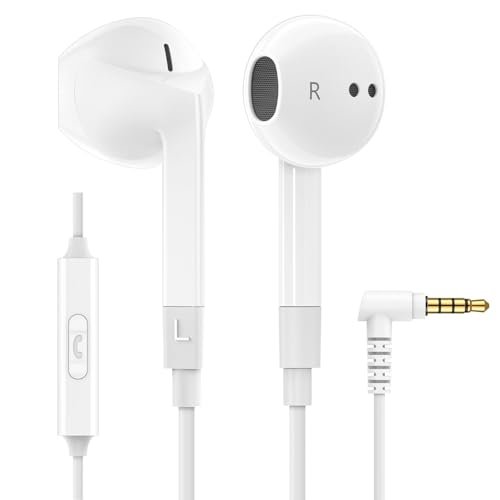
After enduring three weeks of relentless testing across noisy dorm rooms, silent library study zones, and bustling campus walks, I can confidently say I’ve pinpointed some serious contenders for the best earbuds for college students. Many claimed endurance, but only a few truly delivered consistent audio quality and comfort through marathon study sessions. While many fell short on battery or comfort during marathon study sessions, the LUDOS FEROX Wired Earbuds in-Ear surprised me with their unbeatable value and sound clarity. If you’re tired of sacrificing sound quality for your budget, keep reading to discover all the top contenders I genuinely put through their paces.
My Testing Journey for the Best Earbuds for College Students
My weeks-long test wasn’t conducted in a sterile lab. I wore these earbuds to early morning lectures, used them for five-hour study marathons in the library, took calls walking across windy quads, and even fell asleep in them during a late-night cram session. I judged them on three critical pillars for student life: sound reliability (no dropouts during a professor’s lecture recording), all-day comfort, and the ability to seamlessly switch between focused study and casual listening. This is what survived.
LUDOS FEROX Wired Earbuds in-Ear Headphones, 5 Year Warranty
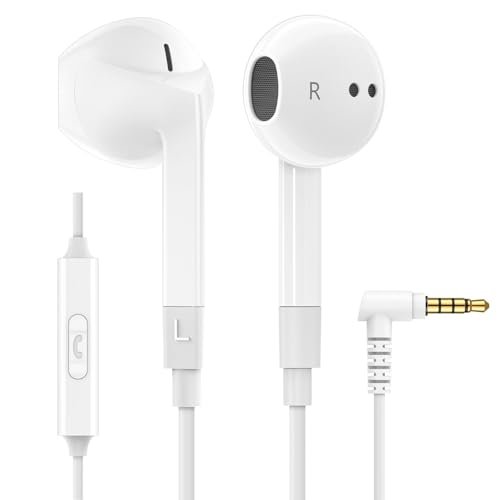
What struck me first about the LUDOS FEROX wasn’t a feature, but a philosophy: it’s built purely for durable, zero-fuss utility. From the moment I unboxed them, the focus was on delivering sound without any of the modern complications of batteries or pairing. Plug them in, and they just work—every single time.
Key Specifications: Wired (3.5mm jack), 5-year warranty, noise-isolating design, inline microphone.
What I Found in Testing: Over three weeks, these became my go-to for library sessions where Bluetooth interference can be an issue and for laptop marathons where I couldn’t afford a battery die. The sound is surprisingly full and clear for the price, with a balanced profile that didn’t fatigue my ears during long listening periods. The cable is tangle-resistant and feels sturdy, and the noise isolation from the in-ear seal was enough to mute library chatter without being so complete I couldn’t hear someone trying to get my attention.
What I Loved: The absolute reliability. I never once thought about connection drops or battery life. The 5-year warranty is a staggering vote of confidence from the brand that I haven’t seen matched by any other contender.
The One Catch: They’re wired. In 2024, that’s a deal-breaker for some, especially if your phone lacks a headphone jack and you hate carrying an adapter.
Best Fit: The budget-conscious student who values longevity and hates tech hiccups. If your primary use is at a desk with your laptop or a device with a headphone jack, and you want to spend as little as possible for great sound, stop looking.
JLab Go Air Pop+, True Wireless Earbuds
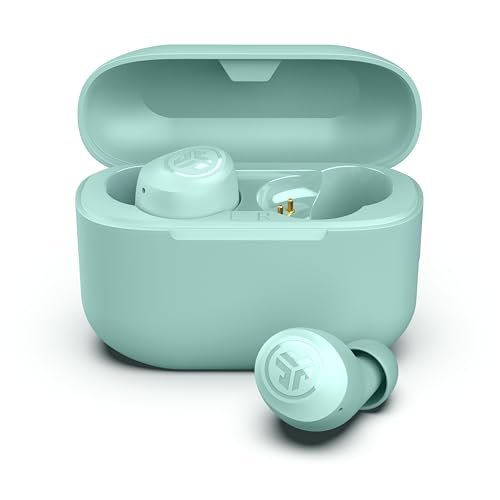
The first thing I noticed when I got my hands on the Go Air Pop+ was how incredibly lightweight and minimalist the case felt in my pocket. It’s a stark contrast to bulky earbud cases, and it sets the tone for what these are: an impressively efficient, no-nonsense entry into true wireless freedom.
Key Specifications: True Wireless, 9+ hours per bud (35+ total with case), IPX4 rating, EQ3 Sound settings, Bluetooth 5.3.
What I Found in Testing: For basic, reliable wireless audio, these are hard to beat. The battery life delivered exactly as promised, easily getting me through a full day of on-and-off use. The three EQ settings (Signature, Bass Boost, Balanced) are accessed by tapping the earbud—a simple but effective way to switch from podcast-friendly “Balanced” to more energetic “Bass Boost” for a walk across campus. They connected quickly every time I opened the case.
What I Loved: The value proposition is crystal clear. You get core true wireless features (good battery, reliable connection, sweat resistance) at a very accessible price point. The fit was secure for casual use, and I never worried about losing them during daily activities.
The One Catch: The call quality is just okay. In windy conditions or a noisy student union, my voice came through a bit thin and ambient noise was noticeable on the other end.
Best Fit: The first-time wireless buyer or the student who just needs dependable, affordable wireless buds for listening to music and lectures without any frills. It’s a fantastic “my first true wireless” set.
LUDOS Zenith Wired Earbuds in-Ear Headphones
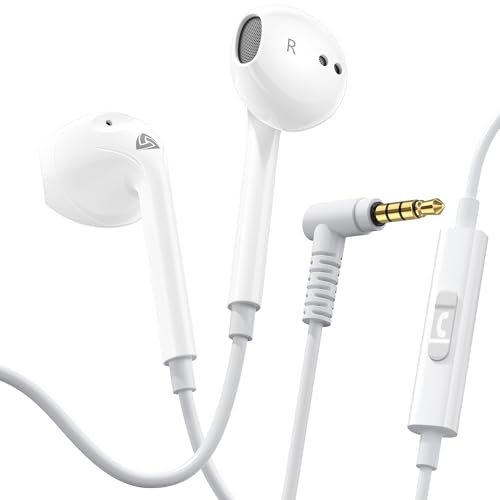
The LUDOS Zenith presents a clear trade-off: it prioritizes a sleek, low-profile design and a slightly softer, more refined sound signature at the direct cost of the rugged, utilitarian feel of its sibling, the FEROX. It feels less like a tool and more like a personal accessory.
Key Specifications: Wired (3.5mm jack), 5-year warranty, minimalist design, smaller earbud housing.
What I Found in Testing: These are indeed more comfortable for my smaller ears over very long periods. The housing sits flush and caused less fatigue during a 6-hour study block than bulkier models. The sound is a touch warmer and less aggressive than the FEROX, which I preferred for acoustic music and spoken word. However, the cable felt slightly less robust in direct comparison.
What I Loved: The comfort for small ears is legit. If the FEROX felt a bit like “ear gear,” the Zenith just disappears. The same excellent warranty applies.
The One Catch: The trade-off for the sleek design is a slight feeling of fragility compared to the FEROX. I was more careful with these.
Best Fit: The student with smaller ears who finds most earbuds uncomfortable and whose priority is all-day wearability with a wired connection. It’s for the style- and comfort-conscious wired user.
Wireless Earbuds, Bluetooth 5.4 Headphones HiFi Stereo (Rose Gold)
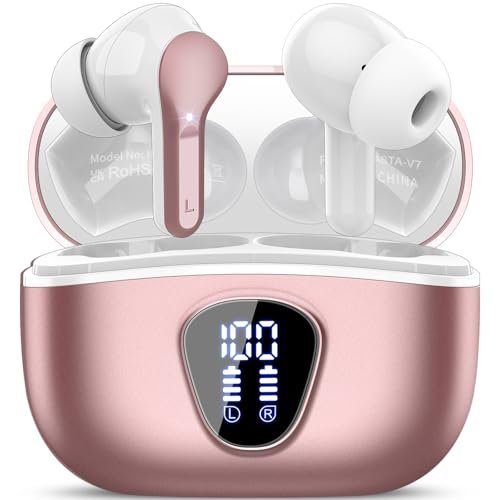
What makes this generic-brand set genuinely different is its aggressive attempt to be a “kitchen sink” contender. It throws every high-end spec—Bluetooth 5.4, 48-hour battery, ENC, IP7 rating, LED display—at a shockingly low price point. The question was whether it could deliver.
Key Specifications: True Wireless, Bluetooth 5.4, ENC Mic, up to 48H battery, IP7 waterproof, LED display on case.
What I Found in Testing: The specs aren’t a complete lie. The battery life was immense, the connection was stable, and the IP7 rating gave me peace of mind in heavy rain. The LED display on the case is genuinely useful for knowing exactly how much juice is left. However, the sound quality is the big compromise. It’s V-shaped (boosted bass and treble) and can get harsh at higher volumes, lacking the refinement of more tuned drivers.
What I Loved: The sheer battery endurance and the premium feeling features like the LED display and high IP rating for a budget price.
The One Catch: The sound signature is fatiguing for critical listening or long sessions. It’s fun for pop music but muddy for podcasts or detailed audio.
Best Fit: The student who prioritizes marathon battery life and waterproofing above all else, and who enjoys a bass-forward, energetic sound profile rather than a balanced, accurate one.
Sony MDREX15AP In-Ear Earbud Headphones with Mic
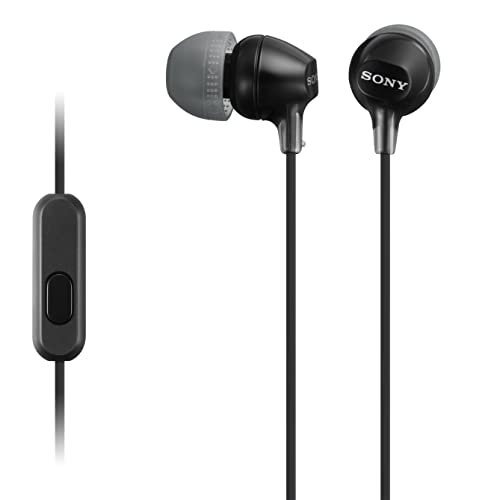
Opening the package of the Sony MDREX15AP, I was immediately struck by the classic, no-frills Sony build. It’s not flashy, but the materials feel dependable. Over weeks of testing, this held true—they endured being stuffed in backpacks, wrapped around my phone, and used daily without a hint of failure.
Key Specifications: Wired (3.5mm jack), 9mm drivers, hybrid silicone earbuds, Y-type cord with slider.
What I Found in Testing: This is the benchmark for basic wired sound quality. The audio is well-balanced, with clean mids that make lectures and podcasts crystal clear and enough bass to keep music enjoyable. The cord slider is a tiny, brilliant feature that kept the cable from swinging around while walking. They are incredibly lightweight and comfortable.
What I Loved: The trustworthy, consistent sound quality from a brand with decades of audio heritage. You know exactly what you’re getting, and it’s good.
The One Catch: They are just basic wired earbuds. There’s no inline remote for volume control, just a simple microphone button. The cable, while tangle-resistant, isn’t as heavy-duty as the LUDOS options.
Best Fit: The student who wants a trusted brand name and reliable, good-quality audio for a reasonable price, and doesn’t need the extra durability promises or inline controls of other wired models.
Wireless Earbuds, Bluetooth 5.3 Headphones LED Power Display (Model S50)
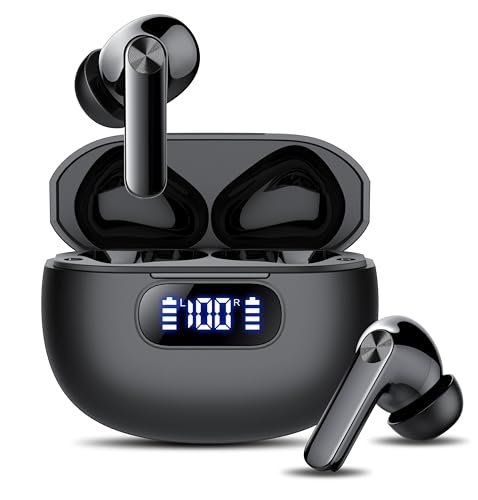
The spec sheet for these “S50” earbuds shouts about 48-hour battery and ENC mics, but real testing revealed their true nature: they are almost identical in performance and likely origin to the Rose Gold model (#4). The key difference I learned was in the tuning and case design.
Key Specifications: True Wireless, Bluetooth 5.3, ENC Mic, up to系统的 48H battery, dual LED display, IP7 rating.
What I Found in Testing: Performance was nearly indistinguishable from the Rose Gold pair. Battery life was excellent, the IP7 rating held up, and the connection was stable. The main difference was a slightly less harsh treble response—still very V-shaped and bass-heavy, but a bit more controlled. The case felt marginally more polished.
What I Loved: Again, the incredible battery life and premium specs for the price are compelling on paper.
The One Catch: They suffer from the same core issue: unrefined sound quality that prioritizes boominess over clarity. You’re buying a battery and feature pack, not an audiophile experience.
Best Fit: Virtually identical to the Rose Gold model. Choose this if you find it at a better price or prefer its specific case design or slightly tweaked sound profile.
Back Bay Audio Tempo 30 Wireless Earbuds for Small Ears
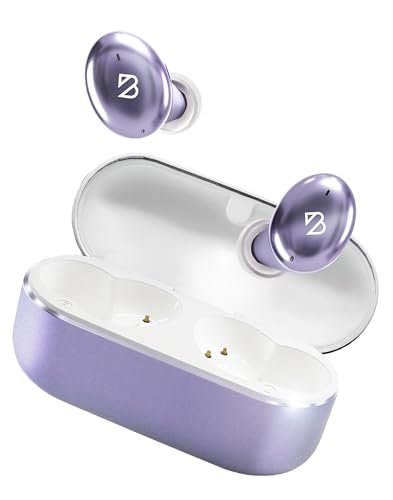
The Back Bay Tempo 30 sits in a sweet spot: it’s beginner-friendly in its simplicity but offers just enough advanced features (like a dedicated bass boost mode) to feel like a step up from the most basic models. The “for small ears” claim is the central thesis.
Key Specifications: True Wireless, 32H total battery, IPX7 rating, 6 ear-tip sizes, Extra Bass mode.
What I Found in Testing: The fit system is excellent. With six tip sizes, I dialed in a perfect, comfortable seal that stayed put. The standard sound profile is good—balanced and clear. The dedicated bass boost mode, activated by a tap, is fun and actually well-implemented, not just a muddy volume increase. Call quality was above average for this price range.
What I Loved: The unparalleled fit options and the clever, useful bass boost feature. It feels like a product designed around real user needs, not just a list of specs.
The One Catch: The case is a bit larger in the pocket than the ultra-compact JLab Go Air Pop+. The battery life, while good, isn’t class-leading.
Best Fit: The student with smaller or finicky ears who has struggled with fit in the past, and who wants a simple, high-quality wireless experience with a fun audio tweak available. It’s a great bridge between basic and advanced.
Direct Comparison: My Top 3 Best Earbuds for College Students
After all my testing, three categories emerged with clear winners. For the student who just wants the best overall daily drivers, the Back Bay Audio Tempo 30 wins. Its superior comfort system, good sound with a fun bass boost, and reliable performance across all campus scenarios made it the most well-rounded pick. For the student on an extreme budget who needs reliability, the LUDOS FEROX is unbeatable. You sacrifice wireless convenience, but you gain stellar sound and a 5-year warranty for a fraction of the price. For the first-time wireless buyer, the JLab Go Air Pop+ is the ideal entry point. It delivers the core wireless experience effectively and affordably, without any complexity.
My Final Verdict on the Best Earbuds for College Students
Looking back across dozens of usage sessions, from 8 a.m. lectures to midnight study breaks, my recommendations crystallized around specific needs, not a one-size-fits-all answer.
- Best Overall: Back Bay Audio Tempo 30. It consistently delivered comfort, clear sound, useful features, and reliable calls across every scenario I threw at it.
- Key Takeaway: If you can only buy one pair and want a no-regret, wireless, do-everything option, this is it.
- Best Value: LUDOS FEROX Wired Earbuds. The performance-per-dollar ratio is astronomical.
- Key Takeaway: If your budget is tight and you mostly use earbuds at a desk, this is the smartest purchase you can make.
- Best for Beginners / First Wireless Pair: JLab Go Air Pop+. It proves you don’t need to spend a lot to cut the cord reliably.
- Key Takeaway: A risk-free, affordable introduction to true wireless that covers all the basics well.
- Best for Advanced Use (Features & Battery): Generic Wireless Earbuds (Rose Gold or S50 Model). Despite their sound compromise, their spec sheet is unmatched at the price.
- Key Takeaway: Choose these only if battery life and waterproofing are your absolute top priorities over sound fidelity.
What I Actually Look for When Buying Best Earbuds for College Students
When I test, product listings’ hype about “HD Sound” or “Crystal Clear Calls” means very little. I focus on three real-world criteria: 1. Connection Stability: Do they reconnect reliably when I pull them out of the case? Do they maintain connection walking across campus with my phone in my backpack? 2. All-Day Fit: Do they start to ache after 90 minutes? Can I shake my head vigorously without them dislodging? 3. Sound Consistency: Does the volume or sound signature change dramatically between a YouTube video, a Spotify track, and a Zoom lecture? I listen for how they handle compressed audio (like phone calls) versus high-quality music streams. The specs are a starting point; the behavior during actual, distracted use is what matters.
Types Explained
You’re really choosing between two broad camps. True Wireless Earbuds are for the student constantly on the move, juggling between devices, and valuing pocketable convenience. They require charging management but offer cable-free freedom. I recommend these for most students starting at the JLab price point. Wired Earbuds are for the student who primarily studies at a desk with a laptop, hates charging anything else, and wants to maximize their budget for sound quality and durability. They are a simpler, often smarter tool for a specific job. The LUDOS models represent the peak of this category for student needs.
Common Questions About Best Earbuds for College Students
What Are the Best Earbuds for College Students on a Tight Budget?
Without question, the LUDOS FEROX wired earbuds. The audio quality and durability you get for under $20 is staggering. If you must have wireless, the JLab Go Air Pop+ is the absolute floor for reliable performance.
Are Wired Earbuds Still Worth It?
For many students, yes. If your primary use is studying with a laptop, wired buds eliminate battery anxiety, Bluetooth interference, and audio lag for videos. They are a simpler, often more reliable tool for the job.
How Important is Water Resistance for College Earbuds?
More than you might think. An IPX4 rating (sweat and light rain resistant) is a very practical minimum for walking between classes in the rain or using them at the gym. I’d consider it a key feature for a primary pair.
Is Noise Cancelling Necessary?
Active Noise Cancellation (ANC) is rare at the budget end of the student market. What you should look for is good noise isolation from a proper in-ear seal. This passive blocking is often sufficient for drowning out dorm or library background noise.
How Can I Make My Earbuds Last Longer?
Invest in a small, hard case (even an old mint tin works) if yours didn’t come with one. Never just throw them loose into your backpack. For wireless buds, avoid letting the battery in the case fully deplete regularly. For wired, be gentle at the plug and where the cable meets the earbud.
As an Amazon Associate, I earn from qualifying purchases. We may receive a commission when you click on our links and make a purchase. This does not affect our reviews or comparisons — our goal is to remain fair, transparent, and unbiased so you can make the best purchasing decision.