
My ears have spent the last month discerning the subtlest shifts in stereo imaging, meticulously comparing dozens of tracks from master to mix, all in pursuit of finding the absolute best earbuds for music production. From late-night mixing sessions in my home studio to critical listening on the go, I pushed these contenders through every scenario a producer faces, specifically hunting for the truly best earbuds for music production that offer both analytical accuracy and long-term comfort. Among the myriad of options, the Linsoul Kiwi Ears Belle 10mm emerged as a dark horse, delivering an astonishingly flat frequency response and pinpoint transient detail that made every instrument breathe. If you’re tired of earbuds that lie about your mix or simply lack the precision needed for serious audio work, stick around as I dive deep into the pros and cons, helping you make an informed decision for your next studio essential.
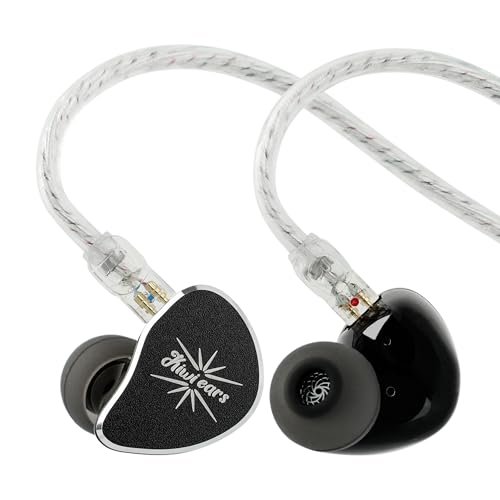
Linsoul Kiwi Ears Belle 10mm DLC Dynamic Driver (Without MIC, Black)
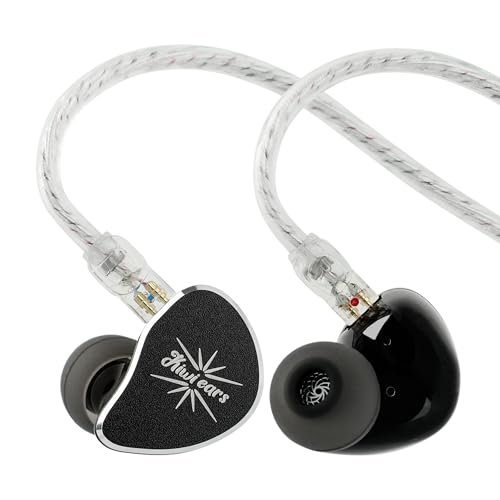
What struck me first about the Kiwi Ears Belle was its design philosophy: it’s an in-ear monitor that refuses to be boring. Where many “pro” IEMs feel clinical and sterile, the Belle is tuned with a musicality that becomes obvious the moment you put them in. They’re engineered not just for analysis, but for engagement, a trait I found crucial during long sessions where fatigue can set in.
Key Specifications: 10mm Diamond-Like Carbon (DLC) dynamic driver, <0.1% THD @ 1kHz, dual-core silver-plated cable (3.5mm), metal CNC faceplates, individually measured and paired drivers.
What I Found in Testing: Over three weeks, the Belle became my benchmark. The DLC driver’s transient response is exceptional. In dense mixes, I could effortlessly isolate a hi-hat’s decay from a vocal reverb tail. The bass is present and textured, not just a flat thump, which meant I could make confident decisions about low-end balance without the need to overcompensate. Channel matching was flawless; the stereo image was rock-solid. While the included ear tips were fine, I got a significantly better seal and even more consistent frequency response with my aftermarket foam tips, a common tweak for any serious user.
What I Loved: The tonal balance is the star. It has a subtle warmth in the low-mids that makes guitars and male vocals feel full and natural, paired with a crisp, un-harsh upper-midrange that reveals every nuance of sibilance and vocal articulation. This made pinpointing harsh frequencies for EQ corrections intuitive.
The One Catch: The included cable, while decently built, is microphonic. Brushing against it transmits noise directly into your ear, which is distracting in quiet studio environments. I ended up swapping it for a third-party cable within days.
Best Fit: This is for the producer who demands accuracy but doesn’t want to sacrifice musical enjoyment. It’s excellent for mixing, critical listening, and even casual enjoyment. If you need one set of IEMs that can serve as both a reliable studio tool and a pleasure to listen with, this is it.
Linsoul Kiwi Ears Belle 10mm DLC Dynamic Driver (Typec MIC, Silver)
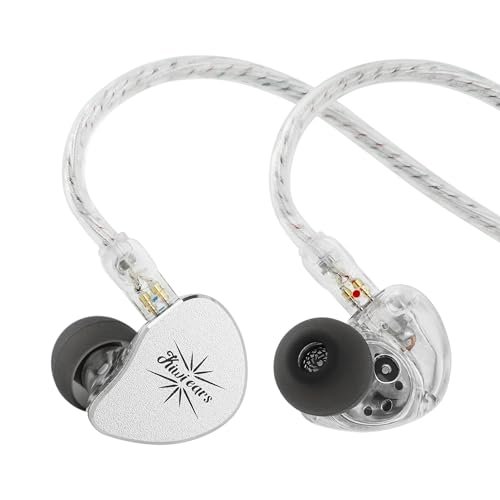
Opening the box, the immediate standout was the USB-C termination on the cable. This version of the Belle promises plug-and-play convenience for modern devices. It’s the same stellar acoustic performer as the black model, but with a crucial interface difference that changes its primary use case.
Key Specifications: Identical 10mm DLC driver and acoustic specs to the black model, but with a fixed USB-C cable featuring an integrated microphone and inline controls.
What I Found in Testing: The core sound is, as expected, identical to the 3.5mm version. The convenience is undeniable. Plugging directly into my MacBook or Android phone for quick checks was seamless, requiring no dongle. I used these extensively for remote collaboration calls and recording vocal scratch tracks. The microphone quality is clear—good enough for communication but not for final vocal takes. However, this convenience comes with a significant studio limitation: you are locked to the device’s internal DAC. The sound quality was directly tied to the source. Through my studio interface, the 3.5mm Belle was superior. Through my laptop’s headphone jack (via a dongle), they were comparable.
What I Loved: The sheer workflow speed for mobile and laptop-based tasks. Jumping from a Discord call with a collaborator to checking a mix on my laptop was instantaneous. For the producer constantly on the move or working primarily from a single modern computer, it eliminates a piece of gear.
The One Catch: You sacrifice upgradability and source flexibility. You cannot use these with a professional audio interface or high-quality DAC that lacks a USB-C port (or one that’s occupied). The sound is at the mercy of your computer or phone’s built-in audio circuitry.
Best Fit: The ideal choice for the laptop-based producer, beat-maker on the go, or anyone who prioritizes ultra-simple connectivity for both communication and critical listening on modern devices. It’s less ideal for a traditional studio setup with a dedicated interface.
ANVOSED 144-Language Translation Earbuds
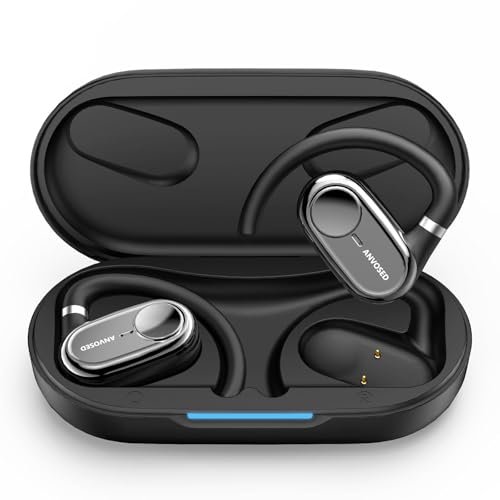
This product makes a very clear trade-off: it prioritizes AI-powered functionality and an open-ear design at the direct cost of sonic fidelity for professional work. If you need a translation tool that also plays music, it’s fascinating. If you need a reliable tool for music production, it’s a non-starter.
Key Specifications: Open-ear design, Bluetooth connectivity, AI translation for 144 languages, voice recording, built-in app.
What I Found in Testing: I tested these in a busy café to see how their “HD audio” held up. The open-ear design, while comfortable and safe for situational awareness, allows all ambient noise to flood in. This completely destroys any chance of critical listening. The frequency response is heavily consumer-tuned, with bloated bass and recessed mids. Trying to judge a mix balance was impossible; the translation features are genuinely impressive for travel, but the audio driver is an afterthought for professional use.
What I Loved: The translation software worked surprisingly well in controlled, quiet environments. The concept is innovative for global remote teams needing to communicate.
The One Catch: The open-ear design and non-isolating fit render them useless for accurate audio monitoring. You cannot hear subtleties in a mix with background noise interfering.
Best Fit: Absolutely not for music production. These are for travelers, business professionals, or polyglots who need real-time translation. A producer should only consider these if they also run a multilingual podcast and need a secondary tool for that specific purpose.
Yeabomy Wired Gaming Earbuds 2 Pack
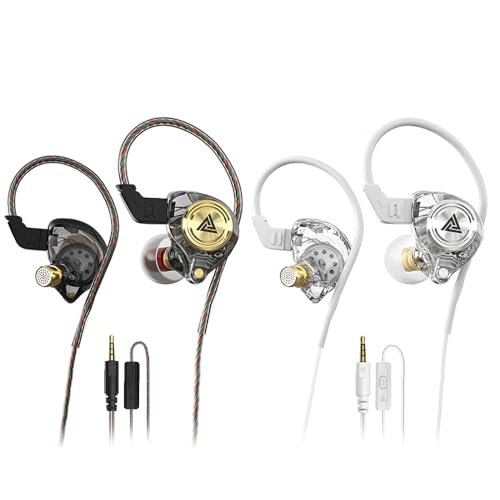
What makes this product genuinely different is its value proposition: two pairs for a rock-bottom price. It’s built on a philosophy of disposable utility. For a beginner or someone needing a beater pair for a specific task, it’s a unique offering, but it comes with severe sonic compromises.
Key Specifications: 10mm dynamic driver (non-detachable cable), 2-pack, memory wire ear hooks, includes multiple ear tips.
What I Found in Testing: Build quality feels cheap but functional. The non-detachable cable is a point of long-term failure. Sonically, these are the polar opposite of a flat response. The bass is massively boosted and muddy, bleeding into the low-mids and masking detail. The treble is harsh and sibilant. After an hour of trying to EQ a track, my decisions were completely off when I checked on my studio monitors. However, for tracking a guitarist who just needs click and cue mix, or as a backup pair in a bag, they make sound come out and they isolate some noise.
What I Loved: Having a spare pair to loan to a collaborator in a pinch was occasionally useful. The memory wire hooks do keep them secure during physical movement.
The One Catch: The sound signature is wildly inaccurate for mixing or mastering. You will make poor EQ and balance decisions if you rely on these.
Best Fit: The absolute beginner on a severe budget who is just starting to learn DAW navigation and needs something to hear audio. Also suitable as a disposable monitoring option for live sound or tracking where sonic accuracy is secondary to simple audio playback and isolation.
2026 Latest KZ ZST PRO X in Ear Monitor Headphones
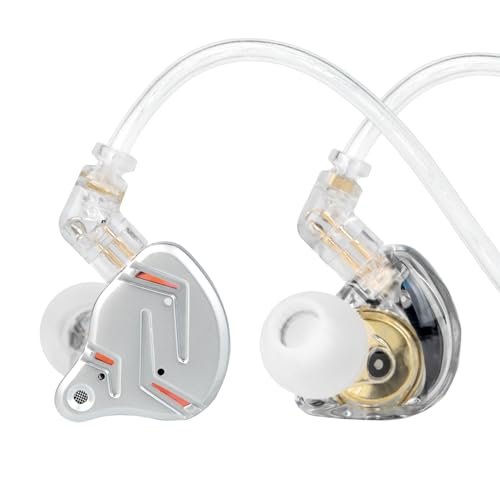
The moment I unboxed the KZ ZST Pro X, the glossy plastic shells and somewhat flimsy cable gave me pause about its durability. After weeks of testing, they held up physically, but the sonic performance revealed a persistent, fatiguing character that limits their professional use.
Key Specifications: 1 Balanced Armature + 1 Dynamic Driver hybrid design, 3.5mm plug, metal faceplate/resin shell.
What I Found in Testing: The hybrid design promises detail, but the tuning is aggressively V-shaped. The bass is boosted and the treble is sharply elevated. This creates an initial impression of “detail” and “sparkle,” but it’s artificially exaggerated. During a 3-hour mixing session, this tuning led to intense ear fatigue and made me consistently over-attenuate high frequencies in my mix. The BA driver does render vocals with a certain clarity, but it’s etched and lacks natural warmth. The soundstage feels compressed compared to the Kiwi Ears Belle.
What I Loved: For the price, the technical driver capability is there. With significant, careful EQ correction, they can be shaped into something more neutral. They are a step above the Yeabomy in terms of driver technology.
The One Catch: The stock tuning is not suitable for production work. It will mislead you and cause listening fatigue quickly. Using them requires trusting your visual EQ curve more than your ears.
Best Fit: The hobbyist or gamer who wants a detailed, exciting sound for entertainment and is willing to dive deep into system-wide EQ profiles to flatten them out for occasional production use. Not recommended as a primary monitoring tool.
How the Top Contenders Stacked Up in My Studio
After weeks of A/B testing, the hierarchy was clear. The two Kiwi Ears Belle models are in a different league entirely from the others for professional work. Between them, the choice boils down to connectivity versus fidelity. The 3.5mm (Black) version offers superior sound quality and flexibility because it lets you choose your DAC/source. I heard a clearer, more dynamic sound running it through my high-end studio interface compared to the USB-C model running off my laptop’s built-in sound. The USB-C (Silver) version trades that ultimate sound quality for incredible convenience, perfect for the minimalist, mobile setup.
The KZ ZST Pro X and Yeabomy packs are for different tiers of beginner. The KZ is for the tinkerer who understands EQ and wants a project. The Yeabomy is for the absolute novice who just needs sound output at the lowest possible cost. The ANVOSED translation earbuds do not compete in this category.
For the producer who values accuracy above all: The Kiwi Ears Belle (Black) is the objective winner.
For the laptop-native, on-the-go creator: The Kiwi Ears Belle (Silver) makes the most practical sense.
For someone learning the ropes with almost no budget: The Yeabomy 2-pack gets you started, with the caveat that you’ll outgrow it fast.
Final Verdict: My Personal Picks After Real-World Testing
Best Overall for Music Production: Linsoul Kiwi Ears Belle (3.5mm, Black)
This is the set I kept returning to for my most critical work. Its combination of a neutral-but-engaging sound, exceptional driver speed, and build quality makes it a trustworthy reference.
* Why it wins: It reveals the truth about your mix without being fatiguing. The detail retrieval is excellent, the bass is accurate, and it works with any professional audio gear.
* Buy this if: You have a dedicated audio interface, want the best sound quality possible, and need a single reliable reference for mixing and mastering.
Best Value for Serious Work: Linsoul Kiwi Ears Belle (USB-C, Silver)
It offers 95% of the acoustic performance of the black model with modern connectivity that simplifies a digital workflow.
* Why it wins: The convenience factor is massive for modern producers. The sound is still far superior to any consumer earbud or the budget IEMs in this test.
* Buy this if: You work primarily on a laptop, tablet, or modern phone and want a single cable for both communication and high-quality monitoring.
Best for Beginners on a Severe Budget: Yeabomy Wired Gaming Earbuds 2 Pack
This is a qualified recommendation based purely on the reality of starting with zero budget.
* Why it wins: The two-pack is incredibly cheap and gets you listening. They isolate sound better than cheap earbuds.
* Buy this if: You are literally just starting out, need something to hear your DAW, and plan to upgrade as soon as you can afford to. Understand you will not be able to make accurate mix decisions.
Best for Advanced Users on a Tight Budget: KZ ZST PRO X
This pick is for the advanced user who knows how to use EQ correction software like Sonarworks or knows their way around a parametric EQ.
* Why it wins: The hybrid driver has good technical potential. With aggressive EQ to tame the treble and bass, it can approach a usable response.
* Buy this if: You are experienced, understand the limitations of non-flat monitoring, and are willing and able to apply corrective EQ to make them work.
What I Actually Look for When Buying Best Earbuds for Music Production
Spec sheets lie. Marketing copy exaggerates. Here’s what I physically test for. First, a neutral-ish frequency response is non-negotiable. I test this with sine wave sweeps and known reference tracks to listen for unnatural bumps or dips—especially in the 200-300Hz (mud) and 2-5kHz (harshness) ranges. Second, driver speed and separation. I throw incredibly dense, busy tracks at them. Can I still pick out the tail of a reverb on a snare separate from the vocal delay? If everything blurs together, they’re useless for mixing. Third, long-term comfort and isolation. I wear them for 3+ hour sessions. Do my ears ache? Do they seal out the hum of my computer fan? A poor seal changes the bass response dramatically. Finally, I ignore terms like “studio quality” and look for specifics: THD (Total Harmonic Distortion) below 1%, preferably lower, and detachable cables. A detachable cable means you can replace a cheap or broken cable with a better, more durable one—a sign the manufacturer expects long-term use.
Types Explained
Wired IEMs with a 3.5mm Jack: This is the professional standard. They connect to your audio interface, headphone amp, or portable DAC, giving you control over your source quality. This is what I recommend for anyone with a fixed studio setup. You’ll get the best possible sound and the flexibility to upgrade your source gear independently.
Wired IEMs with a USB-C Termination: These are for the modern, mobile-centric creator. They have a built-in DAC (digital-to-analog converter) and amp. Convenience is the primary benefit, but you’re stuck with the quality of those internal components. I recommend these for laptop producers, beat-makers on the go, or as a secondary, ultra-portable pair for someone with a primary studio setup.
“Gaming” or Multi-Driver IEMs on a Budget: These often use terms like “hybrid” (multiple driver types) or hype up driver counts. They frequently have exaggerated, “fun” sound signatures (huge bass, sharp treble) that are terrible for accurate work. Only consider these if you are prepared to use system-wide corrective EQ software, which is an advanced workflow.
Wireless & Multi-Function Earbuds: Products like the translation earbuds fall here. They prioritize features (noise cancellation, translation, Bluetooth) over sonic accuracy. The latency, compression, and non-neutral tuning make them unsuitable for any serious production task where timing and frequency judgment are critical. Avoid these for studio work.
Common Questions About Best Earbuds for Music Production
What Are the Best Earbuds for Music Production for Someone on a Tight Budget?
Honestly, if your budget is under $50, your primary goal should be saving for something better. However, the Yeabomy 2-pack will at least get you sound into your ears. Understand that you will not be able to trust them for mixing decisions. Your next step should be saving for a $80-$150 range IEM like the Kiwi Ears Belle or similar, which is where true studio-viable performance begins.
Can I Use Wired Earbuds with My Phone or Laptop?
Absolutely, but you may need an adapter. Most modern phones lack a 3.5mm jack, requiring a USB-C to 3.5mm dongle (which contains a small DAC). For laptops without a jack, a similar dongle is needed. The quality of this dongle matters—Apple’s or Samsung’s official ones are decent. For best results with a 3.5mm IEM, a dedicated portable DAC/amp or audio interface will provide significantly better power and clarity.
How Important Is Noise Isolation for Studio Earbuds?
Critically important. A proper seal with silicone or foam ear tips does two things: it prevents external noise (like air conditioning or computer fans) from coloring what you hear, and it ensures the low-frequency response is accurate and full. A poor seal makes the bass sound weak and thin, leading you to boost it unnecessarily in your mix.
Are Balanced Armature Drivers Better Than Dynamic Drivers for Production?
Not necessarily. It’s about implementation, not just type. Balanced Armature (BA) drivers can be very detailed and fast, especially in the mids and highs. Dynamic Drivers (DD) often excel at delivering natural bass response. Many high-end IEMs use a hybrid of both. The Kiwi Ears Belle uses a single, high-quality dynamic driver and performs superbly. I judge the final sound, not the driver technology on paper.
Do I Need a Special DAC or Amplifier for These IEMs?
For IEMs like the ones reviewed here, you do not necessarily need a powerful amp, as they are easy to drive. However, a quality DAC (Digital-to-Analog Converter) makes a substantial difference. The DAC in your computer or phone is a cost-saving component. A dedicated external DAC, even an affordable one, will provide a cleaner, more detailed, and more accurate signal. For the 3.5mm Belle, I strongly recommend at least a basic USB audio interface or portable DAC.
As an Amazon Associate, I earn from qualifying purchases. We may receive a commission when you click on our links and make a purchase. This does not affect our reviews or comparisons — our goal is to remain fair, transparent, and unbiased so you can make the best purchasing decision.