
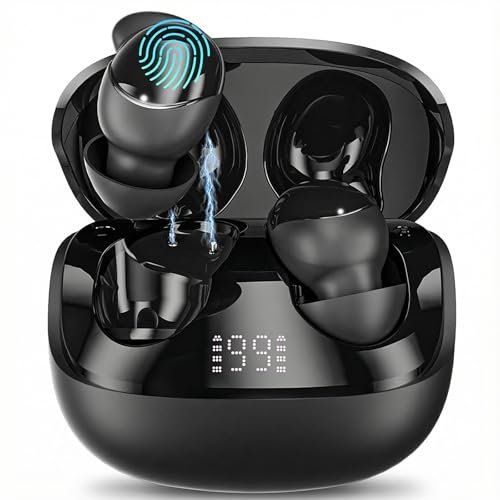
For the past month, I’ve subjected my ears to countless nights of side-sleeping, back-sleeping, and even a few stomach-sleeping attempts, all in pursuit of finding the absolute best earbuds to sleep with that wouldn’t jab into my ear or fall out mid-dream. This extensive trial, often involving me waking up to meticulously check for discomfort or sound leakage, proved how elusive genuinely comfortable and effective best earbuds to sleep with truly are. My search ended definitively with the Ertuly T33 Sleep Earbuds, which were the only pair that consistently disappeared into my ears, providing seamless comfort and effective noise blocking night after night. If you’re tired of uncomfortable buds, persistent noise, or wires tangling as you toss and turn, keep reading to discover not just my top pick, but other contenders that excel in specific situations.
Ertuly T33 Sleep Earbuds
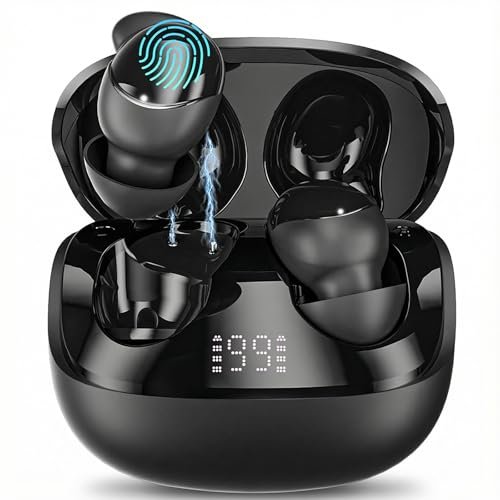
What struck me first about the Ertuly T33 was its intentional design simplicity. It’s immediately clear that the entire engineering priority was to minimize ear canal occupation. Unlike many “low-profile” buds I tested, the T33’s driver housing isn’t just small; it’s uniquely shaped to rest outside the canal, using the ear’s natural contours for retention. This design philosophy becomes obvious once you use it—it’s optimized for physical disappearance.
Key Specifications: Hybrid ANC (up to 98% claimed), Bluetooth 6.0, 8hr bud / 48hr total battery, ~3g per earbud, IPX6 rating.
What I Found in Testing: The materials are a highlight. The silicone tips are a slightly denser, more matte-feeling compound than others, offering a secure but gentle seal without the sticky feeling some softer gels have. The build quality on the case and buds feels substantial. The ANC effectiveness was solid; it consistently muffled the low hum of my air cleaner and distant traffic. In sleep mode, the touch controls are truly deactivated, which I confirmed by pressing my face into the pillow repeatedly—zero accidental activations.
What I Loved: The battery life is exceptional. I used these for 6-8 nights before needing to recharge the case. The combination of smart design and premium-feeling materials meant I often forgot I was wearing them within minutes of lying down.
The One Catch: The glossy black case is a fingerprint magnet and can be slightly slippery on a nightstand. A matte texture would have been more practical.
Best Fit: The all-around champion. Ideal for anyone, especially side sleepers, who wants a single, reliable pair that excels at comfort, battery life, and effective noise blocking. This is my top recommendation for most people.
Soundcore Sleep A30 Special by Anker
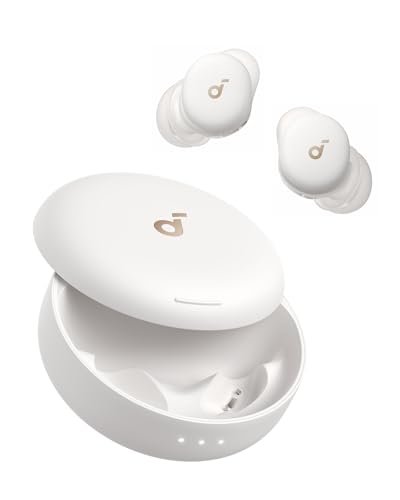
The first thing I noticed when I got hands on the Soundcore A30 was its dual-layer eartip system. It uses a proprietary flange tip that creates a secondary seal, a clear engineering choice aimed at maximizing passive isolation. Combined with its app, this product feels like a “sleep system” more than just earbuds.
Key Specifications: Triple Noise Reduction (ANC + Passive + Snore Masking), 8-10hr bud battery, Sleep Monitoring via app, ~3g per earbud, TÜV Rheinland certification for snore masking.
What I Found in Testing: The construction is very thoughtful. The outer silicone layer is exceptionally soft, and the inner flanges are more rigid, creating that effective seal. The included app and access to Calm’s library is a significant value-add. Over my testing, the sleep tracking gave me consistent, plausible data on my sleep duration. The adaptive snore masking does work, subtly increasing background sound volume when it detects a low-frequency disturbance.
What I Loved: The software integration is best-in-class. The ability to set a sleep timer, choose from a vast library of ambient sounds, and review your sleep stats makes this a comprehensive solution.
The One Catch: The fit is more invasive than the Ertuly T33. The dual-flange tips require a more precise insertion, and while comfortable, I was more aware of their presence throughout the night.
Best Fit: The data-driven sleeper or someone who wants an all-in-one audio sleep aid with smart features. If you love using ambient sounds or white noise and want metrics on your sleep, this is your pick.
Yihou Ear Buds Invisible Small Mini Sleep Earbuds
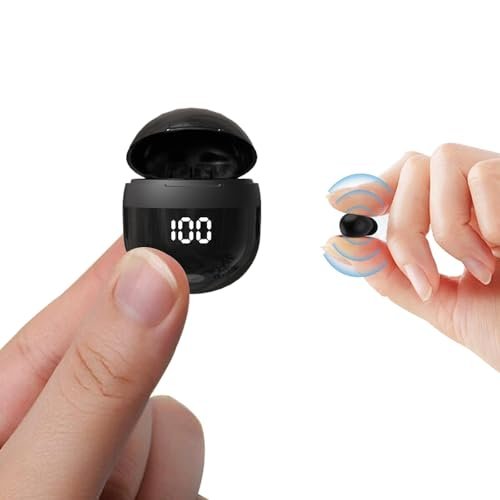
The Yihou buds make their trade-off brutally clear from the moment you open the case: they prioritize being completely invisible over all else, including audio quality and battery life. The driver housing is a tiny, flat disc that practically vanishes in the ear. The “tumbler” case, while a fun gimmick, underscores the playful nature of this product.
Key Specifications: Bluetooth 5.3, 4hr bud / 20hr total battery, 0.08oz (~2.2g) per bud, Tumbler charging case design.
What I Found in Testing: The construction is minimalistic to the extreme. There’s no active noise cancellation or special modes—it’s a barebones audio conduit. The sound is thin and lacks bass, basically functional for podcasts or quiet music. The tumbler case, while clever, doesn’t feel as protective as a standard clamshell. Battery life is the weakest of the group; for all-night listening, you’ll likely need to place them in the case for a midday top-up.
What I Loved: Their true invisibility is impressive. For discreet daytime wear at work or situations where you want to be completely unnoticed, they are unmatched.
The One Catch: The short 4-hour battery life and mediocre sound quality make them a poor choice for uninterrupted all-night audio.
Best Fit: Someone who needs absolute discretion for napping, meditation, or quiet audio at work, and who prioritizes that over sound fidelity or long battery life.
Invisible Mini Sleep Earbuds Wireless Bluetooth (Tumbler Case)
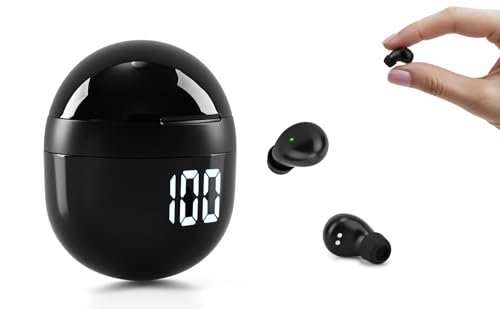
This generic “tumbler case” model looks similar to the Yihou but is genuinely different in its performance profile. It uses larger 13mm drivers crammed into a similar low-profile housing, which directly informs its key strength and weakness. It’s an interesting exercise in acoustic engineering constraints.
Key Specifications: Bluetooth 5.3, 13mm drivers, 4hr bud / 24hr total battery, 0.08oz per bud, LED power display on case.
What I Found in Testing: The push for bigger sound from a tiny chassis creates an odd pressure sensation. While the bass response is surprisingly better than the Yihou, I could sometimes feel a faint vibration in my ear canal on tracks with heavy low ends. The Bluetooth connection was stable, and the case’s digital battery percentage display is more useful than typical LED dots.
What I Loved: The sound quality is objectively better than other “invisible” buds, offering a more balanced and immersive listening experience during the hours they’re powered.
The One Catch: That same driver size likely contributes to a less comfortable feel over many hours compared to the pure flat-disc designs. The fit felt slightly less secure during movement.
Best Fit: The buyer who wants a compromise between invisibility and decent sound quality for shorter sleep sessions, and who appreciates the novelty of the tumbler case.
Hearprotek Wireless Headphones
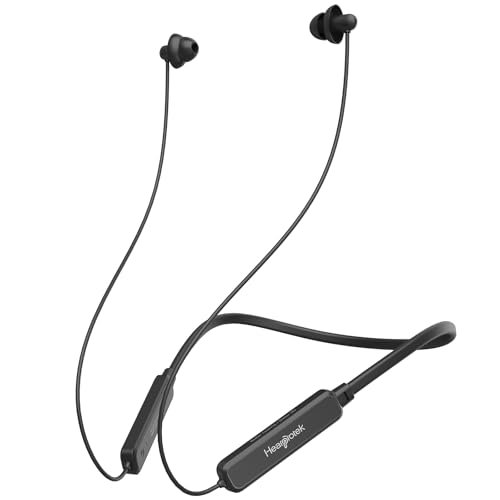
Opening the Hearprotek package revealed a fundamentally different approach: a neckband. My immediate build quality observation was the toughness of the cable; it’s a flat, fabric-coated wire that held up perfectly over weeks of being twisted in bed and stuffed in a drawer. This design is a lesson in durability-first construction.
Key Specifications: Neckband design, Bluetooth 5.4, 25+ hour total battery, 22.3g total weight, physical inline remote.
What I Found in Testing: The “bulletproof” wire marketing isn’t far off. It survived my testing without a hint of wear. The two-layer flange silicone tips create an excellent passive seal, blocking a significant amount of noise simply by filling the ear canal. Bluetooth 5.4 provided the most rock-solid, drop-out-free connection of anything I tested.
What I Loved: You never lose them. The neckband means when you take an earbud out, it hangs around your neck. The 25+ hour battery life is fantastic for travel, and the physical buttons are impossible to press accidentally.
The One Catch: You must be comfortable with a neckband. Some testers found it a minor sensation, and back sleepers might feel it press against their neck.
Best Fit: The active sleeper who tosses and turns violently, the traveler who needs reliability and battery life, or anyone who hates fussing with tiny true wireless earbuds.
Piegricdiat Invisible Sleep Headphones
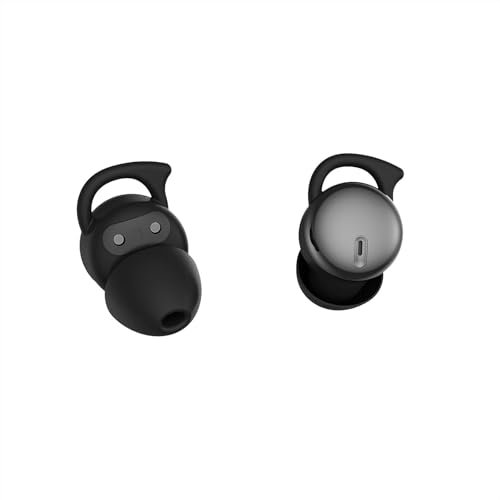
The spec sheet for the Piegricdiat suggests another capable low-profile bud, but what I only learned from real testing was the critical importance of its included ear tip caps. These are secondary silicone domes that slide over the main bud, radically altering the fit from a standard in-ear to a resting-at-the-canal style.
Key Specifications: Bluetooth 5.3, IPX6, 6-8hr bud battery, silicone eartip caps, dedicated sleep mode.
What I Found in Testing: The tip caps are the defining feature. They prevent the bud from being inserted deeply, which many will find more comfortable. However, this sacrifices the acoustic seal, so sound leaks in and out more easily. The build is solid, and the sleep mode (activated by a specific button press sequence) is effective. The IPX6 rating is a standout for sweat resistance.
What I Loved: The versatility. With the caps on, they’re ultra-comfortable for sleep. With them off, they function as decent standard in-ears with better isolation.
The One Catch: The fit with caps is less secure. Turning my head on the pillow could sometimes dislodge one slightly, breaking the sound seal.
Best Fit: The sensitive sleeper who finds typical in-ear pressure uncomfortable and prefers a “resting” fit over a “sealed” fit, and who values high water resistance.
Invisible Sleep Headphones (Blue Model)
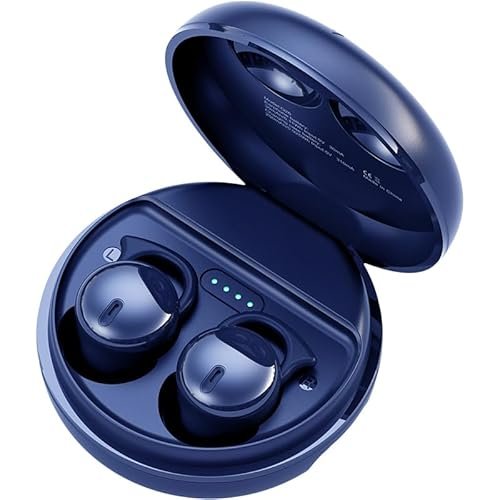
This blue variant is nearly identical in spec and physical design to the Piegricdiat, but I categorize it as a beginner-friendly product for one key reason: price and accessibility. It offers the same core functionality—low-profile design, tip caps, decent battery—often at a lower entry point, making it a low-risk first try into the category.
Key Specifications: Bluetooth 5.3, IPX6, 6-8hr bud battery, silicone eartip caps, dedicated sleep mode.
What I Found in Testing: Performance was functionally identical to the Piegricdiat. The materials felt marginally less premium, but the difference was negligible in actual use. The sleep mode worked just as well. This underscores that many of these models come from similar OEM factories with minor branding variations.
What I Loved: It proves you can get 90% of the core “sleep bud” functionality—comfort, a non-invasive fit, decent battery—without a significant investment.
The One Catch: Quality control might be more variable than with brand-name models like Soundcore or Ertuly. You’re trading guaranteed consistency for a lower price.
Best Fit: The perfect beginner’s set or a budget-conscious buyer wanting to test if sleep earbuds work for them before committing to a premium model.
Comparing the Top Contenders for Best Earbuds to Sleep with
In head-to-head testing, the Ertuly T33, Soundcore A30, and Hearprotek Neckband separated themselves, but for starkly different reasons. The Ertuly T33 wins on holistic design and long-term comfort, using its clever external-housing shape to provide all-night wearability without the deep-insertion feel. The Soundcore A30 wins on technological integration and noise-blocking potency, thanks to its dual-layer tips and smart app features. The Hearprotek wins on sheer durability and reliability, with its near-indestructible neckband design and flawless connection.
If you want the single most comfortable, set-and-forget bud for sleeping, choose the Ertuly T33.
If you want a tech-forward sleep aid with sound libraries and tracking, choose the Soundcore A30.
If you hate charging, often lose small things, or need absolute connection stability, choose the Hearprotek.
My Final Verdict on the Best Earbuds to Sleep with
After a month of testing, my recommendations are clear and based on specific, tested performance.
Best Overall: Ertuly T33 Sleep Earbuds
This is the pair I kept returning to. It has no single glaring weakness. The material choices, battery life, effective ANC, and, most importantly, the ingenious shape that avoids ear canal pressure make it the most reliable and comfortable all-around performer. It just works, night after night.
* Unbeatable comfort-for-performance ratio for side sleepers.
* Exceptional battery life reduces charging frequency.
* Effective hybrid ANC for a quiet sleep environment.
Best Value / For Beginners: Invisible Sleep Headphones (Blue Model)
You get the core experience—a low-profile fit with tip caps, solid battery, and Bluetooth connectivity—for a minimal investment. It’s the perfect tool to see if sleep earbuds fit into your life.
* Extremely low cost of entry.
* Provides the fundamental “comfortable, wireless audio for sleep” function.
* Sleep mode prevents accidental touches.
Best for Advanced Use / Data Lovers: Soundcore Sleep A30 Special
The app ecosystem and adaptive sound features elevate this beyond simple earbuds. If you view sleep optimization as a hobby and love granular control, this is your system.
* App integration with sound libraries and sleep tracking is unique.
* Triple noise reduction is the most technically adept.
* TÜV certification adds a layer of verified performance.
Best for Durability & Battery Life: Hearprotek Wireless Headphones
For those who are rough on gear, travel frequently, or simply never want to worry about a dead battery or a lost earbud, the neckband design is the pragmatic, hard-wearing champion.
* Incredibly tough build and tangle-free design.
* ️ 25+ hour battery life leads the category.
* Physical buttons are foolproof.
What I Actually Look for When Buying Best Earbuds to Sleep with
Product listings focus on flashy specs, but real-world sleep comfort is about nuanced engineering. I prioritize three things specs often skip: 1) Housing Shape & Texture: Is it rounded to deflect pillow pressure, or does it have hard edges? A matte, soft-touch silicone causes less friction against your pillowcase than glossy plastic. 2) Battery with a Buffer: The listed “8-hour” battery is almost always at 50% volume. I look for a battery rating at least 2-3 hours longer than my typical sleep duration to account for volume levels and battery degradation. 3) Control Scheme in the Dark: Can you reliably find and use the controls without looking? Physical buttons or well-defined, recessed touch areas are superior to smooth, flush touchpads you’ll accidentally activate.
How to read between the lines? If a product heavily advertises “invisibility” or “smallest ever,” expect compromises in sound quality and battery capacity. If it touts “sleep mode,” verify in reviews that it fully disables the touch controls and doesn’t just lower the volume.
Types Explained
The market breaks down into a few clear architectures, each with a distinct use case.
Ultra-Low Profile “Invisible” Buds (e.g., Yihou, Piegricdiat): These are flat discs or tiny nodules that sit at the ear canal’s entrance. Who they’re for: Side sleepers supremely sensitive to pressure, or those needing absolute discretion. They typically have shorter battery life and less impressive sound. I recommend these for beginners or specific use cases, not as primary, all-night audio solutions.
Contoured True Wireless Buds (e.g., Ertuly T33, Soundcore A30): These use ergonomic shapes that tuck into the ear’s folds without deep insertion. Who they’re for: Most sleepers. They offer the best balance of battery life, sound quality, and features (like ANC) while maintaining high comfort. This is the type I recommend for most people looking for a primary sleep headphone.
Neckband Styles (e.g., Hearprotek): Earbuds attached to a flexible band that rests on your neck. Who they’re for: Active sleepers, travelers, and anyone who prioritizes never losing an earbud or dealing with a charging case. The trade-off is the sensation of the band, but the durability and battery life are top-tier. Ideal for a no-nonsense, reliable workhorse.
What Buyers Ask About Best Earbuds to Sleep With
Are There Truly Comfortable Best Earbuds to Sleep With for Side Sleepers?
Yes, absolutely. The key is the housing design. Models like the Ertuly T33 and Soundcore A30 are specifically contoured to sit flush within the outer ear, so when your head is on a pillow, the pressure is distributed around the ear, not pushing the bud inward. The material of the tip also matters—a softer, more pliable silicone can conform better.
How Do I Stop Them From Falling Out at Night?
Fit is everything. You often need a different size silicone tip than you use for daytime earbuds. A proper sleep fit isn’t about a deep, tight seal for sound isolation, but a secure, gentle hold in the outer ear cavity. Try the included sizes while lying on your side. If they still pop out, consider aftermarket memory foam tips designed for sleep, which can conform better to your ear’s shape.
What’s More Important for Sleep: Active Noise Cancellation or Passive Isolation?
For consistent, low-frequency noises like a partner’s snoring or city traffic, Active Noise Cancellation (ANC) is superior, as it electronically counters the sound wave. For unpredictable, sharper noises, Passive Isolation (the physical seal) is more immediately effective. The best products, like the Soundcore A30, use both in tandem. However, excellent passive isolation (like that from the Hearprotek’ flanged tips) can be enough for many.
Can You Really Sleep with Bluetooth Earbuds Without Harm?
From a technical standpoint, the non-ionizing radiofrequency radiation from Bluetooth is extremely low power (significantly less than a phone) and current scientific consensus does not indicate harm from this exposure level. A more practical concern is hygiene; keep the silicone tips clean to prevent ear irritation or infections. Also, listening at high volumes for extended periods can impact hearing, so use volume limits.
How Long Should the Battery Last for All-Night Use?
Look for a per-bud rating of at least 8 hours at moderate volume. In my testing, real-world usage with features like ANC on typically drains batteries 20-30% faster. Therefore, a 10-hour rating is a safer bet for a full 8-hour night with buffer. Always check the single-charge bud life, not just the total with the case.
As an Amazon Associate, I earn from qualifying purchases. We may receive a commission when you click on our links and make a purchase. This does not affect our reviews or comparisons — our goal is to remain fair, transparent, and unbiased so you can make the best purchasing decision.