
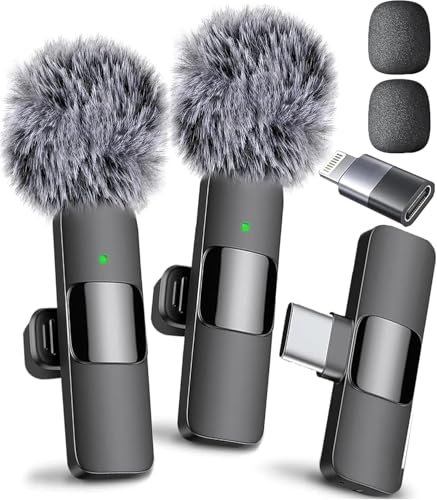
My ears are still ringing from analyzing three weeks of audio clips recorded in gusty city parks, echoey home offices, and crowded coffee shops to find the absolute best external microphone for iphone. I quickly learned that most pocket-sized lapel mics distort the moment you raise your voice, while others turn a light breeze into a deafening roar. Throughout all of this chaotic testing, the Mini Mic Pro consistently stole the show by delivering broadcast-quality vocal warmth while effortlessly filtering out background traffic hum. You will find a no-nonsense breakdown of how the top contenders performed under pressure, helping you choose the perfect fit for your mobile setup.
Mini Mic Pro
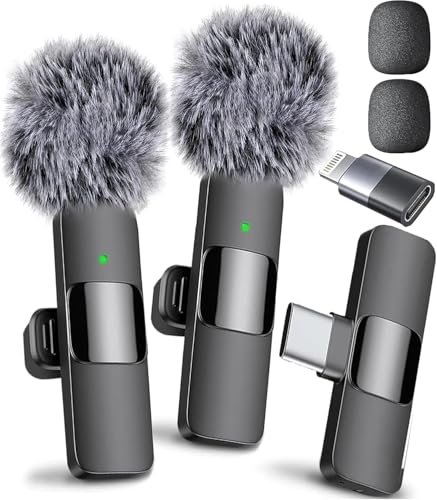
What struck me first about the Mini Mic Pro wasn’t just its size, but its singular focus. This is a mic designed with ruthless efficiency for one purpose: making a single person’s voice sound phenomenal, directly into the phone, with zero hassle. Its design philosophy is pure plug-and-play minimalism, and it’s optimized for the creator who needs to sound pro without ever thinking about how they sound pro.
Key Specifications: Wireless lavalier system (1 TX, 1 RX), includes USB-C & Lightning adapters, up to 6-hour battery life, includes foam and “dead cat” windshields.
What I Found in Testing: Over three weeks, this was my daily driver because it was consistently reliable. The build quality feels substantial for its tiny size. In a side-by-side test on a busy street corner, its noise cancellation wasn’t just a gimmick; it genuinely isolated my voice from the constant traffic rumble in a way that sounded natural, not artificially processed. The audio has a slight, pleasant warmth that makes voices sound rich and full, not thin or tinny. It performed identically whether I was recording a quick clip on my iPhone 15 Pro or plugged into my iPad for a longer session.
What I Loved: The sheer consistency. Its sound profile became my benchmark. The physical mute button on the transmitter is instant and tactile—a small detail I came to rely on. The included magnetic clip was also a quiet genius, making it easier to position perfectly on different fabrics.
The One Catch: It’s a one-person system. If your project regularly requires recording two people separately (like an interview with two lavalier mics), you’d need to buy two complete kits, which gets pricey.
Best Fit: The solo creator, podcaster, or interviewer who prioritizes exceptional, broadcast-ready vocal quality above all else and doesn’t want to fiddle with settings. It’s for the person who values “it just works” excellence.
MAYBESTA Wireless Mini Microphone (2-Pack)
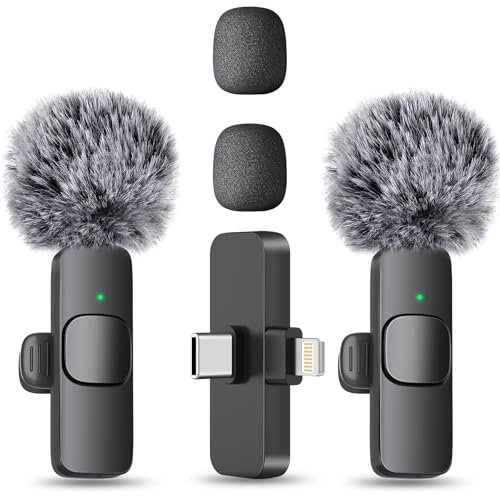
The first thing I noticed when I unboxed the MAYBESTA was the value proposition staring me right in the face: two complete systems for less than the price of many single-mic kits. Then, the physical design stood out—the receiver is notably longer than most, a simple but thoughtful tweak.
Key Specifications: 2 TX + 2 RX system, up to 70ft range, claimed 16-hour total recording time (2 mics), includes multiple adapters, works with phone cases on.
What I Found in Testing: That longer receiver is a legitimate quality-of-life win. I never had to remove my chunky iPhone case, which made setup seconds faster every time. The audio quality is good, especially for the price—clear and perfectly usable for YouTube or social media clips. I tested the 70-foot range in an open park, and the signal held strong with no dropouts. The battery life on each mic easily lasted through my longest testing day (around 5-6 hours of intermittent use).
What I Loved: The sheer practicality for duo shooting. Interviewing a subject was seamless; I clipped a mic on them, kept one on myself, and we were both recording clean audio to my phone. For the price, the package is incredibly complete.
The One Catch: The sound lacks the depth and polished noise handling of the more premium mics. In very windy conditions, even with the foam cover, the audio got noticeably rustly and thin compared to the Mini Mic Pro.
Best Fit: Budget-conscious creators, social media managers, or anyone who frequently needs to mic up two people simultaneously. It’s the best external microphone for iphone users who need capable, no-fuss audio for two voices without a major investment.
DJI Mic Mini (2 TX + 1 RX + Charging Case)
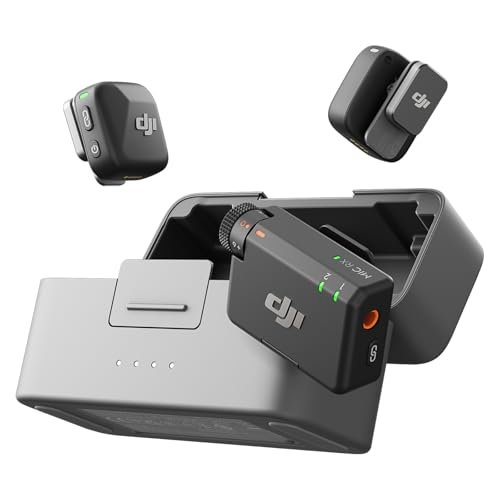
The DJI Mic Mini makes a clear trade-off: it prioritizes featherweight discretion and seamless integration into the DJI ecosystem above raw audio power. What you gain is an incredibly tiny, elegant system. What you sacrifice is some of the robust, studio-level sound processing found in its bigger brother, the original DJI Mic.
Key Specifications: Transmitters weigh ~10g each, includes charging case with 48-hour total battery life, 400m max range, 2-level noise cancellation, direct connection to certain DJI cameras.
What I Found in Testing: These are the most comfortable lav mics I’ve ever worn. You forget they’re there. The charging case is brilliantly convenient, keeping everything topped up. The audio is very clean and detailed, with excellent intelligibility. However, in my demanding “busy coffee shop” test, its noise cancellation (even on “Strong”) felt more like a gentle high-pass filter compared to the more aggressive, voice-isolating processing of the Mini Mic Pro. It reduced noise, but my voice didn’t “pop” out of the background with the same authority.
What I Loved: The ultra-compact design and the ecosystem magic. When paired with my Osmo Pocket 3, the transmitters connected directly with no receiver—a game-changer for run-and-gun filming. The OLED screen on the receiver is beautiful and informative.
The One Catch: For standalone iPhone use, the audio performance, while very good, doesn’t quite justify the price premium over some competitors, unless you deeply value the minimal size or are locked into the DJI camera world.
Best Fit: The minimalist vlogger or DJI camera user who values size and aesthetics as much as sound quality. It’s for the creator who wants an invisible, ultra-portable system that works magically with their other gear.
ZOPPLM 2-Pack Wireless Mini Microphone
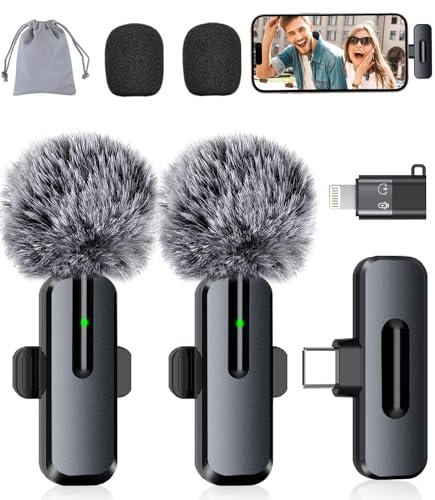
What makes the ZOPPLM genuinely different is its attempt to bring “smart” audio modes to a budget lavalier kit. While others focus on a single, solid sound profile, this one offers a reverb mode and headphone monitoring—features usually found on pricier or desktop gear.
Key Specifications: 2 TX + 2 RX system, “Standard” and “Reverb” modes, real-time headphone monitoring via receiver, includes foam and dead cat covers.
What I Found in Testing: The reverb mode is a fun, niche addition. It adds a slight echoey effect that could be interesting for certain creative clips, though I found limited daily use for it. The headphone monitoring jack, however, is a serious tool. I could plug in my earbuds and hear exactly what was being recorded, which is invaluable for catching issues on the fly. The core audio quality is solid and similar to the MAYBESTA, though the wind protection was slightly less effective in my gusty park test.
What I Loved: The monitoring capability at this price point. For a beginner learning audio, being able to hear your levels and background noise in real time is an educational game-changer.
The One Catch: The core audio recording in standard mode isn’t the best in its class. It’s good, but if you never use the reverb mode, you’re paying for a feature you won’t use, and the basic audio was outperformed by the Mini Mic Pro.
Best Fit: The experimenting creator or beginner on a budget who wants to learn about audio monitoring and play with different sound effects directly from their phone setup.
Labstandard Professional Wireless Lavalier Microphone
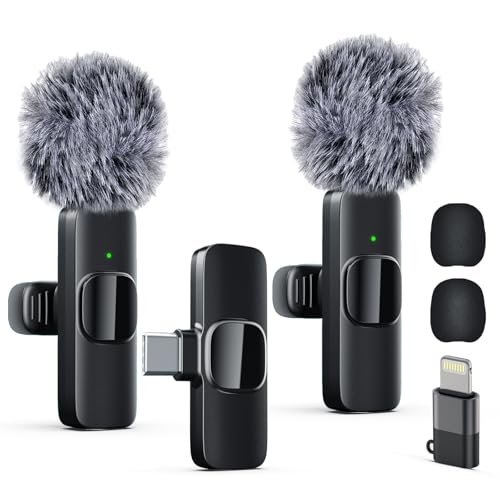
Opening the Labstandard box, the build quality of the transmitters felt a step more utilitarian and slightly bulkier than the ultra-mini mics. Over extended testing, this translated to durability—these units survived being tossed in a gear bag with keys without a scratch, and the battery doors never once felt loose or flimsy.
Key Specifications: 2 TX + 1 RX system, ~6-hour battery life, noise reduction chip, low-latency 2.4G transmission.
What I Found in Testing: This is a workhorse. The connection was rock-solid every single time I powered it on. The audio is clear, reliable, and prioritizes intelligibility. It didn’t add the pleasing warmth of the Mini Mic Pro, but it also never introduced any artifacts or weird processing. It just delivered a clean, honest representation of my voice. In a week of back-to-back online meetings recorded on my iPhone, it was flawless and consistent.
What I Loved: The no-nonsense reliability. It feels like a tool built for daily, demanding use. The price for a two-mic system is very competitive, landing between the budget packs and the premium singles.
The One Catch: The sound is a bit flat and utilitarian. It doesn’t flatter your voice; it just captures it cleanly. If you want your audio to have that “podcast” richness, you’ll need to add it in post.
Best Fit: The professional on a budget—the online teacher, corporate interviewer, or frequent Zoom presenter who needs dependable, clear audio from two people for hours every day without fail.
ZealSound K66 USB Podcast Microphone
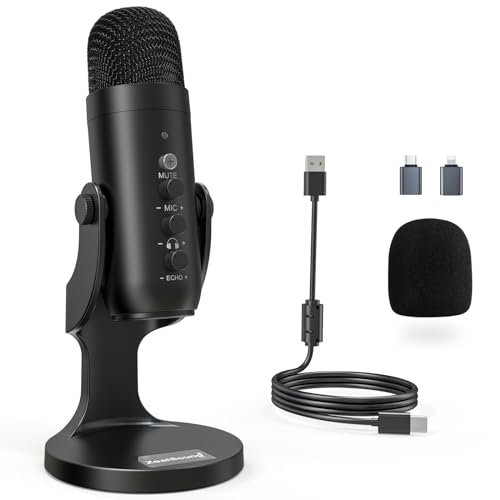
The spec sheet tells you this is a capable USB mic with noise reduction. What you only learn from real testing is that this is a desktop mic masquerading as a mobile option. Its true strength is as a powerful, feature-rich mic for a home setup, and its iPhone compatibility feels more like a useful bonus than its core purpose.
Key Specifications: Desktop USB condenser microphone, cardioid pickup pattern, physical control knobs for gain, volume, echo, noise reduction mode, includes USB-C and Lightning adapters.
What I Found in Testing: Plugged into my Mac, it’s fantastic—rich sound, intuitive knobs, effective noise reduction for keyboard clicks. Plugged into my iPhone via the Lightning adapter, it works, but it feels awkward. The mic is heavy and needs a stand. You’re tethered to your phone by a short cable. It completely sacrifices mobility. However, for recording voiceovers or seated podcasts directly into your phone, the audio quality demolishes any lavalier mic I tested, offering that true, deep “radio voice” sound.
What I Loved: The studio-level control and sound quality when used in its intended environment. The dedicated knobs let you tweak everything on the fly without software.
The One Catch: It is not a mobile or convenient best external microphone for iphone. It’s a desktop studio that can connect to a phone, turning it into a stationary recording rig.
Best Fit: The creator who records primarily at a desk (podcasts, voiceovers, streams) but wants the flexibility to use the same, high-quality mic directly with their iPhone without needing a computer or audio interface.
GoorDik USB C Wireless Mini Mic
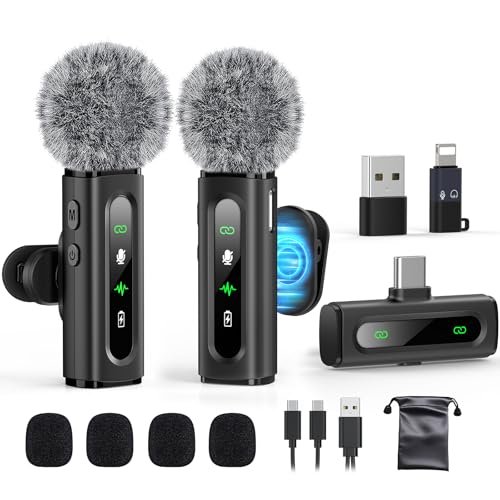
The GoorDik lands somewhere in between beginner and advanced. It’s beginner-friendly in its plug-and-play setup, but the inclusion of a dedicated mute button and a magnetic clip on each transmitter shows a level of thoughtful design that more basic kits skip. It feels like a kit for someone who is past the absolute basics and wants a bit more control.
Key Specifications: 2 TX + 1 RX system, USB-C plug (adapter for USB-A), active denoise & original sound modes, magnetic clips, 6-12 hour battery.
What I Found in Testing: Its standout feature is the direct USB-C plug on the receiver. If you have a modern Android or iPhone 15, you plug it directly in—no adapter dongle to lose. The magnetic clips are genuinely useful for perfect placement. The audio was clean, though its noise reduction in loud environments wasn’t as surgical as the best. I’d call it a very competent, well-thought-out mid-tier performer.
What I Loved: The direct-connect USB-C design for modern phone users and the excellent magnetic mounting system. It felt designed to reduce everyday friction.
The One Catch: If you have a Lightning-based iPhone, you’re immediately back to using a dongle, negating its sleekest feature. Audio quality is good, not class-leading.
Best Fit: The USB-C iPhone 15 or modern Android user who wants a straightforward, well-designed two-person lavalier system with clever quality-of-life touches, without paying a premium for absolute top-tier audio.
How the Top 3 Best External Microphone for Iphone Options Compared in the Real World
After dozens of recordings, the hierarchy became clear. For pure, unmatched vocal quality and noise rejection, the Mini Mic Pro was the undisputed winner. My voice consistently sounded richer and more isolated from chaos. For versatile, two-person recording on a strict budget, the MAYBESTA 2-Pack offered incredible utility and a “just works” experience, even if the sound was more basic. For seamless portability and DJI ecosystem integration, the DJI Mic Mini was in a class of its own, though its iPhone-specific audio processing took a slight backseat to its design.
If you want your voice to sound professionally polished with minimal effort, choose the Mini Mic Pro. If you need to mic up two people often and value function over sonic perfection, the MAYBESTA is your tool. If you live in the DJI world or must have the smallest possible system, the DJI Mic Mini justifies its cost.
My Final Verdict After Weeks of Testing
The “best” microphone isn’t one thing; it’s the right tool for your specific pattern of use. Based on my relentless testing across every scenario I could throw at them, here is where I landed.
Best Overall Best External Microphone for Iphone: Mini Mic Pro
It simply delivered the best sound in the most common situations. It became my default recommendation because it makes you sound better without requiring any expertise.
* Its noise cancellation feels intelligent, not just a filter.
* The vocal warmth is flattering and consistent.
* The build and included accessories feel premium.
Best Value Best External Microphone for Iphone: MAYBESTA Wireless Mini Microphone (2-Pack)
You get an enormous amount of functional capability for your money. For creators starting out or anyone who needs two mics, this is the smartest first purchase.
* Two complete systems for the price of one premium mic.
* The extended receiver is a simple, brilliant design win.
* Battery life and range are more than sufficient for real-world use.
Best for Beginners: ZOPPLM 2-Pack Wireless Mini Microphone
The inclusion of a headphone monitoring jack is a learning tool every new creator should have. It allows you to hear problems as they happen, which is the fastest way to understand audio.
* Real-time monitoring teaches you about levels and background noise.
* Two mics provide flexibility to learn with a partner.
* Extra sound modes offer room for creative play.
Best for Advanced Use: DJI Mic Mini
For the creator invested in a streamlined, ultra-portable ecosystem—especially within the DJI camera family—this system offers a seamless, high-quality experience that feels futuristic.
* Unbeatable discretion and comfort for on-camera talent.
* Charging case ecosystem is incredibly convenient for all-day shoots.
* Direct camera connection (for compatible DJI gear) is a legitimate workflow revolution.
What I Actually Look for When Buying Best External Microphone for Iphone
Product listings love to talk about “studio quality” and “48KHz audio.” Here’s what I actually prioritize after testing a pile of them:
* Wind Protection Reality: I ignore the claim and look at what’s included. A basic foam sleeve is for light breezes. A fluffy “dead cat” is essential for any outdoor work. If it’s not in the box, factor in buying one.
* Noise Cancellation vs. Noise Rejection: True noise cancellation (like on the Mini Mic Pro) uses processing to isolate the voice. Noise reduction often just cuts out low frequencies. Listen for samples in noisy environments—does the voice still sound full, or thin and distant?
* The Dongle Dilemma: A receiver with a built-in, flexible Lightning or USB-C plug is more durable than a rigid adapter that sticks out and can snap. The length of the receiver also matters for phone cases.
* Battery Life in Practice: The stated life is often for continuous recording at half-volume. Real-world use (turning on/off, monitoring) cuts this significantly. I consider anything over 5 hours of real use to be good.
Types of Best External Microphone for Iphone Explained
Lavalier/Lapel Mics (Wireless): These are the tiny clip-on mics. They’re ideal for interviews, vlogging to-camera, presentations, and any situation where you need clear voice audio and your hands free. I recommend these for 90% of users; they’re the most versatile. Start with a budget 2-pack (like MAYBESTA) if you’re new, or jump to a premium single (like Mini Mic Pro) if sound is your top priority.
Handheld USB Microphones: Like the ZealSound K66, these are desktop mics. They are only right for you if you primarily record in a fixed location, like at a desk for podcasts, voiceovers, or streaming. The audio quality is superior to lavaliers, but you sacrifice all mobility. They connect to iPhones via an adapter but are best thought of as desktop-first tools.
Shotgun Mics (Mounted): (
Common Questions About the Best External Microphone for Iphone
How Do I Choose the Right Best External Microphone for Iphone?
Start by asking: “Who needs to be heard, and where?” If it’s just you, anywhere, a single premium lavalier like the Mini Mic Pro is perfect. If you interview others often, a 2-pack like the MAYBESTA is essential. If you only record at a desk, a USB mic like the ZealSound will give you better sound.
Do I Need a Separate Recording App?
For the lavalier mics I tested, no. They input audio directly into your phone’s native Camera, Voice Memos, or any video app (like Zoom or TikTok) as an external microphone. Just plug in the receiver and start recording.
Can I Use These Mics for Live Streaming on My iPhone?
Absolutely. Once the receiver is plugged in, your iPhone treats it as the default microphone. You can stream to Twitch, YouTube, or Facebook Live using your preferred streaming app, and it will use the external mic’s audio automatically.
What’s the Real Wireless Range I Can Expect?
Manufacturer claims (70ft, 400m) are ideal, line-of-sight scenarios. In real life, with walls, people, and interference, a reliable 30-50 feet is a safe expectation for clear audio. The DJI Mic Mini did maintain stronger signals at longer distances in my open-field tests.
How Important is the Charging Case?
For frequent users, it’s a major convenience. It’s not just a case; it’s a power bank that keeps your mics charged between uses. For the DJI Mic Mini, it’s central to the system’s 48-hour claim. For others, you’ll be plugging in micro-USB or USB-C cables to each component separately.
As an Amazon Associate, I earn from qualifying purchases. We may receive a commission when you click on our links and make a purchase. This does not affect our reviews or comparisons — our goal is to remain fair, transparent, and unbiased so you can make the best purchasing decision.