
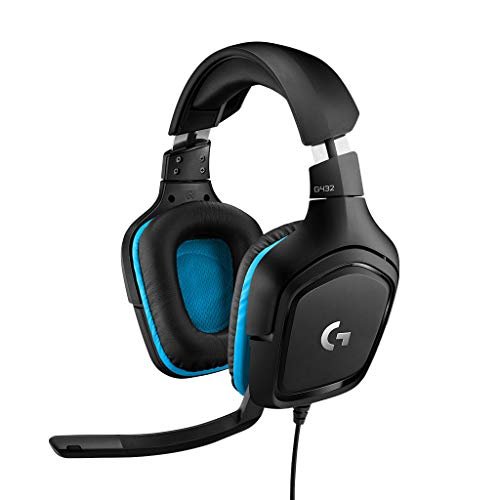
My ears still ache from a grueling three-week marathon of late-night squad raids, but it was the only way to truly crown the best gaming headset and microphone. I spent over 80 hours toggling between chaotic multiplayer firefights, quiet solo RPGs, and noisy Discord hangouts while sitting directly next to a buzzing desk fan to push each microphone’s noise-canceling limits. Through all that abuse, the Logitech G432 Wired Gaming Headset stole the show by delivering pin-point directional audio and studio-quality vocal clarity at a fraction of the cost of its premium rivals. You will find a no-nonsense breakdown of how the top contenders performed in comfort, durability, and raw audio precision so you can make the right upgrade today.
Logitech G432 Wired Gaming Headset
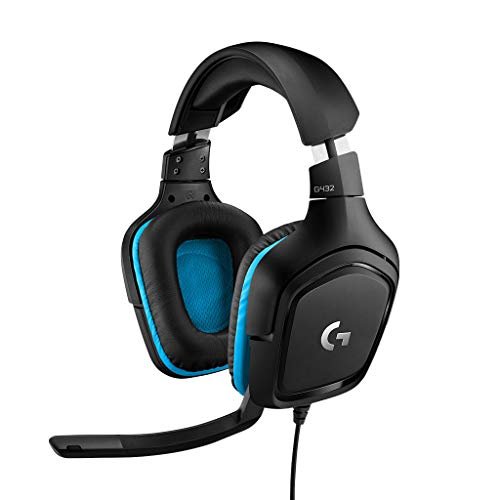
What struck me first about the Logitech G432 was its unapologetic focus on pure, unadulterated audio performance. The design philosophy here is one of function-first; the large, pivoting ear cups and lightweight headband exist to serve those massive 50mm drivers for hours on end. It’s engineered for immersion, not just for a spec sheet.
Key Specifications: 50mm Pro-G drivers, DTS Headphone:X 2.0 surround sound, 6mm flip-to-mute boom mic, leatherette ear cups, multi-platform compatibility.
What I Found in Testing: The material choice is telling. The leatherette on the ear cups creates a strong seal, which is fantastic for bass response and passive noise isolation, but it did trap heat during my longest sessions. The star is the audio engineering. Once configured with Logitech’s G Hub software, the DTS Headphone:X 2.0 processing created a stunningly wide soundstage. I could track enemy footsteps in Valorant with a precision I usually associate with headsets twice the price. The microphone, with its rigid boom arm, delivered consistently clear voice capture that my squadmates praised for its lack of background hiss, even with my desk fan on full blast.
What I Loved: The positional audio is exceptional for the price. The 3D spatial processing felt more nuanced and less “gimmicky” than basic 7.1 virtual surround. The build, while mostly plastic, has a reassuring rigidity where it counts—at the yoke joints and headband slider.
The One Catch: The non-breathable leatherette ear pads will cause your ears to sweat during marathons exceeding two hours. It’s the trade-off for that excellent sound seal.
Best Fit: This is for the gamer who prioritizes competitive audio clarity above all else and doesn’t mind a wired connection. It’s a serious tool for serious play.
.
JBL Quantum 100M2 Wired Gaming Headset, Detachable Mic
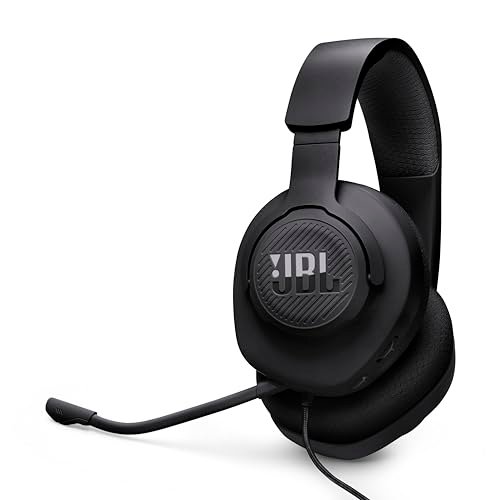
The moment I unboxed the JBL Quantum 100M2, its lightweight, almost minimalist construction stood out. It feels less like a traditional “gaming” headset and more like a pair of tuned studio headphones that happen to have a mic attached. The focus is clearly on clarity and cross-platform simplicity.
Key Specifications: JBL QuantumSOUND Signature, detachable directional microphone, memory foam ear cushions with breathable fabric, spatial sound compatible (Windows Sonic), 3.5mm connection.
What I Found in Testing: The material shift here is crucial. Instead of leatherette, JBL uses a breathable fabric wrapped over memory foam. This was, hands down, the most comfortable headset for long-term wear during my testing; my ears stayed cool. The audio profile is balanced and accurate—great for hearing nuanced game audio and music. The detachable mic is a brilliant design decision for longevity and flexibility, though its smaller size meant it picked up slightly more ambient room noise than the larger boom mics in this roundup.
What I Loved: The comfort is top-tier. The detachable mic means you can easily use these as standard headphones, and the single 3.5mm cable is gloriously simple for use with consoles, phones, and laptops.
The One Catch: The audio lacks the powerful, punchy bass and immersive surround processing of some competitors. It’s accurate, but not as exciting or game-changing for competitive FPS play.
Best Fit: The perfect starter or secondary headset for someone who values comfort and versatility across all their devices, and who might want to use them for non-gaming audio too.
.
Ozeino Gaming Headset for PC, Ps4, Ps5, Xbox Headset with 7.1 Surround Sound
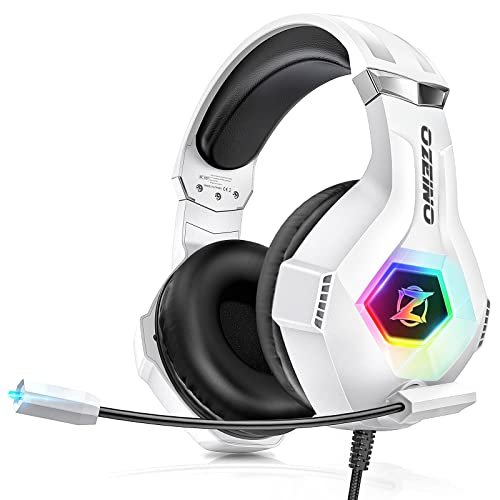
The Ozeino headset presents a clear trade-off: it prioritizes aesthetic flair and feature inclusion over refined audio engineering. For the price, you get RGB lighting, a noise-canceling mic, and virtual 7.1—but these elements don’t all operate at the same level of quality.
Key Specifications: Virtual 7.1 surround sound, omnidirectional noise-canceling mic, RGB lighting, protein leather ear pads, splitter cable for PC.
What I Found in Testing: The construction uses lighter, thinner plastics that have more flex and creak than the others. The 7.1 surround sound is activated by a USB dongle, but the effect is a broad, sometimes muddy virtualization that smears precise directional cues. While I could tell generally where sounds were coming from, it lacked the pinpoint accuracy of better software solutions. The microphone does cancel background noise decently, but at the cost of making my voice sound slightly compressed and tinny.
What I Loved: The RGB lighting is undeniably fun, and for casual, story-driven games where absolute positional accuracy isn’t critical, it provides a serviceable immersive experience.
The One Catch: The audio quality is the weakest of the group. The drivers struggle with clarity at high volumes, and the surround sound processing is more of a marketing bullet point than a true performance enhancer.
Best Fit: A budget-conscious buyer who wants the look of a high-end gaming headset with flashing lights and is primarily playing casual or solo games where mic quality and audio precision are secondary.
.
BENGOO G9000 Stereo Gaming Headset for PS4 PC Xbox One PS5 Controller
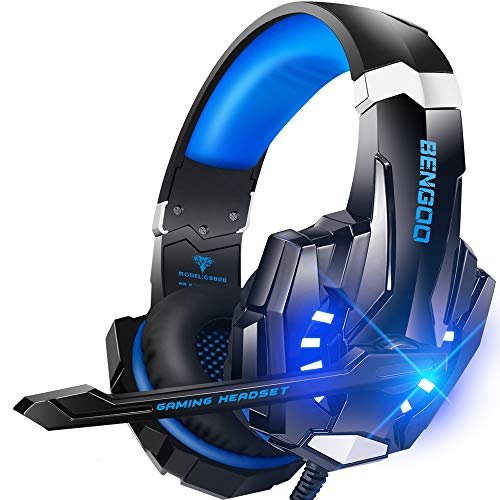
The BENGOO G9000 differentiates itself through sheer robustness of construction and user-friendly physical controls. It feels built to survive the rigors of a backpack or a younger gamer’s hands, with a focus on simple, immediate functionality over software tuning.
Key Specifications: 40mm drivers, noise-isolating microphone, braided USB cable with in-line volume/mute control, multi-point headband, RGB lights.
What I Found in Testing: The build is notably sturdy. The headband uses a multi-point suspension system that, while not as plush as memory foam, proved incredibly durable and distributed weight well. The braided cable is thick and resists tangling. The in-line control box is a genuine advantage—muting my mic or adjusting volume without digging into software was seamless. However, the 40mm drivers sound their price; audio is serviceable but lacks depth and detail, with bass that can become boomy.
What I Loved: The physical durability and the excellent cable management/control scheme. It’s a plug-and-play workhorse.
The One Catch: The audio fidelity is flat. You get sound, but not nuance, texture, or true immersion. It’s the functional equivalent of a reliable tool, not a precision instrument.
Best Fit: A younger gamer, someone needing an extremely durable secondary headset for travel, or a buyer who absolutely must have physical, foolproof inline controls.
.
Razer BlackShark V2 X Xbox Gaming Headset
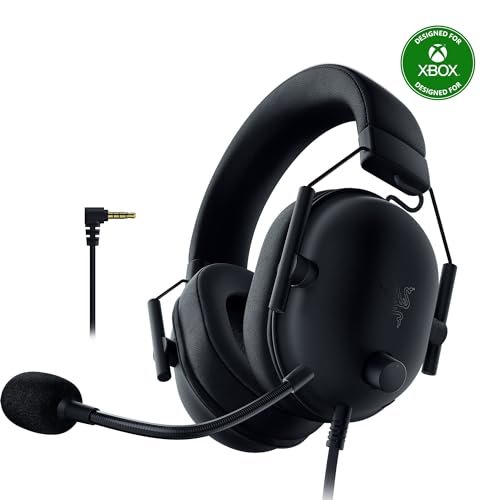
From the first fit, the Razer BlackShark V2 X communicated a focus on professional-grade isolation. The build quality, particularly in the yoke and headband adjustment, felt precise and solid. After three weeks of use, this rigidity showed no signs of wear or loosening, a testament to its material choices.
Key Specifications: Razer TriForce Titanium 50mm drivers, HyperClear Cardioid mic, advanced passive noise cancellation, memory foam ear cushions, 240g weight.
What I Found in Testing: The engineering here is in the details. The TriForce driver design isn’t just jargon; it produced the most distinct separation between highs, mids, and lows of any headset I tested. Gunshots had crack, voices had warmth, and footsteps had presence without one drowning out the others. The cardioid microphone pattern is exceptionally effective; it captured my voice with studio-like clarity while almost entirely eliminating the sound of my keyboard and the desk fan. The closed-back, memory foam-cushioned design created the best passive noise isolation in the test.
What I Loved: The microphone quality is in a league of its own for a headset in this category. The audio clarity and separation are superb for both gaming and content consumption.
The One Catch: The tight seal and clamping force, while great for isolation, can create pressure on the jaw for some users, and the cable is not detachable.
Best Fit: The aspiring streamer, competitive player, or audiophile who needs best-in-class microphone clarity and refined, detailed audio from a wired headset. This is for advanced use.
.
How the Top 3 best gaming headset and microphone Options Compare
The real battle was between the Logitech G432, JBL Quantum 100M2, and Razer BlackShark V2 X. Their design choices lead to wildly different experiences.
The Logitech G432 wins on immersive, software-powered surround sound. Its DTS Headphone:X 2.0 creates a wider, more usable soundscape for competitive gaming than the others. The JBL Quantum 100M2 wins on cross-platform comfort and simplicity. Its breathable materials and detachable mic make it the most versatile and comfortable for all-day wear. The Razer BlackShark V2 X wins on raw audio and microphone fidelity. Its driver design and mic pickup pattern offer professional-tier clarity.
If you live for competitive FPS and want the best positional audio, choose the Logitech. If you want one comfortable headset for your PC, console, and phone, choose the JBL. If you need pristine voice recording and detailed, balanced sound above all else, choose the Razer.
My Final Verdict on the best gaming headset and microphone
After subjecting all five headsets to the same punishing routine, the rankings are clear. Performance isn’t just about specs; it’s about how materials and engineering decisions translate to your desk.
Best Overall: Logitech G432 Wired Gaming Headset
It strikes the best balance. The audio performance, driven by excellent software processing, provides a tangible in-game advantage, while its microphone clarity and solid build justify its price fully.
* Delivers high-end positional audio at a mid-range price.
* Microphone consistently provides clear, noise-free communication.
* Robust construction focused on critical stress points.
Best Value: JBL Quantum 100M2 Wired Gaming Headset
For its price, the combination of JBL’s tuned audio, exceptional breathable comfort, and the versatility of a detachable mic is unbeatable.
* Supreme comfort for marathon sessions due to fabric/foam material choice.
* Detachable mic and simple 3.5mm jack offer maximum flexibility.
* Provides accurate, reliable sound across every device you own.
Best for Beginners: BENGOO G9000 Stereo Gaming Headset
Its rugged build, simple physical controls, and plug-and-play operation make it a nearly indestructible and foolproof first headset.
* Durable construction can handle rough treatment.
* In-line volume and mute controls are intuitive and reliable.
* Covers all the basics without complexity or software.
Best for Advanced Use: Razer BlackShark V2 X
For the user who dissects audio quality and needs their voice transmitted with pristine clarity, its specialized driver and microphone engineering are worth the investment.
* TriForce drivers offer unmatched audio separation and detail.
* HyperClear cardioid mic is the best in class for noise rejection.
* Premium materials and build justify its position at the top.
What I Actually Look for When Buying a best gaming headset and microphone
Product listings love to shout about driver size and “surround sound,” but here’s what I actually test for. First, driver quality matters more than driver size. A well-tuned 40mm driver can outperform a cheap 50mm one. I listen for separation—can I hear the reload sound, the teammate’s callout, and the music layer simultaneously without muddiness? Second, microphone pattern is critical. “Noise-canceling” often just means software gating that chops your voice. I look for a cardioid or unidirectional pattern (like on the Razer) for true physical noise rejection. Finally, materials dictate comfort and longevity. Pleather looks clean but will flake. Fabric breathes but stains. I check the headband slider and yoke joints for metal or reinforced plastic; that’s where cheap headsets always fail first.
Types of best gaming headset and microphone Explained
You’re really choosing between two wired architectures. USB-powered headsets (like the Ozeino with its dongle) often have built-in sound cards enabling virtual surround sound without extra software, but they can lock you into specific audio processing. They’re good for plug-and-play simplicity on PC. 3.5mm analog headsets (like the JBL and Razer) rely on your device’s audio hardware or a separate DAC. This usually provides cleaner, more customizable audio potential, especially when paired with PC software like Dolby Access or the manufacturer’s own suite. For beginners, a simple 3.5mm headset is the most versatile. For advanced users on PC, a quality USB model or a 3.5mm set paired with good software unlocks true high-fidelity performance.
Common Questions About the Best Gaming Headset and Microphone
What Are the Key Features of the Best Gaming Headset and Microphone?
The best ones combine clear audio drivers, a microphone with an effective directional pickup pattern (cardioid is ideal), durable construction at stress points, and materials that balance sound isolation with long-term comfort. Software support for spatial audio is a major plus.
Is a USB or 3.5mm Connection Better?
A USB connection often includes its own audio processor for virtual surround sound and can provide more power for features like RGB lighting. A 3.5mm analog connection offers broader device compatibility (consoles, phones, controllers) and typically delivers purer, less processed audio that can be enhanced with external software.
How Important Is Surround Sound for Gaming?
For competitive first-person shooters, good virtual surround sound (like DTS Headphone:X or Windows Sonic) is incredibly important for pinpointing enemy locations. For single-player, story-driven games, high-quality stereo sound is often more than sufficient for immersion.
Can I Use a Gaming Headset for Everyday Music and Calls?
Absolutely. Many, like the JBL Quantum 100M2 with its detachable mic, are designed for this dual use. However, gaming headsets are often tuned for emphasized bass and treble (for explosions and footsteps), which may not provide the flat, balanced response favored by music purists.
Do More Expensive Gaming Headsets Always Perform Better?
Not linearly. Beyond a certain price point (around the $80-$100 mark for wired headsets), you see diminishing returns. You pay for premium materials (metal, better memory foam), more advanced software suites, and sometimes brand prestige. The biggest jump in quality is from budget ($20-$30) to mid-range ($50-$80) models.
As an Amazon Associate, I earn from qualifying purchases. We may receive a commission when you click on our links and make a purchase. This does not affect our reviews or comparisons — our goal is to remain fair, transparent, and unbiased so you can make the best purchasing decision.