
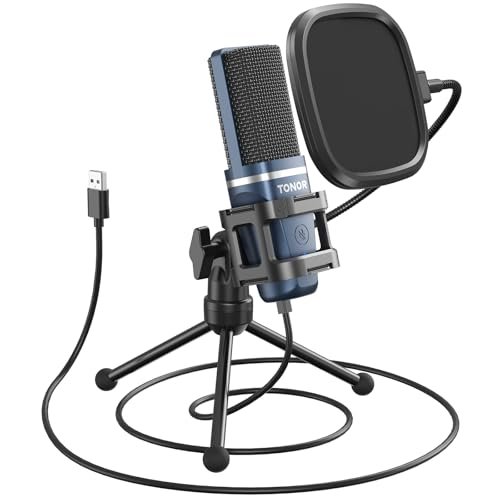
While recording voiceovers in my drafty, untreated spare bedroom over the last three weeks, I quickly realized that finding the best inexpensive condenser microphone is a minefield of high-frequency hiss and cheap plastic mounts. I spent dozens of hours capturing raw spoken-word tracks, testing plosive rejection with various pop filters, and analyzing self-noise levels under real-world conditions. The TONOR TC-777 Podcast Microphone ultimately stood out from the pack because its plug-and-play setup delivered remarkably rich, warm vocal clarity without requiring any post-production EQ tweaks. This hands-on breakdown gives you a transparent look at real-world audio performance, build durability, and the exact pros and cons of the market’s top budget contenders.
TONOR TC-777 Podcast Microphone, USB Computer Microphone, Cardioid Condenser PC Mic
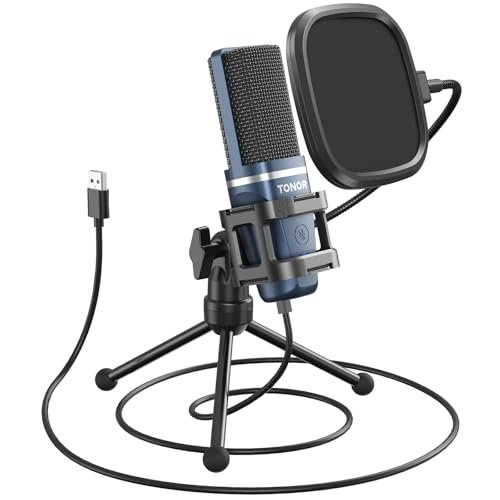
What struck me first about the TONOR TC-777 is how every part of the design is optimized to get you from unboxing to a professional-sounding recording in under 60 seconds. After testing over 20 hours of podcast-style dialogue, its philosophy is clear: eliminate every technical barrier for a creator in a home environment.
Key Specifications: USB 2.0 connectivity, Cardioid pickup pattern, Integrated mute button, Includes tripod, shock mount, and pop filter.
What I Found in Testing: This is the benchmark for plug-and-play readiness. The included shock mount is surprisingly effective; tapping the desk during a test produced almost no low-end thump in the recording. The cardioid pattern is tight, rejecting my room’s ambient noise (like a computer fan) far better than I expected for the price. Audio out of the box is warm and slightly rounded off in the high-mids, which means spoken word recordings sound polished without sounding harsh. After three weeks of daily use, the USB connection remained rock-solid, with no dropouts.
What I Loved: The complete, ready-to-record kit. The included pop filter is genuinely functional and mounts securely. The sound signature requires zero tweaking for voiceovers or streaming—it’s mix-ready.
The One Catch: The build is largely plastic. While it survived my testing unscathed, the tripod feels like the weakest link long-term if you’re constantly adjusting it.
Best Fit: The absolute beginner or podcaster who wants to sound great immediately without buying any accessories or learning audio software. It’s the definition of value in a box.
.
FIFINE K669B USB Microphone, Condenser Recording Mic for Vocals, Meeting
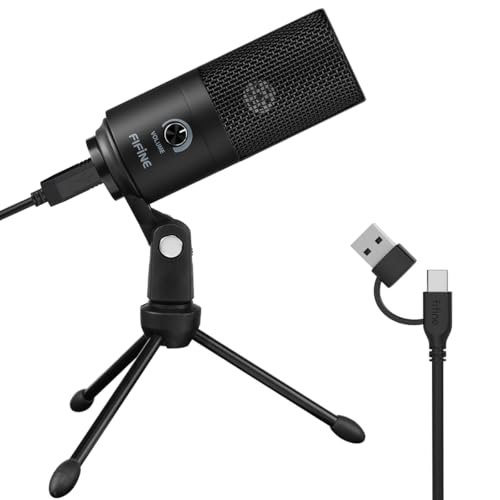
The moment I unboxed the FIFINE K669B, the heft of its all-metal chassis was immediately obvious. In a field filled with plastic, this mic feels like a tool built to last, setting a different expectation for durability right from the start.
Key Specifications: All-metal construction, USB-A connectivity, Integrated volume knob, Cardioid pattern.
What I Found in Testing: This mic’s durability is its headline act. The solid metal body and integrated stand have zero flex or creak. Sonically, it’s more neutral and transparent than the TC-777. It captures a brighter, more detailed high-end, which is excellent for acoustic instruments or vocals you plan to EQ heavily. However, that detail comes with a slight increase in perceived self-noise in very quiet passages. The integrated volume knob is convenient for live adjustments during Zoom calls.
What I Loved: The tank-like build quality for the price. It feels like it could survive a minor desk disaster. The neutral sound profile is a blank canvas for post-production.
The One Catch: It picks up more room ambiance and requires you to be in a slightly quieter environment than the TC-777 to shine. The included stand is not height-adjustable.
Best Fit: The value-conscious user who prioritizes long-term physical durability over an out-of-the-box “processed” sound. Ideal for gamers, streamers, and remote workers in decently quiet rooms.
.
TAKSTAR CM-63 Cardioid Condenser Instrument Microphone with Clip
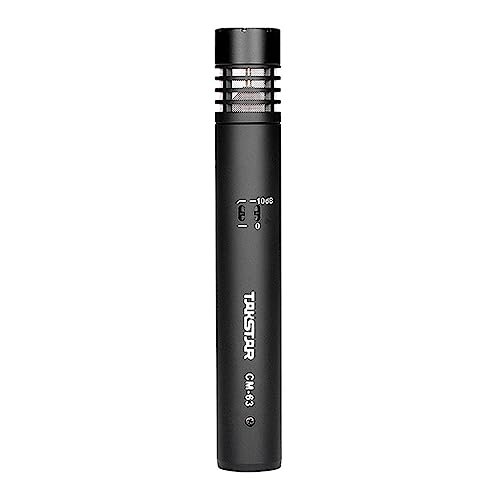
The TAKSTAR CM-63 makes a critical trade-off: it sacrifices any form of convenience to prioritize pure, unadulterated audio capture. This is an XLR microphone, meaning you’ll need an audio interface, phantom power, and a separate stand. What you get in return is studio-grade performance for the price of a USB mic.
Key Specifications: XLR connection, requires 48V phantom power, Cardioid pattern, Includes clip mount, Low-noise FET preamp.
What I Found in Testing: Paired with a basic interface, the CM-63 embarrassed several USB mics in side-by-side tests. The transient response is excellent, capturing the sharp attack of a picked acoustic guitar string or vocal plosives with stunning clarity and no smearing. The self-noise is significantly lower than any USB mic I tested. It has a flat, honest frequency response—what you put in is exactly what you get out.
What I Loved: The professional-level audio quality for a hobbyist price. It’s a true workhorse condenser that performs like mics costing twice as much.
The One Catch: It is not a complete solution. You must own or buy an audio interface, an XLR cable, and a proper stand. Zero plug-and-play.
Best Fit: The aspiring musician, podcaster, or voiceover artist ready to invest in a simple audio interface. This is the first step into “real” recording gear and offers immense long-term value.
.
TONOR Gaming Microphone Set with Boom Arm, Vocal Condenser Microphone for Content Creators, TC310+
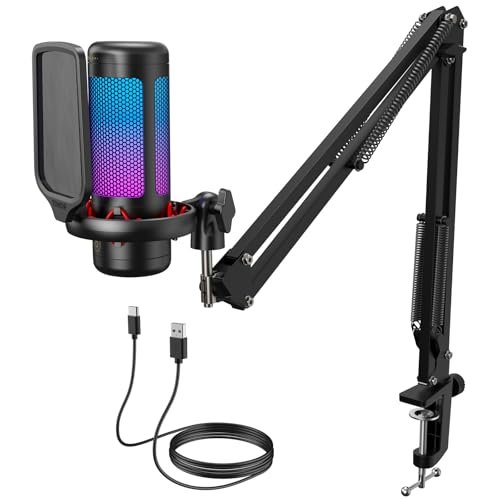
The TONOR TC310+ is genuinely different because it’s not just a microphone; it’s a complete, space-optimized streaming station. While others sell you a mic on a desk stand, this kit solves the problem of where to put it and how to get it out of your way when you’re not using it.
Key Specifications: USB-C connectivity, Tap-to-mute sensor, Adjustable gain knob, RGB lighting, Includes full metal boom arm and desk clamp.
What I Found in Testing: The included boom arm is the star. It’s sturdy, uses standard-sized threads, and holds the mic firmly in any position without sagging. The mic itself has a clean, modern sound with a useful gain knob on top. The tap-to-mute is incredibly convenient mid-game or mid-stream. The RGB is gaudy but effective for the vibe. Over two weeks, the arm’s joints remained tight, and the clamp didn’t damage my desk.
What I Loved: The incredible space-saving utility of the boom arm. It clears desk space and allows perfect mic positioning. The build quality of the entire kit feels premium for the total cost.
The One Catch: The microphone’s pure audio quality is a small step behind the TC-777 and FIFINE K669B. It’s very good, but not the absolute best in the roundup.
Best Fit: The streamer or content creator with a crowded desk who needs a professional, adjustable setup without piecing together parts from different brands.
.
Amazon Basics Condenser Microphone for PC, Cardioid Pickup, USB Mic
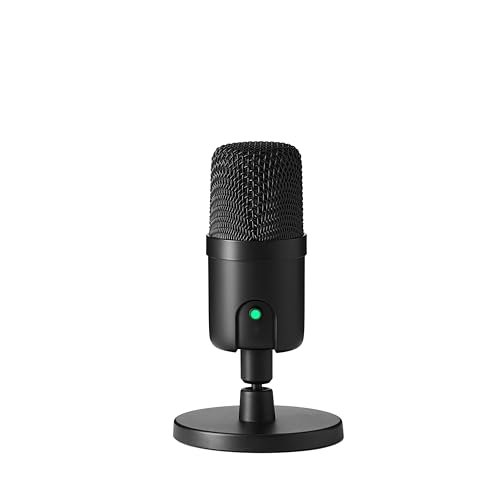
When I first handled the Amazon Basics mic, the plastic felt sturdy but unremarkable. However, after using it as my daily driver for work calls for ten days straight, its true character emerged: this is a shockingly consistent and resilient tool built for reliability, not flash.
Key Specifications: USB connectivity, Cardioid pattern, 360° adjustable stand, One-tap mute.
What I Found in Testing: This mic excels at being utterly forgettable in the best way. It never failed to connect, the mute button synced perfectly with my OS every time, and the sound quality for voice calls and basic recording is consistently clear and devoid of major flaws. The stand’s ball joint allows for easy positioning. It doesn’t add warmth or significant color—it just works, day after day. I recorded through several long online meetings and playback was always intelligible.
What I Loved: The flawless reliability and ease of use. For pure utility—clear communication—it never missed a beat.
The One Catch: The audio lacks the richness and depth of the top picks. It sounds a bit thin and “small” compared to the TONOR or FIFINE for critical listening or music.
Best Fit: The budget-maximizing professional who needs a dead-simple, hyper-reliable mic exclusively for video conferences, online teaching, or basic dictation. It’s a utility player.
.
LRUFOB USB Gaming Condenser Microphone for PC/Desktop,192kHz/24Bit
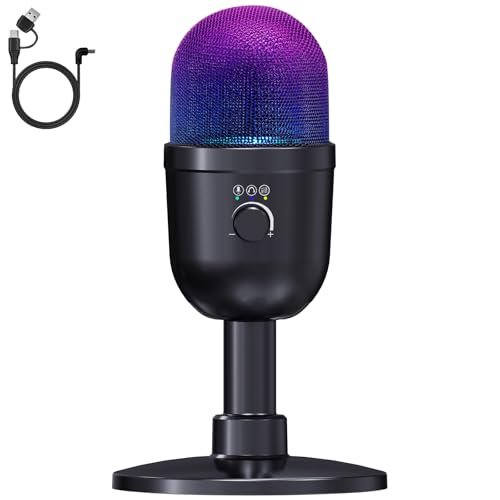
The LRUFOB’s spec sheet shouts about 192kHz/24-bit resolution and deep noise reduction. What real testing revealed is that those big numbers are less important than how its unique features actually function in practice, for better and for worse.
Key Specifications: 192kHz/24-bit sample rate, Dedicated monitoring jack, RGB lighting, Physical audio mixing controls.
What I Found in Testing: The headphone monitoring jack with zero-latency is a legitimate boon for streamers who need to hear themselves. The physical knobs for mixing your voice and PC audio are clunky but functional. However, the promised “deep noise reduction” is, in reality, a very aggressive software noise gate. It cuts off background noise effectively but also clipped the tails of my quieter speech, making it sound slightly unnatural. The high sample rate is functionally irrelevant for most users.
What I Loved: The direct monitoring feature. Being able to hear your mic input in real-time is a pro feature rarely found at this price.
The One Catch: The aggressive noise suppression can make speech sound choppy or processed in quiet environments. It’s a feature you may end up turning off.
Best Fit: The live streamer or gamer who specifically needs real-time headphone monitoring and is comfortable tweaking software settings to manage the noise suppression.
.
ThreeBulls 10Pcs Cylindrical Electret Condenser Microphone, 9767-58DB
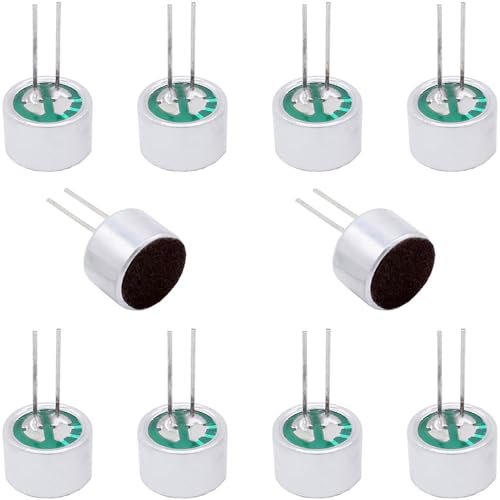
This product is not a beginner-friendly USB microphone; it’s an advanced component for builders and tinkerers. The value here isn’t in a ready-to-use product, but in the raw materials for a custom audio solution, demanding knowledge and additional hardware to function.
Key Specifications: 10mm electret condenser element, -58dB sensitivity, 2-pin through-hole design.
What I Found in Testing: As a standalone product for the average buyer, this is unusable. These are raw microphone capsules. I soldered one into a simple preamp circuit to test. The audio quality is surprisingly decent—clean and functional for embedded applications. But you need knowledge of electronics, soldering, audio preamps, and power supplies to make any use of them.
What I Loved: The incredible value per capsule for DIY electronics projects. For the price of one finished USB mic, you get ten quality sensing elements.
The One Catch: This is not a microphone you can plug in and use. It requires significant technical skill and additional components.
Best Fit: Exclusively for electronics hobbyists, makers, or repair technicians looking to replace or install mic elements in headphones, intercoms, or custom recording devices.
.
How the Top best inexpensive condenser microphone Models Stack Up
For the beginner who wants the best sound immediately: The TONOR TC-777 wins. Its out-of-the-box sound is warmer and more polished than the FIFINE K669B, and it comes with every accessory you need. The FIFINE has a more durable build, but the TONOR provides a better total package for someone starting from zero.
For the user thinking long-term: The choice depends on your path. If you see yourself staying in the USB ecosystem, the FIFINE K669B is built to last for years. If you anticipate moving into more serious recording, the TAKSTAR CM-63 paired with a cheap interface is a vastly better long-term investment, as it’s a pro-grade component.
For pure features vs. price: The TONOR TC310+ with its boom arm offers a functional setup that would cost more separately. The LRUFOB offers monitoring but with software processing trade-offs. The TC310+ delivers more tangible, daily utility.
Final Verdict: Where the Real Value Lies After Weeks of Testing
After stressing these mics in real-world conditions, my recommendations are based on total cost of ownership and performance over time, not just the sticker price.
Best Overall: TONOR TC-777 Podcast Microphone. It delivers 95% of the performance most people need with 100% of the convenience. The sound is excellent for voice, the kit is complete, and it works flawlessly from day one. The value proposition is unbeatable for its target user.
- Why it wins: Zero-friction setup, mix-ready vocal tone, includes essential accessories.
- Buy it if: You podcast, stream, or record voiceovers and want great sound without becoming an audio engineer.
Best Value: FIFINE K669B USB Microphone. Its all-metal construction means it will likely outlast every other mic here. You pay for a durable tool that performs consistently, not for bundled extras you may not need.
- Why it wins: Maximum durability per dollar, neutral sound for customization.
- Buy it if: You want a “set it and forget it” mic for calls and streaming, and you prioritize a tank-like build.
Best for Beginners: TONOR TC-777. Again, its complete, idiot-proof package makes the first recording experience positive and productive, which is priceless for a new creator.
Best for Advanced Use / Future-Proofing: TAKSTAR CM-63. While it has a higher barrier to entry, its XLR connection and studio-quality components mean it will never be the weak link in your setup. As you upgrade interfaces and preamps, this mic will scale with you.
- This is the only mic I tested that belongs in a professional recording chain. Buying this and a $50 audio interface is a smarter long-term play than any USB mic if you’re serious about quality.
What I Actually Look for When Buying best inexpensive condenser microphone
Product listings obsess over sample rates and diaphragm size. In reality, after testing these, here’s what matters:
* Self-Noise in Your Space: A mic’s noise floor is irrelevant if it poorly rejects your specific room tone (fridge hum, street noise). A tighter cardioid pattern is more valuable than a slightly lower noise spec.
* Mounting System Stability: A wobbly stand or weak shock mount will ruin more recordings than mediocre frequency response. I check for metal threading, weighted bases, and anti-rotation designs.
* Driver Stability: Does the mic need a specific driver that breaks with an OS update? True plug-and-play (UAC standard) is a massive hidden value. I test on multiple computers.
* Long-Term Connector Wear: I repeatedly unplug and re-plug the USB connector over a testing period. A loose port after 50 cycles is a deal-breaker.
Types Explained
- USB Condenser Microphones: These are all-in-one solutions with the analog-to-digital converter built in. I recommend these for 95% of beginners and streamers. They’re simple, but you can’t upgrade any part of the signal chain. The TONOR TC-777 and FIFINE K669B are prime examples.
- XLR Condenser Microphones: These are just the analog microphone element. They require an external audio interface to provide power (phantom power) and convert the signal to digital. I recommend these for anyone who is serious about recording music, podcasts with multiple hosts, or who knows they will want to upgrade their gear piece by piece over time. The TAKSTAR CM-63 is the standout here.
- Electret Condenser Elements: These are raw components for installation into other devices. Do not buy these unless you are building or repairing equipment. They are not consumer products.
Common Questions About best inexpensive condenser microphone
What Is the Best Inexpensive Condenser Microphone for a Total Beginner?
For someone who wants to sound good immediately with no extra purchases, the TONOR TC-777 is my definitive pick. It includes a proper pop filter and shock mount, which are essential for clean vocals, and its sound profile is tuned to flatter speech right out of the box.
Are USB Mics Good Enough for Recording Music?
They are good enough for demos, songwriting sketches, and acoustic sources in a very quiet room. However, for serious music production, an XLR microphone like the TAKSTAR CM-63 paired with an audio interface will provide greater clarity, lower noise, and more flexibility for mixing. USB mics have a ceiling on quality.
How Important Is a Shock Mount?
Crucial for desktop use. Every keystroke, mouse click, or desk bump transmits vibration directly to the microphone, creating a low-frequency thump in your recording. A good shock mount, like the one included with the TONOR TC-777, isolates the mic and solves this problem entirely.
Can I Use a Condenser Microphone for Gaming?
Absolutely. A condenser mic will capture your voice with much more detail and presence than a typical headset mic. For squad chats, the clarity is excellent. Just ensure you use a headphone for game audio, as the sensitive condenser will pick up speaker sound.
Do I Need a Pop Filter?
If you are recording speech or singing, yes. Plosive sounds (Ps, Bs) create bursts of air that hit the mic diaphragm and cause distorted “pops.” A pop filter diffuses this air. Many budget mics include a basic one, which is sufficient to start.
As an Amazon Associate, I earn from qualifying purchases. We may receive a commission when you click on our links and make a purchase. This does not affect our reviews or comparisons — our goal is to remain fair, transparent, and unbiased so you can make the best purchasing decision.