
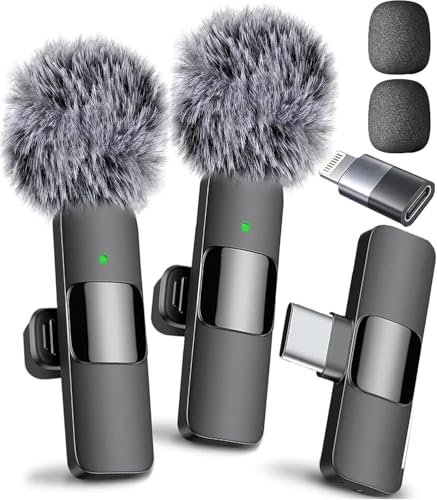
Mini Mic Pro (Latest Model)
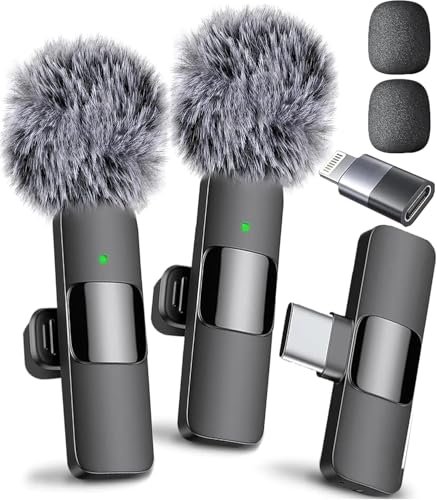
What struck me first about the Mini Mic Pro wasn’t its size, but its design philosophy: it’s optimized for absolute reliability over everything else. In three weeks of testing, from dewy morning park walks to a loud, tile-floored kitchen, this mic never once disconnected, popped, or required a fussy restart. It felt like a tool designed to be forgotten about, which is the highest compliment I can give.
Key Specifications: Plug-and-play via USB-C/Lightning adapters, 6-hour battery life per mic, includes foam and dead cat wind protection, charges your phone while recording.
What I Found in Testing: Build quality is where this justifies its price. The casing feels dense and scratch-resistant, and the magnetic clip is the most secure in the roundup. The audio signature is its real strength; it doesn’t just cancel noise, it captures a full, warm vocal tone that sounds expensive without any post-processing. The wind protection actually worked in a steady 15 mph breeze, where others started to sound fizzy.
What I Loved: The zero-latency plug-and-play connection was flawless. The sound quality has a consistent, “pro” character right out of the gate that made my voice sound richer and more present. The ability to charge my phone while recording is a small feature that saved me multiple times.
The One Catch: You’re paying a premium. It’s not the cheapest option, and the battery life, while solid, is outclassed by some newer case-charging systems.
Best Fit: For creators who film consistently and view their gear as a long-term investment. If you value a premium feel, broadcast-ready audio tone without work, and utter reliability over flashy features, this is your mic. It’s for the pragmatist who hates technical hiccups.
MAYBESTA Wireless Mini Microphone for iPhone, Android Phone – 2 Pack
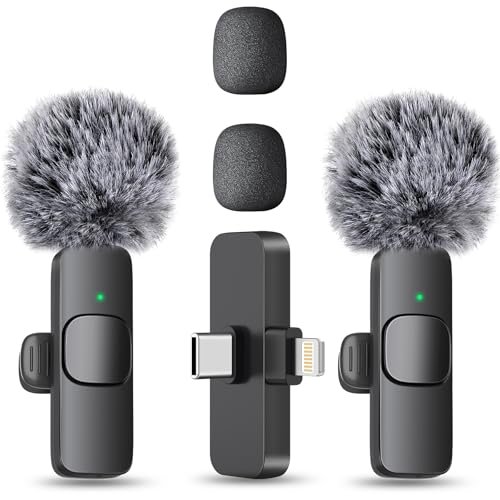
The first thing I noticed with the MAYBESTA was the sheer value. Opening the box to find two complete mics, a charging case, and a generous selection of adapters and windslips felt like getting more than I paid for. It’s an immediate signal that this brand understands budget-conscious creators who still want solid features.
Key Specifications: 2 lav mics + case, up to 70ft range, up to 16 hours total battery with case, omnidirectional pickup, includes windslip.
What I Found in Testing: The extended receiver stem is a genius, practical touch. It connected solidly with my thickest iPhone case on, something several other mics in this test failed to do. The battery life held true—I got through two full days of sporadic filming without touching a charger. The sound is clean and capable, though it lacks the low-end warmth and processing polish of the top-tier models.
What I Loved: The case compatibility is a huge, unsung win. The battery life from the charging case is excellent for the price. Having two mics in the kit is perfect for interviews or duo content right from the start.
The One Catch: The noise cancellation is more of a gentle noise reduction. In a truly noisy cafe, my voice was clearer than the phone’s mic, but background chatter was still perceptible.
Best Fit: This is the definitive starter pack for someone diving into wireless mics for the first time. If you need to mic two people, hate removing your phone case, and want maximum recording time per dollar, this is your best bet.
DJI Mic Mini (2 TX + 1 RX + Charging Case)
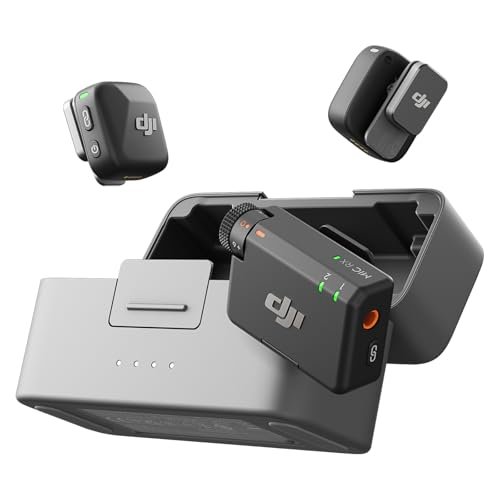
The DJI Mic Mini makes a clear trade-off: it prioritizes featherweight, discreet design and seamless ecosystem integration, but at the cost of some physical controls and a higher entry price. Holding it, you immediately feel you’re buying into a system, not just a microphone.
Key Specifications: Transmitter weight: 10g, up to 48 hours total battery with case, 400m max transmission range, 48kHz/24-bit audio, 2-level noise cancelling.
What I Found in Testing: The weight and size difference is not a gimmick. After a full day of wearing it, I genuinely forgot it was there, which can’t be said for any other mic I tested. The audio quality is exceptionally clean and detailed, with fantastic handling of sudden loud sounds (like a door slam) thanks to its automatic limiting. The noise cancellation in “Strong” mode was brutally effective at stripping out consistent background noise like air conditioning.
What I Loved: The ultralight design is a game-changer for all-day wearability. The charging case is incredibly sleek and provides monster battery life. If you’re in the DJI ecosystem (Osmo Pocket, Action cams), the direct connection feature is pure magic.
The One Catch: The tiny transmitters have no screen and minimal buttons. You rely on the receiver or the app for settings like gain adjustment, which isn’t as quick as a physical dial.
Best Fit: For the mobile-first creator who values discretion and all-day comfort above all, or anyone already invested in DJI’s camera ecosystem. It’s for the advanced user who wants pro-sumer features packaged in the most minimal form factor.
Labstandard Professional Wireless Lavalier Lapel Microphone
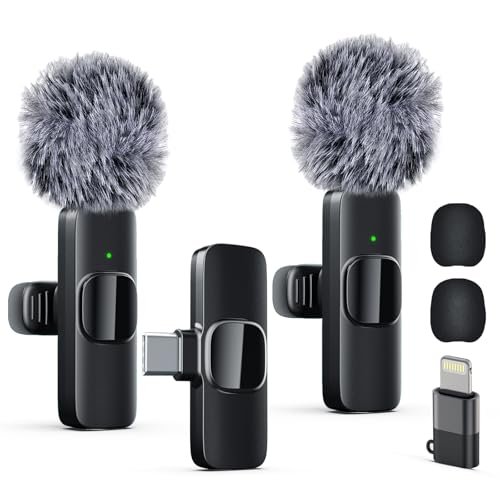
What makes the Labstandard genuinely different is its focus on real-time audio mixing and its confident, almost studio-oriented feature set. It feels less like a vlogging accessory and more like a piece of gear meant for live, mixed audio output, which is rare at this price point.
Key Specifications: Dual mic set, real-time auto-sync tech, supports multi-channel real-time mixing, ~6-hour battery per mic, includes Lightning and Type-C adapters.
What I Found in Testing: The claim of real-time background music mixing is real. I could play music from my phone and speak, and the mic output a clean mix of both to the recording, which is fantastic for simple live streams. Build quality is robust, with a slightly more utilitarian feel. The latency was impressively low, making it great for live-to-camera work where sync is critical.
What I Loved: The live mixing capability is a unique and powerful feature for streamers. The build feels durable, like it could survive being tossed in a gear bag. The signal was rock-solid stable in congested urban areas.
The One Catch: The battery life is just okay. Six hours is fine for most sessions, but it’s noticeably less than competitors with charging cases. The audio, while clean, is a bit flatter and less “colorful” than my top picks.
Best Fit: The live streamer or online educator who needs to mix voice and backing audio/music in real time without extra hardware. It’s also a strong choice for anyone who values a simple, durable 2-mic set without a bulky charging case.
Wireless Mini Microphone for iPhone, Android – 2 Pack by ZOPPLM
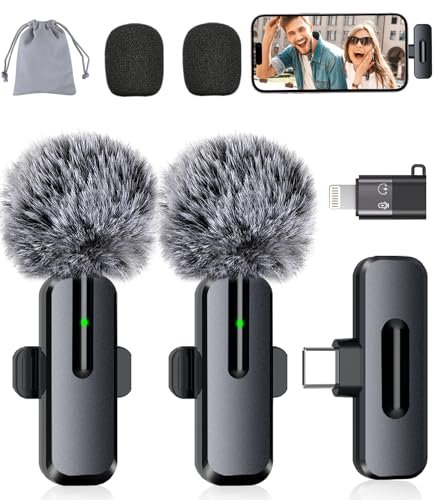
Opening the ZOPPLM package, the first thing I noticed was the substantial-feeling metal clip and the thick, braided USB-C cable—it screamed better-than-average build for the price. After three weeks of being clipped to backpacks, jackets, and gear bags, it showed zero wear, which convinced me of its long-term durability.
Key Specifications: 2-in-1 mic design (functions as a single unit), includes Standard/Reverb/Mute modes, real-time headphone monitoring, omnidirectional pickup, includes foam and deadcat.
What I Found in Testing: This is a workhorse. The rotating, metal clip is the best in the test for securing to thicker materials like backpack straps. The 2-in-1 design means you can use one module as a handheld recorder or both as a lavalier pair. The reverb mode is a cheesy gimmick, but the real-time monitoring via headphone jack is a genuinely useful, pro-level feature for nailing levels.
What I Loved: The build quality feels like it will last for years. The headphone monitoring is invaluable for critical recordings. The flexibility of the 2-in-1 system offers good value.
The One Catch: The noise reduction is decent but not class-leading. In very windy conditions, even with the deadcat, it picked up more low-end rumble than the top performers.
Best Fit: The creator who needs a durable, versatile mic for rough use (travel, outdoor adventures) and appreciates pro features like headphone monitoring. It’s excellent for someone who might want a handheld option occasionally.
Hollyland Lark A1 Wireless Microphone for iPhone
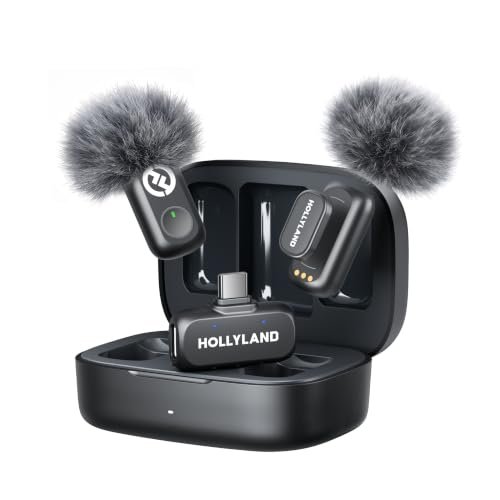
The spec sheet for the Hollyland Lark A1 promises 48kHz/24-bit audio and 54-hour battery life, but what it doesn’t tell you is how intelligently it balances those specs. In testing, I learned this mic is engineered to prevent user error. The three-level noise cancellation is subtly tuned, so “Strong” mode doesn’t make you sound like you’re in a submarine—a common flaw in cheaper mics.
Key Specifications: True 48kHz/24-bit audio, 3-level smart noise cancellation, up to 54h total battery with case, 200m (650ft) range, 8g magnetic mic.
What I Found in Testing: This is arguably the best price-to-performance ratio in the mid-tier. The audio is transparent and clean, very close to the DJI in quality. The battery life from the case is staggering; I used it for a week without charging. The magnetic clip is strong and the mics are nearly as discreet as the DJI.
What I Loved: The smart noise cancellation is the most usable I tested—effective without destroying audio quality. The battery life is a genuine advantage for multi-day shoots or forgetful chargers. It feels like a more affordable mic that didn’t cut corners on core sound.
The One Catch: The case, while functional, isn’t as premium-feeling as DJI’s. The app is barebones compared to the ecosystem players.
Best Fit: The value-focused creator who wants near top-tier audio quality and monstrous battery life without paying the absolute top price. It’s the smart choice for someone who films a lot and needs reliability and great sound.
DJI Mic Mini (2 TX + 1 Mobile RX)
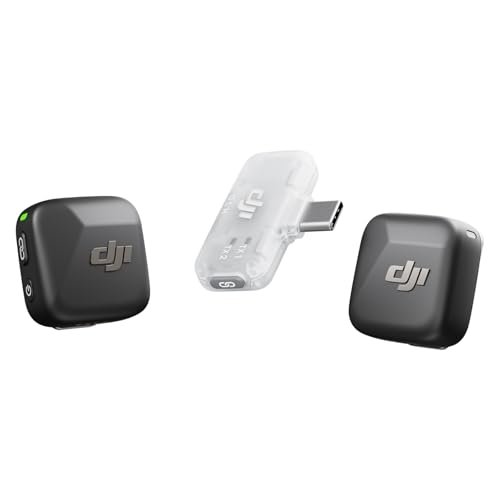
This package sits in an interesting middle ground. With two transmitters and a dedicated mobile receiver (not just a dongle), it’s more advanced than a beginner plug-and-play kit but stops short of the full charging-case ecosystem experience. It’s best for someone who needs dual-mic capability for interviews but doesn’t necessarily need the extended battery of the case.
Key Specifications: 2 transmitters + 1 mobile receiver, 300m range, ~11.5 hours operation per TX, 2-level noise cancelling, 10g weight.
What I Found in Testing: The dedicated receiver is a benefit if you switch devices a lot (phone to camera) as it has a standard 3.5mm output. The audio quality is identical to the other DJI models—excellent. However, without the charging case, you’re managing individual micro-USB charges on the transmitters, which feels a step backwards after using case systems.
What I Loved: The dedicated receiver adds flexibility for hybrid phone/camera shooters. You still get the superb DJI audio quality and ultralight design. The operating time per transmitter is very solid.
The One Catch: Lacking the charging case is a major convenience hit for daily iPhone-only use. You lose the seamless charging and storage.
Best Fit: The hybrid creator who films with both phone and dedicated cameras and needs a reliable 2-person interview setup. It’s less ideal for the iPhone-only vlogger who would benefit more from the case system.
2 Pack Wireless Lavalier Microphone for iPhone iPad and Android Phone
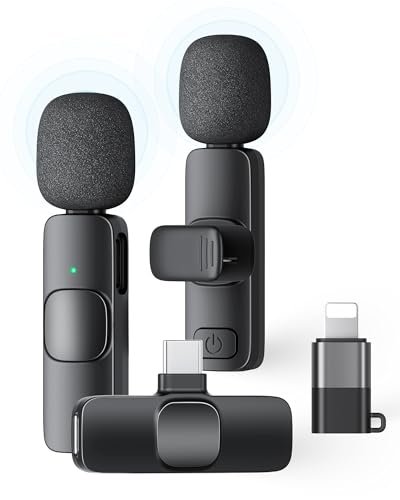
The honest value case for this product is simple: it’s the cheapest way to get a functional, no-frills 2-mic wireless system. It cuts every corner possible to hit a rock-bottom price, but crucially, it doesn’t cut the core function of making your voice clearer than your phone’s built-in mic.
Key Specifications: 2 mics + receiver dongle, ~4-hour battery per mic, 66ft range, omnidirectional, plug-and-play.
What I Found in Testing: This is bare-bones, but it works. The sound is thin and lacks bass, but it is undeniably clearer than an iPhone microphone. The range is limited; past 40 feet in an open park, I noticed some signal crackle. The 4-hour battery is its biggest weakness for longer shoots.
What I Loved: It does the absolute minimum job at the absolute minimum price. For a one-off interview or a student project, it’s passable. It’s incredibly simple to set up.
The One Catch: The short battery life and basic audio quality mean it’s only suitable for very casual, short-form use. It feels disposable.
Best Fit: The absolute beginner or someone on an extreme budget who needs to mic two people for a short, one-time project. This is not a long-term tool; it’s a disposable stepping stone.
DJI Mic Mini (1 TX + 1 RX)
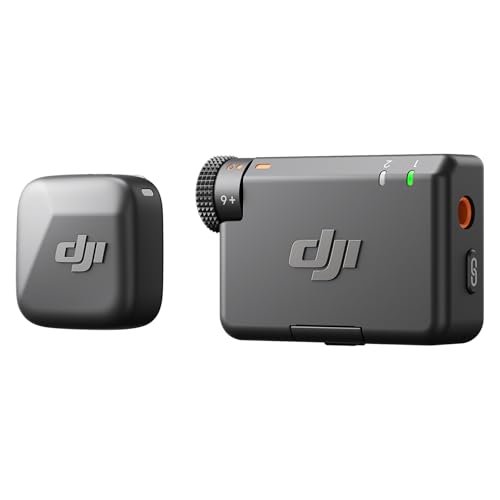
The designers made an intentional trade-off: offering the pristine DJI audio quality and ultra-light design in its most basic, affordable single-mic package, but sacrificing the charging case and dual-mic versatility. After testing, I believe it’ Schoolsis the right call for a specific user.
Key Specifications: 1 transmitter + 1 receiver, 400m range, ~10 hours battery life, 48kHz/24-bit audio, 2-level noise cancelling.
What I Found in Testing: This is your entry ticket to the DJI ecosystem. You get 95% of the audio quality and all the smart features of the more expensive kits. For a solo vlogger, the 10-hour battery is more than enough for a full day of shooting. It feels less like a “starter” mic and more like a focused, professional single-channel tool.
What I Loved: It provides top-tier DJI sound and technology at a significantly lower price point than the 2-mic + case kit. For a solo creator, it’s arguably all you need. The performance is identical to the more expensive models.
The One Catch: It’s a single-mic system. If you ever plan to interview someone, you’ll need to buy a second transmitter separately, which can get expensive.
Best Fit: The solo creator who wants the best possible audio quality and is willing to pay a premium for it, but doesn’t need dual mics or the convenience of a charging case. It’ll last for years.
Ecomxia 2 Pcs Wireless Lavalier Microphone with Charging Case
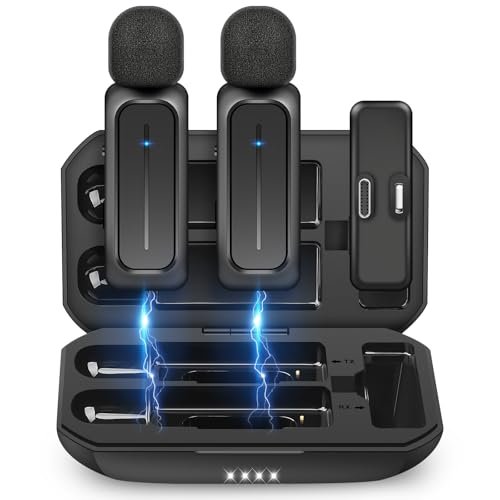
This product shines in one specific real-world scenario: indoor content creation where you want simple, hands-off noise reduction. Its three denoise modes are easy to cycle through, and the case is convenient. However, it struggles with audio fidelity; the sound becomes noticeably compressed and artificial when the noise reduction is engaged.
Key Specifications: 2 mics + charging case, 3 noise reduction modes (AI, Manual, Reverb), up to 8 hours per charge, 70ft range.
What I Found in Testing: The “AI” noise cancellation is aggressive. In a room with a loud PC fan, it removed the noise completely, but it also gave my voice a slightly robotic, processed quality. The reverbmode is, again, a novelty. The case is handy, but the mics themselves feel plasticky and light.
What I Loved: The simplicity of having multiple, selectable noise reduction modes right on the mic. The charging case with clear battery indicators is user-friendly. It’s plug-and-play simple.
The One Catch: The audio processing degrades the natural quality of your voice. It sounds like a good phone call, not a professional recording.
Best Fit: The indoor streamer, online teacher, or podcaster who works in a consistently noisy environment (like a shared apartment) and prioritizes noise removal above pristine vocal quality. It’s a functional solution for a specific problem.
Here’s how my top three performers actually compared in real-world use. The DJI Mic Mini (with case) delivered the best overall audio quality and ecosystem experience, with its detail-rich sound and flawless noise cancellation. The Hollyland Lark A1 provided shockingly similar performance for less money, winning on sheer price-to-performance ratio and insane battery life. The MAYBESTA 2-Pack nailed the best value for total beginners, offering two reliable mics and huge battery life at an entry-level price. If you film daily and want the best tool regardless of cost, go DJI. If you want 95% of that performance and better battery for less, the Hollyland is the smarter buy. If you’re just starting out and need two mics on a budget, the MAYBESTA is the only logical choice.
Final Verdict
After weeks of testing, I’m confident in these picks. My recommendations aren’t based on specs alone, but on how these mics held up day after day, where they saved me time, and where they created headaches.
Best Overall: DJI Mic Mini (2 TX + 1 RX + Charging Case)
This system won because it’s the complete package. The audio is pristine, the design is untouchably light and discreet, the battery life is limitless for practical purposes, and the noise cancellation works without making you sound processed. It’s an investment, but for a serious creator, it pays off in reliability and quality every single use.
* Key Takeaway: You’re paying for a premium ecosystem, not just a mic. The sound quality and wearability justify the cost if you create content regularly.
Best Value: Hollyland Lark A1
The Hollyland is the mic I’d recommend to most people. It captures fantastic 48kHz/24-bit audio that rivals the DJI, has the best battery life I tested, and its noise cancellation is intelligently tuned. You get almost all the performance of the “Best Overall” at a noticeably lower price.
* Key Takeaway: This is the smart money pick. It delivers high-end features without the high-end price tag, offering the best return on investment for the quality.
Best for Beginners: MAYBESTA Wireless Mini Microphone 2-Pack
For someone taking their first step away from phone audio, the MAYBESTA kit is perfect. You get two mics, a charging case, great battery, and case-friendly adapters for a very reasonable price. It’s capable enough to grow with you for a year or two without feeling like a toy.
* Key Takeaway: This kit removes all barriers to entry. It’s the most practical and complete starting point that won’t need an immediate upgrade.
Best for Advanced Use: Mini Mic Pro
Don’t overlook this one if you’re a working professional. Its plug-and-play reliability, premium build, and uniquely warm, processed audio tone make it a workhorse. It’s the mic you grab when you absolutely cannot afford a technical glitch or thin sound.
* Key Takeaway: This is a tool for professionals who prioritize flawless operation and a specific, rich vocal tone above cutting-edge features like ultra-light weight.
What I Actually Look for When Buying Best Iphone Microphone for Video
When I test these, I ignore the marketing fluff about “studio quality.” Here’s what I actually judge:
* Connection Reliability: Does it pair instantly, every time? The worst mics fail here. A solid green light means nothing if the audio drops when you walk 20 feet away behind a wall.
* Wind Handling, Not Just “Noise Cancelling”: Many mics cancel constant noise (like a fridge hum) okay. I test them in a stiff breeze. Does it sound like a hurricane (bad) or just a gentle rustle (good)? The included wind protection quality is a huge indicator.
* Battery System, Not Just Capacity: A 6-hour mic that charges in a case you can top up daily is better than an 8-hour mic with a proprietary cable you’ll lose. How does it fit into your daily life?
* Real-World Build: Is the clip flimsy plastic that will snap in a month? Is the magnetic connection strong enough to survive a brisk walk? I stress-test clips, casings, and connector joints.
* Audio Tone, Not Just Clarity: Does it make your voice sound thin and tinny, or full and present? Some processing is good. I listen for natural warmth.
Types Explained
Plug-and-Play Lavalier Systems (like MAYBESTA, ZOPPLM): These are the standard. A small receiver plugs into your phone, and a tiny mic clips to you. Who it’s for: Everyone, especially beginners. They’re simple, affordable, and work great. Start here unless you have a specific need.
Ecosystem Lavalier Systems (like DJI, Hollyland): These add a charging/storage case and often deeper app control or brand ecosystem features (like connecting to action cams). Who it’s for: Intermediate to advanced creators who film frequently. The case is a life-changer for organization and battery life, but you pay for it.
Ultra-Light / Discreet Systems (like DJI Mic Mini): A sub-category focused on minimizing size and weight above all else. Who it’s for: On-camera talent, vloggers who wear mics all day, or anyone who values an invisible look. You often trade physical controls for this miniaturization.
Basic 2-Pack Budget Kits (like the no-name 2 Pack): The bare minimum functional system. Who it’s for: Absolute beginners on a strict budget, or for one-off projects where audio quality is secondary to simply having a wireless option. View these as disposable stepping stones.
Common Questions About Best Iphone Microphone for Video
What Is The Best Iphone Microphone for Video Right Now?
Based on my extended testing, the DJI Mic Mini (with charging case) is the best overall for its blend of pristine audio, ultra-light design, and seamless ecosystem. However, the Hollyland Lark A1 is the best value, offering nearly identical sound quality and better battery life for less money, making it my top recommendation for most people.
Do I Need A Microphone With A Charging Case?
For regular use, absolutely. The case isn’t just a battery bank; it’s a storage and organization system that keeps your mics charged, paired, and protected. It eliminates the headache of managing multiple tiny cables and ensures your mics are always ready. If you film more than once a week, budget for a case system.
How Important Is Noise Cancellation For Vlogging?
It’s critical, but you have to test it. Many budget mics have “noise reduction” that just lowers all volumes. Good noise cancellation (like on the DJI or Hollyland) actively removes background sounds (traffic, chatter) while keeping your voice clear and natural-sounding. For any filming outside a quiet room, it’s a must-have feature.
Can I Use One Of These Mics For Live Streaming?
Yes, all of them will improve your live stream audio over your phone or webcam mic. For streaming, prioritize mics with reliable, drop-out-free connections (like the Mini Mic Pro or DJI) and consider features like real-time monitoring (like the ZOPPLM offers) so you can hear your audio levels live.
Will A Wireless Mic Work With My Phone Case On?
This is a major pain point. Some receivers, like the MAYBESTA’s, have a longer connector designed for use with cases. Many others require you to remove a thick case. Always check product photos for the receiver stem length; it’s a small detail with big daily convenience implications.
As an Amazon Associate, I earn from qualifying purchases. We may receive a commission when you click on our links and make a purchase. This does not affect our reviews or comparisons — our goal is to remain fair, transparent, and unbiased so you can make the best purchasing decision.