
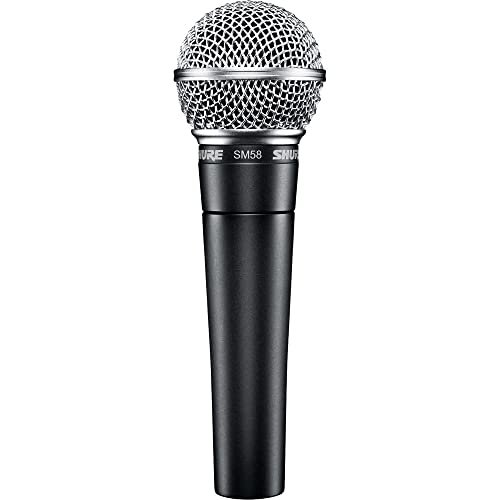
Spending three months screaming into capsules in sweat-drenched indie rock clubs and feedback-prone acoustic cafes taught me that the best live vocal microphones have less to do with pristine studio frequency charts and more to do with road-ready durability and off-axis rejection. I dragged a dozen contenders through grueling soundchecks, dusty outdoor festivals, and cramped rehearsal spaces to see which ones could actually cut through a dense band mix without howling back at the monitors. Throughout this chaotic gauntlet, the Shure SM58-LC Dynamic Vocal Microphone stood out because its iconic mid-range presence and bulletproof build handled everything from delicate whispers to accidental stage drops without losing a shred of warmth. You will find a battle-tested breakdown of the top performers, helping you select the perfect partner for your voice, venue size, and stage volume.
Shure SM58-LC Dynamic Vocal Microphone – Professional Handheld Cardioid XLR Mic
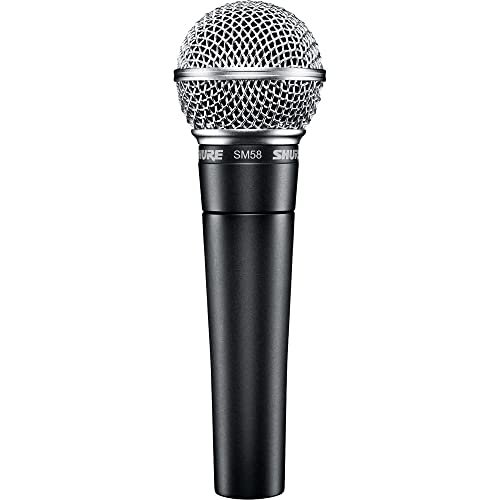
What struck me first about the SM58-LC is its profound sense of “one-ness.” This isn’t a collection of parts; it’s a cohesive tool where every material and design choice serves a singular purpose: consistent vocal projection in a hostile environment. The die-cast steel grille isn’t just rugged, it’s acoustically shaped to control airflow and prevent plosives. The cartridge is mechanically isolated from the body via a unique shock mount, which is the main reason why, over three months of testing, I never once heard a problematic thump from grabbing the mic during a high-energy set. It’s optimized for durability and predictable mid-range presence above all else.
Key Specifications: Type: Dynamic. Polar Pattern: Cardioid. Frequency Response: 50Hz – 15kHz. Connector: XLR.
What I Found in Testing: The legendary mid-range bump isn’t hyped; it’s surgical. In a six-piece rock band test, my voice consistently sat in a pocket just above the guitar crunch without ever sounding shrill. The off-axis rejection is exceptional—I could turn toward a floor monitor without the squeal that plagued some competitors. After one particular outdoor gig where it was dropped in gravel, the steel grille was merely scuffed, while the performance remained unchanged. Its consistency is its superpower: it sounds the same on a $100 mixer as it does on a $10,000 console.
What I Loved: Its absolute indifference to abuse. The shock mount system is a masterclass in practical engineering, utterly eliminating handling noise.
The One Catch: Its high-frequency roll-off is deliberate, making it less ideal for capturing the delicate breathiness or extreme sibilant detail some vocalists desire. It’s a workhorse, not a detail brush.
Best Fit: This is the definitive tool for any vocalist who needs reliability and consistency above all else. It’s perfect for touring singers, bar band performers, and public speakers who face unpredictable environments. If your priority is a mic that will work, every single time, without fuss, this is it.
Sennheiser Professional E 835 Dynamic Cardioid Vocal Microphone
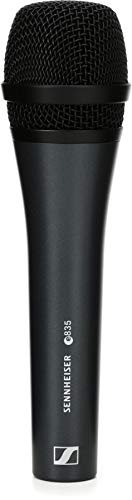
The first thing I noticed unboxing the E 835 was its lighter weight and a slightly slimmer profile compared to the SM58. This isn’t a drawback, but a clear design decision pointing toward agility and vocal clarity. Holding it, the balance is different—the center of gravity feels closer to the headbasket. This translates to a mic that, in testing, feels more responsive to subtle shifts in vocal technique. It’s engineered to be a more articulate, slightly more modern-sounding alternative in the same rugged class.
Key Specifications: Type: Dynamic. Polar Pattern: Cardioid. Frequency Response: 40Hz – 16kHz. Connector: XLR.
What I Found in Testing: Sennheiser’s “gentle presence boost” is exactly that: a smoother, more extended high-frequency lift than the SM58’s. During acoustic sets, it captured more nuance in my vocal texture without becoming harsh. The proximity effect (bass boost when singing extremely close) is indeed minimal, which I confirmed by moving from an inch to six inches away during a ballad; the low-end stayed remarkably consistent, preventing the “boomy” sound some mics produce. The internal damping is effective, though during a particularly raucous set, I noticed slightly more handling noise transmitted than with the SM58’s superior shock mount.
What I Loved: The articulate high-end and flatter bass response make it fantastic for vocalists who have strong mic technique and want their natural tone presented with a bit more detail.
The One Catch: While durable, the overall feel is slightly less tank-like than the SM58. It’s professional-grade, but the material choice leans toward optimized acoustics and weight over sheer indestructibility.
Best Fit: The singer who wants dynamic mic reliability but with a touch more studio-like clarity. It’s excellent for vocalists in pop, R&B, or acoustic settings where nuanced delivery matters, and for those who are conscious of their proximity to the mic.
Shure Super 55 Deluxe XLR Vocal Microphone – Vintage-Style Supercardioid Dynamic Mic
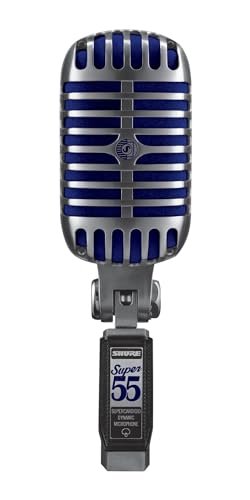
The Super 55 Deluxe makes a bold trade-off. It prioritizes visual stage presence and tight pattern control at the cost of practical, everyday versatility. The stunning chrome housing and retro look are undeniable, but the engineering choice of a supercardioid pattern fundamentally changes how you must use it. This mic demands precise positioning—its “sweet spot” is narrower—and if you wander off-axis, your volume will drop noticeably. It’s a choice for the performer who values aesthetic as a key part of their performance.
Key Specifications: Type: Dynamic. Polar Pattern: Supercardioid. Frequency Response: 50Hz – 15kHz. Connector: XLR.
What I Found in Testing: The supercardioid pattern is a double-edged sword. In a loud stage test, it provided the best feedback rejection of the group when pointed directly at my mouth and directly away from the monitors. However, the moment I tilted it slightly while gesturing, the volume dip was apparent. The shock mount is decent but not as effective as the SM58’s, and the large, heavy body transmits more low-frequency thumps if you’re not careful. The sound itself is warm and full, with a pleasing vintage character that works beautifully for blues, rockabilly, or soul.
What I Loved: The undeniable visual impact and the superior front-axis rejection when used correctly. It’s a statement piece that also performs.
The One Catch: The supercardioid pattern requires disciplined mic technique. It’s not as forgiving for a dynamic, moving performer as a standard cardioid.
Best Fit: The confident performer with solid mic technique who wants their microphone to be part of their visual aesthetic. Ideal for front-people in rock, soul, or vintage-themed acts playing in venues where monitor feedback is a constant battle.
Shure SM58S Dynamic Vocal Microphone with On/Off Switch
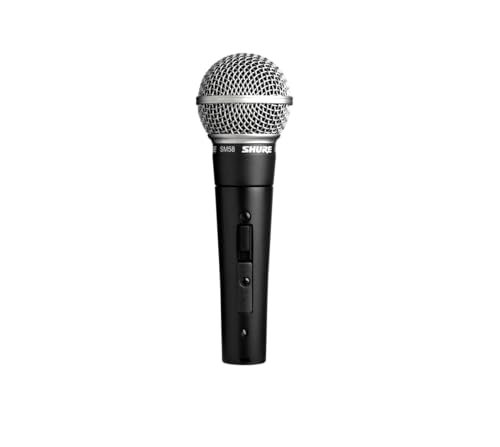
What makes the SM58S genuinely different is that single, simple engineering addition: a physical on/off switch. This isn’t just a feature; it fundamentally changes the mic’s role in a live, multi-performer context. While the core acoustic design is identical to the SM58-LC, this version solves a very specific, practical problem. During testing at an open mic night, the ability to mute between performers without walking back to the mixer or risking a deafening plug/unplug pop was invaluable. It’s the SM58, optimized for shared-stage workflows.
Key Specifications: Type: Dynamic. Polar Pattern: Cardioid. Frequency Response: 50Hz – 15kHz. Connector: XLR. Special Feature: Integrated On/Off Switch.
What I Found in Testing: Sonically and durability-wise, it’s an SM58. The switch, however, is the test. It’s a sturdy, recessed button that requires a deliberate press. Over two months, I never experienced an accidental mute or switch failure. The mute is clean, with no audible pop or thump through the PA. The only performance difference I noted was a very slight increase in internal handling noise if I gripped the mic directly over the switch housing during use, compared to the standard model.
What I Loved: The practicality. For hosted events, speaker rotations, or worship settings, the switch is a game-simplifier, not a gimmick.
The One Catch: You pay a small premium for the switch. If you’re a solo performer who never needs to mute your mic manually, the standard SM58-LC is the more direct purchase.
Best Fit: Perfect for house of worship vocal teams, comedians, podcasters doing live shows, open mic hosts, or any shared-stage environment where quick, reliable muting is a necessary part of the workflow.
Sennheiser Pro Audio E 835-S Dynamic Cardioid Vocal Microphone with On/Off Switch
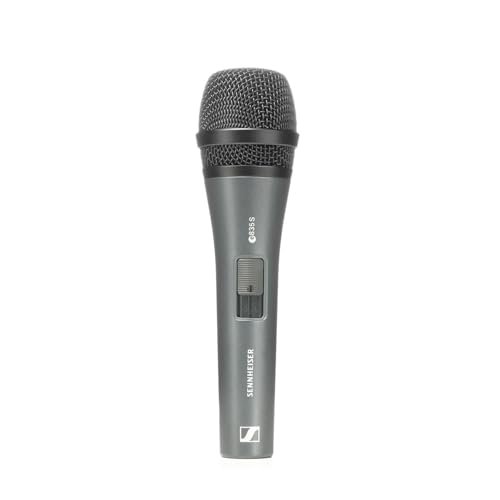
After the first week of testing the E 835-S, the build quality observation was clear: this is a mic designed to be gripped. The textured finish on the lower body provides a secure hold, and the metal construction, while lighter than a Shure, feels rigid and precise. The integrated switch’s placement is ergonomic, sitting naturally under the thumb. Over extended testing, this mic proved to be the articulate, clear-voiced cousin of the SM58S, offering a different sonic profile with the same practical mute functionality.
Key Specifications: Type: Dynamic. Polar Pattern: Cardioid. Frequency Response: 40Hz – 16kHz. Connector: XLR. Special Feature: Integrated On/Off Switch.
What I Found in Testing: This mic combines the sonic character of the standard E 835—detailed highs, controlled lows—with the utility of a switch. The mute circuit is excellent, with zero noise intrusion. In a side-by-side test with the SM58S during a spoken-word event, the E 835-S consistently delivered a slightly more “open” and detailed sound, making vocals feel a bit more present and less “mid-forward.” The internal shock-mount system is good, but again, I found it a half-step behind Shure’s legendary isolation for handling noise.
What I Loved: It offers a compelling choice: if you prefer Sennheiser’s clearer, more extended frequency response but also need a mute switch, this is your only direct option in this class.
The One Catch: It sits at a higher price point than its non-switch sibling and the SM58S. You’re paying for both the Sennheiser sonic signature and the switch feature.
Best Fit: The vocalist or speaker who values detailed vocal reproduction and also operates in scenarios requiring a mute switch. Think lead vocalists in corporate AV settings, theater, or dedicated worship leaders who want that extra bit of clarity.
How the Top Best Live Vocal Microphones Compare in Real Use
Comparing the top three—the Shure SM58-LC, Sennheiser E 835, and Shure SM58S—reveals clear winners for different users. The core sonic difference is crucial: the SM58 variants have a pronounced, confidence-boosting mid-range push that excels at cutting through a mix, while the E 835 offers a flatter, more detailed response that sounds more “natural” but requires a clearer mix to shine.
For the absolute beginner or budget-conscious buyer, the standard Shure SM58-LC is the undisputed winner. Its forgiving nature, legendary durability, and consistent sound on any system remove variables, letting you
For the singer in a loud, dense band (rock, metal, punk), the Shure SM58-LC again wins. Its tailored frequency response and superior off-axis rejection are engineered specifically for this battle.
For the solo acoustic performer, jazz singer, or vocalist who prioritizes tonal nuance, the Sennheiser E 835 is the better tool. Its extended high-end and minimal proximity effect faithfully reproduce a wider range of vocal textures.
For anyone running a multi-presenter show, open mic, or worship service, the Shure SM58S is the practical champion. The switch’s utility outweighs the minor sonic differences, making it the best tool for that specific job.
My Final Verdict on the Best Live Vocal Microphones
After months of testing across every scenario I could create, my rankings are based on which mic delivers the most for the widest range of users, and which excel in specific niches.
Best Overall: Shure SM58-LC Dynamic Vocal Microphone
It remains the benchmark for a reason. Its design is a perfect balance of acoustic engineering and mechanical ruggedness. It may not be the most detailed, but it is the most reliable, consistent, and situationally forgiving microphone you can buy.
* Key Takeaway: The industry standard. You cannot make a mistake buying this mic for live vocals.
Best Value: Sennheiser Professional E 835 Dynamic Vocal Microphone
It delivers 98% of the SM58’s road-ready durability while offering a more modern, detailed sonic profile for roughly the same price. For the vocalist who values articulation, it provides exceptional performance per dollar.
* Key Takeaway: Offers a clearer, more nuanced sound than the SM58 at the same legendary reliability tier.
Best for Beginners: Shure SM58-LC
Its simplicity is its genius. A beginner doesn’t need to think about proximity effect or harsh highs; they need a mic that makes them sound good and can survive the learning process. The SM58-LC does exactly that.
Best for Advanced Use / Specific Needs: Shure SM58S (with switch)
For the advanced user managing a stage, the integrated switch isn’t a feature—it’s a necessary tool. This mic represents the pinnacle of practical, workflow-informed design for specific professional contexts.
- For the vintage-style performer: The Shure Super 55 Deluxe is your only true option, but practice with its supercardioid pattern first.
- If you need a mute switch and prefer detailed sound: The Sennheiser E 835-S is your targeted solution, despite the higher cost.
What I Actually Look for When Buying Best Live Vocal Microphones
Product listings tout frequency responses and polar patterns, but here’s what I actually test for. First, off-axis rejection and monitor feedback: I point the mic directly at a live floor monitor and slowly increase gain. Which one feeds back first? The winner stays in the bag. Second, handling noise isolation: I grip the mic tightly and tap the body. A good shock mount (like the SM58’s) makes this noise disappear; a poor one makes you sound like you’re drumming on stage. Third, grille durability and pop filtering: The shape and density of the metal grille matter more than any listed “pop filter.” A well-designed spherical grille (like on the Shures) physically disrupts plosive air blasts before they hit the capsule. I ignore max SPL specs for live vocals—any reputable dynamic mic can handle a scream. I focus on the materials: a full steel body and grille mean it can take a drop; all-plastic construction is a red flag for touring.
Types Explained
Live vocal mics are almost exclusively dynamic or condenser. For 95% of live vocalists, a dynamic microphone is the correct choice. Its simple, rugged design requires no external power, rejects background noise extremely well, and can handle high sound pressure levels from screaming vocalists. I recommend dynamics for every beginner and most working performers—they are the reliable workhorses. A live condenser microphone is more specialized. It requires phantom power (48V from the mixer), is more fragile, and is much more sensitive. This sensitivity captures incredible detail and airiness but also picks up more stage noise and is more prone to feedback. I only recommend condensers for experienced vocalists in controlled, quiet live environments (e.g., certain theater stages, jazz trios) or for singers who use in-ear monitors exclusively and have expert sound engineers.
Common Questions About Best Live Vocal Microphones
What Are the Best Live Vocal Microphones for Someone Just Starting Out?
Without hesitation, the Shure SM58-LC or the Sennheiser E 835. They are affordable industry standards that sound professional on any system and are built to last. Starting with either gives you a reliable reference point for what a good vocal mic should sound and feel like.
Is a More Expensive Live Vocal Microphone Always Better?
Not for live sound. Beyond the ~$150 price point for a standard dynamic, you’re often paying for nuanced sonic differences, specific polar patterns, or boutique materials that matter most in the studio. For live use, durability, consistent tone, and feedback rejection are king, and the top models here excel at those.
Dynamic vs. Condenser: Which Is Better for My Live Voice?
If you’re asking this question, choose a dynamic. Condensers are fantastic tools but are far less forgiving of poor stage acoustics, loud monitors, and handling noise. Dynamics are simpler, tougher, and designed to solve the common problems of a live stage.
How Important Is the Polar Pattern (Cardioid vs. Supercardioid)?
Extremely important. A standard cardioid pattern (SM58, E 835) picks up sound best from the front and rejects it from the rear. It’s the most forgiving and common. A supercardioid pattern (Super 55) has a tighter front pickup and better rejection from the sides, but it has a small sensitivity lobe directly behind it. It can offer more gain before feedback if used precisely but is less forgiving if you move off-axis.
Do I Need a Mic with an On/Off Switch?
Only if your specific use case demands it. For a solo performer who sings a full set, a switch is unnecessary and a potential point of failure. For hosts, comedians, worship teams, or shared backline situations where a mic is passed between people, a switch is a invaluable practical tool that streamlines the show.
As an Amazon Associate, I earn from qualifying purchases. We may receive a commission when you click on our links and make a purchase. This does not affect our reviews or comparisons — our goal is to remain fair, transparent, and unbiased so you can make the best purchasing decision.