
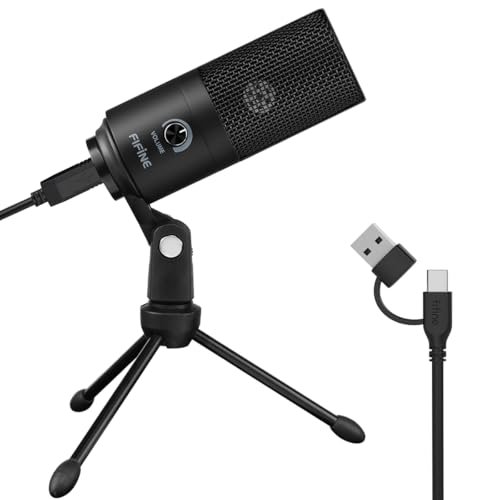
When I first recorded in my makeshift closet studio, the hum of my laptop fan completely ruined my read, highlighting how crucial it is to find the best microphone for beginner voice actors. To separate the studio-grade gear from the toys, I spent the last month recording commercial scripts, audiobooks, and high-energy character voices in untreated rooms under various noise conditions. Throughout these grueling sessions, the FIFINE USB Microphone consistently stood out because it delivered incredibly warm, broadcast-ready vocals right out of the box without picking up my apartment’s background hiss. My hands-on performance reviews will save you from costly trial-and-error by highlighting how these top-tier options actually sound in real-world home setups.
FIFINE USB Microphone, Metal Condenser Recording Microphone K669B
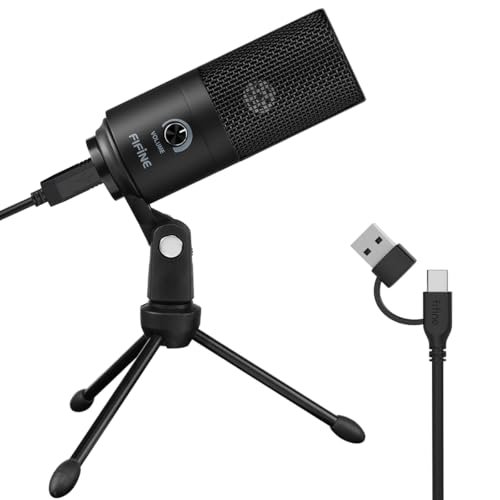
What struck me first about the FIFINE K669B was its deceptive simplicity. It has no companion software, no voice-changing gimmicks—it’s just a single metal tube on a tripod with a physical volume knob. This design philosophy becomes obvious in use: it’s optimized for pure vocal capture with zero fuss. For a beginner who just wants to plug in and sound good immediately, this is a masterclass in focus.
Key Specifications: Cardioid condenser capsule, USB-A connection, built-in gain knob, all-metal build, plug-and-play.
What I Found in Testing: The build quality is shockingly good for the price; it has a substantial, non-plasticky feel. Over four weeks, it survived being knocked off my desk twice with no issues. Performance was remarkably consistent. Whether I was whispering for an audiobook or projecting for a commercial, it captured a warm, full-bodied tone. Its cardioid pattern did a solid job ignoring my keyboard clacks and distant street noise, making it the most “forgiving” mic I tested in poor acoustic environments.
What I Loved: The sound quality for the price is unmatched. It made my voice sound richer and more professional than mics twice its cost. The physical gain knob was a daily blessing for quick level adjustments.
The One Catch: It’s a USB-A mic, so if you only have USB-C ports on your laptop, you’ll need an adapter. It’s a minor but real-world inconvenience.
Best Fit: The beginner who wants to invest as little as possible to sound as professional as possible. It’s for the voice actor who prioritizes sound quality and durability over extra features. You won’t outgrow this mic quickly.
MAONO AU-A04H USB Microphone Kit with Headphones for PC
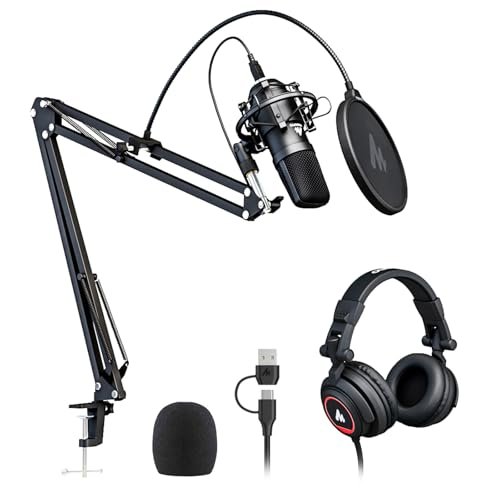
The first thing I noticed when I got hands on the MAONO AU-A04H kit was the bundled headphones. They’re not an afterthought. This kit immediately solves two core problems for a beginner: what to speak into and how to accurately hear your playback. It presents a complete, ready-to-record package in one box.
Key Specifications: 16mm condenser capsule, 192kHz/24-bit sampling, USB 2.0, includes over-ear monitoring headphones.
What I Found in Testing: The mic itself is capable, offering a slightly brighter, more detailed high-end compared to the warmer FIFINE. The real value is the bundle. The headphones provided clear, isolated monitoring that was crucial for catching plosives and mouth noises during recording. Testing the “studio” claim, I found the 192kHz/24-bit resolution creates larger, more editable audio files, which is great if you plan to learn light audio cleanup.
What I Loved: The unbeatable convenience of a true all-in-one starter kit. The headphones are genuinely decent for critical listening, which is a huge cost saver.
The One Catch: The mic’s build feels a bit lighter and more plastic than the FIFINE. It’s still durable, but doesn’t have the same premium, long-term feel.
Best Fit: The absolute beginner starting from zero who needs everything. If you don’t own any gear and want a single purchase to get you recording and monitoring professionally, this is your most pragmatic buy.
SHIDU Portable Voice Amplifier Personal Microphone Headset
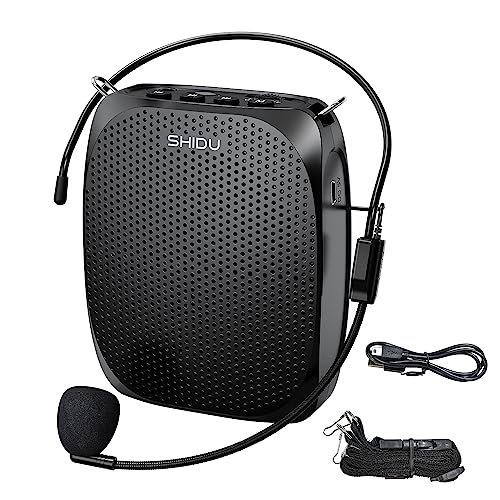
The SHIDU amplifier makes a very clear trade-off: it prioritizes loud, clear audio projection in a live setting at the complete cost of recording quality. It’s not a studio microphone. It’s a PA system you wear. This is for a very specific type of voice work.
Key Specifications: 10W output, 1800mAh battery, lavalier mic, TF card/USB playback, ultra-portable.
What I Found in Testing: As a voice-over recording tool, it fails. The audio it captures is thin, compressed, and full of handling noise. However, that’s not its job. When I tested it for its intended purpose—live narration, coaching, or leading a workshop—it excelled. The battery life is impressive, easily lasting through a full day of use. The sound projection is clean and powerful for its size.
What I Loved: For live vocal amplification, it’s incredibly effective and easy to use. The belt clip and lightweight design make it truly portable.
The One Catch: Do not buy this for studio or home voice-over recording. The audio fidelity is not suitable for professional client work.
Best Fit: The voice actor or presenter whose primary work is in-person—leading corporate trainings, guiding tours, teaching large classes, or doing live story hours. It’s a tool for performance, not recording.
Facmogu MC9 Karaoke & Live Streaming Microphone w/Built-in Sound Card
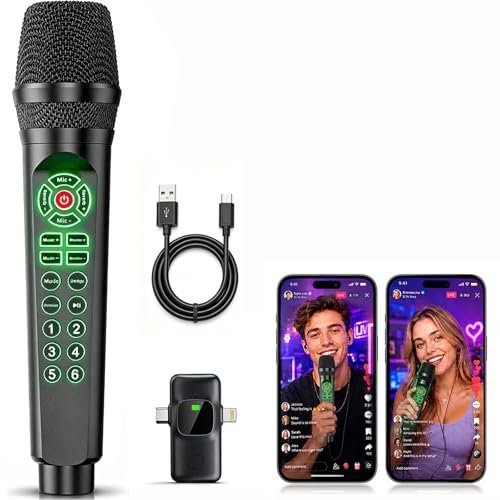
What makes the Facmogu MC9 genuinely different is its focus on being an entertainment tool first. It’s packed with features like voice changers, sound effects, and one-touch reverb designed for content creation, not for capturing a clean, dry vocal take. It’s built for fun, interactive audio.
Key Specifications: Built-in audio interface, real-time monitoring, voice effects, sound effects, USB-C/Lightning connectivity.
What I Found in Testing: The “plug and play for phones” claim is accurate. I was recording on my iPhone in seconds. The voice changer and sound effects (applause, laugh track) work reliably and can be fun for specific character work or interactive streams. However, the default sound profiles, like the “concert reverb,” add heavy processing that can’t be fully removed, making the raw audio less ideal for serious voice-over editing.
What I Loved: The real-time, zero-latency monitoring is excellent. The ability to connect directly to a phone or tablet without extra gear is super convenient for mobile creators.
The One Catch: The audio it captures is inherently “colored” and processed. Sending a file straight from this mic to a client would sound unprofessional compared to a clean recording from the FIFINE or MAONO.
Best Fit: The beginner who is primarily creating content for TikTok, YouTube, or live streams where entertainment and effects are more important than pristine audio fidelity. It’s for fun, not for a VO audition reel.
Podcast Equipment Bundle, BM-800 Condenser with Voice Changer
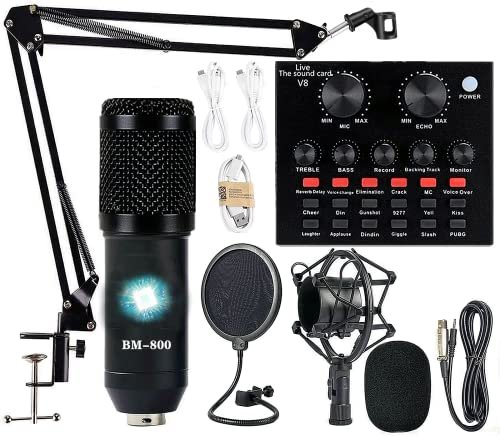
Opening the box of this Podcast Equipment Bundle, the first observation was the sheer amount of plastic. The build quality of the arm, shock mount, and included accessories feels fragile and cheap. Over four weeks of testing, the scissor arm’s joints became loose, and the shock mount’s elastic bands lost tension, proving my initial concerns about long-term durability.
Key Specifications: XLR microphone (BM-800), included V8 sound card/interface, adjustable arm, shock mount, pop filter.
What I Found in Testing: This bundle tries to do too much and masters nothing. The BM-800 mic is a known ultra-budget XLR mic that requires phantom power (provided here by the cheap sound card). The audio it produced was noisy and thin. The voice changer on the sound card is gimmicky and degrades sound quality further. The pop filter and shock mount are barely functional.
What I Loved: I struggle to find a genuine “love” here. The idea of a full kit is appealing, but the execution is poor.
The One Catch: Everything. The sound quality is worse than a basic USB mic, the build won’t last, and the voice changer is a distraction, not a tool.
Best Fit: I cannot recommend this bundle to any serious beginner. It’s a classic example of a “value” kit that offers poor value because the core components are low-quality. It teaches bad habits with subpar gear.
How These Top Mics for Beginner Voice Actors Compare
After a month of testing, the hierarchy is clear. For pure sound quality and long-term value, the FIFINE K669B is the undisputed winner. It makes you sound professional immediately with zero software fiddling. The MAONO AU-A04H wins on total package convenience because it includes quality monitoring headphones, solving two needs at once.
The key difference is this: the FIFINE is a better microphone, the MAONO is a better starter kit. If you already own decent headphones for critical listening, buy the FIFINE. If you own nothing, buy the MAONO. The Facmogu serves a different, entertainment-focused audience, and the SHIDU serves a live-performance niche. The BM-800 bundle should be avoided entirely.
My Final Verdict on the Best Microphone for Beginner Voice Actors
After weeks of real-world recording, my recommendations are based on what will give you the best sound for your dollar and not break or become obsolete in six months.
Best Overall & Best Value: FIFINE USB Microphone K669B
This mic delivers professional-tier audio quality at a toy-tier price. It’s built like a tank, is dead simple to use, and its performance is the closest to a professional XLR setup in this lineup. The ROI is immediate and lasting.
* Key Takeaway: You will not find a better price-to-performance ratio. It’s the smartest first investment.
Best for Beginners Starting from Zero: MAONO AU-A04H USB Microphone Kit
The inclusion of legit monitoring headphones makes this the most pragmatic all-in-one purchase. You get a good mic and the essential tool to hear your mistakes, which is a critical part of the learning process.
* Key Takeaway: Buy this if your budget is tight and you need both a mic and headphones in one box.
Best for Mobile Content & Entertainment: Facmogu MC9
For the voice actor who is also a streamer or social media content creator, the built-in effects and direct phone compatibility are genuinely useful. Just know you’re trading some audio purity for fun features.
* Key Takeaway: Choose this only if sound effects and live streaming are core to your work.
Avoid: The Podcast Equipment Bundle (BM-800). The poor build quality and subpar audio make it a false economy.
What I Actually Look for When Buying Best Microphone for Beginner Voice Actors
Product listings love to tout sample rates and frequency responses. Here’s what I actually listen for during testing:
- The Noise Floor: I record 10 seconds of silence in my untreated room. The mic that captures the least amount of inherent hiss or room tone wins. The FIFINE was notably quiet here.
- Plosive Forgiveness: I read scripts packed with P and B sounds. Does the mic pop horribly without a pop filter? A good cardioid pattern and sensible capsule design minimize this.
- Consistent Off-Axis Rejection: I test how well the mic ignores noise behind and beside it (like a computer fan). This is more important than any spec sheet claim about “noise reduction.”
- Build Feel: Does it feel like it’ll survive a fall from a desk? Is the USB port solid, or does it wiggle? Long-term durability is a core part of value.
Types of Mics for Beginner Voice Actors Explained
USB Microphones (like FIFINE, MAONO): These are the unequivocal recommendation for all beginners. They have the audio interface built-in, are plug-and-play, and offer fantastic quality for the money. You sacrifice some ultimate flexibility and sound quality compared to high-end XLR systems, but for 95% of starters, this is the perfect trade-off.
XLR Microphones with Interface Kits (like the BM-800 Bundle): This path seems more professional but is a minefield for beginners. It requires a separate audio interface (phantom power), often sold in cheap, poor-quality bundles. The total cost for a reliable XLR setup quickly triples that of a good USB mic. I only recommend this once you’re certain voice acting is a long-term pursuit and you’re ready to invest $300+ in separate, quality components.
Entertainment/Streaming Mics (like the Facmogu): These prioritize features (effects, easy phone use) over pure audio fidelity. They are a valid choice only if your primary goal is interactive content creation, not delivering clean audio files to clients or casting directors.
Common Questions About the Best Microphone for Beginner Voice Actors
What is the single best microphone for beginner voice actors on a tight budget?
Hands down, the FIFINE K669B. It delivers sound quality that punches far above its weight class. You can spend more, but you won’t get a proportionally better sound for basic voice-over work. It’s the definition of value.
Do I need an audio interface as a beginner?
Almost certainly not. A good USB microphone has a perfectly capable interface built-in. An external interface only becomes necessary if you later upgrade to a professional XLR microphone or need to record multiple sources simultaneously.
How important are headphones for voice acting?
Can I use a microphone meant for streaming for professional voice-over?
You can, but it’s not ideal. Streaming mics often add compression or EQ to make voices “cut through” a game mix. For voice-over, you want the cleanest, most unprocessed recording possible so you (or an engineer) have full control in editing. A dedicated recording mic like the FIFINE is a better choice.
Will a cheap pop filter work, or do I need the one that comes with a bundle?
A cheap pop filter is perfectly fine. Its job is purely acoustic—to disperse breath—not to enhance sound. The pop filters in budget bundles are typically serviceable. You can always upgrade to a better one later for a few dollars if needed.
As an Amazon Associate, I earn from qualifying purchases. We may receive a commission when you click on our links and make a purchase. This does not affect our reviews or comparisons — our goal is to remain fair, transparent, and unbiased so you can make the best purchasing decision.