
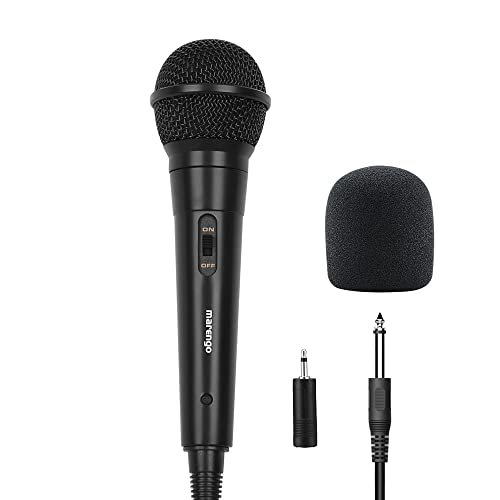
While shouting into budget gear in my uninsulated home office to test background noise rejection, I realized that finding the best microphone for cheap usually means tolerating a horrible, high-pitched hiss. To see which budget options actually deliver, I spent three weeks using these sub-$50 models for daily video calls, voiceover tests, and late-night chats with a noisy desk fan running nearby. Out of everything I plugged in, the Marengo Handheld Wired Microphone absolutely stole the show because of its surprisingly warm, broadcast-like vocal tone and heavy-duty metal build. This hands-on comparison will guide you through the real-world performance of the top budget contenders so you can bypass the plastic junk and find your perfect sound.
Marengo Handheld Wired Microphone
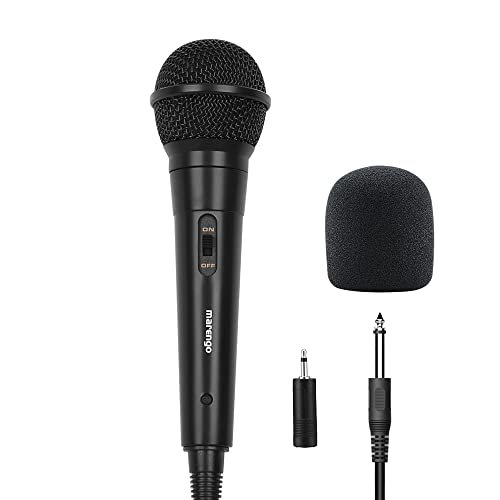
The first thing you notice is the weight. This mic is built like a stage tool, not a toy. Its design philosophy became obvious once I used it: it’s optimized for delivering a full, professional vocal tone directly from your mouth, with zero digital processing to fake it. It’s an unapologetically old-school, physical mic.
Key Specifications: Cardioid Dynamic, 13ft Cable, On/Off Switch, 1/4″ Jack (includes 1/8″ adapter)
What I Found in Testing: The hype about the “premium sound” is legit. On video calls, I was asked if I’d bought a new high-end mic. My voice sounded warmer and fuller compared to the thin, tinny sound from USB mics in the same price bracket. The cardioid pattern did a solid job rejecting my loud, whining desk fan when I spoke directly into it. It’s a tank—I accidentally knocked it off my desk, and it didn’t even get a scratch.
What I Loved: The vocal tone. It has that classic broadcast “proximity effect”—get close, and your voice gains a rich, bassy quality. The metal body feels indestructible, and the long cable is actually a pro-grade, braided one. No drivers, no software, just plug into a mic input and go.
The One Catch: Compatibility. It only works with devices that have a proper MIC IN jack, not an AUX port. This means it won’t plug directly into most laptops, phones, or Bluetooth speakers. You need a speaker, karaoke machine, audio interface, or a cheap 1/4″-to-USB adapter ($10-$15).
Best Fit: Anyone who wants a professional vocal sound for singing, podcasting into a mixer, or live speaking and whose equipment accepts a basic mic jack. If you have a karaoke machine or a basic PA speaker, this is your mic. It’s not for laptop users without an adapter.
.
TONOR Gaming Microphone Set with Boom Arm, TC310+
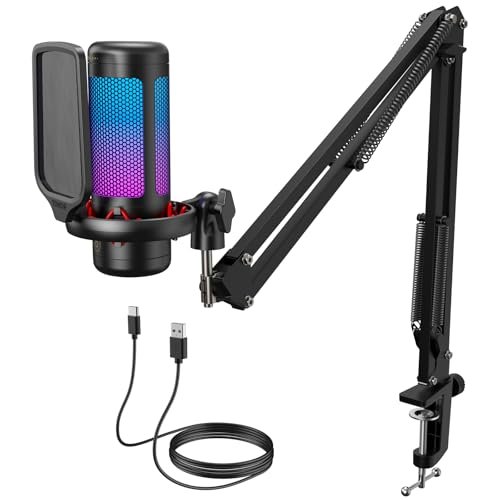
What stood out immediately was the packaging and presentation—it felt like a complete, thought-out kit, not just a microphone thrown in a box. The first thing you set up is the surprisingly decent boom arm, which sets the stage for this being a content creator’s ready-to-roll package.
Key Specifications: USB Condenser, Tap-to-Mute, RGB Lighting, Included Metal Boom Arm and Clamp, Gain Control
What I Found in Testing: This is the most polished “all-in-one” streaming package under $50. The boom arm is sturdy, the clamp is solid, and positioning the mic is effortless. The tap-to-mute function on the mic head worked flawlessly every time, which is more than I can say for some more expensive mics. The sound is clean and clear, perfect for Discord and Twitch chat. The RGB is gaudy but can be turned off.
What I Loved: The complete kit factor. You get a serviceable mic, a good boom arm, and a solid desk clamp for one price. It eliminates the “what else do I need?” headache. The physical gain knob is a simple, effective touch.
The One Catch: The sound, while clear, is a bit sterile and lacks the rich character of the Marengo. It’s a workhorse, not an artist. It also picks up a bit more room noise and keyboard clacks than I’d like, even in its cardioid pattern.
Best Fit: Beginner or intermediate streamers and content creators who want a single purchase to get them fully set up with a professional-looking arm setup. It’s the best choice if you want to avoid buying separate parts.
.
MRSDY USB Gaming Microphone for PC with Noise Reduction
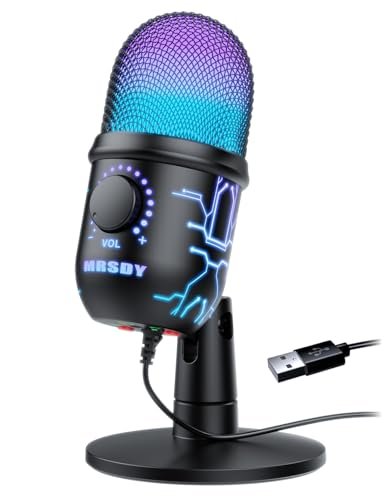
This product makes a clear trade-off: it prioritizes flashy aesthetics and a small desk footprint over audio performance and build quality. It’s designed to look like a miniature studio mic with wild RGB, but the reality of using it is different.
Key Specifications: USB Condenser, Physical Gain Knob, RGB Lighting, 3.5mm Headphone Monitoring Jack
What I Found in Testing: The RGB is the main event—it’s bright and has multiple modes. Beyond that, the experience is mediocre. The included “stand” is a tiny, unstable plastic tripod. The mic tips over if you breathe on it or adjust the gain knob. The noise reduction is aggressive and artificial; in testing, it chopped off the ends of my words in quiet rooms, making me sound slightly robotic. The headphone monitoring jack has noticeable static noise.
What I Loved: The physical gain knob is easy to reach. The mute button works. That’s about it.
The One Catch: The audio quality is the worst of the USB mics tested. It sounds thin, compressed, and processed. The build feels cheap and unstable.
Best Fit: A younger gamer who cares more about their desk looking flashy with RGB than about true audio fidelity. It’s a functional, but disappointing, step up from a headset mic.
.
YIOWNER Wired Microphone
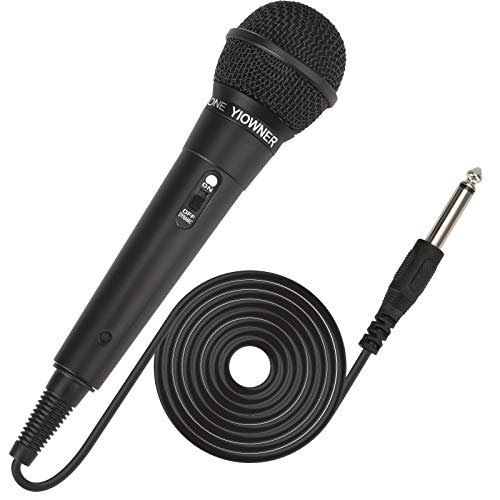
What makes this genuinely different is that it’s the lightweight, plastic counterpart to the metal Marengo. It’s a direct competitor in form and function, but the experience is completely altered by the materials.
Key Specifications: Cardioid Dynamic, 2.5m Cable, On/Off Switch, 1/4″ Jack
What I Found in Testing: This feels and sounds like a cheaper version of the Marengo. The plastic body feels hollow and light. The cable is thinner and more prone to tangling. The vocal tone is decent—warmer than a USB mic—but noticeably thinner and more tinny than the Marengo when used back-to-back. It did the same basic job of rejecting my desk fan, but the overall sound had less body.
What I Loved: The price is often a few dollars lower than the Marengo. It has the same simple, plug-and-play operation for compatible devices.
The One Catch: It feels cheap. The build quality difference is night and day compared to the Marengo. You are trading durability and sonic richness for a very small amount of saved cash.
Best Fit: Someone who needs a basic wired dynamic mic for a karaoke machine or speaker and is on the absolute tightest budget, willing to sacrifice build quality and a bit of sound depth.
.
LIANGSTAR USB Computer Microphone
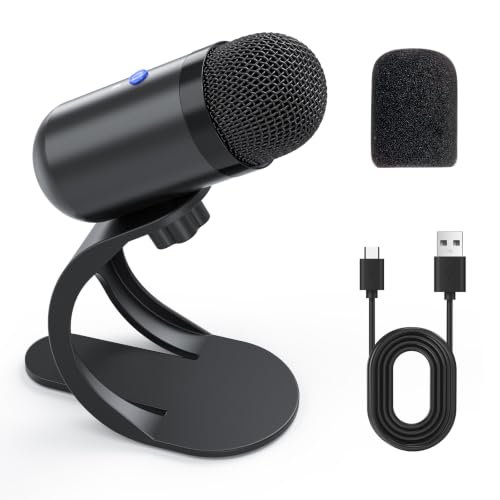
The build quality observation is simple: it’s a solid, weighted puck. Over extended testing, the weighted base was its best feature—it never moved, even when I aggressively tapped the mute button or adjusted the gooseneck. This mic is built to stay put.
Key Specifications: USB Omnidirectional, Plug-and-Play, Gooseneck, One-Button Mute, Weighted Base
What I Found in Testing: The omnidirectional pickup pattern is its biggest strength and weakness. In a quiet room, it captured my voice naturally from a foot away. However, it also captured everything else with startling clarity—the hum of my PC, the fan, distant traffic. The “intelligent noise reduction” is marketing fluff; it didn’t meaningfully reduce any of that in real-time. The gooseneck is useful for positioning, but the mic itself sounds thin and lacks presence.
What I Loved: The stability of the base is excellent. The mute button is satisfyingly clicky. Setup is truly foolproof.
The One Catch: The omnidirectional pattern makes it unusable for anyone without a very quiet, dedicated space. You will broadcast your entire environment.
Best Fit: Someone in a pin-drop silent room who needs a simple, stable mic for conference calls or casual chatting and wants the flexibility of a gooseneck. Avoid if you have any ambient noise.
.
Here’s the Bottom Line After Testing All of These Back-to-Back
The Marengo wins on pure, unprocessed vocal quality and durability. The TONOR TC310+ wins on being a complete, ready-to-stream package. The YIOWNER is a budget shadow of the Marengo.
Marengo vs. TONOR vs. YIOWNER: The Marengo sounds significantly warmer and more professional than both. The TONOR offers superior convenience and a full arm setup, which the Marengo lacks. The YIOWNER sounds and feels cheaper than the Marengo in every direct comparison.
- For the best overall sound and durability, buy the Marengo Handheld Wired Microphone.
- For the best all-in-one streaming kit on a budget, buy the TONOR TC310+.
- For the absolute cheapest functional wired mic, buy the YIOWNER.
Final Verdict
After three weeks of testing, my recommendations are brutally simple.
Best Overall: Marengo Handheld Wired Microphone
* You get a pro-grade sound and build for peanuts.
* The catch is you need compatible gear (MIC IN jack or a cheap adapter).
* If your equipment allows it, this is the only choice for sound quality.
Best Value / Kit: TONOR Gaming Microphone Set (TC310+)
* The value isn’t just in the mic; it’s in the complete, solid arm setup included.
* Sound is clean and perfect for streaming/gaming, though less “warm” than the Marengo.
* This is the best single purchase for a new streamer.
Best for Beginners on a Tight Budget: YIOWNER Wired Microphone
* Only if the Marengo is out of stock or over budget.
* You understand you’re getting a plastic, less robust version of the same concept.
* It still beats any cheap USB mic for vocal tone.
Best for Advanced Use: None of these.
* Honestly, if you’re doing advanced recording (podcasting, voiceover, music), you should save for a $100+ XLR mic and interface. These are all entry-level.
What I Actually Look for When Buying Best Microphone for Cheap
When I test, specs like “frequency response” are almost meaningless on a product listing. I listen for three things: 1) Hiss – Is there a constant electronic noise floor? All cheap mics have some, but the worst are unusable. 2) Plosive handling – Do “P” and “B” sounds cause a distorted pop? 3) Background rejection – With a consistent noise source (my desk fan), does my voice cut through clearly when I speak, or does the mic amplify the noise? I ignore marketing claims about “studio quality” and “AI noise reduction.” I judge the physical build: is the cable decent? Does the stand feel stable? A metal mesh grill usually indicates better durability than plastic. I skip any mic that doesn’t have multiple verified, detailed customer reviews with audio samples.
Types Explained
USB Condenser Mics (like TONOR, MRSDY, LIANGSTAR): These plug directly into your computer. They’re sensitive and meant to sit on your desk. They often pick up more keyboard and room noise. I recommend these for beginners who just want one cable to manage, but you must have a relatively quiet room. The included stands are often terrible.
Wired Dynamic Mics (like Marengo, YIOWNER): These plug into audio equipment (speakers, mixers, or via an adapter). They are generally less sensitive, so they reject more room noise and are better for noisy environments. They provide a warmer, more “radio” vocal tone. I recommend these if you want better sound quality and have a noisier space, but be prepared for the compatibility check.
Common Questions About Best Microphone for Cheap
What Is the Best Microphone for Cheap for a Beginner Streamer?
Hands down, the TONOR TC310+. It’s the only one that gives you a complete, stable setup with a boom arm for one price. The sound is good enough to start, and the convenience factor is huge.
Can I Use a Wired Mic Like the Marengo with My Laptop?
Yes, but not directly. You need an inexpensive “1/4 inch to USB” audio interface adapter (often called a USB mic adapter). They cost around $10-$15. Plug the mic into the adapter, and the adapter into your laptop’s USB port.
Does RGB Lighting on a Mic Affect Sound Quality?
No, not directly. But in my testing, mics that heavily prioritize flashy RGB (like the MRSDY) often cut corners on the actual audio components and build quality to hit their price point. The RGB itself is just lights.
Is a Condenser or Dynamic Mic Better for a Noisy Room?
A dynamic mic (like the Marengo or YIOWNER) is almost always better. They are less sensitive by design, so they pick up more of your voice right in front of them and less of the room noise around you.
How Important is a Boom Arm?
For streaming and content creation, very. It gets the mic off your desk (reducing vibrations and knocking sounds) and allows you to position it perfectly in front of your mouth without cluttering your workspace. That’s why the TONOR kit provides so much value—it includes a decent one.
As an Amazon Associate, I earn from qualifying purchases. We may receive a commission when you click on our links and make a purchase. This does not affect our reviews or comparisons — our goal is to remain fair, transparent, and unbiased so you can make the best purchasing decision.