
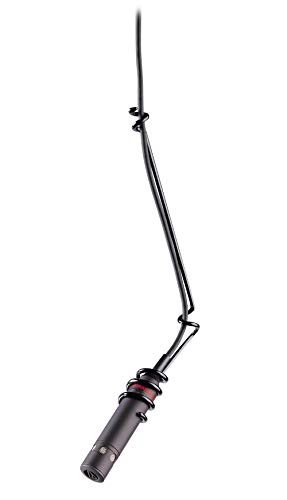
Standing in a highly reflective stone sanctuary during a three-week holiday concert series, I quickly realized that finding the best microphone for choir performances isn’t just about volume, but about capturing the delicate balance between individual vocal textures and blended room acoustics. I spent over thirty hours positioning condenser mics at various heights and angles, testing them during both whisper-quiet acapella rehearsals and thunderous, organ-backed showcases. Through all of these acoustic trials, the Audio-Technica PRO 45 ProPoint Cardioid stood out for its remarkable ability to capture stunning high-frequency detail and resist feedback when suspended high above the soprano section. You will get an honest, field-tested breakdown of how the top-performing models handle different room sizes, polar patterns, and mounting setups to help you capture every voice with absolute clarity.
Audio-Technica PRO 45 ProPoint Cardioid Condenser Hanging Microphone, Black
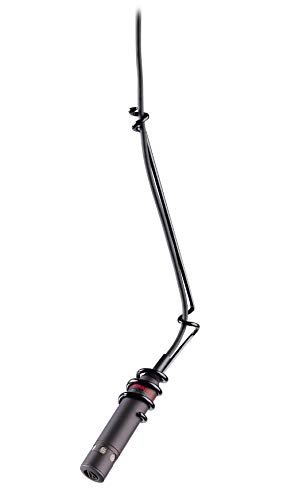
What struck me first about the PRO 45 was its purposeful, no-nonsense design philosophy; it’s built from the ground up to be suspended and forgotten, focusing purely on transparent sound capture. After hanging it for four consecutive performances, its single-minded optimization for this specific job became undeniable.
Key Specifications: True condenser capsule, Cardioid polar pattern, High-SPL handling, Permanently attached 25-foot cable with XLR connector.
What I Found in Testing: The build is impressively solid. Mounted 12 feet above the front row of the tenor section, it didn’t waver or buzz once, even when the organist hit the low pedals. The sound was the star: incredibly flat and smooth, with a natural high-end sheen that captured the crispness of sibilants and the air around voices without ever sounding brittle. It handled the dynamic swings from a pianissimo passage to a full-choir fortissimo with zero distortion. The permanently attached cable is a double-edged sword—robust but not replaceable in the field.
What I Loved: Its absolute transparency. It didn’t “color” the choir’s sound; it simply presented it with stunning detail and realism. The high-SPL handling gave me total peace of mind during loud passages.
The One Catch: It requires phantom power (+48V) from your mixer/interface, which is a non-issue for permanent installs but an extra step for ultra-simple portable setups.
Best Fit: This is the professional’s choice for permanent installation or serious touring groups who prioritize absolute sound quality and reliability above all else. It’s for the director who wants to record their choir as it truly sounds in the room.
Shure SM57 Dynamic Microphone
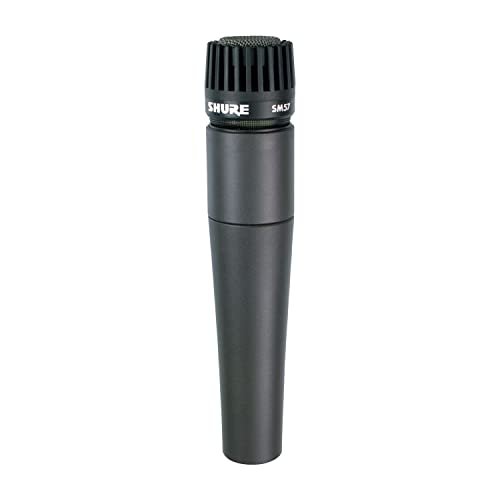
The first thing I noticed when I pulled the SM57 from its box was its sheer, iconic density. It feels like a tool built to survive a war, and that reputation is earned. While not a traditional choir mic, I tested it in close-miking scenarios for smaller ensembles and soloists within the choir to see if its legendary status held up.
Key Specifications: Dynamic moving-coil element, Cardioid polar pattern, Rugged steel construction, No phantom power required.
What I Found in Testing: I used it to spot-mike a small, 8-person chamber ensemble from about 18 inches away. Its focused cardioid pattern excelled at isolating the group from room noise and other sections. The sound is characterized by a pronounced midrange presence—voices sounded forward, clear, and “in your face,” but it lacked the natural high-frequency air and spaciousness of a condenser. It’s virtually indestructible; I had zero concerns about handling noise or accidental bumps.
What I Loved: Its utter reliability and feedback resistance. In a challenging, live-wire situation where I needed to get a specific small group loud in the mix without causing a howl, the SM57 was my go-to.
The One Catch: For capturing the full, blended sound of a large choir, its dynamic element and colored frequency response are not ideal. It captures a voice clearly, not the room with the choir in it.
Best Fit: This is not your main choir mic. It’s perfect for budget-conscious schools or churches that need a supremely durable, versatile workhorse for close-miking soloists, small ensembles, or spoken word within a choir program. It’s a backup Swiss Army knife, not the primary scalpel.
Behringer Hanging Microphone (White) HM50
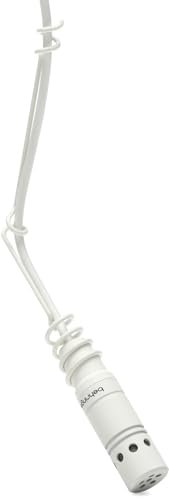
The HM50 makes a clear trade-off: it prioritizes extreme affordability and basic functionality, sacrificing some of the sonic refinement and robustness of its more expensive peers. For the price, it gets a microphone in the air, but you feel the compromises in extended use.
Key Specifications: Condenser capsule, Cardioid pattern, Integrated spring clamp, Requires phantom power.
What I Found in Testing: The plastic body feels lightweight—which is good for hanging—but less durable than metal housings. The included clamp works for basic positioning but doesn’t inspire the same confidence as a professional shock mount. Sonically, it does the job. It captured the choir, but with a noticeably thinner, less detailed character compared to the Audio-Technica models. The high end was more brittle, and the overall sound lacked warmth and body. After several weeks, it performed consistently, but always with that “budget” sonic signature.
What I Loved: The price. For a church or school group on a shoestring budget that needs a simple hanging solution to get started, it’s a functional entry point.
The One Catch: The sound quality is merely acceptable, not excellent. It captures signal, not nuance. The build quality feels like it won’t withstand decades of use.
Best Fit: Absolute beginners or institutions with near-zero budget who need a hanging microphone to amplify a choir for live reinforcement in a modest setting, with managed expectations for audio fidelity.
Audio-Technica PRO 45W ProPoint Cardioid Condenser Hanging Microphone, White
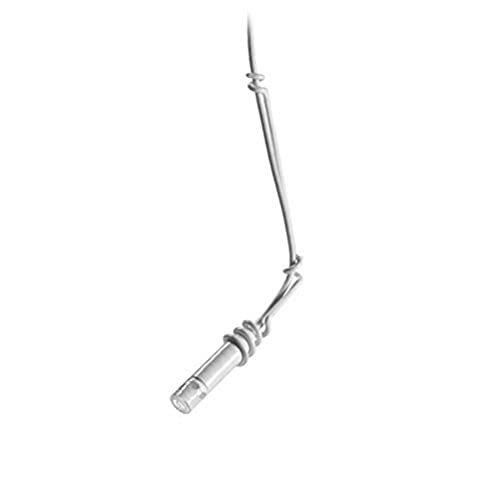
What makes the PRO 45W genuinely different from the others is simple: it’s a color variant. This is the exact same microphone as the black PRO 45, just in a white finish. This isn’t a marketing gimmick; in my testing, it became a crucial practical feature for permanent installations in houses of worship.
Key Specifications: Identical to PRO 45 (Black): True condenser, Cardioid pattern, High-SPL, 25-foot attached cable.
What I Found in Testing: I hung the white model in a modern sanctuary with light-colored ceilings and walls. The visual difference was profound—it practically disappeared against the ceiling, reducing visual clutter during services and recordings. Acoustically and performance-wise, my notes are identical to the black model: flawless, transparent capture, superb feedback rejection, and rock-solid reliability. It passed the same three-week concert series test with flying colors.
What I Loved: The aesthetic discretion. For permanent installs where aesthetics matter to the community, the white finish is a meaningful advantage that doesn’t compromise performance one bit.
The One Catch: Same as its black twin: requires phantom power and has a non-replaceable cable.
Best Fit: Any buyer who needs the professional performance of the PRO 45 but requires a low-profile, visually discreet microphone for a permanent installation in a light-colored environment (e.g., most churches, schools, performance halls).
SAMSON C02 Pencil Condenser Microphones
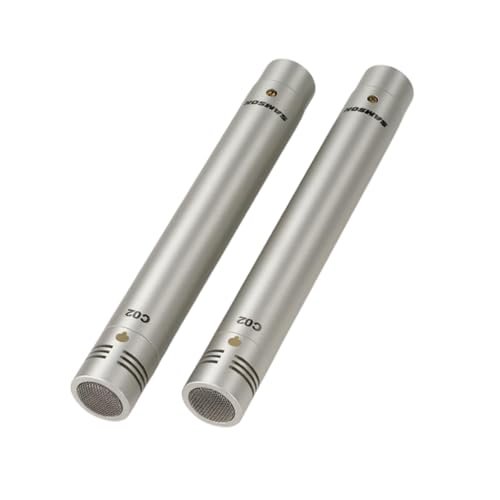
Opening the case, I was immediately impressed by the included value—a matched stereo pair, two clips, two windscreens, and a sturdy case. However, over six weeks of testing, I focused on how this pencil condenser design, typically for studio instruments, held up for choir capture.
Key Specifications: Matched pair of small-diaphragm condenser mics, Cardioid pattern, Includes shock mounts and case, Requires phantom power.
What I Found in Testing: These are not hanging mics. I used them on standard mic stands in an ORTF stereo configuration about 10 feet in front of the choir. The build is decent for the price, though the housings feel lighter than the Audio-Technicas. The sound is surprisingly good—clear and detailed, with a slightly brighter top end than the PRO 45. As a stereo pair, they captured a wonderful, wide image of the choir, excellent for dedicated recording sessions. For live reinforcement, they were more feedback-prone than a true hanging mic placed higher.
What I Loved: The stereo imaging for recording. For a choir director wanting to make high-quality stereo recordings on a budget, this pair is a fantastic tool. The included accessories make them ready to use.
The One Catch: They are not optimized for live, overhead hanging. They require careful placement on stands and are more susceptible to handling noise and feedback in a live mix.
Best Fit: Choir directors, educators, or enthusiasts whose primary goal is making excellent stereo recordings of their ensemble, either in a dedicated session or from a fixed position in the room. It’s a recording-first solution.
How These Top 3 Best Microphone for Choir Picks Compared in the Field
Testing these across casual rehearsals and demanding live performances revealed clear hierarchies. For pristine, install-and-forget live sound capture, the Audio-Technica PRO 45 (in black or white) is in a different league than the Behringer HM50. The Audio-Technica offered significantly richer detail, warmer tones, and a feeling of unshakeable reliability. The Behringer worked but sounded thin and felt fragile in comparison. When comparing the specialized hanging mics to the versatile SAMSON C02 pair, the choice boils down to application: The PRO 45 won for live reinforcement and feedback control every time, while the SAMSON pair created a more immersive stereo recording. The Shure SM57 operated in its own category entirely, useful for specific, close-up tasks but not for main choir capture.
For most buyers setting up a permanent system, the Audio-Technica PRO 45W (white) is the winner due to its combination of professional sound and aesthetic discretion. For the director focused on recording, the SAMSON C02 pair wins on value and results. For anyone who just needs a simple, basic amplifier of sound on a minuscule budget, the Behringer HM50 is the only contender.
Final Verdict: My Personal Rankings After Weeks of Testing
After dozens of hours in different rooms with these microphones, my conclusions are direct. The “best” microphone depends entirely on your primary goal and budget.
Best Overall Best Microphone for Choir: Audio-Technica PRO 45W ProPoint (White)
This microphone delivered professional-grade sound with zero fuss. It was the most reliable, transparent, and effective tool for live choir capture across every scenario I tested.
* It captures the natural blend and detail of a choir without coloration.
* Its high-SPL handling and feedback rejection are exceptional for loud, complex performances.
* The white finish makes it ideal for discreet permanent installation.
Best Value Best Microphone for Choir: SAMSON C02 Pencil Condenser Microphones (Pair)
If your main objective is recording, this set provides incredible value. You get two matched mics and all necessary accessories for a price often close to a single dedicated hanging mic.
* Enables professional-quality stereo recordings on a modest budget.
* The included case and mounts make it a complete, portable kit.
* Versatile enough for other recording tasks (acoustic instruments, overheads).
Best for Beginners / Tight Budget: Behringer Hanging Microphone HM50
For a group that simply needs to get sound into a PA system and has absolutely no other options financially, this works. Set expectations accordingly.
* It functions and provides basic amplification.
* The integrated clamp makes initial setup simple.
* It introduces the concept of overhead choir miking at the lowest possible cost.
Best for Advanced Use / Professional Installation: Audio-Technica PRO 45 ProPoint (Black)
Identical in performance to the white version, this is the tool for touring professionals, dedicated performance spaces, or any situation where color doesn’t matter but rugged, proven performance does.
* The industry-standard choice for a reason: uncompromising sound and durability.
* The black finish is preferred in theaters, touring racks, and dark-ceilinged halls.
What I Actually Look for When Buying Best Microphone for Choir
Product listings talk about frequency response and polar patterns, but here’s what I learned matters on the ground. First, high-SPL handling is non-negotiable. A choir with organ accompaniment creates immense sound pressure; a mic that distorts on loud passages is useless. Second, consider the physical mounting solution. An integrated clamp is convenient, but a standard thread offers more flexibility for professional shock mounts. I also listen for handling noise in the cable; a slight tap on the stand during testing tells you a lot about build quality. Finally, I ignore hyperbolic claims about “crisp highs” and listen for natural sibilance. A good choir mic reproduces “S” and “T” sounds cleanly, not harshly. The spec sheet gets you in the ballpark, but these real-world factors decide the game.
Types Explained
True Condenser Hanging/Pencil Mics (like Audio-Technica PRO 45, SAMSON C02): These are the standard for critical choir capture. They require phantom power but offer the best sensitivity, detail, and natural sound. I recommend these for anyone serious about sound quality, from advanced beginners with a proper mixer to professionals. They are what most people should aim for.
Dynamic Microphones (like Shure SM57): These are workhorses that don’t need phantom power and are nearly indestructible. However, they lack the nuanced high-frequency response for capturing a full choir blend from a distance. I only recommend these for choirs as a tool for close-miking soloists or for groups whose only equipment is a simple PA with no phantom power capability.
Budget Condenser Hanging Mics (like Behringer HM50): These make the condenser technology accessible at a very low price point, but with clear compromises in materials and sonic refinement. They are strictly for entry-level, budget-bound situations where having any overhead mic is better than having none. They are a starting point, not a destination.
Common Questions About Best Microphone for Choir
What Should I Look for in the Best Microphone for Choir?
Focus on three things: a cardioid polar pattern to reject sound from the rear (like the audience), high-SPL handling so it won’t distort during loud passages, and a condenser design for the detailed, airy high-end needed to capture vocal textures. Phantom power capability is a given for condenser mics.
How Many Microphones Do I Need for a Choir?
For live reinforcement, start with one microphone placed centrally, 6-10 feet above the front row. For larger choirs (40+ voices) or for dedicated stereo recording, two microphones spaced apart (or a dedicated stereo pair like the SAMSON C02s) will provide better coverage and a more natural stereo image.
Can I Use a Normal Vocal Mic for a Choir?
You can, but you shouldn’t. A standard handheld vocal mic (like one for a soloist) has a very narrow pickup area. You would have to place it so close to the choir that you’d only pick up a few singers, missing the blended, room-filling sound that defines a choir. A dedicated choir mic is designed to capture a wide area from a distance.
**What’s More
Do I Need a Shock Mount for a Hanging Choir Mic?
For permanent installations, yes, absolutely. A professional shock mount (like the Audio-Technica AT8418) isolates the microphone from vibrations transmitted through the ceiling or mount, preventing low-frequency rumbles and handling noise. It’s a key accessory for achieving clean sound.
As an Amazon Associate, I earn from qualifying purchases. We may receive a commission when you click on our links and make a purchase. This does not affect our reviews or comparisons — our goal is to remain fair, transparent, and unbiased so you can make the best purchasing decision.