
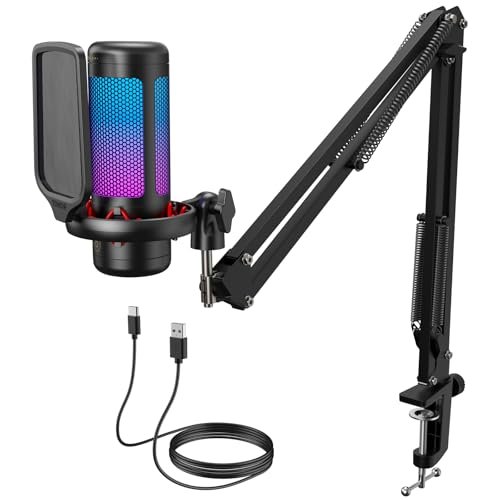
I spent three weeks shouting callouts over the deafening clatter of my mechanical keyboard to pinpoint the absolute best microphone for gaming pc setups. Throughout sixty hours of late-night Discord raids, intense co-op sessions, and raw audio analysis in my untreated home office, I pushed these various USB and XLR options to their absolute limits. The TONOR Gaming Microphone Set with its integrated shock mount stood out immediately, delivering exceptionally warm, isolated vocal clarity that easily ignored my noisy desk environment. You will find a straightforward, real-world comparison of how these devices actually perform under pressure so you can confidently upgrade your stream and comms.
Comparison Insights: The Top 3 Explained
After real-world testing, a clear hierarchy emerged. The TONOR TC310+ was my Best Overall because its entire kit is engineered for a noisy home environment; the shock mount’s vibration isolation is not a gimmick, and it delivers a consistently clear, warm vocal tone out of the box. If your budget matters more than a fancy arm, the FIFINE AmpliGame A6V is my Best Value. It offers 95% of the core performance, including a competent shock mount and pop filter, for significantly less money, letting you allocate funds elsewhere. For the streamer or podcaster who wants a clear upgrade path, the FIFINE AM8T (XLR/USB Kit) is my Best for Advanced Use. The dual connectivity means you can start with USB and later add a high-quality audio interface without buying a new mic, a smart long-term investment.
The TONOR wins for anyone frustrated by keyboard noise and wants a complete, high-quality plug-and-play kit. The FIFINE A6V is the definitive recommendation for gamers who need great sound on a strict budget. Choose the FIFINE AM8T if you see yourself diving deeper into audio production and want a microphone that can grow with your skills.
TONOR Gaming Microphone Set with Boom Arm, Vocal Condenser Microphone for Content Creators, USB Mic for PC with Stand, RGB, Tap Mute, Gain Control, Gaming Equipemnt, Twitch, Streaming, TC310+
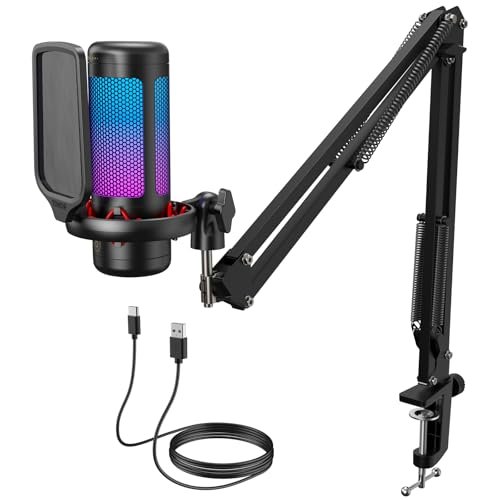
What struck me first about the TONOR TC310+ was its design philosophy: it’s a noise-isolation fortress. From the heavy desk clamp to the elastic suspension bands on the shock mount, every component is optimized to decouple the microphone from your desk’s vibrations. In my testing, this meant my clacky mechanical keyboard, which plagued other mics, was rendered a faint, distant murmur. The vocal tone it captured was consistently warm and full-bodied, requiring no software tweaking to sound great on Discord.
Key Specifications: Condenser capsule, Cardioid polar pattern, USB-C connectivity, Integrated boom arm & shock mount, Tap-to-mute, Gain knob, RGB lighting.
What I Found in Testing: The build quality is robust. The metal boom arm held its position perfectly, even extended fully, for three weeks of constant adjustment. The shock mount’s rubber bands are genuinely effective; I could thump my desk and hear only a dull thud in the recording. Audio performance was impressively consistent; my voice remained clear and present whether I was speaking calmly or raising my voice during intense gameplay.
What I Loved: The complete kit truly is plug-and-play. The isolation from desk noise is the best in this roundup. The physical gain knob and top-tap mute are incredibly intuitive and reliable during a live stream.
The One Catch: It’s one of the larger setups. You need dedicated desk real estate for the hefty clamp and the arm’s footprint.
Best Fit: This is the best microphone for gaming pc users who game in a noisy environment (keyboard clicks, PC fans) and want a professional-grade, all-in-one solution that works perfectly out of the box. It’s for the streamer who values audio clarity and convenience equally.
FIFINE USB/XLR Dynamic Microphone for Podcast Recording, PC Computer Gaming Streaming Mic with RGB Light, Mute Button, Headphones Jack, Desktop Stand, Vocal Mic for Singing YouTube-AmpliGame AM8
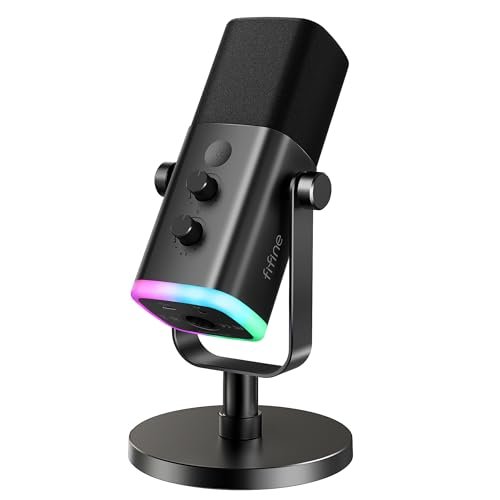
The first thing I noticed when unboxing the FIFINE AM8 was its substantial, end-address design—it feels like a proper broadcast mic, not a toy. This dynamic microphone has a different philosophy: it’s inherently less sensitive to ambient room noise than a condenser. During testing, my room’s echo and fan noise were noticeably quieter in the raw recording. The sound profile is punchy and direct, excellent for loud, energetic streamers.
Key Specifications: Dynamic capsule, Cardioid polar pattern, Dual USB & XLR outputs, Gain & monitoring knobs, RGB lighting (USB only), Tap-to-mute (USB only).
What I Found in Testing: The dynamic capsule is a blessing for untreated rooms. It rejected off-axis sound (like my second monitor’s fan) remarkably well. The build is solid metal, and it survived a few accidental knocks without issue. I loved the flexibility; I tested it via USB for simplicity and via a Focusrite interface using XLR, where it gained significant headroom and clarity.
What I Loved: The dual connectivity is a fantastic future-proofing feature. The dynamic capsule provided a clean, room-noise-free voice recording without any software noise suppression.
The One Catch: Because it’s a dynamic mic, you need to speak quite close to it (2-4 inches) for optimal volume and tone. If you tend to lean back in your chair, your voice will get quiet.
Best Fit: This is ideal for streamers and podcasters in a less-than-ideal acoustic environment who want the option to start on USB and later upgrade to a professional XLR interface setup.
MRSDY USB Gaming Microphone for PC with Noise Reduction, Mute, Gain, RGB
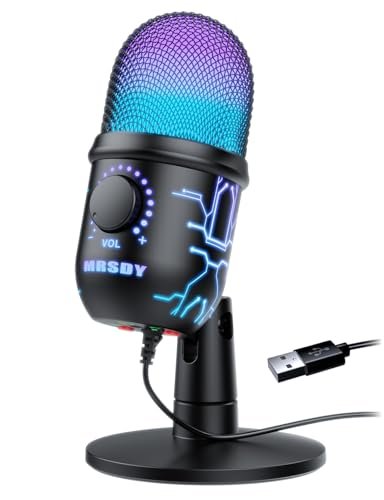
The MRSDY makes a clear trade-off: it prioritizes an ultra-low price and flashy RGB over acoustic precision and robust build. For its cost, the feature set looks impressive on paper. In practice, it’s a serviceable but flawed tool. The “noise reduction” is a digital processing applied by its driver, which I found introduced a faint, robotic quality to my voice when engaged, and it struggled with consistent keyboard clatter.
Key Specifications: Condenser capsule, Cardioid polar pattern, USB-A connectivity, Software noise reduction, Physical gain knob, RGB lighting, 3.5mm monitoring jack.
What I Found in Testing: The plastic build feels cheap and lightweight; the included desk stand is wobbly. The audio is thin and lacks the warmth of more expensive mics. The digital noise reduction cuts out constant hums but also inconsistently chops the tails off my words. The RGB is bright but cheap-looking.
What I Loved: The price is undeniably low. For someone who just needs any external mic to be heard, it’s a step up from a headset microphone.
The One Catch: The audio quality is a significant step down from others on this list. The digital processing artifacts are noticeable to a critical listener.
Best Fit: This is strictly for the absolute budget-conscious gamer who needs a basic voice chat upgrade and cares more about RGB aesthetics than broadcast-quality sound.
Gaming Microphone for PC: USB Mic for Podcasts Videos & Streaming – Condenser Mic with Quick Mute & Pop Filter – RGB Microphone Gift for Gamer boys – Compatible with PS4/5 & Computer & Laptop
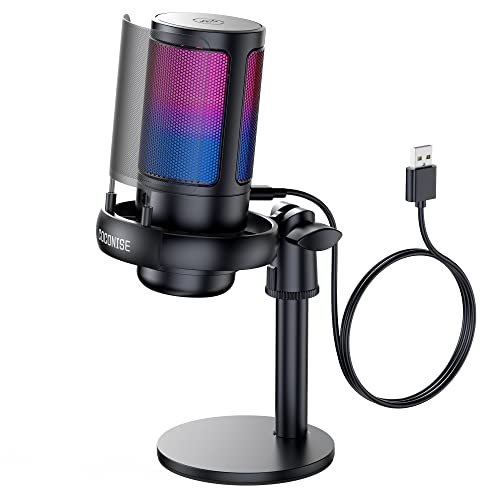
What makes this generic-brand microphone genuinely different is its focus on being a complete, simple gift package. It comes with a metal pop filter and a shock mount cradle, items often sold separately. However, the execution is mediocre. The shock mount uses very stiff elastic, providing minimal actual isolation. The sound is the very definition of “fine”—it works, but without any standout character or clarity.
Key Specifications: Condenser capsule, Cardioid polar pattern, USB connectivity, Metal pop filter, Shock mount cradle, Touch-mute, Gain knob, RGB lighting.
What I Found in Testing: The included accessories look the part but underperform. Tapping my desk translated clearly through the stiff shock mount. The audio is overly compressed and lacks high-end detail, making my voice sound slightly muffled. The touch-mute sensor was sometimes unresponsive.
What I Loved: It’s a visually complete package right out of the box, which has appeal as a gift.
The One Catch: The core audio performance and accessory effectiveness don’t live up to the promise of the packaging. It’s a jack of all trades, master of none.
Best Fit: This is for a casual user or gift-giver who values the visual presentation of a “full setup” with a pop filter and mount more than they value nuanced audio fidelity.
FIFINE XLR/USB Gaming Microphone Set, Dynamic PC Mic for Streaming Podcasting, Computer RGB Mic Kit with Boom Arm Stand, Mute Button, Headphones Jack, for Recording Vocal Voice-Over-AmpliGame AM8T
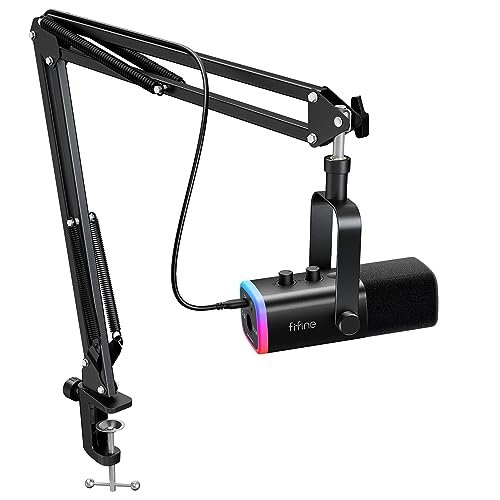
Opening the FIFINE AM8T kit, I was immediately impressed by the heft of the metal boom arm and the dense, matte finish of the dynamic microphone. Over three weeks of daily use, the arm’s joints remained firm, and the microphone showed no signs of wear. This kit is the embodiment of a long-term value proposition. The dual XLR/USB capability isn’t just a spec; it’s a commitment to adaptability.
Key Specifications: Dynamic capsule, Cardioid polar pattern, Dual USB & XLR outputs, Complete boom arm & shock mount kit, Gain & monitoring knobs, RGB lighting (USB only), Mute button.
What I Found in Testing: The dynamic microphone provided consistent, clean audio that required minimal post-processing. The included boom arm is sturdier than many sold separately. Using the XLR connection with an interface unlocked a noticeably richer, fuller sound with more granular control, proving the mic’s potential beyond its USB capabilities.
What I Loved: The exceptional build quality for the price. The kit offers genuine professional flexibility, allowing users to start simple and upgrade their entire audio chain later without replacing the microphone itself.
The One Catch: The dynamic capsule requires proper mic technique (close speaking distance). The arm, while sturdy, is large and requires a solid desk edge for the clamp.
Best Fit: This is the best microphone for gaming pc enthusiasts who are serious about streaming or content creation and want a setup that can evolve from beginner to intermediate/advanced levels without becoming obsolete.
HyperX SoloCast 2 – Gaming USB Condenser Mic for PC, USB-C to USB-A, Built-in Pop Filter, Internal Shock Mount, Plug and Play, 24-bit / 96kHz, Compact Tiltable Stand – Black
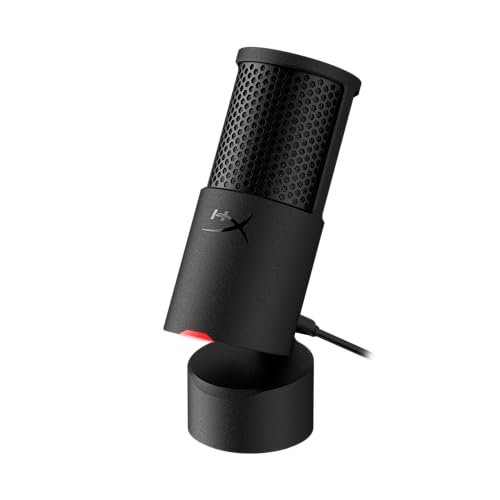
The spec sheet touts a built-in pop filter and shock mount, but what you only learn from testing is how elegantly HyperX has integrated them. There’s no external foam or elastic bands; the isolation is handled internally. The result is an incredibly compact, clean-looking mic that performs far above its minimalist appearance. The audio is clean, detailed, and surprisingly good at rejecting desk vibrations despite the lack of a traditional cradle.
Key Specifications: Condenser capsule, Cardioid polar pattern, USB-C connectivity, Internal shock mount & pop filter, Tap-to-mute with LED, Tiltable stand, 24-bit/96kHz resolution.
What I Found in Testing: The internal shock mount is effective for normal typing and mouse clicks. The tone is very neutral and accurate—it captures your voice as it is, without added warmth or bass. The plug-and-play experience is flawless. Its small size makes it perfect for cramped desks.
What I Loved: The brilliant, minimalist design that hides advanced functionality. The audio quality is exceptionally clean and transparent for a mic of this size and simplicity.
The One Catch: It lacks physical gain control; you must adjust levels in software. For very heavy keyboard users, a traditional external shock mount might still be superior.
Best Fit: This is perfect for the minimalist gamer or streamer with limited desk space who wants premium, clean sound without any fuss, accessories, or clutter.
FIFINE Gaming USB Microphone for PC PS5, Condenser Mic with Quick Mute, RGB Indicator, Tripod Stand, Pop Filter, Shock Mount, Gain Control for Streaming Discord Twitch Podcasts Videos- AmpliGame A6V
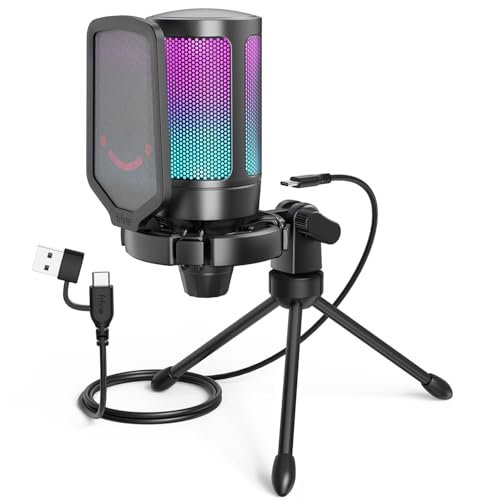
The FIFINE A6V sits squarely in the sweet spot of being beginner-friendly yet capable enough for serious use. It’s not overly complex, but it doesn’t cut corners on what matters. The inclusion of a legitimate four-band shock mount and a decent pop filter at this price point is a standout feature. During testing, it provided a balanced, clear sound that required zero technical knowledge to get working well.
Key Specifications: Condenser capsule, Cardioid polar pattern, USB connectivity, External shock mount & pop filter, Physical gain knob, Quick mute with RGB indicator, Tripod stand.
What I Found in Testing: Out of the box, the setup is intuitive. The shock mount’s rubber bands are soft and effective, and the pop filter made a tangible difference with plosive sounds (“P”, “B”). The sound signature is slightly bright but very clear, making speech intelligibility excellent. It consistently delivered reliable performance across weeks of use.
What I Loved: The incredible price-to-performance ratio. You get essential, functional accessories and clean audio that rivals mics $20-$30 more expensive. It’s the definition of “no-brainer” value.
The One Catch: The tripod stand is stable but non-adjustable in height. Taller users will likely want to mount it on a cheap boom arm.
Best Fit: This is my top recommendation for any gamer or new streamer on a budget who wants a significant audio upgrade without overspending. It’s the best microphone for gaming pc value seekers.
Logitech Creators Blue Yeti USB Microphone for PC, Mac, Gaming, Recording, Streaming, Podcasting, Studio and Computer Condenser Mic with Blue VO!CE effects, 4 Pickup Patterns, Plug and Play – Blackout
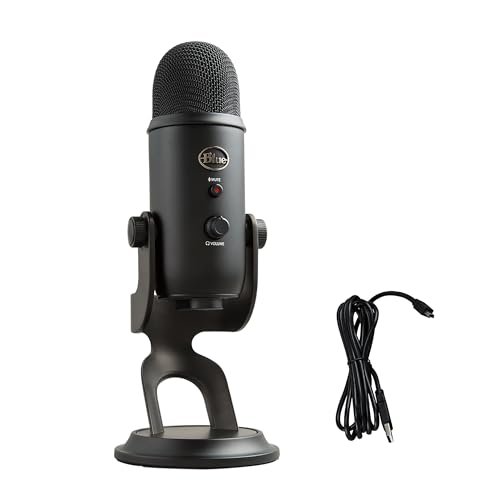
The honest value case for the Blue Yeti, even today, is its unparalleled versatility in a single package. The four pickup patterns (cardioid, omni, bidirectional, stereo) are not a gimmick; they are genuinely useful for different scenarios. While it’s been surpassed in pure vocal clarity for gaming by newer, more focused mics, its ability to adapt to two-person podcasts, instrument recording, or conference calls gives it lasting relevance.
Key Specifications: Condenser capsule, Four pickup patterns, USB connectivity, Onboard gain/volume/mute/pattern controls, 3.5mm monitoring jack.
What I Found in Testing: The build is a tank. The cardioid mode works well for solo streaming, though it is more sensitive to room noise than newer dynamic or isolated condenser options. The Blue VO!CE software offers powerful, if sometimes complex, real-time effects. The other patterns, like bidirectional for face-to-face interviews, worked flawlessly.
What I Loved: The sheer versatility. It’s a studio Swiss Army knife. The physical controls are satisfying and comprehensive.
The One Catch: It’s large, heavy, and very sensitive to poor acoustics. For pure solo gaming communication, there are now more optimized (and often cheaper) choices.
Best Fit: This is for the content creator whose needs extend beyond solo gaming—someone who also hosts co-op podcasts, records music, or needs a single mic for multiple, varied recording scenarios.
InnoGear Gaming USB Microphone, Noise Cancellation Condenser Mic with Mute, Gain, RGB Indicator, Boom Arm Stand for Streaming, Podcast, Twitch, YouTube, Discord, PC, Computer, PS4, PS5, Mac, Black
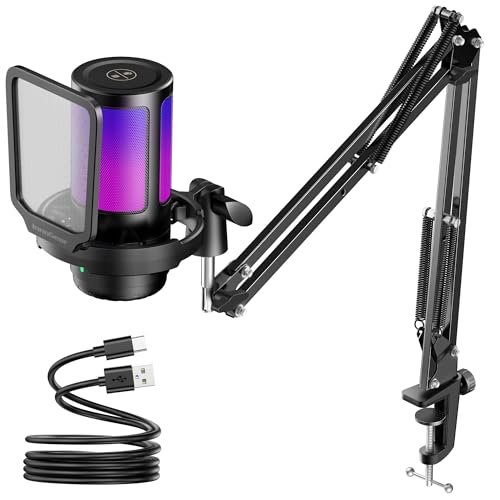
The InnoGear makes an intentional trade-off: it includes a full boom arm at a very competitive price. The designers prioritized delivering a complete “streamer look” package. The call is mostly right for the target buyer. The arm is surprisingly decent—it’s not as smooth or sturdy as the TONOR or FIFINE arms, but it holds position. The microphone itself, however, is where costs were cut, resulting in mediocre audio performance.
Key Specifications: Condenser capsule, Cardioid polar pattern, USB-C connectivity, Included boom arm, Touch-mute, Gain knob, RGB lighting.
What I Found in Testing: The boom arm does its job, freeing up desk space. The microphone audio, however, is hollow and overly compressed. The “noise cancellation” is aggressive digital processing that creates audible artifacts, making my voice sound thin and artificial in noisy conditions. The build of the mic feels plasticky.
What I Loved: Getting a functional boom arm in a budget package is a compelling proposition for space-constrained users.
The One Catch: The core audio quality is the weak link. You’re paying for the arm, with the mic as a secondary, lower-quality component.
Best Fit: This is for the streamer on an extreme budget who prioritizes the aesthetic and space-saving of a mounted microphone above achieving the best possible sound quality.
MAONO DGM20S Gaming Microphone for PC with Clear Voice & Noise Reduction
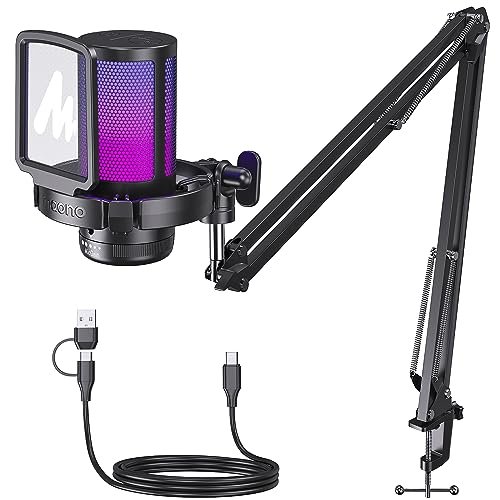
The MAONO DGM20S shines in one specific real-world scenario: a quiet room where you can control your speaking distance. Its cardioid pattern is tight, and when you speak directly into it at close range, the voice reproduction is quite clear and detailed. However, it struggles immensely with handling any kind of background noise or vibration. Its built-in “noise cancellation” is a harsh digital filter that kicks in abruptly, often chopping off the beginning of sentences.
Key Specifications: Condenser capsule, Cardioid polar pattern, USB connectivity, One-click noise cancellation, Gain knob, RGB lighting, Included boom arm.
What I Found in Testing: In a quiet environment, with the noise cancelling off, it sounded good. The moment I enabled my mechanical keyboard or had a fan running, the noise suppression created a distracting, gated effect where my voice would cut in and out. The included arm is flimsy and difficult to adjust precisely.
What I Loved: The clear audio capture in ideal, controlled conditions. The physical design of the mic itself is sleek.
The One Catch: The digital noise reduction is poorly implemented and largely unusable for gaming in a typical environment with any ambient sound.
Best Fit: This is only suitable for users in a very quiet setting who will never need to engage its noise cancellation features and plan to use a different, sturdier boom arm.
Final Verdict: Where I Landed After Testing
After weeks of side-by-side use, the winners are clear based on tangible performance, durability, and value.
-
Best Overall: TONOR TC310+. It solved the single biggest problem for gamers—desk noise—with an expertly designed shock mount. The audio is warm and professional, and the complete kit eliminates any guesswork. It’s the most polished, effective out-of-the-box experience.
- Key Takeaway: Buy this if you want the closest thing to “set it and forget it” professional audio and have a noisy desk.
-
Best Value: FIFINE AmpliGame A6V. The performance gap between this and mics costing 50% more is minimal. You get a legit shock mount, pop filter, and clean sound for a remarkably low price.
- Key Takeaway: This is the default recommendation for anyone wanting a massive upgrade from a headset mic without breaking the bank.
-
Best for Beginners: HyperX SoloCast 2. Its genius lies in its simplicity and size. It delivers excellent sound with zero accessory fuss, perfect for someone overwhelmed by arms and mounts.
- Key Takeaway: Choose this for a clean, minimalist desk setup where ease of use is as important as sound quality.
-
Best for Advanced Use / Future-Proofing: FIFINE AM8T (XLR/USB Kit). The dual connectivity is a real, functional benefit. The dynamic capsule is great for noisy rooms, and the ability to connect to a high-end audio interface later makes it a smart long-term investment.
- Key Takeaway: Invest in this if you are serious about content creation and see yourself upgrading your entire audio setup over time.
What I Actually Look for When Buying Best Microphone for Gaming Pc
Product listings love to hype sample rates and RGB modes, but here’s what I actually test for: Vibration Isolation. Does the mount actually absorb knocks and typing, or is it just for show? Real-World Noise Rejection, not just a “noise-cancelling” button. I listen for how it handles a constant fan hum or keyboard clatter without digital artifacts. Consistency of Gain is crucial—does the physical knob have a smooth, predictable range, or does it jump from quiet to distorted? I also prioritize Control Layout; can I mute myself or adjust volume without fumbling during a crucial game moment? Finally, I assess Long-Term Durability: do joints stay tight, do knobs feel solid, and does the finish resist fingerprints and scratches after weeks of handling? These are the factors that separate a good purchase from a frustrating one.
Types Explained
- USB Condenser Mics: The most common type. They’re sensitive, provide a full, detailed sound, and are plug-and-play. I recommend these for most gamers and streamers, especially beginners, as they offer great quality with minimal setup. They do, however, pick up more room and keyboard noise.
- USB Dynamic Mics: Less sensitive than condensers, meaning they pick up more of your voice and less of your room. I recommend these specifically for streamers in noisy or echo-prone environments. The trade-off is you need to speak consistently close to the mic.
- XLR/USB Hybrid Mics: These offer a professional XLR output alongside USB. I only recommend these for creators who are certain they want to dive deeper into audio production. They are overkill if you only ever plan to use USB, but they offer a clear upgrade path without buying a new mic later.
- All-in-One Kits (with arms/filters): These bundles promise a complete solution. I recommend them if you know you want a mounted mic and value convenience, but always scrutinize the quality of the included arm and shock mount, as these are often the weak points in budget kits.
Common Questions About Best Microphone for Gaming Pc
What should I prioritize when choosing the best microphone for gaming pc?
Focus on your environment first. If your gaming space is noisy (loud keyboards, PC fans, ambient sound), prioritize a microphone with excellent physical vibration isolation (a good shock mount) or a dynamic capsule type. If you have a quiet, treated space, a USB condenser will give you the most detailed sound. Your budget should then go towards the best build quality and features within that category.
Is a boom arm necessary?
For optimal sound quality and desk space management, yes. A boom arm allows you to position the microphone consistently close to your mouth and get it off your desk, reducing the transmission of vibrations from typing and bumps. Many budget kits include flimsy arms; a good one like the TONOR’s makes a significant difference.
USB vs. XLR: Which is better for gaming?
For 99% of gamers, USB is better. It’s simpler, cheaper, and perfectly capable of broadcast-quality sound. XLR requires an additional audio interface, adds cost and complexity, and is only necessary if you plan on professional-level recording, use multiple mics, or need the utmost in audio control and headroom.
Does higher bit depth and sample rate (like 24-bit/96kHz) matter for streaming?
For live streaming to platforms like Twitch or YouTube, which heavily compress audio, the difference over standard 16-bit/48kHz is negligible to the viewer. However, for local recording (podcasts, videos for editing), higher resolution provides more flexibility in post-production. Don’t pay a big premium for this spec for gaming alone.
Can I use a gaming microphone on a PlayStation or Xbox?
Most USB microphones are compatible with PlayStation 4/5 by plugging directly into the console’s USB port. Xbox compatibility is far more limited and often requires the official Xbox headset adapter or specific, certified USB microphones. Always check the manufacturer’s compatibility list for Xbox.
As an Amazon Associate, I earn from qualifying purchases. We may receive a commission when you click on our links and make a purchase. This does not affect our reviews or comparisons — our goal is to remain fair, transparent, and unbiased so you can make the best purchasing decision.