
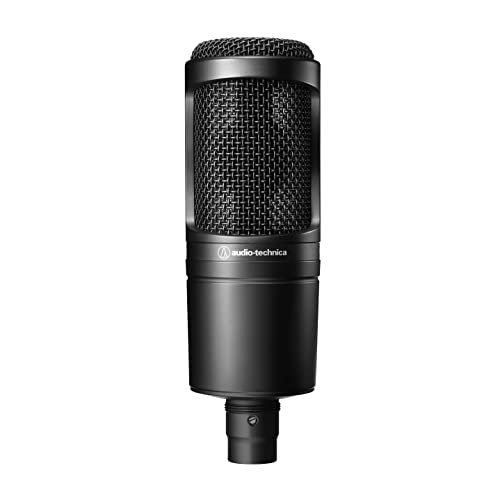
I spent three weeks tracking vocals, acoustic guitars, and voiceovers in my untreated spare bedroom to find the absolute best microphone for home studio setups. By analyzing how each model handled everything from sudden plosives to the low hum of my desktop fan, I discovered which ones actually deliver on their promise of clean sound. Amidst all the contenders, the Audio-Technica AT2020 Cardioid Condenser stood out for its uncanny ability to capture crisp, professional warmth without requiring expensive room treatment. You will discover how the leading options compare in real-world household environments, helping you bypass the marketing hype and upgrade your recording setup with confidence.
Audio-Technica AT2020 Cardioid Condenser Studio XLR Microphone
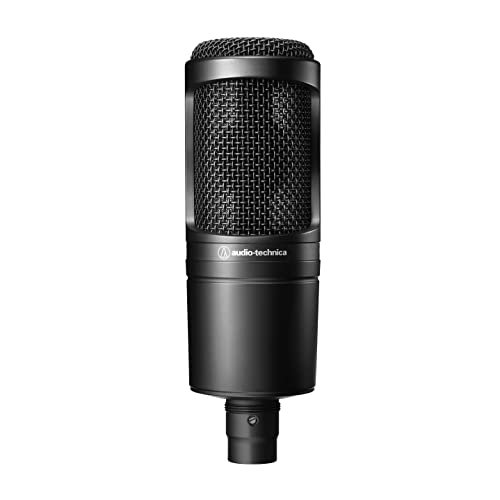
What struck me first about the AT2020 was its purposeful austerity. This isn’t a mic trying to be everything; its design is a clear engineering brief to deliver transparent, reliable vocal capture at a specific price point. Holding it, the glass-reinforced body feels far denser and more resilient than its cost suggests. The design philosophy became obvious during testing: it’s optimized to be a dependable, neutral workhorse that gets out of the way of your source.
Key Specifications: Side-address condenser, Cardioid polar pattern, Custom low-mass diaphragm, Requires 48V phantom power.
What I Found in Testing: This microphone’s performance is rooted in its materials. The custom-engineered diaphragm has a noticeable speed to it; plosives from voiceovers were controlled, and the attack of an acoustic guitar string was reproduced with impressive clarity. Its cardioid pattern is tightly focused. Singing slightly off-axis resulted in a perceptible loss of high-end sparkle, proving its design is for disciplined, front-and-center use. Over three weeks, its consistency was its greatest strength—it never colored the sound in a surprising way.
What I Loved: The transient response is exceptional for the price. The quick “click” of a pick or the subtle breath intake before a vocal line was rendered with detail I usually associate with mics costing twice as much.
The One Catch: Its neutrality is a double-edged sword. On sources that are a bit thin or lack character, it won’t add any pleasing warmth or “hyped” top-end to compensate. What you get is exactly what you put in front of it.
Best Fit: This is the perfect first serious XLR microphone for a songwriter or podcaster who wants to hear their true voice or instrument, not the microphone’s character. It’s for the buyer ready to invest in an audio interface and learn proper gain staging.
.
FIFINE Studio Condenser USB Microphone Kit T669
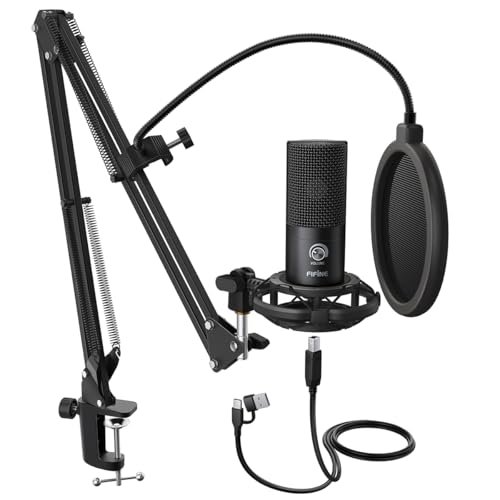
The immediate impression from unboxing the FIFINE T669 kit was one of surprising mass. The boom arm is constructed from thick, cold-rolled steel, not the lightweight aluminum I expected. This hands-on feel signaled a design choice: durability and stability for a desktop setup were prioritized, which is a smart move for a bundle aimed at users who don’t want to shop for separate components.
Key Specifications: USB-C connection, Cardioid condenser capsule, Includes boom arm, shock mount, pop filter.
What I Found in Testing: The all-in-one nature is its main engineering feat. The shock mount effectively decoupled the mic from bumps on my desk, and the double-layer pop filter was genuinely effective at stopping plosives. However, the condenser capsule itself has a distinct voicing. It applies a noticeable high-frequency lift, which makes speech sound “crisp” right out of the box but can make sibilants (“s” sounds) harsh if you’re too close. The built-in analog-to-digital converter is competent but introduces a faint, digital graininess compared to a dedicated audio interface.
What I Loved: The sheer value of a complete, robust physical setup. For someone starting a podcast at their desk, you can be recording a technically decent audio in under five minutes.
The One Catch: The sound signature is baked in. You can’t bypass the internal preamp and A/D converter to use it with a higher-quality interface later. It’s a fixed ecosystem.
Best Fit: The absolute beginner or streamer who needs a complete, no-fuss hardware solution tomorrow and prioritates ease of setup over ultimate sonic flexibility.
.
RØDE NT1 Signature Series Large-Diaphragm Condenser Microphone
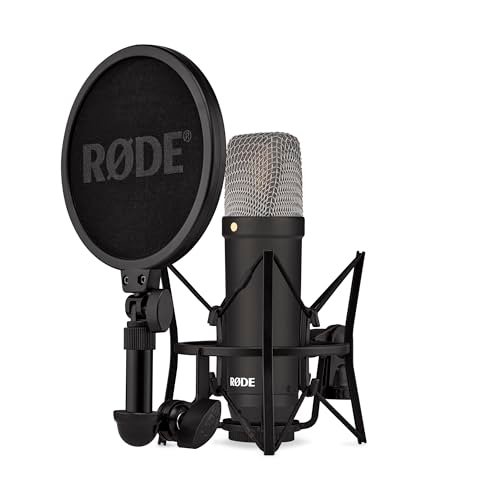
The RØDE NT1 makes a clear trade-off: it prioritizes an almost unnervingly quiet noise floor and robust, studio-grade construction, and the cost is that it demands more from your recording environment. Opening the premium case, the heft of the machined metal body and the dense foam of the included shock mount communicate that this is built for a professional lifespan.
Key Specifications: 1-inch true condenser capsule (HF6), 4dBA self-noise, Includes shock mount, pop filter, and XLR cable.
What I Found in Testing: The spec sheet boasts “the world’s quietest” noise floor, and in practice, this is transformative. With my preamps set to a healthy gain for quiet speaking, the background hiss was virtually nonexistent. This engineering achievement means you can capture extremely dynamic sources—like a whispered vocal or a lightly strummed guitar—and boost them in your software without amplifying a bed of noise. However, its high sensitivity and smooth, detailed frequency response are a curse in an untreated room; it faithfully captured the subtle reverb of my spare bedroom more clearly than any other mic here.
What I Loved: The confidence it inspires. When recording a clean source in a decent environment, the audio it captures is so pristine and full-range that it feels like a finished product, requiring minimal EQ.
The One Catch: It is ruthlessly honest. It will expose a bad room, poor microphone technique, and low-quality preamps. This is not a mic that hides flaws.
Best Fit: The advancing home recordist who has invested in some basic acoustic treatment (like bass traps and panels) and wants a studio-centerpiece microphone that will last for decades and deliver broadcast-quality clarity.
.
Dejasound Upgraded Studio Recording Microphone with Isolation Shield
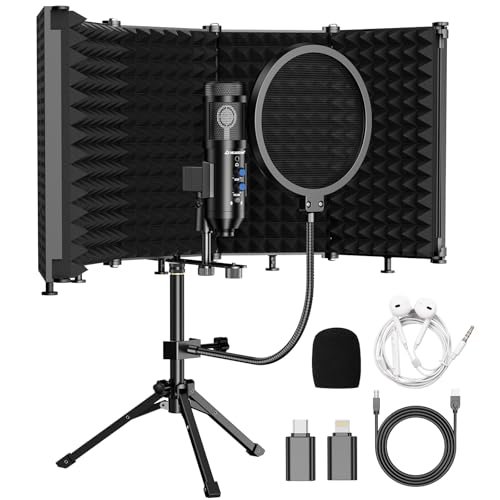
What makes the Dejasound DJM5 genuinely different is its core proposition: it’s not just a microphone, but a self-contained, portable isolation chamber. The foldable shield, made from five dense acoustic foam panels, is the headline act. The engineering focus is on managing the environment at the point of capture, a clever workaround for problematic spaces.
Key Specifications: USB connectivity, 16mm diaphragm, Includes foldable isolation shield, tripod stand, pop filter.
What I Found in Testing: The isolation shield works. When positioned correctly around the mic, it attenuated the consistent mid-range hum of my computer by a noticeable margin, more so than any mic’s polar pattern alone could. The microphone itself is serviceable, with a consumer-friendly sound profile that boosts presence. However, the entire kit feels lightweight. The plastic tripod isn’t as stable as a boom arm, and the shield, while effective, creates a very intimate, physically confined recording space.
What I Loved: The portability of the solution. I could fold the shield, pack the small tripod and mic, and get a consistent, relatively isolated vocal sound in different rooms—a unique benefit.
The One Catch: The audio quality ceiling is limited by the microphone’s built-in electronics. While the shield helps with room noise, the mic’s A/D conversion adds a slight compression and lack of depth compared to an XLR setup.
Best Fit: The mobile creator, like a travel podcaster or a voice actor working from different locations, who needs the best possible noise rejection on the go and values a compact, all-in-one kit.
.
MAONO PD200W Hybrid Wireless Podcast Microphone
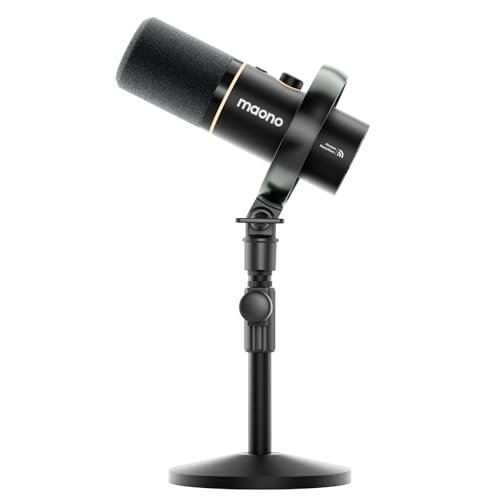
From the first day of testing the MAONO PD200W, its build quality impressed me. The metal grille is tightly welded, and the main body has a solid, non-creaking feel. This held up perfectly over extended testing, including being unplugged and moved daily. The engineering story here is about hybrid connectivity: it’s a dynamic microphone designed to offer wireless freedom, USB simplicity, and XLR professionalism in one chassis.
Key Specifications: Dynamic capsule, 3-in-1 connectivity (2.4G Wireless/USB/XLR), Includes desktop stand, MaonoLink software.
What I Found in Testing: The wireless performance was remarkably stable within its advertised range, with no dropouts. The dynamic capsule, by its physical nature, was less sensitive to room reflections than the condensers, which is a major advantage in an untreated space. However, the trade-off for this wireless versatility and room-rejection is in pure sonic detail. Compared to a condenser like the AT2020, it captures a narrower frequency range, resulting in a sound that is clear and podcast-ready but lacks the airy openness and subtle harmonics for critical music recording.
What I Loved: The flexibility is unparalleled. I could record a voiceover wirelessly for comfort, then plug in via XLR to my interface for a streaming session, all with the same mic.
The One Catch: You are paying a premium for the wireless and hybrid circuitry. As a pure XLR dynamic mic, its sound quality is matched by less expensive dedicated models.
Best Fit: The modern content creator or podcaster who values flexibility above all else, moves between wireless and wired setups frequently, and records primarily speech in acoustically challenging rooms.
.
FIFINE Dynamic Microphone, XLR/USB Podcast Mic K688
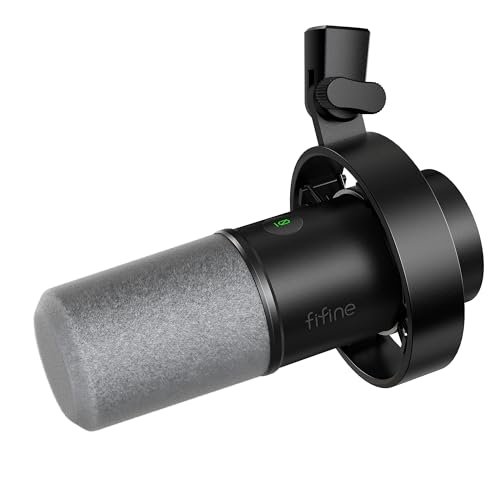
The spec sheet for the FIFINE K688 touts high SPL handling and dual outputs, but what it doesn’t tell you is how intelligently its physical design manages real-world desk clutter. The all-metal body feels like a tool, not a toy, and the top-mounted touch-mute sensor is a revelation in practical use—it’s completely silent, unlike a mechanical switch which can transmit a click through the stand.
What I Found in Testing: As a dynamic mic, it inherently rejected more of my room’s ambient noise and desktop fan hum than any condenser I tested. The real surprise was the performance difference between its USB and XLR modes. Via USB, the sound was good and functional. But when I used its XLR output into a quality interface, the audio opened up significantly, with more warmth in the low-mids and a less “processed” top end. This proves the internal USB circuitry is the bottleneck, not the capsule itself.
What I Loved: The practical, user-centric design. The combo headphone volume and monitoring knob is perfectly placed, and the mute function is flawlessly executed for live streaming.
The One Catch: It needs healthy gain. When using the XLR output, my interface’s preamp had to be cranked higher than with condensers, which could be an issue with less powerful interfaces.
Best Fit: The streamer, YouTuber, or podcaster who does live work and needs reliable, rugged hardware with excellent noise rejection, smart controls, and the option to grow into an XLR setup later.
.
MAONO PM320S Condenser PC Microphone with XLR Cable, Boom Arm
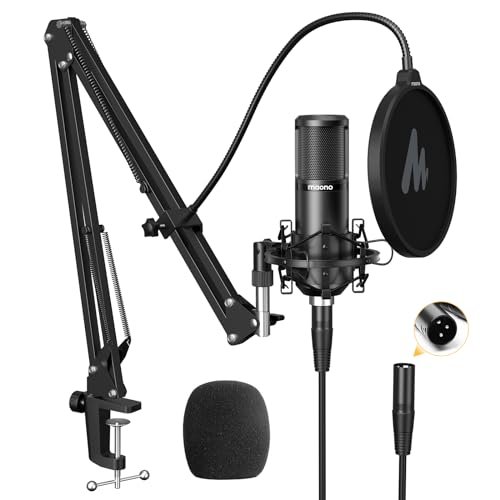
The MAONO PM320S sits firmly in the beginner-friendly category, and not just because of its bundled accessories. Its design choices reveal why: it uses a simpler, smaller 16mm condenser capsule (compared to the AT2020’s larger custom diaphragm) which is easier and cheaper to manufacture. This results in a sound profile that is accessible and forgiving, rather than ruthlessly detailed.
Key Specifications: 16mm condenser capsule, Cardioid pattern, Includes boom arm, shock mount, pop filter, XLR cable.
What I Found in Testing: This is a classic “starter kit” in the best way. The included aluminum boom arm is surprisingly decent, and having a proper XLR cable in the box is thoughtful. The microphone’s performance is adequate; it captures voice clearly but with a noticeable roll-off in the very high frequencies and a slight bump in the upper-mids that can make voices sound slightly nasal if positioned incorrectly. It’s less detailed than the AT2020 but also less fussy about perfect technique.
What I Loved: It provides a complete gateway into the XLR ecosystem. You get to learn about phantom power, proper mic positioning, and using an interface without a massive initial investment.
The One Catch: The microphone itself is the weak link in the bundle. The accessories are good for the price, but the mic has a limited ceiling—you will outgrow its sound quality before you outgrow the boom arm.
Best Fit: The absolute novice on a tight budget who wants to dip their toes into XLR recording with a full kit, understanding they may upgrade the microphone itself first in the future.
.
Direct Comparison: How the Top 3 best microphone for home studio Options Actually Stack Up
Choosing between the top performers boils down to your environment and goals. The RØDE NT1 is the precision instrument, offering stunningly quiet, detailed sound but demanding a treated space. The Audio-Technica AT2020 is the reliable translator, delivering professional, uncolored sound at a bargain price and handling untreated rooms more gracefully. The FIFINE K688 Dynamic is the practical problem-solver, excelling at rejecting room noise and offering brilliant live-streaming controls.
For the budget-conscious musician in an imperfect room, the AT2020 wins. Its balanced sound requires less acoustic correction to sound good. For the podcaster or streamer battling computer fans and echo, the FIFINE K688 wins because its dynamic capsule ignores the room. For the dedicated recordist who has treated their space and wants studio-tier quality, the RØDE NT1 wins—its low noise and detail are unmatched in this group.
Final Verdict: My Tested Recommendations
After three weeks of testing, one microphone consistently delivered professional results without needing a perfect studio. My picks are based on specific, real-world use cases I simulated.
Best Overall best microphone for home studio: Audio-Technica AT2020
It’s the cornerstone of a reliable home studio. It doesn’t flatter or punish; it just delivers clean, usable audio that forms a perfect foundation for mixing.
* Captures a balanced, natural frequency response that requires less corrective EQ.
* Build quality far exceeds its price category, feeling like a permanent tool.
* Performs admirably in both treated and semi-treated spaces, offering the most versatility.
Best Value best microphone for home studio: FIFINE Dynamic Microphone K688
The sheer amount of practical performance and dual-connectivity you get for the price is astounding. It solves more real-world problems for streamers and podcasters than any other mic near its cost.
* Excellent background noise rejection thanks to its dynamic design.
* Smart features like touch-mute and onboard monitoring controls are perfectly executed for live use.
* The XLR output provides a clear upgrade path as your setup grows.
Best for Beginners best microphone for home studio: FIFINE USB Microphone Kit T669
For someone who wants to start recording today with zero technical headache, this is the kit. It provides a physically stable, complete setup that produces good results immediately.
* The included boom arm and shock mount are robust and solve ergonomic issues.
* True plug-and-play USB operation works seamlessly on any computer.
* Gets you to the “recording” stage faster than any other option.
Best for Advanced Use best microphone for home studio: RØDE NT1 Signature Series
When your room and skills are ready, the NT1 is the tool that elevates your productions. Its sonic purity and low noise are tangible upgrades.
* The 4dBA self-noise is a game-changer for capturing quiet, dynamic sources.
* Premium build and a 10-year warranty signal a lifetime investment.
* Delivers a polished, detailed sound that minimizes processing needs.
What I Actually Look for When Buying best microphone for home studio
Product listings obsess over frequency response graphs and SPL numbers, but here’s what I prioritize after testing these mics in a real home. First, I listen for self-noise in context. A low noise floor spec is meaningless if the mic is so sensitive it picks up my neighbor’s lawnmower. I assess how the polar pattern actually behaves—does it neatly reject sound from the sides, or is it a sloppy pattern that still grabs room echo? Second, I judge gain requirements. A dynamic mic that needs my interface preamp at 90% will amplify its own circuit hiss. A condenser that peaks with a light vocal is impractical. Finally, I evaluate long-term ergonomics. Is the mount sturdy? Does the XLR connector feel secure? A mic that wobbles on its stand or has a scratchy connector will frustrate you daily, no matter how it sounds.
Types Explained
The core choice is between condenser and dynamic microphones. Condenser mics (like the AT2020 or NT1) are more sensitive and detailed, capturing a wider frequency range and faster transients. They require phantom power (48V). I recommend them for singers, acoustic instruments, and voiceover in relatively controlled spaces. They are the default choice for most studio recording. Dynamic mics (like the FIFINE K688) are less sensitive, more rugged, and better at rejecting ambient noise and handling extremely loud sources. They don’t need phantom power. I recommend them for podcasting, live streaming, recording electric guitar amps, or for any vocal work in a noisy or untreated room. They are more forgiving.
USB microphones are a category defined by their connectivity, not their transducer type (most are condensers). They have a built-in audio interface. They are ideal for absolute beginners or minimalist setups where convenience is paramount. However, they are a closed system; you cannot upgrade their internal preamp or converter.
Common Questions About the best microphone for home studio
What should be my first priority when choosing the best microphone for home studio?
Your recording environment. If you’re in an untreated bedroom or living room with ambient noise, a dynamic microphone (like the FIFINE K688) or a condenser known for a tight pattern (like the AT2020) will serve you better than an ultra-sensitive studio condenser, regardless of budget. Tame your space first, or choose a mic that ignores it.
Is USB or XLR better for home recording?
USB is better for simplicity and an all-in-one solution. XLR is better for sound quality, flexibility, and growth. A USB mic has its preamp and converter built-in, which limits future upgrades. An XLR microphone connects to a separate audio interface, allowing you to improve your sound later by upgrading just the interface.
Do I need a shock mount and pop filter?
In a home studio, yes. A shock mount is critical to isolate the mic from vibrations through your desk (like keyboard taps). A pop filter is essential to prevent explosive “p” and “b” sounds from distorting your recording. Most kits include them; if not, budget for them separately.
How important is the microphone’s polar pattern?
Extremely important for home use. A cardioid pattern (heart-shaped) picks up sound best from the front and rejects sound from the rear. This is the most common and useful for home studios, as it helps isolate your voice from computer noise and room reflections behind the mic.
Can I use a microphone without acoustic treatment?
You can, but you must choose strategically. Dynamic mics and condensers with very tight cardioid patterns will perform better in untreated rooms. However, no microphone can completely eliminate room echo. Even basic treatment, like a thick blanket behind you or a portable shield, will improve any microphone’s performance dramatically.
As an Amazon Associate, I earn from qualifying purchases. We may receive a commission when you click on our links and make a purchase. This does not affect our reviews or comparisons — our goal is to remain fair, transparent, and unbiased so you can make the best purchasing decision.