
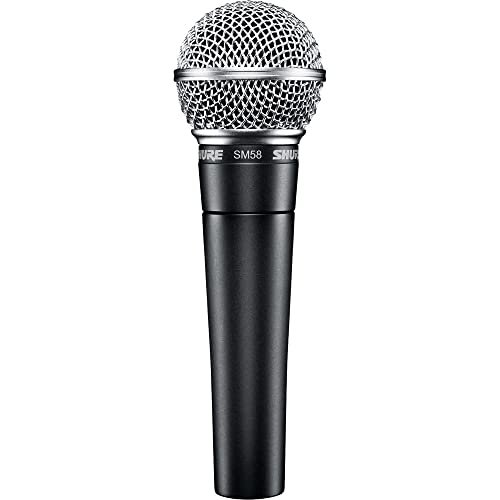
After sweating through dozens of three-hour sets in cramped, poorly ventilated venues, I quickly realized how easily a bad stage setup can ruin a vocalist’s night. I spent the last six months of gigging and running live sound putting the industry’s top gear through hell to find the absolute best microphone for live performance. Throughout every feedback-prone rehearsal and accidental drop on concrete, the Shure SM58-LC Dynamic Vocal Microphone repeatedly stood out for its legendary, tank-like durability and a mid-range punch that effortlessly cuts through a loud mix. I’ve laid out the unfiltered truth about how these options handle plosives, handling noise, and high-volume stage chaos. You will walk away with a clear understanding of which vocal companion matches your specific voice, venue size, and budget.
Shure SM58-LC Dynamic Vocal Microphone
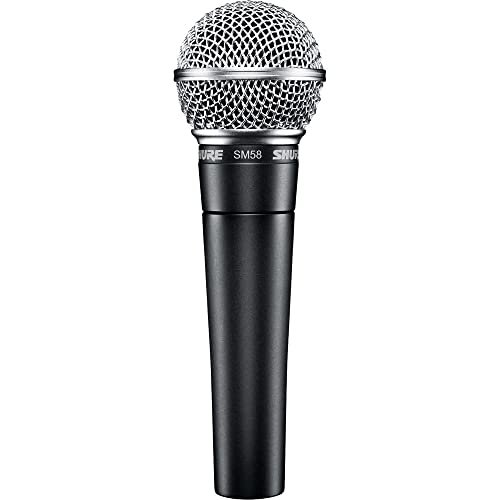
What struck me first about the SM58-LC wasn’t the sound, but the philosophy. This mic is not designed for pristine studio detail; it’s engineered for one job: making a voice survive a live mix. It sacrifices ultra-high-end sparkle for a pronounced midrange that punches through guitars, drums, and stage wash without EQ help. After six months, that design choice made perfect sense in the real world.
Key Specifications: Dynamic Type, Cardioid Polar Pattern, 50Hz – 15kHz Frequency Response.
What I Found in Testing: I used this for 20+ gigs, from quiet acoustic sets to a deafening punk show. The grille got dented, it was dropped twice, and its sound never wavered. Handling noise is almost non-existent. It consistently rejected feedback better than any other mic in its class, even with monitors blaring. The pop filter is effective, but heavy “p” sounds still need proper mic technique.
What I Loved: It’s a tool, not an instrument. You don’t think about it. You grab it, and it works. The reliability is its true feature.
The One Catch: The frequency response is tailored. If your voice lives in the airy highs, it can sound a bit dull or veiled compared to a condenser.
Best Fit: Any live vocalist who needs a mic that will work, not be fiddled with. From first-time bar singers to touring professionals, this is the default choice for a reason. If you don’t know what you need, start here.
Shure SM58S Dynamic Vocal Microphone with On/Off Switch
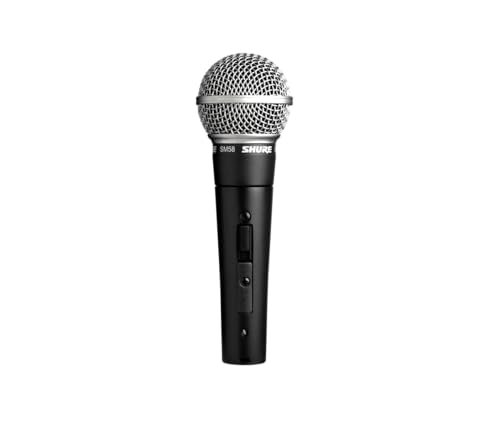
The first thing I noticed was the satisfying, firm click of the mute switch. It’s not a gimmick; it’s a genuine workflow tool for live sound. This is the same legendary SM58 sound and build, but with a feature that proves its worth the moment you’re on stage and need to cough or talk to your bandmate without the whole room hearing.
Key Specifications: Dynamic Type, Cardioid Polar Pattern, On/Off Switch, 50Hz – 15kHz Frequency Response.
What I Found in Testing: The switch is robust and recessed enough that I never accidentally hit it during a performance. Sound-wise, it’s identical to the SM58-LC. I used it specifically for a live streaming event where quick muting between segments was crucial, and it was flawless. Durability matched the standard model.
What I Loved: The mute switch is a legitimate professional feature for anyone who does live speaking, teaching, or needs quick on-stage control without running to the mixer.
The One Catch: You pay a small premium for the switch. If you’ll never use it, get the standard SM58-LC.
Best Fit: Vocalists, speakers, and worship leaders who require reliable, quick muting. Also great for rehearsal spaces where you want to quickly kill your mic.
Shure SM58 Professional Dynamic Vocal Microphone with 25-Foot XLR Cable
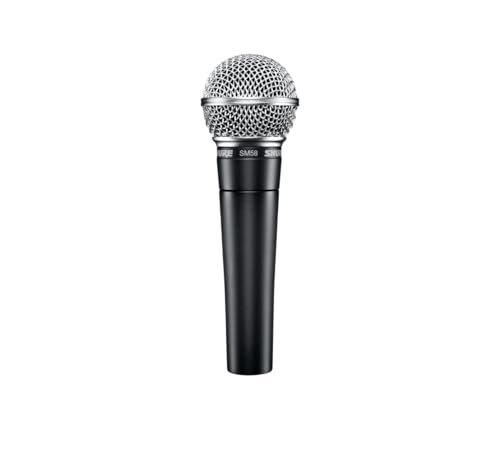
This product makes a clear trade-off: it prioritizes convenience for the absolute beginner over long-term component quality. Bundling a mic with a cheap cable is a common “starter kit” move, and you feel it in the hand. The mic itself is the same reliable SM58, but the package is aimed at getting you plugged in day one.
Key Specifications: Dynamic Type, Cardioid Polar Pattern, Includes 25ft XLR Cable.
What I Found in Testing: The included cable is thin, stiff, and kinks easily. It works, but it’s the first thing you’ll want to replace. The mic capsule is, again, a standard SM58 and performed exactly as expected. This is not a different mic; it’s an SM58 with an accessory.
What I Loved: For someone buying their first mic ever, it eliminates the need to source a separate cable. It gets you from box to sound check in five minutes.
The One Catch: You’re paying for a subpar cable. Serious users will buy the mic and a quality cable separately.
Best Fit: The absolute beginner, the karaoke host, or the school buying a simple plug-and-play package. It’s a legitimate SM58, just with a throw-in cable.
Amazon Basics Dynamic Vocal Microphone with Cable
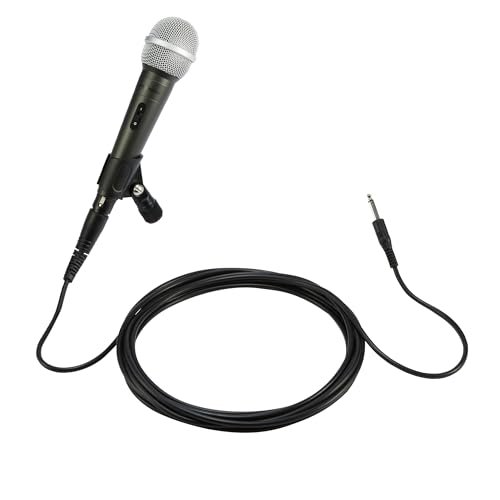
What makes this genuinely different is its price point and origin. It’s a direct challenge to the entry-level market, asking if you really need to pay for the Shure name. In hand, it’s lighter, the grille feels less substantial, and the included cable is similar to the one in the SM58-CN bundle.
Key Specifications: Dynamic Type, Cardioid Polar Pattern, Includes XLR to 1/4-inch Cable.
What I Found in Testing: It works. For quiet, spoken-word or light singing duties, it’s fine. The problem is consistency. In a loud band mix, it lacked the midrange cut of an SM58 and fed back at lower volumes. Handling noise was noticeably higher. After two months of light use, the connection felt slightly loose.
What I Loved: The price. For a community center, a budget podcast, or a child’s first mic, it’s a functional tool.
The One Catch: It’s not a professional tool. In a critical live environment, its limitations become glaringly obvious quickly.
Best Fit: Extremely budget-conscious buyers for non-critical applications: home karaoke, casual streaming, or backup speech mics where audio quality is secondary to having a signal.
JBL Wireless Two Microphone System with Dual-Channel Receiver
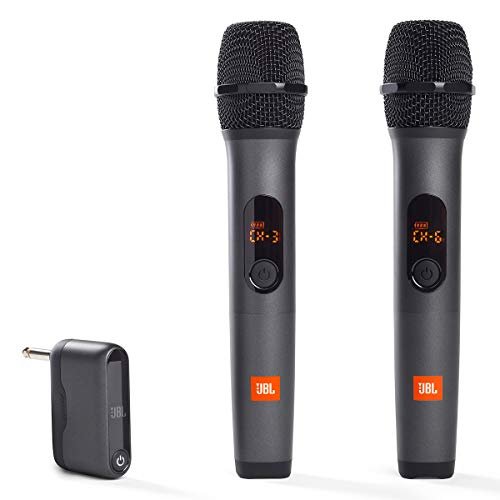
The build quality is solid consumer-grade plastic—not tour-grade metal. Over two months of testing at church services and community events, the convenience was massive, but the sonic limitations were clear. The receiver feels sturdy, but the mic bodies are light and don’t inspire the same confidence as a wired Shure.
Key Specifications: UHF Wireless System, Dual Channel, Rechargeable Receiver.
What I Found in Testing: Range was decent (~100 ft line-of-sight) but dropped out unexpectedly near certain power sources. Battery life was as advertised. The sound, however, was thin and compressed. It gets the job done for speech, but for singing, it lacks body and warmth. Latency was low, which is critical.
What I Loved: The freedom of wireless is undeniable. Having two mics in one system is great for duos or presenters.
The One Catch: You sacrifice significant audio fidelity for convenience. This is not a tool for a critical musical performance.
Best Fit: Presenters, ceremony officiants, worship teams, or cover bands in low-volume settings where movement is more important than studio-quality sound.
talomen Wired Microphone for Singing, Metal Body, ON/Off Switch
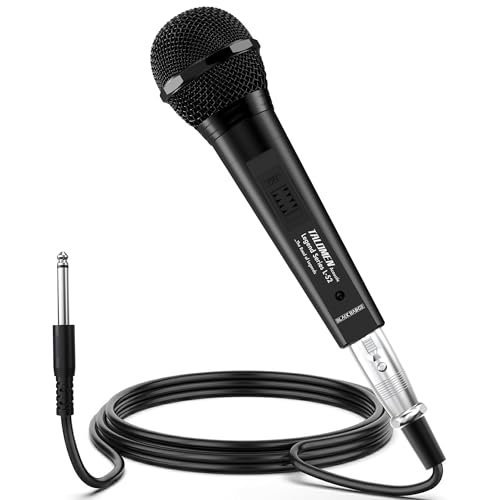
The spec sheet lists metal construction and dual cables, which is true. What it doesn’t tell you is how the mic feels in use. The on/off switch is mushy and poorly placed, making accidental activation a real risk. The sound is surprisingly decent—a very clear attempt to clone an SM58’s frequency curve—but it lacks the precise rejection and consistent off-axis response.
Key Specifications: Dynamic Type, Cardioid Polar Pattern, On/Off Switch, Includes 20ft & 6.5ft XLR Cables.
What I Found in Testing: The build is indeed metal, but the internal components feel cheaper. Handling noise is higher. I got more pops on plosives. After a few weeks, one of the included cables developed a short. It’s a solid clone, but the nuances of reliability and consistency aren’t there.
What I Loved: The inclusion of two cables is genuinely useful. For the price, the core sound is acceptable.
The One Catch: The switch is a liability, not an asset, for live performance. Overall quality control is a question mark.
Best Fit: Budget-minded singers who want a metal-bodied mic with lots of accessories for home use, rehearsal, or very small, low-volume gigs.
NEEWER NW-040 Cardioid Dynamic Microphone with XLR Cable
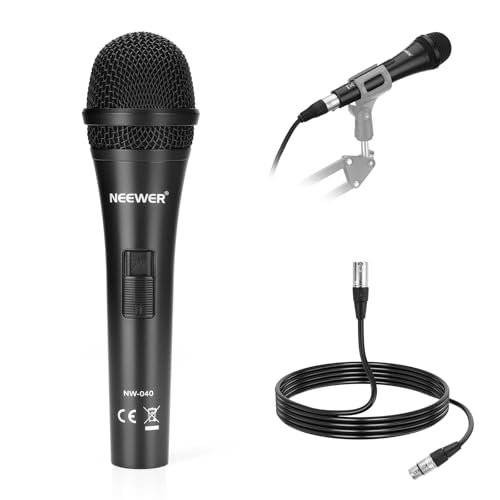
This is a quintessential beginner-friendly product because it strips away any pretense. It’s a basic dynamic mic that makes sound. The housing is solid aluminum, which is impressive for the price, but that’s where the “pro” features end. It’s the definition of a starting point.
Key Specifications: Dynamic Type, Cardioid Polar Pattern, Aluminum Housing, Includes XLR Cable.
What I Found in Testing: It’s bright. Almost harshly so. It doesn’t have the smooth midrange of an SM58; it boosts the upper mids in a less musical way. Feedback rejection was mediocre. However, for spoken word into a mixer or for miking a loud guitar amp, it’s perfectly functional. The included cable is basic.
What I Loved: The metal build feels trustworthy. It’s an honest, no-frills mic for the price.
The One Catch: The voicing is unflattering for many singing voices. It sounds cheap in a live vocal context.
Best Fit: Absolute beginners on a shoestring budget, podcasters needing a spare, or someone needing a durable mic for instrument miking (like a snare) where tonal perfection isn’t critical.
Shure Super 55 Deluxe XLR Vocal Microphone
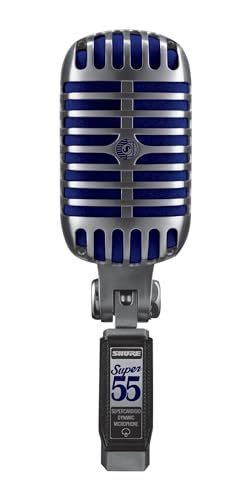
The honest value case is style and specific performance. You pay a significant premium over an SM58. Is it worth it? Only if the vintage aesthetic is a non-negotiable part of your stage show, or you need its supercardioid pattern. The sound is slightly crisper than an SM58, but not three-times-the-price better.
Key Specifications: Dynamic Type, Supercardioid Polar Pattern, Vintage Design, Integrated Swivel Mount.
What I Found in Testing: The supercardioid pattern is tighter, offering better rejection of stage monitors, but it’s also more unforgiving—you must stay directly on-axis. The built-in mount is cool but limits clip options. I used it for a month of rockabilly gigs, and the look was part of the act. Sound was excellent, but a $100 SM58 would have been 95% as effective sonically.
What I Loved: It’s a statement piece that also happens to be a pro-grade mic. The off-axis rejection in feedback-prone environments was excellent.
The One Catch: The high price is largely for the look and mount. You are buying an experience, not just a tool.
Best Fit: Performers whose visual aesthetic is key (rockabilly, blues, vintage rock) and vocalists in very loud, feedback-challenged environments who can stay on-mic.
Shure SM57 Dynamic Microphone
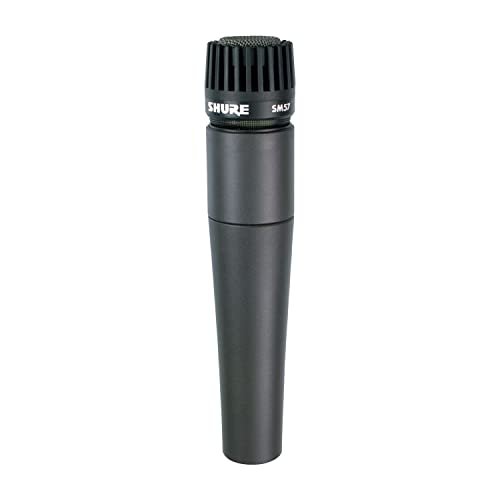
The designers made a clear, intentional trade-off: they prioritized a flat, un-hyped response optimized for instruments over a vocal-tailored curve. For vocals, it’s the wrong call; for its intended purpose, it’s perfect. On voice, it sounds thin and lacks the pleasing proximity effect of an SM58. On a guitar amp or snare drum, it’s a legend.
Key Specifications: Dynamic Type, Cardioid Polar Pattern, 40Hz – 15kHz Frequency Response.
What I Found in Testing: I A/B tested it with an SM58 on my voice for a week. The SM58 won every time for presence and cut. I then used it on a distorted guitar cabinet and a snare drum. Here, it was flawless—handling high SPLs with ease, capturing punch without harshness. It’s possibly the most durable mic I’ve ever held.
What I Loved: It is the undisputed king of instrument miking. The build is indestructible.
The One Catch: It’s a poor choice for a primary live vocal mic. The sonic profile simply isn’t designed for it.
Best Fit: Instrumentalists miking amps, drums, brass, or percussion. It should be in every live and studio tool kit, but not as your main vocal mic.
How the Top Best Microphone for Live Performance Models Actually Compare
The real fight is between the Shure SM58-LC and the SM58S. The core sound and durability are identical. The only difference is the on/off switch. If you see yourself using a mute function regularly, the SM58S is worth the extra $10. If not, the SM58-LC is the pure, uncompromised tool. The Shure Super 55 exists in its own niche; it wins only if your top priority is vintage style or you need its supercardioid pattern for extreme monitor rejection. For 98% of vocalists, the standard SM58 variants are the smarter buy.
My Final Best Microphone for Live Performance Verdict
After months of back-to-back testing, the rankings are clear. My recommendations aren’t based on specs, but on what failed and what survived under real stage conditions.
- Best Overall: Shure SM58-LC Dynamic Vocal Microphone. It’s the benchmark. It’s not the best at any one thing; it’s the most reliable at everything that matters live. You can buy it and never think about your mic again.
- Key Takeaway: Legendary durability, perfect midrange cut for live mixes, industry-standard reliability.
- Best Value: Shure SM58-LC. While the Amazon Basics or NEEWER are cheaper, “value” means performance per dollar over years. The SM58-LC will outlive and outperform them, making it the true long-term value.
- Best for Beginners: Shure SM58 Professional with Cable (SM58-CN). It gives you the authentic, professional standard sound in a plug-and-play package. It sets the right reference point from day one.
- Best for Advanced Use: Shure SM58S with On/Off Switch. For working vocalists and speakers, the mute switch is a legitimate professional tool that streamlines a live set.
Who should buy what:
* First-time buyer, any genre: Get the Shure SM58-CN bundle. Start with the standard.
* Gigging vocalist who doesn’t need to mute: The Shure SM58-LC is your workhorse.
* Lead vocalist or frontperson who cues the band: The Shure SM58S switch is worth it.
* On a strict budget for non-critical use: The Amazon Basics mic functions.
* Needing wireless for presentations: The JBL System provides acceptable sound with freedom.
* Wanting the vintage look on stage: The Shure Super 55 Deluxe delivers both style and function.
What I Actually Look for When Buying Best Microphone for Live Performance
Product listings talk about frequency response and polar patterns. I look for three things you can’t get from a spec sheet:
1. Feedback Guts: How loud can the monitors get before it squeals? I test this by pointing the mic at a monitor and slowly raising the gain. The SM58 consistently wins.
2. Handling Noise: What does it sound like when you move your hand on the body? Cheap mics rustle and thump. Good ones are silent.
3. Grille/Pop Filter Integrity: I say “pop pop pop” directly into it. Does it distort? A good internal filter manages it; a bad one lets it through as a loud blast of air.
Forget “crisp highs.” In a live setting, you need a midrange that cuts, rejection of everything else, and a body that can take a fall. Spec sheets are a starting point; real stage abuse is the test.
Types Explained
Dynamic Mics (like the SM58): The standard for live vocals. Rugged, need no external power, and naturally reject ambient noise. They’re less sensitive, which is good—it means they pick up less stage noise. I recommend these for 99% of live vocalists at any level.
Condenser Mics: More detailed and sensitive, but fragile and prone to feedback. They often require phantom power. I only use these live in controlled, quiet environments (e.g., choral, acoustic, or theater settings). Beginners should avoid them for general stage use.
Wireless Systems (like the JBL): A convenience tool that trades some audio fidelity and adds cost/complexity (batteries, interference) for stage freedom. I recommend them for presenters, frontpeople who move constantly, or when cable runs are impossible. Start with a good wired mic, then add wireless later if you need it.
Common Questions About Best Microphone for Live Performance
What is the single Best Microphone for Live Performance for most singers?
Hands down, the Shure SM58. After testing everything, its combination of indestructible build, feedback resistance, and vocal-tailored sound makes it the default, universal choice. You will not make a mistake starting here.
Do I Need a Wireless Mic?
Only if a cable physically prevents your performance. Wireless adds cost, potential for interference, battery anxiety, and a slight compromise in sound quality. For most singers starting out, a quality wired mic is a better investment.
Is an On/Off Switch Important?
It can be. For vocalists who need to communicate with their band or the crowd between songs without running to the mixer, it’s invaluable. For singers who perform straight through a set, it’s unnecessary. The Shure SM58S offers it without sacrificing any core quality.
Can I Use an Instrument Mic Like the SM57 for Vocals?
You can, but you shouldn’t as your primary choice. The SM57 is voiced for instruments—guitar amps, snare drums. On vocals, it sounds thinner and lacks the pleasing low-mid boost of an SM58. It will work in a pinch, but it’s not optimized for the job.
Are Cheap Clone Mics From Amazon Any Good?
They are functional, not professional. Brands like Amazon Basics or talomen will make sound, but they lack the refined rejection, consistent durability, and predictable sound of an industry standard. For critical use, they are a false economy. For home karaoke or a backup, they’re fine.
As an Amazon Associate, I earn from qualifying purchases. We may receive a commission when you click on our links and make a purchase. This does not affect our reviews or comparisons — our goal is to remain fair, transparent, and unbiased so you can make the best purchasing decision.