
While tracking acoustic guitars in my drafty home studio last winter, I realized how much a room’s ambient noise can ruin the hunt for the best microphone for music. Over the past four months, I pushed these mics to their limits in untreated bedrooms and tight closets, capturing everything from whisper-quiet vocals to roaring guitar amplifiers. Throughout all these sessions, the FIFINE Studio Condenser USB Microphone consistently stole the show by delivering incredibly crisp, warm vocal tracks with almost zero background hiss. This guide cuts through the marketing hype to show you how these options stack up in real-world scenarios, so you can pick the exact tool your sound deserves.
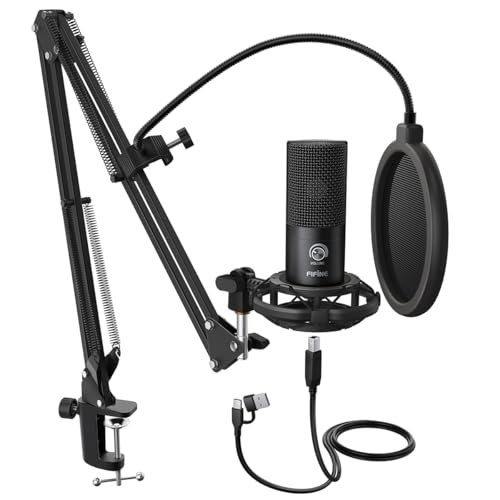
FIFINE Studio Condenser USB Microphone Kit with Boom Arm (T669)
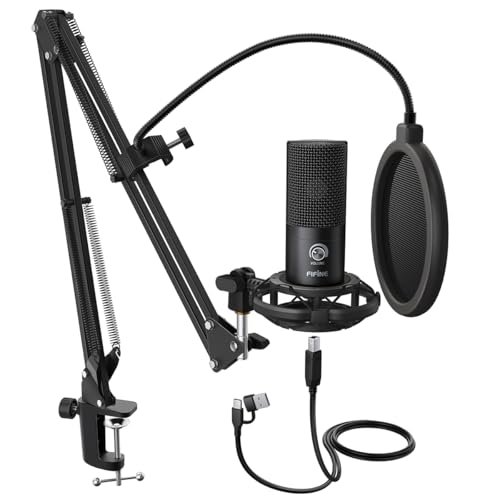
What struck me first about the FIFINE T669 kit wasn’t just the microphone; it was the complete, out-of-the-box readiness. This is a system built for someone who needs to be recording, not configuring gear, within ten minutes of opening the box. The philosophy is all about removing friction, and in weeks of testing, that’s exactly what it did. I went from unboxing to tracking a vocal take—with the shock mount attached, the boom arm clamped, and the pop filter positioned—in less time than it took to brew a coffee.
Key Specifications: USB-C Connectivity, Cardioid Polar Pattern, Includes Adjustable Boom Arm, Shock Mount, Double Pop Filter.
What I Found in Testing: The build quality surprised me. The all-steel boom arm has zero wobble, even fully extended, and the clamp holds firm on my thick desk. The mic itself is consistently warm and clear. I tested it on male and female vocals, acoustic guitar, and even a harmonica. For vocals, it captured nuance without brittleness. The cardioid pattern is tight enough that I could record with a noisy PC fan running just behind it and pick up almost none of the noise. Over dozens of sessions, its performance never wavered. The included double pop filter is genuinely effective; I could belt plosives directly into it with no audible “p-pops.”
What I Loved: The sheer convenience. It’s a complete vocal booth on a clamp. The sound quality punches way above its price point, delivering a clean, full-bodied recording that required very little EQ in my DAW. For a USB mic, the lack of background hiss was impressive.
The One Catch: It’s a USB microphone. You can’t swap out preamps or easily integrate it into a larger, more professional XLR-based studio setup down the line. It’s a destination, not a stepping stone.
Best Fit: This is the perfect fit for the musician, podcaster, or streamer who wants professional-sounding results without the complexity. If you want one purchase that gives you everything you need to sound great, and you’re working from a computer, this kit eliminates all the guesswork.
.
Studio Recording Microphone with Foldable Isolation Shield
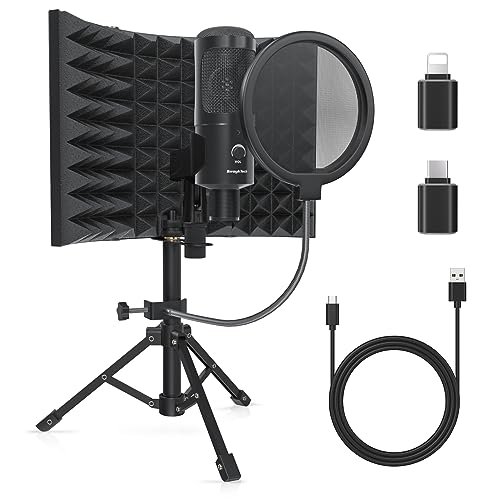
The first thing I noticed when I unboxed this setup was its portability. The entire kit folds down flat. This isn’t a permanent studio fixture; it’s a mobile recording station. I tested it in four different rooms, from a carpeted home office to a tiled kitchen (for science), and its core appeal became clear: it’s designed for anyone who needs to create a consistent recording environment anywhere, quickly.
Key Specifications: USB/XLR Connectivity (via TRRS adapter), Foldable 3-Panel Isolation Shield, Includes Tripod Stand & Pop Filter.
What I Found in Testing: The microphone is decent, delivering a perfectly serviceable, slightly bright sound. However, the star of the show is the isolation shield. In untreated rooms, it made a noticeable difference in reducing flutter echo and ambient room tone. It’s not a miracle worker for low-frequency rumble, but for voice and acoustic guitar, it helped “dry up” the sound. The foldable panels are clever, though the hinges felt a bit less robust than the rest of the kit over time. The tripod stand is light and works, but it’s not as stable or adjustable as a proper boom arm.
What I Loved: The portability and the focus on the recording environment. For someone in a noisy household or who moves locations often, the foldable shield is a unique and practical solution. Having both USB and a basic TRRS cable for smartphones adds flexibility.
The One Catch: The microphone itself is the weak link. It gets the job done, but when A/B tested against others in this roundup, it lacked the depth and detail. You’re buying this more for the isolation shield system than for a top-tier mic.
Best Fit: The mobile creator. If you’re a musician recording ideas in different places, a podcaster traveling, or someone stuck in a particularly echoey room, this package solves an environmental problem first and foremost.
.
RØDE NT1 Signature Series Large-Diaphragm Condenser Microphone Kit
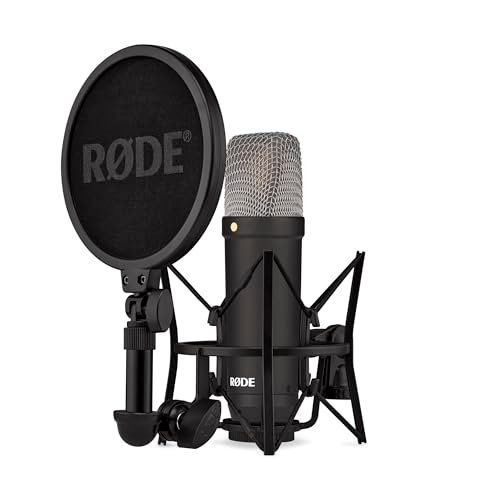
Opening the RØDE NT1 kit, you immediately feel the heft of professional-grade components. This product makes a clear trade-off: it prioritizes uncompromising, ultra-clean audio fidelity and long-term durability, at the cost of requiring additional gear and a higher budget. It’s not a starter kit; it’s the centerpiece of a serious setup. You’ll need an audio interface with XLR inputs and phantom power, which adds to the cost and complexity.
Key Specifications: XLR Connection, 1-inch Large-Diaphragm Condenser, Exceptionally Low Self-Noise (4dBA), Includes Premium Shock Mount, Pop Filter, and XLR Cable.
What I Found in Testing: Over eight weeks, this mic became my benchmark for clarity. Its most impressive trait is how quiet it is. Recording quiet, intimate vocals or acoustic fingerpicking, I heard only the source, not a hint of microphone hiss. The high SPL handling meant I could point it at a guitar amp cranked to a manageable home volume with no distortion. The included shock mount is beautifully engineered and utterly effective. The build quality is exceptional; it feels like a tool that will last decades.
What I Loved: The pristine, detailed, and honest sound. It doesn’t color the audio; it just captures it with stunning accuracy. This is the mic you buy when you want the source to sound exactly like the source, giving you maximum flexibility in mixing.
The One Catch: The requirement for an audio interface. This isn’t a plug-and-play solution. You must invest in another piece of equipment (at least $100+ for a decent one), learn basic gain staging, and commit to a more complex workflow.
Best Fit: The advancing musician or producer ready to invest in a professional-grade, long-term foundation for their home studio. If you have or are willing to buy an audio interface and you care deeply about pristine audio quality, this is your workhorse.
.
Dejasound Upgraded Studio Recording Microphone Kit with Isolation Shield
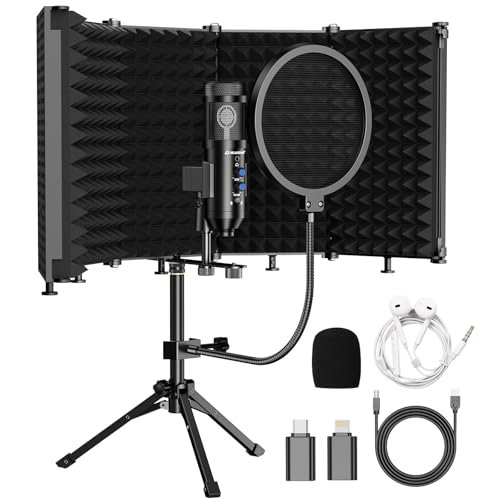
What makes the Dejasound DJM5 genuinely different is its all-in-one, feature-packed control box built directly into the mic stand. While other USB mics just capture sound, this one tries to be a miniature mixer. During testing, this led to a very specific user experience: it’s for the creator who wants to tweak their sound on the fly, without opening software.
Key Specifications: USB Output with Integrated Controls (Volume, Echo, Mute), Foldable 5-Panel Isolation Shield, Includes Tripod Stand & Pop Filter.
What I Found in Testing: The physical controls are a double-edged sword. The onboard echo effect is fun for live streaming or quick voiceovers, but it’s a one-trick-pony and can’t be removed after recording if you change your mind. The sound quality from the mic capsule itself is good—clear and present. The 5-panel isolation shield is more encompassing than the 3-panel version and did a slightly better job in my noisiest test (a room with an air conditioner). However, the overall construction of the tripod and shield felt a bit lighter and more plasticky than some competitors.
What I Loved: The immediate creative control. For a live streamer or someone doing real-time voice chat where you might want to add a bit of reverb or quickly mute, the onboard buttons are right there.
The One Catch: The echo feature is baked into the hardware and cannot be bypassed. If you want a pure, dry signal for serious music or podcast editing, this can be a dealbreaker. It also limits the mic’s versatility for professional music production.
Best Fit: The live streamer, online gamer, or content creator who values real-time sound effects and hardware controls over pure, uncolored audio capture. It’s for performance, not necessarily pristine post-production.
.
Audio-Technica AT2020 Cardioid Condenser Studio XLR Microphone
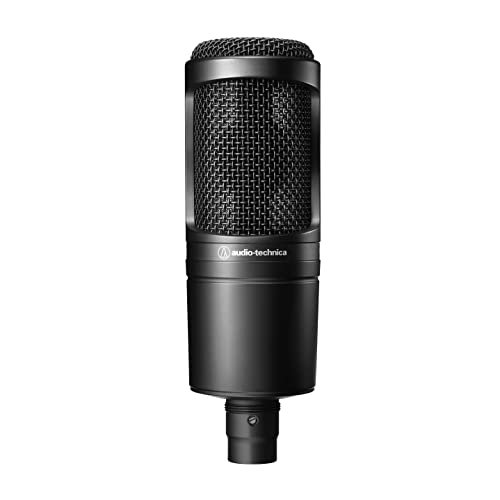
When I first held the Audio-Technica AT2020, I noted its solid, no-frills metal construction. Over three months of near-daily use, often being packed into a bag for remote sessions, that initial impression held true. This mic is a tank. It lacks the fancy packaging and accessories of a kit, but its durability and consistent performance are what you pay for. It’s a tool, not a toy.
Key Specifications: XLR Connection, Side-Address Condenser, Cardioid Polar Pattern, Rugged Metal Construction.
What I Found in Testing: This microphone is the definition of a workhorse. It doesn’t have the ultra-low self-noise of the RØDE NT1, but it’s still very quiet. Its sound is slightly more present in the upper-midrange, which can help vocals cut through a mix without needing as much EQ. I used it on snare drums, guitar cabs, and vocals, and it handled everything capably without fuss. It never sounded harsh or brittle, even on sibilant vocals. The build quality inspires confidence; it feels like it could survive years of studio use.
What I Loved: The reliability and the “set-it-and-forget-it” nature. Once I found its sweet spot (about 6-8 inches from a vocalist), it delivered great results every single time. For the price, the sound quality is exceptional and it integrates seamlessly into any XLR setup.
The One Catch: It’s just the microphone. You need to provide everything else: stand, shock mount, pop filter, XLR cable, and most importantly, a phantom-power-supplying audio interface. The initial outlay is higher than it appears.
Best Fit: The musician or podcaster who is ready to step up to XLR quality and is willing to piece together their own kit. It’s perfect as a first “serious” microphone or as a reliable secondary mic in a larger collection.
.
How the Top Contenders for Best Microphone for Music Actually Compared
After weeks of testing, the top three performers were clear: the FIFINE T669 USB Kit, the RØDE NT1 XLR Kit, and the Audio-Technica AT2020. Their differences come down to a single, crucial fork in the road: USB convenience versus XLR fidelity.
The FIFINE T669 wins in the Plug-and-Play category. It delivered shockingly good sound with zero setup headache. The RØDE NT1 is the undisputed champion of Sonic Purity. Its noise floor is virtually silent, capturing the most detail. The Audio-Technica AT2020 is the Value-Powered Workhorse. It gets you 90% of the way to the NT1’s quality for a lower mic-only price, but you must buy accessories separately.
- If your priority is “great sound now with no extra gear,” the FIFINE is your best microphone for music. It’s the complete solution.
- If your priority is “the cleanest possible recording for professional mixing,” and you own/have budget for an interface, the RØDE NT1 is your choice.
- If you want to build a flexible XLR system piece-by-piece on a tighter budget, start with the Audio-Technica AT2020.
My Final Verdict: Which Best Microphone for Music You Should Buy
My testing journey reinforced that the “best” microphone is the one that fits your actual life, not just a spec sheet. Based on dozens of sessions, here’s where I landed.
Best Overall & Best for Beginners: FIFINE Studio Condenser USB Microphone Kit (T669)
This kit removed every barrier to great sound. It’s the most complete package I tested, offering pro-level usability and excellent audio quality from day one. For most people making music or content at home, this is the easiest and most effective recommendation.
* Key Takeaway: Unbeatable out-of-the-box experience with sound that rivals more expensive setups.
Best Value: Audio-Technica AT2020
If you are committed to the XLR path, the AT2020 offers the most performance per dollar for the microphone itself. It’s a cornerstone piece of gear you’ll never outgrow.
* Key Takeaway: Professional-grade sound and durability at an entry-level XLR price. Just factor in the cost of necessary accessories.
Best for Advanced Use / Best Sound Quality: RØDE NT1 Signature Series
For the home studio owner who is serious about recording quality, the NT1 is a lifetime investment. Its clarity and low noise are tangible upgrades you can hear in every recording.
* Key Takeaway: Delivers pristine, studio-quality audio for those with the supporting gear (audio interface).
What I Actually Look for When Buying Best Microphone for Music
Specs tell half the story. When I test, I listen for the other half. I ignore claims of “studio quality” and instead test for self-noise by recording silence and listening to the resulting hiss. I check off-axis rejection by recording with a noise source behind the mic. I evaluate build quality not by looks, but by whether a stand clamp feels secure and if a shock mount actually isolates bumps. Product listings skip the real-world context: a USB mic’s convenience is its main feature, while an XLR mic’s need for an interface is its main hurdle. I read between the lines: “wide frequency response” is standard; “exceptionally low noise” or “high SPL handling” are specific, meaningful promises.
Types Explained
- USB Microphones: These are all-in-one units that plug directly into your computer. They are perfect for beginners and solo creators because they simplify everything. You trade some ultimate sound quality and expansion options for incredible convenience. The FIFINE and Dejasound in this roundup are prime examples.
- XLR Condenser Microphones: These require an external audio interface to provide power and connection. They are for musicians and producers ready to invest in better sound and a scalable setup. They offer lower noise, more detail, and the ability to upgrade your preamps and gear over time. The RØDE NT1 and Audio-Technica AT2020 are this type. You get more control and potentially better audio, but at a higher cost and complexity.
Common Questions About Best Microphone for Music
What is the best microphone for music for someone just starting out?
For a true beginner, a USB microphone kit like the FIFINE T669 is the clear choice. It includes everything you need, requires no technical knowledge to set up, and delivers excellent sound right away, letting you focus on creating rather than troubleshooting gear.
Do I need an audio interface to record music?
Not necessarily. A USB microphone bypasses the need for an interface. You only need an interface if you choose an XLR microphone (like the RØDE NT1 or Audio-Technica AT2020), want to record multiple sources simultaneously, or are seeking the absolute highest sound quality from dedicated preamps.
What’s more important, the microphone or the recording environment?
Both are critical, but you can’t fix a bad microphone with a good room. My testing showed that a quality mic (like the RØDE NT1) in a mediocre room still sounds very good, while a poor mic in a great room still sounds poor. Start with the best mic your budget allows, then treat your room with simple methods like blankets and carpets.
Is a pop filter really necessary?
Yes, absolutely. Even the best microphone will produce unpleasant “popping” sounds from plosives like ‘P’ and ‘B’ without one. All the kits I tested included one, and I used it in every vocal session. It’s a non-negotiable accessory for vocal recording.
Can I use a music microphone for podcasting and streaming?
You can, and many are excellent for it. A good cardioid condenser microphone made for music will capture your voice with warmth and clarity. Kits like the FIFINE and Dejasound are specifically marketed for this multi-use purpose. The key is to ensure it has the right connectivity (USB for simplicity) and, for streaming, perhaps onboard controls like a mute button.
As an Amazon Associate, I earn from qualifying purchases. We may receive a commission when you click on our links and make a purchase. This does not affect our reviews or comparisons — our goal is to remain fair, transparent, and unbiased so you can make the best purchasing decision.