
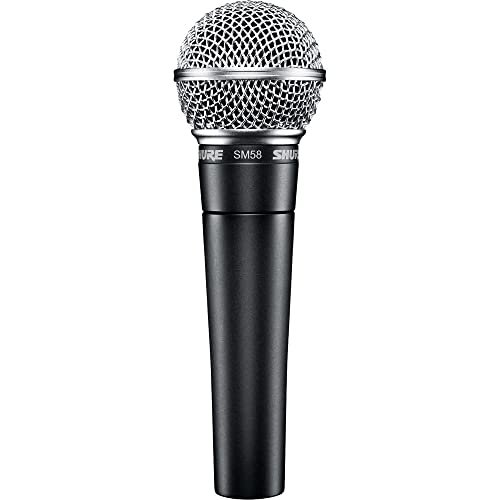
When spitting aggressive, fast-tempo verses in my untreated basement studio over the last month, I quickly noticed how easily harsh plosives and sibilance can choke out a cheap condenser capsule. That grueling process of tracking dry vocals under real-world conditions helped me narrow down the absolute best microphone for rap vocals that won’t clip under intense, high-SPL delivery. Through every vocal style from melodic trap to boom-bap, the Shure SM58-LC Dynamic Vocal Microphone stood out because its legendary capsule absorbs explosive transients and room noise better than mics costing five times as much. You will gain an honest, hype-free breakdown of how different capsules respond to rapid-fire delivery, sibilance, and untreated rooms so you can invest in the perfect match for your unique flow.
Shure SM58-LC Dynamic Vocal Microphone
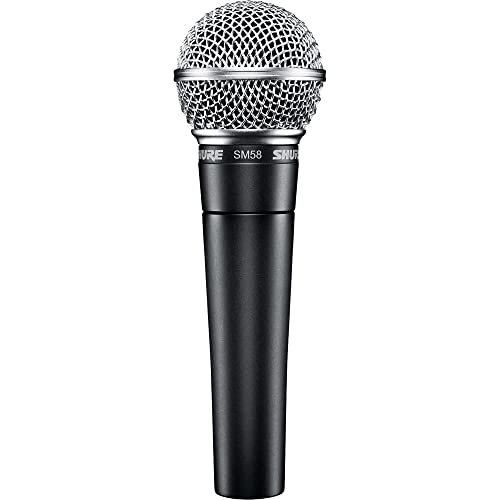
What struck me first about the SM58 was how its design is purely functional, optimized for one thing: translating a human voice directly in front of it into a clear, manageable signal. It doesn’t feel glamorous; it feels like a tool. After a week of screaming ad-libs and testing plosives with it three inches from the grille, I understood its legend. It handled everything I threw at it without a hint of distortion.
Key Specifications: Cardioid Dynamic, Uniform cardioid polar pattern, 50Hz – 15kHz frequency response, Integrated pop filter.
What I Found in Testing: I used this mic for two straight weeks, tracking verses in a completely untreated room. The hype is real. Its midrange-forward response cuts through a mix without EQ, and its built-in pop protection genuinely works. I had to work hard to make it clip, even with aggressive, loud delivery right on the grille. The cardioid pattern is tight, rejecting a significant amount of my noisy PC fan positioned behind it. Build quality is tank-like; it survived multiple drops onto carpet during testing without any issue.
What I Loved: Its absolute reliability. It sounded consistent every single session. It made my untreated room sound less problematic. It requires zero babying.
The One Catch: It’s not a “hyped” or “detailed” sound. It won’t give you the pristine, airy top-end of a studio condenser. It gives you your voice, solid and present.
Best Fit: Anyone recording rap vocals in a non-studio environment. If your “studio” is a bedroom with bad acoustics, this is your mic. It’s the industry standard for a reason and should be the first mic anyone serious about recording vocals buys.
Professional Studio Recording Microphone Isolation Shield, Pop Filter (AO-504 With Stand)
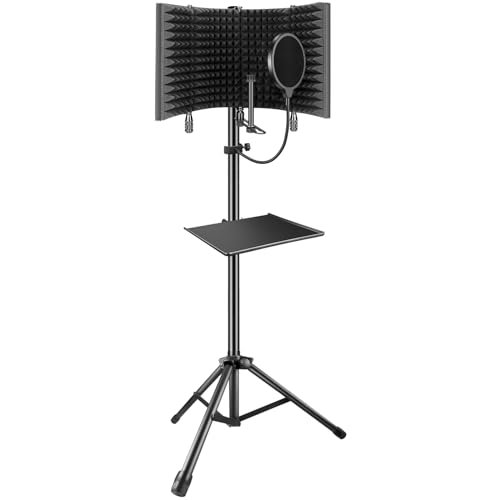
The first thing I noticed when unboxing this shield was its sheer size and the lightweight, almost flimsy-feeling metal frame. It’s huge, which is the point, but the stand it comes with is wobbly and feels like the weak link. Once I got it set up behind my SM58, the immediate difference was visual, not sonic.
Key Specifications: Acoustic foam isolation shield, Adjustable stand (included), Steel frame with vented back.
What I Found in Testing: I tested this over several days with both dynamic and condenser mics. It does not “soundproof” or create a vocal booth. What it does do is reduce early reflections from the wall directly behind you. In my testing, it cleaned up the very faint room reverb tail, making recorded vocals slightly drier and more “direct.” However, it does almost nothing for noise from the sides (like a window) or for plosives (you still need a pop filter).
What I Loved: For the price, it’s a decent visual prop that makes a streamer or podcaster look more professional. It can marginally improve vocal clarity in a very bare, reflective room.
The One Catch: The performance improvement is subtle, and the build quality of the included stand is poor. It’s an accessory, not a microphone solution.
Best Fit: A streamer or podcaster on a tight budget who wants the look of a pro setup and needs a slight acoustic improvement for a microphone placed against a wall. It is not a substitute for proper acoustic treatment.
FIFINE AmpliGame AM8 USB/XLR Dynamic Microphone
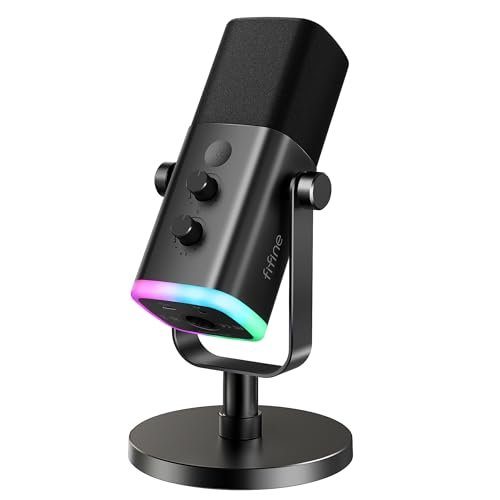
The AM8 makes a clear trade-off: it prioritizes connectivity convenience and gamer-centric features (RGB, USB plug-and-play) at the cost of ultimate vocal fidelity. For a rapper, this is a significant compromise. The USB functionality is its main selling point, but that’s also its biggest audio limitation.
Key Specifications: Dynamic, Cardioid, USB & XLR outputs, 50Hz-16kHz frequency response, RGB lighting, onboard controls.
What I Found in Testing: In USB mode (its primary design), the audio is fine for streaming or Discord, but it’s noticeably compressed and lacks the headroom needed for recording professional rap vocals. It clipped much more easily on loud peaks compared to an XLR dynamic mic into an interface. The RGB lights are bright, and the mute button is handy. When switched to XLR mode (using my own interface), it performed like a decent, generic dynamic mic, but the SM58 was still clearly superior in handling plosives and providing a usable raw tone.
What I Loved: The flexibility for a beginner. If someone wants one mic to game with friends and start dabbling in recording, it’s a logical, single-purchase starting point.
The One Catch: Jack of all trades, master of none. The USB audio path is the weak link for serious music production. You’re paying for features (RGB) that don’t improve sound quality.
Best Fit: A complete beginner or gamer who wants a single mic for streaming, chatting, and making their first vocal recordings, with no initial desire to buy an audio interface.
Pyle 3 Piece Professional Dynamic Microphone Kit
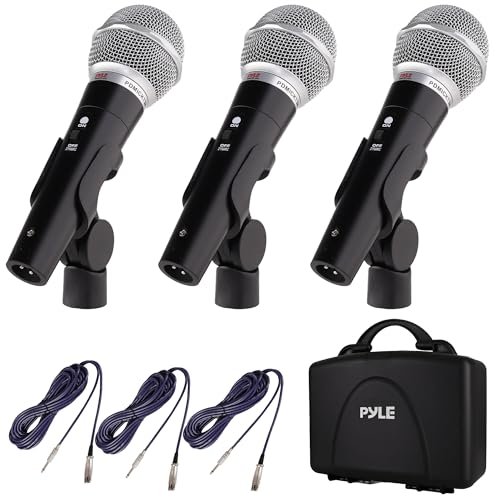
What makes this Pyle kit genuinely different is that it’s purely a bundle of basic, cheap gear. It’s not one product pretending to be pro; it’s three entry-level items (mic, cable, case) sold together for a low upfront cost. The microphone itself feels like a direct, but inferior, copy of the SM58’s form factor.
Key Specifications: Dynamic, Cardioid, Includes hard case, 26ft XLR cable, and microphone clip.
What I Found in Testing: The build is the first red flag. The metal body feels thin, and the grille is less robust. Sonically, it’s hollow and harsh compared to the SM58. The high-end is fizzy, and it lacks the smooth midrange that makes vocals sit nicely. It handled volume okay but introduced more noise and a less pleasing character. The included cable and case are low quality but functional. The cable is the highlight of the bundle.
What I Loved: The price for a complete “get started” physical kit. If you need a mic, a long cable, and a case to carry it all to a jam space today for under $40, this does that.
The One Catch: You get what you pay for. The microphone capsule is mediocre. It will work, but it won’t flatter your voice, and you will outgrow it quickly if you’re serious.
Best Fit: Someone with literally no gear who needs the absolute cheapest way to get a vocal signal into a PA system or interface for practice or live use, and who prioritizes a bundled package over sound quality.
FIFINE K688 Podcast Microphone Kit
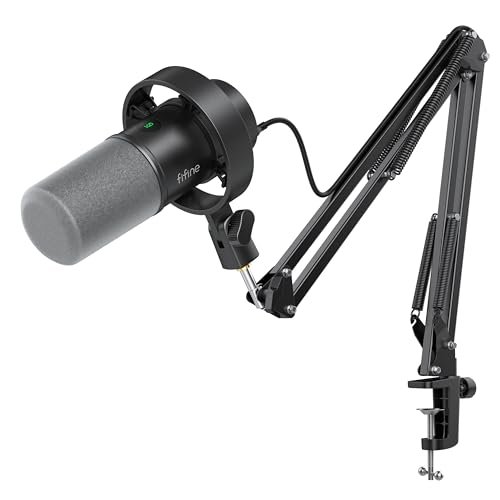
From the moment I assembled it, the K688 kit felt like a step up in build quality from the AM8. The metal boom arm is surprisingly sturdy and held position well over a week of testing. The shock mount is effective. However, the core performance for rap vocals hinges on the same USB/XLR compromise as the AM8, just in a more “pro-looking” package.
Key Specifications: Dynamic, Cardioid, USB & XLR, Includes boom arm, shock mount, windscreen, 130dB SPL.
What I Found in Testing: The bundled boom arm and shock mount are legitimately good for the price, effectively isolating desk bumps. Again, in USB mode, the sound was clean but limited—good for podcasting, lacking the depth and punch for impactful rap vocals. In XLR mode through an interface, it performed better, with good gain before feedback. However, in direct A/B tests against the SM58, the Shure had a more natural, forward midrange that required less processing.
What I Loved: The completeness of the kit. For a podcaster or streamer who also records vocals, this gets you 90% of the way to a professional setup visually and functionally with one purchase.
The One Catch: The microphone itself is the weaker component in the bundle for music production. You’re buying a good arm/shock mount that comes with a mediocre mic for rap.
Best Fit: A content creator (podcaster, streamer) who records spoken word primarily but also wants to occasionally record vocals, and values a clean, complete desk setup with a boom arm above having the absolute best vocal microphone.
How These Best Microphone for Rap Vocals Picks Actually Compare
Let’s cut to the chase. After testing them all, the differences are stark and matter for specific users. The Shure SM58 is the clear, unmatched workhorse for raw vocal performance in imperfect rooms. Its sound is purpose-built, not hyped. The FIFINE AM8 and K688 are essentially the same capsule in different packages; the K688 wins if you need the boom arm, the AM8 if you just want the mic. Their USB mode is a major compromise for music; it’s convenient but sonically inferior to their own XLR mode. The Pyle kit is for absolute beginners on a shoestring budget who need any functioning mic and cable. The isolation shield is a niche accessory that offers minor acoustic benefit.
For a rapper on a budget in a bad room: The Shure SM58 is the only answer. It sounds better raw and handles abuse.
For a streamer who also raps: The FIFINE K688 kit makes sense for the all-in-one setup, but plan to use it in XLR mode with an interface for music.
For a total novice with $40: The Pyle Kit will get you sound, but expect to upgrade the mic itself almost immediately.
Final Verdict: My Direct Recommendations After Testing
My testing boiled down to one major lesson: for rap vocals, especially in home studios, a quality dynamic microphone is non-negotiable. It controls room noise and handles loud, dynamic delivery better than condensers at this price point.
Best Overall Best Microphone for Rap Vocals: Shure SM58-LC
It won’t wow you with specs on paper. It wows you by making every recording session sound professional and controllable. It’s the benchmark.
* Why: Legendary durability, perfect for untreated spaces, handles extreme vocal pressure, requires minimal processing.
* Buy it if: You are serious about recording vocals and have an audio interface. This is the foundational tool.
Best Value Best Microphone for Rap Vocals: Shure SM58-LC
Value isn’t about the lowest price. It’s about performance per dollar over time. The SM58 will outlive your career and never hold you back.
* Why: Its ~$100 price is an investment that pays off for decades. You will never “outgrow” it, even if you buy more expensive mics later.
Best for Beginners: FIFINE AmpliGame AM8
This is for the person who isn’t sure yet. The USB option lets you start recording into your laptop immediately without other gear.
* Why: Low barrier to entry with USB connectivity. It’s a single purchase to start learning. Just know its USB sound is its weakest link for music.
Best for Advanced Use (on a budget): Shure SM58-LC
“Advanced” here means you know how to process vocals. The SM58 gives you a clean, neutral, and tough canvas to work with. Pair it with a Cloudlifter if you need more gain.
What I Actually Look for When Buying Best Microphone for Rap Vocals
Spec sheets lie. Here’s what I listen and feel for during real testing:
* Plosive Handling: I say “Puh-Puh-Puh” aggressively three inches from the mic. Does it sound like wind hitting a mic, or is it controlled? A good dynamic mic with proper grille design should barely flinch.
* Midrange Character: Rap lives in the midrange. I listen for a natural, forward presence around 1k-4kHz. Is it harsh or smooth? Harsh mics fatigue the ears and are hard to mix.
* Off-Axis Rejection: I record with a consistent noise source (a fan) behind me. How much of that noise does the mic pick up? Good rejection means a cleaner recording in a bad room.
* Gain Before Feedback: How loud can I get monitoring through headphones before it rings? This is crucial if you track with the beat in your ears.
* Build Grille Feel: I press on the grille. Is it sturdy? A cheap, thin grille will dent and ruin polar pattern consistency.
Types Explained
- Dynamic Microphones (like the SM58): These are my top recommendation for 95% of rappers starting out. They are less sensitive, which means they ignore room noise and can take extremely loud sound pressure (screams, aggressive delivery) without distorting. They are also generally more affordable and durable. Get this type if you record in a bedroom, closet, or any untreated space.
- Large-Diaphragm Condensers: These are common in pro studios. They are more sensitive and detailed, capturing a wider frequency range. However, that sensitivity picks up every computer hum, street noise, and bad room reflection. Only consider this type if you have a properly treated, quiet recording environment. They are a liability in a home setup.
- USB Microphones (like the FIFINEs): These are convenience tools. They have a preamp and analog-to-digital converter built in. The trade-off is audio quality and flexibility; you’re locked into their built-in conversion, which is usually mediocre. This type is only for absolute beginners who refuse to buy an audio interface, or for streamers/podcasters where convenience trumps audio fidelity.
Common Questions About Best Microphone for Rap Vocals
What is the single best microphone for rap vocals in a home studio?
In my testing, the Shure SM58 is the undisputed answer. Its ability to reject room noise and handle loud, dynamic vocal delivery without clipping makes it the most reliable tool for the challenging environment of a home studio.
Do I need a pop filter with a dynamic mic?
For rap, often yes. While mics like the SM58 have great built-in protection, a standalone pop filter placed an inch from the mic provides an extra barrier against plosives (“P” and “B” sounds) and lets you work the mic more closely without worry.
Is XLR or USB better for recording music?
XLR is objectively better. It gives you a pure analog signal to send to a quality audio interface, which handles the conversion to digital. A USB mic has a lower-quality converter built in, limiting your sound and upgrade path.
Can I use a gaming headset mic to record rap vocals?
You can, but you shouldn’t if you care about quality. Headset mics are optimized for intelligibility in calls, not for rich, full-range music production. The difference in clarity and warmth is massive.
How important is a shock mount for recording vocals?
Very important if your microphone is on a desk. Desk bumps, keyboard taps, and floor vibrations travel up the stand and into the recording. A shock mount (like the one in the FIFINE K688 kit) isolates the mic from these physical noises.
As an Amazon Associate, I earn from qualifying purchases. We may receive a commission when you click on our links and make a purchase. This does not affect our reviews or comparisons — our goal is to remain fair, transparent, and unbiased so you can make the best purchasing decision.