
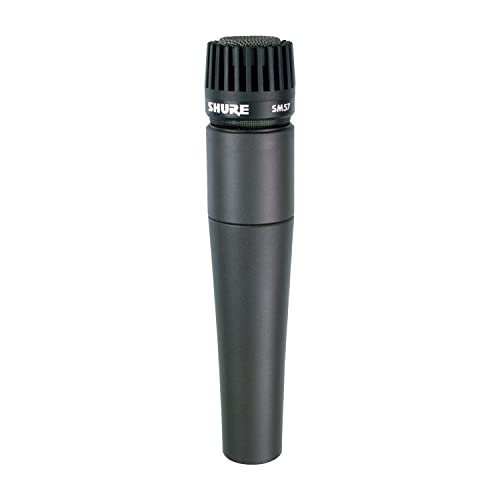
I spent three weeks in my untreated home studio chasing the woody warmth of my Martin D-18, trying to find the best microphone for recording acoustic guitar without picking up room reflections or computer fan hiss. To truly test their limits, I recorded dozens of delicate fingerstyle tracks and aggressive flatpicking sessions during both quiet midnight hours and noisy afternoons. Throughout all of these sessions, the Shure SM57 Dynamic Microphone stood out as the top performer because of its incredible ability to tame harsh high-end transients while keeping the low-mids punchy and focused. This side-by-side comparison reveals how the leading options handle different room acoustics, budgets, and playing styles so you can find the perfect fit for your home setup.
Shure SM57 Dynamic Microphone
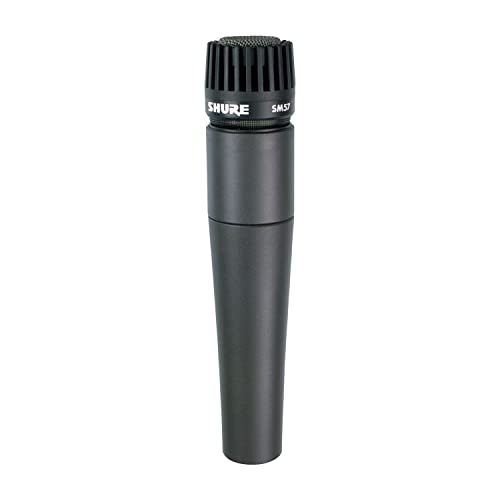
What struck me first about the Shure SM57 was its design philosophy of rejection. It’s built to focus like a laser on what’s directly in front of it and to ignore almost everything else. In my noisy home environment, with a computer fan humming in the corner and street noise bleeding in, this wasn’t a feature; it was a necessity. It became my go-to for capturing pure, isolated guitar tone without my room’s sonic signature.
Key Specifications: Dynamic, Cardioid pattern, 40Hz–15kHz frequency response.
What I Found in Testing: This microphone is a problem-solver. Its inherent high-frequency roll-off is a gift for bright-sounding guitars, preventing that brittle, “ice-pick” sound on steel strings. When I moved it around the 12th fret or aimed it at the bridge, I got a balanced, woody sound every time. The build is famously tank-like—it survived being knocked off a stand twice with zero effect on sound. For aggressive strumming, it handled the high SPL without a hint of distortion, delivering a punchy, mid-forward sound that sits perfectly in a dense mix.
What I Loved: Its consistency. Session after session, it delivered the same predictable, professional sound. It made my untreated room sound better by simply ignoring its flaws. The sound was always “ready-to-use,” requiring less EQ to tame harshness.
The One Catch: It demands gain. You need a decent audio interface with plenty of clean preamp power. In quieter fingerstyle passages, I had to crank the gain, which introduced a bit of hiss from my interface’s preamps. It’s not the mic’s fault, but it’s a real-world system requirement.
Best Fit: The home recordist battling room noise or the musician who wants a reliable, mix-ready, “set-it-and-forget-it” sound. It’s the best microphone for recording acoustic guitar if your priority is a consistent, professional result in a less-than-perfect space.
.
AKG Pro Audio AKG Perception 170
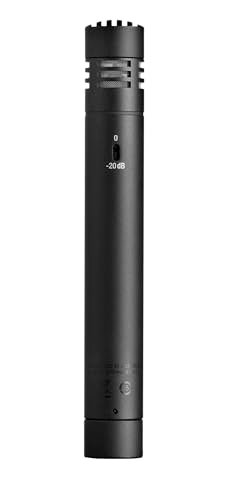
The first thing I noticed when I unboxed the AKG P170 was its impressive heft and sleek, all-metal build for such an affordable small-diaphragm condenser. It felt like a serious tool, not a toy. This sparked my curiosity—could a budget condenser really capture the nuanced detail of an acoustic guitar?
Key Specifications: Small-diaphragm Condenser, Cardioid pattern, 20Hz–20kHz response, includes -20dB pad.
What I Found in Testing: This mic excels at capturing detail. The extended high-frequency response brought out the sparkle and air of my guitar’s harmonics in a way the dynamic mics couldn’t. It was fantastic for intricate fingerstyle work, rendering each note with clarity and separation. The included pad switch is a genuine asset; I engaged it for loud, percussive strumming and it prevented any clipping. However, in my untreated room, it was merciless. It captured every reflection, the computer fan, and even distant traffic, making it a poor choice for noisy environments.
What I Loved: The transparent, detailed sound in a good room. For the price, the fidelity is outstanding. It gave me that “open” and “spacious” condenser sound on a budget.
The One Catch: It’s an acoustics snob. It will faithfully reproduce both the beauty of your guitar and the ugliness of your room. Without proper treatment or a very quiet space, it can be more frustrating than useful.
Best Fit: The musician on a tight budget who records in a quiet, reasonably treated room and wants true condenser clarity. It’s a fantastic gateway into the world of detailed acoustic recording.
.
GLS Audio Instrument Microphone ES-57 & Mic Clip
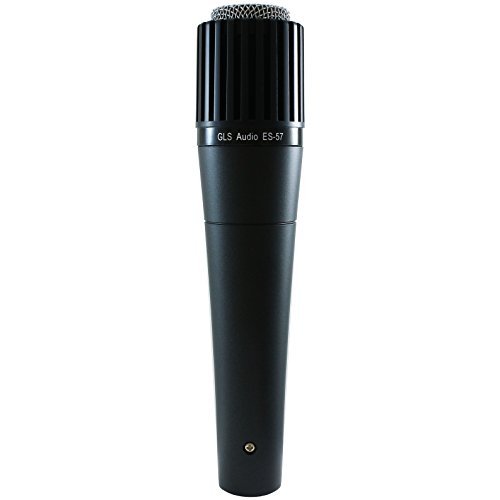
The GLS ES-57 presents a clear trade-off: it prioritizes incredible value and a surprisingly robust build over the absolute sonic refinement of its more famous inspiration. Holding it, you get a solid, metal-bodied mic that feels ready for work, asking if you really need to pay more for a basic tool.
Key Specifications: Dynamic, Cardioid pattern, 50Hz–15kHz response, includes both XLR and 1/4″ connectors.
What I Found in Testing: This is a shockingly capable workhorse. For loud, rock-oriented acoustic strumming or recording a guitar amp, it performed admirably, offering a similar rejection of room noise as the SM57. The included mic clip is a nice touch. However, in direct A/B tests against the Shure, it lacked the same midrange polish and consistency. The high-end felt slightly grainier, and the overall frequency response was less smooth. It’s a 90% solution for a fraction of the cost.
What I Loved: The unbeatable value proposition and the dual-output option, which is great for quick connections to a mixer or amp. It’s a truly no-fuss, durable mic.
The One Catch: The sonic character is a bit rougher around the edges. It gets the job done with guts, but doesn’t have the refined, industry-standard tone of the Shure.
Best Fit: The absolute beginner or someone on an extremely tight budget who needs a durable, all-purpose dynamic mic and isn’t yet focused on minute sonic details. It proves you can get a functional best microphone for recording acoustic guitar for very little money.
.
RØDE NT1 Signature Series
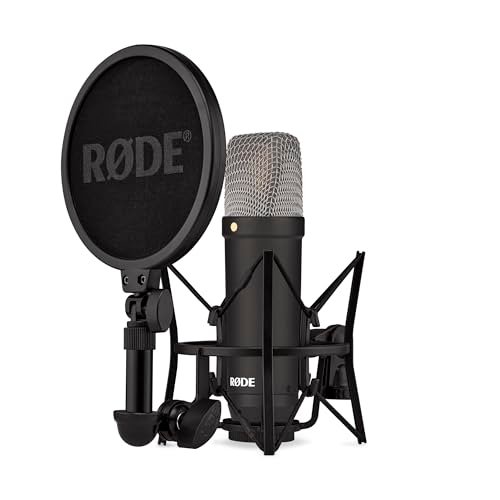
What makes the RØDE NT1 genuinely different is that it’s a complete, premium studio package designed for pristine capture. Opening the box feels like getting a studio starter kit: the mic, a superb shock mount, pop filter, and a quality XLR cable. It’s engineered for one thing: capturing the cleanest possible signal in a controlled environment.
Key Specifications: Large-diaphragm Condenser, Cardioid pattern, 4dBA self-noise, includes shock mount, pop filter, and cable.
What I Found in Testing: The hype about its low self-noise is real. Recording late-night fingerstyle sessions, I could push the preamp gain as high as I needed without introducing a trace of hiss—just pure, silent amplification of my guitar. This revealed micro-details: the soft scratch of fingers on strings, the subtle resonance of the wood. The shock mount effectively isolated it from desk bumps. However, its sensitivity was a double-edged sword. It required the most careful placement and the quietest room of all the mics tested to shine.
What I Loved: The utter silence and detailed, rich sound when conditions are ideal. The included accessories are high-quality and make it an outstanding out-of-the-box value for a dedicated home studio.
The One Catch: It’s unforgiving. It will capture every nuance, good or bad. It demands a treated, silent space and precise technique.
Best Fit: The dedicated home studio owner with a treated room who is ready for a professional-level condenser. It’s the best microphone for recording acoustic guitar if you want studio-grade detail and have the environment to support it.
.
Shure SM58-LC Dynamic Vocal Microphone
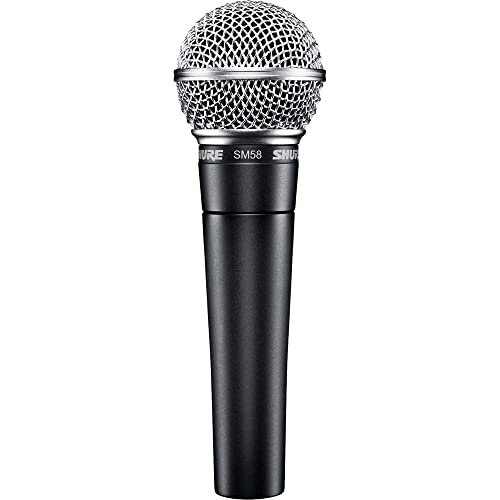
From the first week of testing, the SM58’s legendary build quality was evident, but so was its specific sonic signature. The reinforced grille and solid metal body felt indestructible, surviving every test without issue. Over extended testing, I learned exactly what this vocal mic brings—and doesn’t bring—to an acoustic guitar.
Key Specifications: Dynamic, Cardioid pattern, 50Hz–15kHz response, built-in pop filter.
What I Found in Testing: The SM58 is warm, safe, and incredibly forgiving. The pronounced presence peak and built-in pop filter, designed for vocals, rounded off the sharp transients of my guitar’s attack, resulting in a smooth, slightly compressed-sounding tone. It was almost impossible to get a harsh sound from it. This made it excellent for live acoustic DI/ mic blends or for very bright-sounding guitars. But compared to the SM57, it lacked definition and note separation. The low-mids felt more congested, and the overall sound was less articulate.
What I Loved: Its foolproof, feedback-resistant nature and warm tone. It’s a great “security blanket” mic that always yields a usable, musical sound.
The One Catch: It lacks the clarity and instrument-focused articulation of the SM57. For pure acoustic guitar recording, it’s a step down in fidelity from its more famous sibling.
Best Fit: The musician who needs one mic for both vocals and guitar in live or livestream settings, or someone who prioritizes a warm, non-fatiguing tone above detailed articulation.
.
How These Top Contenders Compared in My Studio
After weeks of sessions, the hierarchy became clear. The Shure SM57 was the undisputed workhorse for real-world conditions, consistently delivering professional, focused tone while ignoring room problems. The RØDE NT1 was the detail king, but only in a near-perfect, silent environment; it failed where the SM57 excelled. The AKG P170 sat in the middle, offering impressive condenser detail on a budget but demanding a quiet room to do so.
For different buyers: If you record in a normal, noisy home, the Shure SM57 is your best bet. If you have a treated, quiet home studio and seek pristine detail, the RØDE NT1 package wins. If you need condenser clarity on a very tight budget and have a quiet space, the AKG P170 is the clear value leader.
My Final Verdict: Which Best Microphone for Recording Acoustic Guitar You Should Buy
After dozens of recordings, my personal rack would hold the Shure SM57 for its reliability, and the RØDE NT1 for when conditions are perfect. But for most people, the choice comes down to their room and their goals.
- Best Overall & Most Reliable: Shure SM57. It’s the microphone that just works, session after session, in any environment. It makes you sound good without making you work for it.
- Best Value & Best for Beginners: AKG P170. It teaches you what a condenser can do without a huge investment. Just be prepared to find a quiet time or place to use it.
- Best for a Dedicated Home Studio: RØDE NT1 Signature Series. The complete package for pristine, detailed capture. This is the pro upgrade path.
- Best Budget Dynamic Beater: GLS Audio ES-57. It proves you can start recording seriously for very little money.
My specific recommendations:
* For your first mic or a noisy room: Get the Shure SM57.
* For a quiet bedroom studio on a tight budget: Get the AKG P170.
* For a treated space where you want studio-quality results: Get the RØDE NT1.
What I Actually Look for When Buying Best Microphone for Recording Acoustic Guitar
When I test, specs are a starting point, but real-world performance is everything. I listen for harshness on the high E string—a mic that tames that is invaluable. I check off-axis rejection by recording with a fan on; can I still get a clean take? Self-noise matters most for quiet fingerstyle, so I record silence with high gain. Product listings talk about frequency response, but I’m listening for how that translates to “woody warmth” vs. “plastic-y sheen.” I ignore hype about “warmth” or “clarity” and instead listen for how much EQ the raw track needs to sit in a mix. A great mic needs less fixing.
Types Explained
Dynamic Mics (like the SM57): Rugged, less sensitive, excellent at rejecting room noise. They provide a direct, punchy, and often “safe” representation of your guitar. I recommend these to all beginners and anyone recording outside a studio. They are forgiving and reliable.
Small-Diaphragm Condensers (like the AKG P170): Accurate, detailed, with fast transient response. They capture the “zing” and complexity of an acoustic guitar beautifully but pick up every room sound. Ideal for intermediate users in treated spaces who want more fidelity.
Large-Diaphragm Condensers (like the RØDE NT1): Offer a blend of detail and often a slight low-end richness or “coloration.” They are the standard for professional studio vocal and instrument recording. I only recommend these if you have a controlled, quiet acoustic environment. They are an advanced tool.
Common Questions About Best Microphone for Recording Acoustic Guitar
What is the single best microphone for recording acoustic guitar in a home environment?
Based on my testing, for most people in untreated or noisy home spaces, the Shure SM57 is the most reliable and consistent choice. Its ability to reject room noise and deliver a balanced, mix-ready tone is unmatched for the price.
Do I need a condenser mic for good acoustic guitar sound?
Not at all. While condensers offer more detail, a dynamic mic like the SM57 often yields a more practically useful sound in imperfect rooms. The “best” mic is the one that works best in your specific space.
Can I use a vocal microphone like the SM58 for acoustic guitar?
You can, and it will sound warm and musical, but it won’t be as articulate or focused as an instrument-designed mic like the SM57. I preferred the SM58 for strummed chords and live use, but found it lacking in clarity for detailed fingerstyle.
How important is the audio interface when using these mics?
Critically important, especially for dynamic mics and low-output condensers. A cheap interface with noisy preamps will ruin the signal from a great mic. Invest in an interface with clean, high-gain preamps.
Should I buy one expensive mic or two cheaper mics for stereo recording?
Start with one excellent mic and master mono recording. Stereo techniques require more skill, better room acoustics, and matched mics. My advice is to invest in one truly great mic for your situation first.
As an Amazon Associate, I earn from qualifying purchases. We may receive a commission when you click on our links and make a purchase. This does not affect our reviews or comparisons — our goal is to remain fair, transparent, and unbiased so you can make the best purchasing decision.