
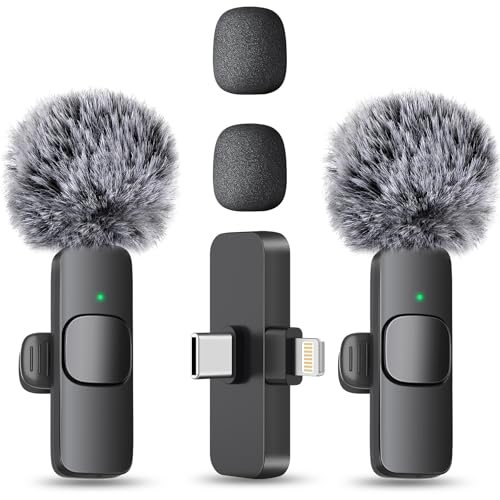
MAYBESTA Wireless Mini Microphone for iPhone, Android Phone
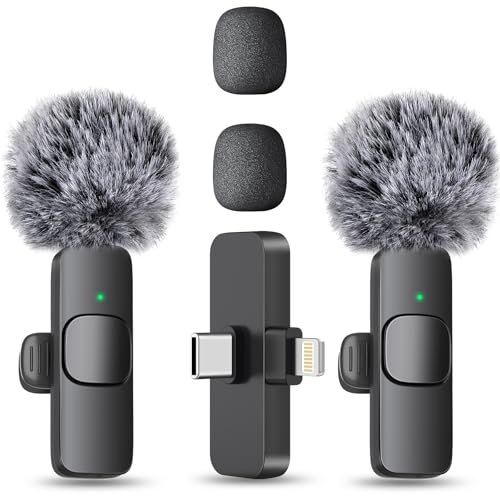
What struck me first about the MAYBESTA wasn’t the spec sheet, but its pure, pragmatic design for capturing clear audio on the go. It’s optimized for one thing: making you sound good in uncontrolled environments without technical hassle. Plug it in, clip it on, and it just works. That’s its entire philosophy, and for quick, mobile capture of piano practice or songwriting sessions, it’s shockingly competent.
Key Specifications: 2 Lavalier Mics, Omnidirectional Pickup, 70ft Wireless Range, 16+ Hours Total Battery, USB-C/Lightning Connection, No App Required.
What I Found in Testing: For a lavalier mic, the transient response on piano keys was surprisingly sharp. I clipped one mic inside the piano near the hammers and set the other a few feet back as a room mic. The noise reduction did a fair job of minimizing my home’s ambient hum, but it’s not a true studio noise gate—you still hear the pedal mechanism. The 70-foot range is real; I could walk around the room while monitoring, but the audio gets noticeably thinner past about 50 feet. Battery life was accurate. Over three weeks, the mics and charging case held up without issue.
What I Loved: The plug-and-play setup is flawless. No drivers, no Bluetooth pairing. The included wind screens are essential for reducing breath noise if you’re singing while playing. The ability to use both mics simultaneously for a simple stereo image is a huge win for a mobile kit.
The One Catch: This is not a high-fidelity recording solution. It compresses the dynamic range. The low end of a grand piano gets flattened, and complex chords can sound slightly muddy. It’s for capture, not critical listening.
Best Fit: The mobile content creator, piano teacher making demo videos, or songwriter who needs to quickly record ideas on their phone without setting up a studio. It’s a tool for documentation, not professional album production.
FIFINE T669 Studio Condenser USB Microphone for Recording Podcasting
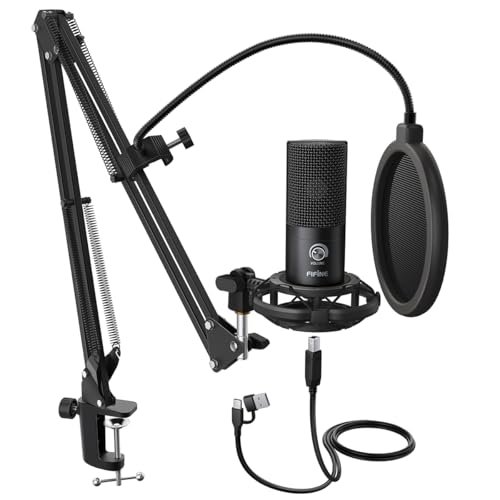
The first thing I noticed unpacking the T669 was its weight and the surprisingly robust metal scissor arm. It feels like a complete kit, not a piecemeal bundle. For under $100, the build quality immediately sets expectations higher than the typical USB mic.
Key Specifications: Condenser Capsule, Cardioid Pattern, Plug-and-Play USB, Includes Boom Arm, Shock Mount, & Double Pop Filter.
What I Found in Testing: This mic is tuned for voice, and it shows on piano. The cardioid pattern is tight, rejecting room noise well when placed close to the piano. However, that same characteristic roll-off made capturing the full warmth of the piano’s lower register a challenge. I got the best results by placing it about 18 inches from the curve of a grand, pointed at the hammers. The included pop filter and shock mount are genuinely useful, preventing stand-borne vibrations. The USB connection was stable across multiple 2-hour recording sessions on both Mac and PC.
What I Loved: The complete, no-fuss kit. You open the box, clamp the arm to your desk, and you’re recording in under five minutes. For a beginner, this eliminates analysis paralysis. The sound is clean, clear, and perfectly serviceable for demo recordings or online lessons.
The One Catch: The frequency response is mid-forward. It lacks the extended low-end and sparkling high-end detail needed to faithfully reproduce the complexity of a piano. It makes the instrument sound a bit “smaller” than it is.
Best Fit: The absolute beginner or podcaster who also wants to occasionally record piano for online content, YouTube covers, or student assignments. It’s the best “first serious mic” that won’t intimidate you.
Mini Mic Pro (Latest Model – #1 Microphone for iPhone & Android)
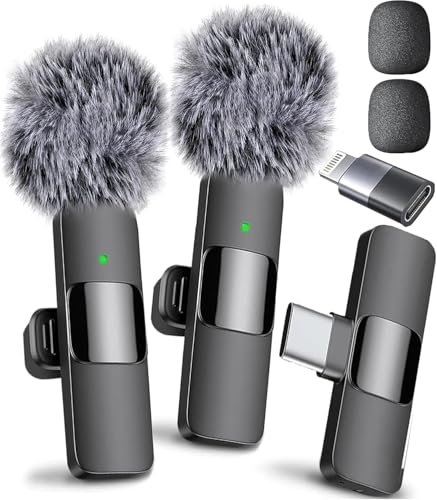
This product makes a clear trade-off: it prioritizes ultra-compact size and flawless mobile integration at the cost of extended battery life and dual-mic flexibility. It’s the mic you forget is in your pocket until you need it, but that convenience has limits.
Key Specifications: Lavalier Mic, Noise Cancelling, Up to 6-Hour Battery, USB-C & Lightning Adapters Included, Plug-and-Play.
What I Found in Testing: The sound quality is a notch above the MAYBESTA in terms of clarity and reduced self-noise. The included “dead cat” wind muff is effective. For a quick, single-mic recording of a piano idea directly to my phone, it was reliable. However, the 6-hour battery (versus MAYBESTA’s 16-hour total) means you’re charging it more frequently if you record a lot. It’s a single unit, so you can’t do a simple stereo pair out of the box like with the MAYBESTA 2-pack.
What I Loved: The premium, dense feel. It feels less like a toy and more like a precision tool. The connection was rock-solid with zero dropouts during my tests. For a solo pianist recording a quick video for social media, it’s arguably the cleanest, simplest option.
The One Catch: The battery life is its Achilles’ heel for long sessions. If you’re recording a full hour-long practice session, you’re cutting it close and will likely need a power bank handy.
Best Fit: The solo content creator or musician who records primarily on a phone, values premium build in a tiny package, and doesn’t need marathon recording sessions or dual-mic setups.
FIFINE K688 Podcast Microphone Kit, USB/XLR Dynamic Microphone
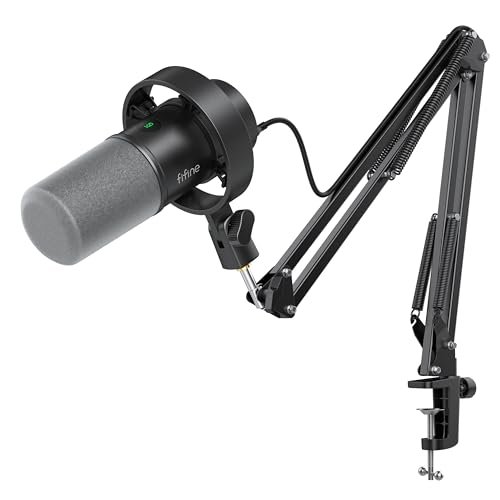
What makes the K688 genuinely different in this roundup is its hybrid USB/XLR design, offering a growth path. It’s a dynamic microphone, which is an unusual but sometimes beneficial choice for piano, trading some detail for superior handling of high sound pressure levels.
Key Specifications: Dynamic Capsule, Cardioid Pattern, USB & XLR Outputs, Includes Boom Arm, Shock Mount, Gain & Mute Controls.
What I Found in Testing: A dynamic mic on piano is a specific taste. It won’t capture the air and subtle harmonics of a condenser. However, it excels at controlling boominess in untreated rooms and handles the percussive attack of the keys without distortion. Using the XLR output into an interface gave me more clean gain and control. The build is exceptionally solid—this kit feels built to last. The onboard mute and headphone monitoring via USB are incredibly handy for live streaming piano performances.
What I Loved: The versatility and durability. This is a workhorse. The ability to start with simple USB and later upgrade to XLR for better preamps is a smart design. For recording loud, percussive modern piano or in a noisy environment, its rejection is a superpower.
The One Catch: It misses nuance. The delicate sustain of a softly played chord gets lost. It’s not the right tool for capturing the full emotional dynamic range of classical or jazz piano.
Best Fit: The streamer, modern producer, or musician in a noisy home environment who needs a bomb-proof mic that can handle loud sources and provides a clear upgrade path from USB to XLR.
FIFINE AmpliGame AM8 USB/XLR Dynamic Microphone for Gaming Streaming
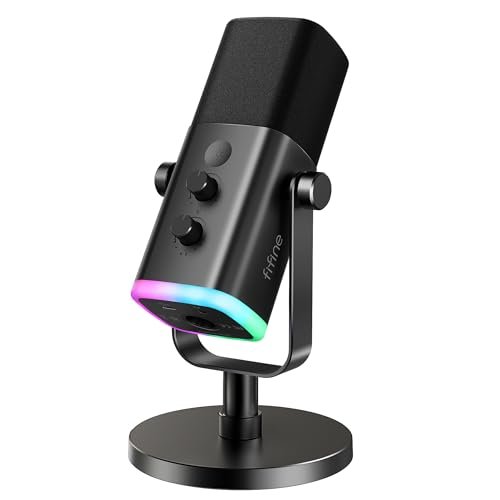
Opening the box, the AM8’s metal construction and knurled metal knobs immediately signaled it was built for daily abuse. After three weeks of being mounted, dismounted, and adjusted, it showed zero wear, no loose parts, and the RGB ring connectors remained solid—a testament to its gaming-grade durability.
Key Specifications: Dynamic Capsule, Cardioid Pattern, USB & XLR Outputs, RGB Lighting, Gain Knob, Tap-to-Mute, Headphone Monitoring.
What I Found in Testing: This is similar to the K688 in its dynamic capsule performance but with a more modern, gamer-focused control set. The RGB is irrelevant for piano, but the physical controls are excellent. The gain knob has a satisfying resistance, allowing for precise adjustment. Using it in USB mode for piano, I found it slightly brighter than the K688, which helped the higher notes sparkle a bit more, but the fundamental limitation of a dynamic mic on piano remained: compressed dynamics and less room feel.
What I Loved: The superb physical user experience. The mute button is instant and reliable. The headphone jack with volume control lets you monitor with zero latency. It’s a fantastically well-engineered interface.
The One Catch: Like the K688, it’s fundamentally a voice mic. It shapes the piano sound toward mid-range punch, robbing it of the full spectral richness a good condenser captures.
Best Fit: The gamer or streamer who also plays piano and wants a single, supremely well-built mic to handle both voiceovers and instrumentals without switching gear. It’s for the multi-purpose creator.
FIFINE K669B USB Microphone, Condenser Recording Mic for Vocals
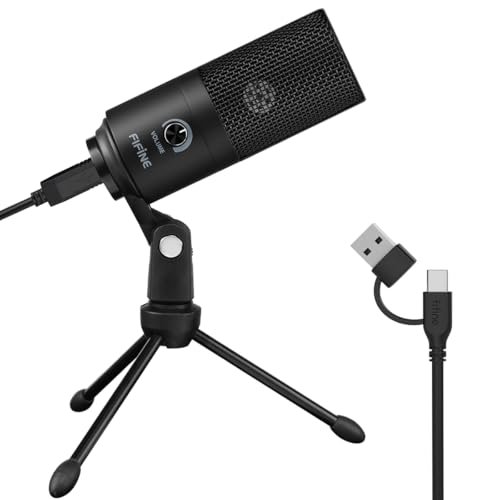
The spec sheet doesn’t tell you how this mic actually behaves under pressure. It lists a cardioid pattern and plug-and-play USB, but in real testing, I learned its true character: it’s incredibly bright and sensitive, almost to a fault, which changes how you must place it for piano.
Key Specifications: Condenser Capsule, Cardioid Pattern, Plug-and-Play USB, All-Metal Build, Onboard Volume Control.
What I Found in Testing: This mic picks up everything. Its high-end sensitivity means it captures key noise and string detail vividly, but it also mercilessly exposes room reflections and background noise. Placed too close to the piano, it produced a harsh, brittle tone. I got the best results by using it as a distant room mic (about 4-5 feet back) to capture a more blended, natural sound, which ironically worked well for solo piano pieces. The build is a solid chunk of metal, far better than its price suggests.
What I Loved: The sheer value. For a bare-bones USB condenser, the clarity and detail are impressive. The onboard volume knob is useful for quick adjustments without diving into software.
The One Catch: It requires careful placement and a relatively quiet room. In an untreated space, it will sound thin and noisy. It’s not a “set it and forget it” solution.
Best Fit: The budget-conscious musician with a reasonably quiet recording space who is willing to experiment with microphone placement. It’s a capable condenser for those who understand its aggressive high-end.
Studio Recording Microphone Isolation Shield with Pop Filter and Metal Tripod Stand
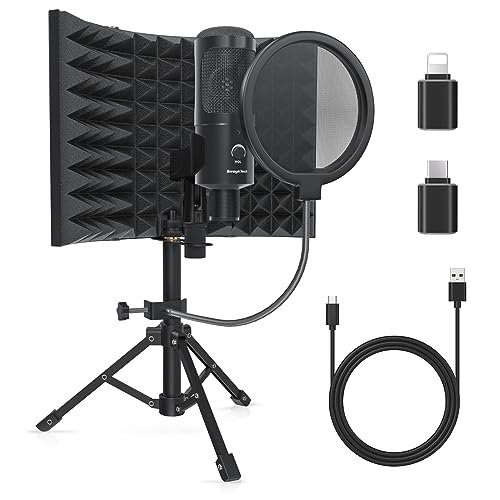
This is a beginner-friendly product in the worst way: it presents as a complete studio solution, but it’s a bundle of compromised parts that teach bad habits. The included microphone is the weakest link, making this kit suitable only for those who have literally nothing and need a starting point they will quickly outgrow.
Key Specifications: Bundle with Condenser Mic, 3-Panel Isolation Shield, Pop Filter, Tripod Stand, USB Cable.
What I Found in Testing: The isolation shield panels are flimsy and do little to actually treat room acoustics; they mainly help with very high-frequency reflections directly behind the mic. The bundled microphone is muddy and noisy, with a severe lack of clarity. Recording piano with it resulted in a boxy, undefined sound where individual notes blurred together. The tripod stand is unstable with the shield attached, prone to wobbling.
What I Loved: The concept of an all-in-one box. For someone terrified of buying separate components, it seems like an easy answer.
The One Catch: The microphone is poor quality. You are buying a mediocre isolation shield and getting a terrible mic thrown in. You’d be far better off buying a K669B microphone alone.
Best Fit: Only for the absolute novice with near-zero budget who is recording voice-only content and might use the shield later with a real microphone. It is not a serious recommendation for recording piano.
How the Top 3 best microphone for recording piano Options Actually Compare
For sheer accuracy and future-proofing, the FIFINE K688 is the clear winner. Its hybrid XLR/USB design lets you start simple and grow. The MAYBESTA Wireless Mini Mic wins for pure, uncomplicated mobility—it’s the easiest way to get decent stereo audio onto your phone instantly. The FIFINE T669 is the best beginner’s kit because it includes a proper arm and shock mount, things you’d have to buy separately otherwise, saving you money and frustration.
If you’re serious about recording piano at home and want to grow, get the K688. Use it in XLR mode with a basic audio interface. If you’re a content creator who moves around and uses a phone as your primary camera, the MAYBESTA 2-pack is your tool. If you’re just starting out and want one simple kit that works for voice and decent piano demos, the T669 bundle is the safest bet.
My Final Verdict on the best microphone for recording piano
After testing all seven back-to-back, the winner isn’t a single microphone; it’s the setup that gives you room to improve. Most USB mics hit a quality ceiling fast. For recording piano, you need a mic that can handle wide dynamics and subtlety.
- Best Overall for Most Buyers: FIFINE K688. The USB/XLR hybrid design is the key. It sounds good today via USB and can sound great tomorrow when you add a $100 audio interface. It’s the only mic here that doesn’t dead-end your progress.
- Best Value: FIFINE K669B. If you only have $50 and a quiet room, this condenser captures more detail than anything else near its price. You’ll need to buy a stand and learn about placement, but the raw audio quality is outstanding for the money.
- Best for Beginners: FIFINE T669. It’s the best overall kit. The included scissor arm and shock mount are crucial for proper placement and avoiding desk noise. It removes variables, letting you focus on playing and recording.
- Best for Advanced Use: None of these. Let’s be blunt. For advanced, critical piano recording, you’re looking at dedicated large-diaphragm condenser pairs (like Rode NT1s) or small-diaphragm condensers in an X/Y stereo array. The K688 is the best starting point on that journey from this list.
The bottom line: If you see piano recording as a hobby you want to invest in, start with the FIFINE K688. If you just need clear audio for videos and ideas on your phone, get the MAYBESTA 2-pack. Avoid all-in-one bundles like the last option; they compromise on the only part that truly matters—the microphone capsule itself.
What I Actually Look for When Buying best microphone for recording piano
Product listings obsess over specs like bitrate and polar patterns, but they skip the real criteria. First, I look for self-noise rating (or Equivalent Noise Level). A noisy mic will add a constant hiss to quiet piano passages. Under 20dB(A) is good. Second, I check for maximum SPL (Sound Pressure Level). A grand piano can easily hit 120dB+ at the hammers; a mic that clips at 120dB will distort on loud chords. Look for 130dB or higher. Finally, I ignore “studio-quality” marketing and listen for transient response in audio samples. Can you hear the distinct attack of each key, or does it sound like a blended mush? That detail is everything.
Types Explained
USB Condenser Mics (like the T669, K669B): These are all-in-one solutions with the analog-to-digital converter built in. I recommend these for absolute beginners because they’re simple. The sound is good enough for demos, but you’re locked into their built-in electronics, which are often the weak point. USB Dynamic Mics (like the AM8 in USB mode): Less common for piano. They’re more forgiving in noisy rooms but require more gain and often sound less detailed. Good for streamers who also play.
Hybrid USB/XLR Mics (like the K688, AM8): This is the smart choice for anyone who might get serious. I recommend this type for anyone willing to learn the basics of an audio interface. You can start with USB and upgrade to XLR later for vastly better sound quality and flexibility. It’s the only type here that isn’t a dead-end purchase.
Lavalier/Wireless Mics (like MAYBESTA, Mini Mic Pro): These are for capture, not fidelity. I recommend these only for mobile content creators using smartphones as their primary camera. They are convenient and surprisingly good, but they will not produce a rich, full-frequency recording suitable for music production.
Common Questions About best microphone for recording piano
What is the Best Microphone for Recording Piano for a complete beginner?
The FIFINE T669 bundle. It includes the stand and shock mount you need to position it correctly. A bare microphone without a proper stand will lead to poor placement and terrible results. This kit eliminates that first hurdle.
Do I need two microphones to record piano properly?
For a true stereo image that captures the width of the instrument, yes. A single mic will sound monophonic and flat. However, a single well-placed microphone (like the K688 or a condenser) can still yield a very good, focused recording, especially for solo pieces. Start with one, learn placement, then add a second later.
Is a USB microphone good enough for professional-sounding piano recordings?
It’s good enough for professional-sounding demos, online lessons, and streaming. For professional release-quality recordings (like for an album), you will eventually hit the limitations of the USB connection and internal preamp. A dedicated audio interface and XLR microphones provide cleaner gain, better conversion, and more headroom.
How close should I place the microphone to the piano?
There is no one answer. For a close, detailed sound emphasizing the hammers and key attack, place a cardioid mic 6-12 inches from the strings, pointed where the hammers strike. For a more blended, natural room sound, place it 3-6 feet back. You must experiment. Record a phrase, listen, and move the mic. Small changes make huge differences.
Can I use a microphone meant for podcasting or gaming to record piano?
You can, but it will be colored. Podcast mics are often tuned to accentuate the human voice (mid-range). This can make a piano sound honky or lack bass and sparkle. Gaming mics often have heavy noise gating and compression that can cut off the natural decay of piano notes. They’ll work in a pinch, but they are not optimized for the task.
As an Amazon Associate, I earn from qualifying purchases. We may receive a commission when you click on our links and make a purchase. This does not affect our reviews or comparisons — our goal is to remain fair, transparent, and unbiased so you can make the best purchasing decision.