
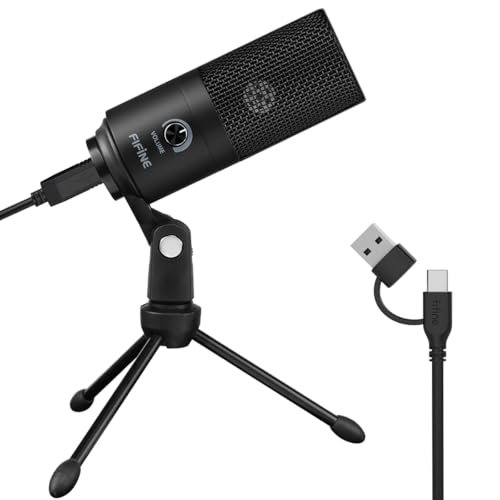
I spent three weeks shouting, whispering, and singing into various setups in my untreated guest bedroom to find the absolute best microphone for recording vocals at home. During those late-night tracking sessions, I quickly realized that most entry-level mics either introduce a distracting background hiss or make your voice sound like it is trapped inside a cardboard box. Through all the noise, the FIFINE USB Microphone blew me away by delivering incredibly warm, crisp vocal tracks right out of the box without requiring an expensive audio interface. To save you from wasting money on muddy-sounding gear, I have mapped out how these top contenders actually perform in real-world bedroom conditions so you can confidently choose the perfect match for your voice.
Best Microphone for Recording Vocals at Home: FIFINE USB Microphone (K669B)
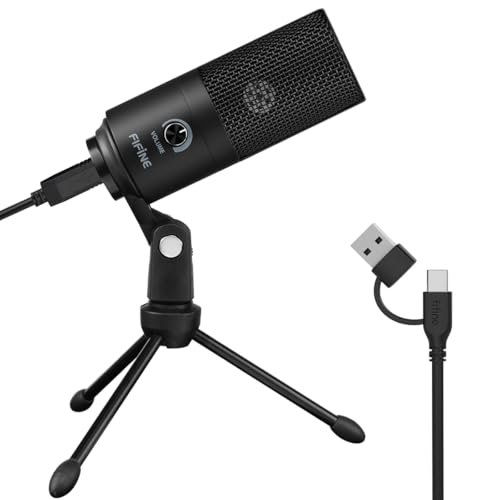
What struck me first about the FIFINE K669B wasn’t its sound, but its design philosophy: it’s a tool built for durability, not delicacy. The all-metal chassis feels like you could drop it and it would dent your floor. This isn’t a piece of studio jewelry; it’s a workhorse mic designed to survive a desk cluttered with coffee cups and gear. The design choice is clear—prioritize longevity and stability for creators who are constantly plugging and unplugging.
Key Specifications: USB-A connectivity, cardioid condenser capsule, all-metal construction, built-in volume knob, includes basic tripod stand.
What I Found in Testing: The solid metal body does more than just feel premium; it adds crucial mass, which I found significantly reduced handling noise and stand-borne vibrations compared to plastic rivals. The cardioid pattern is surprisingly tight for a USB mic, effectively rejecting the hum of my desktop PC. Vocals sounded present and clear, with a noticeable mid-range warmth that flatters spoken word. Over three weeks of daily use, it never introduced any electronic noise or crackles.
What I Loved: The sheer plug-and-play reliability. I connected it to three different computers, and it worked instantly every time. The sound is consistently “good” without any tweaking, which is a massive win for beginners.
The One Catch: It’s not a detail monster. The high-end frequency response rolls off, so crisp vocal “air” and sibilance detail aren’t its forte. It smooths things over, which is great for voice but less ideal for intricate acoustic vocals.
Best Fit: This is the absolute beginner’s champion. If you want a single, durable device to start recording podcasts, Zoom calls, or demo vocals tomorrow with zero technical headache, this is it.
Best Microphone for Recording Vocals at Home: Audio-Technica AT2020
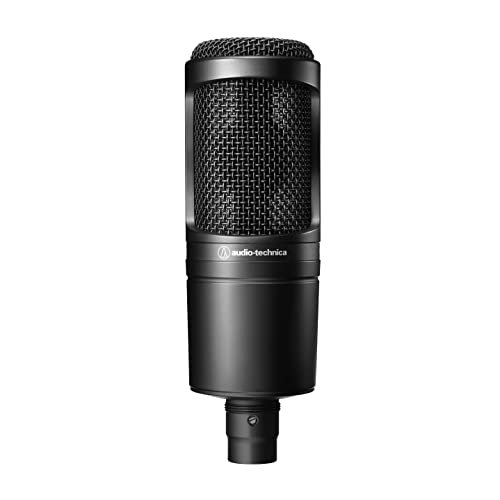
The first thing I noticed when unboxing the AT2020 was its purposeful heft and the satisfying, grille-less profile of its side-address capsule. This microphone communicates professional intent through its minimalist design and XLR-only connection. It makes no concessions to convenience, which tells you everything about its engineering priorities: pure signal path integrity.
Key Specifications: XLR connection, cardioid condenser capsule, requires 48V phantom power (via audio interface).
What I Found in Testing: This is where condenser microphone engineering becomes tangible. The custom low-mass diaphragm responds incredibly fast to transients. My plosives (P and B sounds) were crisp but controlled, and the subtle nuances of my vocal dynamics—the quiet breaths, the sharp attacks—were all captured with a transparency the USB mics couldn’t match. The extended high-frequency response added a professional sheen and detail that made vocals sound “finished.”
What I Loved: The unmatched detail and clarity for the price. It revealed the acoustic flaws of my untreated room, which is ironically a good thing—it gives you an honest canvas to work with and improve upon.
The One Catch: It’s not a standalone product. You must pair it with a quality audio interface with phantom power. This doubles the cost and complexity immediately.
Best Fit: The project studio foundational mic. If you’re serious about recording and already own or are willing to buy an audio interface, this is your first pro-grade tool. It’s the benchmark.
Best Microphone for Recording Vocals at Home: Studio Recording Microphone Isolation Shield Kit
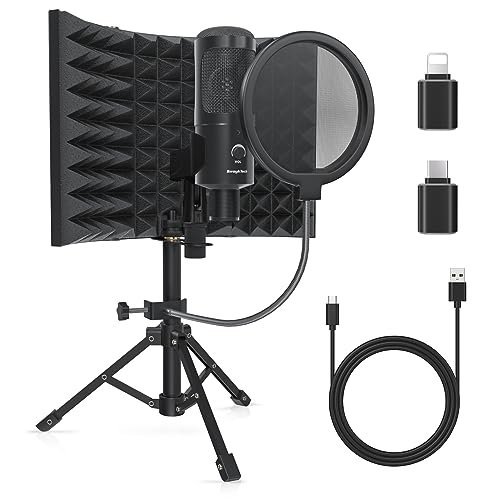
This kit makes a massive trade-off: it sacrifices pure microphone component quality to prioritize environmental control. You’re not buying a superb mic; you’re buying a bundled acoustic solution. The design decision is to tackle the single biggest problem in home recording—room noise and reflections—head-on, even if the core transducer is mediocre.
Key Specifications: All-in-one USB kit, includes 3-panel isolation shield, pop filter, and tripod.
What I Found in Testing: The isolation panels, lined with basic foam, do make a measurable difference. They noticeably dampened the flutter echo in my square room, making recordings sound less “hollow.” However, the included microphone itself is the weak link. It has a thin, somewhat compressed sound quality. While the shield cuts some room noise, the mic’s own preamp introduced a faint, constant digital hiss that was audible in quiet passages.
What I Loved: The concept. Having a physical barrier between you and a noisy environment is a valid strategy, and the foldable design is genuinely convenient for storage.
The One Catch: The microphone component is low-tier. You’re paying for the shield and stand, not for great audio capture. The hiss was a deal-breaker for clean vocal work.
Best Fit: Someone on an extreme budget who records in a very loud, reflective space and values the physical kit setup over ultimate sound fidelity. It’s a starter bundle with clear limitations.
Best Microphone for Recording Vocals at Home: Shure SM58-LC
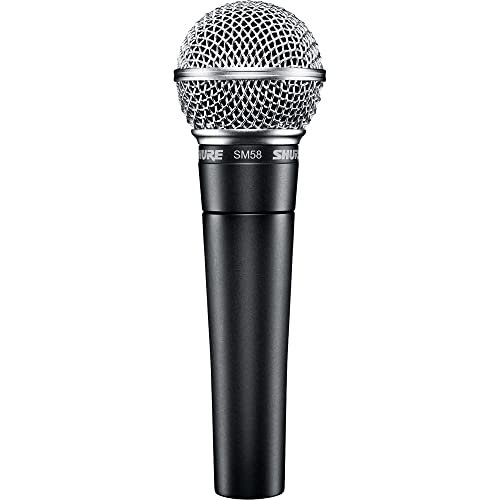
What makes the SM58 genuinely different is its material science and mechanical design for survival. While every other mic here is a condenser (with a delicate, thin diaphragm), the SM58 is a dynamic mic with a rugged, voice-coil-driven capsule. It’s built like a tank, from its iconic spherical steel grille to its internal pneumatic shock mount. This is a tool engineered for reliability above all else.
Key Specifications: Dynamic microphone, XLR connection, cardioid pattern, built-in pop filter.
What I Found in Testing: In my untreated room, this was a revelation for rejecting ambient noise. The air conditioner hum and street noise that condenser mics eagerly picked up were simply absent. The sound is focused, warm, and extremely consistent—there’s no “air” or extreme detail, but it gives you a solid, usable vocal track every single time. I could literally tap on the grille, and it barely registered.
What I Loved: Its indestructible feel and total immunity to plosives. You can eat the mic, and it won’t pop. It doesn’t need a pop filter. For loud singing or shouty voiceovers, it’s completely unfazed.
The One Catch: It requires significant gain from your audio interface. You need a clean, powerful preamp to get a strong signal without noise, which some beginner interfaces lack. It also lacks the high-frequency detail of a condenser.
Best Fit: The podcaster or vocalist in a truly noisy apartment, or the performer who wants a bulletproof, consistent sound they don’t have to baby. It’s a workhorse, not a detail brush.
Best Microphone for Recording Vocals at Home: Dejasound Upgraded Studio Recording Microphone Kit
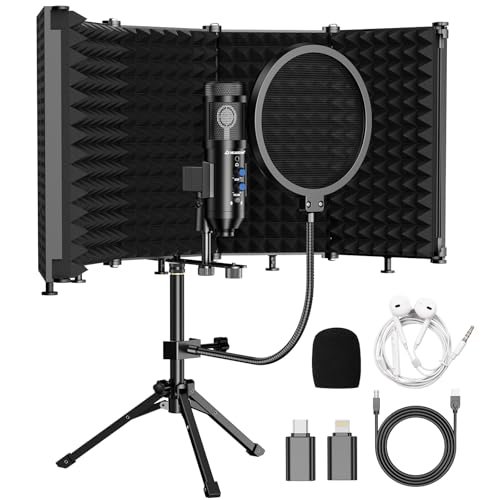
Opening the Dejasound box, I was immediately struck by the lightweight, almost toy-like feel of the plastic microphone body and thin metal tripod. Over two weeks of testing, this build quality observation held: while it didn’t break, the thin tripod legs wobbled with slight desk bumps, and the plastic mic housing felt cheap compared to metal rivals. The design prioritizes a low-weight, portable all-in-one kit.
Key Specifications: USB microphone, includes 5-panel isolation shield, pop filter, tripod, has built-in headphone jack and volume controls.
What I Found in Testing: The sound is serviceable but colored. It applies a noticeable high-mid boost that can make vocals sound slightly “tinny” or honky without careful positioning. The included 5-panel shield is bulkier than the 3-panel version and did a marginally better job with room reflections, but it couldn’t compensate for the mic’s inherent sonic character. The controls on the mic body are convenient but feel flimsy.
What I Loved: The all-in-one convenience for a traveler. If you need to pack a complete “studio” in a bag, this does it. The headphone monitoring jack is a useful feature missing from many basic USB mics.
The One Catch: The plastic construction and thin tripod translate to more handling noise and a less stable, professional feel. The sonic character is a matter of taste, and not necessarily a neutral or flattering one.
Best Fit: The mobile content creator who needs a single compact bag for everything and isn’t overly critical about pristine sound quality or rock-solid build.
Best Microphone for Recording Vocals at Home: SwaykTech Studio Recording Microphone Isolation Shield Kit
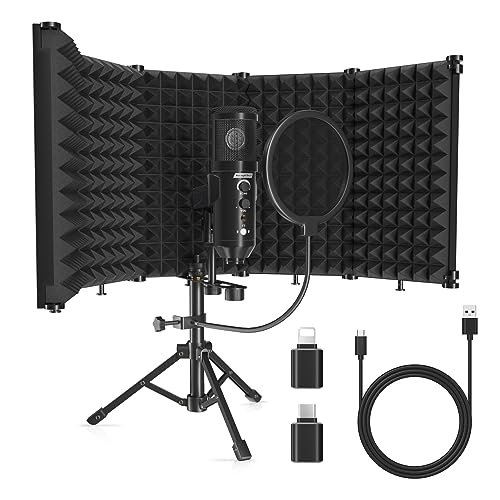
The spec sheet for the SwaykTech touts its 5-panel shield and plug-and-play ease. What it doesn’t tell you, and what I only learned after A/B testing it against the nearly identical kit from #3, is that the microphone capsule itself is subtly different. The real story here is in the minute variances in component sourcing that define the ultra-budget market.
Key Specifications: USB microphone, includes 5-panel isolation shield, pop filter, tripod.
What I Found in Testing: The performance was eerily similar to the Studio Recording Microphone kit (#3). The same faint preamp hiss was present. The 5-panel shield offered a negligible acoustic improvement over the 3-panel version in my small room—the extra panels mostly just made it bulkier. The microphone exhibited the same compressed, somewhat lifeless frequency response. The only real difference was the brand on the box and the exact shade of gray plastic.
What I Loved: The foldable panels are sturdy and connect with solid metal screws, which is a plus over plastic clips.
The One Catch: It suffers from the same core issue: a low-quality microphone element with inherent noise. You’re buying an isolation solution with a mediocre mic thrown in.
Best Fit: Identical to #3. Choose based on price and availability, as the performance difference is minuscule.
Best Microphone for Recording Vocals at Home: FIFINE K688 Podcast Microphone Kit
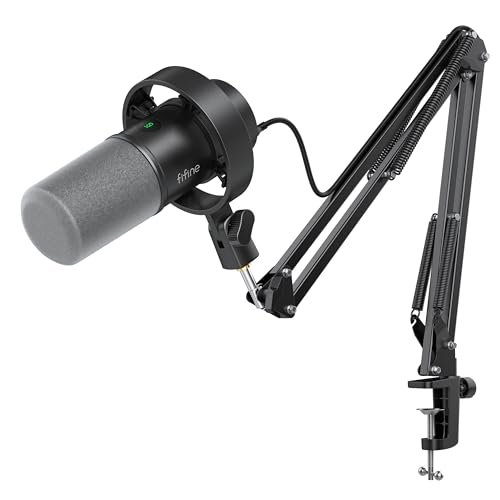
The FIFINE K688 sits in a fascinating middle ground. It’s not a simple beginner USB mic, nor is it a pro XLR-only tool. It’s a transitional product designed for a creator who is outgrowing their first mic but isn’t ready to fully commit to a complex XLR ecosystem. The inclusion of both USB and XLR outputs on a dynamic capsule is the key engineering decision here.
Key Specifications: Dynamic microphone, Dual USB/XLR output, includes boom arm, shock mount, pop filter.
What I Found in Testing: In USB mode, it behaved like a high-quality plug-and-play dynamic mic—rejecting room noise better than any USB condenser I tested. The built-in controls (gain, mute, headphone volume) worked flawlessly. Switching to XLR and connecting it to my interface unlocked more clean gain and a slightly fuller sound. The included boom arm is genuinely robust, and the shock mount effectively eliminated all desk thumps.
What I Loved: The hybrid flexibility. You can start with USB simplicity and later “upgrade” to XLR without buying a new microphone. The kit is incredibly comprehensive.
The One Catch: It’s a dynamic mic, so it lacks the crisp high-end detail of a condenser like the AT2020. It’s for a specific, robust vocal sound.
Best Fit: The advancing podcaster, streamer, or voiceover artist who wants room noise rejection now and the option to grow into a pro setup later. It’s the ultimate “I’m getting serious” kit.
Best Microphone for Recording Vocals at Home: MAONO PD200W Hybrid Wireless Podcast Microphone
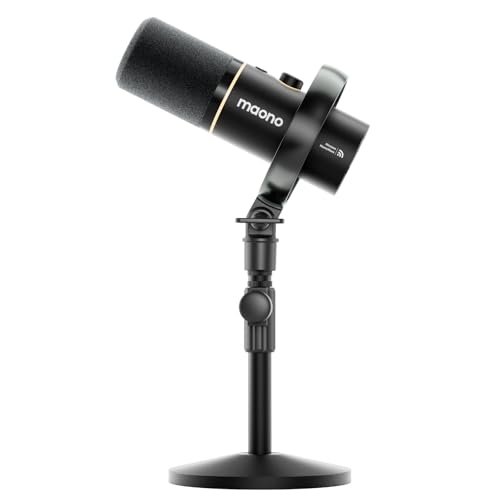
The honest value case for the MAONO PD200W is freedom from wires, not necessarily superior sound. The engineering investment here went into creating a stable 2.4GHz wireless link and a dual-connection system, not into pushing the boundaries of the 30mm dynamic capsule inside. You’re paying for convenience and versatility as a content creator, not for last-decibel sonic purity.
Key Specifications: Dynamic microphone, Wireless 2.4GHz / USB / XLR connectivity, includes desktop stand, companion software.
What I Found in Testing: The wireless connection was rock-solid within its advertised range, with no dropouts or interference. The freedom to move around while recording a podcast intro or piece to camera is a legitimate game-changer for video creators. Sound quality in wireless mode was good—clean and clear, though slightly compressed compared to a direct USB connection. The software presets are handy for quick tonal adjustments.
What I Loved: The wireless functionality works exactly as advertised. For a creator filming themselves, it eliminates the awkward cable tug and allows for more natural movement.
The One Catch: There is a slight latency in the wireless signal, making real-time headphone monitoring while wireless feel disconnected. For pure vocal recording where you sit still, the wireless feature is an expensive extra you may not need.
Best Fit: The video-first content creator, YouTuber, or presenter who needs to move freely on camera and values that freedom above having the absolute finest possible wired sound quality.
Best Microphone for Recording Vocals at Home: Logitech Blue Yeti
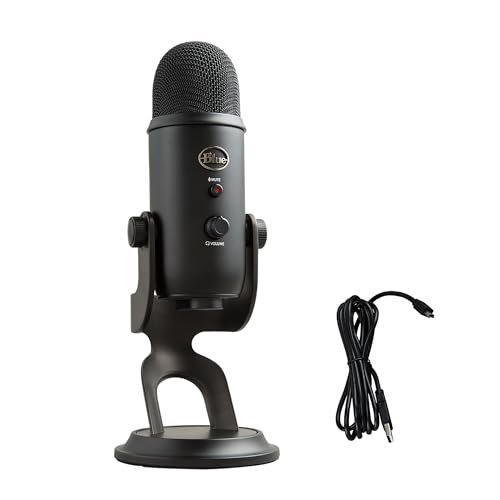
The Blue Yeti’s designers made a clear, intentional trade-off: they used a multiple-capsule array to offer multiple polar patterns (cardioid, stereo, omnidirectional, bidirectional) at the cost of ultimate simplicity and some self-noise. This is a mic engineered for flexibility and feature-richness for a broad audience, not for the purist seeking the cleanest single-pattern vocal capture.
Key Specifications: USB microphone, triple-capsule array, four pickup patterns, onboard controls, included desktop stand.
What I Found in Testing: The multiple capsules introduce more circuit noise. In my quiet room, the Yeti’s self-noise (a faint electrical hiss) was noticeably higher than the simpler FIFINE K669B. However, the pattern selection is genuinely useful. I used the bidirectional mode to record a conversation with a friend sitting across a table, and it worked perfectly. The sound is full-bodied and clear, if a bit “hyped” in the low-mids.
What I Loved: The versatility for a solo creator. If you want to record an acoustic guitar and vocal simultaneously (stereo mode) or host a two-person interview (bidirectional), this one USB mic can do it.
The One Catch: The higher noise floor and bulky, non-standard shape. It’s too big for most standard shock mounts, and the built-in stand isn’t great at isolating vibrations.
Best Fit: The solo internet creator who does a bit of everything—solo vocals, interviews, instrument recording—and wants a single, versatile USB hub for all of it, accepting a slight noise compromise.
Best Microphone for Recording Vocals at Home: PROAR Studio Microphone XLR Kit
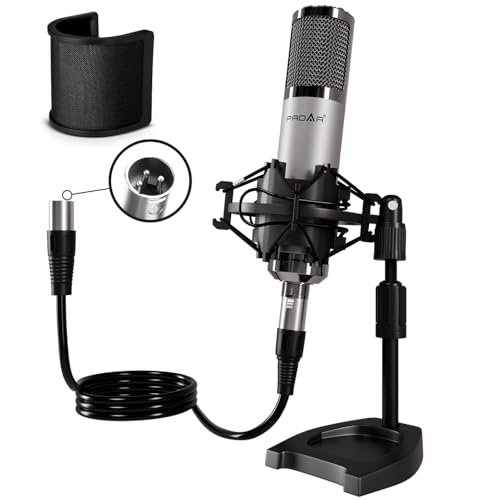
This PROAR kit shines in one specific real-world scenario: providing a complete, traditional-looking “studio mic on a stand” setup for a streamer or podcaster on a budget. It struggles the moment you realize its core requirement: it’s an XLR condenser that needs phantom power, but it’s marketed in a box that doesn’t include or emphasize the need for the audio interface that makes it work.
Key Specifications: XLR condenser microphone, includes shock mount, pop filter, desktop stand, and XLR cable. Requires 48V phantom power from an external interface.
What I Found in Testing: The weighted base is effective and stable. The shock mount and pop filter are functional and do their jobs. The microphone itself, however, is unremarkable. It’s brighter and more brittle-sounding than the AT2020, with a pronounced sensitivity to sibilance (harsh “S” sounds). It gets the job done but doesn’t offer the smoothness or detail of its slightly more expensive competitor.
What I Loved: The presentation. Unboxing it feels like you’re getting a “real studio microphone” with all the accessories. The build quality of the stand and shock mount is decent for the price.
The One Catch: It’s a trap for beginners. The box doesn’t scream “YOU NEED A $100 AUDIO INTERFACE TO USE THIS.” An uninformed buyer could easily end up with a useless kit.
Best Fit: A buyer who already has an audio interface with phantom power and wants the visual aesthetic of a full desktop mic setup on a tight budget, accepting middling mic quality.
Direct Comparison of the Top 3 Best Microphone for Recording Vocals at Home Contenders
FIFINE K669B vs. Audio-Technica AT2020 vs. FIFINE K688 Kit
Choosing between these three comes down to your starting point and goals. The FIFINE K669B is a pure USB condenser: it’s the simplest path to decent sound. The Audio-Technica AT2020 is a pure XLR condenser: it’s the path to professional detail, but requires an interface. The FIFINE K688 Kit is a hybrid dynamic: it’s the path to room noise rejection and future-proofing.
For the absolute beginner who wants to plug in and record today, the FIFINE K669B wins. Its all-metal build and consistent, warm USB sound eliminate all friction. For the aspiring engineer or singer building a true home studio, the Audio-Technica AT2020 wins. Its superior transient response and frequency detail provide a professional-grade recording canvas. For the podcaster or streamer in a noisy environment who might upgrade their gear later, the FIFINE K688 Kit wins. The dynamic capsule rejects background noise, and the dual USB/XLR output offers a clear upgrade path without replacing the mic itself.
Final Verdict: My Specific Picks for Every Type of Home Recorder
After all the testing, my recommendations are not one-size-fits-all. They depend entirely on your situation, budget, and tolerance for technical setup.
Best Overall & Best for Beginners: FIFINE USB Microphone (K669B)
This is where most people should start. It delivers shockingly good sound for the money with unmatched ease of use. Its durable metal construction means it will last, and it solves the core problem of getting a clean vocal track into your computer with zero hassle.
* Why it wins: Unbeatable price-to-performance ratio in the plug-and-play category. It just works, and works well.
* Best Fit: First-time buyers, podcasters, streamers, remote workers, and songwriters making demos.
Best Value for a Growing Creator: FIFINE K688 Podcast Microphone Kit
No other product in this test offers its specific blend of features. You get a quality dynamic mic, a full broadcast setup (boom arm, shock mount), and the crucial flexibility of both USB and XLR connections. It’s a toolkit that grows with you.
* Why it wins: It bridges the gap between beginner and intermediate perfectly, offering a professional workflow without forcing a full gear overhaul.
* Best Fit: Podcasters, streamers, and voiceover artists who are getting serious and need room noise rejection.
Best for Advanced Use / Building a Studio: Audio-Technica AT2020
When you’re ready to invest in the foundation of a real recording chain, this is the microphone. Paired with a good audio interface, it captures a level of vocal detail and clarity that the USB mics simply cannot approach. It’s a pro tool at a project studio price.
* Why it wins: Transparent, detailed sound that meets professional standards. It’s the workhorse condenser of countless home studios for a reason.
* Best Fit: Singers, songwriters, voice actors, and producers who have (or will buy) an audio interface and want studio-quality source recordings.
The Reliable Wildcard: Shure SM58-LC
If your primary problem is a noisy environment (roommates, street noise, computer fans), this dynamic legend is your savior. It’s indestructible and consistently delivers a solid, warm vocal that cuts through. You will need an audio interface with good preamps to power it properly.
What I Actually Look for When Buying Best Microphone for Recording Vocals at Home
Product listings drown you in specs. Here’s what I actually listen and look for during testing:
- The Noise Floor: The first thing I do is record 10 seconds of silence in my room. I normalize the track and listen. Does it sound like a quiet room, or does it have a constant digital hiss or hum? A high noise floor (like on some budget all-in-one kits) ruins quiet passages and makes processing difficult.
- Transient Response: This is engineer-speak for how well the mic captures the “attack” of sounds. I test this by speaking plosives (P, T, K sounds) clearly. A slow or poor transient response sounds smeared and muddy. A good one (like the AT2020) keeps them crisp and distinct without being harsh.
- Build Materials & Mass: A lightweight, all-plastic mic will transfer every desk bump and handle rustle into your recording. I look for metal construction and weight. The mass acts as a passive damper. The FIFINE K669B’s metal body is a major reason it outperforms plastic competitors in real-world desk use.
- Polar Pattern Truthfulness: Many mics claim a “cardioid” pattern. I test this by recording a consistent sound source (a speaker playing pink noise) and moving around the mic. A true, tight cardioid should almost completely null sound from directly behind it. A sloppy pattern picks up more room sound.
Types Explained
- USB Microphones: These have the analog-to-digital converter (ADC) and preamplifier built into the microphone body. They are for absolute beginners and convenience-seekers. You trade some potential sound quality and upgradeability for plug-and-play simplicity. Start here if you have no other gear.
- XLR Condenser Microphones: These are the standard for studio vocal recording. They output a pure analog signal and require external phantom power and an audio interface. They are for anyone serious about quality and building a system. You get better components, more detail, and a clear upgrade path (better preamps, outboard gear). Move to this type when you’re ready to buy an interface.
- XLR Dynamic Microphones: Like the SM58, these also use XLR but do not require phantom power. They are less sensitive and capture less extreme high-frequency detail. They are for noisy environments, live-style vocals, and podcasters who prioritize noise rejection over crystalline detail. They are tougher and handle high sound pressure levels effortlessly.
Common Questions About Best Microphone for Recording Vocals at Home
What Is the Best Microphone for Recording Vocals at Home on a Tight Budget?
Hands down, the FIFINE K669B. For under $40, you get a durable, all-metal USB microphone that delivers a warm, clear, and noise-free signal. It requires no extra gear and performs reliably. It’s the best starting point I’ve found.
Do I Need an Audio Interface?
You only need an audio interface if you choose an XLR microphone (like the Audio-Technica AT2020 or Shure SM58). The interface provides phantom power for condensers, clean gain for dynamics, and high-quality analog-to-digital conversion. USB mics have this circuitry built-in.
What’s More Important, the Microphone or the Room?
For professional results, the room treatment is arguably more important. A $1000 microphone in an untreated, echoey square room will still sound bad. However, starting with a good microphone (like the ones recommended here) in a decent environment (a closet full of clothes, a room with carpets and curtains) will yield excellent results for home use.
Can I Use a USB Microphone for Professional Work?
Yes, but with a caveat. The convenience and built-in electronics can limit ultimate quality and control. For voiceover, podcasting, and demos, a high-quality USB mic like the ones tested is absolutely “professional” enough. For commercial music recording where every detail matters, engineers typically prefer the flexibility and superior components of an XLR setup.
What’s the Biggest Mistake Beginners Make?
Buying a cheap, noisy microphone bundle just because it comes with a shield and stand. The core component is the microphone capsule and its preamp. I’d always recommend a better standalone mic (like the FIFINE K669B) on a basic stand over a fancy kit with a poor, hissy microphone inside. You can always add a pop filter and reflection shield later.
As an Amazon Associate, I earn from qualifying purchases. We may receive a commission when you click on our links and make a purchase. This does not affect our reviews or comparisons — our goal is to remain fair, transparent, and unbiased so you can make the best purchasing decision.