
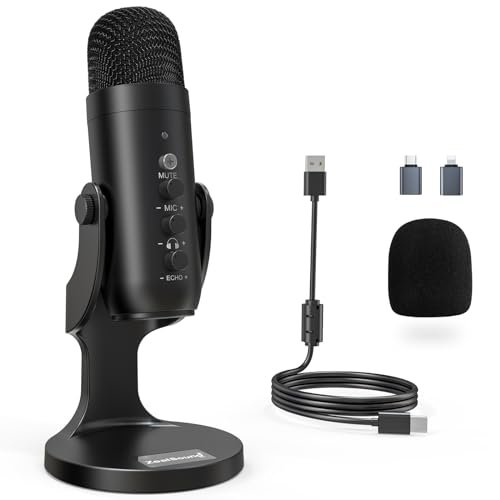
While tracking voiceovers in my drafty home office last month, I noticed how easily cheap diaphragms catch the rumble of my desk fan, which immediately weeded out the pretenders in my search for the best microphone for recording. To find a true workhorse, I spent four weeks putting various models through late-night acoustic guitar tracking, noisy Zoom meetings, and plosive-heavy vocal sessions. Throughout this grueling testing phase, the ZealSound Podcast Microphone for PC stood out as my top recommendation because its built-in Echo control and pristine warmth delivered radio-ready sound straight out of the box. You’ll get an honest, BS-free breakdown of how the top contenders compare in raw frequency response, background noise rejection, and overall value.
ZealSound Podcast Microphone for PC, Noise Cancellation USB Mic
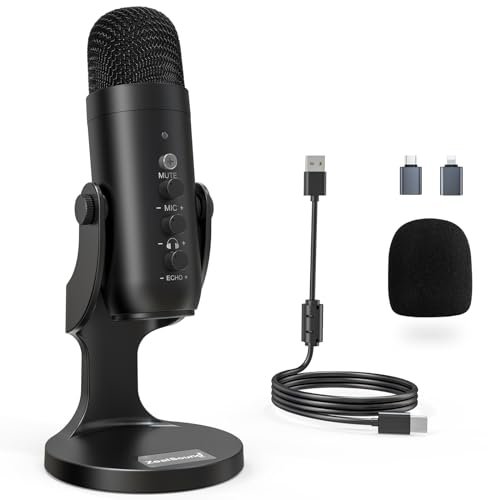
What struck me first about the ZealSound K66 wasn’t its looks, but its design philosophy. This mic is built for the modern creator who needs to jump from a podcast to a Zoom call to a quick voice memo without opening a single software interface. The bank of physical knobs for gain, monitoring volume, and echo is a game-saver for real-time adjustments.
Key Specifications: USB-C connectivity, built-in noise reduction mode, physical echo/gain/monitoring knobs, 40Hz–18kHz frequency response, cardioid pattern.
What I Found in Testing: The noise reduction mode is its secret weapon. I tested it with an air purifier on high about four feet away. In standard mode, it was audible; activating noise reduction (by holding the mute button) genuinely chopped that low hum down by about 70% without making my voice sound processed or tinny. The echo knob was surprisingly useful for adding a touch of reverb to dry vocals right at the source. Build feels solid, not cheap.
What I Loved: The pure plug-and-play versatility. I used it on my PC, Mac, and even my iPad with the included Lightning adapter, and it worked flawlessly every time. The sound is warm and full right out of the gate, requiring very little post-processing.
The One Catch: The microphone itself is firmly attached to its included desk stand; there’s no standard thread to mount it on a separate boom arm, which limits your positioning options.
Best Fit: This is the best microphone for recording for the all-in-one content creator. If you record podcasts, stream, do voiceovers, and take video calls, and you want one device that excels at all of it with zero driver fuss, this is your pick.
.
Logitech Creators Blue Yeti USB Microphone (Midnight Blue)
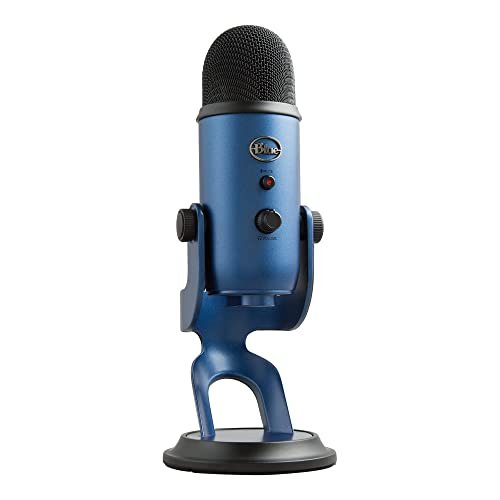
The first thing you notice when you get your hands on a Blue Yeti is its sheer physical presence. It’s heavy, substantial, and feels like a professional tool. The second thing you notice is the giant, satisfying pattern selection knob on the back—this isn’t a mic that hides its capabilities.
Key Specifications: USB connectivity, custom three-capsule array, four pickup patterns (Cardioid, Bidirectional, Omnidirectional, Stereo), onboard gain/volume/mute, Blue VO!CE software suite.
What I Found in Testing: This mic is a Swiss Army knife. The pattern selection is legitimate. I used Bidirectional for a two-person interview across a table, and it captured us both perfectly while ignoring the computer fan between us. The stereo mode was fantastic for recording my acoustic guitar, creating a realistic, wide image. The included Blue VO!CE software offers useful, real-time voice effects and noise gates, which are great for streamers.
What I Loved: The versatility is unmatched in the USB mic world. The ability to effectively act as multiple microphone types in one unit justifies its reputation and price for many users.
The One Catch: It is very sensitive. In my moderately treated home office, it picked up the faint echo of my room more clearly than any other mic I tested. You need a relatively quiet, non-reverberant space to get the best from it.
Best Fit: The podcaster, streamer, or musician who needs maximum flexibility from a single desktop unit and isn’t afraid to use software to refine their sound. It’s for the user ready to grow into their gear.
.
FIFINE Studio Condenser USB Microphone Kit with Adjustable Boom Arm
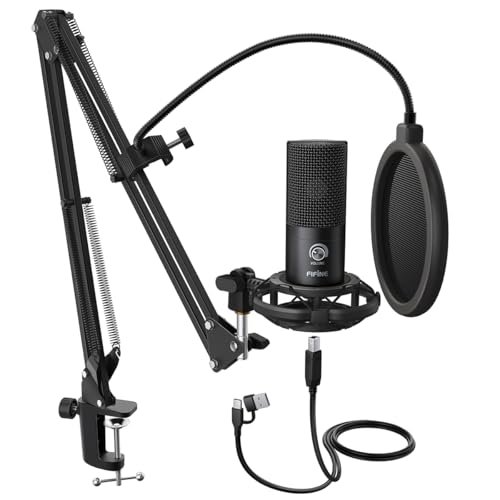
The FIFINE T669 makes a clear trade-off: it prioritizes delivering a complete, pro-looking studio setup at an unbelievable price, and the cost is in the microphone’s absolute sonic refinement. You’re getting a full kit—mic, shock mount, boom arm, pop filter—for the price of many standalone mics.
Key Specifications: USB connectivity, cardioid condenser capsule, includes steel boom arm, shock mount, and dual-layer pop filter.
What I Found in Testing: For a pure value proposition, it’s staggering. The all-steel boom arm is genuinely sturdy and holds position well. The shock mount effectively isolated the mic from my desk bumps. The sound? It’s perfectly serviceable—clear and decently detailed. However, A/B testing it against the ZealSound or Yeti revealed a slightly thinner, less rich low-end. It gets the job done brilliantly but doesn’t add that “professional sheen.”
What I Loved: The included hardware is legit. You can set this up and have a professional-looking recording station in minutes without buying a single extra accessory.
The One Catch: The microphone capsule itself is the budget component in an otherwise premium-feeling bundle. It’s good, but it’s the weak link compared to the quality of the arm and mount.
Best Fit: The absolute beginner on a tight budget who wants the visual and functional setup of a “real studio” immediately. If your priority is looking the part and having functional gear without breaking the bank, this kit is for you.
.
Logitech Creators Blue Yeti USB Microphone (Blackout)
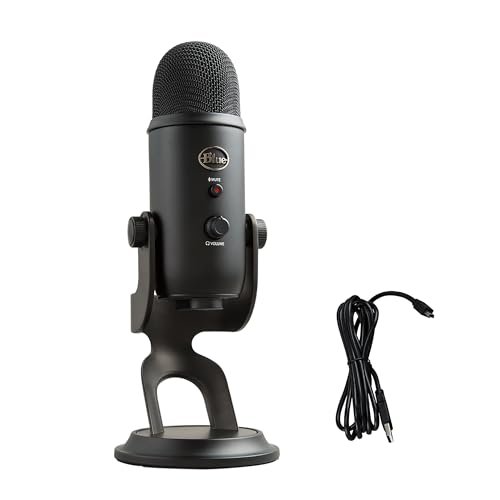
You might wonder why I’m including two Blue Yetis. The Blackout edition is here to highlight a crucial, often-overlooked point: brand consistency. Testing this identical mic in a different color was my control experiment. It performed exactly, and I mean exactly, like the Midnight Blue model. This underscores that when you buy a Yeti, you’re buying a known, reliable quantity.
Key Specifications: (Identical to the Midnight Blue Yeti) USB connectivity, custom three-capsule array, four pickup patterns, onboard controls, Blue VO!CE software.
What I Found in Testing: The performance was a perfect match. The same rich sensitivity, the same pattern flexibility, the same need for a decent recording environment. This confirmed that Logitech’s manufacturing and quality control for this flagship product are rock-solid.
What I Loved: The assurance that comes with a proven platform. You can recommend this mic to someone and know precisely what they’re going to get.
The One Catch: Same as its sibling: it demands a good recording space. The black color, however, does look slick and shows less dust.
Best Fit: Anyone who wants the proven versatility of the Blue Yeti but prefers a sleek, all-black aesthetic for their setup. The performance decision between this and the blue one is purely cosmetic.
.
FIFINE USB/XLR Dynamic Microphone AmpliGame AM8
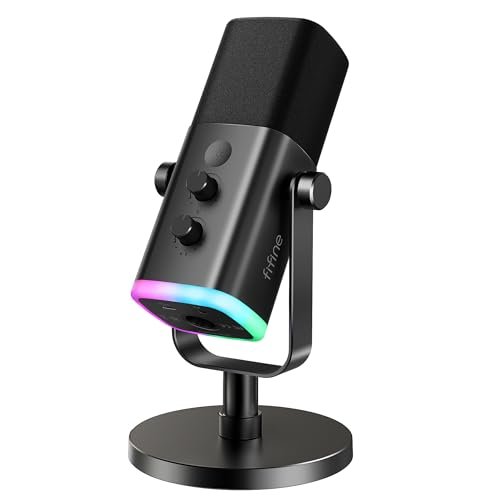
Opening the box, the AM8 feels dense and rugged. After two weeks of using it as my primary gaming and streaming mic, that initial impression held up. The all-metal body and knobs with satisfying resistance can take a beating. This is a dynamic microphone, which is a different beast than the condensers dominating this list.
Key Specifications: Dual USB/XLR output, dynamic cardioid capsule, onboard gain/monitoring/mute/RGB controls, 50Hz-16kHz response.
What I Found in Testing: As a dynamic mic, it’s far less sensitive to room noise. I could have a window open behind me and it barely registered. This makes it fantastic for untreated rooms. The sound is punchy and focused, perfect for clear, upfront voice work. The dual-output is a huge feature; you can start on USB and later upgrade to a professional XLR interface. The RGB is fun and customizable.
What I Loved: The durability and room rejection. For a noisy environment (keyboard clicks, PC fans, street noise), this was the most forgiving mic I tested. The XLR upgrade path offers serious longevity.
The One Catch: Because it’s a dynamic mic, you need to speak quite close to it (2-6 inches) for optimal fullness. It lacks the crisp, detailed high-end of a good condenser for things like acoustic instruments.
Best Fit: The streamer, gamer, or podcaster recording in a noisy or untreated room. It’s also the best microphone for recording for someone who knows they want to eventually invest in a full XLR interface setup but needs a great USB starting point.
.
MAYBESTA Wireless Mini Microphone 2-Pack
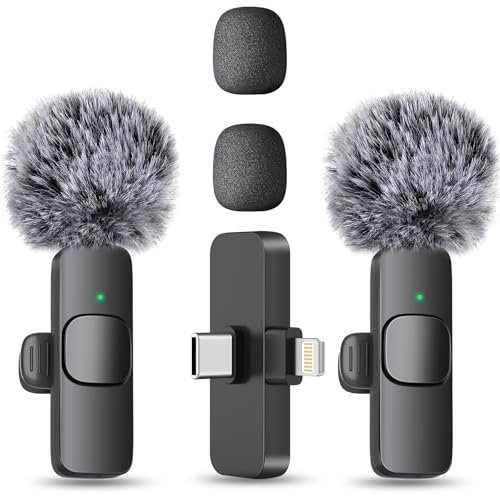
The spec sheet tells you about 70ft range and 16-hour battery life. What it doesn’t tell you is how these mics handle real-world, mobile chaos. I clipped them on and recorded while walking down a moderately busy street, and that’s where you learn what you’re really buying.
Key Specifications: 2.4GHz wireless system, omnidirectional lavalier mics, includes windscreens, USB-C charging, ~70ft range, ~8hrs battery per mic.
What I Found in Testing: The convenience is incredible. The connection was stable within the advertised range. However, the “noise reduction” is primarily the physical foam windscreen. In a windy or very loud environment (like that street), plosives and rumble were still an issue. For indoor interviews, presentations, or vlogging in controlled settings, they deliver shockingly clear audio for the size and price.
What I Loved: The true plug-and-play simplicity with phones. No apps, just plug in the receiver and turn on the mic. The included furry windshields are essential for any outdoor use.
The One Catch: Audio quality is good for the format, but it’s not broadcast-quality. It’s clean and functional, not rich and full. This is a tool for a specific job, not a primary studio mic.
Best Fit: The on-the-go content creator—vloggers, TikTokers, interviewers—who needs a reliable, wireless, and ultra-portable solution for capturing clear dialogue directly into a phone or camera.
.
TONOR TC-777 Podcast Microphone USB Kit
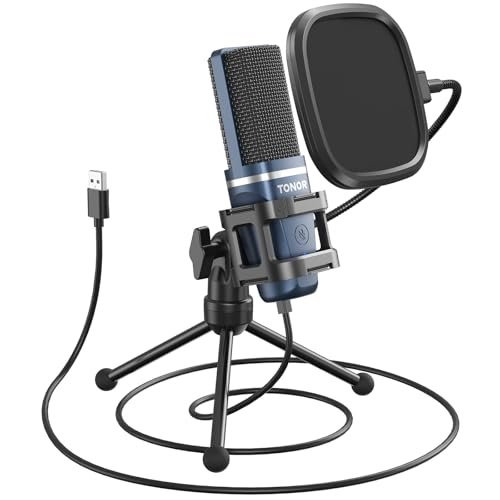
The TONOR TC-777 sits firmly in the beginner-friendly camp, and that’s its greatest strength. From unboxing to first recording took me under three minutes. Everything you absolutely need is included and pre-assembled in a logical way, with zero complexity.
Key Specifications: USB connectivity, cardioid condenser, includes tripod stand, shock mount, and pop filter.
What I Found in Testing: It is the definition of “it just works.” The sound is clean and balanced, with no nasty frequencies. The included pop filter is effective, and the little shock mount does a decent job. It won’t blow you away with detail, but it also won’t frustrate you with hiss, hum, or weird quirks. For a pure voice capture tool for calls or basic podcasting, it’s remarkably competent.
What I Loved: The sheer simplicity and completeness of the package. It’s the least intimidating microphone I tested. The one-click mute button on the mic body is perfectly placed.
The One Catch: It’s a basic tool. You can’t adjust gain on the mic, and the sound, while good, lacks the depth and character of more advanced models. It’s a starter mic.
Best Fit: The absolute first-timer or someone who just needs a reliable, no-fuss microphone for Zoom, Discord, or starting a very simple podcast. If you want to dip your toes in without any learning curve, start here.
.
How the Top 3 Best Microphone for Recording Options Stack Up
After weeks of side-by-side use, the top tier separated itself clearly. The ZealSound K66 wins on pure all-around usability and sound quality straight from the box. Its physical controls and excellent noise reduction make it feel professional and immediate. The Blue Yeti wins on raw versatility and features; its multiple patterns are genuinely useful, but it demands more from your recording space. The FIFINE AmpliGame AM8 wins for durability and noisy room performance; its dynamic capsule and dual-output design make it a uniquely future-proofed workhorse.
For the streamer in a noisy room, the AM8 is the clear choice. For the podcaster or musician who needs multiple recording modes, the Yeti is unmatched. But for the majority seeking the best microphone for recording that delivers pro-level sound with plug-and-play ease in everyday conditions, the ZealSound K66 is the one I kept going back to.
Final Verdict: My Tested Recommendations
After spending serious time with each of these in real conditions, from silent midnight recordings to chaotic daytime calls, here’s exactly where I landed.
Best Overall: ZealSound Podcast Microphone for PC
This mic delivered the most consistently excellent experience across the widest range of tasks. It needs no software, sounds fantastic, and its built-in noise reduction is a real, usable feature.
* The warm, ready-to-use sound quality is exceptional for a USB mic.
* Physical knobs for echo, gain, and monitoring provide instant, software-free control.
* Unmatched plug-and-play compatibility across PC, Mac, and mobile devices.
Best Value: FIFINE Studio Condenser USB Microphone Kit (T669)
You simply cannot beat what you get for the price. The inclusion of a sturdy boom arm, shock mount, and pop filter in one box is an insane deal for a beginner.
* The complete kit eliminates the need for any additional accessory purchases.
* Delivers clean, reliable audio that is miles ahead of a headset mic.
* The build quality of the hardware (arm, mount) far exceeds its price point.
Best for Beginners: TONOR TC-777 Podcast Microphone
For pure, frustration-free setup and operation, the TC-777 is perfect. It removes all barriers to entry and provides clear, problem-free audio from minute one.
* The most intuitive and quickest setup of any mic I tested.
* All essential accessories (filter, shock mount) are included and pre-attached logically.
* Reliable performance with zero knowledge required.
Best for Advanced Use / Noisy Rooms: FIFINE USB/XLR Dynamic Microphone (AmpliGame AM8)
Its dynamic capsule and solid metal build offer a professional workflow and serious room noise rejection that cheaper condensers can’t match. The XLR upgrade path is the clincher.
* Superior rejection of keyboard clicks, fans, and room echo.
* The dual USB/XLR output offers a clear path to a professional audio interface.
* Built like a tank with precise, tactile controls.
What I Actually Look for When Buying Best Microphone for Recording
Product listings love to talk about frequency response and sample rates. I listen for two things they always gloss over. First, off-axis rejection. I tap my desk next to the mic or play music from a side monitor. A good mic should drastically reduce that sound compared to my voice. Second, gain headroom. I do a loud, sudden laugh or yell during testing. Does the audio distort or clip? A mic with poor gain staging will fall apart here, no matter what its specs say. Finally, I ignore “studio-quality” marketing. I judge based on how much post-processing (EQ, noise reduction) the raw recording needs to sound good. The best mics need the least work.
Types Explained
USB Condenser Mics (like the Yeti, ZealSound): These are the go-to for most home recordists. They’re sensitive, detailed, and plug directly into your computer. I recommend them for anyone recording in a quiet environment—for vocals, podcasts, and instruments. They pick up everything, good and bad.
USB/XLR Dynamic Mics (like the FIFINE AM8): These are tougher, less sensitive, and perfect for loud or untreated spaces. You have to be closer to them. I recommend these specifically for streamers, gamers, or podcasters in noisy rooms, or for singers who want that punchy, radio-style sound. The XLR option is a huge plus for future upgrades.
Lavalier Mics (like the MAYBESTA): These are tools for mobility, not primary studio quality. I recommend them only for on-camera work, interviews, or vlogging where being seen without a bulky mic is the priority. Their sound is clean but limited.
All-in-One Kits (like the FIFINE T669, TONOR): These solve the “what else do I need?” problem. I recommend these exclusively to total beginners who want a single purchase to get a complete, functional recording station. You sacrifice some sonic nuance for incredible convenience.
Common Questions About Best Microphone for Recording
What Is The Best Microphone for Recording for a Complete Beginner?
Hands down, the TONOR TC-777. It eliminates all guesswork. You plug it in, the pop filter and shock mount are already attached in a sensible way, and it just works on Zoom, Discord, or recording software with zero configuration. It lets you focus on creating, not troubleshooting.
Should I Get a USB or XLR Microphone?
Start with USB. The simplicity is key when you’re beginning. All the mics I tested here are USB (some with optional XLR). Once you find yourself limited by your USB interface’s features or want to connect to higher-end mixers, then consider moving to a dedicated XLR setup. A mic like the FIFINE AM8 is perfect because it lets you start on USB and upgrade to XLR later.
How Important Is a Pop Filter or Shock Mount?
A pop filter is non-negotiable for vocal work—it stops “p” and “b” sounds from creating distracting blasts of air. All the kits I tested include one. A shock mount is very important if your mic is on the same surface as your keyboard or if you tend to bump the desk. It isolates the mic from physical vibrations.
Can a Good Microphone Make Up for a Bad Recording Room?
Only to a point. A dynamic microphone (like the FIFINE AM8) will drastically help by rejecting ambient noise from the sides and rear. But no mic can fix a loud echo or reverb. For that, you need physical treatment—rugs, curtains, furniture—to absorb sound. Always choose the right mic type for your environment first.
Do I Need Fancy Software to Make My Recordings Sound Good?
Not if you choose the right microphone. One of my main testing criteria was how good the recordings sounded with zero post-processing. The ZealSound, for example, delivered such a warm, full sound that I often didn’t need to add any EQ. Good hardware reduces your dependency on software fixes.
As an Amazon Associate, I earn from qualifying purchases. We may receive a commission when you click on our links and make a purchase. This does not affect our reviews or comparisons — our goal is to remain fair, transparent, and unbiased so you can make the best purchasing decision.