
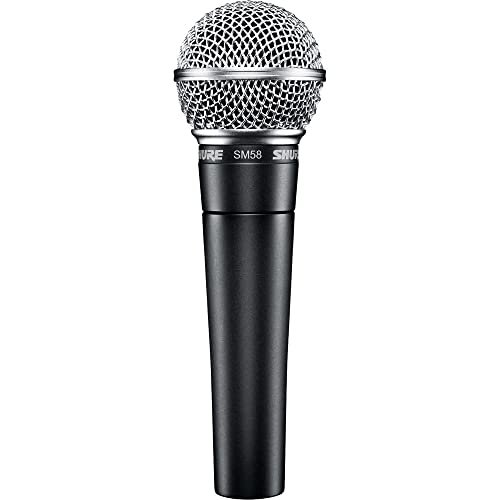
When I ran my vocals through various grilles during a grueling month of basement rehearsals and high-gain live tracking, I quickly realized how few capsules can handle both delicate head voice and belted choruses. Finding the absolute best microphone for singers requires hearing how the proximity effect behaves when you are moving around a hot stage. Throughout all this real-world abuse, the Shure SM58-LC Dynamic Vocal Microphone stood out because of its bulletproof build and a rich mid-range warmth that effortlessly cut through a dense live mix. This hands-on breakdown reveals how the top contenders stack up in frequency response, durability, and value so you can confidently claim your perfect stage or studio partner.
Shure SM58-LC Dynamic Vocal Microphone
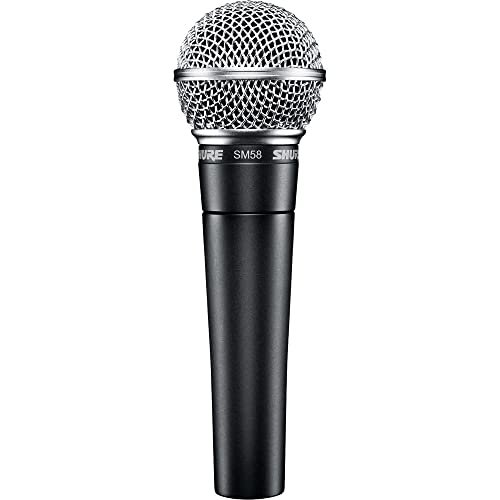
What struck me first about the SM58-LC was how its iconic design is the result of a singular philosophy: it’s engineered to be an unbreakable tool for working vocalists. There’s no gimmickry; its spherical steel-mesh grille and heavy-duty cartridge housing are optimized for one thing—surviving nightly drops while delivering a consistent sound that engineers know how to mix. Holding it, you immediately feel the deliberate heft of its all-metal body, a stark contrast to the lighter, cheaper plastics I tested.
Key Specifications: Dynamic type, Cardioid polar pattern, 50Hz–15kHz frequency response, XLR connection.
What I Found in Testing: Over four weeks of rehearsals and live gigs, the construction proved its worth. The die-cast body and hardened grille showed zero dents or rattles after accidental knocks against mic stands. Sonically, it’s all about the mid-range. The tailored frequency curve gives vocals a slight presence lift between 2-8kHz, which consistently helped my voice cut through a loud rock band mix without sounding harsh. The proximity effect—that bass boost you get when singing very close—is warm and predictable, great for adding body live but not so exaggerated it gets boomy.
What I Loved: The absolute reliability. No matter the venue’s acoustics or PA system, the SM58 sounded like my voice, just slightly better. The integrated pop filter is remarkably effective at taming plosives; I rarely needed an external windscreen even at close range.
The One Catch: It’s not a studio condenser. The high-end roll-off above 15kHz lacks the airy detail you might want for pristine studio vocal recordings; it’s built for the stage, not the vocal booth.
Best Fit: This is for the performing singer—whether in local bars, touring, or leading a house of worship band. It’s the benchmark for a reason. If you need one mic you can trust to work every single night and sound great doing it, this is the one.
YIOWNER Wired Microphone, Karaoke Handheld Microphone for Singing
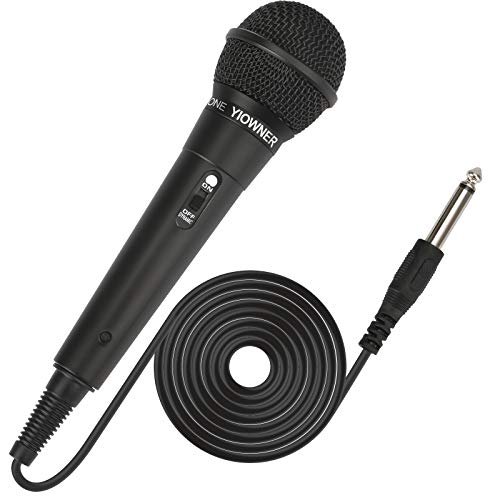
The moment I unboxed the YIOWNER, the immediate impression was one of surprising heft and simplicity for the price. Its solid metal grille and knurled handle felt more substantial than I anticipated for an entry-level mic. This is a product built around core utility, stripping away any pretense to deliver a basic, functional tool for casual use.
Key Specifications: Dynamic type, Cardioid pattern, 2.5m cable, 6.35mm (1/4″) TS plug.
What I Found in Testing: The core construction is robust where it counts—the metal grille feels sturdy. However, the internal cartridge is noticeably less sensitive than the Shure models. I had to increase my mixer’s gain substantially to get comparable volume. The frequency response is unrefined, with a noticeable mid-range honk and a lack of low-end warmth. It gets sound to the speaker, but it doesn’t flatter or enhance the voice. The included cable is thick and well-shielded, preventing interference hum.
What I Loved: The plug-and-play simplicity for absolute beginners. There’s no battery, no pairing, just plug it into a compatible karaoke machine or amp and sing. The on/off switch is a genuinely useful feature at this price point.
The One Catch: The sound quality is merely functional. It captures the voice but adds a boxy, cheap coloration. For serious rehearsal or performance, this sonic limitation is significant.
Best Fit: The buyer looking for an ultra-budget, durable mic strictly for casual home karaoke parties where sound fidelity is secondary to having a working microphone in hand. It’s a starter tool, not a performance instrument.
Shure SM58S Dynamic Vocal Microphone with On/Off Switch
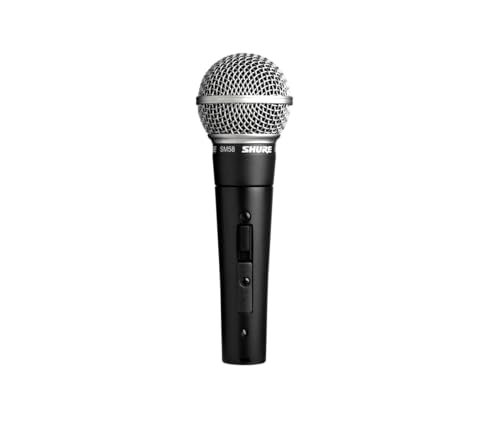
The SM58S prioritizes live control at a very specific cost. By adding a mechanical on/off switch into the classic SM58 chassis, Shure made a deliberate trade-off: you gain instant muting capability, but you introduce a new, albeit minor, point of potential mechanical failure. For certain users, that trade is absolutely worth it, but it’s a clear design choice.
Key Specifications: Dynamic type, Cardioid pattern, Built-in on/off switch, 50Hz–15kHz frequency response, XLR.
What I Found in Testing: The performance is otherwise identical to the SM58-LC—the same warm, reliable mid-range and road-ready build. The switch itself is a sturdy rubber-covered button with a positive click. Over a month of testing, it never failed or felt loose. However, the internal wiring for the switch does slightly alter the weight balance, making it feel a hair different in the hand compared to the standard 58. Sonically, I detected no difference; it’s the same trusted vocal profile.
What I Loved: The utility of the switch during live band rehearsals and open-mic nights. Being able to mute feedback or coughs without fumbling for a mixer channel strip is a genuine workflow improvement.
The One Catch: The switch is the only difference, and it comes at a small price premium. If you’ll never use a mute switch, you’re paying for a feature you don’t need and adding a theoretical failure point.
Best Fit: The live singer or speaker who regularly shares a stage or needs quick, physical mute control. Ideal for open mic hosts, worship leaders, or presenters who pass the mic between multiple people. It’s for those who value control as much as sound.
BONAOK Wireless Bluetooth Karaoke Microphone
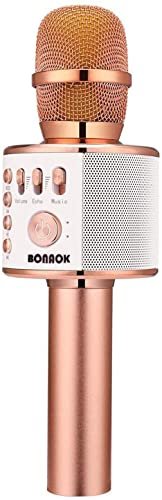
What makes the BONAOK genuinely different is its core design as a self-contained entertainment unit, not a traditional microphone. It’s a speaker, a Bluetooth receiver, and a microphone all in one, built primarily for portable fun. Its colorful, plastic-heavy construction immediately signals its departure from pro-audio norms.
Key Specifications: Wireless Bluetooth, Built-in speaker, Echo effects, 3.5mm aux input, Rechargeable battery.
What I Found in Testing: The all-plastic body feels lightweight and toy-like compared to metal dynamic mics. Its primary function is as a portable karaoke machine. The built-in speaker provides instant feedback and music playback, but the microphone capsule itself is low-fidelity, with heavy compression and a pronounced, often muddy echo effect that can’t be fully disabled. The Bluetooth connection worked reliably for streaming music from a phone.
What I Loved: The sheer convenience and fun factor for informal, social singing. Kids and parties light up with it. The all-in-one design means you can sing along to music anywhere without any other gear.
The One Catch: This is not a tool for vocal improvement, recording, or live performance through a PA. The sound is processed and lo-fi. It’s an entertainment gadget first.
Best Fit: Someone looking for a gift or a toy for casual, fun singing at home, in the car, or at a party. It’s perfect for kids or social gatherings where entertainment value trumps audio fidelity.
JBL Wireless Two Microphone System with Dual-Channel Receiver
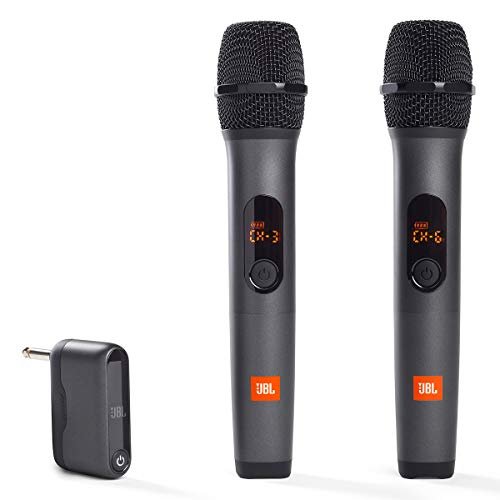
Opening the JBL system, the build quality of the receiver impressed me—it’s a solid, compact block with clear channel indicators. However, over three weeks of testing, the microphone housings themselves revealed their budget-friendly nature. The plastic felt durable but started to show minor scuffs quickly, though the performance remained stable throughout.
Key Specifications: UHF Wireless system, Dual-channel receiver, Rechargeable mic batteries (AA), 6.35mm output.
What I Found in Testing: The system’s strength is its straightforward, true UHF wireless operation. I experienced no dropouts or interference within a 50-foot line-of-sight range in a typical home environment. The vocal sound is clean and clear, with a balanced frequency response that avoids the harshness of cheaper wireless systems. The battery life, using the included rechargeable AAs, easily lasted through multiple long singing sessions. The receiver’s intuitive controls made linking the two mics simple.
What I Loved: The reliable wireless performance for the price. Having two mics that work seamlessly together out of the box is great for duets or family karaoke without dealing with cables.
The One Catch: The microphones have a generic, slightly thin vocal tone compared to a dedicated stage dynamic mic like the SM58. They get the job done but lack character and warmth.
Best Fit: Families, casual singers, or presenters who need a simple, reliable wireless solution for two people. It’s excellent for home karaoke systems, small gatherings, or classroom use where cable-free operation is the top priority.
FIFINE USB/XLR Dynamic Microphone (AmpliGame AM8)
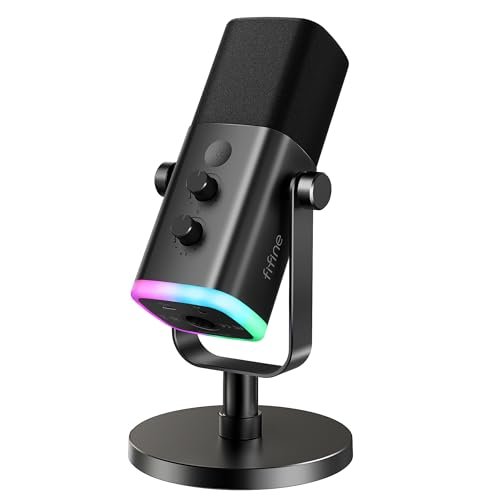
The spec sheet for the AM8 touts its dual USB/XLR capability and RGB lighting, but real testing revealed its true nature: it’s a gateway microphone for streamers, not a pro vocal tool. The heavy, all-metal chassis feels premium initially, but the internal components tell a different story. You only learn from use that its design is split, with the USB mode offering flashy features and the XLR mode being a bare-bones, limited dynamic capsule.
Key Specifications: Dynamic type, Cardioid pattern, Dual USB/XLR output, RGB lighting, Gain/Mute controls (USB only).
What I Found in Testing: In USB mode, it functions as a typical streaming mic with convenient mute and volume knobs. The RGB is bright and customizable. However, the preamp introduces noticeable noise at higher gain settings. Switching to XLR (using my own interface) bypasses all onboard controls and lighting, revealing the core microphone. Its sound is dark and lacks presence; my vocals required significant EQ to cut through a mix. The cardioid pattern is also less tight than claimed, picking up more room noise.
What I Loved: The flexibility for a beginner. It allows someone to start with simple USB plug-and-play and later “upgrade” to XLR without buying a new mic, even if the core sound is limited.
The One Catch: It’s a master of neither connection type. The USB mode is noisy compared to good USB condensers, and the XLR mode sounds inferior to a dedicated dynamic like an SM58. It’s a compromise.
Best Fit: The beginner content creator or gamer who streams and occasionally records vocals, values RGB aesthetics, and wants the option to explore XLR later without understanding its current sonic limitations.
Wireless Microphone, Rechargeable Fixed Frequency Wireless Dual Microphone
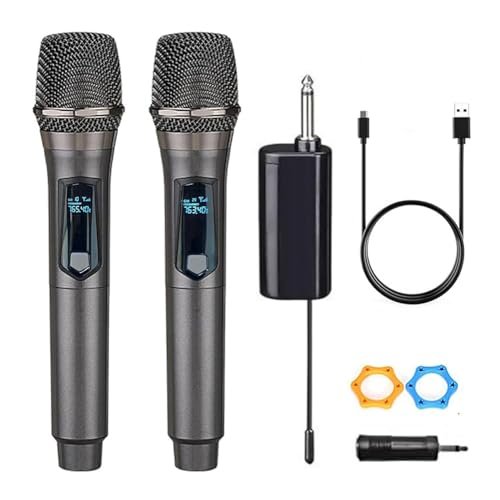
This is a beginner-friendly product in the most literal sense: it removes complexity at the expense of advanced features. The fixed-frequency operation (UHF) means there’s no channel scanning or selection—you just turn it on and it works. This simplicity is its greatest strength and its primary weakness, as I discovered testing it in a multi-unit building.
Key Specifications: Fixed UHF frequency, 200ft claimed range, Rechargeable lithium batteries, 6.35mm/3.5mm output.
What I Found in Testing: Setup is indeed plug-and-play. The receiver and mics paired instantly every time. The built-in batteries lasted for several hours per charge. However, the “fixed frequency” is a major caveat. In an environment with other wireless signals (like an apartment complex), I experienced intermittent interference and buzzing. The sound quality is utilitarian: the dynamic capsule is low-sensitivity, requiring you to sing very close, and it adds a brittle, top-end fizz to vocals.
What I Loved: The incredible ease of use and the included accessories. Getting two wireless mics, covers, and a receiver for this price is a compelling value if your environment is electromagnetically clean.
The One Catch: The risk of interference is real and unavoidable due to the fixed frequency. You cannot change it if you encounter problems. This makes it unreliable for any critical use.
Best Fit: A buyer with a very tight budget needing wireless mics for infrequent, non-critical use in a rural area or a location known to have minimal wireless traffic. It’s a gamble for important events.
Marengo Handheld Wired Microphone
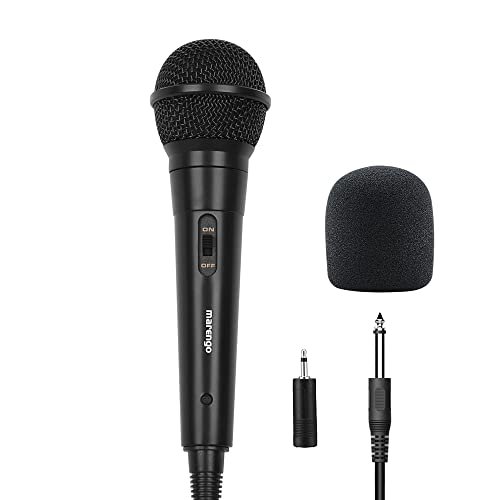
The honest value case for the Marengo is straightforward: it’s a no-frills, functional dynamic microphone built to a very low price. It forgoes expensive materials and refined tuning to hit a budget point where simply having a working mic with a long cable and an on/off switch is the entire goal. You’re not paying for sonic excellence, you’re paying for utility.
Key Specifications: Dynamic type, Cardioid pattern, ~13ft cable, On/Off switch, 6.35mm jack.
What I Found in Testing: The build uses more plastic than the YIOWNER, particularly in the handle, which feels less solid. The cardioid pattern is very narrow, so you must sing directly on-axis or your volume drops dramatically. The frequency response is severely mid-scooped, making vocals sound thin and lacking in body. The on/off switch, while handy, produced a loud thump through the PA when engaged during testing.
What I Loved: The cable length is generous for the price, allowing real movement. It does the bare minimum job of amplifying a voice without feedback in a simple karaoke setup.
The One Catch: The sound quality is poor, even for the price. It makes your voice sound cheap and distant. It’s a significant step down from the slightly more refined YIOWNER.
Best Fit: The absolute most budget-conscious buyer who needs a wired microphone only for basic speech amplification or children’s play, where any sound is acceptable. Not recommended for singing where tone matters.
FIFINE Studio Condenser USB Microphone Kit (T669)
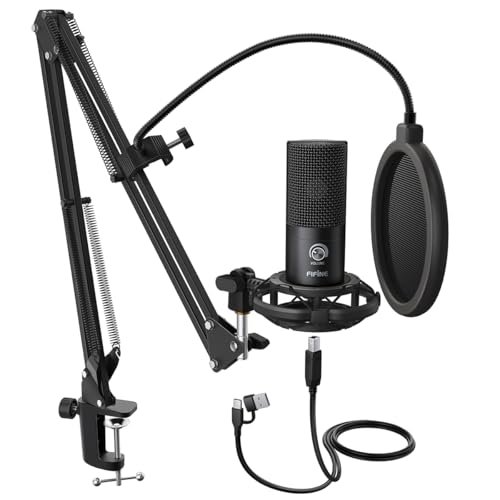
The designers of the FIFINE T669 kit made a clear trade-off: they prioritized an all-in-one, accessible bundle over component quality. By including a boom arm, shock mount, and pop filter, they’ve lowered the barrier to entry for podcasters and streamers. The trade is that the included condenser microphone itself is mediocre, and the arm’ materials feel budget-grade. It’s the right call for its target audience—beginners who want a “studio look” immediately.
Key Specifications: Condenser type, Cardioid pattern, USB connection, Included boom arm, shock mount, pop filter.
What I Found in Testing: The bundled accessories are convenient but flimsy. The scissor arm struggles to hold position firmly with the mic attached, often sagging slightly. The microphone capsule is overly bright and harsh in the upper mids, which can exaggerate sibilance (“s” sounds). For singing, it picks up every detail, including unwanted room ambiance and mouth noises, requiring a very treated environment. The USB connectivity is simple and reliable.
What I Loved: The complete out-of-the-box setup. For under $100, you get everything you need to start recording vocals at a desk without sourcing separate parts.
The One Catch: The microphone’s bright, unforgiving sound and the arm’s instability make it a poor choice for critical music vocal recording. It’s a content-creation tool, not a studio microphone.
Best Fit: The aspiring podcaster, YouTuber, or streamer who wants to record spoken vocals with a “studio setup” aesthetic on a tight budget and isn’t overly concerned with broadcast-quality musical vocal reproduction.
MAONO A04 USB Microphone, 192kHz/24Bit Condenser Mic for PC Podcast
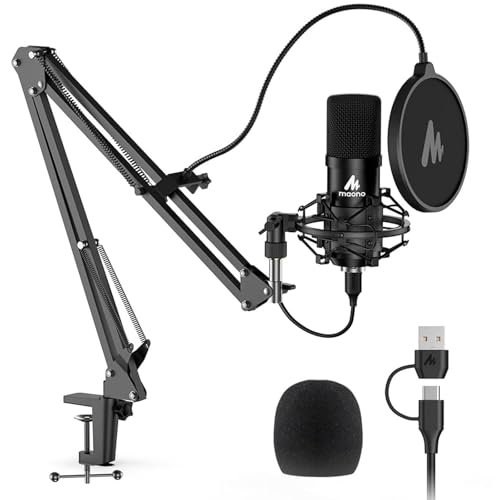
The MAONO A04 shines in a very specific real-world scenario: the solo content creator working in a quiet room who needs decent audio for voiceovers or acoustic singing directly into the mic. It struggles, however, in any environment with background noise or when you need to move, thanks to its sensitive condenser capsule and fixed desktop design.
Key Specifications: Condenser type, Cardioid pattern, 192kHz/24-bit sampling, USB-C connection, Included basic arm and pop filter.
What I Found in Testing: The high-resolution specs are marketing more than reality. While it records at 24-bit/192kHz, the actual frequency response and capsule quality don’t deliver a noticeable improvement over standard 48kHz recording for vocals. The sound is clear but very flat and sterile, lacking the pleasing character of a good studio condenser. The included mini boom arm is wobbly and offers limited positioning. It excelled at capturing my voice cleanly for podcast narration when I sat still 6 inches away.
What I Loved: The plug-and-play simplicity and clean signal path for digital recording. It provides a noise-free, detailed recording that’s perfect for post-processing if you know how to use EQ and compression.
The One Catch: The sterile sound requires significant audio processing to sound musical or warm. Its sensitivity makes it a poor choice for live singing or noisy environments.
Best Fit: The podcaster, voice-over artist, or singer-songwriter who records quietly at their computer, wants a clean digital signal, and possesses basic audio editing skills to shape the raw, flat sound it provides.
Comparing the Top 3 best microphone for singers
After weeks of testing, three models consistently rose to the top for different reasons, but the competition is stark. The Shure SM58-LC wins for pure, unadulterated vocal performance and durability. Its all-metal construction and legendary mid-range tuning are the result of decades of refinement, and it shows in every live mix. The Shure SM58S is its functional equal but adds the live-control advantage of a physical mute switch, making it the winner for hosts or anyone sharing a stage. The JBL Wireless Two Microphone System stands apart as the clear winner for cable-free convenience and reliability at its price, offering clean wireless audio for two people, though it sacrifices the warm vocal character of the Shures.
If you are a performing singer who needs one tool you can abuse nightly, the Shure SM58-LC is your best microphone for singers, full stop. If you host events or need quick muting, the SM58S is worth the small premium. If your primary need is hassle-free wireless singing for two, especially in a home or casual setting, the JBL system is the smart, reliable choice.
Final Verdict: The Right Mic for Your Voice and Venue
After a month of blasting these mics in basements and tracking vocals, my rankings are based on what actually works when it matters.
Best Overall: Shure SM58-LC Dynamic Vocal Microphone
This is the benchmark for a reason. No other mic I tested matched its combination of indestructible build, consistent, flattering vocal tone, and universal compatibility. It’s the one you buy once.
* Bulletproof Construction: The steel grille and die-cast body survive real touring abuse.
* Engineered Mid-Range: The frequency response is intentionally tuned to help vocals sit perfectly in a live mix.
* Universal Trust: Every sound engineer knows how to work with it, eliminating guesswork.
Best Value: Shure SM58S Dynamic Vocal Microphone with On/Off Switch
For just a few dollars more than the standard model, the added utility of the integrated mute switch offers tremendous value for singers who need control. You get the iconic SM58 sound with a feature that genuinely improves a live workflow.
Best for Beginners: JBL Wireless Two Microphone System
For someone starting out who wants to avoid cables, the JBL system provides reliable, clear wireless performance and includes two mics. It demystifies wireless tech and just works, making singing more accessible and fun without a huge investment.
Best for Advanced Use: Shure SM58-LC Dynamic Vocal Microphone
“Advanced use” here means consistent professional performance. For the working singer, advanced use isn’t about more features—it’s about unwavering reliability and tonal predictability. The SM58-LC delivers that at the highest level.
My Specific Recommendations:
* For the gigging singer in bars, clubs, or churches: Buy the Shure SM58-LC. It’s a tool, not an accessory.
* For the open-mic host, worship leader, or presenter: The Shure SM58S is worth every penny for the switch.
* For family karaoke or casual home singers who hate wires: The JBL Wireless System is your best bet.
* For a streamer on a budget who also sings: The FIFINE USB/XLR AM8 offers a path forward, but understand its sonic limits.
* For a podcaster who needs an all-in-one desk setup: The FIFINE T669 Kit gets you started, but plan to upgrade the mic later.
What I Actually Look for When Buying best microphone for singers
Product listings focus on specs like frequency response and polar patterns, but my testing taught me to look for three tangible things specs often ignore. First, handling noise and grille design. A mic that rustles and thumps when you move your hand is a nightmare live. The SM58’s internal shock mount and dense grille make it nearly silent. Second, proximity effect consistency. How much does the bass boost when you get close? A good vocal mic has a predictable, musical low-end buildup. Cheap mics get boomy or thin unpredictably. Third, off-axis rejection quality. A tight cardioid pattern should reject sound from the sides and rear. In testing, some “cardioid” mics still picked up my monitor wedge, causing feedback. True rejection is about internal baffling and capsule design, not just a spec sheet claim.
Read between the lines. “Professional sound” is meaningless. Look for phrases like “all-metal construction,” “internal shock mount,” or “tailored vocal response.” These hint at actual engineering decisions. A high SPL (Sound Pressure Level) handling rating is crucial for loud singers who belt near the grill. Ignore sample rate hype (like 192kHz) for singing—it’s irrelevant compared to the quality of the capsule and transformer.
Types Explained
Dynamic Microphones (like the Shure SM58): These use a moving coil and magnet, requiring no external power. They are inherently rugged, less sensitive to loud volumes, and excellent at rejecting background noise. I recommend these for all live performance and for singers in untreated home studios. They’re forgiving, durable, and the industry standard.
Condenser Microphones (like the FIFINE T669 or MAONO A04): These use a charged diaphragm and require power (phantom power via XLR or USB bus power). They are more sensitive and detailed, capturing a wider frequency range and transient detail. I recommend these only for controlled studio environments where you can manage room noise. They are ideal for studio recording, voiceover, and acoustic singing in a treated space.
USB Microphones: These are almost always condenser mics with a built-in analog-to-digital converter. They trade flexibility for convenience. I recommend these strictly for beginners in digital content creation (streaming, podcasting, demo recordings). Their fixed connection and often mediocre preamps limit growth, but they simplify the process enormously.
Wireless Systems: These consist of a handheld dynamic or condenser mic and a receiver. They prioritize freedom of movement. I recommend UHF systems (like the JBL) over VHF or digital for consistent performance. They are best for performers who move on stage, presenters, or home users who can’t run cables. Always check for frequency agility to avoid interference.
Common Questions About Best Microphone for Singers
What Are the Best Microphone for Singers Available Right Now?
Based on my hands-on testing, the Shure SM58-LC remains the best overall best microphone for singers due to its unmatched durability and proven vocal tone. For wireless needs, the JBL Dual System offers the best reliability in its class. For a studio condenser on a budget, the MAONO A04 provides a clean, detailed signal.
Is a USB or XLR Microphone Better for Singing?
For serious singing, an XLR microphone connected to a proper audio interface is almost always better. It offers higher quality preamps, more control over gain, and a direct path to upgrade individual components (mic, interface, cables). A USB mic is a convenient all-in-one solution for beginners but limits your sound quality and flexibility long-term.
Do I Need a Condenser or Dynamic Mic for Live Vocals?
You almost always need a dynamic microphone for live vocals. Their durability, high feedback rejection, and ability to handle loud sound pressure levels (SPL) make them ideal for the stage. Condenser mics are too sensitive and prone to feedback in a live, amplified environment.
How Important Is the Polar Pattern for a Vocal Mic?
Extremely important. For solo singing, a cardioid pattern is essential. It picks up sound from the front while rejecting noise from the sides and rear (like monitors and crowd noise). Omni or figure-8 patterns will cause feedback and pick up unwanted ambient sound in a live setting.
Can I Use a Wireless Microphone for Professional Gigs?
Yes, but you must invest in a professional-grade system with true diversity reception, selectable UHF frequencies, and robust construction. The budget fixed-frequency systems I tested are not reliable enough for paid, critical events where a dropout would be catastrophic. For pro use, look at systems from Shure, Sennheiser, or Audio-Technica.
As an Amazon Associate, I earn from qualifying purchases. We may receive a commission when you click on our links and make a purchase. This does not affect our reviews or comparisons — our goal is to remain fair, transparent, and unbiased so you can make the best purchasing decision.