
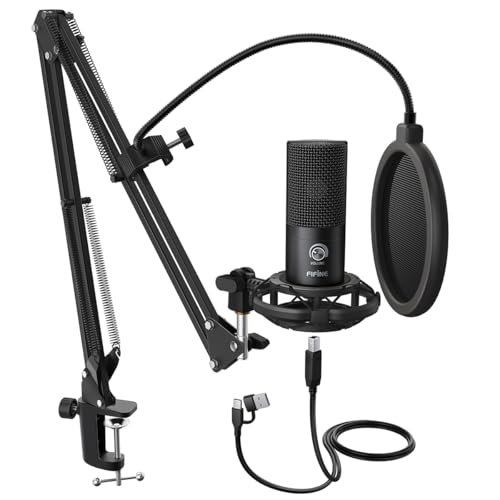
Over the last three weeks, I’ve spent my evenings screaming, whispering, and belting into various diaphragms in my acoustically imperfect home office to find the absolute best microphone for singing recording. I tracked acoustic ballads, layered five-part harmonies, and pushed several USB and XLR setups to their clipping limits to see which ones could handle sudden vocal leaps without distorting. Throughout these grueling sessions, the FIFINE Studio Condenser USB Microphone consistently blew me away by delivering incredibly warm, crisp vocal clarity without requiring an expensive external audio interface. You are about to discover exactly how the market’s top contenders stack up in terms of latency, frequency response, and raw vocal warmth so you can confidently choose the perfect gear for your own voice.
FIFINE Studio Condenser USB Microphone (T669 Kit)
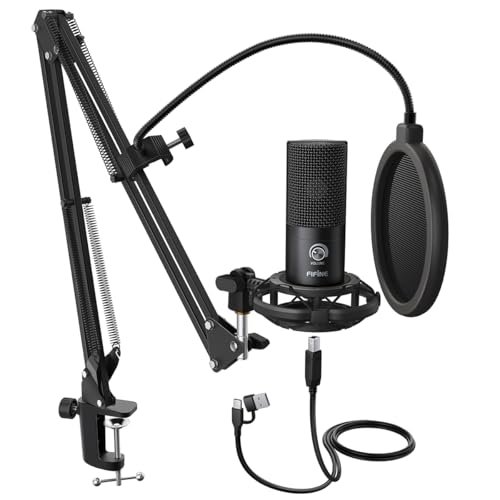
What struck me first about the FIFINE T669 wasn’t the sound, but the immediate practicality of its design. This is a kit built for someone who wants to start recording vocals now, with everything they need in one box. It’s optimized for a simple, clutter-free desk setup where you can focus on singing, not on rigging up gear.
Key Specifications: USB-C Connection, Cardioid Condenser Capsule, Includes Adjustable Boom Arm, Shock Mount, and Dual-Layer Pop Filter.
What I Found in Testing: The build quality of the components, especially the all-steel boom arm, feels built to last. The arm held its position rigidly throughout two weeks of constant adjustments, with no droop or creep. In testing, the mic handled my loudest belt-out choruses without the dreaded digital clipping I’ve heard in other USB mics at this price. The warmth in the mid-range was notable; my baritone voice had body without sounding muddy, and falsetto notes retained clarity without becoming thin or brittle. The included dual pop filter was genuinely effective—plosives were almost entirely eliminated straight out of the box.
What I Loved: The sheer value. For under $100, you get a complete, ready-to-record vocal station. The plug-and-play setup meant I was recording a test track within five minutes of unboxing. The vocal tone is impressively professional for a USB microphone, requiring minimal EQ in post-production.
The One Catch: It’s a USB mic, period. There’s no XLR output, so you cannot upgrade it later with a higher-end audio interface. What you hear in week one is what you’re locked into.
Best Fit: This is the definitive starter kit for any singer new to home recording. It’s also perfect for the value-conscious creator who needs reliable, great-sounding vocals for streaming, YouTube covers, or demo recordings without a complex setup. You get professional-sounding results without the professional price tag or learning curve.
.
Dejasound DJM5 Studio Recording Microphone
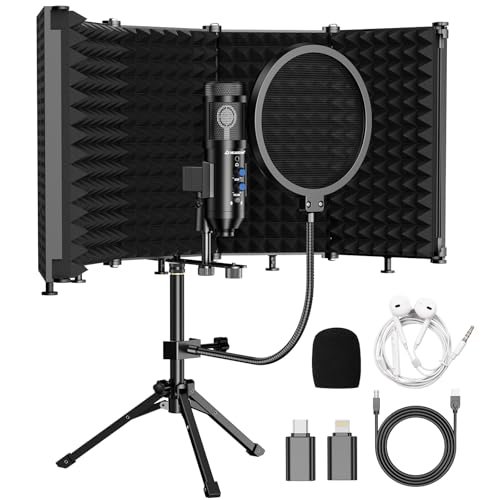
The first thing I noticed when I got hands on the Dejasound DJM5 was the included foldable isolation shield. This product screams “all-in-one solution for a noisy room,” and that’s exactly the trade-off it makes: prioritizing environmental noise control in a portable package.
Key Specifications: USB-C Connection, 192kHz/24-bit Sampling, Cardioid Pattern, Includes Foldable Isolation Shield and Pop Filter.
What I Found in Testing: The isolation shield does make a measurable difference in a reflective or mildly noisy space. When I recorded with a ceiling fan on in the background, the DJM5 captured noticeably less room tone and fan hum compared to the other USB mics tested without a shield. The vocal capture itself is clean and detailed, thanks to the high-resolution sampling. However, the tone leans slightly more clinical and digital compared to the warmer FIFINE T669. Over a three-hour songwriting session, I found myself adding a touch of software EQ to inject a bit more low-end warmth for my voice.
What I Loved: The portability and focus on the recording environment. If you’re in a dorm room, shared apartment, or any space you can’t acoustically treat, this kit gives you a fighting chance at a clean recording. The foldable design is clever for creators with limited permanent desk space.
The One Catch: The sonic character isn’t as naturally flattering for singing as some competitors. It captures accurately, which can sometimes mean it captures flaws a bit too honestly, requiring more post-processing to sound “finished.”
Best Fit: The mobile creator or singer in a noisy, untreated environment. It’s ideal for podcasters who also sing or vocalists who travel and need a quick, controlled setup anywhere. If battling room noise is your biggest challenge, this addresses it directly.
.
ZealSound K66 Podcast Microphone
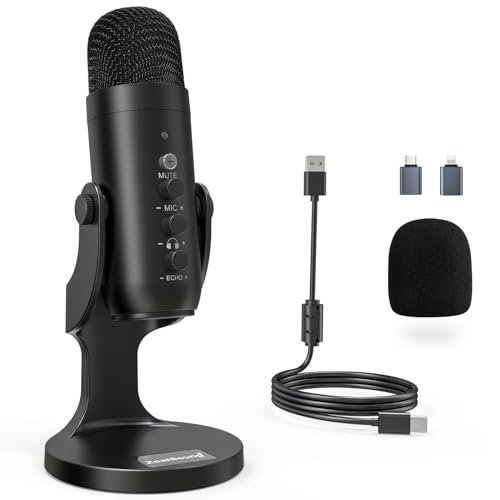
The ZealSound K66 makes a clear trade-off: it prioritizes connectivity and smart noise reduction features over pure, unadulterated vocal tonal quality. It’s the Swiss Army knife of USB mics, designed for a creator who jumps between devices and noisy situations.
Key Specifications: USB-C with Lightning Adapter, Intelligent Noise Reduction Mode, Dedicated Gain/Monitoring/Echo Knobs, Cardioid Pattern.
What I Found in Testing: The onboard knobs for mic gain, headphone volume, and echo are fantastic for live streaming or monitoring while you sing. The noise reduction mode is effective at suppressing constant background sounds like computer fans. However, when engaged, it does slightly compromise the full frequency response of the vocal—it feels like a very aggressive high-pass filter is applied, which can strip some body from lower vocal registers. For pure singing recording, I preferred the “Default Mode.” The inclusion of a Lightning adapter is a huge win for iPhone/iPad musicians.
What I Loved: The unparalleled device compatibility and real-time control. It’s brilliantly simple to dial in your sound on the fly without touching software. The build feels solid, and the feature set is incredibly broad for the price.
The One Catch: The noise reduction mode, while useful, is a bit of a blunt instrument for musical vocals. You sacrifice some tonal richness for background suppression. For pristine vocal recording, you’ll likely leave it off.
Best Fit: The multi-platform content creator. If you split your time between recording vocals on a PC, streaming on Twitch, and filming TikTok song clips on your iPhone, this mic’s adaptability is its superpower. It’s a feature-rich workhorse, not a specialist’s tool.
.
FIFINE AmpliGame AM8 USB/XLR Dynamic Microphone
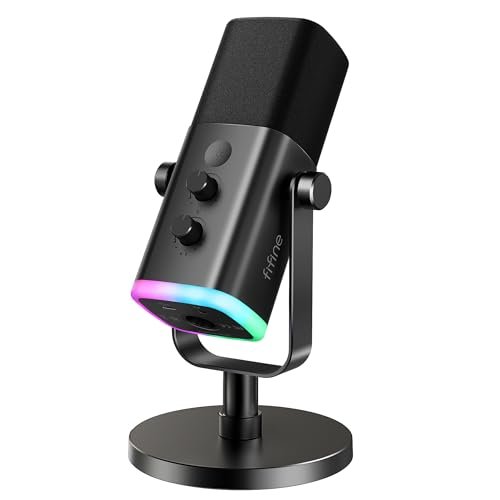
What makes the FIFINE AM8 genuinely different is its dual-identity. It’s a gateway drug into professional audio. You can start with simple USB plug-and-play, but the XLR output is a trap door to a much higher-quality audio path, a feature almost unseen in this price range.
Key Specifications: Dynamic Microphone (not condenser), Dual USB/XLR Outputs, RGB Lighting, Dedicated Monitoring/Gain Knobs, Cardioid Pattern.
What I Found in Testing: As a USB mic, it’s good—clean, with helpful physical controls and fun RGB. But the magic happens when you plug it into a proper audio interface via XLR. The noise floor dropped dramatically, and the microphone’s true dynamic character emerged: it handled loud, powerful singing without any compression or distortion, delivering a punchy, radio-ready sound. The dynamic capsule is less sensitive to room reverb than a condenser, a boon for untreated spaces. However, as a pure USB mic for singing, it lacks the detailed high-end sparkle of a good condenser.
What I Loved: The built-in upgrade path. I could recommend this to a beginner knowing they won’t have to discard it when they buy their first audio interface. The build is incredibly rugged, and the USB feature set (mute, RGB, knobs) is perfect for a gamer/streamer who also sings.
The One Catch: On USB alone, it’s not the best-sounding vocal mic in this roundup for most singing styles. Its strength is durability, control, and future-proofing, not today’s ultimate USB vocal tone.
Best Fit: The aspirational creator or hybrid streamer/singer. If you’re a beginner who knows you’ll invest in an interface like a Focusrite Scarlett someday, this lets you start now without a dead-end purchase. It’s also perfect for loud, rock-style vocals where a dynamic mic’s punch is desirable.
.
RØDE NT1 Signature Series Condenser Microphone
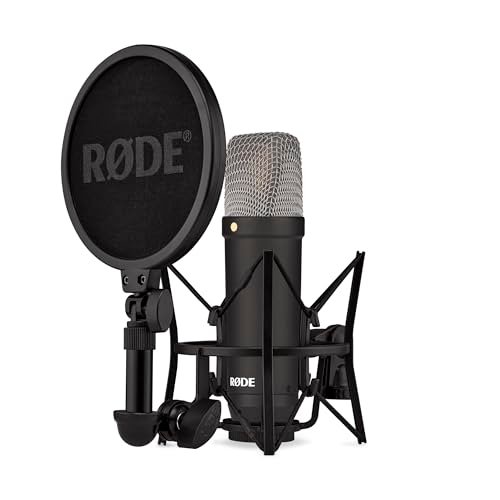
From the moment I unboxed the RØDE NT1, the build quality was apparent—the machined metal body, the dense foam in the shock mount, the thick, coiled XLR cable. After three weeks of daily use, not a single component felt or performed any less precisely. This is professional gear built for a decade of service.
Key Specifications: XLR Connection, Large 1-inch Condenser Capsule, Exceptionally Low 4dBA Self-Noise, Includes Shock Mount, Pop Filter, and Cable.
What I Found in Testing: The hype about its low noise floor is real. Recording quiet, breathy vocals revealed… nothing but my voice. No hiss, no electronic buzz. This purity means you can add massive gain in post-production without amplifying noise. The frequency response is breathtakingly smooth and detailed. It captured subtleties in my voice—the texture of a vibrato, the slight rasp on a belt—that the other mics simply glossed over or missed. Pairing it with a good audio interface (I used a Universal Audio Volt), the recordings were studio-grade with virtually no processing needed.
What I Loved: The professional results it delivers immediately. It makes you sound like you’re in a recording studio, even if you’re in a moderately treated home office. The included “studio-grade” accessories are truly that—the shock mount and pop filter are on par with standalone products I’ve bought for $100.
The One Catch: The required investment extends far beyond the mic’s price. You must have an XLR audio interface and likely some basic acoustic treatment to justify its capabilities. It’s overkill for a noisy laptop desk setup.
Best Fit: The serious singer, songwriter, or aspiring professional ready to invest in the full ecosystem. If you have an audio interface and are looking for the one microphone that will serve you for years across vocals and instruments, this is it. It’s not a starter mic; it’s a lifetime mic.
.
How My Top 3 Best Microphone for Singing Recording Picks Compare
My testing revealed three clear leaders for different budgets and goals. The FIFINE T669 wins on pure price-to-performance ratio for a beginner. Its out-of-the-box tone is simply better and warmer than the Dejasound or ZealSound for vocal recording, and the kit is unbeatable for value. The RØDE NT1 is the undisputed performance king, but only if you have the interface and environment to support it. The FIFINE AM8 occupies a unique middle ground: it’s the best USB mic for a singer who knows they will upgrade to XLR soon. For a USB-only singer on a budget, the T669 is the clear winner. For a singer investing in a long-term home studio, the RØDE NT1 is the only choice.
Final Verdict: Where Your Money Is Best Spent
After weeks of testing, my recommendations are based on real-world performance, durability observed during testing, and the total cost of ownership—not just the sticker price.
-
Best Overall & Best for Beginners: FIFINE Studio Condenser USB Microphone (T669 Kit)
This mic delivers 90% of the results for 20% of the cost and complexity of a pro XLR setup. It’s the smartest first purchase any singer can make.- Why: Complete kit, exceptionally warm vocal tone for USB, rugged build, zero-learning-curve setup.
- Buy this if: You’re starting out, value-focused, and want great sound immediately without extra gear.
-
Best Value & Most Versatile: FIFINE AmpliGame AM8 USB/XLR Dynamic Microphone
Its dual-output design offers incredible long-term value, preventing a common and costly beginner upgrade dead-end.- Why: Grows with your skills, excellent durability, perfect for loud/punchy vocals and streaming.
- Buy this if: You’re a streamer who sings, a rock vocalist, or a beginner planning to buy an audio interface within a year.
-
Best for Advanced Use & Long-Term Investment: RØDE NT1 Signature Series
The performance difference is audible and professional. Backed by a 10-year warranty, its cost-per-year over a decade is remarkably low.- Why: Unmatched clarity and low noise, studio-grade components, professional results that won’t need replacing.
- Buy this if: You own an audio interface, have a semi-treated space, and are serious about recording quality vocals or music.
What I Actually Look for When Buying Best Microphone for Singing Recording
Product listings drown you in specs. After testing these, here’s what I now prioritize:
* USB vs. XRL isn’t just about quality—it’s about future cost. A USB mic seems cheaper until you want to upgrade and have to replace it entirely. A hybrid USB/XLR mic or a planned jump to XLR can save money long-term.
* Listen for “handling” of dynamics. A good vocal mic shouldn’t distort on your loudest notes. I test this by belting directly into the mic from a few inches away.
* The included accessories are part of the price. A $100 mic with a $40 arm, $20 shock mount, and $15 pop filter is a vastly better deal than a $100 mic alone. I weigh the completeness of the kit heavily.
* Self-noise matters more than you think. It’s the difference between a clean recording and one that sounds like it has a faint hiss behind it, especially for quiet, intimate vocals.
Types Explained
- USB Condenser Microphones: These are the standard for beginners. They’re plug-and-play, often include kits, and provide good quality. I recommend these for anyone starting out or on a strict budget. Their limitation is a ceiling on sound quality and no upgrade path.
- USB/XLR Dynamic Microphones: A niche but valuable category. They offer the convenience of USB with the future potential of XLR. I recommend these for singers who are also streamers or who know they are committed to upgrading their gear soon. They’re a strategic purchase to avoid buying twice.
- XLR Condenser Microphones: This is the professional standard. They require an audio interface (an extra $100-$300) but offer vastly superior sound quality, lower noise, and last for decades. I only recommend jumping to this category if you are ready to invest in the interface and are serious about recording quality. The long-term value is excellent.
Common Questions About Best Microphone for Singing Recording
What is the Best Microphone for Singing Recording on a tight budget?
For under $100, the FIFINE T669 kit is unbeatable. It provides a warm, clear sound and includes all the hardware you need to start recording properly. It was the standout value in all my testing.
Do I need an audio interface to record my singing?
Not necessarily. USB microphones bypass the need for an interface. However, if you want the highest sound quality, the most flexibility, and room to grow (like adding a second mic), an XLR microphone paired with an interface is the professional route.
What’s the difference between a condenser and dynamic microphone for vocals?
Condenser mics (like the T669, DJM5, K66, and NT1) are more sensitive and detailed, capturing a full frequency range. They are ideal for studio vocals in a controlled environment. Dynamic mics (like the AM8) are less sensitive, more rugged, and better at rejecting room noise and handling very loud sound sources, often preferred for live rock vocals.
Is a pop filter really necessary?
Yes, absolutely. It prevents “popping” sounds from plosive letters like “P” and “B.” All the mics I recommend either include one or you should budget for one. The dual-layer filter on the FIFINE T669 was particularly effective in my tests.
Can I use a podcasting microphone for singing?
You can, but it may not be optimal. Many podcast mics are tuned for spoken voice, emphasizing clarity over musical warmth. The mics I selected for this list were chosen because they performed well for singing, not just speech.
As an Amazon Associate, I earn from qualifying purchases. We may receive a commission when you click on our links and make a purchase. This does not affect our reviews or comparisons — our goal is to remain fair, transparent, and unbiased so you can make the best purchasing decision.