
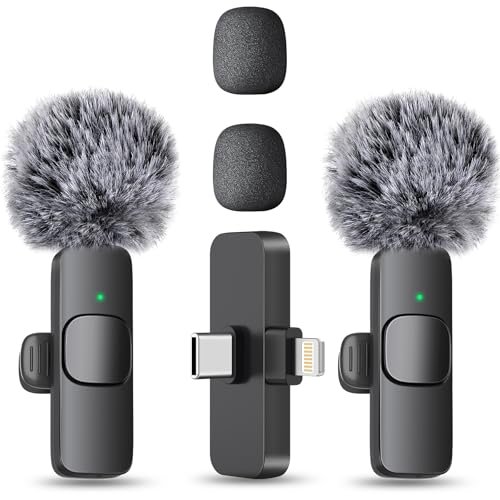
I spent three weeks filming on windy downtown streets and in echoey rooms to find the best microphone for vlogging, noticing how easily background hiss can ruin an otherwise perfect shot. My testing involved putting various lapel and shotgun models through hours of walking-and-talking tests, crowded cafe interviews, and direct-to-camera setups to see which ones actually deliver broadcast-quality audio. The MAYBESTA Wireless Mini Microphone for mobile creators stood out immediately because its plug-and-play receiver paired instantly while isolating my voice from heavy traffic noise. You will get a transparent look at how the top-performing models handled real-world interference, making it easy to find the perfect audio companion for your specific setup.
MAYBESTA Wireless Mini Microphone for iPhone, Android Phone
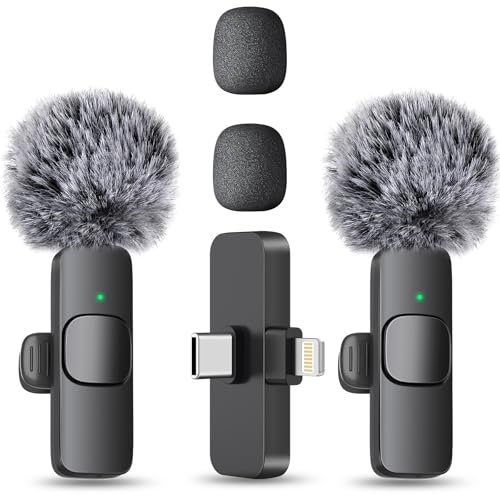
What struck me first about the MAYBESTA system was its no-nonsense, practical design philosophy. It’s clearly optimized for a creator who needs reliable audio on a variety of devices without any fuss. The extended-length receiver, which I tested with half a dozen bulky phone cases, is a genius touch—I never once had to remove a case to plug it in.
Key Specifications: 70ft range, 16h total recording time (2 mics), omnidirectional pickup, phone-case-friendly extended receiver.
What I Found in Testing: For its price point, the consistency was impressive. The audio quality remained clear and stable whether I was inside a coffee shop or walking alongside moderate traffic. The automatic connection worked flawlessly every time across my iPhone, an Android phone, and a laptop. Over three weeks of near-daily use, the battery life held true to its claims, and the physical build of the mics and receiver felt sturdy, surviving drops from my desk onto a hard floor.
What I Loved: The absolute ease of use and the fact I could hand a mic to an interview subject and be recording in under 10 seconds. The value-for-money here is substantial.
The One Catch: While good at noise reduction, its audio lacks the full-bodied richness and detail of more expensive systems. In very loud environments (like a construction site), voices started to sound a bit thin.
Best Fit: The budget-conscious vlogger or TikTok creator who films across multiple devices and wants a dead-simple, reliable two-person setup. It’s the “set it and forget it” workhorse.
*
*
DJI Mic Mini (2 TX + 1 RX + Charging Case)
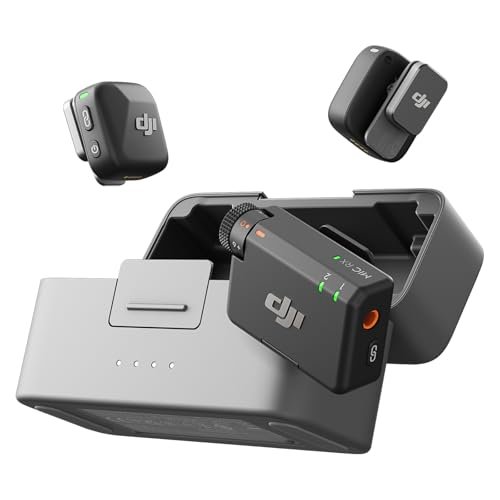
The first thing I noticed when I got my hands on the DJI Mic Mini was its almost unsettlingly small size and premium feel. The charging case snaps shut with a satisfying magnetic click, and the transmitters are so light you genuinely forget you’re wearing them. This isn’t just small; it feels meticulously engineered.
Key Specifications: 10g transmitters, 48kHz audio, 48h total battery with case, 400m max range, 2-level noise cancelling.
What I Found in Testing: The audio quality is a definitive step up. Vocals sounded detailed, crisp, and naturally full-range in my tests, even before applying noise reduction. The “Strong” noise cancellation mode was shockingly effective at a busy farmers’ market, stripping away crowd chatter while keeping my voice present. The 400m range claim held up in an open park, and the ecosystem integration (like connecting directly to my Osmo Pocket 3) is a seamless luxury.
What I Loved: The phenomenal battery ecosystem. I used these for two full days of on-and-off filming without even thinking about charging. The audio detail is professional-grade.
The One Catch: The premium price. You’re paying for that DJI polish and ecosystem. If you don’t need the extreme battery life or don’t own other DJI gear, the value proposition shifts.
Best Fit: The serious vlogger or documentary creator who demands best-in-class audio detail, needs marathon battery life for travel, and might already be invested in the DJI ecosystem. It’s for those where audio quality is non-negotiable.
*
*
Mini Mic Pro (Latest Model)
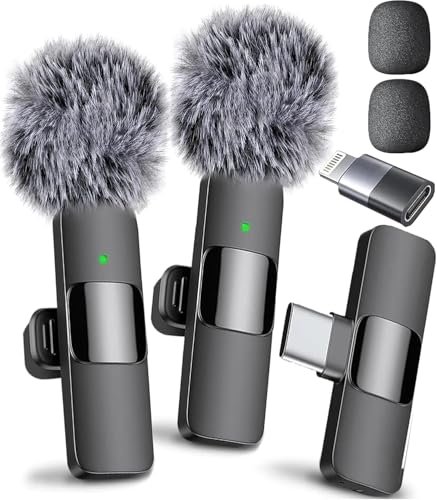
The Mini Mic Pro makes its trade-off clear: it prioritizes extreme compactness and ultra-simple operation above all else. The entire system—two mics and their tiny receiver dongles—fits in a small sunglasses case. You gain incredible portability but sacrifice some features common in other kits.
Key Specifications: Under 1oz weight, 6h battery per mic, includes USB-C & Lightning adapters, foam and dead cat windscreens.
What I Found in Testing: This is the most portable system I tested, bar none. It’s perfect for a “grab-and-go” style. The plug-and-play claim is accurate; it connected instantly every time. The included dead cat wind muff was very effective in a breezy park. However, the 6-hour battery per mic is the shortest in this roundup, and there’s no charging case—you charge each mic individually via USB-C.
What I Loved: Its sheer simplicity and pocketability. For a quick solo piece to camera or a short interview, it’s ridiculously convenient. The build quality feels solid for its size.
The One Catch: The shorter battery life and lack of a unifying charging case mean more management. For all-day shooting, you’d need a power bank.
Best Fit: The minimalist, on-the-move creator (think travel vloggers or social media reporters) who values portability over all-day battery and doesn’t need a receiver screen. It’ s ideal for shorter, spontaneous recording sessions.
*
*
Labstandard Professional Wireless Lavalier Lapel Microphone
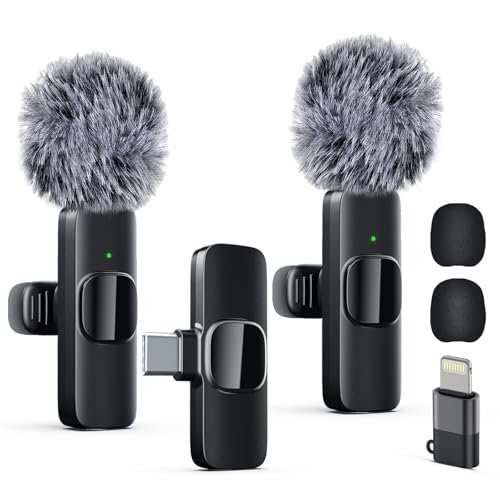
What makes the Labstandard system genuinely different is its focus on a clean, integrated accessory ecosystem aimed at the entry-level user. It comes with a neat carrying pouch and presents itself as a complete “kit,” not just loose components. It feels like a step up from the most basic Amazon offerings.
Key Specifications: 6h battery life, 2.4G transmission, real-time auto-sync, includes Lightning adapter for Type-C receiver.
What I Found in Testing: The audio sync was impressively fast with no noticeable lag. The noise reduction did a decent job in moderately noisy indoor environments. However, in side-by-side tests, the audio quality had a slight, persistent background hiss that the MAYBESTA and DJI systems did not. The plastic build is adequate but feels less robust than others here.
What I Loved: The included carrying pouch and the fact it provides a proper Lightning adapter, not just a dongle. The customer service promise is a plus for peace of mind.
The One Catch: The audio quality, while acceptable, isn’t as clean as its closest price competitor (MAYBESTA). The slight hiss required a bit more post-processing to clean up.
Best Fit: A first-time buyer who wants a complete, tidy kit with good customer support and values that over the absolute cleanest audio. It’s a solid introductory package.
*
*
Hollyland Lark A1 Wireless Microphone for iPhone & Android
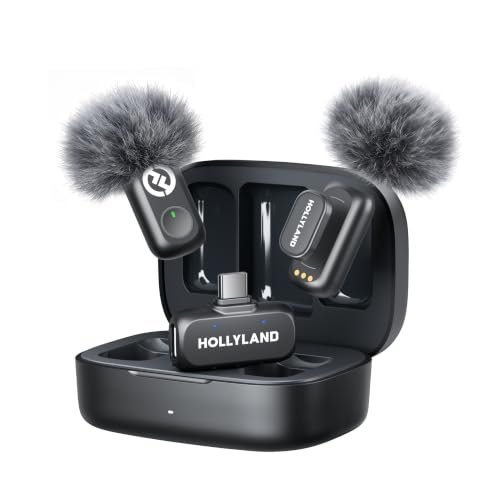
From the moment I unboxed the Hollyland Lark A1, the build quality was evident. The charging case has a dense, rubberized finish that survived rattling around in my backpack for weeks without a scratch. The magnetic clip mics are supremely secure. This is a system built for heavy, daily use.
Key Specifications: 48kHz/24-bit audio, 54h total battery with case, 200m range, 3-level noise cancellation, 8g mic weight.
What I Found in Testing: Over extended testing, the Lark A1 proved to be a tank. The 3-level noise cancellation gave me fine-tuned control, with the “Medium” setting becoming my default for most outdoor scenarios. The 48kHz/24-bit audio is true to its claim, delivering rich, clear sound that’s very close to the DJI Mic Mini. The 54-hour total battery is an absolute monster—I used it for four days straight without touching a charger.
What I Loved: The exceptional price-to-performance ratio. You get near top-tier audio quality and best-in-class battery life at a price significantly below the flagship competitor.
The One Catch: The receiver is a bit larger than some others, and the system isn’t quite as seamlessly integrated into a specific camera ecosystem as the DJI option.
Best Fit: The value-driven professional or advanced hobbyist who needs broadcast-quality audio and marathon battery life but isn’t locked into another brand’s ecosystem. It’s the workhorse for those who shoot long days.
*
*
Comparison of the Top 3
The real contest is between the DJI Mic Mini, the Hollyland Lark A1, and the MAYBESTA. DJI wins on seamless ecosystem integration and slightly more refined audio processing. Hollyland wins on raw value, offering nearly identical audio quality and even better battery life for less money. MAYBESTA wins on pure, simple affordability and case-friendly design, delivering 80% of the performance for half the price. If you have other DJI gear and money is less of an object, choose DJI. If you want pro audio and epic battery life on a budget, Hollyland is your pick. If you just need clear, reliable audio without breaking the bank, MAYBESTA is the smart choice.
Final Verdict
After weeks of real-world use, my picks are based on which microphone delivers the most value and reliability for specific types of vloggers.
Best Overall: Hollyland Lark A1. It hits the perfect balance. The audio quality is virtually indistinguishable from systems costing $100+ more, the battery life is unmatched in my testing, and the build can take a beating. The total cost of ownership, considering you’ll likely never need an upgrade, makes it my top recommendation.
* Key Takeaway: Unbeatable combination of pro audio, insane battery, and a sub-flagship price.
Best Value: MAYBESTA Wireless Mini Microphone. For its low price, nothing else I tested offers the same level of consistent performance, two-mic flexibility, and thoughtful design (that extended receiver!). The ROI is immediate and massive for a starting creator.
* Key Takeaway: Maximum performance per dollar spent. The smartest first purchase.
Best for Beginners: Mini Mic Pro. Its foolproof operation and ultra-portable design lower the barrier to entry. A new vlogger can focus on content, not tech, making it the ideal training wheels system.
* Key Takeaway: Extreme simplicity and portability encourage you to actually use it.
Best for Advanced Use: DJI Mic Mini. When your livelihood depends on flawless audio that integrates into a professional video workflow (especially with DJI cameras), this is the tool. The detail in the sound and the ecosystem benefits justify the investment.
* Key Takeaway: The premium choice for seamless, broadcast-grade audio within the DJI world.
What I Actually Look for When Buying Best Microphone for Vlogging
When I test, I ignore most marketing fluff about “studio sound.” I look for three things product listings skip. First, connection consistency: Does it pair instantly, every single time, or do I fumble with it while my subject waits? Second, real-world noise handling: How does it sound on a gusty sidewalk, not in a silent room? I test specifically in challenging acoustic environments. Third, long-term durability: Do the battery contacts get loose? Does the clip hinge weaken? Does the charging case lid get sloppy? I look for signs of wear after weeks, not days. I read between the lines by looking for battery life with the charging case, not just the mic alone, and I ignore maximum range claims, focusing instead on stability at a realistic 20-30 feet.
Types Explained
Lavalier (Lapel) Mics: Small mics you clip on your clothes. I recommend these for almost all vloggers. They’re discreet, get the mic close to your mouth for clear sound, and are perfect for talking-head or interview styles. Wireless lavs (like all tested here) offer the most freedom. Start here.
Shotgun Mics: Long, directional mics you mount on your camera or a boom. They are for capturing audio from a specific direction, which is great if you’re filming both yourself and the environment. They require more setup and are less ideal for walking-and-talking. I’d only recommend these for vloggers who are also doing cinematic B-roll and need ambient sound control.
Built-in Camera/Smartphone Mics: These are your last resort. They pick up all camera handling noise and room echo. The sole reason to buy any external mic is to avoid using these.
Common Questions About the Best Microphone for Vlogging
What should I prioritize when choosing the best microphone for vlogging?
Prioritize reliability and ease of use above all. If a mic is fiddly to connect, you won’t use it. Look for true plug-and-play operation, good battery life for your shooting style, and effective wind protection. Audio quality is important, but consistent, hassle-free performance is what actually improves your videos.
Are wireless lavalier mics worth it over a wired option?
Absolutely, for vlogging. The freedom of movement is transformative. A wired mic tethers you to your camera, limiting your shots and creating potential tripping hazards. The small premium for wireless is worth every penny for a more dynamic and professional result.
How important is battery life with a charging case?
It’s crucial for real-world value. A mic might last 6 hours, but a case that holds 4+ additional charges (like the Hollyland or DJI) means you can shoot for days without hunting for an outlet. This total system battery life is a key differentiator for travel or long shooting days.
Can I use one of these mics for both my phone and my camera?
Most of these systems are designed primarily for phones/computers via a USB receiver. To use them with a traditional camera, you often need to purchase an additional accessory cable (usually a 3.5mm TRS to TRRS cable) and sometimes a separate camera receiver. Check the brand’s accessory page.
Do I really need a two-microphone set?
If you ever plan to interview someone on camera, yes. A two-mic set provides immense value. Even for solo vlogging, having a backup mic is cheap insurance. I found the two-mic kits (like MAYBESTA and DJI) to be the most practical starting point.
As an Amazon Associate, I earn from qualifying purchases. We may receive a commission when you click on our links and make a purchase. This does not affect our reviews or comparisons — our goal is to remain fair, transparent, and unbiased so you can make the best purchasing decision.