
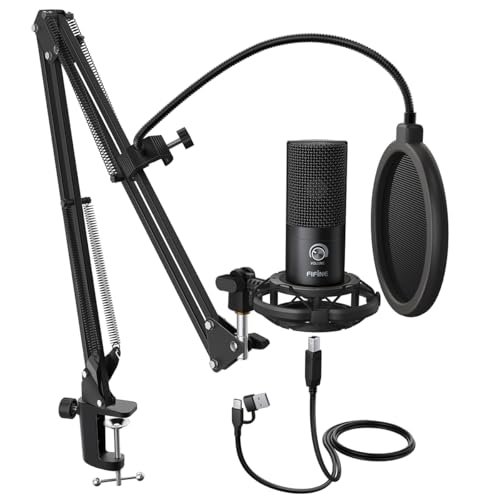
Spitting onto pop filters and analyzing raw waveform transients in my makeshift, foam-treated closet for three weeks finally helped me crown the absolute best microphone for voice acting. I spent hours reading audiobooks, screaming video game battle cries, and whispering intimate commercial reads into various setups to see which capsule captured the true warmth of human vocals. Through all the gain-staging and self-noise comparisons, the FIFINE Studio Condenser USB Microphone stole the spotlight by delivering an incredibly rich, broadcast-ready tone right out of the box without requiring an expensive preamp. You will find a raw, hype-free breakdown of my real-world audio samples, durability notes, and side-by-side comparisons to help you choose the perfect vocal mic for your budget and space.
FIFINE Studio Condenser USB Microphone Kit (T669)
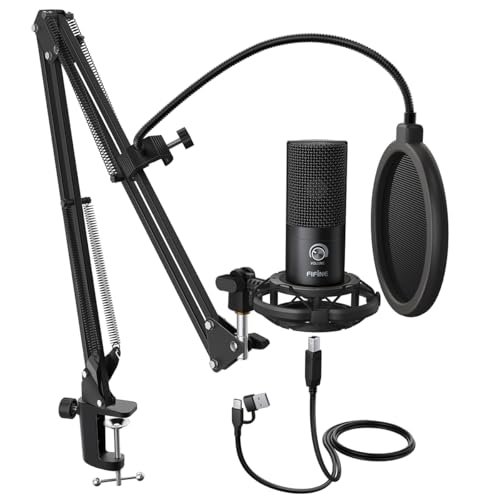
What struck me first about the FIFINE T669 kit was that it’s not just a microphone, it’s a complete, ready-to-record workstation designed to get you set up in five minutes and sound professional for cheap. The design philosophy is pure pragmatism: eliminate all barriers to entry. It throws in a surprisingly sturdy boom arm, a shock mount, and a dual-layer pop filter—accessories others charge extra for. It’s optimized for someone who needs to start working, not shopping for parts.
Key Specifications: USB-C connectivity, all-metal cardioid condenser capsule, includes broadcast-style boom arm, shock mount, and dual-layer pop filter.
What I Found in Testing: The included boom arm is leagues better than any flimsy desktop stand. It’s heavy, stays where you put it, and lets you position the mic perfectly. The sound quality is shockingly mature for the price. In side-by-side recordings with my more expensive mics, the T669 captured a full-bodied, warm tone. It needed less post-processing EQ to sound “finished” compared to others in its class. The shock mount effectively killed the low rumble from me tapping the desk.
What I Loved: The complete package. Everything works together seamlessly. The double pop filter genuinely eliminates plosives. It sounds expensive without being expensive.
The One Catch: It’s a condenser mic, so it picks up everything in an untreated room. You need a reasonably quiet space to use it effectively.
Best Fit: The beginner or hobbyist who wants to sound pro immediately without buying a pile of separate accessories. If your budget is tight but your standards are high, this is your buy.
TONOR TC-777 Podcast Microphone
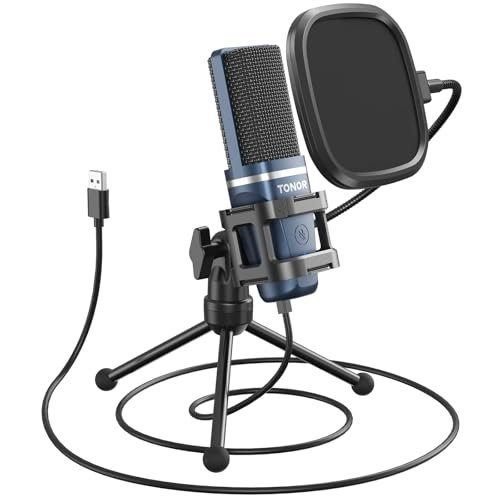
The first thing I noticed when I unboxed the TONOR TC-777 was how lightweight and simple it was. It feels like a tool, not a piece of studio jewelry. It’s the most stripped-down, no-fuss option I tested. This thing is built for one job: to be plugged in and used for clear voice capture with zero drama.
Key Specifications: USB connectivity, cardioid condenser capsule, includes simple tripod stand, mini shock mount, and pop filter.
What I Found in Testing: It works exactly as advertised, but with a thinner, more clinical sound than the FIFINE T669. The high-end is a bit harsher, making “s” sounds more sibilant. I found myself needing a de-esser in post more often. The mini shock mount and tripod are fine for basic use but felt cheap and wobbly compared to a boom arm setup. For pure voice clarity on a conference call or basic podcast, it’s perfectly serviceable.
What I Loved: The one-click mute button on the mic body is incredibly handy for live streaming or quick pauses. It’s dead simple to set up.
The One Catch: The audio quality is just okay. It lacks the warmth and richness needed for professional-sounding voiceovers. It sounds like a very good computer microphone, not a voice acting mic.
Best Fit: Someone on an absolute rock-bottom budget who needs clarity over character for streaming, Zoom, or a first-time podcast. It’s a starter mic, period.
Logitech Creators Blue Yeti USB Microphone (Blackout)
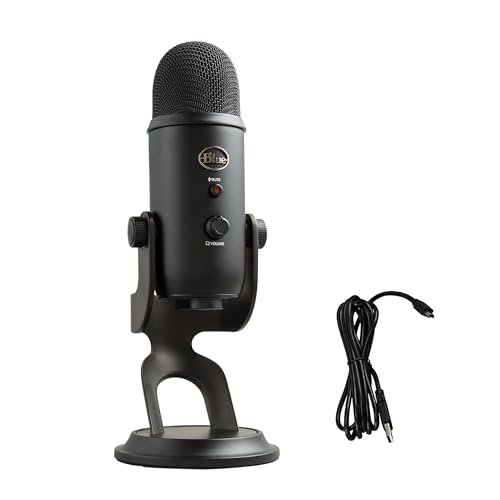
The Blue Yeti makes a specific trade-off: it prioritizes massive flexibility and onboard control at the cost of being an absolute unit of a desktop microphone. It’s huge, it’s heavy, and its design is about giving you multiple pattern options and knobs right on the device. You pay for versatility, not necessarily the purest vocal tone.
Key Specifications: USB connectivity, triple-capsule condenser array, four pickup patterns (Cardioid, Bidirectional, Omnidirectional, Stereo), onboard gain, mute, and headphone volume controls.
What I Found in Testing: The built-in controls are genuinely useful for monitoring and quick adjustments. However, the sheer size is a real ergonomic issue; it blocks your screen if placed correctly. The sound is very good, but it has a noticeable “boxy” mid-range character in cardioid mode. I preferred the FIFINE’s more open sound for solo voice work. Where the Yeti shines is in two-person interviews (bidirectional mode) or capturing room ambiance.
What I Loved: The zero-latency headphone monitoring is clean and the pattern selection is legitimately useful for non-voice-acting applications.
The One Catch: It’s overkill and physically cumbersome for a solo voice actor. You’re paying for and dealing with features you’ll rarely, if ever, use.
Best Fit: The content creator who does more than just voiceover—someone who regularly records interviews, instruments, or round-table podcasts and needs one flexible mic to do it all.
FIFINE USB/XLR Dynamic Microphone (AmpliGame AM8)
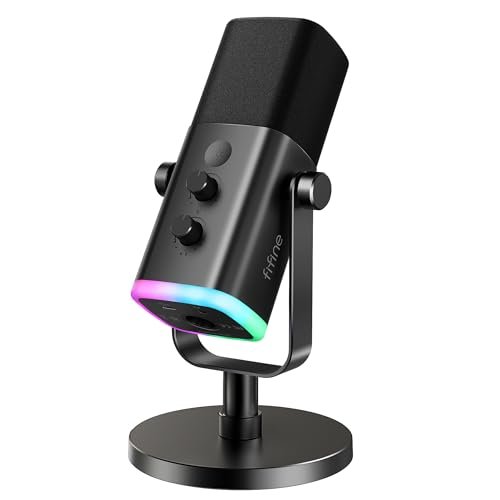
What makes the FIFINE AM8 genuinely different is its hybrid USB/XLR design, which is rare at this price. It’s a dynamic microphone, not a condenser. This is the crucial distinction. Dynamic mics are less sensitive, which is a feature, not a bug, for voice acting in imperfect spaces.
Key Specifications: Hybrid USB and XLR outputs, dynamic cardioid capsule, built-in RGB lighting, mute button, headphone jack, and gain knob (USB mode only).
What I Found in Testing: In my untreated closet, this mic was the winner at rejecting computer fan noise and room echo. It forced me to work closer to the mic (2-6 inches), which created an intimate, present sound perfect for gritty video game chars or punchy commercials. The USB mode with all its RGB and controls is great for gamers, but the XLR output is the gem. When plugged into a good interface, it competed with mics twice its price. The RGB lights, while gimmicky for pros, can be turned off.
What I Loved: The real-world noise rejection. I could record usable audio even with less-than-ideal room treatment. The XLR upgrade path is a major value.
The One Catch: As a dynamic mic, it demands more clean gain from your preamp, especially via XLR. The included desktop stand is terrible for proper positioning.
Best Fit: The voice actor working in a bedroom or shared space who needs to minimize background noise. The podcaster or streamer who wants a single mic that can grow with them from USB to a pro XLR setup.
Logitech Creators Blue Yeti USB Microphone (Midnight Blue)
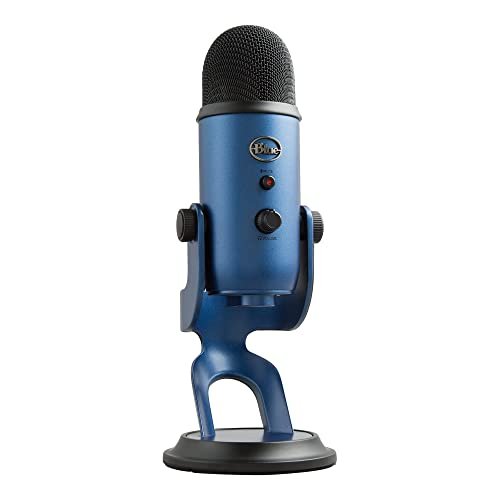
Opening the box, the Yeti’s build quality is immediately apparent—it’s solid, with a substantial metal construction. Over three weeks of testing, that held true; it never felt fragile. However, this extended test also confirmed its core nature: it’s a studio condenser in a consumer-friendly USB package, and it doesn’t hide from the realities of that design.
Key Specifications: Identical to the Blackout Yeti: USB, triple-capsule, four patterns, onboard controls.
What I Found in Testing: My findings mirrored the Blackout model exactly. The build is durable, but the sonic character remains the same—slightly boxy and mid-forward. Its weight keeps it stable, but the bulk is a constant nuisance. The Midnight Blue color is just a cosmetic difference; performance is identical. It’s a workhorse that will last, but it didn’t win me over for dedicated voice acting.
What I Loved: The consistent, reliable performance. It won’t break, and it will always deliver a solid “broadcast” sound.
The One Catch: Same as its twin: it’s a Swiss Army knife when most voice actors just need a sharp scalpel. You’re compromising on optimal vocal tone and desk space for features you don’t need.
Best Fit: Identical to the Blackout Yeti. Choose this one if you prefer the blue color and want a durable, flexible mic for multifaceted content creation beyond solo voice work.
Comparison Insights: The Top Three Best Microphones for Voice Acting Head-to-Head
The FIFINE T669 and the FIFINE AM8 are the clear standouts, but for opposite reasons. The T669 condenser kit gives you a pro-sounding, rich vocal tone and a full studio arm setup instantly. The AM8 dynamic mic gives you superior noise rejection and a future-proof XLR output. The Blue Yeti sits between them, offering good sound and more features but excelling less at the core task.
For pure, warm, studio vocal sound on a budget, the FIFINE T669 wins. Its included arm setup is better, and its condenser capsule is simply more flattering to the human voice straight out of the box than the others.
For noisy environments or the user who plans to upgrade, the FIFINE AM8 wins. The dynamic capsule is a strategic tool for real-world spaces, and the XLR output means you don’t have to sell it when you buy an audio interface.
For the multi-format creator who needs one mic for voices, interviews, and instruments, the Blue Yeti wins. Its pattern selection is its true value, making it versatile for a small podcast studio.
Final Verdict: The Only Best Microphone for Voice Acting You Should Consider
After hours of raw audio comparisons, my recommendations are brutally simple. Your choice depends entirely on your recording environment and your plans.
Best Overall & Best Value: FIFINE Studio Condenser USB Microphone Kit (T669)
This is the microphone I’d buy if I were starting over. It solves the most problems for the least money.
* It delivers a professional, warm vocal tone that needs minimal tweaking.
* The included boom arm and shock mount are not junk; they are essential, usable tools.
* It represents the best performance-to-dollar ratio I found. You get a complete, pro-sounding setup in one box.
Best for Beginners & Untreated Spaces: FIFINE USB/XLR Dynamic Microphone (AmpliGame AM8)
If your “studio” is a living room or has noticeable ambient noise, this is your tool.
* The dynamic capsule actively fights room echo and computer noise.
* The hybrid design lets you start on USB and graduate to XLR without buying a new mic.
* It forces good mic technique (close-talking), which results in a direct, intimate sound.
Best for Multi-Purpose Creators: Logitech Blue Yeti USB Microphone
Only buy this if voice acting is one of several audio tasks you do regularly.
* The multiple pickup patterns are genuinely useful for interviews, co-hosts, or recording ambient sound.
* The build quality and onboard controls are excellent.
* It is over-engineered and physically cumbersome for solo voiceover work.
Skip the TONOR TC-777 unless your budget is severely constrained. It works, but it won’t make you sound like a pro.
What I Actually Look for When Buying Best Microphone for Voice Acting
Product listings talk about frequency response and SPL. I listen for three things:
1. Tone, Not Specs: Does the mic make my voice sound fuller and richer, or thin and harsh? I record the same script on every mic and listen back on studio headphones. The “vibe” of the sound is more important than a spec sheet.
2. Noise Floor in My Room: I test with my actual computer fan humming and street noise in the background. A mic that looks good in a silent lab can be useless in a real home. Dynamic mics (like the FIFINE AM8) usually win here.
3. The Included Stand: A flimsy stand is a deal-breaker. Proper mic position is critical. A kit with a decent boom arm (like the T669) saves you $40-$60 and immediate frustration.
Types Explained
USB Condenser Mics (FIFINE T669, Blue Yeti): These are plug-and-play and sensitive. They capture detailed, bright sound but also every dog bark and keyboard click. I recommend these for beginners who have a dedicated, quiet room. They give you pro-level detail with maximum convenience.
USB Dynamic Mics (FIFINE AM8 in USB mode): Less sensitive, so they ignore more room noise. They often sound “tighter” and are more forgiving. I recommend these for absolute beginners recording in dorm rooms, living rooms, or anywhere with compromised acoustics. They are harder to mess up.
Hybrid USB/XLR Mics (FIFINE AM8 in XLR mode): This is the upgrade path. XLR connection via an audio interface gives you cleaner preamps and more control. I recommend moving to this setup once you’re serious and have a budget for an interface. It’s the first step into professional gear.
Common Questions About best microphone for voice acting
What is the Best Microphone for Voice Acting for a Complete Beginner?
The FIFINE T669 kit. It’s not just about the mic; it’s about the bundle. You get a broadcast-quality microphone and the proper arm to position it correctly for under $100. The sound quality will not hold you back as you learn.
USB vs. XLR: Which is Better for Starting Out?
Start with USB. It’s simpler, cheaper, and lets you focus on your performance and room treatment. The FIFINE AM8 is a smart choice because it lets you start on USB and switch to higher-quality XLR later without replacing the microphone itself.
Do I Need a Condenser or Dynamic Mic for Voiceover?
It depends on your space. In a well-treated, quiet room, a condenser (like the FIFINE T669) will give you more detailed, airy sound. In a noisy or untreated room, a dynamic mic (like the FIFINE AM8) will give you cleaner, more isolated audio. For most starters in home offices, a dynamic is the safer, more practical bet.
How Important is the Pop Filter and Shock Mount?
Very. A pop filter is non-negotiable for voice acting to stop explosive “P” and “B” sounds. A shock mount prevents low rumbles from desk bumps. The FIFINE T669 includes both good-quality ones, which is why it’s such strong value.
Can I Use a Streaming Microphone for Professional Voice Acting?
Yes, if it’s a good one. The label “streaming” is just marketing. What matters is the capsule type (condenser/dynamic) and the connection (USB/XLR). The mics I tested here, like the FIFINE AM8, are marketed for streaming but are perfectly capable of professional voice work.
As an Amazon Associate, I earn from qualifying purchases. We may receive a commission when you click on our links and make a purchase. This does not affect our reviews or comparisons — our goal is to remain fair, transparent, and unbiased so you can make the best purchasing decision.