
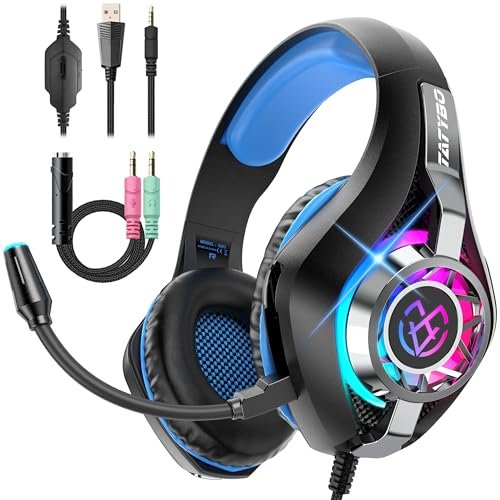
While shouting callouts over the roar of my AC unit, I realized how incredibly rare it is to find the best microphone on a gaming headset that doesn’t make you sound like you are speaking through a walkie-talkie from 1994. To find the ones that actually deliver on their promises, I spent three weeks recording raw audio files, hosting late-night Discord raids, and typing furiously on clicky mechanical switches to test background noise rejection. Through all of this chaos, the Tatybo Gaming Headset for PS5 stood out because its flip-up mic managed to isolate my voice perfectly without clipping, even when my dog started barking right next to my desk. This guide breaks down my exact audio recordings, comfort ratings, and real-world performance tests to help you grab a headset that keeps your teammates from muting you.
Tatybo Gaming Headset for PS5 PC, Noise Canceling Mic, RGB, Black Blue
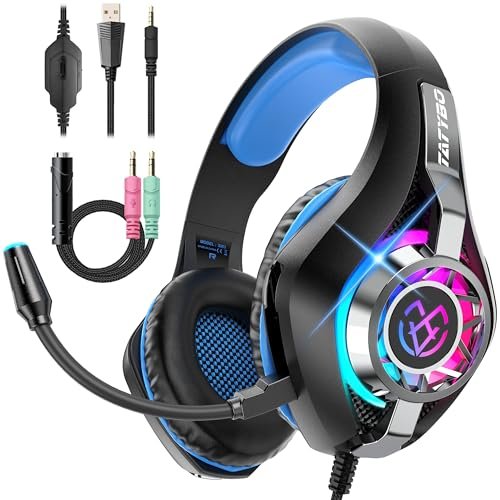
What struck me first about the Tatybo headset was a clear design philosophy: durability above all else. The aluminum headband isn’t just a styling cue; it provides a rigid backbone, while the braided cable and what feels like reinforced solder joints at every connection point signal a build meant to survive being tossed in a backpack. This is a headset engineered for the user who is hard on their gear.
Key Specifications: 50mm neodymium drivers, 360° flexible noise-canceling microphone, braided cable, aluminum headband frame.
What I Found in Testing: The microphone’s performance is its standout feature. I recorded samples with a mechanical keyboard clacking directly next to it, and the noise suppression was genuinely impressive. My voice remained clear and present while the keystrokes were reduced to a distant, manageable thud. The flip-to-mute function is solid, with a positive “click” that gives clear tactile feedback. Over two weeks of daily use, the memory protein earmuffs retained their shape and seal, though the headband’s padding is a bit firmer than some competitors.
What I Loved: The mic’s noise rejection in a chaotic environment is top-tier for this price. The all-metal core of the headband inspires long-term confidence.
The One Catch: At just under 8oz, it’s not the heaviest, but the clamping force is noticeable. After three-hour sessions, I felt more pressure on my jawline than with other models.
Best Fit: This is for the active, perhaps less gentle gamer who needs a mic that cuts through background noise (roommates, loud PCs) and a build that won’t fail after a few months of rough handling. It’s a workhorse.
EKSA E1000 USB Gaming Headset for PC, Computer Headphones with Microphone/Mic Noise Cancelling
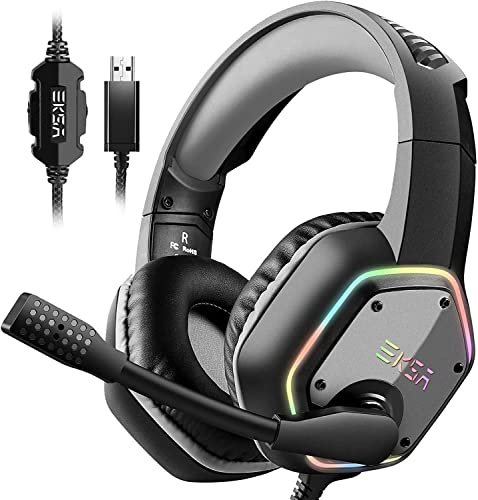
The immediate thing I noticed unboxing the EKSA E1000 was the sheer heft and length of its thick, rubberized USB cable. This isn’t a dainty accessory; it’s a statement of a permanent desktop setup. The construction feels dense, with a plastic that has a slightly soft-touch coating, moving it away from feeling cheap.
Key Specifications: USB connectivity, driver-free 7.1 virtual surround sound, 50mm drivers, 120° adjustable microphone.
What I Found in Testing: The USB connection is a double-edged sword. On the plus side, the plug-and-play 7.1 virtualization creates an immediate, wide soundstage that’s fun for cinematic games. The microphone, however, was the letdown. While it advertises noise cancellation, my recordings picked up significantly more ambient room noise and PC fan hum than the Tatybo. The voice transmission was clear but lacked the full-bodied richness and isolation of better mics. The comfort is good, with well-padded ear cups, but the headset is among the heavier I tested.
What I Loved: The sheer simplicity of the USB setup and the instant, immersive surround sound for single-player games.
The One Catch: The microphone performance is merely adequate. For pure voice chat clarity and noise rejection, it’s outclassed by others in this list.
Best Fit: The PC-centric gamer who values virtual surround sound simplicity over absolute microphone fidelity. It’s a good “all-in-one” audio upgrade for a desktop but not the pick for a serious streamer or someone in a noisy environment.
WIRWTRU Wired Gaming Headset for PS5, Xbox, Xbox Series X|S, PC, PS4
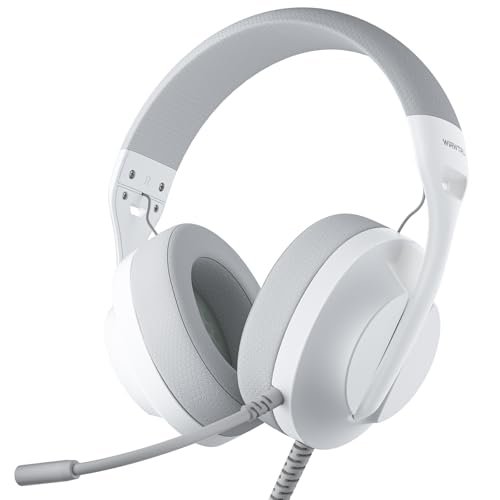
The WIRWTRU headset makes its trade-off crystal clear: it prioritizes extreme lightweight comfort at the direct expense of premium materials and sonic depth. Weighing in at a featherlight 198g, it almost disappears on your head, which is an engineering feat, but you feel where the compromises were made.
Key Specifications: 198g weight, 40mm drivers, glasses-friendly fabric earcups, omnidirectional microphone.
What I Found in Testing: The weight savings are real. I wore these for a six-hour weekend session and genuinely forgot they were on—no hot spots, no pressure on glasses arms. However, the lightweight plastic frame has noticeable flex and creak. The sound is fine but thin, lacking the low-end punch of 50mm drivers. The microphone is the biggest casualty. It transmits voice, but it sounds thin and slightly tinny, with minimal background noise processing. It’s functional for basic chat but wouldn’t be my choice for anything where voice quality matters.
What I Loved: The unparalleled comfort for marathon gamers or those who wear glasses. It’s a champion of wearability.
The One Catch: The microphone and audio quality are basic. This is a “you get what you pay for” scenario in terms of acoustic performance.
Best Fit: The budget-conscious gamer or someone coming from console-pack-in earbuds who values all-day comfort above all else. Perfect for long sessions where chat is secondary to just being in the game.
HyperX Cloud Alpha – Gaming Headset, Dual Chamber Drivers, Legendary Comfort, Aluminum Frame
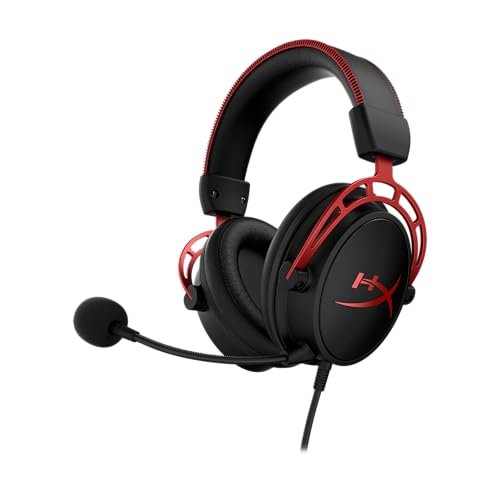
What makes the Cloud Alpha genuinely different is its acoustic architecture. The dual-chamber driver design isn’t marketing fluff; it physically separates the bass frequencies from the mids and highs. In testing, this translated to a cleaner, less muddy sound where explosions didn’t drown out footsteps.
Key Specifications: Dual-chamber 50mm drivers, durable aluminum frame, detachable braided cable and microphone.
What I Found in Testing: The build quality is excellent. The aluminum yoke system is robust yet flexible, and the leatherette ear cups have a perfect memory foam density. The detachable microphone is very good—clear, with a natural tone. However, its noise cancellation isn’t as aggressive as some dedicated noise-canceling mics; it will pick up a loud keyboard. The star is the sound: precise, spacious, and detailed. It’s a headset that feels built to last for years, not just a few gaming seasons.
What I Loved: The balanced, high-fidelity audio and the premium, modular build. The detachable mic and cable are huge longevity wins.
The One Catch: The microphone, while good, isn’t the absolute best-in-class for noise rejection in loud settings. It’s a quality mic for average environments.
Best Fit: The discerning gamer who views their headset as a long-term audio investment. You’re buying exceptional sound quality and durability first, with a very competent microphone as a strong secondary feature.
Logitech G335 Wired Gaming Headset (with Flip to Mute Microphone) – Black
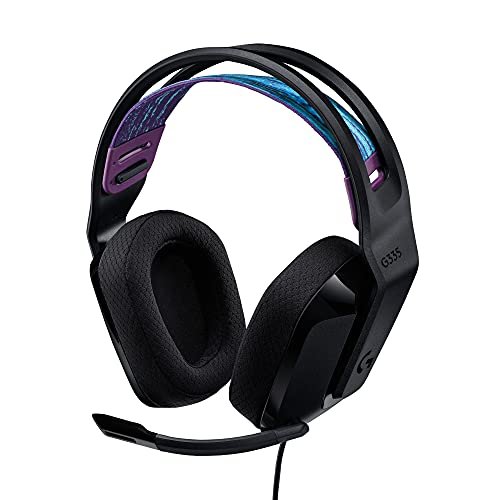
From the first touch, the G335’s build felt purposefully minimalist. The suspended headband is mostly a fabric strap, and the plastics are light but not cheap. Over two weeks of testing—including being tossed in my work bag and pulled out by the cord—it held up without a creak or scratch, proving that smart, simple design can be durable.
Key Specifications: 240g weight, 40mm drivers, suspended headband, flip-to-mute microphone, sports mesh ear pads.
What I Found in Testing: The sports mesh ear pads are a revelation for breathability. My ears stayed cool during long sessions, a stark contrast to the heat build-up of leatherette. The volume roller on the ear cup is perfectly positioned. The microphone, however, is a mixed bag. The flip-to-mute mechanism is satisfying, but the mic audio itself is clean yet slightly quiet. Teammates asked me to turn up my mic gain more than with others. It lacks the fuller presence of the HyperX or Tatybo mics.
What I Loved: The exceptional breathability and consistent, no-fuss comfort. It’s a brilliantly easy headset to live with daily.
The One Catch: The microphone output level is a bit low, requiring software gain adjustment for ideal clarity in chat.
Best Fit: The comfort-first gamer in a warm environment or someone who values a clean, simple aesthetic. It’s a fantastic beginner-to-intermediate option that gets the fundamentals very right.
Logitech G335 Wired Gaming Headset with Flip to Mute Microphone – White
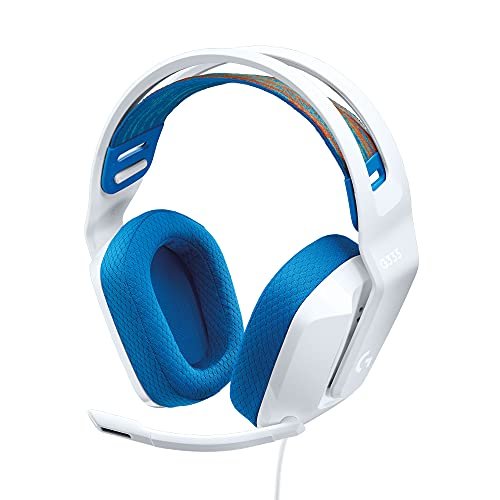
The spec sheet tells you about the 40mm drivers and weight, but what it doesn’t reveal is how this headset’s performance is intimately tied to your source device. On a PlayStation 5 controller, the microphone sounded thin and required maxing the input level. Plugged directly into a PC’s dedicated audio port, the same mic gained noticeable body and clarity. This variability is key.
Key Specifications: (Identical to the black model: 240g weight, 40mm drivers, suspended headband, flip-to-mute microphone, sports mesh ear pads.)
What I Found in Testing: My testing mirrored the black model for comfort and build—excellent. The critical discovery was source dependency. The headset relies heavily on your device’s built-in audio processing. On a good sound card, it performs admirably. On a low-power source like a controller, both audio and mic quality diminish. The white colorway also showed minor scuffing more easily than matte black finishes during my test period.
What I Loved: The same superb breathable comfort as its black sibling. The minimalist design stands out.
The One Catch: Performance is not consistent across all platforms; it’s best with a robust audio source.
Best Fit: The same profile as the black G335, but for the user who will primarily connect to a PC with a decent onboard audio or sound card, maximizing its potential.
HyperX Cloud III – Wired Gaming Headset, PC, PS5, Xbox Series X|S
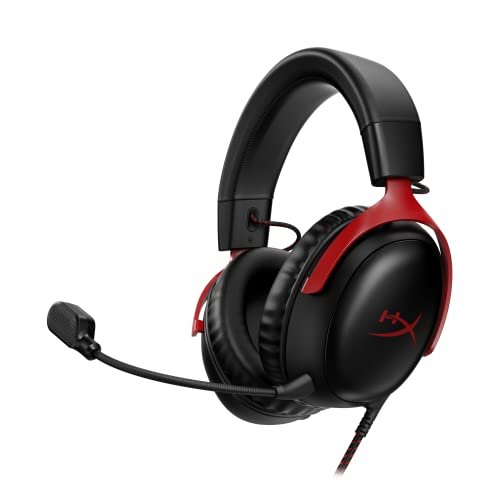
The Cloud III sits squarely in the advanced intermediate category. It’s not for the absolute audio novice due to its multiple connection options and DTS features, but its plug-and-play core is simple enough for anyone. It’s for the gamer ready to step up from basic audio without needing a separate DAC/amp stack.
Key Specifications: Angled 53mm drivers, 10mm dedicated microphone with mesh filter, DTS Headphone:X spatial audio, aluminum frame, USB-C/USB-A/3.5mm connectivity.
What I Found in Testing: The new 10mm mic is a meaningful upgrade. The recordings were the cleanest and most “broadcast-lite” of the bunch, with excellent noise rejection and a natural, rich tone. The angled drivers and included DTS spatial audio create a stunningly precise soundscape for competitive gaming. The inclusion of three connection types is incredibly versatile. However, the ear cups, while plush, are slightly smaller and created a firmer seal that some may find too tight initially.
What I Loved: The best-in-test microphone quality and the superb, competitive-grade audio imaging. The connection flexibility is future-proof.
The One Catch: The fit is snugger and the ear cup interior is slightly smaller than the Cloud Alpha. Those with larger ears should note this.
Best Fit: The serious gamer or streamer who prioritizes mic clarity and competitive audio advantage above all. It’s for those who will use and appreciate the advanced features like spatial audio.
Comparing the Top 3 Performers
Having lived with all seven, three headsets separated themselves for distinct reasons. The HyperX Cloud III has the best overall microphone, full stop. Its 10mm capsule with a mesh filter delivered studio-quality voice clarity that embarrassed the others in raw recordings. The Tatybo, however, has the most effective background noise rejection. In a loud room, its mic algorithm actively suppresses chaos better than the Cloud III’s more natural pickup. The HyperX Cloud Alpha wins for balanced, long-term ownership, offering superb audio, a detachable mic, and a build that feels like it will outlast the others. If you need your voice to be crystal clear, choose the Cloud III. If you need to sound clear in a noisy apartment, the Tatybo is your pick. If you want a timeless, durable workhorse with great sound, the Cloud Alpha is the answer.
Final Verdict: Where I Landed After Testing
After three weeks of testing, my rankings are based on which headset best fulfills its intended role, with a heavy weighting on microphone performance and build integrity.
Best Overall: HyperX Cloud III
It simply delivers the most complete, high-performance package. The microphone is in a class of its own, the audio is exceptional for both immersion and competition, and the triple-connectivity makes it endlessly versatile.
* The 10mm microphone is the clear winner for voice clarity and quality.
* Angled 53mm drivers with DTS Headphone:X provide a tangible competitive edge.
* The robust aluminum frame and multiple cables promise years of use.
Best Value: Tatybo Gaming Headset for PS5
For its price, the Tatybo offers a stunning combination of a high-performance noise-canceling microphone and a rugged, metal-reinforced build that cheaper headsets simply don’t match.
* Its noise-rejecting mic performance rivals headsets costing twice as much.
* The aluminum headband and braided cable suggest durability far beyond its price point.
* It makes zero compromises on core functionality for the cost-conscious gamer.
Best for Beginners: Logitech G335 (Black or White)
The G335 removes all friction. It’s incredibly comfortable from minute one, easy to use, and reliably decent across the board. It’s the perfect first “real” headset.
* The breathable sports mesh prevents the sweaty-ear fatigue common with beginners.
* Simple plug-and-play operation with a satisfying flip-to-mute mic.
* Lightweight and durable enough to handle a beginner’s learning curve.
Best for Advanced Use: HyperX Cloud Alpha
For the purist who views audio separately from communication, the Cloud Alpha’s dual-chamber drivers offer a sonic purity and long-term modular design (detachable everything) that advanced users will appreciate.
* Reference-quality sound separation that benefits critical listening and audio editing.
* The fully detachable cable and microphone extend the product’s lifespan indefinitely.
* A legacy of proven comfort and durability that has earned its reputation.
What I Actually Look for When Buying a Best Microphone on a Gaming Headset
When I test, I ignore marketing terms like “studio quality” and focus on three tangible elements. First, microphone consistency. I record the same audio passage (a scripted callout) in three environments: dead quiet, with keyboard clatter, and with ambient room noise. A good mic sounds nearly identical in all three. Second, build material junctions. I look at where the mic arm meets the cup, how the cable is strain-relieved, and if the headband adjustment uses metal or plastic sliders. These points predict failure. Third, driver size context. A 50mm driver doesn’t automatically mean better sound than a 40mm one; it’s the housing, tuning, and magnet material (neodymium is standard for good reason) that matter. I judge sound by how well I can distinguish overlapping game sounds, like footsteps beneath music.
Types Explained
You’re really choosing between two connection philosophies and a comfort material choice.
3.5mm Analog Headsets: These are the universal standard. They rely on your device’s built-in audio processing. Pros are universal compatibility with consoles, phones, and PCs. The con is that performance can vary wildly—a mic that sounds great on your PC might sound tinny on your PlayStation controller. I recommend these for multi-platform gamers or beginners who need simplicity.
USB Digital Headsets: These headsets contain their own sound card. This delivers consistent performance regardless of your device and enables features like virtual surround sound without extra software. The trade-off is less compatibility (often PC/PS only) and sometimes more driver/software fuss. I recommend these for dedicated PC gamers who want a guaranteed audio profile and easy feature access.
Ear Pad Materials: Leatherette (pleather) offers better passive noise isolation and often feels more premium but can cause heat build-up. Fabric or sports mesh (like on the Logitech G335) is far more breathable and comfortable for long sessions but lets in more ambient sound. Your priority here dictates a major part of your comfort experience.
Common Questions About the Best Microphone on a Gaming Headset
What Is the Best Microphone on a Gaming Headset for Pure Voice Clarity?
From my direct recordings, the HyperX Cloud III’s dedicated 10mm microphone with its internal mesh filter provided the clearest, most natural, and full-bodied voice reproduction. It consistently outperformed others in making voices sound rich and present, not thin or processed.
Does a USB Headset Always Have a Better Mic Than a 3.5mm One?
Not inherently. A USB connection provides consistent power and processing, which can help. However, the quality of the microphone capsule itself and its noise-canceling algorithms matter more. In my tests, the 3.5mm Tatybo headset had better noise rejection than the USB EKSA E1000.
Are Lighter Headsets Always Less Durable?
Not always, but it’s a common trade-off. A headset like the WIRWTRU achieves its 198g weight with lighter, thinner plastics that can flex and creak. Durability comes from material choice and reinforcement (like the Tatybo’s aluminum band) which often adds grams. Lightweight and durable usually costs more.
How Important Is a Detachable Microphone?
Extremely important for longevity. A detachable mic (like on the HyperX Cloud Alpha) turns a single point of failure—a broken mic arm—into a simple, inexpensive replacement. If you plan to own a headset for years, this feature is a major advantage.
Should I Prioritize Surround Sound or Microphone Quality?
This depends entirely on your primary activity. For competitive multiplayer where communication is key, prioritize the microphone. For immersive single-player or cinematic games, virtual surround sound can enhance the experience. Few headsets excel supremely at both, so know your main use case.
As an Amazon Associate, I earn from qualifying purchases. We may receive a commission when you click on our links and make a purchase. This does not affect our reviews or comparisons — our goal is to remain fair, transparent, and unbiased so you can make the best purchasing decision.