
While walking down a windy, traffic-heavy metropolitan avenue last month, I noticed that most so-called “studio-quality” mobile accessories failed to block out even basic background rumble. To find the absolute best microphones for iPhone, I spent three weeks recording everything from noisy coffee shop interviews to late-night voiceovers in my makeshift closet studio. Out of everything I plugged in, the Mini Mic Pro stole the show because of its uncanny ability to isolate my voice while completely neutralizing harsh ambient wind noise. You will find a clear, no-nonsense breakdown of how the top contenders performed in real-world environments so you can choose the perfect model for your own mobile setup.
Mini Mic Pro
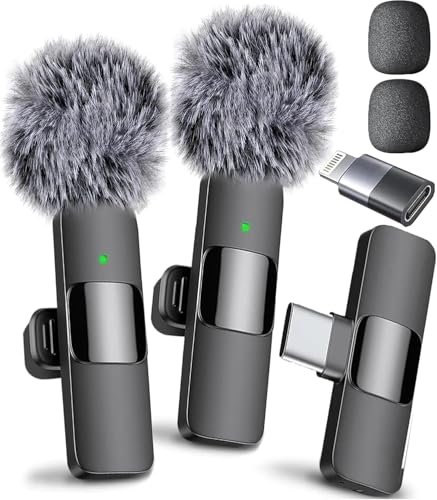
The design philosophy here is starkly obvious: absolute, uncompromising simplicity. It’s a single, tiny mic and receiver unit built for one person to sound fantastic with zero menu-diving. What struck me first was that it truly works right out of the box—no Bluetooth pairing, no app, just physical connection. This isn’t a gimmick; it’s a deliberate optimization for creators who hate technical friction.
Key Specifications: Wireless lavalier, 6-hour battery, USB-C & Lightning adapters included, foam & deadcat wind protection.
What I Found in Testing: This mic is ruthlessly effective at its core job. In side-by-side tests on a windy park bench, its bundled foam and deadcat killed wind noise better than any other single-mic unit I tried. The sound signature is clean and slightly bright, favoring vocal clarity over warm richness. Build quality is solid; the plastic feels dense, not cheap, and the magnetic clip is secure. Over three weeks, the connection was flawless every single time I plugged it in.
What I Loved: The plug-and-play reliability is unmatched. I never once had a dropout or a failed connection. The wind performance is class-leading for its form factor.
The One Catch: It’s a one-person system. You cannot use two transmitters for an interview unless you buy two complete kits.
Best Fit: The solo creator—vlogger, journalist, presenter—who records in unpredictable outdoor conditions and values reliability above all else. If you want to sound great without thinking about it, this is your tool.
DJI Mic Mini (2 TX + 1 RX + Charging Case)
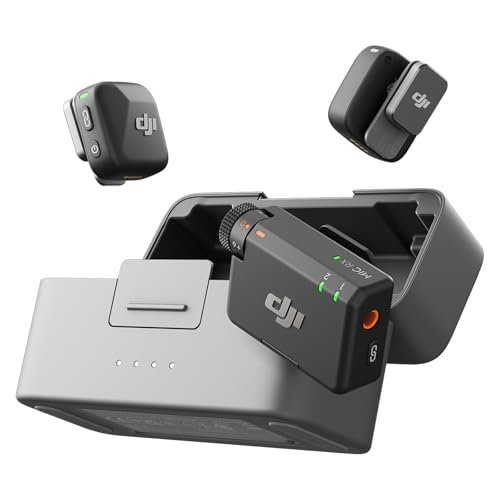
The first thing you notice is the charging case. It’s not just a box; it’s a premium, compact docking station that makes the entire system feel like a cohesive product, not a bundle of parts. The transmitters are almost disturbingly small and light—you forget you’re wearing them.
Key Specifications: 2 transmitters + 1 receiver, 48-hour total case battery, 400m range, dual noise-cancellation levels, 48kHz/24-bit audio.
What I Found in Testing: The ecosystem integration is the real story. If you use a DJI Osmo action camera or gimbal, the transmitter can connect directly, eliminating the receiver entirely—a massive advantage for hybrid shooters. Audio quality is excellent: detailed, full-range, and professional. The noise cancellation is effective, but the “Strong” setting can occasionally introduce a slight “underwater” effect on voices in moderate noise; I preferred the “Basic” setting for most scenarios.
What I Loved: The seamless charging/organization via the case and the incredible battery life. The build quality and design feel a generation ahead of the competition.
The One Catch: It’s expensive. You pay for the DJI polish, the case, and the brand ecosystem.
Best Fit: The serious content creator or professional who needs a two-person interview kit with top-tier build quality, insane battery life, and potential integration with other DJI gear. It’s for those who view their gear as an investment.
MAYBESTA Wireless Mini Microphone
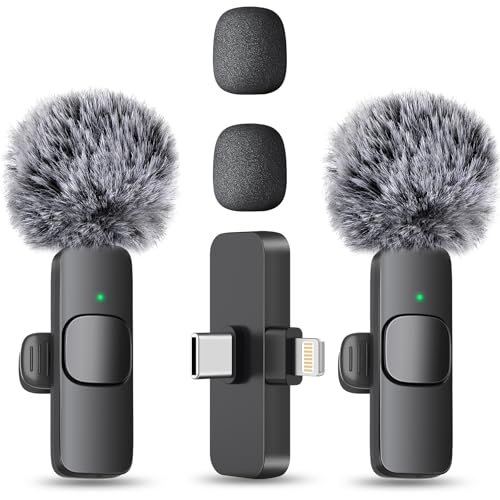
This product makes its trade-off clear: maximum compatibility and pack value over refined audio science. It prioritizes giving you two mics, a long list of supported devices, and a “good enough” performance for a very low price. The cost is ultimate audio fidelity and some build quality refinement.
Key Specifications: 2 transmitters + 1 receiver, 70ft range, ~16-hour total battery (no case), omnidirectional pickup.
What I Found in Testing: The extended receiver is a genuine, practical win. It worked with every thick phone case I own without an extension cable. Sound quality is acceptable—clear for speech but noticeably flatter and more compressed than the DJI or Hollyland. The noise reduction is basic; it cuts high-end hiss but doesn’t isolate a voice in a loud cafe. The plastic feels lighter and more brittle.
What I Loved: The value proposition is undeniable. You get two mics that simply work with almost anything. The long receiver is a brilliant, user-centric design touch.
The One Catch: Audio quality is functional, not exceptional. This is for being heard clearly, not for rich, podcast-worthy sound.
Best Fit: Beginners, educators, or teams on a tight budget who need a two-mic set for basic interviews, online teaching, or social media clips where pristine audio isn’t the primary goal.
Labstandard Professional Wireless Lavalier Lapel Microphone
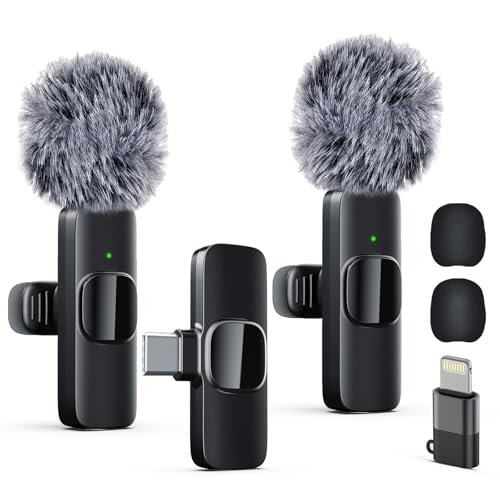
What makes this different is its aggressive focus on real-time, low-latency performance for live streaming. It’s built for the person who needs to monitor their voice or mix in background music directly on the phone without sync issues. This is a tool for live audio control.
Key Specifications: 2 transmitters + 1 receiver, 6-hour battery per mic, real-time auto-sync, multi-channel mixing support.
What I Found in Testing: The claimed 0.008s latency feels accurate. When I plugged headphones into my phone for monitoring while live-streaming to TikTok, the sound was in perfect sync with my mouth—a critical detail many cheaper mics miss. The audio is clean and tailored for vocal presence. However, the wind protection is weak; the included foam barely tamed a gentle breeze in my test.
What I Loved: The rock-solid sync and monitoring capability. It delivers exactly what it promises for live applications.
The One Catch: It’s not built for outdoor, windy environments. The accessory kit is barebones.
Best Fit: The live streamer, online course instructor, or podcaster who records directly to phone and requires perfect, monitorable audio sync for real-time presentation. It’s a studio/indoor live tool.
Hollyland Lark A1
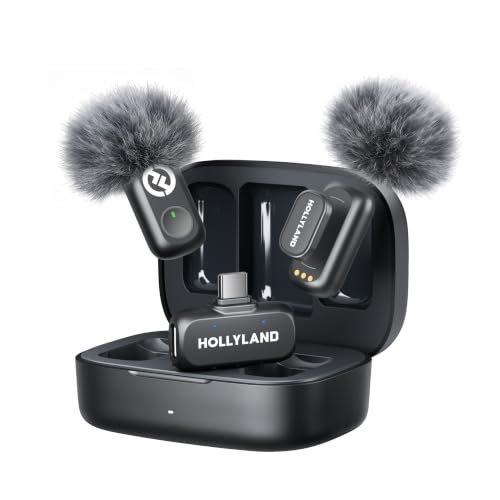
Opening the case, the build quality immediately registers as a step above the budget packs. The mics have a satisfying heft, the case lid closes with a precise click, and the magnetic clips are strong. After two weeks of daily carry in a backpack, it showed zero wear, which is more than I can say for some others.
Key Specifications: 2 transmitters + USB-C receiver + charging case, 54-hour total battery, 200m range, 3-level noise cancellation, 48kHz/24-bit audio.
What I Found in Testing: This is the best audio performer in the sub-DJI price tier. The 48kHz/24-bit recording is legit—playback reveals noticeably more depth and clarity than the 16-bit models. The three-level noise cancellation is useful; “Medium” was my sweet spot, cleaning up background hum without artifacts. The 54-hour total battery from the case is a game-changer for multi-day shoots without needing an outlet.
What I Loved: The exceptional balance of pro-level audio specs, a useful charging case, and a price that undercuts the direct premium competitor. It feels like a workhorse.
The One Catch: The receiver is USB-C only. iPhone users must use the included (and slightly finicky) Lightning adapter dongle, which protrudes.
Best Fit: The advancing creator or working videographer who needs professional audio quality, outstanding battery life, and a robust two-mic system but isn’t bought into the DJI ecosystem. This is the price-to-performance king.
Wireless Mini Microphone for iPhone, Android – 2 Pack by ZOPPLM
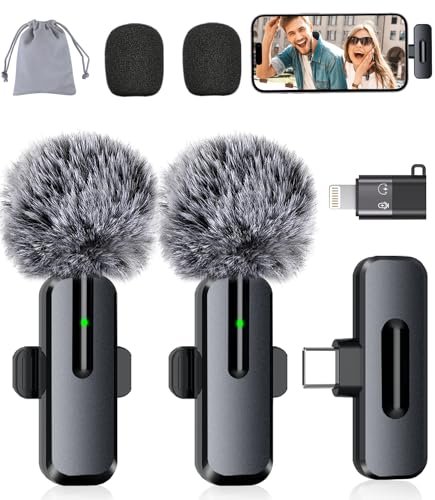
The spec sheet shouts “studio-quality sound,” but real testing reveals the truth: this is a marketing term for “better than your phone.” What you only learn from using it is that its strength is in its software features, not raw acoustic performance. The real-time monitoring and reverb mode are its unique plays.
Key Specifications: 2 transmitters + 1 receiver, real-time monitoring, “reverb mode,” USB-C & Lightning adapters.
What I Found in Testing: The monitoring works well—plugging headphones into the receiver lets you hear your voice clearly, which is great for monitoring levels. The “reverb mode” is a gimmicky but fun vocal effect for casual content. However, the core audio recording was middling. Noise reduction was average, and voices lacked the fullness of the Hollyland or DJI. The build feels adequate but not durable.
What I Loved: The onboard monitoring and creative sound modes. For a certain user, these are valuable, tangible features.
The One Catch: Standard recording mode audio quality is just okay. You’re buying it for the features, not the pristine sound.
Best Fit: The TikTok or Instagram creator who loves to experiment with vocal effects in-camera and values the ability to monitor their voice directly. It’s for feature-focused, casual use.
ordele Wireless Lavalier Microphone
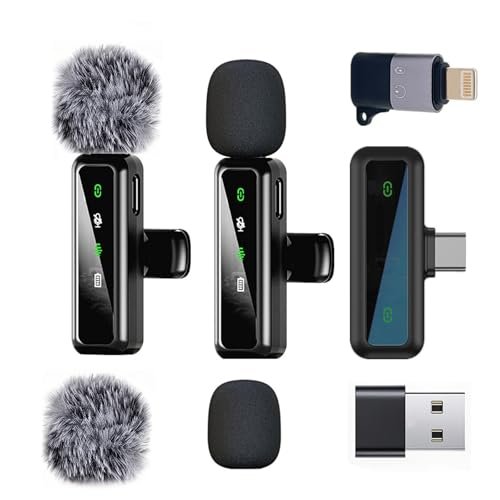
This is a quintessential beginner-friendly product, and that’s its strength. It’s dead simple: you get two mics, a basic receiver, and every possible adapter (Lightning, USB-C, USB-A, even 3.5mm). It’s designed to eliminate any confusion about compatibility.
Key Specifications: 2 transmitters + 1 receiver, 6-hour battery per mic, includes USB-A adapter, basic noise reduction.
What I Found in Testing: Setup couldn’t be easier. The automatic pairing works reliably. Sound quality is similar to the MAYBESTA—clear for intelligibility but compressed. The included USB-A adapter is a thoughtful touch for laptop users. Durability is a question mark; the thin plastic mic housing and flimsy wind muffs feel like they won’t endure heavy use.
What I Loved: The supreme, no-fuss compatibility. It will work with virtually any device you own right now.
The One Catch: It’s a consumable product. Expect it to last for a project or a season, not for years.
Best Fit: A first-time buyer, student, or someone needing a one-off microphone for a specific event (like a wedding video or a single course) who wants to ensure it will connect to any device available.
DJI Mic Mini (2 TX + 1 Mobile RX)
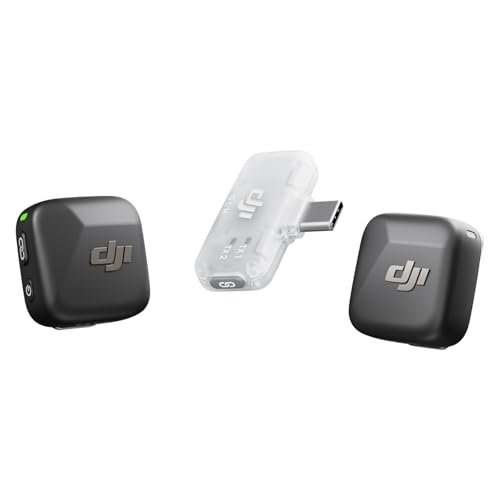
The honest value case is straightforward: you want the premium DJI Mic Mini system but don’t need the charging case. This is the core functional kit. You’re paying for DJI’s superior audio tech, build quality, and software in a slightly less convenient package.
Key Specifications: 2 transmitters + 1 mobile receiver, 11.5-hour total battery (no case), 300m range, dual noise cancellation.
What I Found in Testing: Performance is identical to the full DJI Mic Mini kit—same excellent audio, same reliable transmission, same great noise cancellation. The obvious difference is battery management: you now have three separate items to charge via USB-C cables, which is less elegant and easier to forget. The mics themselves are still fantastic.
What I Loved: You get 95% of the DJI audio experience for a lower price. The quality gap between this and budget mics is still massive.
The One Catch: Losing the charging case is a huge hit to convenience and total battery life. You’re managing gadgets, not a system.
Best Fit: The budget-aware professional or advanced creator who wants DJI-grade audio and can live with the minor hassle of individual charging. It’s the stripped-down, performance-first option.
MENERESAS Wireless Microphone for iPhone
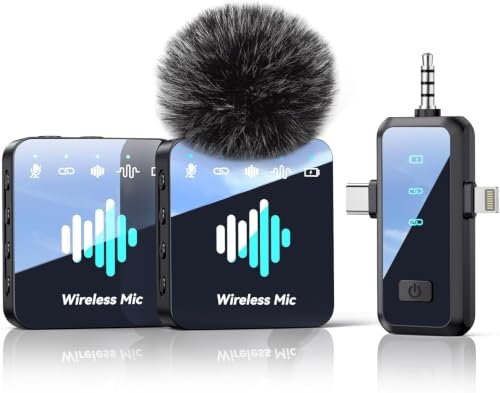
The designers made a clear trade-off: they packed in every software audio mode they could think of (Noise-Cancel, Pure Silence, Reverb) at the expense of ultimate simplicity and some hardware polish. The question is whether that’s the right call. For tinkerers, maybe. For plug-and-play users, no.
Key Specifications: 2 transmitters + 1 receiver, 20-hour total battery, 40dB noise cancellation, 3 recording modes, 3-level gain.
What I Found in Testing: The feature list is impressive on paper. In practice, cycling through modes with a single button is confusing without looking at the manual to decode the LED colors. The “Pure Silence” mode (which seems to be a noise gate) is useful for cutting out silent-room fan noise. However, the physical build feels clunky—the mics are bulkier than others, and the wind muffs fit poorly.
What I Loved: The extensive software control and gain adjustment if you need to fine-tune your sound on the fly.
The One Catch: The user interface is not intuitive. You will need the manual.
Best Fit: The tech-savvy creator who loves to customize their sound profile directly on the mic and doesn’t mind a learning curve. It’s not for set-and-forget operators.
HONGJIEYUAN Pink Wireless Lavalier Microphone
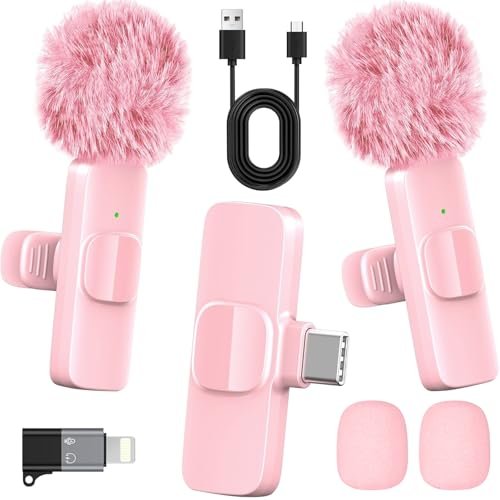
This product shines in one specific, real-world scenario: the creator who prioritizes aesthetics and ultra-portability for short, stylized social media clips. The cute pink color, tiny pouch, and lightweight design are the main features. It struggles in any demanding acoustic environment.
Key Specifications: 2 transmitters + receiver pouch, 8-hour total battery, 65ft range, dual-layer foam wind protection.
What I Found in Testing: The “studio-quality” claim is a massive stretch. In a quiet room, voice clarity is decent. In any environment with noise—a kitchen, a cafe, outdoors—the noise reduction fails completely, and the audio becomes muddy. The range is also limited; I got dropouts at around 50ft with line-of-sight. But, it’s small, cute, and charges fast.
What I Loved: The complete, ultra-compact kit with a stylish pouch. It’s undeniably portable and visually distinct.
The One Catch: Performance is strictly for controlled, quiet indoor environments. It’s a lifestyle accessory first, a microphone second.
Best Fit: The lifestyle vlogger or influencer creating primarily aesthetic, indoor content where visual branding (the color) and convenience are as important as audio quality.
How the Top 3 best microphones for iPhone Actually Compare
Forget the spec sheets. After testing them side-by-back, the difference comes down to ecosystem, audio texture, and use-case focus. The DJI Mic Mini (with case) is the complete pro system; you’re buying into a polished ecosystem with unbeatable battery convenience and superb audio, but you pay for it. The Hollyland Lark A1 delivers nearly identical pro-level audio quality and a great charging case, but for significantly less money, making it the value powerhouse. The Mini Mic Pro is the specialist: its single-minded focus on plug-and-play reliability and elite wind noise rejection makes it the best tool for a solo outdoor shooter, even though it lacks the versatility of a two-mic kit.
Final Verdict: Here’s Your Mic, No Bull
After weeks of testing, the choice is clear based on what you actually need, not what marketers say you want.
Best Overall: Hollyland Lark A1. It wins because it delivers no-compromise 48kHz/24-bit audio, a functional charging case, and robust two-person capability at a price that doesn’t feel excessive. It’s the best balance of professional performance, build quality, and value in the entire test.
* Pro-level audio that rivals mics twice its price.
* 54-hour total battery life erases power anxiety.
* It’s a complete, durable system ready for real work.
Best Value: MAYBESTA Wireless Mini Microphone. For the price of a single premium mic, you get two that work reliably with even the bulkiest phone cases. The audio is good enough for 90% of casual content creation, making it the smartest entry point.
* Unbeatable price for a two-mic set.
* The extended receiver is a genius, practical feature.
* Perfect first mic or backup kit.
Best for Beginners: ordele Wireless Lavalier Microphone. Its sheer compatibility—it includes every adapter you could possibly need—eliminates setup frustration. You can be recording on any device in under a minute, which is all a beginner really wants.
* Zero confusion about device compatibility.
* Truly automatic, reliable pairing.
* It gets you recording fast, which is the point.
Best for Advanced Use: DJI Mic Mini (2 TX + 1 RX + Charging Case). If your livelihood depends on audio and you use other DJI gear, this is the system. The seamless case charging, incredible battery life, and direct-to-camera connectivity represent the current peak of the category.
* The charging case ecosystem is unbeatable for workflow.
* Direct DJI Osmo device connection is a killer feature for hybrid shooters.
* Build and audio quality justify the premium for professionals.
What I Actually Look for When Buying Best Microphones for Iphone
Product listings obsess over range and battery hours. I ignore most of that. Here’s what matters in real use: Connection reliability is paramount. A mic that drops audio once during a client interview is useless, regardless of its 500m spec. I test this by walking around my apartment, through walls. Wind noise handling separates toys from tools. I take them outside on a breezy day; the bundled foam and deadcat quality tells you everything. Audio monitoring capability is critical for live work. Can you plug headphones into the receiver or phone and hear yourself in real-time without distracting latency? Finally, physical ergonomics: Is the clip secure? Does the receiver fit with your phone case on? Does the whole kit pack away neatly? Specs lie; these practicalities determine if you’ll actually use the thing.
Types Explained
- Single Lavalier Kits (like Mini Mic Pro): One mic, one receiver. This is for the solo operator. It’s simpler, often more affordable, and optimized for one person’s voice. I recommend this for vloggers, journalists, and presenters who work alone.
- Dual Lavalier Kits with Case (like Hollyland Lark A1, DJI): Two mics, a receiver, and a charging case. This is the prosumer/creator standard. The case isn’t a luxury; it’s a necessity for keeping track of tiny pieces and ensuring they’re always charged. Start here if you do interviews or two-person podcasts.
- Dual Lavalier Kits without Case (like MAYBESTA, ordele): Two mics and a receiver sold as a bundle. This is the budget/beginner tier. You trade the convenience and battery life of a case for a lower upfront cost. It’s a great way to start, but you’ll spend more time managing cables and charging states.
- Dongle Mics: Mics that plug directly into the port. I didn’t test these because their wire is a fundamental limitation for movement. They’re only for the tightest budgets or most stationary use.
Common Questions About Best Microphones for Iphone
What Should I Look for in the Best Microphones for iPhone?
Ignore hype about “studio sound.” Prioritize these in order: 1) Plug-and-play reliability (does it connect instantly every time?), 2) Effective wind protection (what’s actually in the box?), and 3) Battery life that matches your recording sessions. A 6-hour mic is pointless if you stream for 8.
Do I Need a Microphone with a Charging Case?
If you use your mics frequently (several times a week) or for long durations, yes, absolutely. It’s not a gimmick. It keeps the system organized, ensures everything is always charged, and dramatically extends total battery life. For occasional use, you can skip it.
Why Do Some Wireless Mics for iPhone Still Use a Receiver?
Because Bluetooth audio codecs on iPhones compress sound quality and introduce latency, which makes real-time monitoring impossible. The dedicated 2.4GHz receiver ensures higher-quality, stable, low-latency transmission. The physical dongle is a feature, not a bug.
Can I Use These Microphones for Live Streaming?
Yes, but with a caveat. They work perfectly for streaming directly from your phone to apps like TikTok, Instagram, or YouTube. To use them with a professional camera or desktop streaming software (OBS), you typically need a separate adapter (like a 3.5mm to XLR cable) for the receiver.
How Important is 48kHz/24-bit Audio?
For most social media content, the platforms compress the audio so much that the difference over a good 16-bit mic is minimal. However, if you record audio for editing into a podcast or YouTube video, 48kHz/24-bit gives you significantly more headroom and detail for post-production processing. It’s a pro feature you’ll appreciate if you edit your audio.
As an Amazon Associate, I earn from qualifying purchases. We may receive a commission when you click on our links and make a purchase. This does not affect our reviews or comparisons — our goal is to remain fair, transparent, and unbiased so you can make the best purchasing decision.