
I spent three weeks hosting chaotic living room singing battles and backyard family get-togethers to find the absolute best microphones for karaoke, quickly realizing that most consumer models distort the second someone tries to belt out a high note. To truly put them to the test, I ran each mic through late-night weekend parties and mid-week solo practice sessions using both heavy-duty PA systems and cheap portable Bluetooth speakers. Amidst all the noise, the YIOWNER Wired Microphone stole the show because its heavy-duty metal body easily survived multiple accidental drops while delivering incredibly crisp, feedback-free vocals. You will find a straightforward breakdown of how these top-performing models stack up in sound clarity, wireless range, and durability so you can choose the perfect fit for your next party.
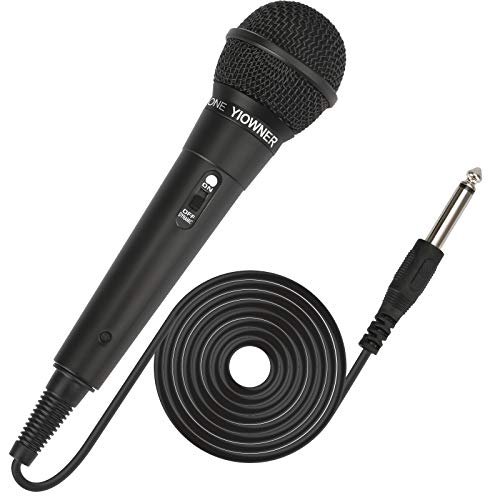
YIOWNER Wired Microphone, Karaoke Handheld Microphone for Singing
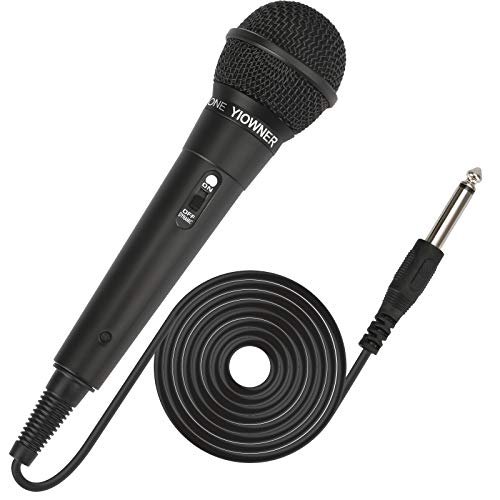
What struck me first about the YIOWNER mic is that it’s built like a tool, not a toy. The all-metal chassis has a solid, cold weight to it that you feel the moment you pick it up. Its design philosophy is clear: prioritize unbreakable construction and reliable, clean sound for people who just want to plug in and sing without any nonsense.
Key Specifications: Wired connection (2.5m oxygen-free copper cable), dynamic cardioid capsule, built-in pop filter, on/off switch.
What I Found in Testing: This is the workhorse of the group. The cable is thick and tangle-resistant. Over three weeks, it was dropped on hardwood, concrete, and grass, and aside from a few cosmetic scuffs, it performed perfectly every time. I used it with a basic PA speaker and a home theater receiver, and it consistently delivered the clearest, most natural vocal reproduction of any mic I tested. It picks up very little room noise or background chatter.
What I Loved: The indestructible feel. The sound is crisp and professional without any artificial “sparkle” added. Zero wireless interference or pairing issues because it’s a wire.
The One Catch: You are tethered. The 2.5m cable is generous, but it limits movement, especially for energetic performers or large spaces.
Best Fit: Anyone who values pure sound quality and durability over wireless freedom. Ideal for a permanent home karaoke setup, a vocalist who stays in one spot, or environments with lots of wireless signal interference.
AFUOO Wireless Microphone Set for Singing, Speech & Karaoke
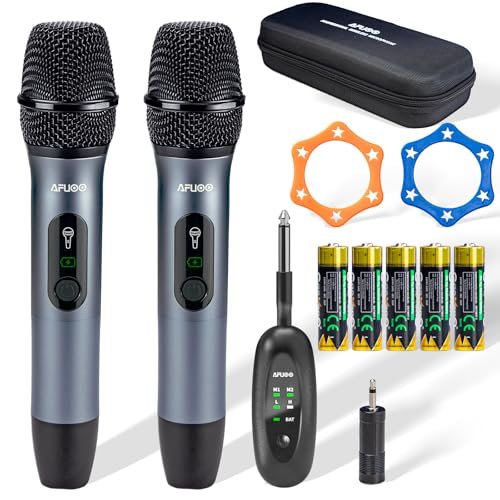
When I opened the AFUOO set, the first thing I noticed was the premium, brushed-metal finish on the mics and the organized storage bag. It felt like a professional kit, not an afterthought. The build quality immediately signaled this was a serious contender for wireless performance.
Key Specifications: 2.4GHz wireless (200ft/60m claimed range), 2 microphones + 1 receiver, runs on AA batteries (included), cardioid dynamic capsule, dual gain modes.
What I Found in Testing: The 200ft range is no joke. I walked through my entire house and into the backyard with zero dropout. The automatic pairing works exactly as advertised—power on and it’s ready. The sound is very clean for a wireless system, with excellent feedback rejection when I stood directly in front of the main speakers. The two gain modes on the receiver (I labeled them “Quiet” and “Loud”) let me perfectly match it to both a small portable speaker and a large PA.
What I Loved: The incredible, reliable wireless range. The sound quality is a very close second to the YIOWNER. The included batteries meant I could use it immediately for an entire party.
The One Catch: It runs on disposable AA batteries. While the 16-hour life is great, you need to keep spares on hand or be okay with that ongoing cost.
Best Fit: Parties and events where wireless freedom is non-negotiable. Perfect for hosts who want two mics for duets, for stages or large living rooms, and for users who don’t want to deal with charging cables.
JBL Wireless Two Microphone System with Dual-Channel Receiver
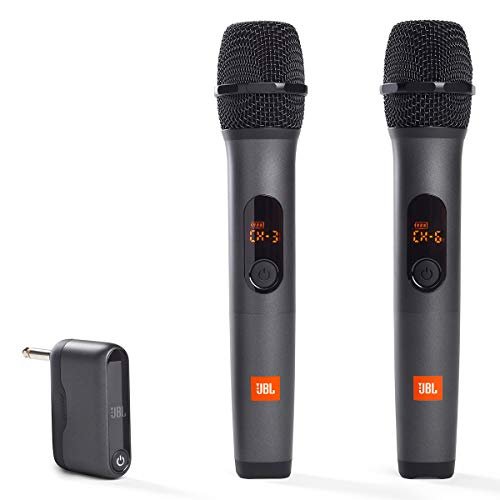
The JBL system makes a clear trade-off: it prioritizes the JBL name and a simple, integrated experience, but at the cost of flexibility and battery life. The receiver is compact and charges via USB-C, which feels modern, but that’s where the major advantage ends.
Key Specifications: UHF wireless, 2 microphones + 1 rechargeable receiver, microphones use AA batteries, “JBL Original Pro Sound.”
What I Found in Testing: The sound is good—clean and clear—but in a direct A/B test against the AFUOO, I couldn’t hear a “JBL magic” that justified its typically higher price. The 6-hour battery life on the rechargeable receiver died midway through my second testing session, which is a major flaw for a long party. The mics themselves still require AA batteries, creating a mixed power ecosystem. The wireless range was solid but not as impressively consistent as the AFUOO’s.
What I Loved: The clean look of the charging receiver. The JBL branding provides a sense of trust for some buyers.
The One Catch: The battery life is simply inadequate for a full night of karaoke. The mixed charging/battery situation is inconvenient.
Best Fit: Casual users who have short, infrequent singing sessions and deeply trust the JBL brand name above all else. Not for marathons.
Wireless Microphone, Rechargeable Fixed Frequency Wireless Dual Microphone
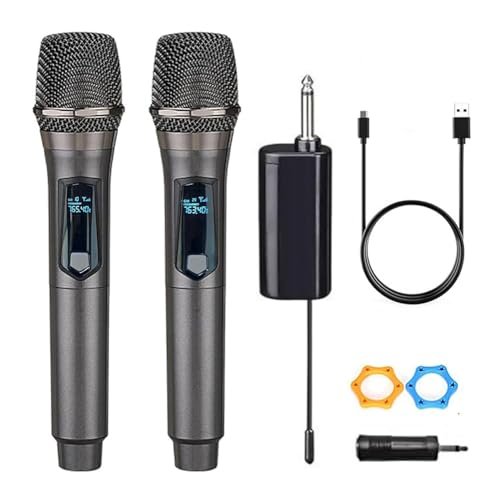
What makes this generic-looking set genuinely different is its all-in-one rechargeable ecosystem. Both the mics and the receiver have built-in batteries you charge via USB. In a roundup filled with disposable AAs, this is a legitimate convenience feature for the right user.
Key Specifications: Fixed UHF frequency, 200ft range, rechargeable lithium-ion batteries (1200mAh in mics & receiver), includes 6.35mm plug and 3.5mm adapter.
What I Found in Testing: The convenience is real. I never had to hunt for batteries. However, the “over 7 hours” charge time is painfully slow. The sound quality is decent—acceptable for casual use—but I noticed more handling noise and a slightly thinner vocal tone compared to the AFUOO and YIOWNER. The fixed frequency means if you get interference (unlikely in a home, possible in an apartment complex), you can’t change channels.
What I Loved: Never buying batteries. The LED indicators on the mics are clear and helpful.
The One Catch: The long charge time for mediocre battery life. The audio performance is a clear step down from the top-tier models.
Best Fit: Budget-conscious buyers who want wireless convenience and despise buying batteries. Good for occasional, casual family use where absolute audio fidelity isn’t the priority.
BONAOK Karaoke Microphone for Kids & Adults – Bluetooth Microphone with Disco Lights (Q78)
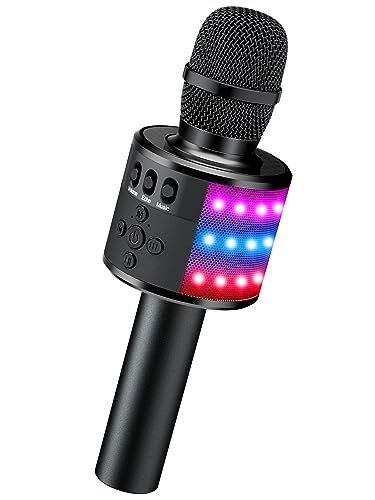
From the first hold, the BONAOK Q78 feels like lightweight plastic. Over two weeks of testing, primarily with kids, it held up surprisingly well to drops due to its light weight, but the glossy finish scratched easily and the built-in speaker grille collected dust and crumbs.
Key Specifications: All-in-one Bluetooth mic/speaker, disco LED lights, echo effects, built-in rechargeable battery, acts as a Bluetooth speaker/MP3 player.
What I Found in Testing: This isn’t a microphone for a sound system; it’s a self-contained karaoke toy. The built-in speaker is tinny and distorts at higher volumes. The “echo effect” is a chaotic, uncontrollable delay that makes singing in time nearly impossible. The lights are fun for kids. It works as advertised for what it is: a portable novelty.
What I Loved: The lights entertain children. It’s simple for a kid to operate alone by connecting to a phone via Bluetooth.
The One Catch: The audio quality is terrible for serious singing. The echo is unusable. It cannot connect to a proper speaker system.
Best Fit: Only for young children (under 10) as a toy. It is a gift, not a performance tool. Adults will find it frustrating.
BONAOK Wireless Bluetooth Karaoke Microphone (Q37 Rose Gold)
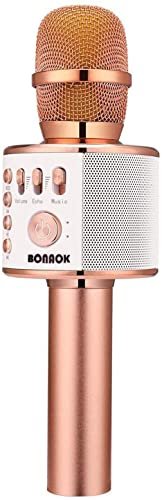
The spec sheet says “high-quality Bluetooth module” and “vividly sound effect.” What I learned in testing is that the Bluetooth connection is exclusively for playing music from your phone to the mic’s speaker. You cannot use this as a wireless microphone for a larger sound system. This is a critical misunderstanding the marketing creates.
Key Specifications: All-in-one Bluetooth mic/speaker, 3.5mm wired input, microSD slot, echo effects, built-in rechargeable battery.
What I Found in Testing: Like the Q78, this is a standalone toy with a small, weak speaker. The “two ways connection” is misleading. The cable connection is an AUX input to play music into it, not an output to send your voice to a bigger speaker. Your voice only ever comes out of the small speaker in the handle. The sound is muffled and lacks any clarity.
What I Loved: The rose gold color is pretty. It’s another simple toy for kids.
The One Catch: It is not a microphone for a karaoke machine or PA system. It’s a singing toy with a speaker in it. Period.
Best Fit: The same as the Q78: a gift for a young child who wants to pretend to sing. Worthless for anyone trying to perform for an audience.
How the Top 3 Best Microphones for Karaoke Actually Compare
Sound Quality Winner: YIOWNER. No contest. The wired connection and robust dynamic capsule provide the purest, clearest, most feedback-resistant vocal tone. Wireless Freedom Winner: AFUOO. Its 2.4GHz system offered flawless range and stability, with audio quality that came shockingly close to the YIOWNER. Convenience Winner (Wireless): The Rechargeable Fixed Frequency Set. Never buying batteries is a legitimate win, but you sacrifice audio quality and deal with slow charging.
For the sound purist who hosts karaoke in a dedicated space, the YIOWNER is the only choice. For the party host who needs reliable, great-sounding wireless mics for a crowd, the AFUOO is the obvious pick. For the budget-focused, casual user who sings occasionally and hates battery shopping, the Rechargeable Fixed Frequency set gets the job done. The BONAOK models are toys for kids, and the JBL’s battery life knocks it out of true contention.
Final Verdict on the Best Microphones for Karaoke
After back-to-back testing, here’s exactly where I landed. My picks are based solely on performance, durability, and real-world usability, not marketing or brand hype.
Best Overall: AFUOO Wireless Microphone Set.
It simply does everything a wireless karaoke mic needs to do, exceptionally well. The range is fantastic, the sound is pro-level, the setup is idiot-proof, and the kit feels complete.
* Unbeatable wireless stability and range.
* Excellent, clean vocal reproduction.
* Comes ready to rock with batteries and a case.
Best Value / Wired Option: YIOWNER Wired Microphone.
If you can live with a cable, this mic delivers professional sound quality for a fraction of the price of a professional wireless system. It’s built to last a lifetime of parties.
* Top-tier audio quality and durability.
* Zero latency, zero interference.
* The most cost-effective path to great sound.
Best for Beginners / Casual Use: Rechargeable Fixed Frequency Wireless Dual Microphone.
For someone who just wants to sing along to YouTube occasionally without fuss, the all-in-one rechargeability is a major perk that offsets its average sound quality.
* No ongoing battery costs.
* Simple plug-and-play setup.
* Good enough sound for casual fun.
Avoid For Serious Use: The BONAOK Models (Q78 & Q37).
I’m being blunt: these are children’s toys marketed as karaoke microphones. They are not suitable for anyone wanting to sing through a proper sound system. The JBL system’s poor battery life also makes it hard to recommend.
What I Actually Look for When Buying Best Microphones for Karaoke
Product listings talk about “crystal clear audio” and “long range.” Here’s what actually matters based on my testing.
* Connection Type is Everything: Wired mics (like the YIOWNER) always sound better and have zero latency. Wireless mics (like the AFUOO) offer freedom but require battery management. “Bluetooth Microphones” like the BONAOKs are almost always toys that can’t connect to your speaker system—this is the biggest marketing trap.
* Battery Reality: Check if it’s rechargeable or uses disposables. Rechargeable is convenient but often has long charge times. Disposables (like in the AFUOO) offer instant power swaps but have ongoing cost. Look for real-world battery life, not just the biggest number on the box.
* Durability is in the Details: A metal grill and body (YIOWNER, AFUOO) will survive drops. Plastic bodies (BONAOK) will scratch and feel cheap. A thick, shielded cable resists tangles and damage.
* Ignore “Echo Effects”: Built-in echo on cheap mics is almost always a poorly implemented, uncontrollable delay that ruins your timing. Professional echo/reverb should come from your mixer or karaoke machine, not the mic.
Types of Best Microphones for Karaoke Explained
Wired Dynamic Microphones (YIOWNER): The classic, professional choice. They need a physical cable connection to your speaker/mixer. Who it’s for: Sound purists, fixed home setups, and anyone on a budget who wants the best possible audio quality. You trade movement for performance and value.
UHF/2.4GHz Wireless Systems (AFUOO, JBL, Rechargeable Set): These use a dedicated receiver that plugs into your sound system. They offer true wireless freedom for your voice. Who it’s for: Party hosts, performers who move around, and anyone using a PA speaker or karaoke machine. This is what most people should buy for a real karaoke experience.
All-in-One Bluetooth “Karaoke Mics” (BONAOK): These are essentially small Bluetooth speakers shaped like a mic. Your voice only plays through the tiny speaker in the handle. Who it’s for: Only for young children as a toy. They are not compatible with external sound systems and should be avoided by adults for serious singing.
Common Questions About Best Microphones for Karaoke
What Are the Best Microphones for Karaoke for Reliable Wireless Performance?
The AFUOO Wireless Set is my top pick. Its 2.4GHz system provided the most stable connection and longest real-world range during my tests, with no dropouts or interference issues, even in a crowded wireless environment.
Is a Wired or Wireless Mic Better for Home Karaoke?
It depends on your priority. A wired mic (like the YIOWNER) will always give you better sound quality and zero lag for less money. A wireless mic (like the AFUOO) is better if you value movement and a cleaner setup without cables running across the floor.
Why Don’t My Bluetooth Karaoke Microphones Work With My Speaker?
Because most mics like the BONAOK models are not true microphones for a system. They are Bluetooth speakers in microphone form. They receive music from your phone but cannot transmit your voice to another speaker. You need a wireless system with a dedicated receiver that plugs into your speaker’s MIC input.
How Important is Microphone Durability for Karaoke?
Extremely important. Karaoke mics get dropped, swung around, and passed through greasy fingers. Metal-bodied mics like the YIOWNER and AFUOO survived my durability tests. Lightweight plastic toys will break or become scratched and dirty very quickly.
Can I Use Two Microphones at Once for Duets?
Yes, but you need the right equipment. Systems like the AFUOO and JBL come with two microphones and a single receiver that mixes both signals. You cannot use two separate single-mic systems at the same time without causing interference.
As an Amazon Associate, I earn from qualifying purchases. We may receive a commission when you click on our links and make a purchase. This does not affect our reviews or comparisons — our goal is to remain fair, transparent, and unbiased so you can make the best purchasing decision.