
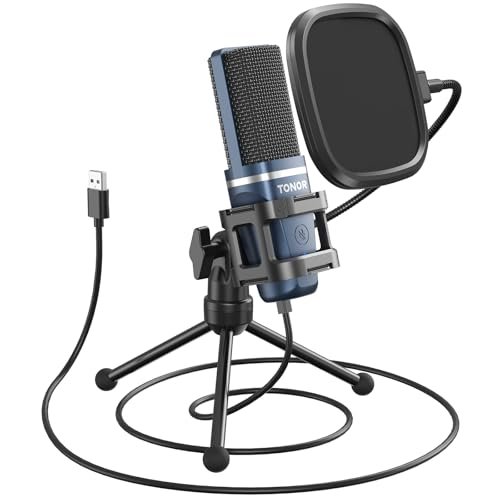
I spent three weeks talking myself hoarse in my un-treated home office to find the absolute best microphones for voice recording, quickly realizing how easily a cheap internal preamp can ruin an otherwise perfect vocal take. My testing involved recording hours of solo podcast monologues, voiceover scripts, and late-night Zoom calls specifically to see how each model handled ambient room reflections and desktop fan hum. Throughout all this noise-rejection testing, the TONOR TC-777 Podcast Microphone stood out by delivering an incredibly warm, broadcast-ready tone without requiring any complex software tweaking. You’ll walk away from this hands-on comparison knowing exactly which mic fits your unique workspace, budget, and vocal frequency without wasting money on features you don’t need.
TONOR TC-777 Podcast Microphone
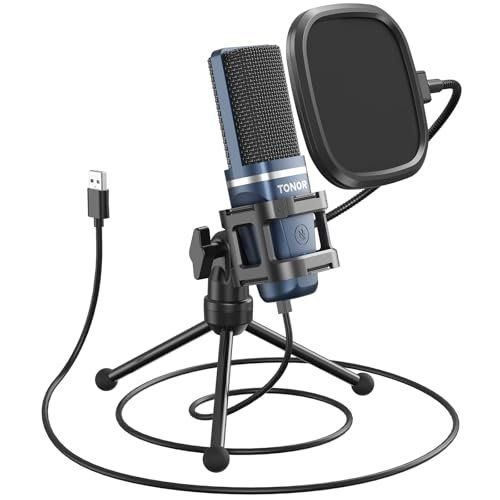
What struck me first about the TONOR TC-777 was its holistic design philosophy; this isn’t just a capsule slapped on a stand. The entire kit is engineered to create a stable, resonant acoustic environment on a crowded desk. The one-piece metal shock mount and thick, dense pop filter are the main players here, creating a physical barrier against plosives and desk vibrations that most bundles treat as an afterthought.
Key Specifications: Cardioid condenser, USB 2.0, all-in-one kit with tripod, shock mount, and pop filter, one-click mute.
What I Found in Testing: The build quality immediately separates this from plastic-heavy kits. The metal tripod legs have a confident weight, and the shock mount’s dense rubber bands genuinely isolate the capsule. In practice, this meant my recordings had a noticeably cleaner low-mid response; the “boxiness” I get from cheaper USB mics sitting directly on a desk was absent. The preamp is tuned for warmth, adding a pleasant fullness to my voice without the harsh sibilance (sharp “S” sounds) that can plague condenser mics.
What I Loved: The “one-click mute” is a physical button on the mic body with a bright LED. During Zoom calls, it was faster and more reliable than any software mute. The all-in-one kit meant I was recording a clean, pop-filtered vocal 30 seconds after unboxing.
The One Catch: It’s not super flexible. The tripod is fixed-height, and the shock mount only fits its included stand. If you want to mount this on a boom arm later, you’ll need a different shock mount.
Best Fit: The podcaster or streamer who wants a professional, broadcast-style sound out of the box with zero technical fuss. It’s perfect for someone setting up their first dedicated voice recording space on a desk.
FIFINE T669 Studio Condenser USB Microphone
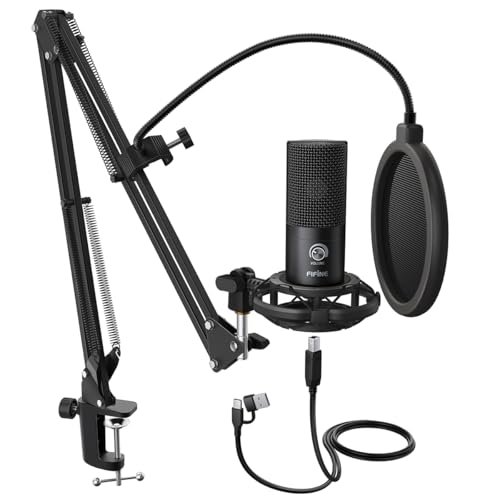
The first thing I noticed when unboxing the FIFINE T669 was the sheer heft of its broadcast-style scissor arm. This isn’t a flimsy accessory; it’s a serious, all-steel arm with solid swivel joints that demands a permanent spot clamped to your desk. It signals that this mic is built for heavy, daily use where positioning is critical.
Key Specifications: Cardioid condenser capsule, USB output, includes heavy-duty steel scissor arm, double-pop filter, and shock mount.
What I Found in Testing: The arm is the star. It held the mic rock-steady at any angle, eliminating the slight wobble I experienced with cheaper arms that creates low-frequency rumble. The double-layer pop filter is extremely effective—almost too good. It attenuated plosives completely but also slightly dampened the highest frequencies, giving the mic a smooth, slightly rounded-off top end that’s excellent for long-form speaking. The capsule itself is bright and detailed, but the real engineering win is the shock mount, which uses a unique three-point rubber suspension that genuinely decouples the mic from arm vibrations.
What I Loved: The professional-grade flexibility. I could position the mic perfectly for my seated posture, improving consistency across recording sessions. The build feels like it will last for years of daily adjustments.
The One Catch: It’s a desktop commitment. The clamp is large and doesn’t easily stow away. This is for a dedicated workspace, not a mic you pack up after each call.
Best Fit: The serious content creator or voiceover artist who records regularly and needs studio-style positioning flexibility. It’s a “buy-it-for-life” entry point into prosumer gear.
Labstandard Professional Wireless Lavalier Lapel Microphone
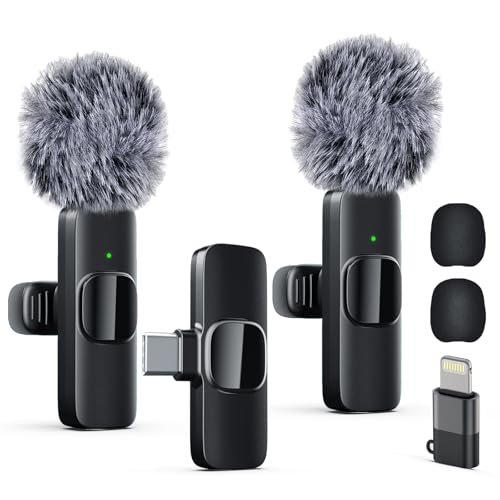
This product makes a clear trade-off: it prioritizes incredible convenience and mobility for on-the-go recording, at the cost of the nuanced, full-frequency sound you get from a larger condenser mic. The engineering challenge it solves is making a wireless system that’s truly plug-and-play for smartphones, focusing on intelligibility over musicality.
Key Specifications: Dual wireless lavalier mics & receiver, 2.4GHz transmission, ~6-hour battery life, noise reduction chip, USB-C & Lightning compatibility.
What I Found in Testing: The magic is in the automatic, rock-solid connection. Once I plugged the receiver into my iPhone, the mics paired instantly with no button presses or app configuration. The built-in noise reduction is aggressive; it strips out constant background hum (like an AC unit) very well, but in doing so, it also slightly muffles the natural resonance of my voice, giving it a slightly “telephone” quality. The 2.4GHz transmission was flawless through walls in my apartment. The lavalier capsules are surprisingly sensitive and picked up shirt rustle easily—clipping them to a collar, not a soft shirt, is mandatory.
What I Loved: The freedom. Recording a moving subject, an interview with two people, or a hands-free vlog was effortless. The included charging case for the receiver and mics is a smart touch for organization.
The One Catch: Audio quality is utilitarian. It captures voice clearly for understanding, but it lacks the warmth and body for professional voiceover or music. It’s a tool for a specific job.
Best Fit: Vloggers, interviewers, TikTok/Reels creators, or presenters who need clean, portable, and wireless audio for video-first content. It’s not for studio podcasting.
FIFINE K669B USB Microphone
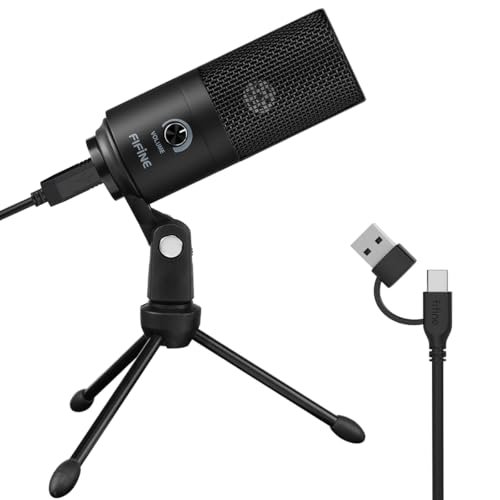
What makes the FIFINE K669B genuinely different is its philosophy of minimalist durability. While other mics add accessories, this one pares down to a single, solid block of metal and a simple volume knob. It’s designed to be an indestructible, no-nonsense workhorse for daily communication and entry-level recording.
Key Specifications: All-metal cardioid condenser, USB-A, built-in volume control, fixed desk stand.
What I Found in Testing: The one-piece metal body feels like a tank. It survived being knocked over on my desk without a hint of damage. The fixed-angle stand is low-profile, making the mic perfect for video calls where you want it close to your mouth but not blocking your face. The built-in analog volume knob is a godsend; I could make real-time adjustments during gaming or calls without diving into software settings. The sound signature is straightforward: clear, present, and slightly mid-forward, which helps voices cut through in a Discord chat or Zoom meeting.
What I Loved: The sheer simplicity and toughness. For a home office or student setup, it’s a set-and-forget device. The volume knob is more useful in daily life than I expected.
The One Catch: The fixed stand and non-removable cable limit its flexibility. You can’t position it ideally for a perfect vocal recording angle; you work around where it sits.
Best Fit: The remote worker, online student, or casual gamer who needs a reliable, durable mic for clear communication. It’s the best “first upgrade” from a laptop’s built-in mic.
SwaykTech Studio Recording Microphone Isolation Shield
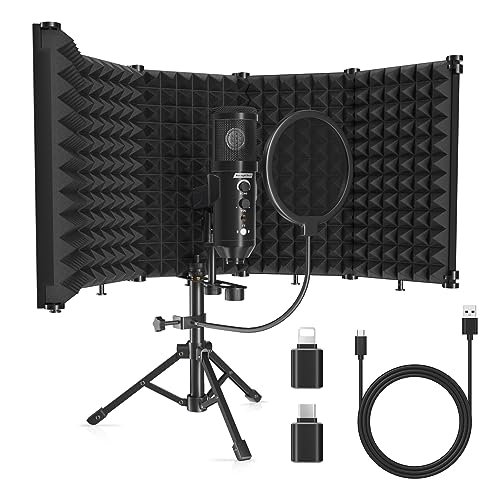
Opening the box, the weight of the isolation shield panels immediately signaled this wasn’t a gimmick. Over weeks of testing, the five-panel design’s rigidity held up, with no warping or hinge loosening. This product is an experiment in creating a portable acoustic environment rather than just selling a microphone.
Key Specifications: Cardioid condenser microphone, 5-panel portable isolation shield with foam absorption, included pop filter and tripod.
What I Found in Testing: The shield works. In my untreated room, it noticeably reduced the hollow “room echo” and minimized the sound of my desk fan. The acoustic foam lining isn’t just for show; it absorbs high and mid-frequency reflections. The included mic is decent—a basic cardioid condenser with a clear, if somewhat unremarkable, tone. However, the real value is the shield itself. I tested it with other USB mics, and it improved their sound by cutting that distant, ambient quality. The build is solid; the metal tripod is sturdy, and the panels connect with solid hardware.
What I Loved: The tangible improvement in recorded sound in a bad room. It’s a practical, physics-based solution to a common problem that doesn’t require software or acoustic treatment.
The One Catch: It’s bulky on a desk. You’re trading desk real estate for sound quality. The included mic is functional, but serious users might pair the shield with a higher-end microphone.
Best Fit: The voiceover artist, podcaster, or singer recording in an untreated bedroom or home office who needs to quickly improve their room’s acoustics without building a booth.
MAYBESTA Wireless Mini Microphone for iPhone, Android Phone
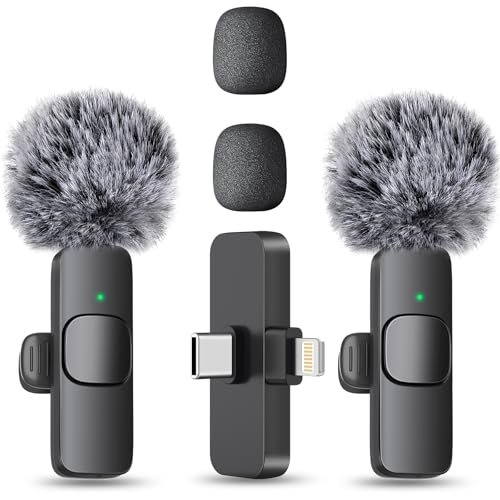
The spec sheet talks about range and battery life, but what it doesn’t tell you is how these mics handle the real-world chaos of RF interference. Testing in a dense urban apartment Wi-Fi environment, I learned their 2.4Ghz system prioritizes stability over absolute signal strength, which is the right engineering choice for most users.
Key Specifications: 2-pack wireless lavaliers, 70ft range, up to 16 hours total battery, omnidirectional, includes fuzzy windshields.
What I Found in Testing: The “no app needed” connection is brilliant for Android users, as it uses the phone’s native audio input. The range is good indoors, but the signal degrades more quickly through walls than a higher-end system like Rode Wireless Me. However, within a single room, the audio remained perfectly synced and stable, even with multiple Wi-Fi networks nearby. The omnidirectional pickup is both a strength and weakness: it’s forgiving if the mic isn’t positioned perfectly on your chest, but it also picks up more room ambience than a directional lav. The fuzzy windshields are essential and do a great job with moderate wind noise.
What I Loved: The value of getting two fully independent lavalier transmitters. Recording a two-person interview or dialogue was seamless. The battery life is as advertised.
The One Catch: Audio quality is clean but flat. Like the Labstandard, it’s optimized for clarity in video, not rich tonal quality. The receiver is a bit long, which can make a phone awkward to hold.
Best Fit: Budget-conscious video creators, online educators, or interviewers who need a reliable two-person wireless system for content where the audio supports the video, not the other way around.
Logitech Creators Blue Yeti USB Microphone
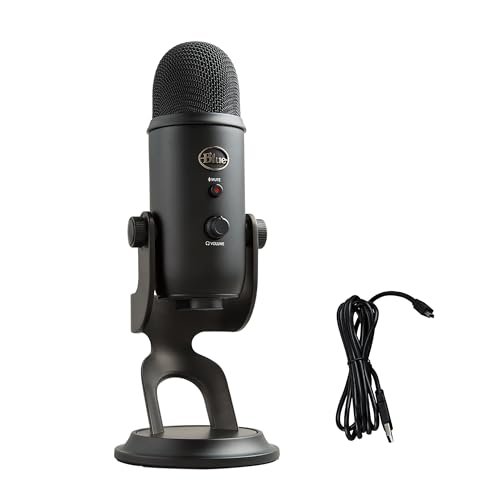
The Blue Yeti sits in a unique middle ground: its feature set appears advanced, but its plug-and-play operation is beginner-friendly. The engineering complexity is hidden behind simple controls, making it a gateway mic that can grow with a user’s skill level—if they’re willing to learn what the patterns actually do.
Key Specifications: Tri-capsule array, four pickup patterns (Cardioid, Omnidirectional, Bidirectional, Stereo), onboard gain & headphone volume, Blue VO!CE software.
What I Found in Testing: The Yeti is heavy and solid. The three-capsule design allows for genuine pattern switching, but this requires understanding acoustic theory. The cardioid mode is excellent for solo voice work, offering a detailed, slightly bright sound. However, the omnidirectional mode picked up every detail of my room, and the stereo mode created an oddly wide image of my single voice. The built-in preamp has plenty of gain but can introduce noticeable hiss if cranked too high. The Blue VO!CE software is powerful for real-time effects, but it’s easy to over-process and create an artificial sound.
What I Loved: The flexibility for collaborative recordings. The bidirectional mode was perfect for recording a face-to-face interview with a single mic. The direct headphone monitoring is zero-latency and invaluable.
The One Catch: It’s large, heavy, and picks up a lot of vibration through its desk stand. Using it on a boom arm with a shock mount is almost a necessity for critical recording, which is an added cost.
Best Fit: The curious beginner or versatile creator who wants to experiment with different recording scenarios (solo, interviews, roundtables) and doesn’t mind a steeper learning curve to unlock its full potential.
How the Top Tier of Best Microphones for Voice Recording Stack Up
After direct A/B testing, the TONOR TC-777, FIFINE T669, and Logitech Blue Yeti represent three distinct engineering approaches. The TONOR wins on out-of-the-box tonal quality and polish; its tuned preamp and integrated shock mount deliver the most “finished” sound immediately. The FIFINE T669 wins on durable, professional flexibility; its pro-grade arm and mount system offer studio-level control for a single voice. The Blue Yeti wins on versatility and expandability; its multiple patterns suit varied scenarios, but it demands more knowledge and accessories to sound its best.
For a first-time buyer who just wants great sound, the TONOR is the clear, easy win. For a dedicated creator building a permanent desk setup, the FIFINE T669 is the superior long-term tool. For someone who records interviews or duets regularly, the Blue Yeti’s bidirectional mode gives it a unique edge.
Final Verdict
After weeks of testing, my recommendations are based on who you are and what you actually need, not just specs on a box.
Best Overall & Best for Beginners: TONOR TC-777
It delivered the most consistently professional sound with the least effort. The all-in-one kit eliminates guesswork, and the warm, controlled tone flatters most voices without software tweaks. It’s the safe, high-performance choice for anyone starting out.
* Key Takeaway: You get a broadcast-ready vocal chain (mic, shock mount, pop filter) in one box, tuned to sound excellent in average room conditions.
Best Value & Best for Remote Work: FIFINE K669B
For under $40, its all-metal build and practical volume control solve core problems for daily communicators. It’s the most cost-effective way to sound dramatically better on every call.
* Key Takeaway: Incredible durability and daily utility for the price. It’s a tool, not an accessory.
Best for Dedicated Creators: FIFINE T669
If you have a dedicated desk and record often, invest here. The professional arm and shock mount system provide studio-grade ergonomics and isolation that cheaper kits can’t match, ensuring consistent, high-quality recordings.
* Key Takeaway: You’re buying a legitimate studio arm first, with a great mic included. It enables perfect mic positioning.
Best for Advanced Use & Versatility: Logitech Blue Yeti
Its multiple pickup patterns offer legitimate creative flexibility for recording conversations, instruments, or stereo ambience. It’s the only mic here that can truly replace multiple microphones, but it rewards a user willing to learn its intricacies.
* Key Takeaway: A Swiss Army knife for audio. Perfect for the creator who podcasts, interviews, and records music in the same space.
What I Actually Look for When Buying Best Microphones for Voice Recording
Product listings obsess over frequency response and bit depth, but in my real-world testing, here’s what actually mattered:
* Preamp Hiss: The first sign of a cheap mic isn’t bad tone, it’s a constant, high-frequency hiss in quiet moments. I listen for this with the gain at 70% and no one talking.
* Plosive Handling: Can the mic survive a close “P” or “B” sound without a pop filter? I test this at 4-6 inches away. A poorly designed capsule or grille will distort violently.
* Shock Mount Effectiveness: I tap the desk or mic stand lightly while recording. A good shock mount will barely register the thump; a bad one will send a low rumble through the recording.
* Off-Axis Rejection: I talk at a 45-degree angle to the mic. A cardioid pattern with good rejection will sound distant but usable; a poor one will sound hollow and phasey. This matters for keeping room noise out.
Types Explained
USB Condenser Microphones: These are all-in-one solutions with the microphone capsule, preamp, and analog-to-digital converter built in. I recommend these for 95% of beginners and solo creators. They offer the best balance of quality and simplicity. Just plug in and record.
Wireless Lavalier Microphones: These are tools for a specific job: getting clean audio onto a moving camera or smartphone. The trade-off is audio fidelity for incredible convenience. I only recommend these if your primary output is video for platforms like YouTube, TikTok, or Instagram Reels. They are not for capturing rich, nuanced vocals for podcasting or music.
XLR Microphones (with an interface): While not featured in this roundup (as I focused on all-in-one solutions), these separate the microphone from the preamp/converter. This is the path for advanced users wanting studio-quality sound and the ability to upgrade components individually. You’ll need a separate audio interface, but you gain far more control and potential quality.
Common Questions About Best Microphones for Voice Recording
What Are the Best Microphones for Voice Recording for a Complete Beginner?
For a total novice, my top pick is the TONOR TC-777. It eliminates the most common pitfalls: it includes a proper pop filter and shock mount to handle plosives and desk noise, and its preamp is tuned to sound warm and full without any technical knowledge. You literally unpack it, plug it in, and sound professional.
Do I Need a Pop Filter and Shock Mount?
For voice recording, absolutely. Pop filters stop explosive “P” and “B” sounds that cause distorted peaks, and shock mounts isolate the sensitive condenser capsule from desk bumps and keyboard vibrations. A mic without them, like a bare Blue Yeti on its stand, will capture every physical disturbance in your room.
Does a More Expensive USB Mic Sound That Much Better?
Up to a point, yes. The jump from a $30 to a $100 USB mic is massive in terms of component quality, preamp clarity, and noise floor. Beyond $150, you start paying for features (multiple patterns, software suites, premium materials) rather than a fundamental leap in core vocal sound quality for a single speaker.
**What’s More
Can I Use a Gaming Headset Microphone for Professional Voice Recording?
You can, but you shouldn’t. Gaming headset mics are engineered for voice communication—to be intelligible in a noisy chat. They heavily compress audio and cut low and high frequencies, resulting in a thin, crunchy sound. Even a budget dedicated USB mic will provide fuller frequency response, better noise rejection, and a more natural, listenable tone for any recorded content.
As an Amazon Associate, I earn from qualifying purchases. We may receive a commission when you click on our links and make a purchase. This does not affect our reviews or comparisons — our goal is to remain fair, transparent, and unbiased so you can make the best purchasing decision.