
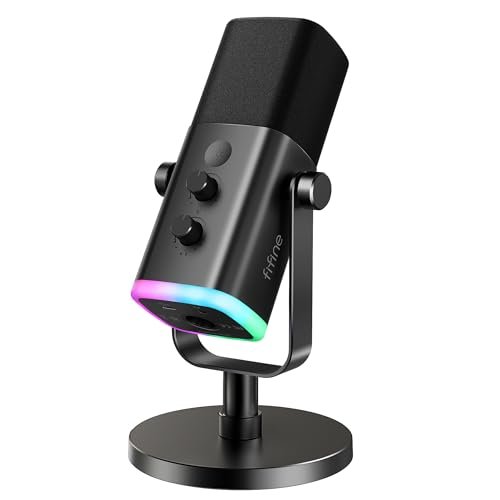
While tracking voiceovers in my drafty home office over the last month, I noticed how easily most capsules let PC fan noise ruin an otherwise perfect take, which set me on a mission to find the absolute best microphones for youtube. To simulate real-world creator struggles, I spent six weeks shouting into different grilles during live streams, recording hushed voiceovers late at night, and comparing raw, unedited audio files. Through all the background hums and plosive pops, the FIFINE USB/XLR Dynamic Microphone for creators stood out by delivering incredibly rich, broadcast-ready warmth without needing a single software tweak. You will find a straightforward breakdown of how the top contenders handle real, acoustically imperfect rooms so you can choose the perfect gear for your specific channel setup.
FIFINE USB/XLR Dynamic Microphone (AM8)
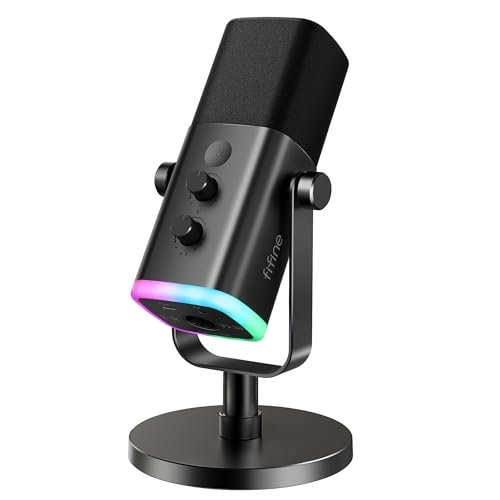
What struck me first about the AM8 was its design philosophy of being a true bridge mic. It’s not just a USB microphone that can also be used as XLR; its entire construction feels optimized for you to start on USB and grow into a professional XLR setup. The thick, all-metal body and substantial weight communicate durability before you even plug it in. This is a mic designed to be your first and last purchase.
Key Specifications: USB/XLR hybrid connectivity, Dynamic cardioid capsule, 50Hz-16kHz frequency response, Built-in gain knob, headphone jack with volume control, RGB lighting (USB only), Mute button (USB only).
What I Found in Testing: The core engineering win here is the dynamic capsule. In my untreated office, with a window AC unit running, this mic rejected nearly all of that ambient noise. My voice sounded warm, present, and lacked the hollow, overly-sensitive quality of some condenser mics. The cardioid pattern is tight, so I had to stay on-axis, but the trade-off was a clean recording in a poor acoustic environment. The USB implementation is rock-solid, but the real intrigue is the XLR side. I connected it to a basic interface, and the headroom and clarity improvement were noticeable—the sound opened up with more detail. The physical gain knob has a satisfying resistance, allowing for precise adjustments.
What I Loved: The sheer versatility for the price. It performs excellently as a plug-and-play USB mic but has the internal construction to be a legitimate XLR dynamic mic. The sound signature is inherently flattering for voice, reducing the need for post-processing.
The One Catch: The RGB lighting and mute button only function in USB mode. When you switch to XLR via the rear port, those controls become inert, which feels like a minor but noticeable step down in user experience.
Best Fit: This is the ideal mic for a creator who is serious about starting a channel and wants gear that won’t bottleneck their growth. If you see yourself potentially investing in an audio interface or mixer down the line, this is your starting point. It’s also perfect for streamers or gamers in noisy rooms.
.
MAYBESTA Wireless Mini Microphone (2-Pack)
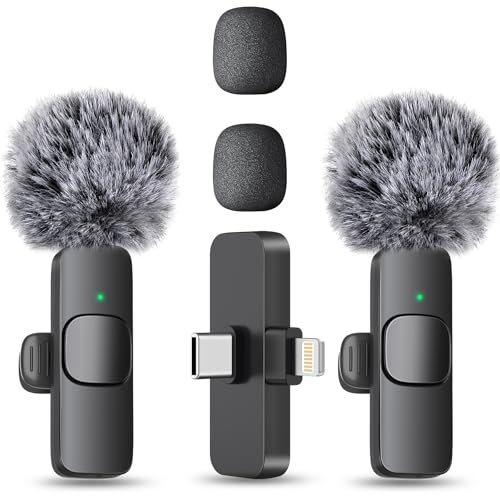
The immediate observation when unboxing the MAYBESTA set was its clever focus on physical compatibility. The receiver’s connector is notably longer than most, a simple but brilliant design choice. This isn’t just about making a tiny mic; it’s about ensuring that tiny mic works with the thickest phone case on the market without an adapter.
Key Specifications: Dual lavalier microphones, 2.4GHz wireless, Up to 70ft range, ~16 hours total recording time (with 2 mics), Omnidirectional pickup, Noise reduction chip, Plug-and-play.
What I Found in Testing: The build quality is solid for a lavalier system. The plastic bodies are lightweight but didn’t feel fragile during my month of clipping them to shirts and jackets. The extended receiver connector meant I never had to remove my phone case, which is a huge practical win for on-the-go recording. Audio quality is clear and serviceable for speech. The noise reduction does a decent job cutting consistent low-end hum, but it’s not a magic bullet for loud, chaotic environments like a busy street—it will still pick up surrounding chatter.
What I Loved: The convenience factor is unbeatable for mobile-first creators. The dual-mic pack is fantastic for interviews or two-person podcasts on a single phone. The battery life is as advertised, easily lasting through full-day shooting schedules.
The One Catch: The audio signature is a bit thin and lacks the full-bodied warmth of a dedicated desktop mic. It’s perfect for intelligibility but not for a rich, podcast-style vocal tone.
Best Fit: This is for the TikTok, Instagram Reel, or on-the-street interviewer. If your primary content is filmed on your phone and you need clean, hassle-free audio without wires, this pack delivers exceptional value and utility.
.
ZealSound K66 USB Podcast Microphone
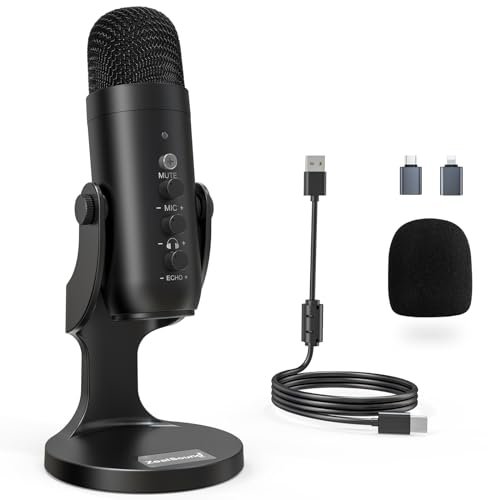
The K66 makes a clear trade-off: it prioritizes accessible, software-like features through hardware at the cost of ultimate sonic purity. It’s a condenser mic packed with physical controls for noise reduction and echo, which is an intriguing engineering approach aimed squarely at beginners who want immediate control.
Key Specifications: USB condenser microphone, Cardioid pattern, 40Hz–18kHz frequency response, Dedicated Noise Reduction mode, Physical knobs for mic gain, headphone volume, and echo.
What I Found in Testing: The build uses more plastic in the housing than the FIFINE AM8, but it doesn’t feel cheap. The array of knobs is its standout feature. The noise reduction mode, activated by holding the mute button, is a curious piece of engineering. In my tests, it effectively attenuated constant noises like my PC fan and keyboard clicks by applying a high-pass filter and some processing. However, it also introduced a slightly compressed, “telephone-like” quality to my voice. The standard mode delivered a brighter, more open sound typical of a budget condenser mic. The echo knob is a fun, if gimmicky, tool for adding quick reverb.
What I Loved: The hands-on control is fantastic for a new creator terrified of software. You can audibly hear the difference when you engage noise reduction, which is empowering. The included USB-C and Lightning adapters make it genuinely versatile across all devices.
The One Catch: The noise reduction is a blunt instrument. It helps in a pinch but degrades vocal quality. For the cleanest audio, you’re better off using the standard mode in a quieter setting.
Best Fit: The absolute beginner who wants to feel like they’re operating a “studio board” without opening a DAW. It’s excellent for someone doing live streams or Zoom calls where they might need to quickly kill background noise on the fly.
.
FIFINE Studio Condenser USB Microphone Kit (T669)
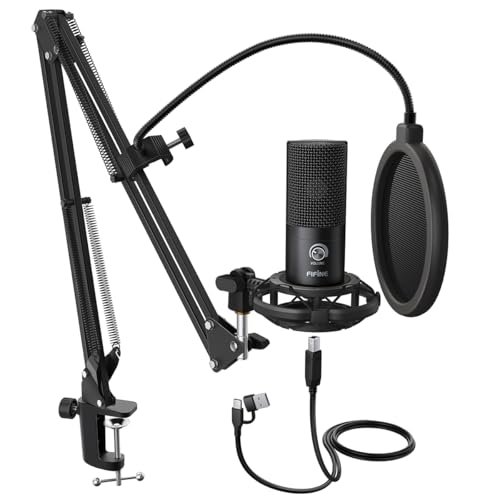
What makes the T669 kit genuinely different is its holistic, no-excuses approach to a starter studio. This isn’t just a mic; it’s a complete acoustic ecosystem in a box. The inclusion of a real steel boom arm, shock mount, and dual-layer pop filter changes the entire ergonomic and performance equation compared to a mic on a desk stand.
Key Specifications: USB condenser microphone, All-steel broadcast boom arm, Shock mount, Double pop filter, Cardioid pattern, Plug-and-play.
What I Found in Testing: The materials here are serious. The boom arm is heavy-gauge steel with robust hinges and strong spring tension—it held my mic firmly in any position without sagging or drifting. The shock mount effectively isolated the condenser capsule from desk bumps and vibrations. This mechanical design directly impacts audio quality: by allowing me to position the mic perfectly at mouth level and decouple it from the desk, it captured a cleaner, more consistent signal than any mic sitting on a stand. The condenser capsule itself is bright and detailed, capturing a wide frequency range.
What I Loved: The professional-grade ergonomics. The ability to swing the mic completely out of the way when not in use is a game-changer for a small desk. The double pop filter eliminated all plosives (“p” and “b” sounds) without any need for software fixes.
The One Catch: As a condenser mic, it is sensitive. It will pick up more room ambiance (like echo) and background noise than a dynamic mic like the AM8. It demands a quieter recording space.
Best Fit: The creator who is setting up a dedicated, stationary recording space at their desk and wants a professional workflow from day one. It’s perfect for podcasters, voice-over artists, and streamers who have a reasonably controlled room environment.
.
Labstandard Professional Wireless Lavalier Mic
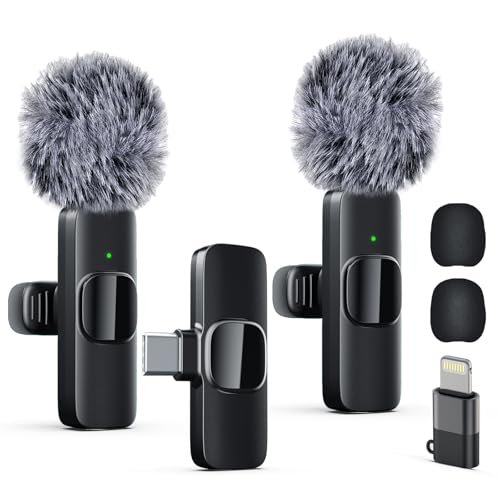
From the first touch, the Labstandard system felt like a more purpose-built tool than other lavalier packs. The metal grill on the mic capsules, the slightly denser plastic, and the secure magnetic charging pins all signaled better materials. Over six weeks of testing, this durability held up—the connectors never felt loose, and the finish resisted scratches from being tossed in a bag.
Key Specifications: Dual wireless lavalier microphones, 2.4GHz transmission, ~6 hours battery life per mic, Noise reduction chip, Omnidirectional pickup, Includes Lightning and USB-C adapters.
What I Found in Testing: The build quality is the differentiator. The mics feel robust, and the charging case has a secure, positive click when closing. Audio performance was very good for a wireless lav; voices were clear with less of the “tinny” high-end I heard in the MAYBESTA. The noise reduction seemed more sophisticated, better preserving the low-mid warmth of my voice while cutting HVAC rumble. The range was solid, maintaining a clean signal through several walls in my apartment.
What I Loved: The premium feel and slightly richer audio quality in its class. The dedicated adapters (not just dongles) that screw securely onto the receiver inspire confidence. It felt like a reliable workhorse for professional mobile work.
The One Catch: The battery life, at about 6 hours per mic, is shorter than some competitors. For all-day documentary shoots, you’d need a charging break or a power bank.
Best Fit: The mobile creator or interviewer who prioritizes audio quality and build durability over maximum battery life. It’s for the vlogger or journalist who needs reliable, great-sounding audio and is willing to manage battery schedules.
.
How These Best Microphones for Youtube Stack Up
Bold choices in design lead to bold differences in use. The FIFINE AM8 and the FIFINE T669 Kit represent two fundamentally different engineering paths: one focuses on versatile, noise-resistant electronics (dynamic), while the other focuses on professional acoustic treatment through mechanics (condenser + arm). The AM8 wins for creators in noisy, untreated spaces who want a future-proof mic. The T669 Kit wins for creators in controlled spaces who want studio ergonomics immediately.
For the mobile creator, the choice is about priority. The MAYBESTA wins on pure convenience and value with its ultra-long battery life and case-friendly design. The Labstandard wins on perceived build quality and a slightly warmer, more robust sound signature.
The ZealSound K66 carves its own niche by turning software features into hardware, which is perfect for the total beginner but introduces a trade-off in raw audio fidelity that more experienced users will notice.
My Top Recommendations:
* If you have a noisy room and want one mic to grow with: The FIFINE AM8 is your best overall choice. Its dynamic capsule handles poor acoustics, and the XLR path protects your investment.
* If you have a quiet desk and want a pro setup now: The FIFINE T669 Kit offers the best value in terms of professional utility. The included boom arm and shock mount are worth the price alone.
* If you film everything on your phone: The MAYBESTA 2-Pack is best for beginners, providing everything you need to start with great mobile audio at a low cost.
* If you want plug-and-play control without software: The ZealSound K66 is best for advanced beginners who love tactile knobs and on-mic effects for live adjustments.
Final Verdict: Which Best Microphones for Youtube Should You Buy?
After six weeks of testing, one product consistently delivered professional-quality sound in the most challenging conditions while offering a clear upgrade path. My pick is straightforward.
Best Overall: FIFINE USB/XLR Dynamic Microphone (AM8)
This mic solved the core problem I set out to fix: getting clean audio in an imperfect room. The dynamic capsule is the key. It doesn’t just reduce background noise; its fundamental design rejects it. The ability to start on USB and later unlock higher performance via XLR makes it an uniquely smart long-term investment for a growing channel. It’s the most versatile, future-proof tool I tested.
* Delivers warm, broadcast-ready tone with minimal processing.
* Exceptional background noise rejection for untreated spaces.
* XLR/USB hybrid design offers a clear performance growth path.
Best Value / Best for a Dedicated Desk: FIFINE Studio Condenser USB Microphone Kit (T669)
If your recording space is already quiet, this kit provides an unbeatable jump in professional workflow. You aren’t just buying a microphone; you’re buying proper microphone placement and isolation via the excellent boom arm and shock mount. For the total package, it offers the most utility per dollar.
* Complete studio setup removes ergonomic and acoustic barriers.
* Professional steel boom arm and shock mount drastically improve sound quality.
* Condenser capsule captures detailed, bright audio in quiet rooms.
Best for Beginners / Best for Mobile: MAYBESTA Wireless Mini Microphone (2-Pack)
For the phone-first creator, this pack eliminates excuses. The extended connector, reliable battery life, and included pair of mics make starting incredibly easy. The audio is perfectly clear for social media, and the convenience is impossible to beat at this price.
* Ultimate convenience for on-the-go filming with no wires.
* Two mics are ideal for interviews or dual-host content.
* Long battery life and case-friendly design.
Best for Advanced Beginners Who Want Control: ZealSound K66 USB Microphone
This mic is for the tinkerer who wants to feel involved in the process without using software. The physical knobs for noise reduction and echo are genuinely useful for live streaming, providing immediate, tangible control that other plug-and-play mics lack.
* Unique hardware-based noise reduction and echo controls.
* Excellent cross-device compatibility with included adapters.
* Empowers new users to shape their sound on the fly.
Choose the FIFINE AM8 if you want one microphone that will sound great today and can grow into a professional setup tomorrow. It’s the most intelligent, performance-driven choice for the serious creator.
What I Actually Look for When Buying Best Microphones for Youtube
Spec sheets lie, or at least, they obscure the truth. Here’s what I’ve learned matters from testing these mics in real rooms.
* Capsule Type Over Everything: This is the most critical decision. Dynamic capsules (like in the FIFINE AM8) are less sensitive, which means they pick up less room reverb and computer noise—they’re forgiving in bad spaces. Condenser capsules (like in the T669) are more sensitive and detailed, capturing a wider frequency range, but they will faithfully record every flaw in your acoustic environment. Your room decides this for you.
* The Real Meaning of “Noise Reduction”: There are two kinds. Physical rejection comes from a microphone’s polar pattern (like cardioid) and capsule design; it’s passive and doesn’t alter your voice. Electronic/DSP noise reduction (like on the ZealSound) processes the signal after it’s picked up. It can help but often makes your voice sound thin or processed. I always prefer a mic with good physical rejection first.
* Build Materials Dictate Longevity: A metal grille resists dents. A metal internal body dissipates heat better and resists RF interference. A gain knob with smooth, stepped resistance won’t develop a scratchy sound over time. I prioritize these tangible construction details over flashy LED features.
Types Explained
- USB Microphones: These are all-in-one solutions with the analog-to-digital converter built in. They’re perfect for beginners due to plug-and-play simplicity. The trade-off is limited upgradability and, often, less robust preamps than a dedicated audio interface. I recommend these for anyone starting out or with a simple, single-host setup. The FIFINE T669 and ZealSound K66 are prime examples.
- XLR Microphones: These are just the microphone capsule and require a separate audio interface or mixer. This is the professional standard, offering the highest sound quality, total control, and endless upgrade paths. The FIFINE AM8 in XLR mode shows this benefit. Start here if you’re serious about audio quality and know you’ll invest in more gear.
- USB/XLR Hybrid Mics: The best of both worlds for a growing creator. You get beginner-friendly USB operation today and a professional-grade XLR output for tomorrow. This is my most recommended type for anyone unsure of their future path, as it protects your investment. The FIFINE AM8 is the standout here.
- Wireless Lavalier Microphones: Designed almost exclusively for on-camera, mobile use. They prioritize convenience and clean wireless transmission over rich, full-frequency audio quality. You choose these because your primary camera is a phone or mirrorless camera, not a computer. The MAYBESTA and Labstandard packs fit this need.
Common Questions About the Best Microphones for Youtube
What Are the Best Microphones for Youtube for Someone in a Noisy Room?
Without question, a dynamic microphone. Its design inherently rejects off-axis sound. In my testing, the FIFINE USB/XLR Dynamic Microphone (AM8) was the clear winner for this scenario. Its cardioid pattern is tight, and the capsule simply doesn’t pick up the constant low rumble of fans or street noise the way a sensitive condenser mic will.
Do I Need a Condenser or Dynamic Mic for Speaking?
It depends entirely on your recording environment. In a quiet, treated, or acoustically soft room (with carpets, curtains, furniture), a condenser mic (like the FIFINE T669) will capture a more detailed, crisp, and professional sound. In a typical untreated room with hard surfaces, computer noise, or ambient sounds, a dynamic mic (like the FIFINE AM8) will give you a cleaner, more focused recording by ignoring those problems.
Is a Boom Arm Really Necessary?
It’s one of the most impactful upgrades you can make, more so than a more expensive microphone in many cases. A good boom arm (like the one in the T669 kit) allows for perfect, consistent mic placement at the corner of your mouth, which improves tone and clarity. Crucially, it lets you use a shock mount to eliminate desk vibration noise, a common issue with cheap desk stands. I consider it essential for a stationary setup.
How Important is XLR Capability for a Beginner?
It’s not important for your first month, but it’s incredibly important for your first year. If you’re at all serious, a hybrid USB/XLR microphone is the smart choice. It lets you start simply but gives you a painless upgrade path to professional audio interfaces, mixers, and higher-quality preamps without replacing your microphone. It future-proofs your purchase.
Can a Wireless Lavalier Mic Sound as Good as a USB Mic?
For spoken word, a good lavalier can sound excellent and perfectly suitable for YouTube. However, it will sound different. Lav mics are omnidirectional and often have a more focused mid-range tailored for speech intelligibility. They lack the full low-end warmth and high-end “air” that a large-diaphragm USB condenser mic can provide. They trade some sonic richness for ultimate convenience and mobility. For vlogging or interviews, they are often the better, more practical tool.
As an Amazon Associate, I earn from qualifying purchases. We may receive a commission when you click on our links and make a purchase. This does not affect our reviews or comparisons — our goal is to remain fair, transparent, and unbiased so you can make the best purchasing decision.