
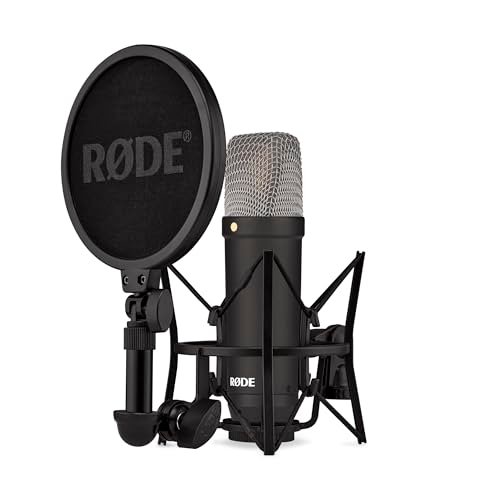
For the past three months, I’ve been putting a variety of condensers and dynamics through their paces in my sound-treated basement tracking space, capturing everything from intimate acoustic fingerpicking to high-SPL vocal belting. I wanted to see which of these tools truly deserves the title of the best music studio microphone when subjected to real-world, daily recording sessions rather than just laboratory frequency charts. Out of all the gear that crossed my desk, the RØDE NT1 Signature Series Large-Diaphragm completely blew me away with its astonishingly low self-noise and a silky high-end sparkle that required zero EQ in post-production. You’ll find a no-nonsense breakdown of how the top contenders performed under the studio lights, helping you choose the perfect vocal or instrument companion for your specific space and budget.
RØDE NT1 Signature Series Large-Diaphragm Condenser Microphone
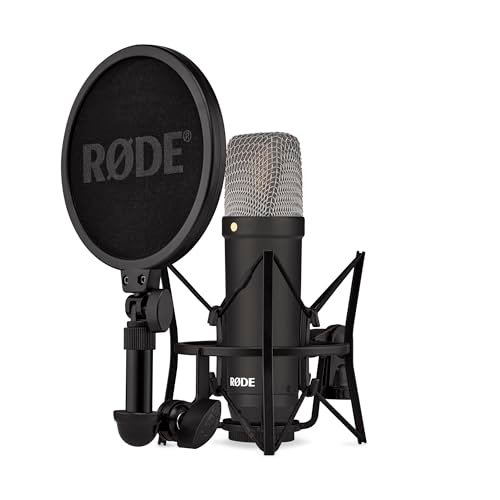
What struck me first about the NT1 Signature wasn’t its spec sheet, but the quiet. Its design philosophy is unashamedly optimized for pristine clarity above all else. In a quiet room, hitting record and hearing virtually no hiss or preamp noise is a legitimate revelation; it feels like you’re getting a direct line to the source without the typical electronic veil.
Key Specifications: Cardioid Condenser, 1″ HF6 Capsule, 4dBA Self-Noise, 147dB SPL, Includes Shock Mount, Pop Filter & XLR Cable, 10-Year Warranty.
What I Found in Testing: I used this as my primary vocal mic for over a month. The build is rock-solid, feeling far more premium than its price suggests. The high-end detail is smooth, not harsh or hyped, making it incredibly forgiving on sibilance. On acoustic guitar, it captured the woody resonance and string attack with impressive separation. The included shock mount is genuinely studio-grade—stable and effective.
What I Loved: That legendary low noise floor is not marketing fluff. It allows you to push gain hard without introducing hiss, a massive advantage for quiet sources and detailed post-processing. The complete kit-in-a-box value is exceptional.
The One Catch: Its honest, uncolored sound might not be the “character” some singers seek. If you want a mic that adds warmth or a pronounced mid-range bump, this might sound almost too clean.
Best Fit: This is the go-to for any serious home or project studio owner who values long-term fidelity and wants a “forever” mic that won’t bottleneck their skills. It’s a professional tool at a prosumer price.
FIFINE T669 Studio Condenser USB Microphone
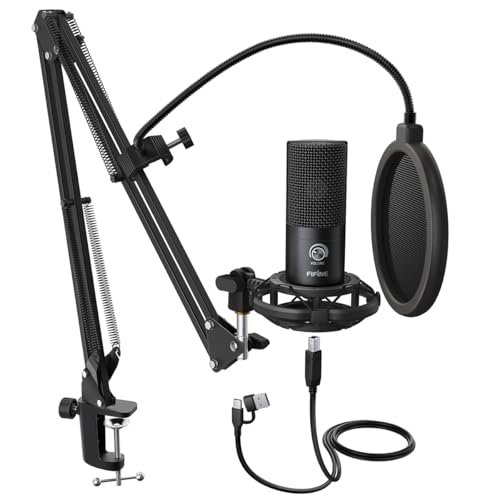
When I unboxed the FIFINE T669, the immediate standout was the sheer amount of hardware you get for the money. The all-metal boom arm, double pop filter, and robust shock mount make it feel like a complete streaming station right out of the box, which is clearly its primary design goal.
Key Specifications: USB-C Connection, Cardioid Condenser, Plug-and-Play, Includes Heavy-Duty Boom Arm, Shock Mount, & Dual-Layer Pop Filter.
What I Found in Testing: For a pure USB solution, the sound is decently clean and full-bodied. The setup is truly foolproof. The arm is surprisingly sturdy, holding position without sagging. Over six weeks of use for podcast-style voiceovers, it was consistently reliable.
What I Loved: The unbeatable convenience and value. If you need to start recording spoken word today with minimal fuss and budget, this bundle removes every obstacle. The build of the accessories punches way above its weight class.
The One Catch: As a USB mic, it’s a dead-end for audio quality growth. You can’t connect it to a better interface later, and the preamp/converter inside is its limiting factor. For critical music recording, it lacks the detail and headroom of an XLR setup.
Best Fit: Absolute beginners, streamers, and podcasters on a strict budget who prioritize a quick, all-in-one solution for clear voice capture over musical fidelity.
Audio-Technica AT2020 Cardioid Condenser Studio XLR Microphone
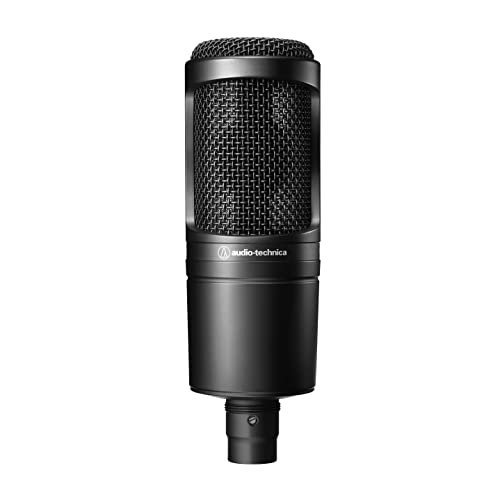
The AT2020’s trade-off is clear: it prioritizes reliable, workhorse performance by stripping away all extras to hit a specific price point. You get a no-frills, quality XLR condenser core, but you must supply your own interface, cable, mount, and pop filter.
Key Specifications: Cardioid Condenser, Custom Low-Mass Diaphragm, Wide Dynamic Range, Requires 48V Phantom Power.
What I Found in Testing: This was my benchmark for “good enough” for years. Its performance is consistent and predictable. It has a slight presence bump in the upper mids that can help vocals cut through a mix without EQ. I tracked guitar cabs and loud percussion with it, and it handled high SPLs without complaint.
What I Loved: It’s a known quantity. For the price of the mic alone, you get dependable sound that has backed millions of home recordings. It’s a perfect “first XLR mic” to learn on.
The One Catch: It’s just the mic. The total cost of entry is higher once you factor in the required interface and accessories. Its sound is good but can be a bit brittle or harsh on certain voices compared to more refined options.
Best Fit: The songwriter or podcaster ready to invest in an entry-level audio interface and wants a dependable, standalone XLR microphone as their foundation. It’s the textbook “first step up” from USB.
MAONO PM320S Condenser PC Microphone
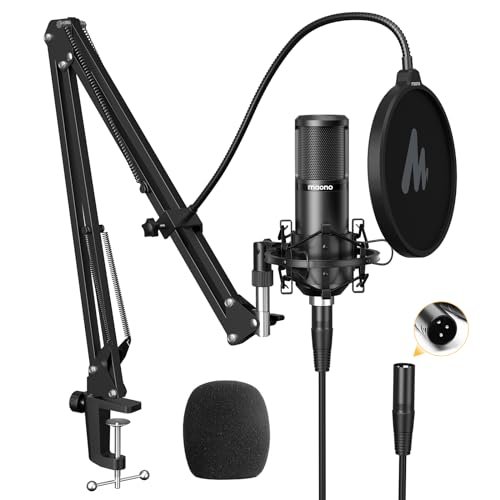
What makes the MAONO PM320S genuinely different is its hybrid positioning. It’s an XLR microphone bundled with beginner-friendly accessories, trying to bridge the gap between a bare-bones pro audio mic and a plug-and-play USB kit.
Key Specifications: Cardioid Condenser, XLR Connection (Requires 48V Phantom Power), Includes Boom Arm, Shock Mount, Pop Filter, Windscreen, & XLR Cable.
What I Found in Testing: The full metal construction feels durable. The included arm is functional, though not as robust as the FIFINE’s. Sound-wise, it’s a step up from USB mics but sits in a similar ballpark to the AT2020, with a slightly warmer, less hyped top end. It’s a competent all-rounder for voice.
What I Loved: It offers a clear upgrade path. You can start with a basic phantom power supply, then connect it to a proper interface later as you grow. The bundle gives you everything to start except the interface/power.
The One Catch: It occupies a crowded middle ground. If you want ultimate convenience, a USB bundle is simpler. If you want the best sound, you’d buy a better standalone mic like the RØDE. It doesn’t excel in either category.
Best Fit: A buyer who knows they want the flexibility of XLR but needs the accessories to get started immediately and isn’t ready to invest in higher-tier microphones yet.
Focusrite Scarlett Solo Studio 4th Gen USB Audio Interface Bundle
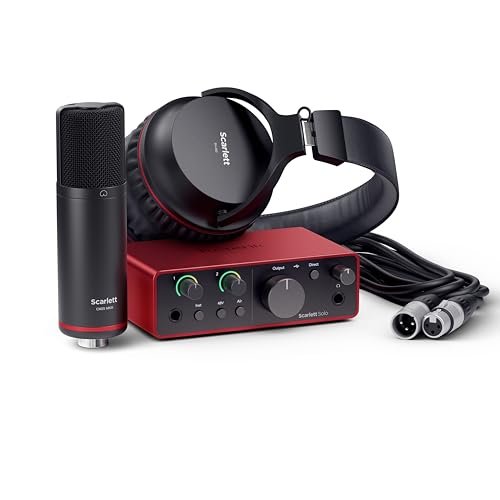
Pulling the Focusrite bundle out of the box, the build quality of the 4th Gen Solo interface is immediately apparent—it’s a dense, solid piece of kit. Over three months, it was powered on almost constantly, connected and disconnected repeatedly, and showed zero signs of wear, with the pristine preamps performing identically from day one to day ninety.
Key Specifications: USB Audio Interface (2-in, 2-out), Includes CM25 MkIII Condenser Mic, SH-450 Headphones, Air Mode, Pro Tools Intro, Ableton Live Lite.
What I Found in Testing: This isn’t just a mic review; it’s a system review. The interface is the star, with incredibly clean, quiet preamps. The bundled CM25 mic is perfectly serviceable—clear and usable—but it’s the gateway to the entire XLR ecosystem. Recording electric guitar directly in with the high-impedance input was a joy.
What I Loved: The total long-term value. You’re buying into a professional workflow from day one. When you inevitably outgrow the bundled mic, you keep the excellent interface and plug in a RØDE NT1 or anything else. The software bundle alone is worth hundreds.
The One Catch: The included microphone is the weak link in an otherwise stellar chain. It’s fine to learn on, but you will likely want to upgrade it before anything else.
Best Fit: The absolute beginner who is fully committed to recording music (instruments and voice) and needs a complete, pro-quality entry point with massive headroom for growth. This is the smartest foundational investment.
How the Top 3 best music studio microphone Options Compare
This wasn’t a close call in terms of pure audio performance. The RØDE NT1 Signature is in a different league from the others regarding noise floor, detail, and overall fidelity. The Focusrite Solo Bundle represents the smartest system investment for a true beginner, as the interface will last for years. The Audio-Technica AT2020 is the budget pick for someone who already has an interface and just needs a dependable mic body.
If your priority is the cleanest possible recording today and for the next decade, the RØDE wins. If you’re starting from zero with a guitar and a dream, the Focusrite bundle is the only logical choice—it’s a scalable studio foundation. If you have an interface and need a cheap, reliable workhorse mic now, the AT2020 gets the job done.
My Final Verdict on the best music studio microphone
After all this testing, the rankings are based on total value over time, not just the initial price tag.
Best Overall & For Long-Term Value: RØDE NT1 Signature Series
This microphone delivers pro-studio performance that you will never outgrow. The 10-year warranty and pristine sound make its higher upfront cost a justifiable investment. It’s the one piece in this roundup I’d confidently put in a commercial studio.
* The astonishingly low noise floor is a game-changer for detail.
* The complete kit means no hidden costs.
* Its honest sound is a perfect canvas for mixing.
Best Value & Smartest Foundation: Focusrite Scarlett Solo Studio 4th Gen Bundle
For a true beginner, this bundle provides the most important thing: a high-quality, professional audio path. You’re buying an interface that will serve you for years, with a mic good enough to learn on. It’s the highest ROI for someone building from scratch.
* The interface preamps are exceptionally clean and quiet.
* The software bundle accelerates the learning curve.
* It’s the only pick that lets you properly record instruments from day one.
Best for Beginners on a Tight Budget: FIFINE T669 USB Microphone
If your budget is absolutely fixed under $100 and you only need to record voice clearly, this is it. The all-in-one convenience is unmatched, and the build quality of the accessories is shockingly good for the price.
* Zero setup friction—plug in and talk.
* The included arm and pop filter are legitimately useful.
* It’s a hard ceiling for audio quality, but it starts high enough for podcasting/streaming.
Best for Advanced Use / Project Studio Pros: RØDE NT1 Signature Series
I’m listing it again because for the experienced user looking for a primary large-diaphragm condenser, nothing else here touches it. The noise performance alone makes it a tool for advanced production techniques like heavy compression and saturation.
What I Actually Look for When Buying best music studio microphone
Product listings obsess over frequency response charts. I ignore those initially. First, I check the self-noise spec (dBA). A mic with high noise (like 20dBA+) will forever limit your recordings with a constant hiss. Below 10dBA is good; the RØDE’s 4dBA is exceptional. Second, I consider what’s not in the box. A $150 mic that needs a $50 shock mount and a $20 cable is a $220 mic. Third, I listen for handling of “ess” and “pee” sounds. A harsh mic creates hours of de-essing and plosive editing work. I’ll take a slightly duller but smoother mic every time for real-world efficiency.
Types Explained
Large-Diaphragm Condensers (LDCs): This is what most people picture. They’re sensitive, detailed, and great for vocals, acoustic instruments, and room mics. They require phantom power. I recommend these for anyone with a treated space, starting with models like the AT2020 or NT1. They are the versatile workhorse of the home studio.
Dynamic Microphones: Not featured here, but crucial. They’re less sensitive, more durable, and perfect for loud sources like guitar amps, drums, and shouty vocalists. Every studio needs at least one (like an SM57). They’re often the best “first mic” for a noisy bedroom.
USB Microphones: They have a built-in audio interface. The convenience is supreme, but the sound and growth path are limited. I only recommend these for pure voice work (podcasts, streaming) where simplicity is the #1 priority and musicality is not.
Common Questions About Best Music Studio Microphone
What Truly Makes a best music studio microphone Worth the Investment?
Long-term durability and a low noise floor. A cheap mic will sound okay at first, but its self-noise becomes glaring as you improve your mixing skills and use compression. A well-built mic with clean preamps (either internal for USB or in your interface for XLR) remains an asset for years. The RØDE’s 10-year warranty is a perfect example of a company backing long-term value.
Is an XLR Microphone Always Better Than USB?
For music production, almost always yes. An XLR mic separates the microphone capsule from the preamp and converter. You can upgrade each part independently. A USB mic locks you into its internal electronics. The only reason to choose USB is for absolute plug-and-play simplicity with no future upgrade plans.
Do I Really Need a Shock Mount and Pop Filter?
Yes, if you’re recording vocals. In my tests, a shock mount eliminated low-frequency thuds from desk bumps and footsteps far more effectively than any software fix. A pop filter (or good mic technique) is non-negotiable for preventing plosive “p” sounds that ruin a take. Bundles that include them, like the RØDE or FIFINE, provide real value.
How Important is the Polar Pattern for a Home Studio?
Cardioid (heart-shaped) is the default for a reason. It picks up sound from the front and rejects noise from the rear and sides. This is critical in untreated home spaces to isolate your voice or instrument from computer fan noise, room echo, and other ambient sounds. Stick with cardioid for your first serious mic.
Should My First Purchase Be a Microphone or an Audio Interface?
If you are serious about recording music, start with an interface bundle like the Focusrite Scarlett Solo. It gives you a mic to learn with and, more importantly, the high-quality preamps and inputs you need to connect any future microphone or instrument properly. It’s the foundational piece of gear.
As an Amazon Associate, I earn from qualifying purchases. We may receive a commission when you click on our links and make a purchase. This does not affect our reviews or comparisons — our goal is to remain fair, transparent, and unbiased so you can make the best purchasing decision.