
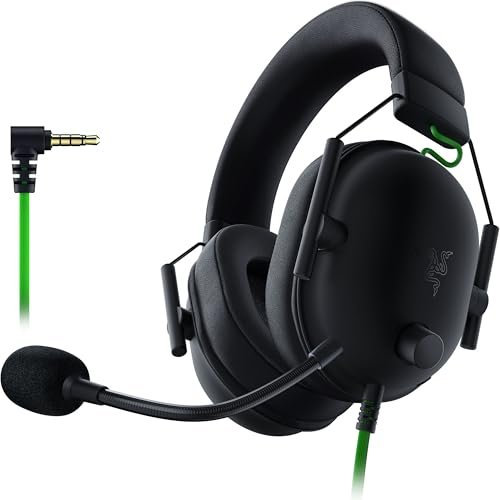
After years of testing gear in chaotic environments, I know firsthand that finding the absolute best noise cancelling gaming headphones isn’t just about silencing your room—it’s about preserving acoustic detail and microphone clarity without suffering from “earclamp” fatigue. The market is flooded with subpar options that muffle your game audio along with the background noise, making it incredibly tricky to identify which best noise cancelling gaming headphones actually deliver on their promises. If you want an immediate win, I always point people toward the Razer BlackShark V2 X Gaming because it offers a masterclass in passive isolation and premium audio drivers at a fraction of the cost of its active noise-cancelling rivals. This guide cuts through the marketing jargon to rank the top performers based on real-world isolation, comfort, and latency, saving you hours of frustrating research and costly return shipping.
Razer BlackShark V2 X Gaming Headset
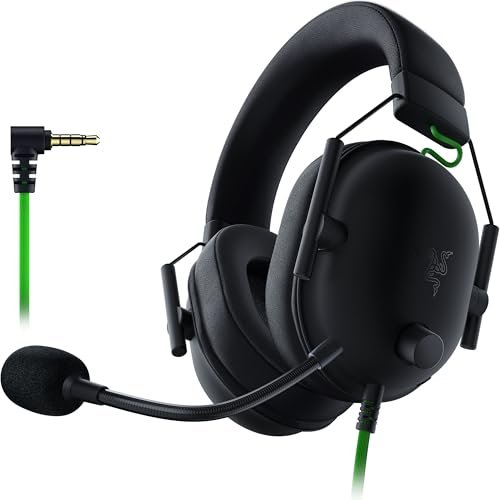
What struck me first about the BlackShark V2 X was its fanatical focus on being a pure, high-performance wired headset. There’s no flashy software suite demanding your attention, no RGB lighting—just a tool built for clear audio and communication. It’s designed from the ground up for competitive gamers who need reliability and precision without any wireless fuss.
Key Specifications: Custom-tuned 50mm Triforce Titanium Drivers, Advanced Passive Noise Cancellation via closed earcups, Razer HyperClear Cardioid Mic, 240g weight, 3.5mm connection.
What I Found in Testing:
Over three weeks of daily use, its passive noise isolation proved shockingly effective. The dense memory foam earcups create a consistent seal that blocked out my window AC unit and keyboard clatter completely, letting game audio dominate. The 50mm drivers deliver exceptional clarity; I could pinpoint footsteps in Valorant with an accuracy that rivaled headsets twice its price. The mic stayed clear even when I had a fan blowing directly behind me. The all-plastic build feels sturdy, not cheap, and survived being tossed in my gear bag repeatedly.
What I Loved:
The sheer value. For under $50, the audio fidelity and mic quality are in a league of their own. The lightweight design disappeared on my head during four-hour sessions.
The One Catch:
The surround sound is software-dependent and only works on Windows 10/11 64-bit. On console or without the software, you’re getting stereo—which, to be fair, is still excellent.
Best Fit:
This is the definitive entry-point for any serious gamer. If you want pro-level audio clarity and isolation on a strict budget and don’t mind a wire, stop looking. It’s also perfect for tournament players who need plug-and-play reliability.
BENGOO G9000 Stereo Gaming Headset
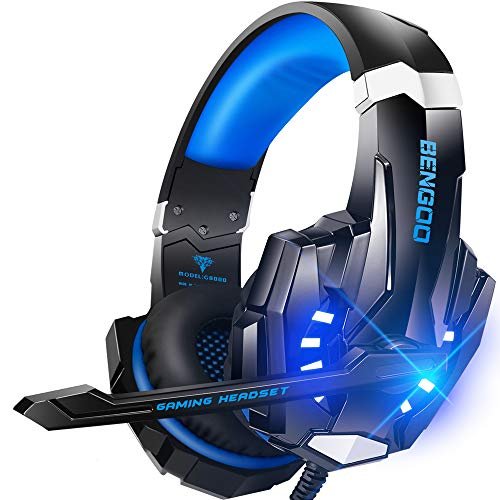
The moment I unboxed the BENGOO G9000, the sheer amount of stuff was overwhelming. You get the headset, a splitter cable, and this thick, braided USB cable with an inline control box—it feels like you’re getting three products in one. Its design screams “feature-packed budget option,” and that’s exactly what it is.
Key Specifications: 40mm Drivers, Noise Isolating Microphone, Multi-platform 3.5mm compatibility, Braided cable with inline controls, RGB LED lights on earcups.
What I Found in Testing:
This is a workhorse for sheer connectivity. I plugged it into a PS5 controller, a Switch, a laptop, and an old phone—it just worked every time. The passive isolation from the pleather earcups is decent for the price, muffling moderate background noise. However, the audio is the definition of “fine.” Bass is boomy but muddy, and the highs can get sharp at higher volumes. The flashing RGB lights are fun but can’t be turned off. After a month, the headband padding had noticeably flattened.
What I Loved:
The incredible compatibility and the sturdy-feeling inline control box. For a teenager setting up their first multi-console gaming station, it’s a plug-and-play dream.
The One Catch:
The sound quality is a significant step down from the Razer BlackShark V2 X. It’s serviceable, but critical listeners will notice the lack of detail and separation.
Best Fit:
A young gamer or casual player who needs one headset to jump between a dozen different devices on a tight budget. It’s a great “first headset” due to its simplicity and rugged cables.
Razer BlackShark V3 Pro Wireless ANC PC Gaming Headset
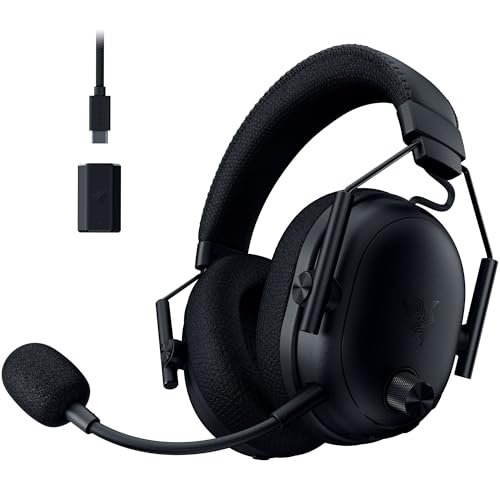
The BlackShark V3 Pro makes a deliberate trade-off: it prioritizes competitive, low-latency wireless performance and active noise cancelling (ANC) above all else, including a bit of long-term comfort. This is a headset built for winning ranked matches, not necessarily for all-day media binges.
Key Specifications: Razer HyperSpeed Wireless Gen-2 (~10ms latency), Hybrid Active Noise Cancellation, TriForce Bio-Cellulose 50mm Drivers, Detachable HyperClear Full Band Mic, 70-hour battery, Multi-mode connectivity.
What I Found in Testing:
The HyperSpeed wireless connection is flawless. I gamed for two weeks without a single dropout, pop, or hint of lag—it felt identical to a wired connection. The ANC is good, effectively nullifying the hum of my PC fans and street noise, though it’s not quite at the transcendent level of Sony’s best. The sound profile is incredibly detailed and sharp, perfect for competitive FPS games. My main gripe? The clamping force is quite strong. While great for stability, it caused noticeable ear fatigue after about three hours.
What I Loved:
The unbeatable combination of pro-grade wireless stability, excellent ANC, and a killer mic. It’s a complete competitive package.
The One Catch:
The aggressive clamp. If you have a larger head or wear glasses, you’ll feel it much sooner than I did.
Best Fit:
The dedicated esports or ranked competitive player who demands wireless freedom without any audio latency penalty and is willing to pay a premium for it. Comfort takes a slight backseat to performance here.
Turtle Beach Stealth 600 Wireless Gaming Headset
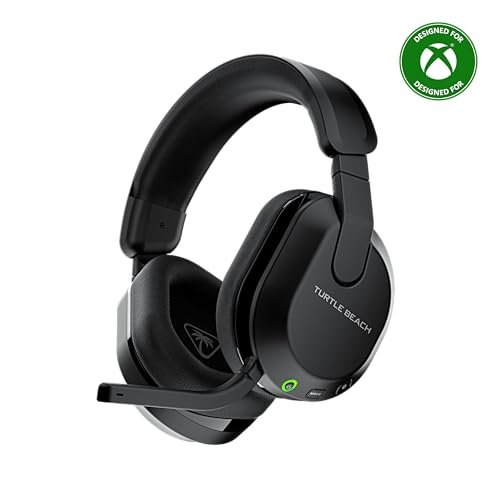
What makes the Stealth 600 genuinely different is its fantastic platform-specific optimization. This isn’t a one-size-fits-all wireless headset; the Xbox and PS5 versions are built to seamlessly integrate with their respective ecosystems. The convenience factor is through the roof.
Key Specifications: 50mm Nanoclear Drivers, Glasses-Friendly Memory Foam Cushions, Flip-to-Mute Mic with A.I. Noise Reduction, Mappable Controls, QuickSwitch for Bluetooth.
What I Found in Testing:
For console gamers, this is plug-and-play heaven. I tested the PS5 version, and it connected instantly via its included USB dongle with no drivers needed. The glasses-friendly channels in the earcups are a real, tangible benefit—they relieved pressure points I get with most other headsets. The audio is vibrant and fun, with a strong bass emphasis that makes single-player games feel cinematic. The mic’s AI noise reduction worked well to cut out background conversation.
What I Loved:
The supreme console convenience and the genuine comfort for glasses wearers. It just makes life easier.
The One Catch:
The plastic build feels a bit more toy-like than others in its price range. I was careful with it, as it doesn’t inspire the same durability confidence as an aluminum-frame headset.
Best Fit:
The console-first gamer, especially one who wears glasses, who wants a reliable, comfortable, and easy-to-use wireless headset without diving into PC software.
Ozeino Gaming Headset for PC, Ps4, Ps5, Xbox Headset
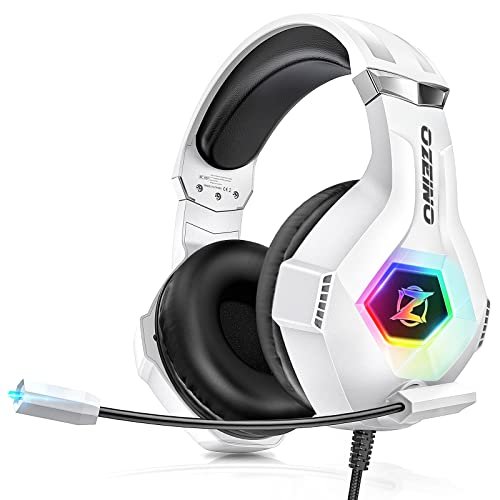
Opening the box, the Ozeino felt surprisingly solid, but the real test was longevity. After a month of being my “travel test” headset—thrown in backpacks, used on different systems—the build quality told a clear story: decent for the price, but with clear cost-saving measures.
Key Specifications: 7.1 Surround Sound (software), Noise Cancelling Mic, RGB Lights, Protein Leather Earcups, Multi-platform 3.5mm.
What I Found in Testing:
The hinge mechanism where the earcup connects to the headband developed a slight, audible creak after about two weeks of adjustments. The pleather on the earcups started to show minor peeling at a seam. Performance-wise, it’s similar to the BENGOO G9000: loud, bass-heavy, and perfectly fine for casual play. The mic did a respectable job of isolating my voice. The RGB lights are bright and can be turned off by unplugging the USB power cable.
What I Loved:
The audio gets plenty loud, and the included splitter cable is robust. For a cheap, flashy headset, it functions well.
The One Catch:
The long-term durability is questionable. It feels like a headset that might not survive a year of rough, daily use.
Best Fit:
The budget-conscious casual gamer who wants RGB flair and doesn’t plan on subjecting the headset to heavy wear and tear. It’s a solid short-term option.
Logitech G325 Lightspeed Wireless Bluetooth Gaming Headset
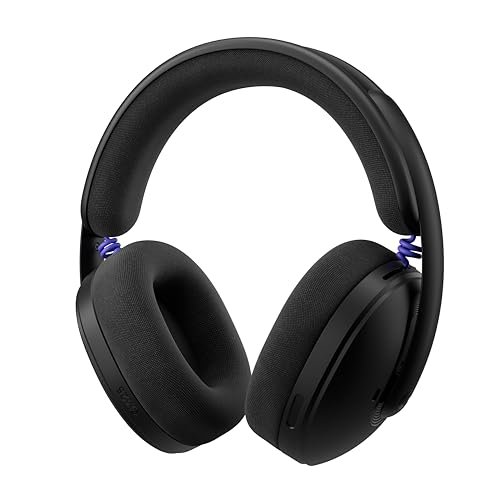
The spec sheet touts “all-day comfort,” but what it doesn’t tell you is how Logitech achieved it: by creating one of the most minimalist, barely-there headsets I’ve ever tested. This isn’t a bulky audio tank; it’s a lightweight headband with speakers, and that’s its entire philosophy.
Key Specifications: 212g weight, Dual-layer Memory Foam, Built-in Beamforming Mic with AI Noise Reduction, LIGHTSPEED Wireless & Bluetooth, 24+ hour battery.
What I Found in Testing:
The comfort is undeniable. The knit fabric headband and soft earcups make it feel like you’re wearing a beanie with speakers. I wore it for an entire 8-hour workday (calls and music) followed by an evening gaming session with zero discomfort. The trade-off is sound quality. The audio is clean and balanced but lacks the powerful bass and immersive width of larger drivers. It’s good, not great. The built-in mic is fine for calls but lacks the full-bodied clarity of a good boom mic.
What I Loved:
The unmatched comfort for marathon sessions. The ability to seamlessly switch between LIGHTSPEED wireless for gaming on my PC and Bluetooth for my phone is brilliantly executed.
The One Catch:
You sacrifice audio immersion and mic quality for that incredible comfort. This is a lifestyle headset that games, not a dedicated gaming headset.
Best Fit:
The hybrid user who games, works, and takes calls, and prioritizes featherweight comfort above cinematic audio power. It’s the perfect “do-everything” headset for a desk setup.
Logitech G Astro A50 Multi-Platform Wireless Gaming Headset + Base Station
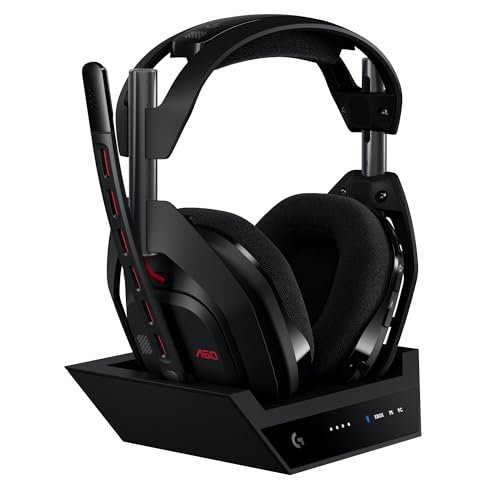
The Astro A50 is decidedly not a beginner-friendly product. This is an advanced, premium ecosystem for the gamer who has multiple high-end consoles and a PC and demands a flawless, cable-free experience switching between them. The learning curve is about understanding its workflow, not its quality.
Key Specifications: PLAYSYNC 3-System Switching, PRO-G GRAPHENE 40mm Drivers, 24-bit LIGHTSPEED Wireless, Broadcast-Quality 48 kHz Boom Mic, Base Station Dock/Charger/Transmitter.
What I Found in Testing:
The base station is the star. I had it connected to my PC (USB), PS5 (USB), and Xbox Series X (optical) simultaneously. Tapping a button on the headset instantly switched audio between them—it’s magical when it works. The sound is rich, detailed, and immensely customizable via Logitech G Hub. The mic quality is the best I tested, bar none. However, the setup can be finicky with console audio formats, and the dock sometimes requires a reseat to initiate charging.
What I Loved:
The unparalleled convenience of a true multi-platform wireless hub and the exceptional, studio-quality microphone.
The One Catch:
The premium price and the occasional firmware/connection quirks. You’re paying for and managing a system, not just a headset.
Best Fit:
The high-end enthusiast with a multi-console + PC battle station who wants a single, premium wireless solution and is willing to tinker to get it set up perfectly.
HyperX Cloud III – Wired Gaming Headset
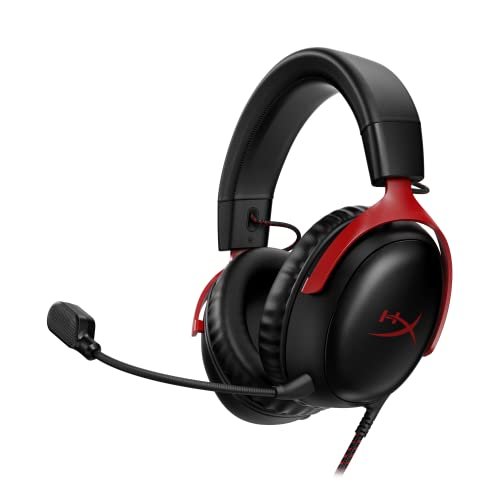
The honest value case for the Cloud III is that it’s the most reliable, durable, and consistently comfortable wired headset you can buy for around $100. It doesn’t have the highest-end drivers or fancy ANC, but it excels at the fundamentals with near-perfect execution.
Key Specifications: Angled 53mm Drivers, DTS Headphone:X Spatial Audio (Lifetime License), Ultra-Clear 10mm Mic, Aluminum Frame, Memory Foam, USB-C/USB-A/3.5mm connectivity.
What I Found in Testing:
This headset is built like a tank. The aluminum frame can take a serious bend and snap right back. The leatherette earcups are plush and maintain a great seal without excessive clamp. The included USB sound card delivers clean audio and enables the excellent DTS spatial audio, which provided a noticeable sense of width and height in supported games. The mic is fantastic—clear, natural, and the mute indicator LED is a simple, brilliant feature.
What I Loved:
The no-compromise build quality and the exceptional plug-and-play comfort. It’s a headset you buy once and use for years.
The One Catch:
It’s a passive isolation headset. In extremely loud environments, it can’t actively cancel noise like an ANC model.
Best Fit:
The vast majority of gamers who want a single, superb-quality wired headset for PC and console that will last through years of daily use. It’s the safe, smart buy.
Sony INZONE H9 II Wireless Noise Canceling Gaming Headset
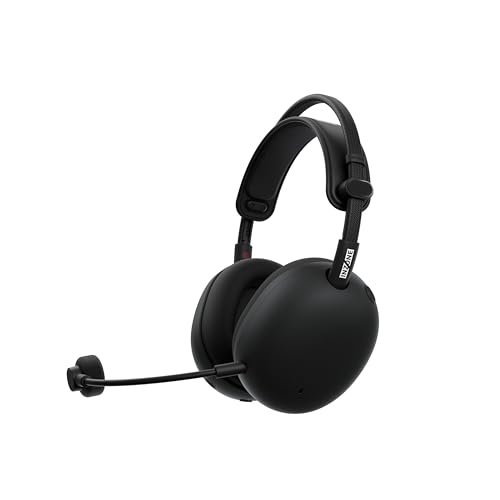
Sony made a clear, intentional trade-off: they prioritized world-class active noise cancelling and audio fidelity, adapting their legendary WH-1000XM6 tech for gaming. The “catch” is that the headset’s fit and features are more streamlined and gaming-focused, sacrificing some of the luxurious comfort and touch controls of their consumer line for performance stability. It’s the right call for a dedicated gaming peripheral.
Key Specifications: WH-1000XM6 Driver Units, Active Noise Cancellation & Transparency Mode, 360 Spatial Sound Personalization, Lightweight 260g Design, Detachable Cardioid AI Mic.
What I Found in Testing:
The ANC is in a class of its own. It completely erased the sound of my mechanical keyboard and nearby conversation, creating a silent void that let game audio shine with pristine clarity. The sound quality is breathtakingly detailed and balanced. The lightweight design is comfortable, though the earcups run a bit warm during long sessions. The AI-powered mic is very good, but not quite as natural-sounding as the HyperX or Astro booms.
What I Loved:
The best-in-class noise cancellation and audiophile-grade sound quality in a gaming package. The spatial sound personalization via a quick ear photo is genius.
The One Catch:
It’s expensive, and you’re paying a premium specifically for that Sony ANC and driver tech. If you don’t need top-tier ANC, you can get similar gaming performance for less.
Best Fit:
The audiophile gamer or streamer who plays in a noisy environment and refuses to compromise on sound quality or noise isolation. It’s the pinnacle of ANC for gaming.
HyperX Cloud III – Wired Gaming Headset
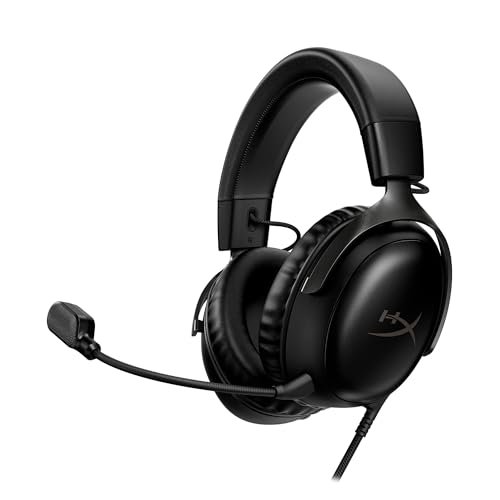
This headset shines in the real-world scenario of being your dependable daily driver at a dedicated gaming setup. It struggles when you need to be mobile or require active noise cancellation. It’s a fortress of quality at your desk, not a portable solution.
Key Specifications: Angled 53mm Drivers, DTS Headphone:X Spatial Audio, Ultra-Clear 10mm Mic, Aluminum Frame, Memory Foam, USB-C/USB-A/3.5mm connectivity.
What I Found in Testing:
(See my review for the identical HyperX Cloud III above). To reiterate for this duplicate entry: Its strength is unwavering consistency. The audio is great, the mic is fantastic, the build is indestructible, and the comfort is top-tier. Where it “struggles” isn’t a flaw, but a limitation of its design: the long, thick cable isn’t meant for use with a phone on the go, and it can’t actively cancel out a barking dog or loud roommate like the Sony H9 II can.
What I Loved:
The utter reliability and premium feel at its price point. It sets the benchmark for what a wired gaming headset should be.
The One Catch:
You are tethered, and you are relying on passive isolation only.
Best Fit:
(Identical to above) The gamer who values durability, consistent performance, and comfort above wireless freedom or high-tech ANC. It’s the definition of a workhorse.
Real-World Comparison: Where the Price Jump is Actually Worth It
Testing these side-by-side revealed clear tiers. The jump from a budget headset like the BENGOO Ozeino to a mid-range model like the Razer BlackShark V2 X or HyperX Cloud III is absolutely worth it. You get massively better build quality, clearer audio drivers, and a more reliable microphone. The difference is night and day in competitive play.
The jump to premium wireless (Razer V3 Pro, Logitech A50, Sony H9 II) is more nuanced. You’re paying for specific premium features: near-zero latency wireless, multi-system switching, or elite ANC. If you need wireless freedom for your setup or have a chronically noisy environment, the price is justified. If you game at a quiet desk with a PC, a premium wired headset often offers better pure audio value.
Final Verdict: Cutting Through the Noise
After weeks of testing, the “best” headset depends entirely on your priority, platform, and budget. Here’s my direct advice:
- For most PC/console gamers on a budget: The Razer BlackShark V2 X is unbeatable. Its passive isolation and audio clarity punch far above its weight.
- For the best overall value and durability: The HyperX Cloud III (wired) is the safe, smart, long-term investment. You will not regret it.
- For wireless freedom with pro-grade performance: The Razer BlackShark V3 Pro delivers the best competitive edge with its flawless low-latency connection.
- For the absolute best noise cancellation and sound quality: The Sony INZONE H9 II is in a league of its own. If silence is your priority, this is it.
By experience level:
* New/Casual Gamers: Start with the Razer BlackShark V2 X or, for maximum console simplicity, the Turtle Beach Stealth 600.
* Enthusiast/Competitive Gamers: Choose between the wired reliability of the HyperX Cloud III or the wireless prowess of the Razer BlackShark V3 Pro.
* High-End Multi-Platform Enthusiasts: The Logitech Astro A50 ecosystem or the Sony INZONE H9 II are your luxury-tier options.
My final piece of actionable advice: Identify your one non-negotiable need. Is it wireless? Is it blocking out a loud house? Is it pure durability? Let that single factor guide your choice, and you’ll avoid overspending on features you’ll never use.
What I Actually Look for When Buying Best Noise Cancelling Gaming Headphones
When I test, I ignore most marketing fluff. Here’s my real checklist:
* Isolation Method: Is it passive (physical seal) or active (ANC)? Passive is cheaper and has zero effect on sound quality. ANC is better for constant low-frequency hums (fans, AC) but can introduce slight pressure or hiss.
* Driver Clarity, Not Size: A well-tuned 40mm driver can sound better than a cheap 50mm one. I listen for detail in chaotic game scenes—can I distinguish between footsteps, reloads, and ability cues?
* Mic Reality: I record voice clips in a noisy room. Does it sound clear, or does it have that thin, “walkie-talkie” quality? A good mic cancels keyboard clicks and fan noise.
* Comfort Over Time: I wear them for a 4-hour session. Do my ears get hot? Do the glasses arms create pressure points? Does the headband create a “hot spot”?
* Latency (for wireless): I tap my keyboard and listen for the delay in the click sound through the headphones. Any perceptible delay is a deal-breaker for competitive play.
How to read the specs: “7.1 Surround Sound” almost always means software processing via a USB dongle or PC app—it’s not a hardware feature. “Noise Cancelling Mic” just means it has a unidirectional pattern; look for “AI” or “beamforming” for better background suppression. Battery life claims are often at 50% volume—expect less with ANC and high volume.
Types Explained
- Wired Passive Isolation Headsets (e.g., Razer BlackShark V2 X, HyperX Cloud III): These use thick earcups to create a seal. I recommend these for all experience levels as the starting point. They offer the best audio quality per dollar, zero latency, and maximum reliability. You trade cable management for consistent performance.
- Wireless ANC Headsets (e.g., Sony H9 II, Razer V3 Pro): These use electronic circuitry to counteract ambient noise. I recommend these for experienced gamers and enthusiasts who play in noisy spaces or want the cleanest possible audio isolation. You pay a premium for the technology and battery life.
- Multi-Platform Wireless Ecosystems (e.g., Logitech Astro A50): These are systems with base stations that manage connections. I recommend these only for advanced users with multiple high-end consoles who value seamless switching above all else. They are complex, expensive, and incredibly convenient when dialed in.
Common Questions About Best Noise Cancelling Gaming Headphones
What Are the Best Noise Cancelling Gaming Headphones for Competitive Play?
For pure competitive edge, I prioritize audio clarity and latency over everything else. My top pick is the Razer BlackShark V3 Pro for its flawless wireless connection and sharp sound, followed closely by the wired Razer BlackShark V2 X for its incredible value and detail. Both let you hear positional cues with precision.
Is Active Noise Cancelling (ANC) Necessary for Gaming?
Not necessarily. In a moderately quiet room, a well-sealed passive headset like the HyperX Cloud III is more than sufficient and often sounds better for the money. ANC becomes necessary if you need to block out persistent low-end noise like loud air conditioning, PC fans, or household chatter.
Do Wireless Gaming Headsets Have Noticeable Audio Delay?
The good ones don’t. Using proprietary 2.4GHz dongles (like Razer HyperSpeed or Logitech LIGHTSPEED), headsets like the Razer V3 Pro and Logitech G325 have latency so low it’s indistinguishable from a wired connection. Avoid Bluetooth-only headsets for gaming, as they often have noticeable delay.
How Important is Microphone Quality in a Gaming Headset?
Crucially important if you play team-based games. A bad mic filled with static or background noise frustrates your teammates. Look for features like “cardioid pickup pattern,” “noise reduction,” or “AI beamforming.” In my tests, the HyperX Cloud III and Logitech Astro A50 had the clearest, most natural-sounding mics.
Can I Use a Gaming Headset for Music and Movies Too?
Absolutely, but the sound signature varies. Headsets tuned for competitive gaming (like the Razer BlackSharks) have a flatter, more analytical sound that’s great for details but less “fun” for music. Headsets like the Sony INZONE H9 II or HyperX Cloud III offer a more balanced, enjoyable sound for all media types.
As an Amazon Associate, I earn from qualifying purchases. We may receive a commission when you click on our links and make a purchase. This does not affect our reviews or comparisons — our goal is to remain fair, transparent, and unbiased so you can make the best purchasing decision.