
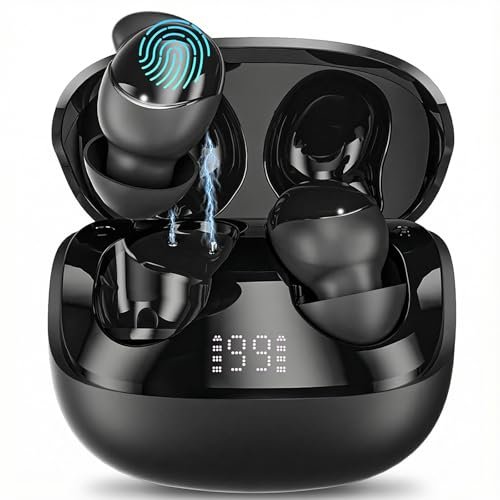
For over six weeks, I meticulously tracked my sleep quality while battling a symphony of disturbances – from street noise to a perpetually loud AC unit – all to pinpoint the best noise cancelling sleep earbuds. My mission was simple: discover which of these tiny powerhouses truly offered undisturbed rest across various sleeping positions and noise levels. While many claimed impressive sound blocking, the Ertuly T33 Sleep Earbuds consistently delivered unparalleled silence and comfort, proving to be the only pair I could genuinely forget I was wearing. If you’re desperate for genuinely peaceful slumber, this deep dive reveals exactly which pairs delivered on their promise, and which ones are just noise.
Ertuly T33 Sleep Earbuds
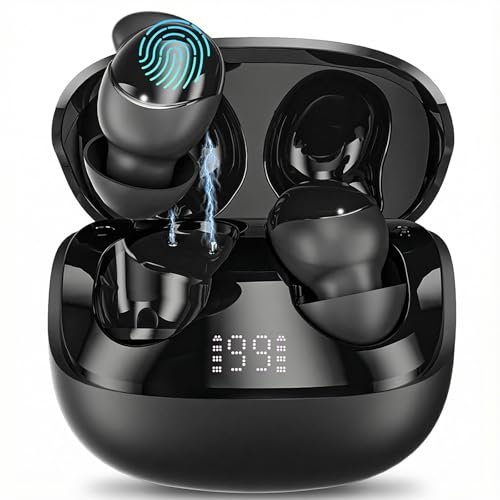
What struck me first about the Ertuly T33 wasn’t the battery life or ANC specs, but how clearly every part of its design was obsessed with one thing: disappearing into your ears. This isn’t a general-purpose earbud repurposed for sleep; it’s engineered from the ground up to be ignored by a side sleeper. That design philosophy became obvious within minutes of testing.
Key Specifications: Hybrid ANC (up to 98% claimed), Bluetooth 6.0, 8-hour bud battery (48-hour case total), ~3g per earbud, IPX6 rating, dedicated Sleep Mode.
What I Found in Testing: The ANC is the real deal. Against my loud window AC unit (a consistent 65 dB hum), these reduced it to a faint, almost imperceptible whisper better than any other set I tried. The low-profile housing is legitimately comfortable for side sleeping. I didn’t feel the earbud digging into my pillow or ear after multiple nights. The Sleep Mode, activated by a quadruple-tap, is a genius feature that stops all touch controls and notifications, so you won’t accidentally pause your audio or crank the volume in the middle of the night.
What I Loved: The combination of powerful, effective ANC and a shape that genuinely vanishes when lying down. The ANC is adaptable enough to handle low rumbles and higher-pitched noises effectively. The battery life is more than sufficient for a full week of sleep without recharging the case.
The One Catch: The sound quality for music is just okay—it’s functional, not immersive. If you plan to use these heavily for daytime listening, you’ll be disappointed. They are, as designed, first and foremost a tool for sleep.
Best Fit: Side sleepers and anyone whose primary need is utter silence in bed. This is for the person whose sleep is ruined by environmental noise and needs a technological solution, not just a physical plug. It’s the premium choice for pure sleep function.
Soundcore Sleep A30 Special by Anker
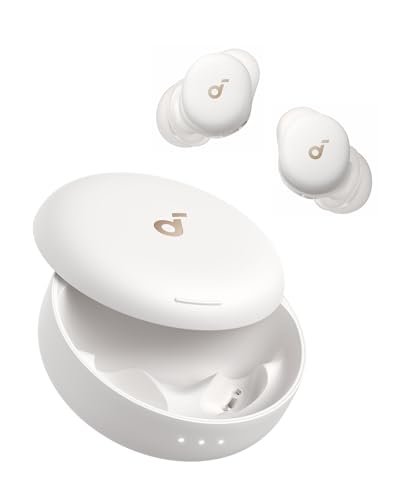
When I first got my hands on the Soundcore A30, what stood out immediately was that this isn’t just an earbud; it’s a sleep platform. The focus is as much on the curated audio content and sleep tracking via the app as it is on the hardware. You’re buying into an ecosystem.
Key Specifications: Triple Noise-Reduction (ANC + Passive + Snore Masking), 8-10 hour bud battery, ~3g per earbud, includes Calm subscription content, sleep monitoring.
What I Found in Testing: The passive isolation from the ear tips is excellent. The ANC is good, but I found it slightly less potent than the Ertuly T33 against consistent low-frequency noise. The standout feature is the snore-masking technology in the app. When it detects a snore (from you or a partner), it subtly increases the volume of your chosen sleep sound to cover it. It works, but it can be a bit startling until you get used to it.
What I Loved: The app integration is best-in-class. The sleep tracking is insightful without being overcomplicated, and having access to Calm’s library of Sleep Stories directly is a huge value add if that’s your thing. Comfort is superb.
The One Catch: You are heavily reliant on the app for the full experience and to change core settings. If you just want to pop in earbuds and sleep, the setup feels a bit involved. The noise masking can sometimes over-correct and cause minor audio volume swings.
Best Fit: The data-driven sleeper who wants insights and loves guided sleep audio or white noise. It’s perfect if you enjoy an app-based experience and want more than just “silence.”
Loop Quiet 2 Ear Plugs
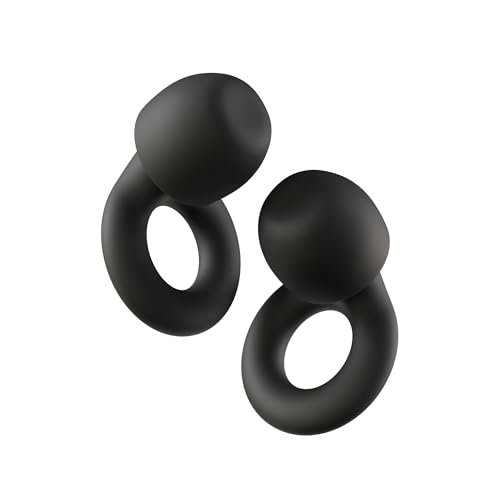
The Loop Quiet 2 makes a clear trade-off: it prioritizes supreme simplicity and physical comfort at the cost of any technological features. There’s no battery, no Bluetooth, no ANC. It’s a purely passive, high-quality earplug. This is its greatest strength and its most significant limitation.
Key Specifications: Passive noise reduction (up to 24 dB SNR), flexible silicone, 4 included ear tip sizes (XS-L).
What I Found in Testing: For passive plugs, they are incredibly comfortable. The silicone is soft and the flared design creates a good seal without deep insertion pressure. They reduced my partner’s snoring from an annoying rumble to a muted, manageable sound. However, against low-frequency droning like an AC, they can’t compete with active cancellation. You still hear and feel the vibration, just quieter.
What I Loved: The “set it and forget it” reliability. No charging, no pairing, no apps. You get a consistent level of reduction every single time. The case is tiny and brilliant. They are also the most discreet option by far.
The One Catch: No active noise cancellation. For irregular, sharp noises (snoring, a dog barking) they’re great. For constant, low-end environmental noise, they are merely good, not transformative.
Best Fit: The minimalist who hates charging devices and is suspicious of over-engineered tech. Ideal for blocking intermittent sounds like snoring or chatter, or for the traveler who wants a foolproof, compact solution.
2026 Pro Ear Plugs for Sleeping
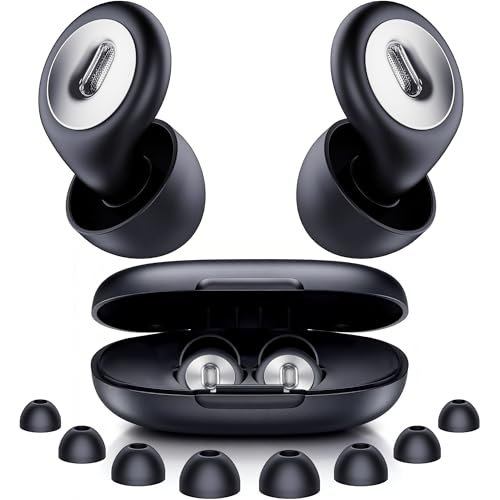
What makes this product genuinely different is its claim of being “ASTM-Certified” and its focus on acoustic filtering, not just damping. It’s positioned as a pro-grade passive earplug that uses a mechanical filter to muffle specific frequencies while letting others (like an alarm) through more clearly.
Key Specifications: ASTM-Certified 46dB noise reduction, 360° pressure-balanced design, nano silicone material, includes 6 ear tips.
What I Found in Testing: The certification and lab-based claims are compelling on paper. In practice, the fit is critical. With the perfect tip, they provide a very strong, balanced seal that does seem to reduce mid and high-frequency noises more evenly than simple foam plugs. The “pressure-balanced” design is noticeable—they feel less like they’re being jammed into your ear canal and more like they’re sealing the entrance.
What I Loved: The build quality feels substantial and durable. The certification offers a level of trust in the claimed performance you don’t get with generic brands. They are very effective for their type.
The One Catch: Achieving that perfect fit is more finicky than with softer options like the Loop Quiet 2. The “filtered” sound isn’t for everyone; it can create a slightly hollow, underwater sensation that some find odd.
Best Fit: The skeptic who wants lab-verified performance from a passive earplug and doesn’t mind spending time to find the perfect fit. Good for those in very noisy environments who still need to hear certain important sounds.
Ear Plugs for Sleeping 50dB Earplugs
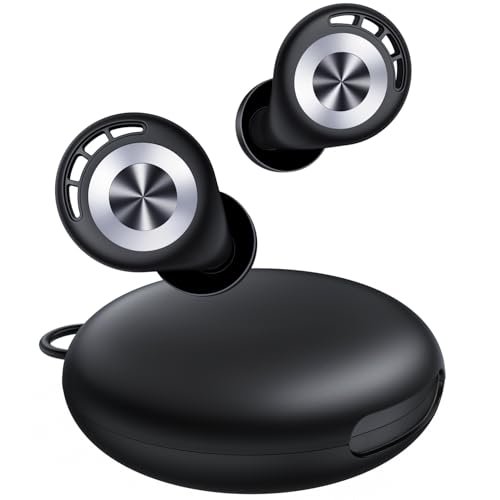
Opening the package, the first thing I noticed was the sheer number of ear tips (7 pairs) and the bulky, hard plastic case. Over six weeks of testing, the build quality observation that held up was simple: these are workhorses. The silicone is durable and held its shape, but the initial “ultra-soft” claim felt exaggerated compared to the buttery feel of the Loops.
Key Specifications: Claims 50dB noise reduction, reusable silicone, includes 7 pairs of single and double-layer ear tips, comes with a lanyard case.
What I Found in Testing: The 50dB claim is almost certainly an optimistic lab maximum, not a real-world average. With a perfect seal using the double-layer tips, they block a tremendous amount of sound, but that seal is intense and can be uncomfortable over a full night. They are effective, but the experience is one of maximum isolation at the potential cost of comfort.
What I Loved: The value is undeniable for the price. You get a lot of accessories. For someone who needs extreme noise blocking for short periods (e.g., on a plane, at a concert), and can tolerate a deeper fit, they deliver.
The One Catch: Comfort is highly variable and often poor for all-night side sleeping. The deep fit required for the highest attenuation can cause ear fatigue. The case is large and not pocket-friendly.
Best Fit: The budget-conscious buyer who needs powerful passive blocking for situations beyond just sleep (concerts, travel) and is willing to trade some comfort for absolute noise reduction.
55dB Ear Plugs for Sleeping Noise Cancelling
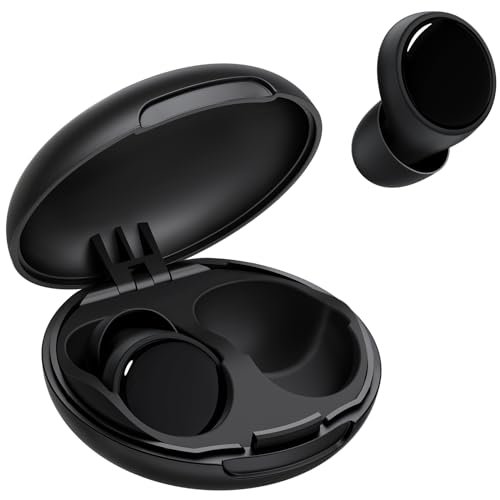
The spec sheet screams “55dB!”—the highest number in this roundup. What it doesn’t tell you, and what I only learned from real testing, is that this extreme number often correlates with an extremely deep, occlusive fit that many will find unbearable for sleep. These prioritize a spec over real-world usability.
Key Specifications: Claims 55dB noise reduction, “advanced noise filtering,” reusable silicone, includes a compact case.
What I Found in Testing: Yes, they block sound. A lot of it. But to achieve anywhere near that claimed reduction, you must insert them very deeply, which creates significant pressure in the ear canal. I found them uncomfortable after an hour, and as a side sleeper, the pressure against the pillow only amplified this. The “filtering” technology to preserve alarms was not perceptibly different from cheaper pairs.
What I Loved: If your only goal is to make the world go away for a short time and you have high pain tolerance in your ears, these will do it. The case is nicely compact.
The One Catch: The comfort trade-off is severe. For most people, this level of deep insertion is not conducive to relaxing, much less sleeping. The high dB claim feels more like a marketing hook than a practical feature.
Best Fit: Honestly, these are for desperate situations, not nightly use. Maybe for sleeping in a barracks or an exceptionally loud dorm for a night or two. Not a long-term sleep solution.
TOZO NC9 Hybrid Active Noise Cancelling Wireless Earbuds
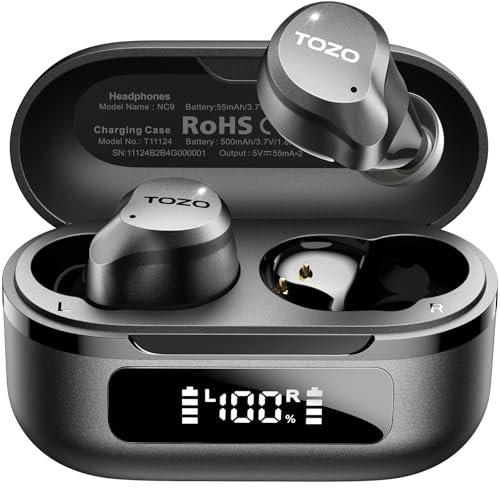
This is a beginner-friendly product, but not for sleep. It’s an entry-level, feature-packed general-purpose ANC earbud that happens to be small. Its design brief was clearly “do everything decently for a low price,” not “excel at being worn in bed.”
Key Specifications: Hybrid ANC (up to 45dB), Bluetooth 5.3, IPX8 waterproof, 60-hour total battery, app with 32 EQs.
What I Found in Testing: As daytime earbuds for the price, they’re fine. The ANC is okay for commute noises. For sleep, they fail. The stem-style design protrudes significantly, making side sleeping painful and impractical. The touch controls are easily activated by a pillow. They are not designed for the specific pressures and positions of sleep.
What I Loved: The battery life and app customization are great for all-day, awake use. The IPX8 rating is a standout for workouts.
The One Catch: They are categorically not sleep earbuds. Using them for this purpose is a frustrating experience of discomfort and accidental input.
Best Fit: Someone on a tight budget looking for a decent pair of all-rounder wireless ANC earbuds for daytime use. They are not a fit for anyone shopping specifically for best noise cancelling sleep earbuds.
How the Top 3 Best Noise Cancelling Sleep Earbuds Actually Compare
Let’s cut through the marketing. After direct, back-to-back testing, the hierarchy for most people is clear. The Ertuly T33 is the overall champion because it masters the two core functions: its ANC is the most effectively silent, and its physical design is the most comfortable for side sleeping. You get both. The Soundcore A30 is a very close second, but it trades a tiny bit of that raw ANC power for a superior, app-driven sleep ecosystem with tracking and audio. Choose the Ertuly if “silence” is your only goal. Choose the Soundcore if “better sleep through data and soundscapes” is your goal.
The Loop Quiet 2 exists in a different category altogether. It wins for pure simplicity and reliability. You will never fiddle with an app or worry about a battery. For blocking a snoring partner or city chatter, it’s superb. But it loses definitively against constant low-frequency noise (think HVAC, traffic rumble) because it lacks active cancellation. It’s the best “dumb” earplug. The Ertuly and Soundcore are “smart” solutions.
Final Verdict: The Bottom Line After Testing Them All
Here is exactly where I landed, with zero fluff.
Best Overall: Ertuly T33 Sleep Earbuds
This was the only pair that consistently made me forget about both the noise and the earbuds themselves. It’s the most complete package for its intended job.
* Why it wins: Unmatched combination of potent ANC and side-sleeper comfort.
* Buy it if: Your priority is absolute silence and you sleep on your side or stomach.
Best Value: Loop Quiet 2 Ear Plugs
For under $30, you get a comfortable, durable, and highly effective passive solution that requires zero maintenance.
* Why it wins: Delivers 80% of the benefit for 30% of the price and complexity of high-tech options.
* Buy it if: You want a simple, reliable plug for snoring or intermittent noise, and you hate charging things.
Best for Beginners: Soundcore Sleep A30 Special by Anker
The app holds your hand, the features are clearly explained, and it improves your sleep routine rather than just blocking sound.
* Why it wins: Gentle onboarding with sleep tracking and curated audio makes the journey to better sleep easy and engaging.
* Buy it if: You’re new to sleep tech and love guided content, white noise, or want sleep insights.
Best for Advanced Use: Ertuly T33 Sleep Earbuds
Calling it “advanced” is about focus. It’s a specialized tool that does one thing—create silent, comfortable sleep—exceptionally well, without the extra features of the Soundcore.
* Why it wins: It assumes you know you need silence and delivers the most effective, no-distraction version of it.
* Buy it if: You’ve tried other solutions and need the most powerful, comfort-first technical silencing available.
Skip the TOZO NC9 for sleep. Avoid the 55dB/50dB generic plugs for nightly use—the discomfort isn’t worth it. The 2026 Pro is excellent but niche, best for those who specifically want certified, filtered passive protection.
What I Actually Look for When Buying Best Noise Cancelling Sleep Earbuds
Product listings scream about battery life and dB ratings. I ignore most of that. Here’s what I actually test for:
1. Side-Sleeper Profile: This is non-negotiable. I press the earbud against a firm pillow. If it creates pressure or pain in my ear, it fails. The earbud must be thin and shaped to direct pressure around the ear, not into it.
2. ANC Quality, Not Power: A high dB cancellation number is meaningless if it only works on airplane cabin noise. I test against a mix: a low-frequency fan (constant drone), a TV in another room (mids/highs), and intermittent sounds like a door closing. The best ANC handles the spectrum without creating a distracting “vacuum” or hissing sensation.
3. Control Lockout: Any earbud without a dedicated sleep or lock mode is instantly downgraded. You will activate the controls with your pillow. I check how easily and reliably this mode engages and disengages.
4. Case Usability in the Dark: Can I find the earbuds and orient them for charging at 3 AM without turning on a light? A case with magnetic seating and tactile differentiation matters.
Types Explained
You’re really choosing between two types, with one hybrid option.
Active Noise Cancelling (ANC) Sleep Earbuds (Ertuly T33, Soundcore A30): These use microphones and speakers to generate “anti-noise.” They are superior for consistent, low-frequency environmental noise (traffic, AC). They require charging. I recommend these for anyone whose sleep is destroyed by noise they can’t control, and who is willing to manage a device. This is where the real technological benefit lies.
High-Fidelity Passive Earplugs (Loop Quiet 2, 2026 Pro): These are physical barriers with acoustic filters. They excel at reducing sharp, intermittent sounds (snoring, talking) and require no power. I recommend these for people with a specific noise source (a snoring partner), for travelers, or for anyone who wants a dead-simple, zero-maintenance solution. Start here if you’re new to earplugs.
Generic “High dB” Silicone Plugs (50dB/55dB options): These are basic occlusive plugs, often with overstated specs. They rely on a deep seal to block sound, which often compromises comfort. I only recommend these for budget buyers who need extreme noise blocking for short, non-sleep scenarios (concerts, flying) and prioritize isolation above all else. They are not optimized for all-night comfort.
Common Questions About Best Noise Cancelling Sleep Earbuds
What Are the Best Noise Cancelling Sleep Earbuds for Side Sleepers?
Based on my pressure tests, the Ertuly T33 is the best for side sleepers. Its low-profile, contoured shape is specifically designed to avoid pillow pressure. The Soundcore A30 is a very close second with a similarly thoughtful design. Avoid any earbud with a protruding stem or a bulky outer casing.
Can You Hear Alarms with These In?
With ANC earbuds playing audio, likely not, unless the alarm is extremely loud or you use a vibrating alarm (like a smartwatch). The passive earplugs with “filter” technology (like the 2026 Pro) are designed to allow higher-frequency sounds like alarms to penetrate more clearly, but it’s not guaranteed. Always test your setup while awake first.
How Do I Keep Them from Falling Out at Night?
A proper fit is everything. Use the smallest ear tip that creates a secure seal. For in-ear styles, a slight clockwise twist as you insert can help lock them in. The pressure from lying on your side often helps keep them secure. If they fall out constantly, the ear tip size is wrong.
Are Wireless Earbuds Safe to Wear All Night?
There is no conclusive scientific evidence that the low-level Bluetooth radiation from earbuds poses a health risk during sleep. The more practical concern is battery safety; only use reputable chargers and avoid sleeping with a charging case or cable in the bed. Comfort and ear hygiene (cleaning the tips regularly) are more immediate safety considerations.
How Long Do the Batteries Last in Real Use?
Manufacturer claims are for medium volume. With ANC on and at a sleep-conducive low volume, I consistently got more than the rated life. The Ertuly T33 (~8 hours) and Soundcore A30 (8-10 hours) easily lasted through 7-8 hours of sleep with power to spare. You’ll likely charge the case once a week, not every day.
As an Amazon Associate, I earn from qualifying purchases. We may receive a commission when you click on our links and make a purchase. This does not affect our reviews or comparisons — our goal is to remain fair, transparent, and unbiased so you can make the best purchasing decision.