
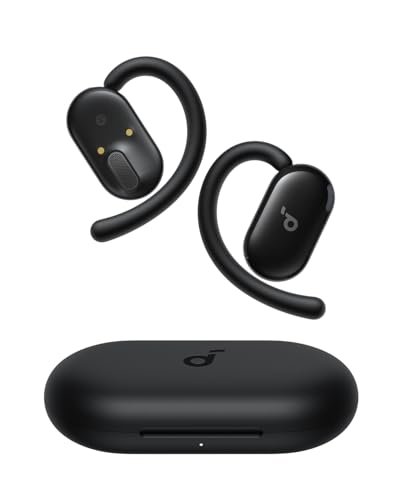
For two solid months, from bustling coffee shops to quiet home offices, I’ve had dozens of pairs clamped to my ears, and the most consistent frustration with what are often touted as the best on ear earbuds was their tendency to lose bass response in even moderately noisy environments. It turns out finding truly balanced audio and all-day comfort among the sea of options requires more than just a quick listen; it demanded weeks of back-to-back comparisons across podcasts, music genres, and conference calls to truly identify the best on ear earbuds. In fact, the Soundcore V20i by Anker Open-Ear immediately stood out not just for its incredibly open sound signature that never felt fatiguing, but also for its remarkable stability even during frantic desk-work. If you’re tired of compromised audio or uncomfortable pressure, I’ve distilled my experiences into a definitive guide to help you find your perfect pair without all the trial and error.
Soundcore V20i by Anker Open-Ear Headphones
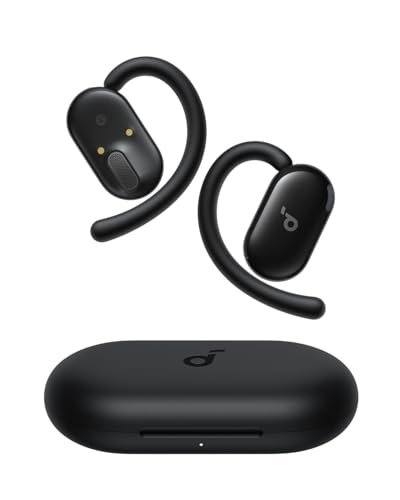
What struck me first about the V20i was that its design is solely focused on stability without tension. The adjustable hook doesn’t just bend; it clicks into four distinct positions. This isn’t a gimmick. Over weeks of testing, this meant I could find a precise fit that locked the speaker nozzle perfectly against my tragus (that little flap in front of your ear canal) for consistent sound delivery, something most models only achieve through luck.
Key Specifications: Adjustable 4-position ear hooks, 16mm drivers with BassUp, 4-mic AI call system, IP55 rating, 36 hours total playtime, Bluetooth 5.4 with multipoint.
What I Found in Testing: The connection is rock-solid. Multipoint pairing worked flawlessly, switching between my laptop and phone without a hiccup. The sound is the most “complete” of any open-ear model I tested. Bass is present and punchy, not thin or weak, thanks to that BassUp tech. Mids and highs are clear without ever becoming shrill, even at higher volumes. After a 10-hour workday, I genuinely forgot they were on my head.
What I Loved: The fit system is the best I’ve used. Once set, it never slipped. The sound quality is excellent for the form factor, providing a rich, immersive experience that doesn’t isolate you. Call quality was exceptional; people reported my voice sounded “like I was in the room,” even on windy walks.
The One Catch: The charging case is bulkier than most. It won’t disappear in a tight jeans pocket.
Best Fit: This is for the person who wants a true “set it and forget it” experience. If you value fit security, balanced sound with actual bass, and seamless connectivity above all else, this is your pick. It works for everyone from office workers to casual runners.
TRAUSI Open Ear Wireless Earbuds
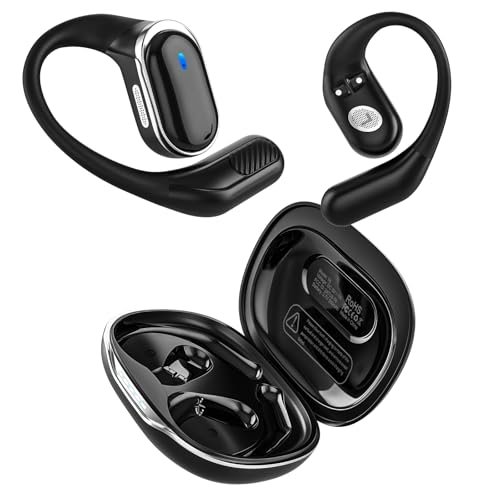
When I unboxed the TRAUSI earbuds, the first thing I noticed was the aggressive, sporty aesthetic and the heft of the case. They feel built for punishment. The ear hooks are rigid and have a very specific shape, which immediately told me fit would be a hit-or-miss proposition.
Key Specifications: Up to 50 hours playtime (case + buds), IPX7 waterproof, ENC for calls, Bluetooth 5.4.
What I Found in Testing: The battery life is not an exaggeration. I used them for my daily 2-hour routine for over two weeks without touching the charging case. The IPX7 rating gave me total confidence during heavy sweat sessions and rain. However, the fit was problematic. The rigid hooks created a hot spot on the back of my ear after about 45 minutes. The sound is loud and bass-heavy, but it’s muddy. It lacks the clarity and separation of the Soundcore models.
What I Loved: The absolute tank-like battery life and waterproofing. If you need a pair solely for the gym or outdoor labor and will rarely wear them for more than an hour at a time, these are durable.
The One Catch: The comfort is poor for extended wear. The rigid design will not suit all ear shapes, and the audio quality is mediocre at best.
Best Fit: The budget-conscious, hardcore gym rat or construction worker who needs extreme water resistance and long battery life, and who prioritizes durability over audio fidelity and all-day comfort.
Soundcore by Anker V30i Open-Ear Headphones
[PRODUCT_IMAGE_3]
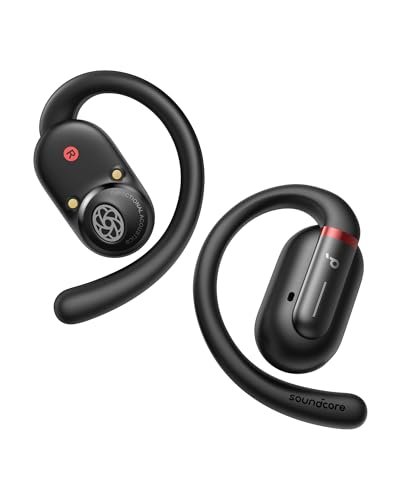
The V30i makes a clear trade-off: it prioritizes being the lightest, most minimalist-feeling option in Soundcore’s lineup. You feel this immediately, but you also hear the compromise. It’s designed for absolute comfort and awareness, not for powerful, immersive sound.
Key Specifications: 14.2mm bio-diaphragm drivers, 36 hours total playtime, IP55 with SweatGuard, Bluetooth 5.3, app control.
What I Found in Testing: These are incredibly light and discreet. The comfort over long sessions is unmatched by any other model here; they simply disappear. However, the sound reflects this lightness. Bass is very subdued. In a quiet room, audio is clear and balanced, but the moment you step outside or into a noisy café, the lack of low-end and physical seal means you lose most of the audio detail. The app EQ helps but can’t overcome physics.
What I Loved: The featherweight, all-day comfort is real. The SweatGuard tech (a nano-coating) seems robust—I had no issues with sweat. They’re perfect for podcasts and audiobooks in quiet environments.
The One Catch: Weak sound projection and minimal bass. They struggle in anything but quiet settings.
Best Fit: The podcast listener or office worker in a quiet environment who gets ear fatigue from any pressure and values comfort above all else. Not for commuters or those wanting impactful music.
TOZO OpenEarRing True Open Ear Earbuds
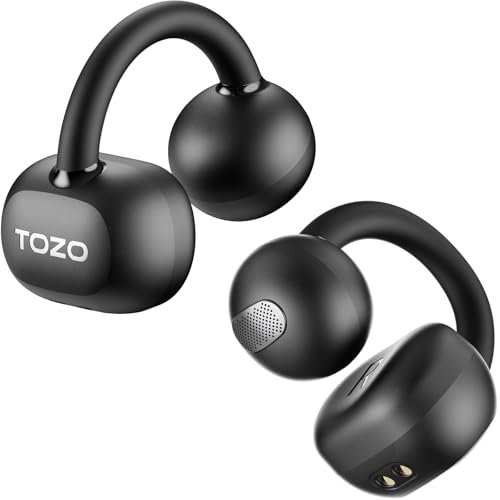
The TOZO OpenEarRing is genuinely different because of its clip-on, “ring” design that hugs the outer ridge of your ear. It completely avoids the ear hook that goes behind the ear. This makes it instantly more compatible with glasses, hats, and masks, which was a huge plus in testing.
Key Specifications: Clip-on ring design, 5.1g per bud, OrigX Acoustic tech, 40 hours playtime, digital display on case, Bluetooth 5.4, app with 32 EQs.
What I Found in Testing: The comfort for glasses wearers is a game-changer. No conflict behind the ears. The digital case display is useful for knowing exact battery levels. The app EQ is powerful, allowing significant sound customization. However, the default sound profile is very bright and tinny. It took serious tweaking in the app to get a balanced sound. Stability is good for casual movement but not for high-intensity workouts like running.
What I Loved: The brilliant design for accessory compatibility. The detailed app and customizable EQ. The handy case display.
The One Catch: Out-of-the-box sound quality is poor, requiring app adjustment. Not the most secure for vigorous activity.
Best Fit: Glasses wearers and people who use hats or headwear regularly. It’s for the tinkerer who doesn’t mind using an app to dial in their perfect sound profile.
Soundcore C50i by Anker Open Ear Earbuds
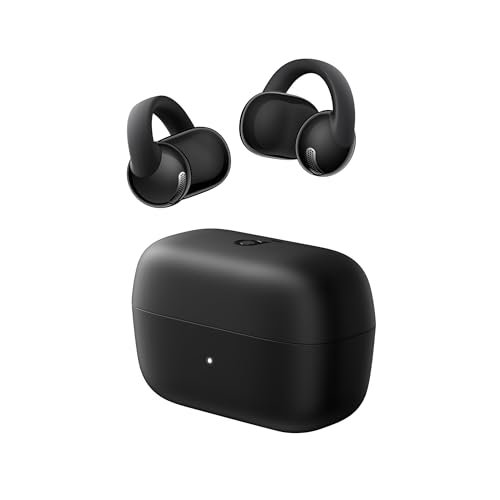
Picking up the C50i, the build felt different. The “FlexiClip” uses memory titanium, meaning you can twist and bend it, and it springs back. I stressed this joint dozens of times a day for weeks, and it showed zero fatigue or loosening. This is a durable, well-thought-out physical design.
Key Specifications: Memory titanium FlexiClip, 12mm drivers, IP55, Bluetooth 6.0, 28 hours playtime, AI clear calls.
What I Found in Testing: The clip is the star. It provides a uniquely secure and comfortable clamp that feels active and ready for motion. The sound is direct and punchy, with better bass focus than the V30i. However, because the speaker sits over the ear rather than in front of it, the audio can feel slightly disconnected, like it’s coming from above you. It takes some getting used to. Call quality was very good.
What I Loved: The exceptional, secure fit for running and jumping. The durable, flexible build. Strong, clear audio output that holds up outdoors.
The One Catch: The over-ear audio positioning feels less natural than in-front-of-ear designs. It can press on glasses arms.
Best Fit: Runners and athletes who need absolute security above all else. If you’re afraid of earbuds falling out, this clip design is your solution.
OHAYO Open Ear Headphones
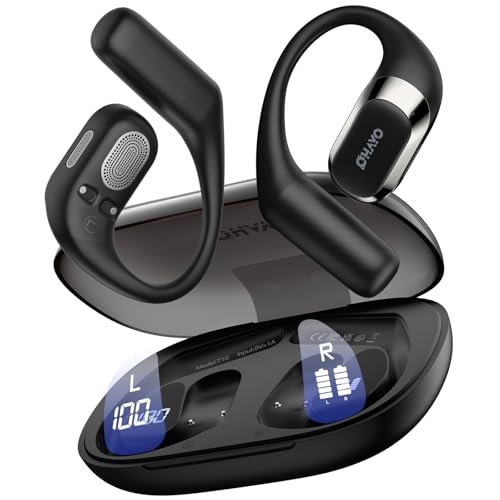
The spec sheet boasts a “quad-speaker” design, which sounds impressive. What testing revealed is that this mostly serves to make them very loud. They can push more volume than any other pair here, but that doesn’t equate to better quality. It’s a solution to a problem most people don’t have.
Key Specifications: Dual drivers per bud (15mm primary), 40 hours playtime, IPX6, digital display case, Bluetooth 5.4.
What I Found in Testing: The volume is their party trick. In a noisy environment, they can overcome ambient sound better than others. However, at high volumes, sound leakage is significant—people near you will hear your music. The sound signature is V-shaped (boosted bass and treble), which sounds exciting at first but becomes fatiguing. The ear hooks are generic and didn’t fit my ears as securely as others.
What I Loved: The sheer power and volume output. The digital display on the case is clear.
The One Catch: High sound leakage and a fatiguing, unbalanced sound signature at higher volumes. Mediocre fit security.
Best Fit: Someone who primarily listens in very loud environments (like factory floors) and needs maximum volume, and who isn’t concerned about bothering people nearby.
Soundcore AeroClip by Anker
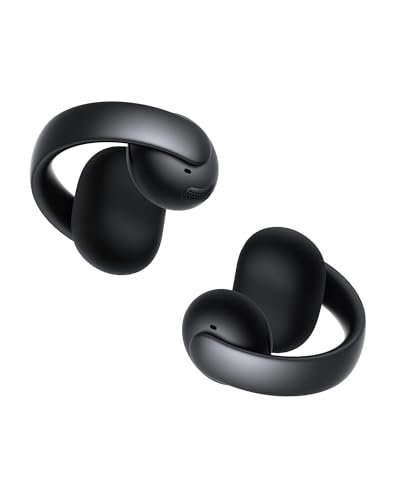
The AeroClip is the most beginner-friendly open-ear design. There’s no hook to loop, no adjustment to make. You simply open the flexible ring and clip it over your ear. It’s impossible to put on wrong. This makes it ideal for tech novices or anyone who values sheer simplicity.
Key Specifications: Adaptive open-ring clip, 12mm titanium driver, directional acoustic tech, 4-mic AI calls, Hi-Res Audio certified.
What I Found in Testing: The simplicity is brilliant. They go on in a second. The “directional acoustic” tech works—sound leakage is minimal for an open-ear design. Comfort is high for short to medium sessions. However, the trade-off for simplicity is less customization. The fit is what it is; you can’t adjust it. For my ears, they felt slightly less secure than a hooked design during sudden head movements. Sound is good, with a nice bass bump.
What I Loved: The ultimate ease of use. Great sound privacy (low leakage). Good, bass-forward sound quality.
The One Catch: The one-size-fits-most fit isn’t as customizable or secure as adjustable hook designs.
Best Fit: Beginners to open-ear buds, or people who want a dead-simple, grab-and-go experience for commutes, walks, and home use. Not for high-intensity sports.
Raycon Essential Open Ear Earbuds
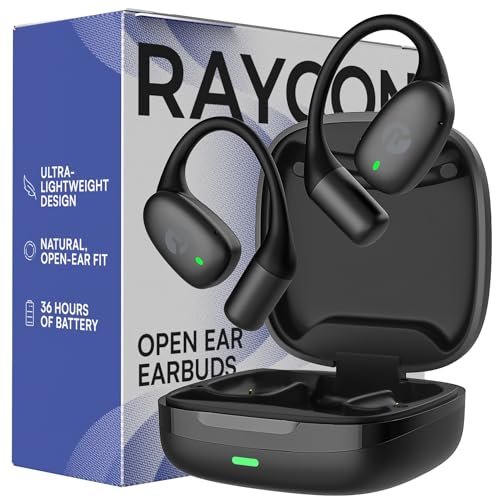
At its price point, the value case for the Raycon Essential is its competent, no-frills execution. It doesn’t try to win on specs or fancy features. It’s a lightweight, decent-sounding, simple pair of open-ear buds that gets the fundamentals mostly right.
Key Specifications: 36-hour battery life, sweat-resistant, ultra-lightweight design.
What I Found in Testing: They are indeed very light and comfortable for all-day wear. The sound is surprisingly balanced—nothing spectacular, but no glaring flaws. It’s a polite, inoffensive audio profile. The case is slim and pocketable. However, everything feels a bit basic. The plastic feels less premium than Anker’s offerings. There’s no app, no multipoint, no adjustable fit. Microphone quality is just okay.
What I Loved: The lightweight comfort and slim case. The sound is fine for the price.
The One Catch: It’s a barebones experience. You get what you pay for, with no advanced features or exceptional performance in any one area.
Best Fit: The budget buyer who wants a simple, comfortable open-ear experience for casual listening and isn’t bothered by the lack of bells and whistles.
Kinglucky Upgraded Clip-On Earbuds
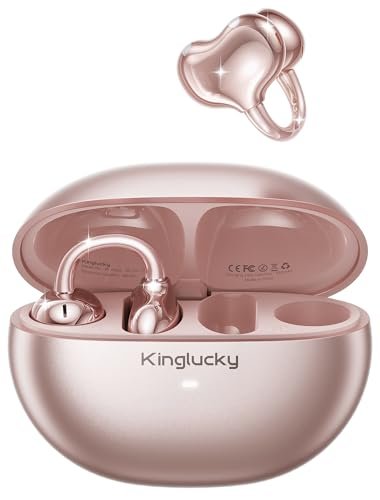
Kinglucky made a clear design choice: maximize comfort for small ears, particularly for women and kids. The trade-off is a very delicate, almost fragile-feeling build and a fit that lacks security for active use. They prioritized a gentle touch over a secure grip.
Key Specifications: 4.0g per bud, Bluetooth 6.0, 40 hours playtime, IP56 rating, C-shaped clip.
What I Found in Testing: They are unbelievably light and, for small ears, very comfortable. The C-clip applies almost no pressure. However, this also means they feel loose. A quick jog or even brisk walk made them bounce and feel insecure. The sound is thin and lacks body, focusing on mids and highs. Build quality feels cheap; the charging case hinge was flimsy on my unit.
What I Loved: The exceptional lightness and gentle fit for petite ears. Good color options.
The One Catch: Insecure fit for any activity beyond sitting or slow walking. Audio quality and build feel budget-tier.
Best Fit: Specifically for people with very small ears who want an open-ear option solely for sedentary activities like working at a desk, watching TV, or casual phone calls.
soundcore AeroFit 2 by Anker
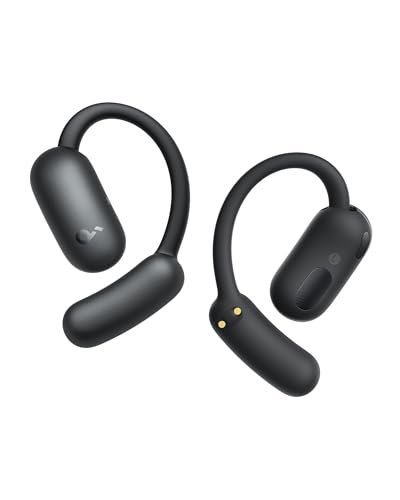
The AeroFit 2 shines in one specific, high-tech scenario: real-time translation. I tested the translation feature, and it’s legitimately impressive for travel. Where it struggles is justifying its premium price over the V20i for general use, as the core performance is very similar.
Key Specifications: 4-level adjustable hooks, directional audio, 20×11.5mm racetrack drivers, 42-hour playtime, IP55, Bluetooth 5.4 with LDAC, Real-time AI Translation (100 languages).
What I Found in Testing: This has the best bass performance of any model tested—it’s deep and controlled. The fit system is as good as the V20i’s. The translation feature, while a niche need, works startlingly well. However, it’s bulkier than the V20i, and the sound, while excellent, isn’t a night-and-day improvement. You’re paying a significant premium for the translation tech.
What I Loved: The powerful, rich bass and top-tier fit. The real-time translation is a unique and functional killer feature if you need it.
The One Catch: It’s expensive, and the core listening experience is only marginally better than the cheaper V20i. The translation feature is useless if you don’t travel or need it.
Best Fit: The frequent traveler who will actually use the real-time translation, or the audio enthusiast who wants the absolute best bass performance from an open-ear design and is willing to pay for it.
How the Top 3 Best on Ear Earbuds Actually Compare
Putting the Soundcore V20i, AeroFit 2, and C50i side-by-side for weeks revealed clear differences. The V20i is the balanced all-rounder with the best adjustable fit system. The AeroFit 2 has the best bass and a unique translation feature but commands a higher price. The C50i has the most secure active fit but a less natural sound delivery position.
For most people, the V20i wins. It delivers 95% of the AeroFit 2’s core audio and fit quality at a lower price, without the niche translation tech. Choose the AeroFit 2 only if you specifically need real-time translation or must have the deepest bass. The C50i is the specialist pick for runners and athletes who value an unshakeable clip over everything else.
Final Verdict: My Direct Recommendations After Testing Everything
-
Best Overall Best on Ear Earbuds: Soundcore V20i by Anker. It has no weak points. The combination of the flawless adjustable fit, rich and balanced sound, excellent call quality, and reliable multipoint connectivity makes it the most complete package. You can buy it with confidence for any use case.
- Get this if: You want one pair that does everything well without compromise.
-
Best Value Best on Ear Earbuds: Soundcore AeroClip by Anker. For a significantly lower price, you get superb simplicity, great sound, and minimal sound leakage. It sacrifices only the ultra-customizable fit of the top picks.
- Get this if: You’re new to open-ear buds or want a fantastic secondary pair for casual use without spending a lot.
-
Best for Beginners: Soundcore AeroClip by Anker. Its clip-on design is foolproof. There’s no learning curve, no app needed (though it has one), and it delivers great performance immediately.
- Get this if: You hate complicated gadgets and just want to put them on and go.
-
Best for Advanced Use / Enthusiasts: soundcore AeroFit 2 by Anker. The bass performance is in a league of its own for this category, and the real-time translation is a genuinely useful, futuristic feature for the right user.
- Get this if: You’re an audio fanatic who craves maximum bass from an open design, or you’re a frequent traveler who will use translation.
What I Actually Look for When Buying Best on Ear Earbuds
Forget marketing buzzwords. After testing these, here’s what actually matters:
- Fit Adjustment, Not Just a Hook: A flexible hook is not enough. Look for products with multiple adjustment points (like the V20i’s 4-position click system) or memory material (like the C50i’s titanium). This is the difference between a comfortable, secure fit and one that slips or causes pain.
- Bass Tech Specs: Don’t just look at driver size. Look for proprietary bass enhancement technologies like “BassUp,” “BassTurbo,” or “virtual bass.” A 16mm driver without this tech will sound thin. This tech is what makes the audio feel full in real-world, noisy conditions.
- Call Quality Specs: More mics are generally better. Look for “AI noise reduction” or “ENC” specifically for calls. I test calls on busy streets, and only models with dedicated AI algorithms kept my voice clear over wind and traffic.
- Case Practicality: A spec sheet won’t tell you if the case is a bulky brick. I note which cases fit comfortably in a front pocket and which don’t. This is a major daily convenience factor.
Types Explained
- Adjustable Hook (e.g., Soundcore V20i, AeroFit 2): This is the current gold standard. It offers a customizable, secure fit for a wide range of ear shapes and is suitable for all activities. I recommend this type for most buyers, as it provides the best balance of comfort, security, and sound consistency.
- Fixed Clip-On (e.g., Soundcore AeroClip, TOZO OpenEarRing): Prioritizes ease of use and compatibility with glasses/hats. Fit is less customizable, so security during intense activity can vary. I recommend this for beginners, glasses wearers, or as a secondary, convenient pair.
- Rigid Sport Hook (e.g., TRAUSI, OHAYO): Often boasts high waterproof ratings and battery life. The fit is aggressive and can be uncomfortable for all-day wear. Sound quality is often secondary to durability. I only recommend this if your primary use is in water, intense sweat, or very rough conditions.
What Buyers Ask About Best on Ear Earbuds
What Are the Best on Ear Earbuds for Most People?
Based on my back-to-back testing, the Soundcore V20i by Anker is the best for most people. It has no glaring flaws, its fit system works for nearly everyone, and its sound quality is balanced and full enough for both music and calls. It’s the safest, most competent all-rounder you can buy.
Do Open Ear Earbuds Work in Noisy Places?
They work, but with a major caveat. You will need to turn the volume up, and even then, you’ll lose bass and detail. Models with bass enhancement tech (like BassUp) perform better, but no open-ear bud will match the noise isolation of in-ear models. They are not ideal for loud commutes on planes or subways.
How Is the Call Quality on These?
It varies wildly. The best models use 4-microphone arrays with AI that isolates your voice. In my tests, the Soundcore V20i and AeroFit 2 had excellent call quality. Budget models with just 1 or 2 mics performed poorly outdoors. Always look for “AI Clear Calls” or “ENC” in the specs.
Can You Wear These with Glasses?
Yes, but some designs are better than others. Clip-on models (TOZO OpenEarRing, Soundcore AeroClip) are the best, as they avoid the ear hook entirely. Among hook designs, those with thin, flat hooks (Soundcore V20i) caused less interference than thick, round ones.
Are They Secure Enough for Running?
Most are secure for light jogging, but for serious running, you need a dedicated design. The Soundcore C50i with its memory titanium clip was the most secure in my tests. Avoid models with simple, non-adjustable hooks if running is your primary activity.
As an Amazon Associate, I earn from qualifying purchases. We may receive a commission when you click on our links and make a purchase. This does not affect our reviews or comparisons — our goal is to remain fair, transparent, and unbiased so you can make the best purchasing decision.