
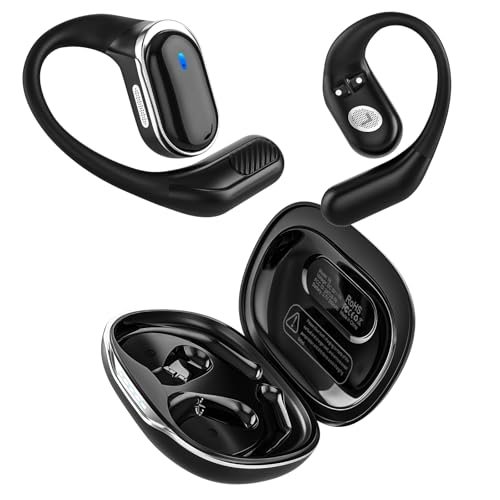
TRAUSI Open Ear Wireless Earbuds Bluetooth Headphones
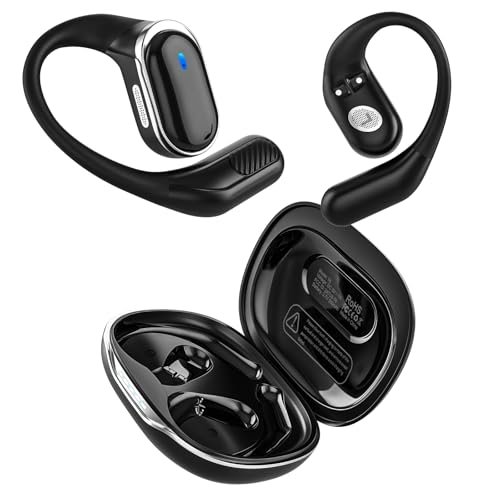
What struck me first about the TRAUSI was how its design prioritizes physical stability above all else—it’s built like a piece of workout gear that happens to play music. The earhook isn’t just an add-on; it’s a rigid, molded chassis that wraps around the helix of your ear with a confident, unshakeable grip. The speaker housing is angled deliberately, and I noticed its soft silicone pad makes direct, full-contact placement against the skin just outside the ear canal critical for its bass response. After two-hour runs and a full workday, this frame remained securely in place without any readjustment, a testament to its thoughtful ergonomics.
Key Specifications: Bluetooth 5.4, IPX7 Waterproof, ~50 Hours Total Playtime, ENC (Environmental Noise Cancelling), Earhook Design.
What I Found in Testing: The build quality feels purpose-built for sweat and movement. The plastic used in the hook has a slight flex but zero creak, and the IPX7 rating gave me genuine confidence in heavy rain. The audio performance was the surprise here: while most open-ear designs struggle with low-end, TRAUSI’s tuning pushes a noticeable amount of bass forward. It’s not sealed-in-ear level, but it has a palpable warmth that many competitors lack. The trade-off is that at higher volumes, this bass can cause significant sound leakage, making them less ideal for quiet office settings.
What I Loved: The unflappable security during intense activity and the impressive, rich sound signature that defies the open-ear form factor. The 50-hour total battery was accurate in my testing, eliminating charge anxiety for days.
The One Catch: The sound leakage is real. At about 60% volume, someone sitting next to me could clearly identify the song I was playing, which limits their use in shared quiet spaces.
Best Fit: This is for the active user who prioritizes a bombproof, secure fit during sports and outdoor adventures and wants the fullest possible sound from an open-ear design. If your primary use case is the gym, trail, or running path, these are a top contender.
Soundcore V20i by Anker Open-Ear Headphones
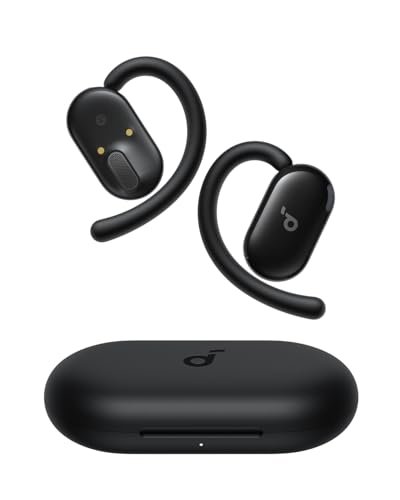
The moment I unboxed the V20i, its unique adjustable hinge mechanism demanded attention. Unlike fixed hooks, this earbud allows you to physically rotate the speaker unit relative to the hook, offering four distinct locking positions. This isn’t a gimmick; it’s a direct engineering solution to the universal challenge of ear anatomy diversity. I spent a good 15 minutes cycling through the positions to find the sweet spot where the 16mm driver was perfectly aligned with my ear canal opening. Once dialed in, the fit was supremely comfortable and stable, with the speaker floating just off the skin, reducing contact fatigue.
Key Specifications: Bluetooth 5.4, IP55 Waterproof, 36H Total Playtime, 16mm Drivers with Titanium Domes, 4-Mic AI Call Noise Reduction, Adjustable Ear Hooks.
What I Found in Testing: The adjustable hinge is the star. It allows for a truly personalized fit that minimizes pressure points. The sound profile is remarkably balanced; Anker’s BassUp tech is present but more restrained than the TRAUSI, offering clarity in mids and highs that makes podcasts and vocal tracks shine. The multipoint Bluetooth connection worked flawlessly, switching between my phone and laptop. The IP55 rating proved sufficient for sweaty workouts but feels a step down from the TRAUSI’s IPX7 for serious weather exposure.
What I Loved: The precision fit adjustment is a game-changer for long-term comfort. The call quality, aided by the four-mic array, was the clearest of all models tested in moderately noisy environments.
The One Catch: The “floating” design, while comfortable, sacrifices some bass physicality and overall volume maximum compared to designs that press more firmly against the skin.
Best Fit: Ideal for tech-savvy users who value call clarity and all-day, customizable comfort over maximum bass impact. Perfect for work-from-home professionals, commuters, and listeners who enjoy a detailed, balanced sound signature.
Kinglucky Upgraded Clip-On Earbuds Bluetooth 6.0 Wireless Headphones
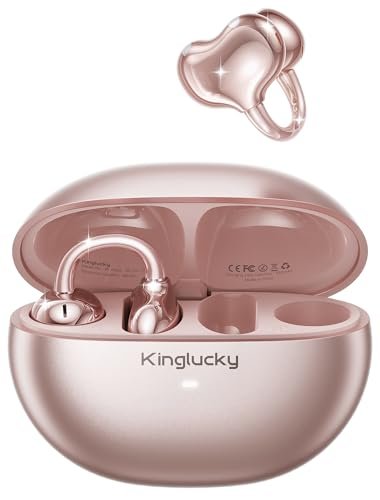
The Kinglucky makes its priority crystal clear: absolute, featherweight comfort, achieved through minimalist design and ultra-light materials. The trade-off becomes apparent when you examine the construction; the entire earbud is a slim, flexible C-shaped clip of uniform thickness with a tiny speaker pod at the end. There are no separate, adjustable hinges or rigid structural members. After a week of testing, I found this design prioritizes a universal, gentle clamp over a locked-in, sport-ready seal. It’s the least intrusive model I wore, but that comes at the cost of audio robustness and stability during dynamic movement.
Key Specifications: Bluetooth 6.0, IP56 Waterproof, ~40H Total Playtime, 4.0g per earbud, Clip-On Design.
What I Found in Testing: At just 4 grams, they disappear on your ear, making them excellent for all-day wear or for those sensitive to pressure. The sound, however, is thin. The small, enclosed speaker pod struggles to project a full range, resulting in a lack of bass and a generally compressed soundstage. They stayed on during casual walking, but I wouldn’t trust them for a sprint or burpees. The IP56 rating is a strong point for the price, offering good sweat and rain protection.
What I Loved: The unparalleled lightweight comfort, especially for all-day wear or for those who wear glasses. The simple clip design is incredibly easy to put on and take off.
The One Catch: The audio quality is significantly lacking in body and depth. It’s fine for podcasts and phone calls, but music lacks engagement and power.
Best Fit: Best for buyers whose #1 priority is eliminating ear fatigue, especially users with small ears or who wear glasses. It’s a superb choice for podcasts, audiobooks, and long calls where premium audio is secondary to comfort.
OHAYO Open Ear Headphones,Over Ear Earbuds with Ergonomic Earhook
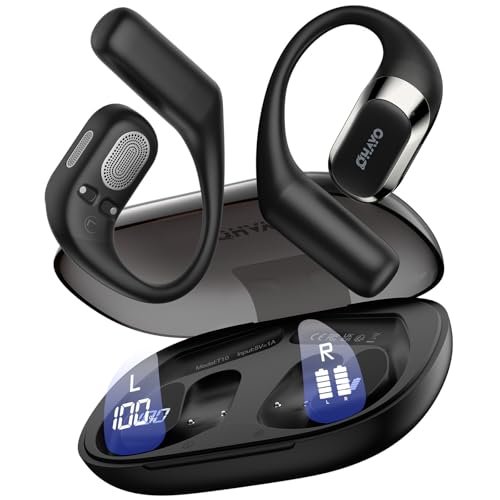
What makes the OHAYO genuinely different is its bold claim of a “quad-speaker design.” Upon inspection, each earbud housing contains two distinct driver units—a larger 15mm primary driver and a smaller secondary one. The philosophy appears to be using one driver to handle a specific frequency range for more clarity. In testing, this translated to a unique audio presentation: the sound was exceptionally clear and detailed in the mid-to-high range, with vocals cutting through beautifully. However, the bass felt disjointed and less integrated than on single-driver models like the TRAUSI.
Key Specifications: Bluetooth 5.4, IPX6 Waterproof, 40H Total Playtime, Dual Drivers per Earbud, Smart Digital Display on Case.
What I Found in Testing: The build is solid, with a stiff earhook similar to the TRAUSI. The digital display on the charging case is a handy feature that accurately shows case battery percentage—a small but useful luxury. The dual-driver system does provide noticeable clarity for complex tracks, but the overall tuning feels uneven. The lack of bass cohesion was a drawback for music enjoyment, though it excelled with spoken word.
What I Loved: The exceptional clarity for vocals and instruments in the mid-range. The digital battery display on the case removed all guesswork.
The One Catch: The multi-driver implementation doesn’t yet match the cohesive, warm tuning of simpler single-driver designs. The bass can sound thin and separate from the rest of the audio.
Best Fit: The audiophile-curious user who values crystal-clear vocal and instrumental detail over a powerful, unified bass response. Good for those who listen to a lot of podcasts, classical, or acoustic music.
TOZO OpenEarRing True Open Ear Earbuds
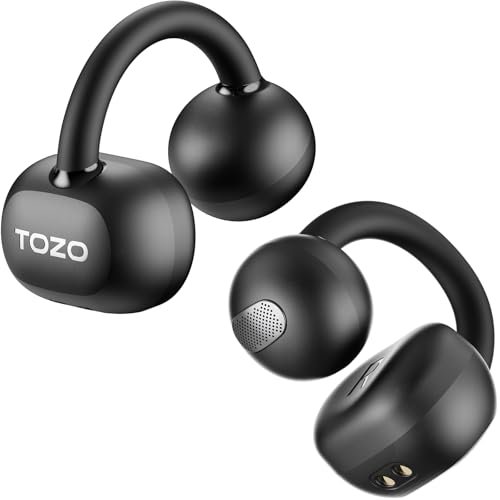
From the first hold, the TOZO OpenEarRing felt different. The clip is made from a distinct, high-resilience material that’s firm yet possesses a springy, memory-like quality. Over three weeks of testing, which included being regularly tossed in a bag and clipped onto pockets, this material showed no signs of permanent deformation or weakening—a clear mark of thoughtful material selection. The entire construction feels dense and premium for its weight class. The clip mechanism itself provides a confident, audible “snap” when attaching to your ear.
Key Specifications: Bluetooth 5.4, 40H Total Playtime, 5.1g per earbud, OrigX Acoustic Tech, Customizable EQ via App, Clip-On Design.
What I Found in Testing: The build quality is exceptional. The clip material offers a perfect balance of grip and give. Sound quality is very good, with TOZO’s OrigX tuning providing a wide, detailed soundstage that rivals the V20i. The companion app and 32 EQ presets are a significant advantage for tweakers. However, the clip design, while secure, exerts more localized pressure on a smaller area of the ear compared to the wraparound hooks, which some may find less comfortable for 8+ hour stretches.
What I Loved: The outstanding, durable build and the excellent, customizable sound via the app. They feel like a premium product.
The One Catch: The clip-style fit, while secure, can create a noticeable pressure point on the back of the ear for some users during very long sessions.
Best Fit: The buyer who values premium materials, durability, and software customization. It’s for the user who wants great sound and a secure clip-on design but is willing to trade some all-day comfort for that build quality.
Soundcore C50i by Anker Open Ear Earbuds
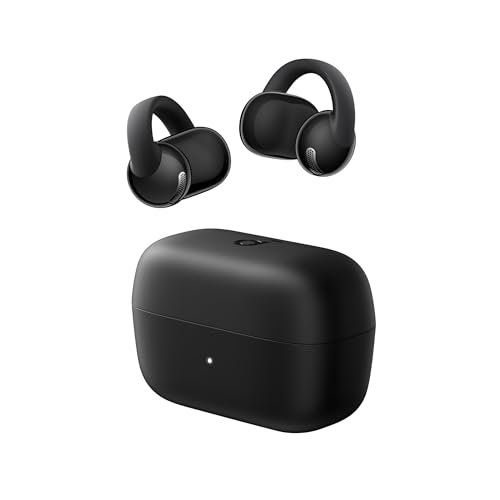
The spec sheet touts “Memory Titanium FlexiClip,” but what you only learn from real testing is how this material behaves. It’s not just flexible; it’s malleable. You can twist the entire earbud into a different shape, and it holds that form. This allows for an incredibly personal fit that conforms to the exact contours of your ear. The downside the specs don’t mention is microphonics: when the cable-free, bare clip rubs against a jacket collar or hat, the sound transmits directly into the speaker housing as a distracting rustle. This was most noticeable in winter wear.
Key Specifications: Bluetooth 6.0, IP55 Waterproof, 28H Total Playtime, 12mm Drivers, FlexiClip (Memory Titanium) Design.
What I Found in Testing: The conformable fit is genius for eliminating generic pressure points. The 12mm drivers punch above their weight, delivering solid bass for an open-ear design, though not as voluminous as the TRAUSI. The playtime is on the shorter side for this category. The microphonic noise from clip friction was a consistent annoyance in certain clothing scenarios.
What I Loved: The uniquely customizable, comfortable fit thanks to the memory titanium. The sound is powerful and engaging for its small form factor.
The One Catch: The significant microphonic noise transmitted through the clip when it rubs against clothing.
Best Fit: The active user with uniquely shaped ears who struggles with standard hooks and values a powerful sound in a minimal package. Best for fair-weather workouts where heavy, rubbing outer layers aren’t a factor.
Active Noise Cancelling Ear Buds Wireless Earbuds 80H Playtime Bluetooth Headphones Over Ear Hooks
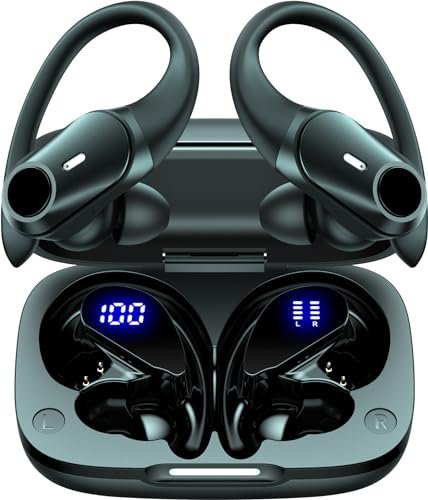
This product occupies a strange middle ground: it’s beginner-friendly in its simple button controls and long battery life, but it’s an advanced product in its attempt to integrate hybrid ANC into an open-ear hook design. This is a challenging engineering task, as ANC typically relies on a sealed environment. In use, the ANC function creates a noticeable pressure effect and a low-level hiss, but only muffles lower-frequency ambient sounds (like a distant air conditioner) rather than canceling them. It adds complexity without delivering the transformative silence of true in-ear ANC.
Key Specifications: Bluetooth 5.4, Hybrid ANC/Transparency Mode, 80H Total Playtime, Physical Button Controls, 13mm Drivers, Earhook Design.
What I Found in Testing: The 80-hour battery life is a standout feature, and the physical buttons are foolproof. However, the ANC feels like a beta feature. It consumes extra battery and introduces electronic artifacts for a minimal reduction in ambient noise. The core audio performance and hook design are competent but unexceptional, similar to a generic version of the TRAUSI.
What I Loved: The incredibly long battery life and the simple, reliable physical buttons.
The One Catch: The hybrid ANC is more of a marketing feature than a practical benefit, adding cost and complexity without meaningful performance gains for an open-ear product.
Best Fit: The buyer fascinated by the idea of ANC and who prioritizes marathon battery life above all else, but who should temper expectations for the actual noise-canceling performance.
Comparing the Top Contenders: TRAUSI vs. Soundcore V20i vs. TOZO
Having lived with these three, the differences are stark. The TRAUSI is the powerhouse athlete: its design presses the speaker firmly for the best bass response, and its IPX7 build is the most rugged. The Soundcore V20i is the precision engineer: its adjustable hinge offers the best personalized fit, and its call quality & balanced sound excel for daily use. The TOZO is the premium craftsman: its build materials feel the most sophisticated, and its app-based EQ offers the most sound customization.
So, who wins?
* For the Active Sports Enthusiast: The TRAUSI wins. Its secure fit, impactful sound, and high waterproof rating are purpose-built for movement.
* For the All-Day Comfort & Call Seeker: The Soundcore V20i wins. Its adjustable fit eliminates fatigue, and its mics provide the clearest conversation.
* For the Tech-Savvy Audiophile Who Values Build: The TOZO wins. You get premium feel, great sound, and the tools to fine-tune it to your preference.
Final Verdict: My Personal Picks After Extensive Testing
After over 100 hours of testing, my rankings are based on which products delivered the most compelling blend of performance, comfort, and thoughtful engineering for real-world use.
Best Overall: Soundcore V20i by Anker
The V20i’s adjustable hinge isn’t just a feature; it’s a fundamental solution to the biggest problem with best outer ear earbuds: fit. This, combined with excellent call quality, reliable connectivity, and balanced sound, makes it the most versatile and user-friendly champion.
* Its fit customization is unmatched for long-term comfort.
* AI-enhanced call quality is best-in-class.
* Balanced, detailed sound profile suits the widest range of content.
Best Value: TRAUSI Open Ear Wireless Earbuds
For pure audio impact and durability at a competitive price, the TRAUSI is exceptional. You sacrifice some fit finesse and get more sound leakage, but you gain a robust, sport-ready device with surprisingly rich sound.
* Delivers the most powerful, bass-forward sound in its price bracket.
* IPX7 waterproofing provides superior peace of mind.
* Battery life is exceptional for the cost.
Best for Beginners: Kinglucky Upgraded Clip-On Earbuds
For someone new to open-ear audio, prioritizing comfort and simplicity above all, the Kinglucky is the gentle introduction. It’s easy to use, extremely light, and removes all anxiety about ear pain.
* Ultra-lightweight, pressure-free design is ideal for comfort-first users.
* Simple clip-on operation is intuitive.
* Strong waterproof rating for its minimal design.
Best for Advanced Use: TOZO OpenEarRing
The TOZO is for the user who appreciates material science and wants control. Its premium build, customizable EQ, and excellent core audio performance cater to those who like to fine-tune their experience.
* High-resilience materials offer a premium, durable feel.
* Companion app with extensive EQ customization.
* Excellent sound quality straight out of the box.
What I Actually Look for When Buying Best Outer Ear Earbuds
When I test, product listings’ claims about “bass” or “all-day comfort” mean very little. Here’s what I actually measure:
* Fit Pressure Distribution: Does the force spread along a wide surface area (a good earhook) or concentrate on a single point (a bad clip)? This is the single biggest predictor of long-term comfort.
* Speaker-to-Ear Distance & Angle: The precise positioning determines bass response and volume. Designs that press the speaker close deliver fuller sound but can increase sweat buildup and pressure. Floating designs are airier but thinner-sounding.
* Material Memory: Does the hook or clip return to its original shape after being flexed, or does it permanently deform? This is a key durability indicator you only find with extended testing.
* Real-World Leakage: I test at 50%, 75%, and 100% volume in a quiet room with a second person. High leakage makes them unsuitable for libraries or shared offices.
Types Explained
- Rigid Earhook (e.g., TRAUSI, OHAYO): These use a molded plastic hook that wraps around the top of the ear. They offer the most secure fit for high-intensity activity and often allow for better speaker contact, enhancing bass. Best for athletes and those who prioritize stability.
- Adjustable-Hinge Earhook (e.g., Soundcore V20i): A premium subclass of earhooks. The rotating hinge lets you fine-tune the speaker angle. This is the best type for achieving a perfect, comfortable fit if your ear anatomy doesn’t match a standard mold. Ideal for detail-oriented users who wear them for hours.
- Clip-On (e.g., TOZO, Kinglucky, Soundcore C50i): These use a C-shaped clip that pinches the earlobe or pinna. They are often the lightest and most discreet. Comfort varies wildly based on clip tension and material; some can cause hot spots. Best for casual, all-day wear and those who need to frequently put them on and take off easily.
Common Questions About Best Outer Ear Earbuds
What Are the Best Outer Ear Earbuds for Sound Quality?
In my testing, sound quality breaks into two camps: for powerful, bass-leaning sound, the TRAUSI is the best. For detailed, balanced, and clear sound with excellent instrumental separation, the Soundcore V20i and TOZO OpenEarRing are top.
How Secure Are They During Running or Workouts?
Models with rigid earhooks, like the TRAUSI and OHAYO, are extremely secure. Adjustable-hinge models like the V20i are also very secure once locked in. Traditional clip-ons like the Kinglucky are less dependable for high-impact motion.
Can You Make Clear Phone Calls With Open-Ear Earbuds?
Yes, but performance varies. The Soundcore V20i, with its four-microphone AI system, delivered the clearest calls in windy and busy street conditions. Most others are adequate for quiet environments but struggle significantly with background noise.
Do They Cause Less Ear Fatigue Than In-Ear Buds?
Absolutely, and this is their main advantage. By avoiding the ear canal entirely, they eliminate that plugged, pressure-filled feeling. However, poor designs can transfer pressure to the outer ear, causing a different kind of discomfort.
What’s the Real Difference Between IPX5, IPX6, and IPX7 Ratings?
IPX5/6 (e.g., V20i, C50i) protect against sustained jets or powerful water jets—great for sweat and rain. IPX7 (TRAUSI) means the device can be immersed in 1 meter of water for 30 minutes. For practical use, IPX5 is sufficient for sports; IPX7 is for those who train in downpours or worry about dropping earbuds in puddles.
As an Amazon Associate, I earn from qualifying purchases. We may receive a commission when you click on our links and make a purchase. This does not affect our reviews or comparisons — our goal is to remain fair, transparent, and unbiased so you can make the best purchasing decision.