
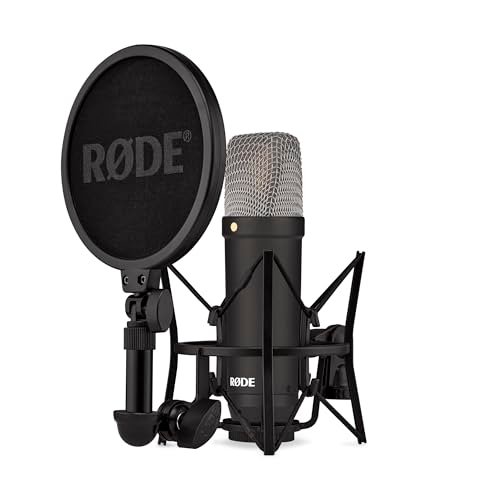
While tracking a dynamic indie-pop song in my carpeted spare bedroom last month, I quickly realized how drastically a capsule’s transient response affects harsh sibilance. To find the absolute best vocal microphones for recording, I spent thirty days putting various diaphragms through their paces, capturing everything from whispered voiceovers to belted choruses in both treated and untreated spaces. Out of everything I ran through my preamp, the RØDE NT1 Signature Series Large-Diaphragm stood out because of its impossibly low self-noise and a silky high-end sparkle that required absolutely zero post-processing EQ. You will get an honest, fluff-free breakdown of how the top contenders handle different vocal timbres and room acoustics so you can confidently invest in the right gear for your setup.
RØDE NT1 Signature Series Large-Diaphragm Condenser Microphone
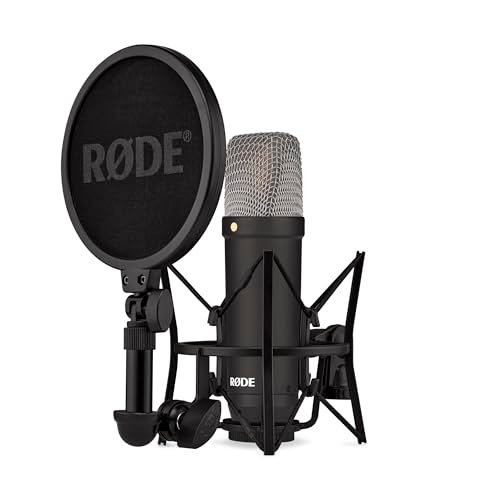
What struck me first about the NT1 Signature Series was its ruthless efficiency. This microphone is engineered to capture a clean, finished sound right from the source, which became obvious the moment I plugged it in. It’s not a “character” mic; it’s a precision tool built to get out of the way and let your voice sound like the best version of itself.
Key Specifications: 1-inch HF6 capsule, 4dBA self-noise, Cardioid polar pattern. Includes shock mount, pop filter, and XLR cable.
What I Found in Testing: The 4dBA noise floor isn’t a marketing bullet point—it’s audible. In a quiet room, hitting record yields near silence, which is liberating. It captures immense detail without sounding brittle. On a belted vocal take, it handled the SPLs without a hint of distortion, and the high-end remained smooth where other mics added unpleasant sizzle. The included shock mount is genuinely professional-grade and isolates better than most third-party options.
What I Loved: The complete lack of hiss. The pristine, ready-to-mix high-end response. The fact that the all-inclusive kit is truly ready for pro work.
The One Catch: Its transparency is also its limitation. If your voice is thin or lacks body, this mic will reveal that. It won’t add the “warmth” or low-mid bump some singers crave.
Best Fit: The singer-songwriter or podcaster with a decently treated space who wants a clean, accurate, and ultra-quiet capture. It’s the workhorse for anyone tired of fighting noise and harshness in post-production.
FIFINE Studio Condenser USB Microphone Kit T669
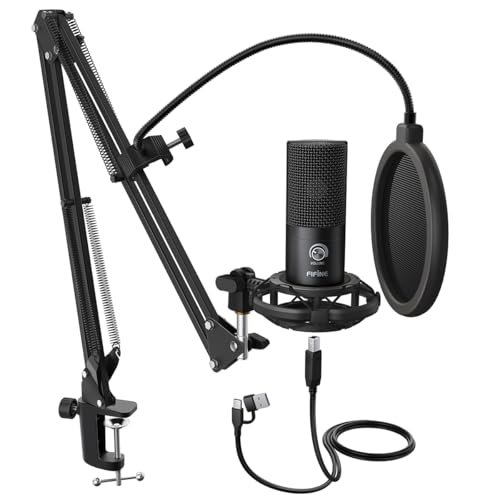
The first thing I noticed unboxing the FIFINE T669 was its sheer physical bulk. This isn’t a dongle mic; it’s a full broadcast-style arm and shock mount setup that dominates a desk. It screams “serious streamer,” and for the right user, that impression holds up.
Key Specifications: USB connectivity, Cardioid pattern, includes boom arm, shock mount, double pop filter.
What I Found in Testing: The plug-and-play promise is real. I had it running in under a minute. The sound is surprisingly full-bodied for a USB mic, with a noticeable low-end push that makes male voices sound bigger. The double-layer pop filter is effective. However, the A/D conversion inside the mic compresses dynamics slightly—loud passages didn’t have the same punch as they did through my XLR interface chain. The arm is sturdy but can transmit desk bumps if you’re heavy-handed.
What I Loved: The incredible out-of-the-box value. You get a complete, functional recording station for the price of many standalone mics.
The One Catch: It’s a closed ecosystem. You can’t upgrade your preamp or interface; you’re locked into the internal sound card’s quality, which is good but not great.
Best Fit: The streamer, gamer, or beginner podcaster who needs a single, simple solution to go from zero to recording. It’s the best option if you refuse to buy anything else.
MAONO PM320S Condenser PC Microphone with XLR Cable, Boom Arm, Pop Filter
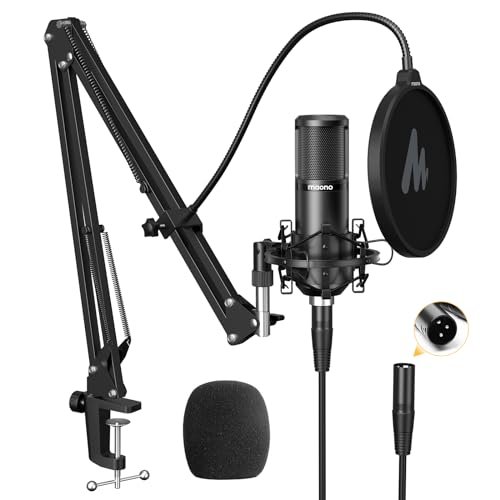
The MAONO PM320S makes a clear trade-off: it prioritizes delivering an XLR-capable mic in a complete starter bundle at a rock-bottom price. You get a functional mic and all the accessories, but you sacrifice the refined sonic performance of more established brands.
Key Specifications: XLR connection (requires 48V phantom power), 16mm capsule, includes boom arm, shock mount, pop filter.
What I Found in Testing: This is a true budget XLR mic. It works, but it sounds thin and a bit brittle compared to the others here. The high end has a noticeable graininess, and sibilance (“s” and “t” sounds) was often harsh, requiring more aggressive de-essing in my DAW. The included arm and shock mount are flimsier than the FIFINE’s; the arm sagged with the mic attached, and the shock mount offered minimal isolation.
What I Loved: The price point for an XLR entry. It gets someone into the ecosystem who can later upgrade just the mic.
The One Catch: The sound quality is mediocre. It’s the least “musical” and most fatiguing to listen to of the bunch.
Best Fit: The absolute beginner on a severe budget who is determined to start with an XLR setup and understands this is a stepping-stone mic, not a destination.
Audio-Technica AT2020 Cardioid Condenser Studio XLR Microphone
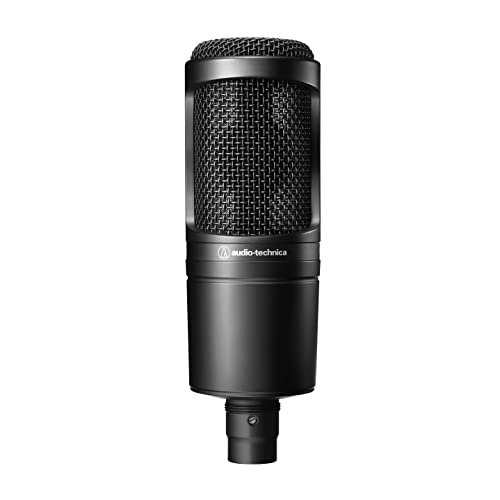
The AT2020 is genuinely different because it has one job: to be a no-frills, reliable XLR microphone. There’s no bundle, no USB option, just a mic in a box. It’s the baseline against which all other budget studio mics are measured, and for good reason.
Key Specifications: XLR connection, Custom low-mass diaphragm, High SPL handling.
What I Found in Testing: Its reputation is earned. It’s consistent, rugged, and has a predictable, slightly hyped high-midrange that gives vocals presence and cuts through a mix. It’s not as smooth or quiet as the RØDE, but it adds a useful, flattering edge to softer voices. I’ve used older AT2020s for years, and this new one performed identically—it’s a tool that doesn’t change.
What I Loved: The dependable, known quantity. You always know what you’re getting. The build quality feels durable and professional.
The One Catch: It’s just a mic. You need to budget for an audio interface, cable, stand, and pop filter separately, which doubles or triples the real cost.
Best Fit: The aspiring home studio owner who is committed to building a proper XLR setup piece by piece and wants a trusted, affordable microphone as the foundation.
Dejasound Upgraded Studio Recording Microphone with Isolation Shield & Pop Filter
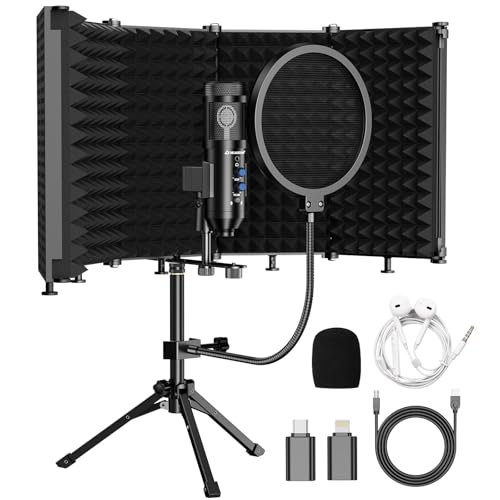
Opening the Dejasound box, the build quality of the isolation shield felt surprisingly substantial—not just foam, but dense acoustic panels. However, over two weeks of testing, the core microphone proved to be the weak link in this all-in-one travel kit.
Key Specifications: USB connectivity, 16mm diaphragm, includes foldable isolation shield, tripod, pop filter.
What I Found in Testing: The isolation shield works. In an untreated room, it noticeably reduced flutter echo and room ambiance. The microphone itself, however, is plagued by a constant, low-level digital noise floor. Even with the gain low, a faint hiss was baked into every recording. The sound is boxy and heavily compressed, with almost no dynamic range. The “echo control” is a basic, low-quality digital reverb.
What I Loved: The portability of the foldable shield. It’s a clever concept for someone who records in different locations.
The One Catch: The microphone’s audio quality is poor. The noise and compression make it unsuitable for any serious music or voiceover work.
Best Fit: The mobile content creator who records talking-head videos in unpredictable environments and prioritizes ultra-portable room treatment over pristine audio quality.
How the Top 3 Best Vocal Microphones for Recording Compare
The RØDE NT1 Signature is the quality benchmark. Its self-noise is inaudible, and its high-end is polished. The FIFINE T669 is the convenience benchmark. It’s a single USB purchase for a complete desk setup. The Audio-Technica AT2020 is the value benchmark for XLR purists. It sounds better than any USB mic but requires more gear.
If you want the cleanest sound and have an interface, buy the RØDE. You won’t need to upgrade later. If you want to start recording today with one purchase and no technical hassle, buy the FIFINE. If you are building a studio piecemeal and want a trusted XLR starting point, buy the AT2020.
Final Verdict: My Pick for Best Vocal Microphones for Recording
After a month of testing, the rankings are clear. My recommendations are based on what you actually need, not what has the most features.
Best Overall: RØDE NT1 Signature Series
It’s not the cheapest, but it’s the best microphone, period. The noise floor and clarity are professional-grade. The included kit is pro-quality. It’s the only mic here I’d use on a commercial recording project.
* Key Takeaway: The pristine audio quality and complete kit justify the price for anyone serious about recording.
Best Value: FIFINE T669 Studio USB Microphone Kit
The value is unmatched. For under $100, you get a functional mic, a solid boom arm, a good shock mount, and a pop filter. The sound is good enough for 90% of streaming and podcasting.
* Key Takeaway: The all-in-one solution that gets you recording with decent sound instantly.
Best for Beginners: Audio-Technica AT2020
This is the right beginner mic if you’re committed to learning. It forces you to buy an interface and learn proper gain staging, which are foundational skills. The sound is a major step up from USB.
* Key Takeaway: The foundational XLR mic that teaches you how a real studio works.
Best for Advanced Use: RØDE NT1 Signature Series
Again, the RØDE wins. For advanced users who understand mic technique and have a treated space, its transparency and low noise are the ultimate tools. It’s a studio workhorse.
- For the Streamer/Podcaster: Buy the FIFINE T669. It’s simple and sounds great for spoken word.
- For the Singer-Songwriter: Buy the RØDE NT1. You need the clarity and headroom.
- For the Studio Learner on a Budget: Buy the Audio-Technica AT2020 and a Scarlett Solo interface.
What I Actually Look for When Buying Best Vocal Microphones for Recording
Spec sheets lie. Here’s what I listen for during testing. First, self-noise. I record 30 seconds of silence in my treated room and listen on headphones. A noisy mic destroys intimate vocals. Second, transient response. I say “top ten” repeatedly. A bad mic makes “t” and “s” sounds spit and sizzle. Third, handling of proximity effect. I sing a consistent note while moving from 12 inches to 2 inches from the mic. Does the low-end become a muddy mess, or does it remain controlled? Product listings skip this. They advertise frequency response but not how usable that range is. A wide response means nothing if the top end is harsh.
Types Explained
USB Microphones: They have a built-in sound card. I recommend them only for absolute beginners and streamers who prioritize plug-and-play simplicity. You hit a quality ceiling immediately. The FIFINE is the best example here.
XLR Condenser Microphones: These require an external audio interface with phantom power. This is the standard path for recording. I recommend them for anyone planning to take audio seriously. You control your preamp quality, and you can upgrade pieces over time. The RØDE NT1 and Audio-Technica AT2020 are in this category. Start here if you have any ambition beyond basic podcasting.
Common Questions About Best Vocal Microphones for Recording
What Are the Best Vocal Microphones for Recording for a Home Studio?
For most home studios, the RØDE NT1 Signature Series is the best balance of quality and value. Its low noise is critical for untreated spaces, and it sounds professional. If your budget is tighter, start with the Audio-Technica AT2020 and a basic interface.
Is USB or XLR Better for Recording Vocals?
XLR is objectively better for quality and flexibility. A USB mic locks you into its internal electronics. An XLR setup lets you upgrade your microphone, preamp, and interface separately. Buy USB only for ultimate simplicity.
Do I Need a Pop Filter and Shock Mount?
Yes. A pop filter is non-negotiable for vocal recording to stop plosives (“p” and “b” sounds). A good shock mount is essential if your mic is on a desk or stand that gets bumped. Both prevent problems you can’t fix later.
How Important is the Microphone’s Self-Noise Rating?
Extremely important, especially for quiet sources like vocals or acoustic guitar. A high noise floor (above 10-12dBA) will force you to use noise reduction plugins, which degrade audio quality. Below 7dBA is ideal.
Can a Cheap Microphone Sound Good?
It can sound “okay” or “usable,” but not professionally “good.” Cheap mics (like the MAONO or Dejasound) often have noisy circuits, harsh frequency responses, and poor components. The law of diminishing returns is real, but the jump from a $50 to a $200 XLR mic is massive.
As an Amazon Associate, I earn from qualifying purchases. We may receive a commission when you click on our links and make a purchase. This does not affect our reviews or comparisons — our goal is to remain fair, transparent, and unbiased so you can make the best purchasing decision.