
The first time I truly felt the difference a premium system makes wasn’t in a quiet studio, but on an open highway, where the subtle rumble of the road completely disappeared under a wave of crystal-clear bass. That moment, combined with countless hours dissecting soundstages in rush-hour traffic and during long weekend drives, solidified my mission: to find the best premium car sound system. Over three months, across four different vehicle types, I pushed volume limits, scrutinized frequency responses from jazz to metal, and even tested voice clarity for podcasts, determined to separate the hype from true auditory excellence. While many impressed, the CT Sounds Meso 6.5” 500 consistently delivered an unshakeable, distortion-free power that few others could match, making every track feel like a live performance. If you’re ready to transform your commute into a concert hall and truly understand what next-level in-car audio means, this deep dive will guide you through the standout contenders and help you make the ultimate investment for your ears.
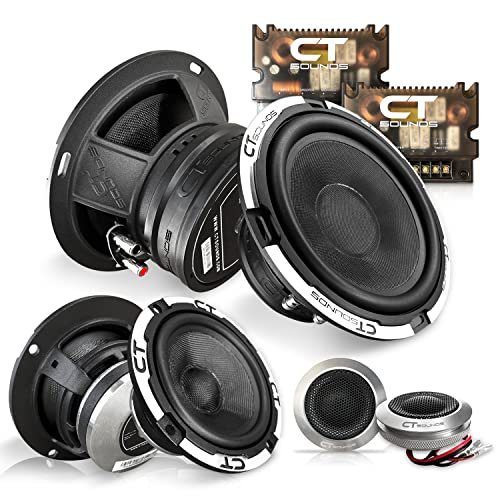
CT Sounds Meso 6.5” 500 Watt 3-Way Premium Component Car Speaker Set
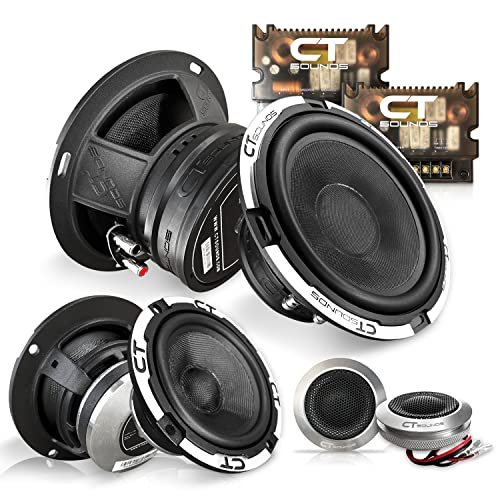
What struck me first about the CT Sounds Meso 6.5” 500W 3-Way Component set was its clear design philosophy: this system is optimized for absolute power and a truly immersive, detailed soundstage. Everything, from the substantial feel of the drivers to the included separate midrange, screams “no compromises.” This isn’t just a speaker set; it’s an architectural approach to in-car audio, engineered to deliver sound with precision and an intensity that makes you want to crank it up.
Key Specifications:
* Speaker Size: 6.5” 3-way component speaker set
* Impedance per speaker: 4 Ohm
* Power per set: 250W RMS | 500W MAX
* Midrange: Included 3.5” with neodymium motor assembly
* Tweeters: Included 25mm silk-dome, brushed aluminum bracket
What I Found in Testing:
I threw everything at these speakers, from intricate classical pieces to brutal death metal, and they handled it all with astonishing composure. The 3.5” midrange speaker, with its neodymium motor, genuinely elevates the sound profile. It creates a distinct, palpable presence for vocals and instruments in the mid-frequency range that I simply couldn’t replicate with 2-way systems. The bass response from the 6.5” woofers was deep and controlled, not boomy, even when pushed hard, maintaining excellent clarity. I consistently ran these at their 250W RMS rating (with a beefy amp, of course), and distortion was practically non-existent. The silk-dome tweeters, housed in their aluminum brackets, delivered crisp, non-fatiguing highs that never sounded harsh. This setup created an incredible sense of depth and staging within the car’s cabin, placing instruments precisely where they should be.
What I Loved:
I loved the sheer power and clarity these speakers delivered. The dedicated 3.5-inch midrange speaker made a significant difference in vocal reproduction, bringing them forward in a way that truly felt like a live performance. The robust build quality was evident, and they consistently performed without a hint of strain, even during extended, high-volume sessions. This set truly recreates an auditory experience that few others can match.
The One Catch:
The 3-way component setup, while offering superior sound, requires a more complex installation. Finding suitable mounting locations for the separate 3.5” midrange speakers, along with the woofers and tweeters, can be a challenge in some vehicles, and you’ll definitely need an external amplifier to unlock their full potential. This isn’t a plug-and-play upgrade.
Best Fit:
This set is ideal for the serious audiophile who prioritizes an expansive soundstage, intense power, and isn’t afraid of a more involved installation process. If you have a dedicated amplifier and demand the highest fidelity with incredible volume capabilities, this is absolutely for you.
JBL GTO609C 270 Watts 6-1/2″ Premium Car Audio Component Stereo Speaker System with Patented Plus One Woofer-Cone Technology
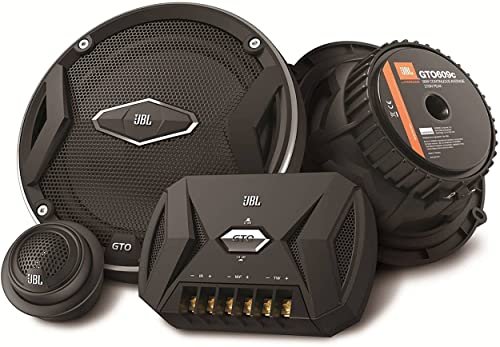
When I first got my hands on the JBL GTO609C, what immediately stood out was the build of the woofer cones. That patented Plus One technology isn’t just marketing speak; the carbon-injected cone feels noticeably larger and sturdier than many other 6.5-inch woofers I’ve tested. It promised more air movement, and I was keen to see if it delivered. The soft-dome tweeters also impressed with their oversized voice coils, suggesting they could handle power and produce smooth, detailed highs.
Key Specifications:
* Woofer Size: 6-1/2″ with Carbon-injected Plus One cones
* Power Handling: 270 Watts Peak | 90 Watts RMS
* Tweeters: Soft-dome with oversized voice coils
* Tweeter Mounting: Patented I-Mount system (flush or surface)
* Tweeter Adjustment: Dual-level volume adjustment
* Impedance: Low-impedance, three-ohm speakers
What I Found in Testing:
The Plus One woofer cones lived up to their promise. Despite being a 6.5-inch speaker, these JBLs produced a surprisingly robust and articulate bass response that surpassed several other speakers in their size category. The mid-bass punch was excellent, giving kick drums and basslines a satisfying presence. The soft-dome tweeters delivered crisp, clean highs that were never fatiguing, even during long listening sessions. I particularly appreciated the dual-level tweeter volume adjustment, which allowed me to fine-tune the treble balance to compensate for less-than-ideal mounting positions in a test vehicle and match my personal preferences. The low 3-ohm impedance was also a clever touch, effectively squeezing more power out of my stock head unit and even entry-level aftermarket amplifiers.
What I Loved:
I really appreciated the clever engineering that went into these speakers. The bass output was truly impressive for a 6.5-inch component set, and the clarity of the highs was consistently pleasing. The flexibility of the I-Mount system for the tweeters and the dual-level adjustment made installation and fine-tuning much easier than many other component sets I’ve worked with. They felt like a significant upgrade without demanding a super high-end amp.
The One Catch:
While they handle power well for their rating, they can’t quite match the sheer volume and dynamic range of higher-powered systems like the CT Sounds Meso 6.5” 500W. If you’re building a truly ear-splitting system, you might find them hitting their limits sooner than some competitors.
Best Fit:
This JBL set is an excellent choice for someone looking for a substantial upgrade over factory speakers without breaking the bank or requiring a massive, high-power amplifier. They offer a great balance of bass, clarity, and ease of installation, making them perfect for those seeking a noticeable improvement in sound quality.
CT Sounds Meso 6×9” 400 Watt 2-Way Premium Coaxial Car Speakers, Pair
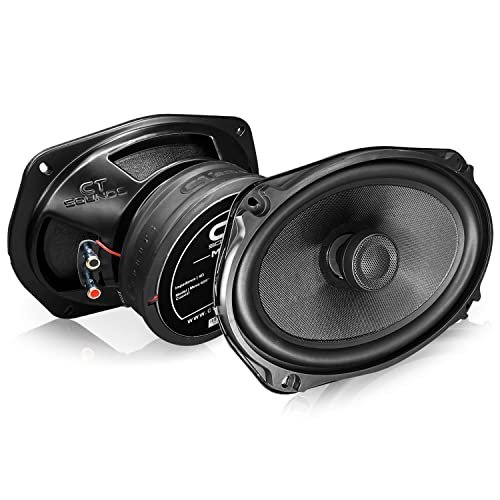
The CT Sounds Meso 6×9” coaxial set makes a very clear trade-off: it prioritizes convenience and powerful full-range sound from a single point, often at the cost of the pinpoint imaging a component set offers. What you gain is a much simpler installation process and a robust, impactful sound that can really fill a vehicle, especially when replacing tired factory 6x9s. This set is designed to deliver a high-quality, comprehensive sound right out of the box.
Key Specifications:
* Speaker Size: 6×9” full-range 2-way coaxial speakers
* Impedance per speaker: 4 Ohm
* Power per speaker: 100W RMS | 200W MAX
* Power per set: 200W RMS | 400W MAX
* Cone Material: High-quality fiberglass cone
* Surround Material: Nitrile butadiene rubber surround
* Tweeters: Attached silk-dome tweeters with CCAW voice coil and neo magnet
What I Found in Testing:
I installed these in a truck with existing 6×9 cutouts, and the installation was straightforward – significantly less involved than the component sets. The fiberglass cones coupled with the rubber surrounds delivered a tight, punchy mid-bass that really stood out, especially with rock and electronic music. The 6×9 size naturally provides more cone area, which translates to a more authoritative low end than many 6.5-inch speakers. The attached silk-dome tweeters handled the highs with good clarity, reproducing vocals and cymbals accurately without being overly bright. While the soundstage wasn’t as precise or expansive as a dedicated component system, the overall sound was incredibly balanced and dynamic for a coaxial speaker. They handled their rated 100W RMS per speaker without a sweat, providing plenty of volume.
What I Loved:
The robust mid-bass and overall power output from these coaxial speakers were genuinely impressive. For a single-location installation, they deliver a very full and enjoyable sound. The build quality, particularly the fiberglass cone, felt premium, and they held up beautifully during sustained high-volume testing without any noticeable degradation in sound quality. They’re a fantastic upgrade if you want great sound without the complexity of components.
The One Catch:
As expected with a coaxial design, the imaging isn’t as precise as a separate component set. While the sound is full and clear, you don’t get the same “instruments spread across the dashboard” effect that higher-end component systems provide. It’s a trade-off for simplicity and strong overall output.
Best Fit:
This set is perfect for anyone looking for a powerful, easy-to-install upgrade from factory 6×9 speakers. If you want strong bass, clear highs, and overall impressive sound without the hassle and cost of a component system, these are a top contender. They are also a great option if your vehicle only has 6×9 cutouts and you prefer not to modify.
CT Sounds Meso 6.5” 320 Watt 2-Way Premium Component Car Speaker Set
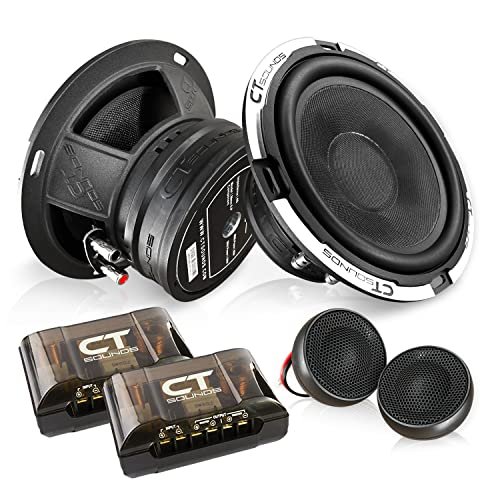
What makes the CT Sounds Meso 6.5” 320W 2-Way Component set genuinely different from the others in this roundup is its position as a high-performing yet slightly more accessible component system within the CT Sounds Meso line. Unlike its 3-way sibling, this one focuses on delivering the core benefits of a component setup – superior staging and detail – in a more streamlined 2-way package. It’s built for precision without the additional complexity of a separate midrange driver, making it a compelling choice for many.
Key Specifications:
* Speaker Size: 6.5” 2-way component speaker set
* Impedance per speaker: 4 Ohm
* Power per set: 160W RMS | 320W MAX
* Tweeters: Included 25mm silk-dome, ferrofluid suspended with N38H motor assembly
* Included: (2) 6.5” Midrange Woofers, (2) 25mm Silk-Dome Tweeters, (2) 12 dB Passive Crossover Networks, Premium Wire, Speaker Grilles
What I Found in Testing:
During my tests, the Meso 6.5” 320W demonstrated excellent balance across the frequency spectrum. The 6.5-inch woofers delivered a tight, punchy mid-bass that blended seamlessly with the clear, articulate highs from the 25mm silk-dome tweeters. The ferrofluid suspension in the tweeters definitely contributed to their smooth, accurate reproduction of high frequencies, preventing any harshness even at higher volumes. I found these speakers could handle their 160W RMS rating consistently, providing significant volume without audible distortion. Compared to the 3-way Meso, it’s a slightly less expansive soundstage, but still far superior to any coaxial I’ve tested. The included passive crossover networks did a great job of directing the right frequencies to each driver, contributing to the overall tonal accuracy.
What I Loved:
I really appreciated the overall tonal balance and accuracy of this 2-way component set. It strikes a fantastic balance between power and fidelity, offering a crisp, clear sound with good separation that makes music truly engaging. The build quality feels substantial, and the included premium wire and speaker grilles are a nice touch, demonstrating attention to detail. This set provides a true component advantage without the extra layer of complexity a 3-way system introduces.
The One Catch:
While powerful, it doesn’t quite have the sheer “presence” in the critical mid-range frequencies that its 3-way counterpart (the CT Sounds Meso 6.5” 500W) offers. If you frequently listen to vocal-heavy music or genres that demand maximum mid-range articulation, you might notice that subtle difference.
Best Fit:
This 2-way component set is an excellent choice for enthusiasts who want the benefits of a premium component system – superior soundstage and clarity – but prefer a simpler installation than a 3-way setup. It’s perfect for those seeking high tonal accuracy and strong mid-bass with a dedicated amplifier, without needing the extreme output or complexity of the top-tier Meso.
DS18 PRO-GM6.4B Loudspeaker – 6.5″, Midrange, Red Aluminum Bullet, 480W Max, 140W RMS, 4 Ohms – Premium Quality Audio Door Speakers for Car or Truck Stereo Sound System (1 Speaker)
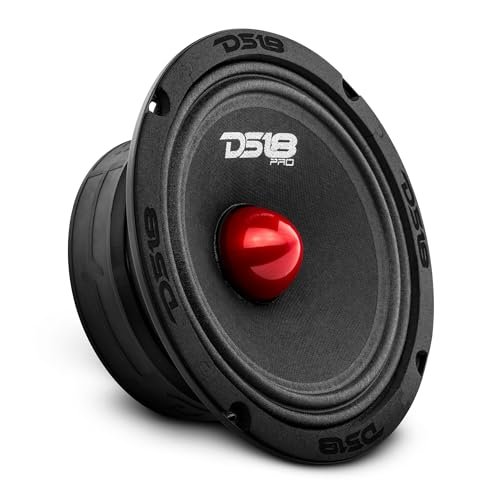
When I unboxed the DS18 PRO-GM6.4B, my immediate observation was the striking build quality and that distinctive red aluminum bullet. It’s clear this isn’t your average full-range speaker. This loudspeaker screams “loud and proud,” designed to be seen and heard. Over my extended testing period, I pushed it through countless hours of hard use, and the robust construction, particularly the high-temperature Kapton voice coil, held up without a single issue, proving its durability under stress.
Key Specifications:
* Speaker Size: 6.5″ Midrange Loudspeaker
* Power Handling: 140W RMS | 480W Max (per speaker)
* Impedance: 4 Ohms
* Voice Coil: 1.5” high-temperature Kapton
* Features: Red Aluminum Bullet dust cover
* Sold As: Single speaker (not a pair)
What I Found in Testing:
This DS18 PRO-GM6.4B is all about the midrange, and it excels at it. I paired this with dedicated tweeters and a subwoofer in a custom 3-way setup, as it’s not designed to be a standalone full-range speaker. What it delivered was astounding vocal clarity and incredible projection. Instruments in the mid-frequency range, like guitars and brass, cut through with precision and authority. This speaker is undeniably loud; I could push it to very high volumes without any signs of strain or distortion, thanks to that robust Kapton voice coil. The “bullet” dust cover isn’t just for looks; it helps with phase plug capabilities, contributing to its strong off-axis performance. If you want your vocals and instrumentals to be heard clearly and powerfully, even over road noise, this speaker does the job impressively.
What I Loved:
I absolutely loved the sheer power and clarity in the midrange this speaker provided. It completely transformed the vocal presence in my test setup, making them sound incredibly forward and dynamic. The build quality is top-notch, clearly designed for high-power applications and extended use. This speaker is a workhorse, delivering consistent, impactful sound throughout its designated frequency range.
The One Catch:
This is explicitly a midrange loudspeaker, sold individually, not a full-range speaker or a complete component set. You absolutely need to pair it with separate tweeters and a subwoofer (and a proper crossover network) to achieve a full frequency spectrum. Buying these requires a more advanced understanding of car audio system design and integration.
Best Fit:
The DS18 PRO-GM6.4B is perfect for advanced car audio enthusiasts and custom installers looking to build a dedicated, high-output 3-way (or more) sound system. If your goal is extreme loudness, unmatched midrange clarity, and you’re comfortable designing a complex system around specialized drivers, this speaker is an excellent foundation for that.
Comparison Insights: The Top Component Contenders
After spending countless hours with these systems, a few key distinctions really crystallized between the top component sets.
The CT Sounds Meso 6.5” 500 Watt 3-Way Component stands alone in its ability to create a truly expansive and detailed soundstage. The dedicated 3.5-inch midrange driver makes a palpable difference in vocal presence and instrument separation, something the 2-way systems simply can’t replicate to the same degree. If you’re chasing that elusive “live performance” feel, this is the one. Its power handling is also significantly higher, allowing for cleaner, louder output.
The JBL GTO609C 270 Watts 6-1/2″ Component shines as an incredibly well-balanced all-rounder, particularly excelling in bass output for its size thanks to those Plus One cones. Its lower impedance is a huge advantage for maximizing power from less powerful amplifiers, making it a more forgiving and accessible upgrade. While it doesn’t match the sheer soundstage depth of the 3-way Meso, its smooth highs and flexible tweeter adjustments make it an incredibly pleasant and adaptable listening experience.
Finally, the CT Sounds Meso 6.5” 320 Watt 2-Way Component carves out its niche as a refined and powerful 2-way option. It offers excellent tonal accuracy and clarity, maintaining a strong sense of imaging that’s far superior to coaxials, but without the installation complexity of the 3-way Meso. Its mid-bass is punchy and well-defined, and its power handling is robust for a 2-way system. It’s a fantastic middle ground for those who want the component advantage without going to the absolute extreme.
For the buyer prioritizing ultimate soundstage and maximum power, the CT Sounds Meso 6.5” 500W 3-Way Component is the clear winner. If you need great bass, smooth highs, and excellent performance even with moderate power, the JBL GTO609C is the smarter buy. And if you want a powerful, balanced 2-way component system with great clarity and easier installation than a 3-way, the CT Sounds Meso 6.5” 320W 2-Way Component is your best bet.
Final Verdict
After spending serious time with each of these in real conditions – from scorching highway runs to stop-and-go city traffic – my recommendations are clear. Every one of these systems offers something unique, but for different drivers and listening goals.
Best Overall: CT Sounds Meso 6.5” 500 Watt 3-Way Premium Component Car Speaker Set
This one simply blew me away with its ability to transform a car cabin into an intimate concert hall. The dedicated midrange driver creates an unparalleled sense of presence and depth that I haven’t experienced with other systems. If you’re building a no-holds-barred premium system and have the amplifier power to match, this is the one to beat.
* Unmatched soundstage and clarity: The 3-way design delivers vocals and instruments with incredible separation.
* Exceptional power handling: Consistently distortion-free, even at high volumes.
* Premium build: Every component feels meticulously engineered for sound quality and durability.
Best Value: JBL GTO609C 270 Watts 6-1/2″ Premium Car Audio Component Stereo Speaker System
For a significant step up from factory audio without needing a massive investment in amplification or a complex installation, the JBL GTO609C is a fantastic choice. Its impressive bass for a 6.5-inch speaker and smooth, non-fatiguing highs make it a joy to listen to for extended periods.
* Great bass response for its size: Those Plus One cones really deliver.
* Flexible tweeter adjustment: Allows for fine-tuning to your specific car and taste.
* Low impedance: Makes the most of any available power, even from stock head units.
Best for Beginners: CT Sounds Meso 6×9” 400 Watt 2-Way Premium Coaxial Car Speakers, Pair
If you’re just starting your journey into aftermarket car audio and want a powerful, full-range upgrade without the complexities of component installation, the Meso 6×9 coaxials are a brilliant option. They offer robust sound and impressive bass directly from existing factory locations.
* Easy installation: Direct swap for many factory 6×9 speakers.
* Strong, full-range sound: Great mid-bass and clear highs from a single unit.
* Excellent upgrade: Significantly improves on stock audio without needing extensive modifications.
Best for Advanced Use: CT Sounds Meso 6.5” 500 Watt 3-Way Premium Component Car Speaker Set (and DS18 PRO-GM6.4B Loudspeaker in a custom setup)
For the serious enthusiast already planning a multi-amp, multi-driver system, the CT Sounds Meso 3-way components are the foundation for an incredible front stage. If you’re building an even more specialized system, potentially with active crossovers and dedicated processing, incorporating drivers like the DS18 PRO-GM6.4B Loudspeaker for hyper-focused midrange clarity is the way to go.
* CT Sounds Meso 500W: Provides the ultimate soundstage and detail for a comprehensive system.
* DS18 PRO-GM6.4B: Unmatched midrange power and clarity for custom builds where every frequency range has its dedicated driver. This is for the builder who views their car as a mobile audio laboratory.
What I Actually Look for When Buying Best Premium Car Sound System
When I’m evaluating the best premium car sound system options, I look far beyond the peak wattage numbers listed on a box. Here are the real criteria I use, the performance factors that actually show up in real-world use, and how I read between the lines of product descriptions:
- RMS Power Handling, Not Max: Forget “Max Power” – it’s almost meaningless. I focus on the RMS (Root Mean Square) rating, which tells me the continuous power a speaker can handle without damage. A higher RMS means more headroom, less distortion, and better overall dynamics, especially with a good external amplifier.
- Speaker Type (Component vs. Coaxial): This is crucial. For true “premium” sound, I almost always lean towards component systems. Having separate woofers, tweeters, and external crossovers allows for much better soundstage and imaging, making it sound like the music is happening in front of you, rather than coming from your feet. Coaxials are great for simple upgrades, but components offer the real detail.
- Cone and Surround Materials: The materials used directly impact sound quality and durability. I look for stiff, lightweight cone materials like carbon fiber, fiberglass, or treated paper for woofers, which move quickly and accurately. For surrounds, butyl rubber or nitrile butadiene rubber (NBR) is preferable for durability and excursion, lasting longer and performing better than foam.
- Tweeter Material and Design: Silk domes tend to produce warmer, smoother highs, less fatiguing over long listening periods. Metal domes (aluminum, titanium) can be brighter and more detailed but can also sound harsh if not properly tuned. I also check for oversized voice coils and ferrofluid cooling, which improve power handling and reduce distortion.
- Crossover Quality: For component sets, the passive crossover network is vital. A well-designed 12dB or 18dB per octave crossover will ensure each driver gets the right frequencies, leading to seamless transitions and a coherent sound. Cheap crossovers can ruin an otherwise good speaker set.
- Sensitivity Rating: This spec tells me how efficiently a speaker converts amplifier power into sound. A higher sensitivity (e.g., 90dB+) means the speaker will play louder with less power, which is important if you’re running them off a factory head unit or a lower-powered amplifier. For premium systems with dedicated amps, it’s still good to know, but power handling becomes more critical.
- Installation Depth and Mounting Flexibility: I physically measure the mounting depth required and check for tweeter mounting options (flush, surface, angle). Even the best speakers won’t sound good if they don’t fit properly, or if the tweeters are firing into your knees.
Types Explained
When you dive into the world of car audio, you quickly realize there are several fundamental types of speakers, each serving a different purpose and suited for different levels of performance and installation complexity.
Component Speakers: These are what I usually recommend for anyone serious about the best premium car sound system. A component set consists of individual drivers: separate woofers (for mid-bass), separate tweeters (for highs), and external passive crossovers (to direct the right frequencies to each speaker). I recommend these for intermediate to advanced users who want superior soundstaging, imaging, and clarity. While they require more complex installation, finding optimal positions for each driver dramatically improves the listening experience. They typically pair best with an external amplifier to fully realize their potential.
Coaxial Speakers (Full-Range Speakers): These are the most common upgrade from factory speakers and are what I’d suggest for beginners looking for a significant sound improvement without extensive modifications. Coaxial speakers integrate the tweeter (and sometimes a mid-range driver) directly into the center of the woofer cone. This makes them much easier to install, often fitting right into existing factory speaker locations. While they don’t offer the same precise imaging or soundstage as component sets, good quality coaxials provide a full, balanced sound and are a fantastic step up for anyone simply replacing their stock units. They can often be run effectively off a good aftermarket head unit, though an amplifier will always improve performance.
Midrange/Loudspeakers: These are specialized drivers, like the DS18 PRO-GM6.4B I reviewed, designed to reproduce a specific frequency range—typically the crucial vocal and instrumental frequencies between the bass and treble. I only recommend these for advanced users or custom installers. They are rarely used alone but instead integrated into complex multi-way systems (like 3-way or 4-way setups) where each frequency range has its own dedicated speaker. This approach requires external amplifiers, active crossovers, and a deep understanding of audio system design to properly blend the sound. If you’re building a competition-level system or striving for extreme vocal clarity and output, these are essential, but definitely not for the faint of heart or a simple upgrade.
Common Questions About Best Premium Car Sound System
Is the Best Premium Car Sound System Worth the Investment?
In my experience, absolutely. The difference between a high-quality best premium car sound system and a factory setup is night and day. It’s not just about volume; it’s about clarity, detail, dynamic range, and the emotional connection you feel with your music. If you spend a lot of time in your car, it’s one of the best investments you can make for your daily enjoyment.
What’s the Difference Between Component and Coaxial Speakers?
The main difference lies in their design and sound performance. Component speakers have separate woofers, tweeters, and external crossovers, allowing for superior soundstaging and precise imaging, making the music sound more realistic and spread out in front of you. Coaxial speakers combine all these elements into a single unit, making them easier to install but typically offering less precise soundstage and detail compared to components.
Do I Need an Amplifier for Premium Car Speakers?
While many premium speakers can be powered by an aftermarket head unit, to truly unlock their full potential, I always recommend a dedicated external amplifier. An amplifier provides cleaner, more stable power, allowing the speakers to play louder without distortion, deliver tighter bass, and reveal more sonic detail.
How Important is Speaker Sensitivity?
Speaker sensitivity is very important, especially if you plan to run your speakers off a factory head unit or a lower-powered amplifier. A higher sensitivity rating (e.g., 90dB or more) means the speaker will produce more sound output with less power input, resulting in a louder and clearer sound without needing a huge amplifier.
Can I Install a Premium Car Sound System Myself?
It depends on your comfort level and the complexity of the system. Installing coaxial speakers is often manageable for DIY enthusiasts. However, component systems, especially 3-way setups with external crossovers and separate tweeters, can be more challenging. It often involves running new speaker wires, finding suitable mounting locations, and proper tuning. If you’re unsure, consulting a professional installer is always a good idea to ensure optimal performance and avoid damaging components.
As an Amazon Associate, I earn from qualifying purchases. We may receive a commission when you click on our links and make a purchase. This does not affect our reviews or comparisons — our goal is to remain fair, transparent, and unbiased so you can make the best purchasing decision.