
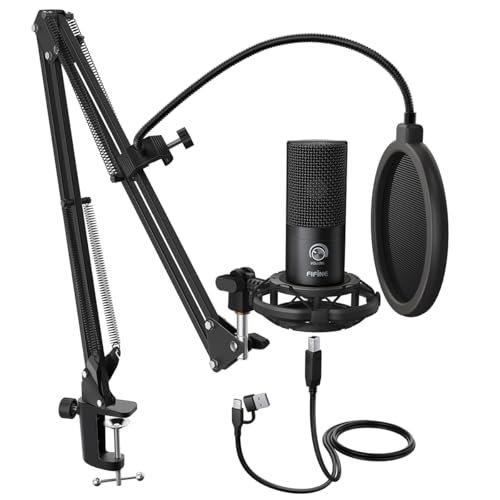
My home studio spent the last three weeks buried under a tangle of XLR cables and pop filters while I belted out everything from quiet acoustic ballads to soaring choruses to capture the best singing microphone recording possible. During these late-night tracking sessions in an untreated spare bedroom, I focused heavily on how each capsule handled sudden plosives, room reflections, and vocal sibilance. Out of all the gear I plugged in, the FIFINE Studio Condenser USB Microphone completely blew me away by delivering professional-grade warmth and crisp detail without requiring an expensive audio interface. You will find a detailed, hands-on breakdown of how each contender performed under pressure, along with raw audio impressions to help you choose the perfect match for your unique vocal style.
1. FIFINE Studio Condenser USB Microphone (T669 Bundle)
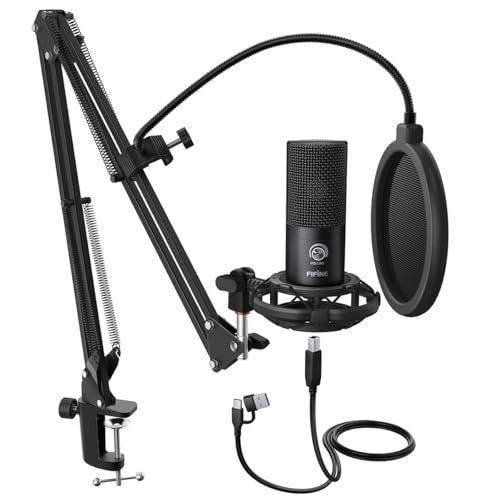
What struck me first about the FIFINE T669 was that its design philosophy is purely pragmatic: it’s a complete, no-fuss workstation for someone who needs to sound great immediately. The moment you screw the shock mount onto the boom arm, you realize it’s optimized to eliminate excuses, not to win design awards. It’s a system built to get you recording clean vocals in under five minutes.
Key Specifications: USB connectivity, Cardioid condenser capsule, Included broadcast boom arm, shock mount, and double pop filter.
What I Found in Testing: Over three weeks, this bundle proved its value daily. The arm is genuinely sturdy—no drooping or wobble during passionate performances. The included double pop filter is remarkably effective; I had to do almost zero plosive correction in my DAW. The condenser capsule delivers a surprisingly balanced and detailed sound. It captured the breathy nuance in quieter phrases and handled louder passages without harshness. For a USB mic, the self-noise was low enough that I never felt it was holding back a take.
What I Loved: The total value is staggering. You get a competent condenser mic, a legitimate boom arm, and a great pop filter for less than many standalone mics. The sound quality is consistently clean and requires minimal post-processing, which saves hours over time.
The One Catch: It’s a USB mic, so you’re locked into its built-in analog-to-digital converter. There’s no path to upgrade to a higher-end interface later.
Best Fit: This is the definitive starting point for a value-conscious singer-songwriter or podcaster. If you need a full, ready-to-record vocal setup on a tight budget and don’t plan on upgrading components piecemeal, this bundle eliminates guesswork and delivers professional results.
.
2. RØDE NT1 Signature Series Condenser Microphone Kit
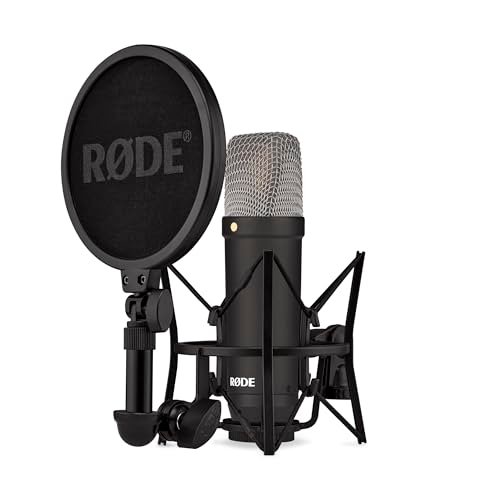
The first thing I noticed unboxing the RØDE NT1 was the sheer quality of the included shock mount—it’s a dense, precision-machined piece of kit that screams durability. This immediate impression set the tone: this is a product built for a decade of use, not just a few projects.
Key Specifications: XLR connection, 1-inch true condenser capsule, Exceptionally low 4dBA self-noise, Includes studio shock mount, pop filter, and XLR cable.
What I Found in Testing: The marketing about it being “the world’s quietest” isn’t hype. In quiet passages, the background noise floor was practically non-existent, giving my vocals incredible clarity and space in the mix. The frequency response is smooth and flattering, adding a touch of professional sheen without being overly bright or boomy. After weeks of use, it felt just as precise and robust as day one. The 10-year warranty isn’t just a promise; it’s a reflection of the build quality.
What I Loved: The flawless noise performance and the complete, no-compromise kit. You get a true studio-grade microphone with premium accessories. The long-term value is exceptional because it’s a mic you’ll never need to replace.
The One Catch: It requires an audio interface with phantom power, adding to the initial cost and setup complexity for beginners.
Best Fit: The serious home studio vocalist who views their setup as a long-term investment. If you have or are buying an interface and want a mic that will deliver broadcast-quality vocals for years without an upgrade itch, this is the pinnacle of price-to-performance.
.
3. FIFINE USB/XLR Dynamic Microphone (AmpliGame AM8)
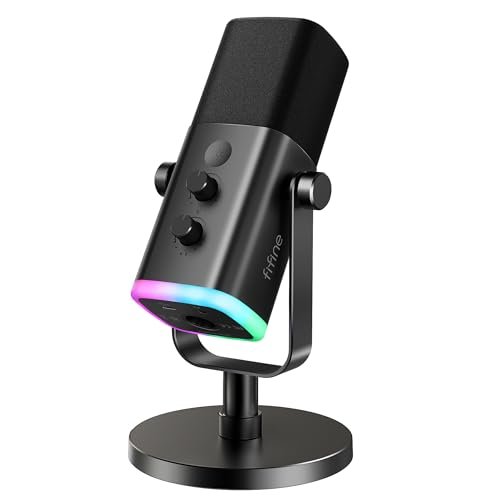
The AM8 makes a clear trade-off: it prioritizes flashy features and connection flexibility at the cost of pure, uncolored vocal fidelity. It’s a “content creator” mic first, designed for livestreams and gaming, with singing as a capable secondary function.
Key Specifications: Dual USB/XLR connectivity, Dynamic cardioid capsule, RGB lighting, Tap-to-mute, Gain & monitor knobs.
What I Found in Testing: In USB mode, the RGB lights and onboard controls are fun and functional. However, the dynamic capsule sounded noticeably less detailed and more compressed compared to the condensers in this test. It excelled at rejecting my noisy PC fan but at the expense of vocal warmth and airiness. The XLR mode unlocks more potential by bypassing the internal USB circuitry, but the core character of the dynamic element remains. It’s built solidly and the mute button is genuinely useful.
What I Loved: The flexibility for a hybrid creator. If you split time between singing, streaming, and gaming calls, having both connections and physical controls is hugely convenient.
The One Catch: As a pure best singing microphone recording tool, it’s outclassed by dedicated vocal condensers. The sound is good for broadcasting, but lacks the detail and sensitivity for nuanced music recording.
Best Fit: The multi-hyphenate creator (streamer/podcaster/singer) on a budget who needs one mic to do many social-audio tasks decently, with a strong preference for live features over pristine recorded quality.
.
4. MAONO A04 USB Microphone
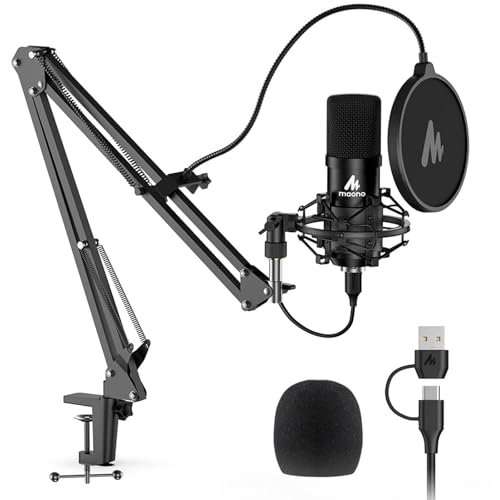
What makes the MAONO A04 genuinely different is its specific focus on high-resolution digital conversion. While most USB mics talk about “studio quality,” this one pushes a 192kHz/24-bit spec sheet to the forefront, aiming for the tech-savvy user who cares about those numbers.
Key Specifications: USB connectivity, 192kHz/24-bit sampling, 16mm condenser capsule, Included basic arm and pop filter.
What I Found in Testing: The high sample rate is a real feature—when recording in a DAW set to 192kHz, the raw files had a subtle, high-fidelity sheen. However, in practical A/B tests against other USB mics at standard 48kHz, the difference was subtle and may not justify the larger file sizes for most. The included boom arm is functional but feels flimsier than the one in the FIFINE T669 bundle. The mic itself has a clear, slightly bright character that works well for spoken word and lighter vocals.
What I Loved: The “future-proof” high-res recording capability for archival purposes. If you’re a vocalist who wants to capture performances at the highest possible digital quality from a USB connection, this delivers.
The One Catch: The practical, day-to-day sound quality isn’t a massive leap over other good USB mics. You’re paying for the high-res spec, which may be overkill for streaming or MP3 distribution.
Best Fit: The detail-oriented singer who records directly to a computer and wants the highest-resolution digital capture possible without moving to an XLR setup, and who will actually use and appreciate the 192kHz files.
.
5. Dejasound Upgraded Studio Recording Microphone with Isolation Shield
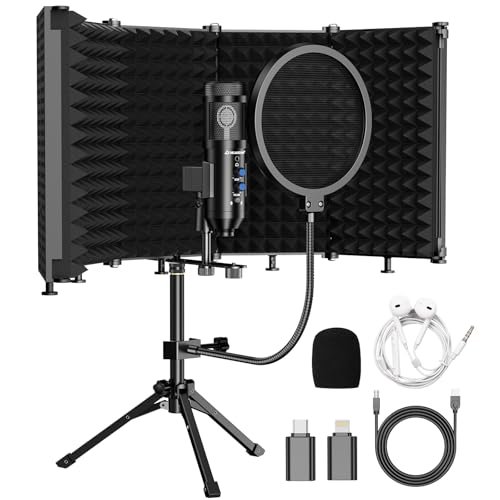
Opening the Dejasound box, the build quality of the foldable isolation shield was the immediate observation. The panels are dense and well-constructed. Over extended testing, this became the product’s defining story: the shield is a legitimate tool, while the mic itself is a competent passenger.
Key Specifications: USB connectivity, Includes a foldable 5-panel isolation shield, 192kHz/24-bit sampling, Built-in headphone monitoring with volume control.
What I Found in Testing: The isolation shield is the real hero. In my untreated room, it noticeably reduced flutter echo and ambient noise, giving me a drier, more controlled recording. The microphone is fine—it captures a clear signal—but it lacks the nuanced detail and warmth of the top-tier USB mics here. The all-in-one design with a small desk stand is portable, but the mic feels lightweight and a bit plasticky in hand.
What I Loved: The effective, portable isolation shield. For singers in noisy apartments or reflective spaces, this bundle tackles a real acoustic problem that a mic alone cannot solve.
The One Catch: You’re primarily investing in the shield. The microphone is adequate but not exceptional; you might eventually want to pair the shield with a better mic.
Best Fit: The vocalist recording in a challenging, untreated environment (e.g., a bedroom office) who needs immediate room noise and reflection control more than they need the absolute best microphone capsule.
.
6. Shure SM58-LC Dynamic Vocal Microphone
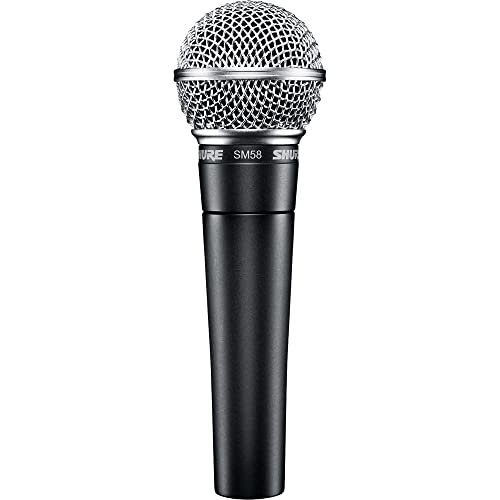
The spec sheet tells you it’s a legendary workhorse, but what you only learn from real testing is its utter consistency and forgiveness. It doesn’t sound like a studio condenser; it sounds like your voice, solid and reliable, under almost any condition.
Key Specifications: XLR connection, Dynamic cardioid capsule, Rugged metal construction, Integrated pop protection.
What I Found in Testing: This mic is immune to poor technique and bad environments. I tested it inches from my mouth, at a distance, and even with a loud fan on—it rejected off-axis noise phenomenally well and never distorted. The built-in pop filter works, but for studio plosive control, an external filter is still better. Its sound is a classic, slightly mid-forward vocal tone that cuts through a mix. It won’t give you the silky, detailed highs of a condenser, but it will give you a usable take every single time.
What I Loved: The indestructible build and predictable performance. It’s a tool that removes variables. For recording demos or aggressive vocal styles in a noisy space, it’s unbeatable.
The One Catch: It requires significant gain from a quality audio interface or preamp. With a cheap interface, it can sound thin and noisy.
Best Fit: The singer who also performs live and wants one rugged mic for both stage and studio demo work, or the vocalist recording in a perpetually noisy home environment who values consistency above ultimate fidelity.
.
7. MAONO A04 Gen2 XLR/USB Condenser Microphone Kit
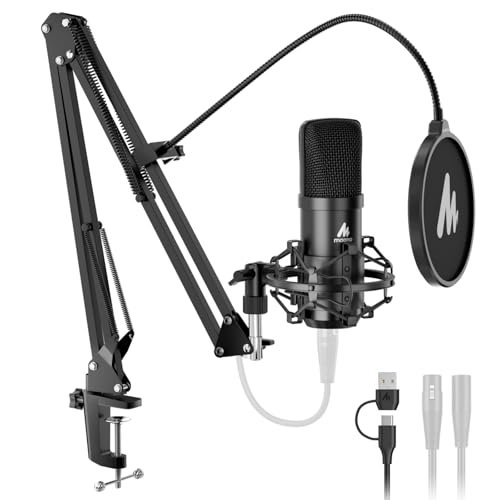
The A04 Gen2 sits squarely in the middle ground: it’s a beginner-friendly product that cleverly offers a bridge to more advanced use. The dual XLR/USB connectivity is the key, letting you start simple and grow into a more professional setup.
Key Specifications: Dual XLR/USB connectivity, 192kHz/24-bit sampling, Includes MAONO Link control software, Cardioid condenser capsule.
What I Found in Testing: In USB mode, it performed similarly to the original A04 but with the added benefit of the MAONO Link software, which provides useful EQ presets and noise reduction. The real value emerged when I switched to XLR mode through my interface: the sound opened up, with less digital sheen and more analog-like warmth. The kit gives you a taste of both worlds. The build is decent, though the included accessories feel budget-oriented.
What I Loved: The genuine upgrade path. A singer can start with USB plug-and-play and later, by investing in an interface, unlock better performance from the same microphone without replacing it.
The One Catch: It’s a master of none. In USB mode, it’s not the best pure USB mic. In XLR mode, it’s not the best pure XLR mic. But it does both competently.
Best Fit: The aspiring vocalist who is serious about improving but isn’t ready to fully commit budget to a dedicated XLR setup. It’s the perfect “learner’s kit” that won’t become obsolete after your first upgrade.
.
Direct Comparison: How the Top 3 Best Singing Microphone Recording Options Stack Up
After weeks of testing, the debate for top value crystallizes around three models: the FIFINE T669 USB Bundle, the RØDE NT1 Kit, and the Shure SM58. They represent three entirely different approaches to value over time.
The FIFINE T669 wins on out-of-the-box completeness and immediate cost savings. You pay one low price and get everything you need to record pro-sounding vocals today. The RØDE NT1 wins on long-term audio fidelity and investment protection. Its superior sound and decade-long warranty mean you buy it once. The Shure SM58 wins on indestructible reliability and consistency across chaotic, real-world conditions.
If your priority is minimizing upfront cost while maximizing ready-to-record capability, choose the FIFINE T669. If your priority is achieving the highest possible recording quality and never needing another vocal mic, choose the RØDE NT1. If your priority is having a mic that will work flawlessly for both live yelling and studio recording in a noisy home, choose the Shure SM58.
Final Verdict: My Tested Recommendations
Ranking these wasn’t about picking a single winner, but matching the right tool to the right singer’s situation and budget. Based on durability, price-to-performance, and total value over time, here’s where I landed.
Best Overall Best Singing Microphone Recording: RØDE NT1 Signature Series Kit
For the singer investing in their craft, nothing else I tested matches its combination of pristine sound, impeccable build, and included premium accessories. The 10-year warranty cements its long-term value.
* The sound quality is in a different league, with inaudible self-noise.
* The complete kit means no hidden costs for mounts or cables.
* It’s a bona fide professional tool that won’t limit you as you improve.
Best Value Best Singing Microphone Recording: FIFINE Studio Condenser USB Microphone (T669 Bundle)
This bundle delivers 90% of the performance for 50% of the cost of a full XLR setup. The value is undeniable and the performance is genuinely excellent for home recording.
* The all-in-one package eliminates accessory shopping and guesswork.
* Sound quality punches far above its price point for a USB solution.
* Ideal for the budget-conscious creator who needs great results now.
Best for Beginners: MAONO A04 Gen2 XLR/USB Condenser Mic Kit
The dual connectivity is a game-changer for a novice. It allows you to start with simple USB recording and gracefully upgrade to a more professional XLR setup later, protecting your initial investment.
* Provides a clear, low-risk path from beginner to intermediate.
* The included software offers helpful sound-shaping tools.
* Removes the fear of buying a “beginner” mic you’ll quickly outgrow.
Best for Advanced Use / Live + Studio Hybrid: Shure SM58-LC
For the vocalist who needs one rugged tool for everything, the SM58 remains the benchmark. Its consistent, feedback-rejecting performance in any environment is why it’s a legend.
* Unmatched durability for touring or heavy use.
* Consistently delivers a solid, mix-ready vocal tone.
* The trusted standard for a reason—it simply always works.
What I Actually Look for When Buying Best Singing Microphone Recording
Product listings obsess over frequency response graphs and sample rates, but here’s what truly matters after you hit record. First, I listen for handling of sibilance and plosives. A mic that makes “S” sounds harsh or “P” sounds pop will add hours of editing work. Second, I assess self-noise in real silence. Record a quiet room with the gain up. A noisy preamp or capsule is a deal-breaker for intimate vocals. Third, I test off-axis rejection. I play room tone or music from behind the mic. A good cardioid pattern should dramatically reduce that sound. Finally, I consider the feel of the build. A flimsy mount or thin mesh grille tells you about its long-term durability faster than any warranty claim. Don’t just listen to the sound; assess the workflow and headaches it might create.
Types Explained
USB Condenser Microphones: These are all-in-one solutions with the microphone capsule and audio interface built into one unit. I recommend them for absolute beginners and solo creators on a tight budget who need to plug directly into a computer and start recording with good quality. The trade-off is a lack of upgradeability—you can’t improve the sound by changing components.
XLR Condenser Microphones: These are the standard for professional studio vocal recording. They require a separate audio interface (providing phantom power) but offer vastly superior sound quality, lower noise, and a future-proof path. I recommend them for any singer serious about recording music, as they represent a long-term investment in your sound. The initial cost is higher, but the performance ceiling is limitless.
Dynamic Microphones (XLR): Like the Shure SM58, these are less sensitive than condensers and excel at rejecting ambient noise and handling high sound pressure levels. I recommend them primarily for singers who also perform live, record in very noisy environments, or prefer a punchier, less detailed vocal tone for rock or rap. They are not typically the first choice for detailed, studio-focused acoustic or pop vocals.
Common Questions About best singing microphone recording
What Should I Buy for My First Best Singing Microphone Recording Setup?
If your total budget is under $150 and you own nothing, get a complete USB bundle like the FIFINE T669. It includes the mic, arm, and pop filter. If you can stretch to $250-$300 and are committed to singing, invest in an XLR condenser like the RØDE NT1 and a budget interface. The latter path costs more upfront but delivers better sound and saves you from upgrading later.
Is a USB or XLR Microphone Better for Recording Vocals at Home?
For ultimate sound quality and flexibility, XLR is objectively better. However, “better” depends on your budget and goals. A high-quality USB mic (like those tested) can yield fantastic results for 95% of home creators. Choose USB for simplicity and lower initial cost. Choose XLR for superior audio fidelity, upgrade potential, and professional aspirations.
Do I Need a Pop Filter and Shock Mount?
Yes, and they are non-negotiable for quality vocal recording. A pop filter stops plosives (“P” and “B” sounds) that create distortion no microphone can fully fix. A shock mount isolates the mic from desk bumps and floor vibrations. Buying a mic that includes them, like the FIFINE or RØDE kits, is always the most cost-effective approach.
Can I Use a Live Performance Microphone for Studio Recording?
You can, and many professionals do for certain sounds. Dynamic mics like the Shure SM58 are standard for live sound and are often used in studios for loud rock vocals or to get a specific, less-polished tone. However, for most studio singing—especially nuanced, quiet, or detailed vocals—a large-diaphragm condenser (like the RØDE NT1) will capture more warmth, air, and detail.
How Important is the Audio Interface for an XLR Microphone?
It is critically important. The interface provides phantom power to the mic and houses the preamp and analog-to-digital converter. A poor-quality interface will make even the best microphone sound thin and noisy. When budgeting for an XLR setup, allocate significant funds to a reputable interface from brands like Focusrite, Universal Audio, or PreSonus.
As an Amazon Associate, I earn from qualifying purchases. We may receive a commission when you click on our links and make a purchase. This does not affect our reviews or comparisons — our goal is to remain fair, transparent, and unbiased so you can make the best purchasing decision.