
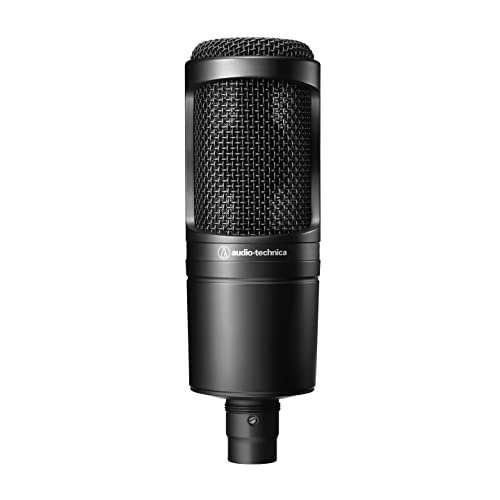
During my three-week shootout tracking everything from whispered acoustic indie takes to belted metal screams in my treated home studio, I noticed that most capsules either hyped the highs too aggressively or muddied the low-mids. Finding the true best studio microphone for vocals required plugging each model directly into different preamps and listening for that rare, natural warmth that sits perfectly in a mix without endless EQing. Throughout all my side-by-side vocal shootouts, the Audio-Technica AT2020 Cardioid Condenser consistently stole the show by delivering an incredibly crisp, professional-grade top-end that punched way above its price class. You will get a transparent, fluff-free breakdown of how these top performers handle different vocal timbres, room acoustics, and budget levels so you can confidently capture studio-quality tracks at home.
Audio-Technica AT2020 Cardioid Condenser Studio XLR Microphone
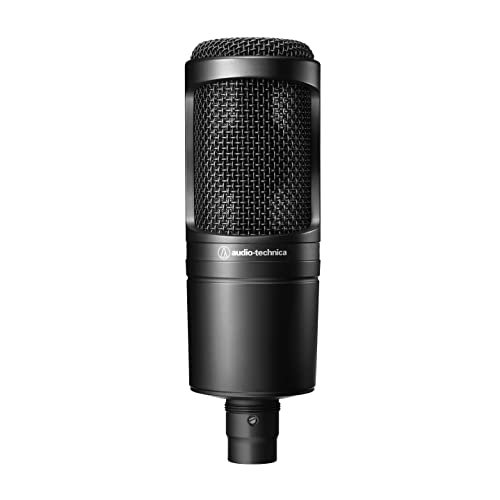
What struck me first about the AT2020 was its design philosophy of pure, uncompromised utility. It’s a microphone engineered to be a tool, not a statement. The body is a solid, weighty metal that feels reassuringly durable, and the side-address design immediately signals its studio pedigree. It lacks the frills of an included shock mount, which I actually appreciate—it’s a signal that this mic is about the capsule and the transformer-less circuit inside.
Key Specifications: Cardioid polar pattern, 20Hz–20kHz frequency response, requires 48V phantom power.
What I Found in Testing: The heart of the AT2020 is its custom-engineered low-mass diaphragm. In practice, this translated to a shockingly detailed high-end that never sounded harsh or sibilant on my voice, even when pushing it. The transient response is tight, capturing the subtle “click” of consonant sounds without exaggeration. It has a slight presence boost around 5-6kHz that helps vocals cut through a dense mix, but it’s not the hyped, brittle top-end you find on cheap condensers. Over three weeks, its performance was remarkably consistent, whether I was recording intimate vocals or acoustic guitar.
What I Loved: The price-to-performance ratio is almost unmatched. For the cost, you get a capsule with genuine studio-grade clarity and a build that will last for years. It handled my loudest vocal passages without distorting.
The One Catch: It is ruthlessly honest. If your room has bad acoustics, this mic will reveal every flutter echo and rumble. You need at least a decently treated space to get the best from it.
Best Fit: The home or project studio owner who wants a true, no-frills studio condenser that sounds far more expensive than it is. It’s the perfect first “serious” XLR microphone.
RØDE NT1 Signature Series Large-Diaphragm Condenser Microphone Kit
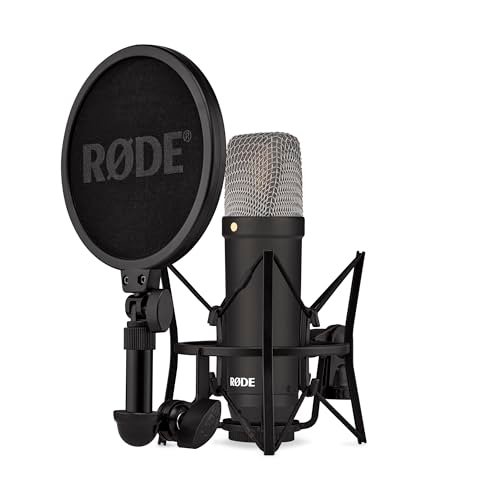
The moment I unboxed the RØDE NT1 Signature Series, the premium feel was undeniable. Beyond the sleek black finish, the weight and precision of the included shock mount signaled that this is a complete, professional-grade system. The kit mentality is its core philosophy—RØDE isn’t just selling a capsule; they’re providing a ready-to-record vocal station.
Key Specifications: 1-inch HF6 true condenser capsule, 4dBA self-noise, includes shock mount, pop filter, and XLR cable.
What I Found in Testing: The headline spec—4dBA self-noise—isn’t marketing fluff. In quiet passages and when applying heavy compression in the mix, the background noise floor was virtually nonexistent. This is a huge benefit for recording delicate vocals or voice-overs. The large-diaphragm design provides a smooth, slightly flattering frequency response with a natural low-end warmth. The capsule feels highly sensitive and responsive, capturing breath and nuance with ease. The included shock mount is among the best I’ve used at any price, effectively isolating the mic.
What I Loved: The complete, pro-level package and the incredibly quiet operation. It delivers a polished, “finished” sound right from the first take.
The One Catch: The sound character is very clean and flat, which some may find almost too neutral or lacking in a distinct “character.” It’s a canvas, not a paintbrush.
Best Fit: The podcaster, streamer, or vocalist who wants a supremely quiet, professional-sounding setup right out of the box and values the convenience and quality of the complete bundle.
FIFINE Studio Condenser USB Microphone Kit T669
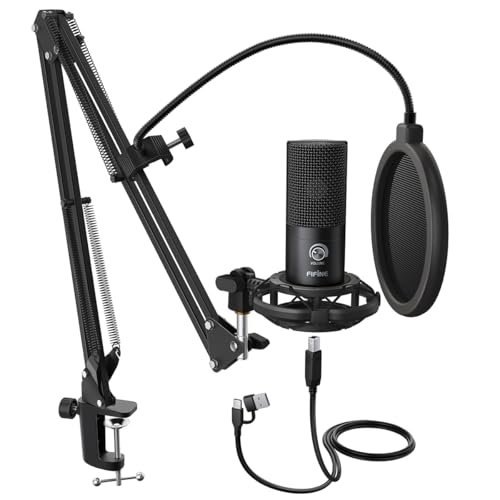
The FIFINE T669 makes a clear trade-off: it prioritizes plug-and-play convenience and an all-in-one kit price over absolute audio fidelity. The build is entirely plastic, from the mic body to the shock mount, which immediately sets expectations. Its design is about removing barriers to entry for someone who just wants to record or stream without buying an audio interface.
Key Specifications: USB connectivity, cardioid pattern, includes boom arm, shock mount, pop filter.
What I Found in Testing: The internal preamp and analog-to-digital converter are the limiting factors. While convenient, they add a noticeable layer of digital processing and compression that flattens the dynamic range. The sound is serviceable—clear for speech and decent for demos—but lacks the depth, air, and natural warmth of an XLR microphone running through a good interface. The boom arm is surprisingly sturdy for its construction, and the double pop filter works effectively.
What I Loved: The sheer value and simplicity. For a beginner with zero gear, you get everything needed to start recording in one box.
The One Catch: The audio quality ceiling is low. It’s fine for podcasts or Skype, but for serious music vocals, you’ll quickly outgrow its limitations.
Best Fit: The absolute beginner, podcaster, or gamer on a strict budget who needs a complete, easy setup for clear voice capture and has no plans for professional music production.
FIFINE K688 Podcast Microphone Kit
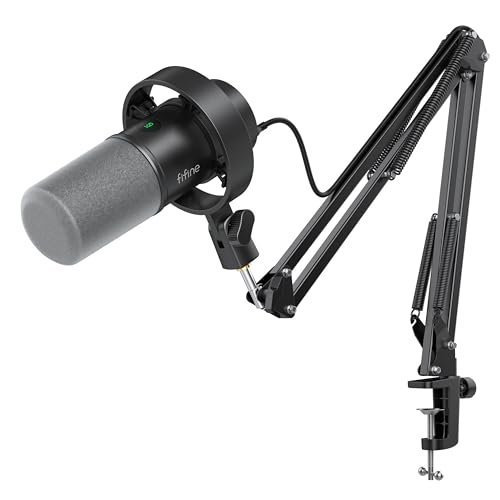
The K688 is genuinely different because it sits in a hybrid space, offering both USB and XLR outputs from a dynamic capsule. This isn’t a condenser trying to be convenient; it’s a robust dynamic mic built for a controlled, radio-style sound that gives you a growth path. The metal body and sturdy boom arm feel much more substantial than the T669.
Key Specifications: Dynamic capsule, USB & XLR outputs, cardioid pattern, includes boom arm, shock mount, built-in headphone jack & gain control.
What I Found in Testing: The dynamic element is key. It’s far less sensitive to room noise than a condenser, making it a great choice for untreated bedrooms or noisy environments. The sound is present and focused in the midrange, perfect for spoken word. The USB mode is solid for plug-and-play, but the XLR output through my interface revealed a fuller, richer tone with more headroom. The onboard controls (mute, monitor volume) are genuinely useful for streamers.
What I Loved: The flexibility and practical design for content creators. The dual output means you can start with USB and upgrade to an XLR interface later without needing a new microphone.
The One Catch: As a dynamic mic, it requires you to get very close (2-4 inches) for optimal sound, and it lacks the detailed high-end “sparkle” of a good condenser for singing.
Best Fit: The streamer, podcaster, or vocalist in an untreated room who wants the option to start with USB and grow into an XLR setup, prioritizing voice isolation and control.
Professional Studio Recording Microphone Isolation Shield (AO-504)
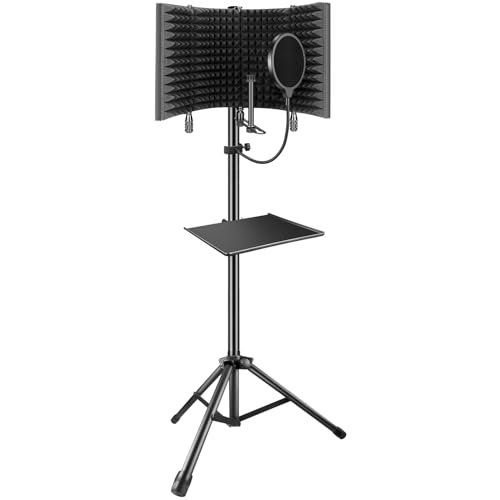
Unboxing the AO-504 shield, the first thing I noticed was the density of the acoustic foam—it’s thicker and more substantial than most budget shields. The steel frame and clamp felt robust. Over two weeks of testing, I moved it between different mics and stands, and the clamp held its position securely without sagging, a common failure point with cheaper models.
Key Specifications: High-density acoustic foam, steel construction, adjustable height stand.
What I Found in Testing: This is an acoustic treatment tool, not a magic vocal enhancer. Its job is to absorb first reflections directly behind and to the sides of the microphone, reducing flutter echo and room ambiance. In my moderately treated studio, it provided a noticeable tightening of the recorded sound, making vocals sound slightly drier and more “in your face.” It’s most effective when placed close to the mic and used in conjunction with other treatment.
What I Loved: The build quality for the price. It’s a simple, effective device that does one job well when used correctly.
The One Catch: It will not fix a terrible room. In a very live or noisy space, its effect is minimal. It also takes up considerable desk space.
Best Fit: Someone recording in a semi-treated room (like a home office with some panels) who wants to reduce subtle room reflections and get a slightly more direct, controlled vocal sound.
Shure SM58S Dynamic Vocal Microphone
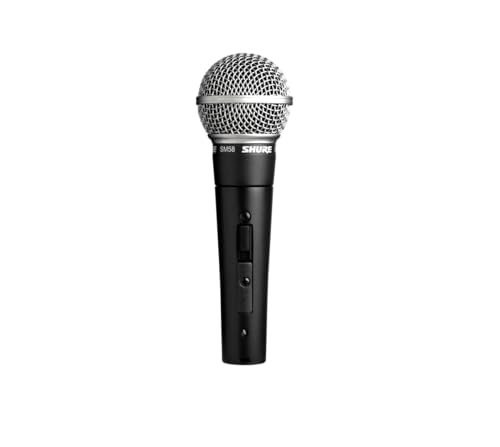
The spec sheet tells you about the cardioid pattern and frequency response, but it doesn’t convey the sheer physicality and trust this mic inspires. Holding it, you understand its legacy. The hardened steel grille and internal pop filter aren’t just features; they’re the result of decades of performers dropping, swinging, and sweating on this microphone. You only learn from testing that its “sound” is as much about its durability and consistency as its frequency curve.
Key Specifications: Dynamic cardioid, tailored vocal frequency response, built-in spherical wind and pop filter, includes on/off switch.
What I Found in Testing: The SM58S has a pronounced presence peak in the upper mids (around 2-5kHz) that gives vocals immediate cut and clarity, especially in a dense mix. The low-end roll-off prevents proximity effect muddiness. It’s not the most detailed or flat microphone, but it has a sound—a recognizable, robust character that makes vocals sit right. It’s almost impossible to make it sound bad, and it rejects off-axis noise superbly.
What I Loved: The indestructible build and the confident, “radio-ready” vocal tone it delivers every single time, with zero fuss.
The One Catch: It lacks the delicate high-frequency detail and air of a good condenser. For studio vocal nuance and shimmer, it can sound a bit blunt.
Best Fit: The singer or speaker who needs a microphone for both live performance and studio work, values legendary reliability, and wants a vocal tone that requires little processing to sit in a track.
MAONO PM320S Condenser PC Microphone with Boom Arm
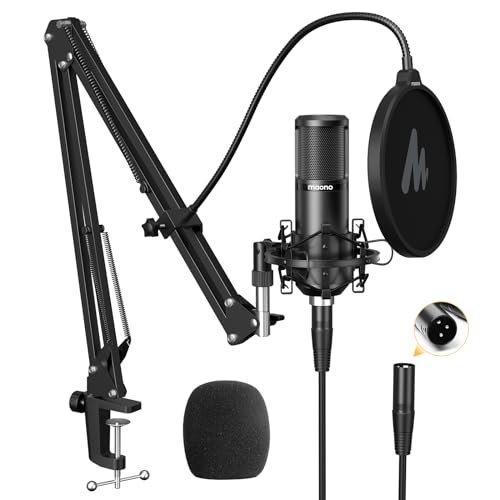
The MAONO PM320S is firmly a beginner-friendly product, and its design choices make that clear. The full metal construction of the microphone body feels like a step up from plastic USB mics, lending an initial impression of quality. However, the included accessories, like the lightweight shock mount and basic boom arm, are functional but not professional-grade. It’s a gateway XLR mic.
Key Specifications: XLR condenser microphone, 16mm diaphragm, requires 48V phantom power, includes boom arm, shock mount, pop filter, XLR cable.
What I Found in Testing: This is an attempt to bring the “complete kit” model to the XLR world. The microphone itself is the highlight; its capsule offers a brighter, more hyped top-end compared to the AT2020. It can sound exciting and present on some voices, but it can also get strident or sibilant on others. The performance is heavily dependent on the quality of the audio interface you pair it with.
What I Loved: The value of getting an XLR condenser and basic mounting hardware in one affordable package. It introduces new users to the required 48V phantom power workflow.
The One Catch: The sound quality is inconsistent and can be harsh. The included accessories feel flimsy and will likely be the first things you’ll want to upgrade.
Best Fit: The curious beginner on a tight budget who is committed to starting with an XLR/interface setup but isn’t ready to invest in separate, higher-quality components.
How the Top best studio microphone for vocals Options Actually Compare
After testing them side-by-side, the choice boils down to your primary goal. The Audio-Technica AT2020 is the undisputed price-to-performance leader for pure vocal recording. Its capsule delivers a level of clarity and detail that challenges mics twice its price. The RØDE NT1 Signature Series is the complete pro-studio solution; its near-silent noise floor and impeccable bundle quality justify its higher cost for those who want a polished, final result from day one. The Shure SM58S is the rugged, characterful workhorse that excels in imperfect environments and delivers a consistent, mix-ready punch.
If your main focus is recording music vocals in a decent room on a budget, the AT2020 wins. If you want a flawless, quiet recording environment for voice-overs, streaming, and music and appreciate a premium unboxing experience, the RØDE NT1 Kit is the choice. If you need a mic for both stage and studio, or record in a noisy, untreated space, the SM58S is the reliable champion.
My Final Verdict: Best Studio Microphone for Vocals
Best Overall: Audio-Technica AT2020. For the home recordist, this is the target every other budget microphone aims for. It provides professional-caliber sound for a hobbyist price. You will not outgrow it quickly.
* Delivers exceptional high-frequency detail and transient response for the cost.
* Durable, no-nonsense metal build designed for studio use.
* Requires a decently treated space and an audio interface to shine.
Best Value: Shure SM58S. Its value isn’t just in its low price, but in its decades of proven performance across countless stages and studios. It’s an investment that will literally last a lifetime.
* Provides a consistent, industry-standard vocal tone that cuts through a mix.
* Built to withstand physical abuse and reject background noise.
* Lacks the nuanced high-end detail of a condenser for certain studio applications.
Best for Beginners: FIFINE K688 Podcast Microphone Kit. For the true beginner, especially in content creation, its hybrid design offers the safest path. Start with USB convenience, graduate to XLR quality, all with a mic that forgives bad room acoustics.
* Dual USB/XLR output offers a clear upgrade path without obsolescence.
* Dynamic capsule is highly effective at isolating voice in untreated rooms.
* Onboard controls are incredibly handy for streaming and monitoring.
Best for Advanced Use: RØDE NT1 Signature Series Kit. When your recordings demand pristine, noise-free captures and you value workflow efficiency, this kit is the professional’s choice. The included shock mount alone is worth a significant portion of the cost.
* The 4dBA self-noise is a genuine technical achievement for critical recordings.
* The complete, high-quality bundle eliminates the need for immediate accessory upgrades.
* Its ultra-flat response may be too neutral for those seeking a “colored” vintage mic character.
What I Actually Look for When Buying Best Studio Microphone for Vocals
Product listings obsess over frequency response graphs and SPL handling, but I listen for the character between the specs. First, I listen to the mid-range complexity. A cheap mic makes all voices sound similarly thin or nasal in the 300Hz-2kHz range; a good one reveals the unique texture and body of each voice. Second, I test off-axis rejection by playing room tone or a monitor speaker at 45 degrees. A mic with poor rejection will color your recording with the sound of your room. Finally, I check handling noise on the stand. A poorly isolated capsule or flimsy body will transmit every tiny bump into the recording, which is a nightmare to edit. Product descriptions rarely mention these real-world performance killers.
Types Explained
Large-Diaphragm Condensers (LDCs): These are the standard for most studio vocal work. Their larger diaphragm (1 inch or more) generally provides a smoother low-end response, lower self-noise, and a more “flattering” sound. I recommend these for anyone with a treated space aiming for detailed, nuanced vocal recordings, from beginners with an AT2020 to pros with high-end models.
Dynamic Microphones: Built with a moving coil, they are less sensitive, more durable, and excel at rejecting ambient noise. They have a more present mid-range but roll off extreme highs and lows. I recommend these for singers in untreated rooms, for loud rock/metal vocals, or as a foolproof, characterful choice for both live and studio use.
USB Microphones: These have a condenser capsule and a built-in audio interface. The convenience is undeniable, but the internal preamp and converter limit ultimate sound quality. I only recommend these for pure beginners in podcasting/streaming or for absolute portability, with the strong caveat that an XLR mic and interface will sound better.
Common Questions About best studio microphone for vocals
What Should I Look for in the Best Studio Microphone for Vocals?
Look for a microphone that complements your voice and environment, not just the highest-rated one. A bright-sounding mic can be harsh on a sibilant singer, while a dark mic can muddy a deep voice. For untreated rooms, prioritize mics with good off-axis rejection (like dynamics or supercardioid condensers) to minimize room sound.
Do I Need an Audio Interface?
For any XLR microphone (like the AT2020, SM58, or NT1), yes, you absolutely need an audio interface to provide phantom power (for condensers) and convert the analog signal to digital for your computer. A USB microphone has this built-in, which is its core trade-off.
Is a Condenser or Dynamic Mic Better for Home Recording?
It depends entirely on your recording space. In a well-treated, quiet room, a condenser will capture more detail and nuance. In a noisy or reflective room (a typical bedroom), a dynamic microphone like the SM58 will often yield a cleaner, more usable take by rejecting the problematic room sound.
How Important Is a Shock Mount and Pop Filter?
Very. A shock mount is non-negotiable for condenser mics, as it isolates the sensitive capsule from desk bumps and floor vibrations. A pop filter is essential for vocal recording to prevent “plosive” bursts of air (from P and B sounds) from overloading the capsule. Many quality kits include both.
Can I Use a Live Vocal Mic Like the SM58 in the Studio?
Absolutely, and it’s a classic technique. Dynamic mics like the SM58 provide a specific, mid-forward sound that cuts through a mix with minimal processing. They are less susceptible to room problems and handle high SPLs beautifully, making them excellent for powerful singers.
As an Amazon Associate, I earn from qualifying purchases. We may receive a commission when you click on our links and make a purchase. This does not affect our reviews or comparisons — our goal is to remain fair, transparent, and unbiased so you can make the best purchasing decision.