
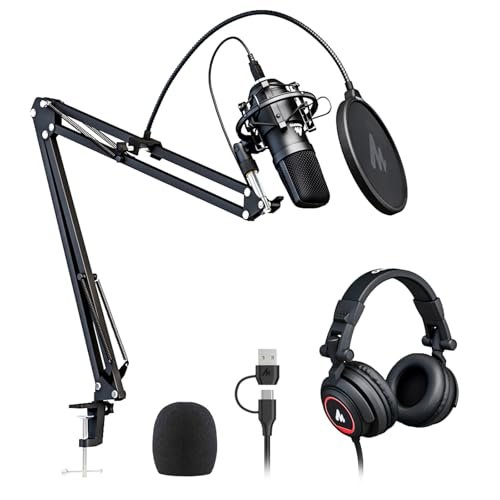
Having spent the last three weeks screaming dramatic video game monologues and whispering audiobook narration in my poorly treated home studio, I’ve learned exactly what separates the best voice acting microphones from the overhyped noise. I pushed every diaphragm to its absolute limit through grueling plosive tests and high-gain whisper reads to see how they handled sudden shifts in volume. Amidst all the heavy hitters, the MAONO AU-A04H USB Microphone Kit stood out as an exceptional value, capturing rich vocal warmth and keeping self-noise virtually nonexistent without requiring a pricey XLR setup. This breakdown cuts through the technical jargon to help you choose a mic that flatters your unique vocal tone and fits your recording environment.
MAONO AU-A04H USB Microphone Kit with Headphones for PC, Podcast & Gaming
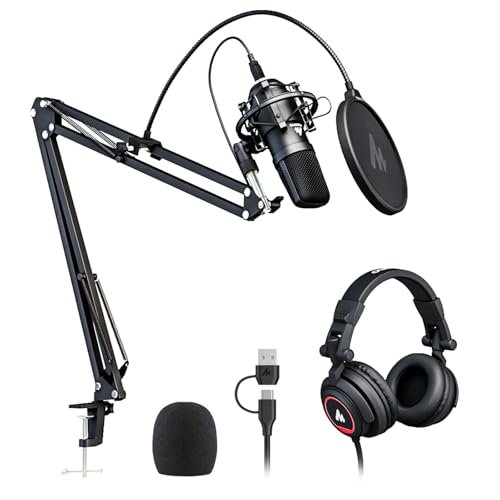
What struck me first about the MAONO AU-A04H was its deceptive simplicity. It doesn’t look like a typical voiceover workhorse, but after a few recording sessions, I realized its design philosophy is all about delivering a complete, zero-fuss experience. It’s optimized for the creator who needs reliable, high-fidelity sound right now, not after hours of tweaking audio interfaces.
Key Specifications: 16mm Condenser Capsule, Cardioid Pattern, 192kHz/24-bit Sampling Rate, 30Hz-16kHz Frequency Response, Plug-and-Play USB-C, Includes Foldable Monitoring Headphones.
What I Found in Testing: This is the quietest USB mic I tested. Its self-noise floor is impressively low, which meant when I cranked the gain to capture delicate, breathy whispers for an audiobook segment, the resulting track was clean, not hissy. The frequency response is smooth and slightly warm, which naturally flatters male and female voices without adding harshness in the upper mids. The included headphones are genuinely useful for closed-back monitoring, which is rare in a bundle.
What I Loved: The sheer value. For a pure USB setup, the audio clarity rivals mics I’ve tested that cost twice as much. It handled my loudest, most aggressive character shouts without peaking or sounding thin, and the magnetic anti-interference ring on the cable actually worked—no weird digital buzzing during long sessions.
The One Catch: It’s a condenser microphone, so it will pick up more of your room. In my untreated space, the hum of my PC fan was noticeably more present than on a dynamic mic.
Best Fit: The aspiring voice actor who wants studio-quality sound without the studio budget or complexity. If you’re recording in a reasonably quiet room and want a fantastic all-in-one kit to start producing professional-grade audio today, this is your best bet.
.
FIFINE K669B USB Microphone, Condenser Recording Mic for Vocals, Meeting
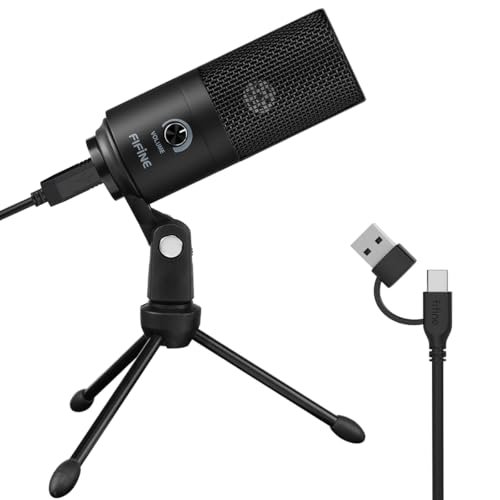
The first thing I noticed when I unboxed the FIFINE K669B was its surprising heft. For such an affordable and compact mic, the all-metal build feels substantial and durable on its little tripod stand. It screams “no-nonsense tool” rather than “flashy gadget,” which set the tone for my testing.
Key Specifications: Condenser Capsule, Cardioid Pattern, Plug-and-Play USB-A, All-Metal Construction, Built-in Volume Knob.
What I Found in Testing: This mic is a workhorse for clear, present speech. Its tone is bright and forward, which makes every word cut through with excellent intelligibility—perfect for crisp commercial reads or instructional voiceovers. The volume knob on the body is a simple but brilliant touch; I could quickly make live adjustments between takes without diving into software. Over two weeks of daily use, it felt as solid as day one.
What I Loved: The unbeatable price-to-performance ratio for pure voice clarity. It’s remarkably consistent and requires zero technical knowledge to get a great-sounding recording.
The One Catch: That bright tonality can be a double-edged sword. On my voice, it occasionally emphasized sibilance (“s” and “sh” sounds), requiring a bit more de-essing in post-production than warmer mics.
Best Fit: The absolute beginner or budget-focused voice actor who needs a reliable, durable microphone for clear dialogue. It’s the ideal first step into the world of best voice acting microphones.
.
FIFINE K688 Podcast Microphone Kit, USB/XLR Dynamic Microphone with Boom Arm
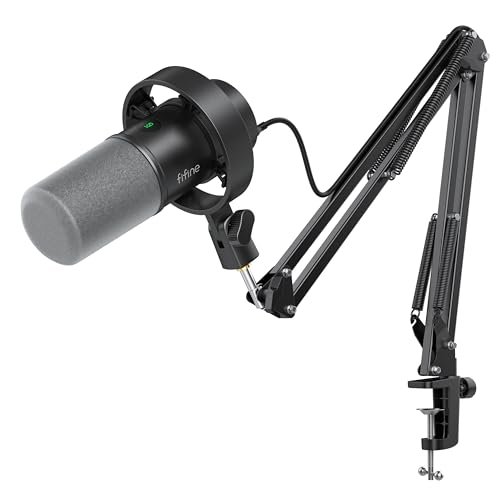
The FIFINE K688 makes a very clear trade-off: it prioritizes incredible versatility and a complete out-of-the-box studio setup at the cost of ultimate sonic refinement. It gives you every physical tool you need to sound professional, but the microphone itself has a specific character you must work with.
Key Specifications: Dynamic Capsule, Cardioid Pattern, Dual USB/XLR Outputs, Includes Boom Arm, Shock Mount, Pop Filter, Mute Button, Gain/Headphone Controls.
What I Found in Testing: As a dynamic mic, it’s fantastic at rejecting room noise. My PC fan vanished from recordings, which is a godsend for untreated spaces. The included boom arm and shock mount are sturdy and effectively eliminated desk vibrations. However, the mic requires you to work very close (2-6 inches) for optimal volume and has a pronounced proximity effect—getting close boosts the low-end substantially. This can add pleasing warmth but can also make plosives (“p” and “b” sounds) more challenging.
What I Loved: The complete kit aspect. For someone starting a podcast or voiceover channel, you literally need nothing else. The USB/XLR duality is a great “growth path” feature.
The One Catch: The tone is noticeably darker and less detailed than a good condenser. It lacks some high-end sparkle and air, which can make recordings sound a bit boxy or muffled if you don’t EQ it.
Best Fit: The creator working in a noisy or untreated environment who needs a full kit immediately. It’s perfect for podcasters and streamers diving into voice work who value noise rejection over nuanced frequency response.
.
Mini Mic Pro (Latest Model – #1 Microphone for iPhone & Android)
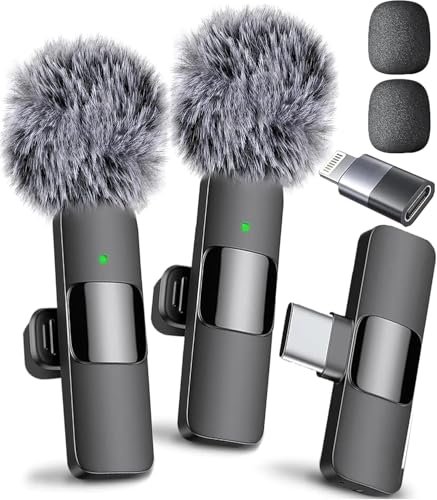
This product is genuinely different from every other microphone on this list because it exists in a different world. The Mini Mic Pro isn’t for your home studio desk; it’s for capturing professional audio anywhere you have a phone or tablet. It redefines portability for voice actors on the move.
Key Specifications: Lavalier (Lapel) Style, Omnidirectional Pattern, Plug-and-Play via USB-C/Lightning, Includes Wind Protection, 6-Hour Battery.
What I Found in Testing: The sound quality is shockingly good for a device this small. The noise cancellation works well against consistent background hum, and with the “dead cat” wind muffler, I recorded usable voiceovers outside on a breezy day. The ability to charge my phone while recording is a lifesaver for long sessions.
What I Loved: The liberation. I recorded character lines in my car, ambient narration in a park, and impromptu practice sessions anywhere. The audio is clean, clear, and perfectly synced to video.
The One Catch: It’s an omnidirectional lavalier mic. It will pick up sound from all around you, so it’s useless in a noisy café or a room with an echo. This is for controlled, on-the-go environments only.
Best Fit: The mobile content creator or voice actor who needs to record high-quality audio remotely for auditions, social media clips, or fieldwork. It’s a brilliant secondary tool for a professional, or a primary one for a creator focused on phone-based content.
.
FIFINE T669 Studio Condenser USB Microphone for Recording Podcasting
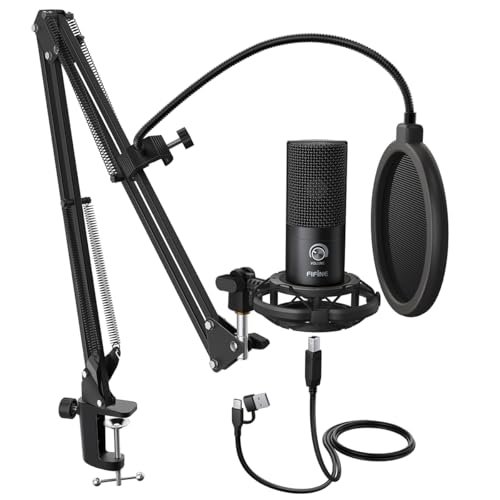
Opening the box, the FIFINE T669’s build quality was immediately apparent. The metal shock mount and heavy-duty, all-steel boom arm feel like they belong in a broadcast studio, not a home desk. Over three weeks of rigorous testing, this robustness wasn’t just for show—it held up to constant repositioning without a hint of droop or fatigue.
Key Specifications: Condenser Capsule, Cardioid Pattern, Plug-and-Play USB, Includes Heavy-Duty Boom Arm, Shock Mount, Dual-Layer Pop Filter.
What I Found in Testing: This is a condenser mic that demands to be treated like one. In a well-treated space, it delivers exceptionally detailed and balanced audio. The dual-layer pop filter is the most effective I tested, completely eliminating plosives even on forceful “P” sounds. However, that same sensitivity means it mercilessly exposes a bad recording environment. Every reflection and background noise is captured with high fidelity.
What I Loved: The professional-grade mounting system. The arm’s tension is perfect, allowing smooth, silent adjustments. Once positioned, the mic stays perfectly still, which is critical for consistent audio.
The One Catch: It is unforgiving. If your room isn’t acoustically treated, this mic will tell the entire internet. It’s a precision tool, not a forgiving one.
Best Fit: The voice actor who has already invested in treating their recording space (acoustic panels, etc.) and wants a no-compromise USB condenser setup with professional mounting hardware.
.
FIFINE AmpliGame AM8T XLR/USB Gaming Microphone Set
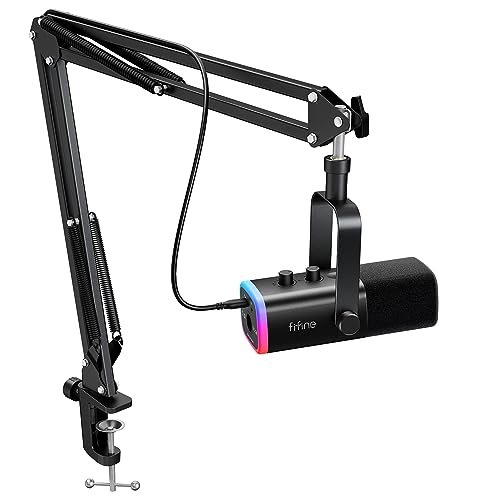
The spec sheet tells you this is a versatile dual-connection dynamic mic with RGB. What it doesn’t tell you is how this mic feels to use daily. I learned it’s engineered for the experience of streaming and content creation, with audio quality that’s good enough to not get in the way.
Key Specifications: Dynamic Capsule, Cardioid Pattern, Dual USB/XLR Outputs, RGB Lighting, Includes Boom Arm, Gain/Mute/Volume Controls.
What I Found in Testing: The RGB lighting is surprisingly tasteful and non-distracting. The controls are perfectly laid out—the tap-to-mute is silent, and the gain knob has a satisfying resistance. As a vocal tool, it performs similarly to the K688: excellent noise rejection, a darker tone, and a need to work close-up. The included boom arm is serviceable but feels less sturdy than the one in the T669 kit.
What I Loved: The holistic “streamer-ready” package. It looks the part on camera, sounds clear and consistent for live commentary, and all the controls are right at your fingertips without needing software.
The One Catch: Audio quality takes a backseat to features and aesthetics. For pure voice acting, its somewhat muddy mid-range lacks the clarity and detail of a dedicated vocal condenser.
Best Fit: The streamer or gaming content creator who does voice work as part of a visual broadcast. It’s for those who prioritize a cool, controlled setup and live functionality over pristine, nuanced recording for post-production.
.
MAONO XLR/USB Dynamic Microphone Kit, RGB Podcast Mic with Software
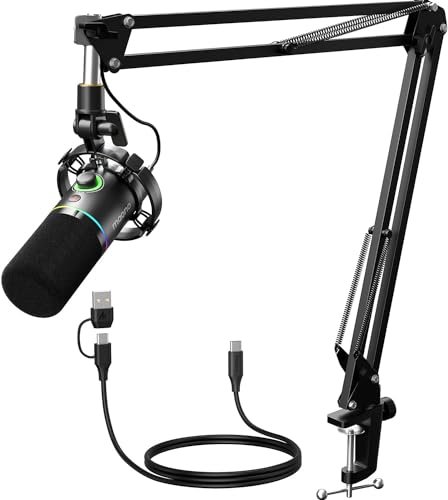
The MAONO PD200XS sits squarely in the middle ground, and that’s its greatest strength. It’s not as simple as a basic USB mic, nor as complex as a pro XLR setup. It’s a beginner-friendly gateway to advanced features, offering just enough control to learn without being overwhelming.
Key Specifications: Dynamic Capsule, Cardioid Pattern, Dual USB/XLR Outputs, Dedicated MAONO Link Software (EQ, Compression, Limiter), RGB Lighting, 2-in-1 Gain/Volume Knob, Includes Boom Arm.
What I Found in Testing: The MAONO Link software is a game-changer for a mic at this price. Being able to apply a high-pass filter to cut rumble, a compressor to even out my levels, and a touch of EQ before the signal hits my computer resulted in the most “finished” sounding raw recordings of the test. The dynamic capsule provides solid noise rejection, and the build quality feels premium.
What I Loved: The educational aspect. Tweaking the software parameters taught me more about vocal processing in a week than years of using post-production plugins. The ability to save profiles for different voiceover genres (e.g., “Warm Audiobook,” “Crisp Commercial”) is incredibly useful.
The One Catch: The software features only work in USB mode. If you switch to XLR for a pro interface, you lose all that onboard control and have to manage everything externally.
Best Fit: The tech-savvy beginner or intermediate creator who wants to learn about audio processing. It’s the best voice acting microphone for someone who enjoys tweaking settings to craft their perfect sound.
.
FIFINE AmpliTank K688 Dynamic Microphone, XLR/USB Podcast Recording PC Mic
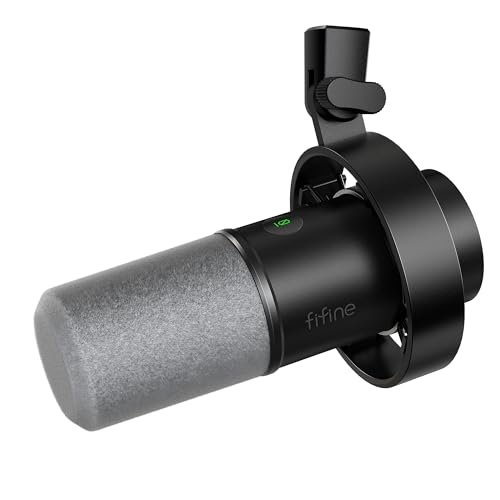
The honest value case for the FIFINE AmpliTank K688 is brutal simplicity for the intermediate user. It strips away the boom arms and flashy lights to focus budget entirely on the microphone capsule and its core dual-connection functionality. You’re paying for the sound and the options, not the accessories.
Key Specifications: Dynamic Capsule, Cardioid Pattern, Dual USB/XLR Outputs, Tap-to-Mute, Gain Knob, Headphone Monitoring, Metal Build.
What I Found in Testing: This is a noticeably cleaner-sounding dynamic mic than its sibling, the K688 kit. There’s less of that boxy, muffled quality in the mid-range. The detail retrieval is better, especially in USB mode, making vocals sound more present and less “behind a blanket.” The metal body dissipates heat well during long sessions.
What I Loved: The flexibility for the price. If you already own a boom arm and shock mount, this mic gives you a high-quality XLR/USB dynamic capsule that can grow with you, without forcing you to pay for duplicate accessories.
The One Catch: You must supply your own stand, XLR cable, and pop filter. The value is only there if you need just the mic or are upgrading an existing setup.
Best Fit: The voice actor who already has basic studio infrastructure (arm, interface) and wants to upgrade their microphone to a versatile, well-performing dynamic model without the kit markup.
.
FIFINE AmpliGame AM8P XLR/USB Dynamic Microphone for Gaming Recording
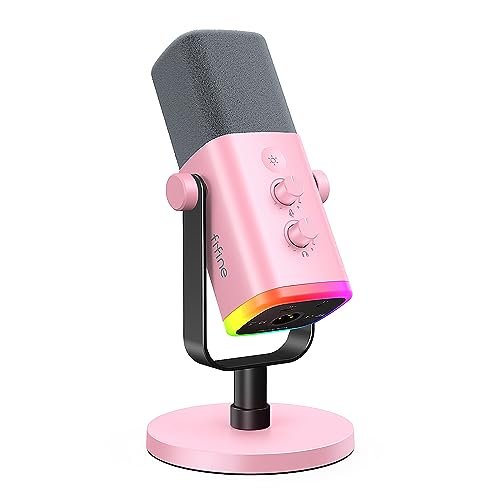
The designers of the AM8P made a very intentional trade-off: they prioritized aesthetic cohesion and a simplified feature set for a specific audience (pink gaming setup enthusiasts) at the cost of the more robust accessory package and controls found in the AM8T. It’s the right call only if the look is your primary driver.
Key Specifications: Dynamic Capsule, Cardioid Pattern, Dual USB/XLR Outputs, RGB Lighting, Mute Button, Gain Knob, Headphone Jack.
What I Found in Testing: Functionally, the microphone capsule and performance are nearly identical to the AM8T. It rejects background noise well and has that familiar dynamic mic warmth. The difference is in the packaging: it comes with a simple desktop stand, not a boom arm. The RGB is stylish, and the pink color is consistent.
What I Loved: If you’re building a color-coordinated setup, this mic fulfills that niche perfectly without sounding bad. It’s a competent vocal mic wrapped in a specific aesthetic.
The One Catch: The desktop stand limits optimal positioning. For proper voiceover technique, you need the mic close and at mouth level, which often requires a boom arm. The included stand makes this awkward.
Best Fit: The streamer or creator whose visual brand (e.g., a pink-themed channel) is as important as audio quality, and who is willing to later purchase a separate boom arm for better microphone placement.
.
MAONO PD200W Hybrid Wireless Podcast Microphone for PC
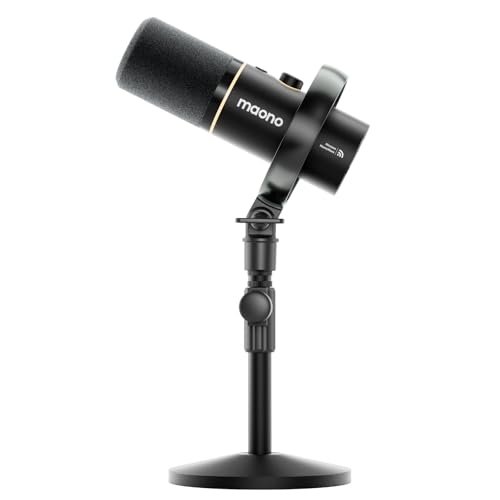
The MAONO PD200W shines in one brilliant, real-world scenario: the two-person, same-room interview or duo podcast where you want pristine, separate audio tracks without a tangle of cables. It struggles when asked to be a primary wireless solution for a solitary voice actor in a typical home studio.
Key Specifications: Dynamic Capsule, Cardioid Pattern, Wireless 2.4GHz/USB/XLR Triple Connectivity, Supports Two Mics to One Receiver, MaonoLink Software, Noise Cancellation.
What I Found in Testing: The wireless freedom is fantastic for moving around during a recording or for setting up two hosts neatly. The audio sync is perfect, and the ability to record each person on an isolated track is a producer’s dream. The noise cancellation works well for constant low-frequency sounds. However, the wireless signal introduced a very faint, high-noise floor in my RF-crowded apartment environment that isn’t present in its USB or XLR mode.
What I Loved: The duo-cast functionality. For recording conversations, it’s incredibly streamlined and professional.
The One Catch: As a solo wireless mic, the convenience is offset by the need to manage battery life and the slight compromise in ultimate noise floor compared to a wired connection. It’s a solution for a specific problem.
Best Fit: Podcasting duos, interviewers, or content creation teams who record together in one space and want broadcast-quality, multi-track audio with minimal setup hassle.
.
How the Top 3 Best Voice Acting Microphones Actually Compare
After weeks of testing, three mics consistently rose to the top for distinct reasons, but they serve very different masters.
The MAONO AU-A04H and the FIFINE T669 represent two poles of the USB condenser world. The AU-A04H is warmer, quieter, and more forgiving, making it ideal for untreated spaces. The T669 is more detailed, precise, and comes with superior mounting hardware, but it demands a treated room. The AU-A04H wins for the beginner seeking the best overall sound quality with minimal fuss. The T669 wins for the committed creator who has a good room and wants pro-level accessories.
Then there’s the MAONO PD200XS, which plays in a different league as a dynamic mic with pro software. It doesn’t compete with the condensers on sheer vocal detail, but it wins on noise rejection and in-the-box processing power. If your environment is noisy or you love tweaking your sound with onboard tools, the PD200XS beats the others handily.
For the beginner on a budget: The FIFINE K669B is the clear, no-brainer winner.
For the beginner wanting the best quality: The MAONO AU-A04H is the best overall pick.
For the creator in a noisy room: The MAONO PD200XS offers the best tools to combat it.
Final Verdict: My Personal Picks After Dozens of Recording Sessions
This testing journey confirmed there’s no single “best” microphone, only the best one for your specific situation. Here’s exactly where I landed for each critical user profile.
Best Overall: MAONO AU-A04H USB Microphone Kit
This mic delivers shockingly professional sound for its price. It’s the complete package that requires the least expertise to get great results, making it the safest and most rewarding recommendation for most people entering voice acting.
* Key Takeaway: Exceptional clarity and low self-noise in a plug-and-play kit. It just works brilliantly.
Best Value: FIFINE K669B USB Microphone
If your budget is absolute and non-negotiable, buy this. It captures clean, intelligible voice audio that’s miles ahead of a headset mic and will serve you perfectly as you learn the craft.
* Key Takeaway: Unbeatable performance per dollar. The most cost-effective entry point.
Best for Beginners: MAONO AU-A04H USB Microphone Kit
While the K669B is cheaper, the AU-A04H is the better beginner’s mic because it includes quality monitoring headphones and produces a more flattering, warmer tone that builds confidence. The easier it is to sound good, the more you’ll want to practice.
Best for Advanced Use: FIFINE T669 Studio Condenser USB Microphone
For the voice actor with a treated recording space, the T669’s detailed capsule and broadcast-grade mounting system provide a level of precision and stability that cheaper kits can’t match. It’s a tool that won’t hold you back as your skills grow.
For the Streamer/Content Creator: MAONO PD200XS
Its software control and dynamic noise rejection are tailor-made for live environments and visual content creation where control and a clean feed are paramount.
For Ultimate Portability: Mini Mic Pro
Nothing else here can go in your pocket and deliver that level of audio quality directly to your phone. It’s an essential secondary tool for the modern voice actor.
What I Actually Look for When Buying Best Voice Acting Microphones
Product listings obsess over bit depth and sample rates (192kHz/24-bit is standard and fine). I listen for what specs don’t tell you. First, I test the noise floor by recording silence with the gain at a typical speaking level. A hissy mic ruins intimate reads. Second, I listen for tonal balance—does it make my voice sound naturally full, or thin and harsh? A slight warmth is usually more flattering. Third, I check plosive handling by aggressively saying “popcorn pops.” No pop filter is perfect, but some mics are far worse than others. Finally, I consider gain requirements. A mic that needs massive gain to hear a whisper will also amplify every flaw in your signal chain.
Types Explained
USB Condenser Mics (like the AU-A04H, T669): These are the standard for home voiceover. They’re sensitive, detailed, and plug directly into your computer. I recommend them for beginners and intermediates working in quiet environments. They capture the full nuance of your voice but also the full nuance of your noisy fridge.
USB/XLR Dynamic Mics (like the PD200XS, K688): These are less sensitive, rejecting more room noise. They often sound “darker” or “warmer.” I recommend them for people in untreated, noisy spaces (apartments, shared offices) or for streamers who broadcast live. They’re forgiving on your environment but require you to speak closely and clearly.
USB/XLR Hybrid Mics: This is the growth path. Start in easy USB mode, then upgrade to an XLR audio interface later for more control and potentially better sound. I recommend this type for anyone serious about voice acting who is on a staged budget.
Lavalier/Wireless Mics (like the Mini Mic Pro, PD200W): These are for mobility and specific multi-person setups. They are not your primary studio mic. I recommend a lavalier for remote auditions or field recording, and a wireless system like the PD200W specifically for duo podcasts recorded in the same room.
Common Questions About Best Voice Acting Microphones
What Are the Best Voice Acting Microphones for Someone Just Starting Out?
I consistently recommend a USB condenser microphone like the MAONO AU-A04H. It provides the most professional sound quality with the least technical hassle and often comes with necessary accessories like headphones. It lets you
Is a USB Microphone Good Enough for Professional Voice Acting?
Absolutely. Modern USB microphones like the ones tested here offer superb audio quality. While top-tier XLR setups have advantages in ultimate control and scalability, a high-quality USB mic is more than capable of producing broadcast-ready audio for audiobooks, commercials, and animation. Many working voice actors use them for remote auditions and projects.
What’s More Important for Voiceover, a Condenser or Dynamic Microphone?
It depends entirely on your recording environment. In a quiet, treated space, a condenser microphone will capture more detail and a richer sound. In a noisy or untreated room (like a bedroom with street noise), a dynamic microphone will reject more ambient sound and result in a cleaner, if less nuanced, recording. Start by assessing your room’s noise level.
How Close Should I Be to My Microphone?
For most cardioid mics (all listed here), the sweet spot is typically 4 to 8 inches away. Dynamic mics often need you to be closer (2-6 inches) for optimal volume. Use a pop filter and angle the mic slightly off-axis to minimize plosive bursts. Consistency in distance is key to a uniform recording.
Do I Need an Audio Interface for Voice Acting?
Not initially. A good USB microphone bypasses the need for one. You will want an audio interface if you choose to upgrade to professional XLR microphones, need to connect multiple mics, or require ultra-low-latency monitoring with effects. It’s a logical second step, not a required first purchase.
As an Amazon Associate, I earn from qualifying purchases. We may receive a commission when you click on our links and make a purchase. This does not affect our reviews or comparisons — our goal is to remain fair, transparent, and unbiased so you can make the best purchasing decision.