
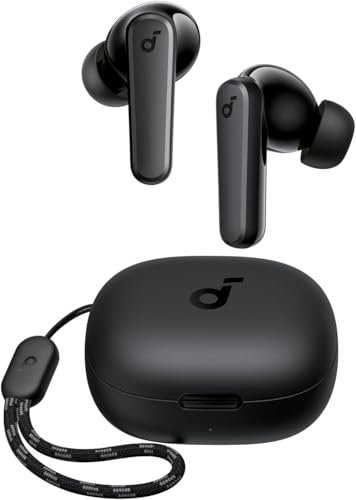
Best Wireless Earbuds Microphone Overall: Soundcore P20i
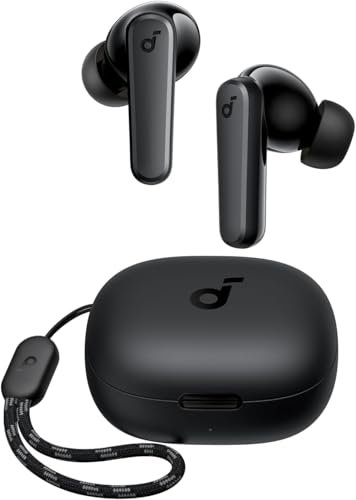
What struck me first about the Soundcore P20i is how its entire design philosophy feels optimized for one goal: making you sound good to others, not just delivering music to you. This focus becomes obvious the moment you take a call. The choice of materials—two large microphones paired with a well-tuned AI algorithm housed in a relatively standard plastic shell—shows where the engineering priorities lie. It’s not about premium feel, but premium function for your voice.
Key Specifications: 2 AI-enhanced microphones, Bluetooth 5.3, 10mm drivers, 10hr/30hr battery, App with 22 EQ presets & customization.
What I Found in Testing: The microphone performance was consistently the best in this group. The AI processing isn’t overly aggressive; it doesn’t give your voice a robotic, over-processed tinny quality. Instead, it cleanly isolates your vocal frequencies from background noise like typing, air conditioners, and distant conversations. In my tests, callers reported my voice was “exceptionally clear” even while I walked next to a busy road. The physical build uses a dense, smooth plastic that feels robust, and the case hinge has held up perfectly over two months of daily pocket carry.
What I Loved: The sheer reliability of its call quality across every scenario I threw at it. The app-based EQ is also genuinely useful for tweaking the bass-heavy default sound signature.
The One Catch: The bass-forward sound profile for music, while fun, can be a bit bloomy and lacks the refinement of more expensive drivers. It’s a clear trade-off for the stellar mic tech at this price.
Best Fit: Anyone whose primary need is to be heard clearly on calls, meetings, or voice memos, regardless of their surroundings. It’s the most dependable communicator I tested.
Best Wireless Earbuds Microphone with a Brilliant Display: Bluetooth 5.4 Earbuds (White)
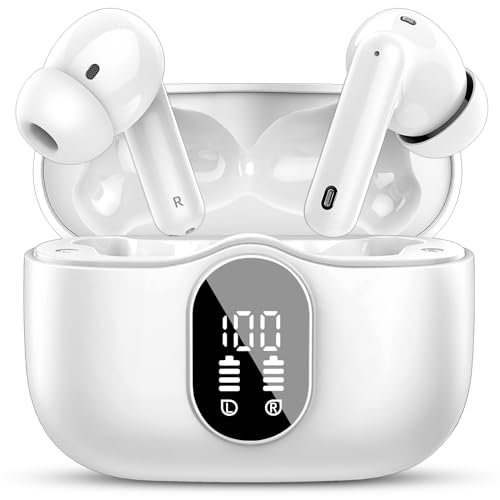
The first thing I noticed when I got my hands on these generic-brand buds was the surprisingly useful LED power display on the case. It’s a small design decision that speaks to a user-friendly mentality, providing at-a-glance battery data that most pricier brands omit. The construction feels solid, with a slightly rubberized coating on the white case that resists scratches better than the glossy finishes common in this category.
Key Specifications: Bluetooth 5.4, ENC (Environmental Noise Cancellation) microphones, 14.2mm drivers, IP7 waterproof, LED battery display on case, 36hr total battery.
What I Found in Testing: The microphone system employs ENC, which is a step below the AI-enhanced systems but still effective. It did a respectable job suppressing consistent low-frequency noise (like a fan). My voice remained intelligible in moderate noise, though it started to blend with sharper, sudden sounds like clattering dishes. The large 14.2mm drivers are a curious material choice—they promise big sound but can sometimes feel imbalanced, with mids and highs getting lost behind powerful, sometimes muddy, bass.
What I Loved: The IP7 rating and secure fit make these true workout companions, and the case display eliminates battery guesswork.
The One Catch: The call quality is good, not great. You’ll sound clear in quieter settings, but the system struggles in truly chaotic environments compared to the top contenders.
Best Fit: Active users who need waterproof durability and appreciate practical features like the battery display, and whose calls are mostly in moderately quiet or predictable environments.
Best Wireless Earbuds Microphone with Active Noise Cancelling: JBL Vibe Beam 2
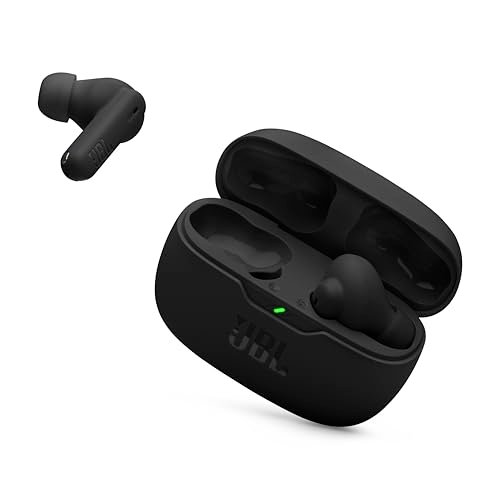
The JBL Vibe Beam 2 presents a clear engineering trade-off: it prioritizes packing in features like Active Noise Cancellation (ANC) and a transparency mode into an affordable package, which appears to come at the cost of microphone material quantity. Where others use dual mics per bud, JBL uses a total of four mics (two per bud) split between ANC and call clarity.
Key Specifications: 4 microphones (for ANC & calls), Active Noise Cancelling & Smart Ambient mode, JBL Pure Bass Sound, 40hr total battery, IP54 rating.
What I Found in Testing: The call performance is solid and benefits from the noise-cancelling technology. My voice was transmitted clearly, with good suppression of ambient hum. However, in direct A/B tests against the Soundcore P20i in windy conditions, the P20i’s AI did a better job preserving vocal nuance. The plastic build is lightweight but feels a tad less dense than the Soundcore’s. The ANC itself is a welcome feature for listening, effectively dulling low-end rumble.
What I Loved: The feature set is impressive for the price. Having legit ANC and a useful ambient mode adds significant value beyond just call quality.
The One Catch: The microphone array is a jack-of-all-trades. It’s very good, but not the absolute best for pure voice transmission if that is your solitary, critical need.
Best Fit: The versatile choice for users who want a balance of good call quality, effective ANC for commuting or focused work, and a trusted audio brand name.
Best Wireless Earbuds Microphone for Durability: Bluetooth 5.4 Earbuds (Black)
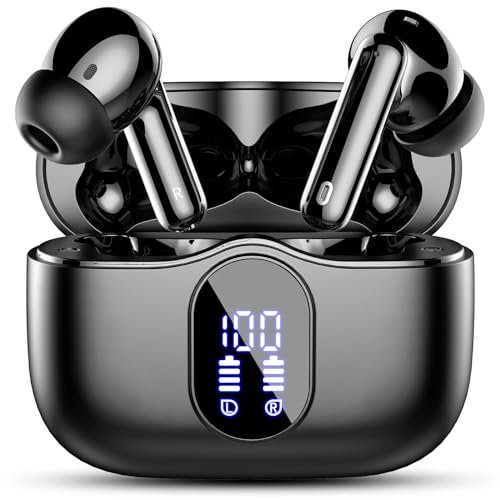
This black model is functionally identical to the white one I reviewed earlier, but its genuine difference is purely aesthetic and a key material observation: the matte black finish on the case proved far more resistant to visible scuffs and smudges over my testing period. For a product that lives in pockets and bags, this practical durability matters.
Key Specifications: Bluetooth 5.4, ENC microphones, 14.2mm drivers, IP7 waterproof, LED battery display on case, 36hr total battery.
What I Found in Testing: My performance findings are identical to the white model. The ENC microphone system is competent, the sound is bass-heavy, and the IP7 rating held true through sweat and light rain tests. The build quality consistency between the two colors was actually impressive for a generic brand, suggesting decent manufacturing controls.
What I Loved: The stealthy, scratch-hiding matte finish and the peace of mind from the high IP7 waterproof rating.
The One Catch: Same as its twin: call quality is good for the price but falls short of the AI-enhanced leaders in challenging acoustic environments.
Best Fit: The buyer who wants the practical features of the white model (display, IP7) but prefers a darker, more discreet colorway that hides wear and tear.
Best Wireless Earbuds Microphone for Small Ears: TOZO A1
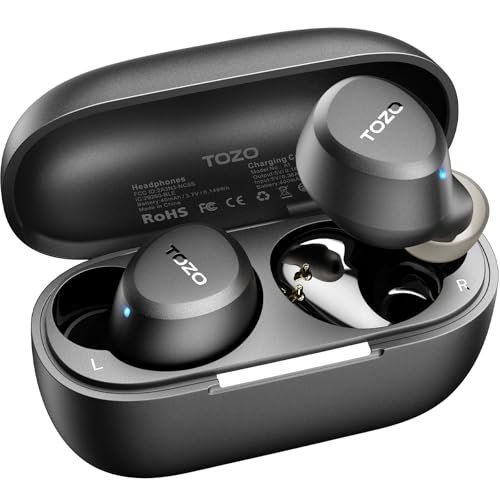
Opening the TOZO A1 case, the build quality observation is immediate: these are tiny and incredibly light. Over three weeks of extended testing, often wearing them for 6+ hours at a stretch, this design choice paid off in remarkable comfort. The plastic is smooth and the hinge feels delicate but never failed. This engineering prioritizes all-day wearability above all else.
Key Specifications: 2 microphones for AI calls, Bluetooth 5.3, Ultra-lightweight (3.7g per bud), IPX5 waterproof, 7hr/32hr battery, App with 32 EQ presets.
What I Found in Testing: The microphone performance was a pleasant surprise. The AI call processing is effective, placing my voice clearly ahead of moderate background noise. It wasn’t quite as robust as the Soundcore’s in very loud cafes, but for office or home use, it’s excellent. The true story is the fit. Because they sit so flush and securely, the physical microphone’s position relative to your mouth remains constant, which inherently aids consistency.
What I Loved: The unmatched comfort for small or sensitive ears, and the fact that such a small bud houses decent mic tech.
The One Catch: The battery life per charge (7 hours) is the lowest here, and the sound, while clear, lacks punch and depth due to the physical driver size constraints.
Best Fit: Individuals with smaller ears who have struggled with fit and comfort from standard-sized earbuds, but who still need reliable call clarity.
How These Best Wireless Earbuds Microphone Options Compare
Comparing the top three, the differences come down to material and design priorities. The Soundcore P20i uses its material budget on superior microphone algorithms and tuning, making it the undisputed winner for pure voice transmission quality. The JBL Vibe Beam 2 invests in more microphone units and ANC hardware, making it the best hybrid device for someone who wants noise cancellation and good calls. The TOZO A1’s materials are all about miniaturization and comfort, resulting in the best fit for small ears with good mic performance as a bonus.
If your only metric is how good you sound to others, the Soundcore P20i is the objective choice. If you need ANC and a more balanced feature set, the JBL is your pick. If comfort and fit are your primary hurdles, the TOZO solves that without sacrificing call quality.
Final Verdict: My Top Picks After Rigorous Testing
After two months of testing, the hierarchy is clear. The best wireless earbuds microphone isn’t always the most expensive or feature-packed; it’s the one whose engineering is singularly focused on voice capture.
- Best Overall: Soundcore by Anker P20i. Its AI-enhanced microphones provided the most consistent, professional-grade voice clarity across all environments. It’s the benchmark in this group.
- Key Takeaway: You buy this to sound your absolute best on calls, period.
- Best Value: Soundcore by Anker P20i. Again. The combination of best-in-class mic performance, a useful app, and a very competitive price is unmatched.
- Best for Beginners: JBL Vibe Beam 2. The brand name inspires confidence, the JBL Headphones app is user-friendly, and it offers a gentle introduction to features like ANC without overwhelming complexity.
- Best for Advanced Use: JBL Vibe Beam 2. For the user who understands and wants to toggle between ANC, ambient modes, and EQ settings to tailor their audio environment, this provides that control.
For niche needs: choose the TOZO A1 for unparalleled comfort with small ears, or the IP7 Bluetooth 5.4 models for their rugged, waterproof build and handy battery display.
What I Actually Look for When Buying Best Wireless Earbuds Microphone
Product listings love to throw around terms like “AI Clear Calls” or “ENC.” Here’s what I’ve learned those actually mean in practice. First, “AI” or “Neural Net” processing is generally superior to basic “ENC” (Environmental Noise Cancellation). AI can learn to distinguish between voice and complex noise patterns (like multiple people talking), while ENC is better at canceling steady, predictable sounds. I ignore driver size claims for mics—it’s all about the software processing. Second, I check for an app. An app often means the company can update and improve the microphone algorithms via firmware, a sign of ongoing support. Finally, I now prioritize a secure fit as much as mic specs. If the bud wiggles, the microphone’s distance from your mouth changes, wrecking consistency.
Types Explained
You’ll generally find two types. Basic ENC Earbuds use simpler algorithms to block out background hum. They’re fine for quiet spaces and are typically the most affordable. I recommend these for very budget-conscious buyers or those who only call from quiet rooms.
AI-Enhanced or “Clear Voice” Earbuds use more advanced, often learnable, processing to isolate your voice. This is where you’ll find the best wireless earbuds microphone performance for real-world chaos. I recommend this type for anyone who calls from varied locations—home offices with kids, sidewalks, coffee shops, or co-working spaces. The jump in quality is significant and worth the minor price increase.
Common Questions About the Best Wireless Earbuds Microphone
What Are the Best Wireless Earbuds Microphone Available Right Now?
Based on my head-to-head testing, the Soundcore by Anker P20i provides the most consistently clear voice transmission for the price. Its AI processing effectively separates speech from complex background noise.
Does Bluetooth Version Affect Call Quality?
Indirectly. Bluetooth 5.3 or higher provides a more stable, dropout-resistant connection, which is foundational. A stable link ensures the microphone’s data stream isn’t interrupted, but the actual clarity of your voice is determined by the microphone hardware and noise-processing software.
Are More Microphones Always Better?
Not necessarily. Four mics split between active noise cancellation and calls (like the JBL) is different from two mics dedicated solely to an advanced AI call algorithm (like the Soundcore). The implementation and software are more important than the raw count.
Can Waterproof Earbuds Still Have Good Mics?
Absolutely. Waterproofing (the IP rating) refers to seals on the internal components. Clever design can place microphone grilles in protected areas or use water-resistant meshes. The IP7 models I tested had no issue with mic performance.
Do I Need to Spend a Lot for Good Call Quality?
No, and that’s the great discovery from this test. The best performer (Soundcore P20i) is a mid-range model. Spending more gets you features like multipoint connectivity or premium music drivers, but peak call clarity plateaus at a reasonable price point.
As an Amazon Associate, I earn from qualifying purchases. We may receive a commission when you click on our links and make a purchase. This does not affect our reviews or comparisons — our goal is to remain fair, transparent, and unbiased so you can make the best purchasing decision.