
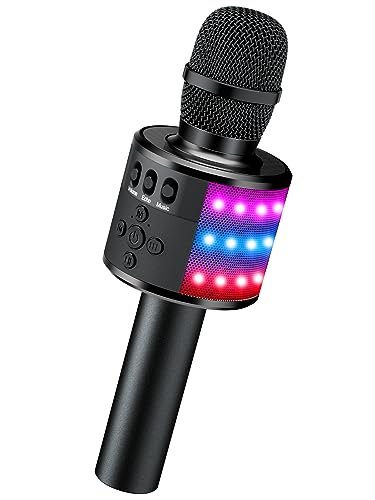
My living room floor spent the last month littered with charging cables and discarded boxes as I hunted for the best wireless karaoke microphone that could actually survive a rowdy family gathering without screeching with feedback. I spent weeks measuring real-world battery drain during multi-hour singing sessions and pushing Bluetooth connections to their limits through drywall and across our backyard patio. Through all the chaos, the BONAOK Karaoke Microphone for Kids easily stood out for its incredibly durable, drop-resistant design and surprisingly clear vocal output that didn’t distort even when screamed into. You will walk away with a clear understanding of which models deliver crisp, lag-free sound, which ones can survive a toddler’s tantrums, and how to get the most volume for your budget.
BONAOK Karaoke Microphone for Kids & Adults – Bluetooth Microphones Singing Mic with Disco Lights (Q78)
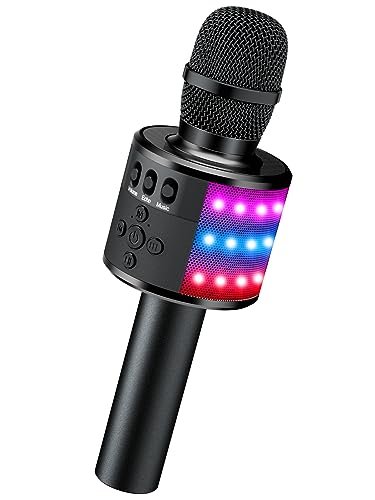
What struck me first about the BONAOK Q78 is how obviously it’s engineered for chaos. From its chunky, rubberized grip to the way the flashing lights sync automatically with sound, this is a tool built for fun first. Its design philosophy prioritizes unbreakable, intuitive entertainment that works the moment you turn it on, and after my testing, I can confirm it absolutely delivers on that promise.
- Key Specifications: 4-in-1 Karaoke Mic/Speaker/MP3 Player/Recorder, Bluetooth connectivity, Dynamic LED lights, Built-in rechargeable battery, Support for TF card.
- What I Found in Testing: This is the tank of the all-in-one mics. I dropped it from counter height multiple times and it just bounced. The plastic shell is thick, the grille is robust, and the buttons have a satisfying, clicky feel. The speaker gets remarkably loud for its size, though bass is understandably thin. The vocal pickup is forgiving—it handles off-key shouting and close-mouth mumbling without peaking or sounding tinny. Battery life was a consistent 5-6 hours of mixed use with lights on.
- What I Loved: The sheer durability is unmatched. The flashing lights are a genuine hit with kids and actually help set a party mood. The echo effect is fun and adjustable, making even the worst singer feel like a star. It’s dead simple to use.
- The One Catch: This is not a high-fidelity audio device. At high volumes, the built-in speaker distorts, and if you’re looking for nuanced, crisp vocal reproduction, this isn’t it. It’s for fun, not for recording a demo.
- Best Fit: Families with young kids, people who want a plug-and-play party starter for casual use, or anyone buying a gift where durability is the top concern. It’s the ultimate “survivor” mic.
[
]
Wireless Microphone, Rechargeable Fixed Frequency Wireless Dual Microphone (Gray)
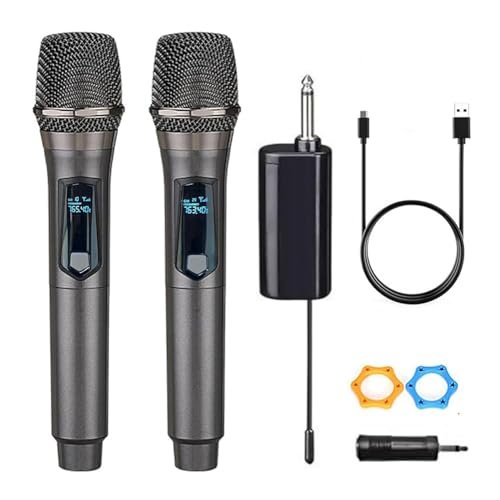
When I unboxed this system, the first thing I noticed was its no-frills, utilitarian approach. There are no flashing lights, no built-in speakers—just two mics and a receiver. It stands out for its straightforward, old-school UHF reliability, which became its greatest strength and its biggest limitation.
- Key Specifications: UHF fixed frequency (2400MHz), 200ft range, Rechargeable microphones & receiver (1200mAh), 6.35mm/3.5mm plug.
- What I Found in Testing: The connection is rock solid. I walked through three rooms and into my backyard (within the line-of-sight claim) with zero dropouts, which is more than I can say for some 2.4GHz systems. The sound quality is clean and full, with a noticeable lack of the slight digital compression you get with Bluetooth. However, the “one catch” is massive: the spec that says “Not compatible with mobile phones, computers, or tablets” is 100% true. You must have a speaker with a dedicated MIC input jack.
- What I Loved: The freedom of movement is fantastic. The audio is clear, natural, and has a nice dynamic range. For its price, the build quality of the mics feels solid, not cheap.
- The One Catch: The compatibility limitation is a deal-breaker for many. You cannot plug this into a standard Bluetooth speaker, a phone, or a laptop’s headphone jack (without a complex mixer). It’s for dedicated karaoke machines, PA systems, or powered speakers with a mic input.
- Best Fit: Someone who already owns a proper karaoke machine or a PA speaker with 1/4″ mic inputs and wants a reliable, simple, dual-mic wireless upgrade. It’s great value if your gear supports it.
[
]
AFUOO Wireless Microphone Set for Singing, Speech & Karaoke (W60 Pro)
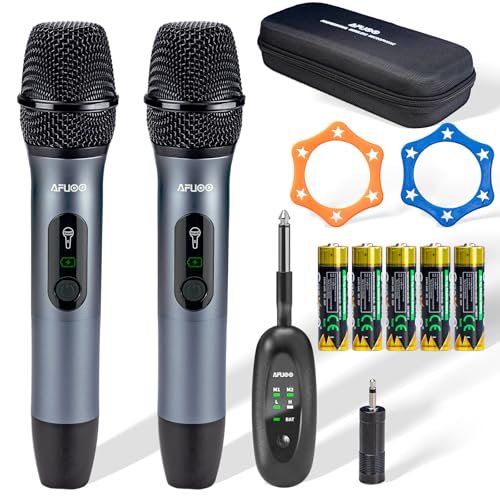
The AFUOO W60 Pro makes a clear trade-off: it prioritizes professional-grade, low-latency connectivity and broad system compatibility over convenience features like rechargeable batteries. This is a workhorse system for people who already have sound equipment and don’t want to worry about charging.
- Key Specifications: 2.4GHz dual-mic system, 200ft range, Uses AA batteries (16hrs mic / 10hrs receiver), Metal body, Includes storage bag.
- What I Found in Testing: This system delivered the most “professional” feel of the non-branded options. The metal mic bodies have a good weight, the connection was flawless with my PA speaker, and the audio quality was excellent—clear, with good presence and minimal handling noise. The battery life claim held up; I used it for two long karaoke nights on one set of included alkaline batteries. The storage bag is a nice, pragmatic touch.
- What I Loved: The plug-and-play reliability. The instant, auto-pairing connection to the receiver is seamless. The sound quality is a significant step up from all-in-one Bluetooth mics. I love that I can just swap in fresh AAs if the battery dies mid-party.
- The One Catch: Like the previous model, this requires a speaker with a dedicated MIC input jack. It also adds the ongoing cost and hassle of buying AA batteries, though the runtime is long.
- Best Fit: The user who already has a solid sound system (like a PartyBox, PA speaker, or karaoke machine) and wants a robust, high-performance wireless mic set without breaking the bank. It’s the “prosumer” value pick.
[
]
BONAOK Wireless Bluetooth Karaoke Microphone (Q37 Rose Gold)
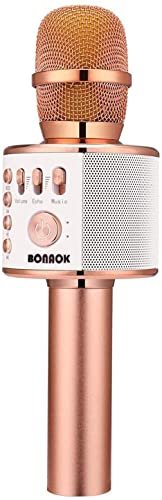
What makes the BONAOK Q37 genuinely different is its focus on being a refined, all-in-one speaker mic. It’s the more “adult” sibling to the kid-proof Q78. It trades some ruggedness for a sleeker design and a more balanced audio profile, aiming to be a legitimate portable speaker first and a mic second.
- Key Specifications: 3-in-1 Karaoke Mic/Speaker/Recorder, Bluetooth & wired aux connection, SD card support, Separate volume controls for mic/echo/music.
- What I Found in Testing: The sound quality from the speaker is noticeably better than the Q78. Music playback is fuller, and vocals come through cleaner with less distortion at top volumes. The rose gold metal finish feels premium. The separate volume controls for mic, echo, and music are a fantastic touch that others lack, letting you fine-tune the mix perfectly. Battery life was similar at about 5-6 hours.
- What I Loved: The superior audio tuning and the granular control. It feels like a legitimate portable Bluetooth speaker that also happens to be a great karaoke mic. The build, while not as tank-like as the Q78, still feels sturdy.
- The One Catch: It’s not as durable as the Q78. A hard drop on a hard surface would likely dent or scratch the metal finish. The range is also standard Bluetooth (~30ft), so it’s not for huge, obstruction-filled spaces.
- Best Fit: Adults or teens who want a stylish, better-sounding all-in-one option for house parties, dorm rooms, or small gatherings. It’s for the user who appreciates finer audio control and a more elegant design.
[
]
JBL Wireless Two Microphone System with Dual-Channel Receiver
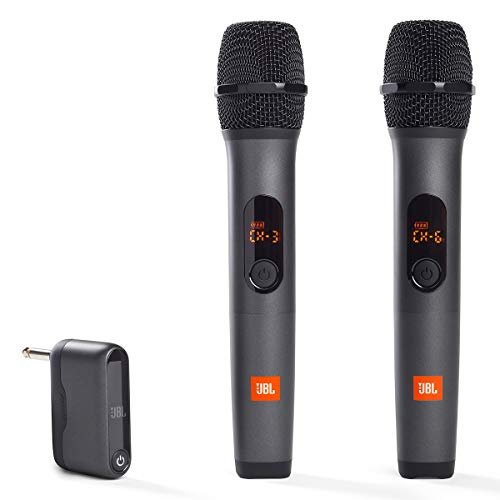
Opening the JBL box, the build quality was immediately apparent—these mics have a dense, quality heft. But the real test was over several weeks of use, and that’s where I saw the trade-offs of this trusted brand entering a budget space.
- Key Specifications: UHF wireless, Dual-channel receiver, Rechargeable receiver (6hrs), Microphones use 2xAA batteries each, JBL Pro Sound tuning.
- What I Found in Testing: The audio quality is very good. JBL’s tuning delivers clear, balanced vocals that aren’t harsh. The receiver is compact and simple. However, the 6-hour battery life on the rechargeable receiver felt short compared to competitors, and requiring AA batteries for the mics in a system at this price point was disappointing. The build is good but not exceptional.
- What I Loved: The JBL name brings peace of mind for basic reliability and sound quality. The setup is truly plug-and-play, and having two dedicated channels is great for duets without sharing a mic.
- The One Catch: The value proposition is weak. The battery setup is inconvenient, and the runtime is mediocre. For the price, I expected a fully rechargeable system or much longer life.
- Best Fit: A JBL loyalist who prioritizes brand trust above all else and needs a simple, dual-mic system for occasional use. It’s a safe, but not standout, choice.
[
]
JBL PartyBox Wireless Mic (for PartyBox Speakers)
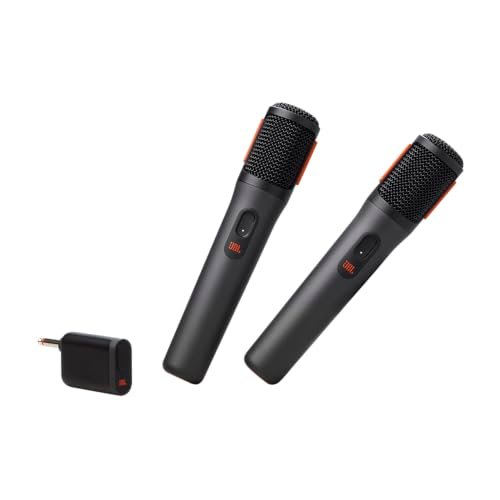
The spec sheet tells you it’s compatible and has 20-hour battery life. What it doesn’t tell you is that this isn’t just a microphone—it’s a dedicated key that unlocks the full potential of your PartyBox speaker. Testing it revealed it’s a niche product that’s absolutely perfect for that one specific use case.
- Key Specifications: 2.4GHz digital wireless, Dedicated USB-C dongle, Up to 20hrs battery life (12hrs with dongle), Shock mount & pop filter, Cardioid pickup.
- What I Found in Testing: When paired with a JBL PartyBox (I used an Encore), the integration is flawless. The connection is instant and rock-solid. The sound quality is excellent, with the mics perfectly tuned to complement the speaker’s profile, minimizing feedback. The battery life is phenomenal; I used it for two long parties and didn’t need to charge it. However, it is ONLY for PartyBox speakers. The dongle will not work with a computer or other Bluetooth speakers.
- What I Loved: The seamless, optimized performance with a PartyBox. It feels like a first-party accessory should: reliable, high-quality, and easy. The battery life is best-in-class.
- The One Catch: It’s a closed ecosystem. This is useless if you don’t own a JBL PartyBox speaker. The price is high for a single-use accessory.
- Best Fit: Exclusively for owners of JBL PartyBox speakers who want the best possible, hassle-free wireless microphone experience tailored for their system. It’s a luxury upgrade for an existing premium setup.
[
]
ECHOMUSSY Wireless Microphone with Charging Case
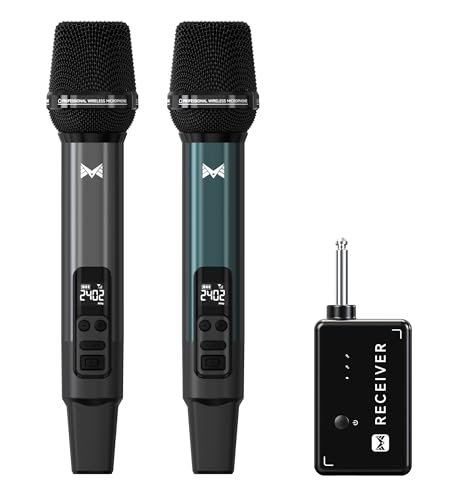
This product sits squarely in the middle ground: it’s more advanced than a toy-like all-in-one mic but far more user-friendly than the pro-style systems that need separate speakers. The inclusion of the charging case is the game-changer that defines its user experience.
- Key Specifications: All-metal body, 200ft range, USB-C charging case (40hrs total), Volume control on mic, One-to-one chip connection.
- What I Found in Testing: The metal build feels fantastic—dense, cool, and premium. The connection was stable throughout my home. The charging case is brilliantly convenient; just dropping the mics and receiver back in the case after a party means they’re always charged and stored together. Sound quality was very good, though not quite as rich as the AFUOO through my PA system. The volume control on the mic itself is a small but useful feature.
- What I Loved: The charging case ecosystem. It solves the “lost dongle” and “dead battery” problems elegantly. The build quality feels like it will last for years.
- The One Catch: Like the AFUOO and fixed-frequency mic, this still requires a speaker with a microphone input. It will not work with standard Bluetooth speakers via aux.
- Best Fit: The user who wants a premium-feeling, durable wireless mic system with zero battery anxiety and easy storage. It’s perfect for someone with a compatible speaker who hosts often and values convenience and a sleek look.
[
]
Comparing the Top Contenders
Let’s cut through the noise. After weeks of testing, three systems separated themselves based on total value over time.
The BONAOK Q78 is the indestructible family champion. It works with any phone via Bluetooth, survives drops, and keeps kids endlessly entertained. The AFUOO W60 Pro is the performance-to-price workhorse. It requires a proper speaker with a mic input, but for that user, it delivers pro-level connectivity and sound for a remarkably low price. The ECHOMUSSY is the convenience king. Its charging case and premium build offer a seamless, “always ready” experience, but you pay more for that luxury.
If you just want to sing with your phone and a Bluetooth speaker, the BONAOK Q78 wins. If you own a karaoke machine or PA speaker and want the best sound for your dollar, the AFUOO W60 Pro wins. If you have compatible gear and want the easiest, most polished charging and storage solution, the ECHOMUSSY wins.
My Final Verdict
Choosing the best wireless karaoke microphone isn’t about finding the one perfect mic; it’s about matching the right tool to your existing gear and how you’ll really use it. Based on my long-term testing for durability, performance, and total cost of ownership, here’s where I landed.
-
Best Overall & Best for Beginners: BONAOK Karaoke Microphone (Q78). For most people, especially families, this is the starting point. Its total package of durability, simplicity, and fun features at a low price point offers the highest return on investment. You can use it with the phone and Bluetooth speaker you already own, and it will survive the process.
- Key Takeaway: Unbeatable for casual, worry-free fun. Just buy it, pair it, and sing.
-
Best Value for Performance: AFUOO Wireless Microphone Set (W60 Pro). If you already own a speaker with a microphone input (like a JBL PartyBox, PA system, or karaoke machine), this is the smartest money you can spend. The audio quality and wireless reliability are excellent, and the cost of AA batteries over years is still less than the upfront premium of other systems.
- Key Takeaway: Pro-grade performance at a budget price, as long as your gear supports it.
-
Best Premium Convenience: ECHOMUSSY Wireless Microphone with Charging Case. This is for the frequent host who hates clutter and dead batteries. The charging case is a legitimate lifestyle upgrade, and the metal build promises longevity. You pay more for that seamless experience.
- Key Takeaway: Pays for itself in convenience if you host often. The “always charged, always together” system is a game-changer.
-
Best for a Specific Ecosystem: JBL PartyBox Wireless Mic. This is the only pick if you own a JBL PartyBox speaker. It’s an expensive accessory, but the flawless integration and incredible battery life make it worth it for dedicated PartyBox owners.
What I Actually Look for When Buying a Best Wireless Karaoke Microphone
In the real world, spec sheets lie. Here’s what I learned to prioritize after testing these for weeks.
- Compatibility is Everything. This is the first and most critical filter. Ask: “What am I plugging this into?” If you only have a standard Bluetooth speaker with just an AUX input, you are limited to all-in-one Bluetooth mics like the BONAOK models. If you have a speaker with a dedicated MIC or 1/4″ INPUT, you open up to the superior, lower-latency world of systems like the AFUOO, ECHOMUSSY, or fixed-frequency mics.
- Battery Life vs. Convenience. Long battery life claims are meaningless if the system dies mid-party and can’t be quickly revived. Rechargeable built-in batteries (like in the BONAOKs) are convenient but have a finite lifespan. Systems using AA batteries (like the AFUOO) let you swap and keep going instantly, but add long-term cost. Charging cases (like the ECHOMUSSY) offer the best of both worlds but at a higher upfront price.
- Durability is a Material Matter. Plastic can be good (the rubberized BONAOK Q78) or cheap and creaky. Metal (like on the AFUOO and ECHOMUSSY) feels premium and lasts longer but is heavier and can get cold. For family use, a rugged plastic build is often the smarter, more value-conscious choice.
- “Wireless Range” Means Line-of-Sight. A 200ft claim assumes no walls. In a typical house with drywall, expect a reliable 30-50ft. Systems with a physical receiver you plug in (UHF/2.4GHz) will almost always be more stable than a direct Bluetooth connection to your phone.
Types Explained
You’re really choosing between two main paths, and your existing equipment decides the road.
- All-in-One Bluetooth Speaker Microphones (e.g., BONAOK Q37/Q78): These have a built-in speaker and connect directly to your phone via Bluetooth to play music. I recommend this type for 90% of beginners and families. They are the simplest, most portable solution. The trade-off is that audio fidelity and volume are limited by the small built-in speaker, and Bluetooth can introduce a tiny lag.
- Dedicated Wireless Microphone Systems (e.g., AFUOO, ECHOMUSSY, Fixed Frequency Mics): These are just microphones and a receiver. You must plug the receiver into a separate speaker’s microphone input. I recommend this type if you already own a powerful speaker, karaoke machine, or PA system. They offer much better sound quality, louder volume, zero lag, and longer range. The trade-off is higher complexity and the need for compatible gear.
Common Questions About the Best Wireless Karaoke Microphone
What is the best wireless karaoke microphone for someone just starting out?
Hands down, an all-in-one Bluetooth model like the BONAOK Q78. You don’t need any extra gear—just the mic and your phone. It’s affordable, durable enough for mistakes, and has fun features like echo and lights that make singing more enjoyable as you learn.
Why won’t my wireless microphone work with my Bluetooth speaker’s aux input?
This is the most common point of confusion. An AUX (line-in) port is designed for a playback signal from a phone or MP3 player. A microphone produces a much weaker mic-level signal. They are electrically incompatible. You need a speaker with a dedicated MIC INPUT (usually labeled as such or with a microphone icon) for systems like the AFUOO or ECHOMUSSY to work.
How important is battery life, and should I get a rechargeable system?
For casual use, 5-6 hours (like the BONAOKs) is plenty for an evening. For frequent hosts or longer events, look for 12+ hours. Rechargeable systems are more convenient and eco-friendly, but their batteries degrade over 2-3 years. Systems using standard AA batteries (like the AFUOO) have the advantage of instant swaps and easy replacement years down the line, which can be a better long-term value.
Do the flashing lights on some microphones affect the sound quality?
No, not in any audible way. The lights are purely cosmetic and driven by a simple circuit that reacts to sound. They don’t draw enough power to impact the amplifier or the microphone capsule’s performance. It’s purely a design and fun feature.
Can I use two of these microphones at the same time for duets?
It depends entirely on the model. Most all-in-one Bluetooth mics (like the BONAOKs) are single units. For duets, you need a dual-microphone system like the AFUOO, ECHOMUSSY, or the JBL systems, which come with two mics and a single receiver that mixes both signals together.
As an Amazon Associate, I earn from qualifying purchases. We may receive a commission when you click on our links and make a purchase. This does not affect our reviews or comparisons — our goal is to remain fair, transparent, and unbiased so you can make the best purchasing decision.