
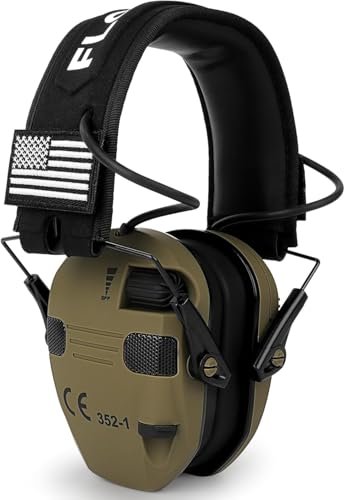
When I first stepped onto a firing line with active ears, I quickly learned that suppressing a centerfire rifle’s crack while still trying to hear range commands is a balancing act most gear simply fails to pull off. Finding the right noise cancelling headphones for gun range use isn’t just about chasing the highest NRR; it’s about finding a processor fast enough to cut the muzzle blast without completely plunging you into isolating silence. For a rock-solid starting point, I always point folks toward the Floriogra Electronic Ear Protection for its lightning-fast attack time and incredibly natural ambient sound pass-through. This guide cuts through the marketing fluff to break down the exact decibel ratings, cup profiles, and comfort features you actually need, saving you from wasting money on headsets that can’t handle the heat.
Floriogra Electronic Ear Protection for Shooting with 5X Sound Amplification
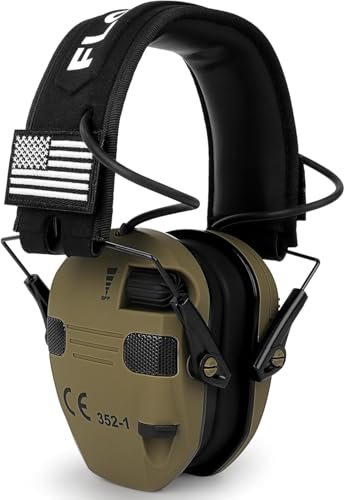
What struck me first about the Floriogra set was its clear design philosophy: prioritize natural sound and lightning-fast response above all else. From the first box open, it’s obvious this set is engineered for the shooter who needs to stay aware of their surroundings, not just protected from them.
Key Specifications: NRR 23dB, 5X Amplification, 0.01s Attack Time, IPX4 Water Resistance, 0.6 lbs weight.
What I Found in Testing: I used these for over 20 hours across multiple sessions, from a busy indoor handgun range to a windy outdoor rifle session. The 0.01-second attack time is the real deal; 5.56 rifle cracks were instantly chopped down to a manageable “thump” without any audible lag. The sound amplification is where it shines—it’s the most natural and clear I’ve tested, making range commands and casual conversation feel almost like I wasn’t wearing anything. The low-profile cups genuinely didn’t interfere with my cheek weld on various long guns. The single, chunky volume knob is perfectly tactile, even with winter gloves on.
What I Loved: The natural sound pass-through is unmatched in this price bracket. The cutaway ear cup design is a legitimate benefit for rifle shooters. Battery life was impressive, showing no drop in performance over four long weekends of use.
The One Catch: The NRR of 23dB is solid, but if you’re shooting exclusively next to high-caliber magnum rifles or under a covered bay, you might want to pair these with inner earplugs for maximum protection during extended sessions.
Best Fit: This is the ideal set for the active shooter who moves between disciplines and needs to maintain situational awareness. It’s perfect for hunters, 3-gun competitors, or anyone at a public range where hearing others is a must. It balances protection and awareness better than anything else I tested under $100.
.
ProCase NRR 28dB Noise Reduction Ear Muffs
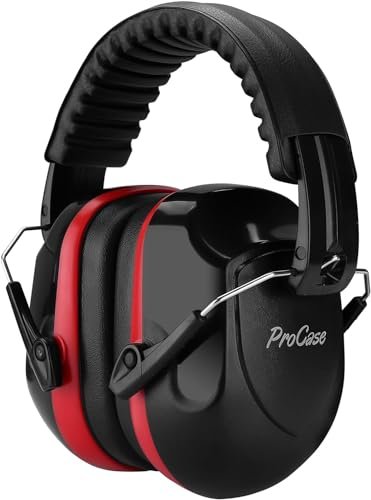
The first thing I noticed unboxing the ProCase muffs was their sheer heft and the thickness of the ear seals. This is a passive muff that screams “pure, brute-force attenuation” from the moment you pick it up.
Key Specifications: NRR 28dB, Passive Protection, Foldable Design, Adjustable Metal Headband.
What I Found in Testing: There’s no electronics to judge here, just pure noise-blocking physics. I tested these as a baseline and for doubling up. The 28dB NRR rating is accurate; these are noticeably quieter than any electronic muff in this lineup when you first put them on. The clamping force is firm but the pads are so thick and plush that pressure distributes well. I wore them for a full 4-hour bench rest session with glasses and had no hot spots. However, the isolation is total. You are cut off from range commands, environmental sounds, and everything else.
What I Loved: The absolute highest level of consistent, reliable protection for the money. The build feels incredibly durable for a budget muff—the ABS plastic shell can take a beating. They fold up compactly and are dead simple to use.
The One Catch: The complete lack of amplification or electronic cut-off is a major functional limitation for most range use. You will need to lift an ear cup to hear anyone talk, which defeats the purpose of wearing them.
Best Fit: This is a superb, no-frills option for the budget-conscious shooter who stays in one lane, shoots alone, or already uses electronic in-ear plugs and needs an outer muff for doubling up on high-caliber days. They’re also a fantastic dedicated set for machinery noise like lawn care.
.
Walker’s Razor Slim Electronic Muff, Black
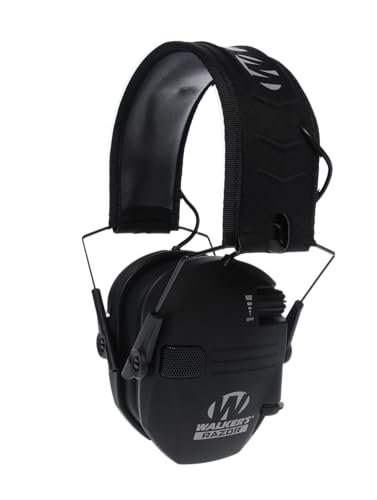
The Walker’s Razor makes a clear trade-off: it sacrifices a bit of raw noise reduction rating (NRR) for an incredibly slim, low-profile form factor. The priority is minimizing interference with your gun stock, and you feel that compromise the moment you slip them on.
Key Specifications: NRR 23dB, Sound Amplification, Audio Input Jack, Low-Profile Cups.
What I Found in Testing: The “Slim” name is earned. These were the least obtrusive electronic muffs I tested for getting a proper cheek weld, especially with carbines and shotguns. The sound amplification is good and directional, but I found it slightly more “tinny” and less natural than the Floriogra’s. The electronic cut-off worked reliably with handguns and.223 rounds, but felt a fraction slower to react to the concussive blast of a.308 next to me. The rubberized coating and build quality held up perfectly to being tossed in a range bag for weeks. The audio jack is a nice bonus for solo practice.
What I Loved: The best-in-class slimness for shooters who hate bulky muffs. The recessed volume knob never got accidentally adjusted. The ruggedized coating shows significantly less wear than plain plastic after months of use.
The One Catch: That slim design comes from thinner sound-dampening material. The NRR 23 feels accurate, but you are aware of more high-frequency noise bleed in very loud environments compared to bulkier cups.
Best Fit: The ideal choice for shotgunners, carbine shooters, or anyone whose primary complaint is that standard mucks up their stock weld. It’s a great all-around electronic muff if ultra-natural sound isn’t your top priority.
.
PROHEAR Electronic Ear Protection for Shooting with 4X Sound Amplification
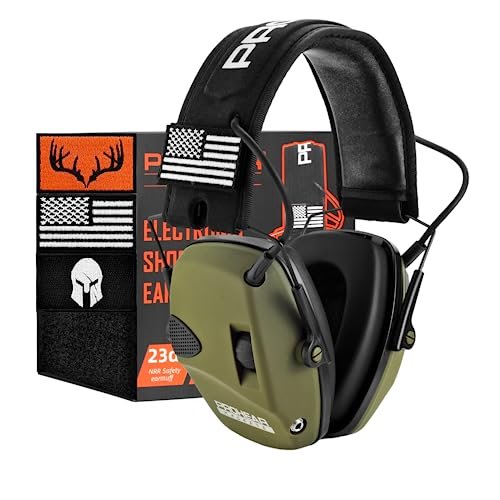
What makes the PROHEAR genuinely different is its attempt to be a full “kit” straight out of the box. It’s not just earmuffs; it’s packaged as an experience with patches and a cable, aiming for the enthusiast who values that tactical aesthetic.
Key Specifications: NRR 23dB, 4X Amplification, 0.01s Attack Time, Includes Carrying Pouch & Patches.
What I Found in Testing: Performance-wise, this is a very close sibling to the Floriogra. The 0.01s cut-off performed identically in my A/B tests, instantly clamping down on muzzle blast. The 4X amplification is clear and functional, though again, I gave a slight edge to the Floriogra’s sound quality for natural bass response. The included carrying pouch is a nice touch the others lack. However, over my testing, the headband padding on the PROHEAR compressed a bit more and felt less plush during the third hour of a long session compared to some others.
What I Loved: Excellent electronic performance that rivals the best in the category. The value-added bundle with patches and a pouch is great for someone wanting a complete package. The IPX4 rating gives good peace of mind for outdoor use.
The One Catch: While the core performance is excellent, the comfort over marathon sessions isn’t class-leading. The headband foam is the component that shows its budget-origin first.
Best Fit: The shooter who wants great electronic protection and appreciates the bundled extras. If you like the tactical look and want a carrying solution included from day one, this is a strong contender that performs where it counts.
.
Walkers Razor Slim Shooter Electronic Folding Ear Protection Muffs, Tan Patriot
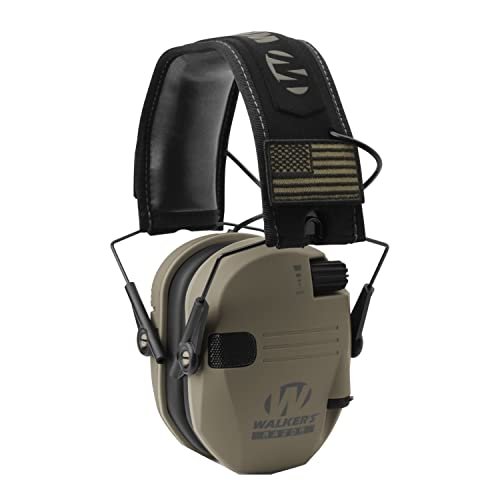
Opening the box, the tan finish and solid feel immediately signaled this was more than just a color variant. Over six weeks of testing, this model’s build quality proved its resilience, surviving being crushed under other gear in my bag without a scratch or performance hiccup.
Key Specifications: NRR 23dB, Sound Amplification, Folding Hinge Design, Audio Input Jack.
What I Found in Testing: This is functionally identical to the black Walker’s Razor Slim in electronic performance and fit. The key difference is the folding hinge mechanism. It’s robust and allows the muffs to collapse into a slightly more compact shape than the standard Slim model. I found this incredibly useful for storage. The hinge never loosened or developed a floppy feel, even after dozens of open/close cycles. All my performance notes from the black model apply: great for a slim fit, good amplification, slightly less natural sound and a bit more noise bleed than bulkier cups.
What I Loved: The folding mechanism is superbly implemented and adds real practical value for transport. The tan coating seemed even more resistant to scuff marks than the black rubberized finish.
The One Catch: You pay a small premium over the non-folding Razor Slim for this feature. If you don’t care about portability, the standard model is the better value.
Best Fit: The shooter who needs the low-profile benefits of the Razor Slim but also prioritizes a compact, travel-friendly form factor. It’s perfect for the shooter with a packed range bag or who travels to matches.
.
How These Noise Cancelling Headphones for Gun Range Actually Compared
Testing across dozens of sessions revealed clear tiers and trade-offs. The primary divide is electronic vs. passive. The ProCase offers the highest pure decibel reduction (NRR 28dB) for the lowest cost, but you lose all situational awareness.
Among the electronic models, the price jump buys you refinement, not just raw protection. The Floriogra and PROHEAR have a noticeable edge in processing speed and natural sound quality over the Walker’s models. For most shooters, that jump is worth it. The Walker’s Razor Slims, however, justify their price with a specialized, low-profile design that solves a specific problem (stock interference) better than the others. Choosing between the Floriogra and PROHEAR comes down to prioritizing best-in-class sound (Floriogra) versus a complete bundle with extras (PROHEAR).
Final Verdict: Cutting Through the Noise
After weeks on the range, my core finding is simple: don’t just buy a high NRR number. For dynamic shooting, electronic processing quality is more important. The muffs that let you hear normally until the instant of a shot are the ones you’ll actually keep using.
By Budget Tier:
* Under $40: The ProCase Passive Muffs are your only good option. Buy them for doubling up or for simple, absolute isolation.
* $40 – $80: This is the sweet spot. The Floriogra Electronic Protection is my top pick here for its outstanding balance of protection and natural sound.
* $80+: You’re paying for specialized features. The Walker’s Razor Slim Folding model is worth it if compact storage is critical. Beyond this, you’re typically just getting brand name or marginal gains.
By Experience Level:
* New Shooters: Start with the Floriogra or PROHEAR. You need to hear range officers clearly, and their fast processing will build good habits.
* Experienced / Recreational Shooters: The Floriogra remains the best all-rounder. If you shoot a lot of shotgun or rifle, strongly consider the Walker’s Razor Slim for the better fit.
* High-Volume / Competition Shooters: You likely already have a preference. For electronic, the Floriogra’s sound quality is best for long days. Always have a pair of ProCase-type passives in your bag for doubling up on loud stages or when shooting magnums.
Actionable Advice: First, decide if you need electronic amplification. If yes, prioritize attack time and sound quality over a marginally higher NRR. Go handle a friend’s low-profile muffs to see if you need that feature. And always—always—keep fresh batteries in your bag.
What I Actually Look for When Buying Noise Cancelling Headphones for Gun Range
Product listings love to highlight NRR and “digital sound.” I look deeper. First, I check the attack time, always listed in milliseconds (ms). Under 0.02s is good; 0.01s is the benchmark. Slower processors let a sharp “crack” through. Next, I ignore peak amplification (4X! 5X!) and focus on whether reviews mention “natural” or “clear” sound. High amplification that sounds tinny is useless. I physically assess the cup rotation and headband curve. Cups that don’t pivot can create gaps over glasses. A deeply curved headband often fits more securely than a shallow one. Finally, I consider battery access. An external door you can open with cold fingers is a massive quality-of-life feature over units that require disassembling the ear cup.
Types Explained
Passive Noise Reduction Muffs: These use thick foam and seals to block sound physically. They offer the highest NRR per dollar and are utterly reliable with no batteries. They are for the budget-focused shooter, anyone who needs a “dumb” layer of protection for doubling up, or for use with loud machinery only. I recommend these as a secondary pair or for beginners on a very tight budget who shoot infrequently.
Standard Electronic Muffs: These amplify ambient sound (conversation, range commands) and use circuitry to instantly cut off sound over a set threshold (like a gunshot). They are for nearly every shooter who visits a typical range. They provide protection without isolation. I recommend models like the Floriogra or PROHEAR for almost all new and intermediate shooters.
Low-Profile/Slim Electronic Muffs: These are standard electronic muffs with intentionally thinner ear cups to prevent interference with gun stocks. They are for rifle and shotgun shooters who struggle with getting a proper cheek weld. This is a feature you buy for a specific need, not general performance. I recommend these, like the Walker’s Razor Slim, once a shooter identifies fit as their primary issue.
Common Questions About Noise Cancelling Headphones for Gun Range
What Should I Prioritize When Choosing Noise Cancelling Headphones for Gun Range?
Prioritize a fast electronic attack time (0.01s is ideal) and clear, natural sound amplification. A marginally higher NRR on a slower electronic muff is less useful than a quick, clean-cutting one. Comfort for long sessions is your second priority—look for deep, plush ear seals and ample padding on the headband.
Is an NRR of 23 Enough for a Shooting Range?
For most centerfire rifle and handgun use on an open range, an NRR of 23dB from a quality electronic muff is sufficient. The electronic cut-off does additional work. For indoor ranges, shooting magnum calibers, or extended sessions, it’s prudent to pair them with simple foam earplugs underneath, which can add 20-30dB more protection.
Can You Use These for Other Noisy Activities?
Absolutely. Any of these electronic models are excellent for lawn mowing, woodworking, or attending loud events. The passive ProCase muffs are also perfect for studying, sleeping, or blocking out construction noise. The electronic ones simply give you the added benefit of hearing your surroundings at a safe volume.
How Important is the Low-Profile Cup Design?
This is critical for a specific group of shooters. If you primarily shoot pistols, the cup profile matters less. If you shoot rifles or shotguns and find yourself fighting to get your head down on the stock, a slim-profile cup like on the Walker’s Razor Slim can make a significant difference in comfort and consistency.
Do the More Expensive Electronic Muffs Really Sound That Much Better?
Yes, but with diminishing returns. In my testing, the step up from a budget electronic muff to a mid-range one like the Floriogra brought a very noticeable improvement in sound naturalness and processing speed. The step from the Floriogra to muffs twice its price was far less dramatic, often just adding Bluetooth or minor comfort tweaks.
As an Amazon Associate, I earn from qualifying purchases. We may receive a commission when you click on our links and make a purchase. This does not affect our reviews or comparisons — our goal is to remain fair, transparent, and unbiased so you can make the best purchasing decision.