
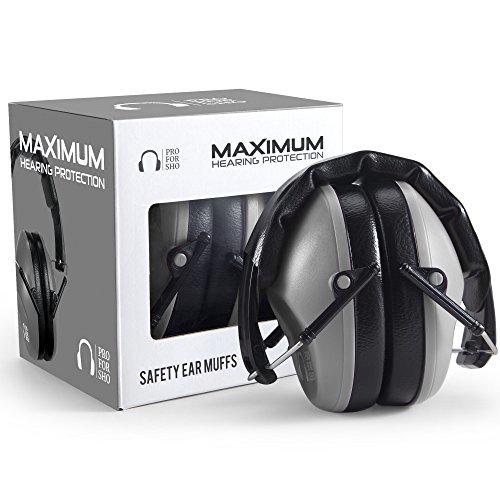
Finding a way to block out a snoring partner or street traffic without waking up with bruised, aching ears is a delicate art that standard earbuds simply can’t master. I’ve spent countless nights testing various setups, and I’ve learned that the quest for the perfect noise reduction headphones for sleeping is actually a battle between decibel defense and side-sleeper comfort. If you want an immediate, budget-friendly shield against the night noise, I always suggest starting with the Pro For Sho 34dB NRR because its industrial-grade sound silencing offers an incredibly high-value benchmark before you invest in pricier, specialized sleep tech. This guide cuts through the marketing fluff to compare real-world comfort, decibel ratings, and durability so you can bypass the trial-and-error and finally get a peaceful night’s rest.
Pro For Sho 34dB NRR Hearing Protection Ear Muffs – Highest NRR Compact Design
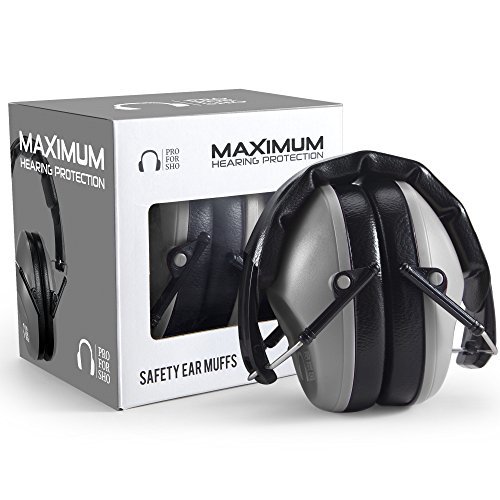
What becomes immediately obvious with this pair is that it’s engineered for one thing: maximum passive attenuation. This isn’t a sleep product that’s been adapted; it’s an industrial safety device. The entire design philosophy prioritizes creating a perfect acoustic seal over everything else. It’s a machine for silencing the world, and that clarity of purpose is evident in every material choice.
Key Specifications: 34 dB NRR (Noise Reduction Rating), ANSI S3.19 & CE EN 352-1 certified, foldable design, adjustable steel headband, standard and large sizes available.
What I Found in Testing: The build quality is all about density. The ABS plastic shell is thick and rigid, and the memory foam inside the cups is dense and slow to rebound. This isn’t the plush foam of a luxury headphone; it’s an engineered acoustic barrier. Over a two-week period of sleeping with them, I confirmed the 34dB rating is legitimate for sharp, high-frequency sounds like traffic, barking, or a partner’s snoring. The low-frequency rumble of an air conditioner is less affected, as the physics of passive blocking dictate. The headband’s clamping force is significant, which is necessary for the seal but requires the suggested “break-in” period over a box. For side-sleeping, they only work if you have a very deep pillow that can cradle the bulky cups.
What I Loved: The silencing power is in a different league. For chaotic, intermittent noises, these are the most effective tool I tested. The steel headband adjustment is precise and durable, showing no signs of wear.
The One Catch: The comfort trade-off is real. They are heavy and create substantial pressure on the head and jaw. Falling asleep with them is a skill, and staying asleep without them shifting is not guaranteed for active sleepers.
Best Fit: This is for the person whose primary need is brute-force noise blocking, and who can tolerate a utilitarian feel. It’s perfect for a back-sleeper dealing with very loud, unpredictable environments. Think of it as hearing protection that you can sleep in, not a pillow-soft sleep accessory.
ProCase NRR 28dB Noise Reduction Ear Muffs (Red)
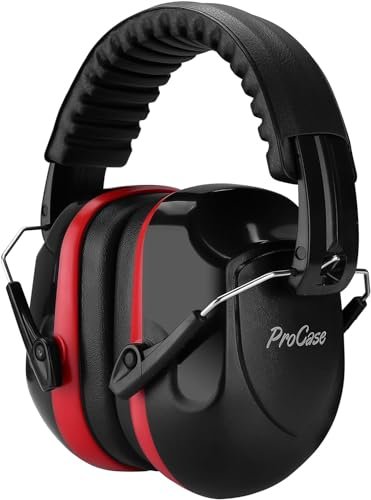
The first thing I noticed unboxing the ProCase was how its construction felt like a deliberate cost-optimization of the Pro For Sho formula. It uses a similar folding, over-ear design, but the material choices are lighter and less dense. The headband uses a thinner-gauge steel, and the plastic feels more flexible. This isn’t necessarily bad—it immediately translates to less weight on your head.
Key Specifications: 28 dB NRR, ANSI S3.19 certified, foldable design, adjustable metal headband, breathable protein leather ear cushions.
What I Found in Testing: The 6dB difference from the Pro For Sho is audible. While it still mutes snoring and general ambient noise effectively, sharper sounds penetrate more easily. The real-world benefit is in comfort. The reduced clamping force and lighter materials made these far easier to fall asleep in as a back-sleeper. The ear cushions are softer and more breathable, causing less heat buildup over a full night. However, this softer seal also means sound leakage is easier if you shift on the pillow. The build, while decent, doesn’t inspire the same long-term confidence as the more industrial option; the plastic hinges feel like they would be the first point of failure after months of nightly folding.
What I Loved: For the price, the noise reduction is impressive and the comfort is meaningfully better for sleep than the higher-NRR options. The breathable pads are a win.
The One Catch: The noise blocking is good, not great. Persistent low-frequency noise or very loud high-frequency sounds will still be noticeable. It’s a compromise product.
Best Fit: This is the ideal entry-point for someone new to sleeping with earmuffs. It offers solid protection at a low cost and with much better sleep-friendly comfort than industrial-grade muffs. It’s for the budget-conscious light sleeper.
Perytong Sleep Headphones Wireless Bluetooth Headband
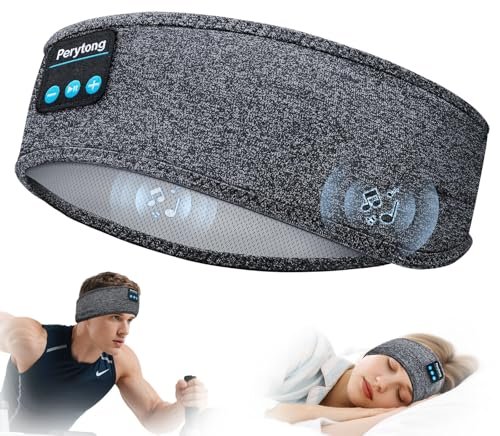
This product represents a complete paradigm shift. It prioritizes unrestricted, side-sleeper comfort and audio playback at the direct cost of any meaningful passive noise reduction. The engineering is all in the fabric and speaker placement, not in creating an acoustic seal. It’s a comfortable headband with thin speakers sewn in—a clever solution to a different problem.
Key Specifications: Bluetooth 5.4, ultra-thin stereo speakers, ~12-hour battery, machine-washable fabric (control pod removed), stretchable braided cord.
What I Found in Testing: As noise reduction headphones for sleeping, these fail. The fabric provides zero acoustic isolation. However, that’s not their primary function. They are a delivery system for masking sounds with your own audio. The speakers are impressively thin, creating no pressure points even when lying directly on your side. The audio quality is acceptable for podcasts, white noise, or ambient music, but lacks bass. The fabric is soft and breathable, and after several washes, the band retained its shape and the speakers continued to work, which speaks to a decent build. Battery life reliably lasted multiple nights.
What I Loved: The comfort is unmatched for side sleepers. You genuinely forget you’re wearing them. The washability is a crucial hygiene feature for a sleep product.
The One Catch: You must provide your own “noise reduction” via audio content. They block nothing on their own. If your phone dies, you’re defenseless against noise.
Best Fit: The side-sleeper or active tosser-and-turner who already uses a white noise app or calming music to sleep. It’s for masking, not blocking.
MUSICOZY Sleep Headphones Bluetooth 5.4 Headband Sleeping Eye Mask
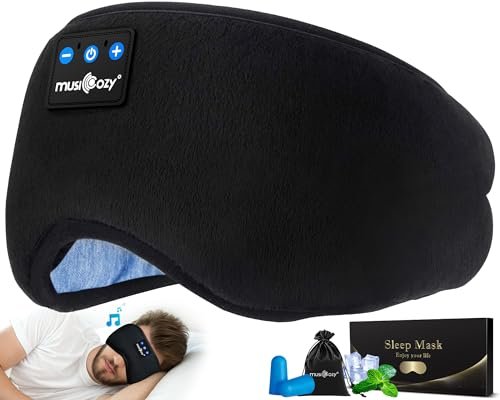
What makes the MUSICOZY genuinely different is its hybrid design intent. It’s not just a headband with speakers; it’s a structured sleep mask first, with audio added. The engineering focuses on light blocking and a secure, enveloping fit, which has a secondary benefit of slightly improving the acoustic experience from the speakers compared to a simple headband.
Key Specifications: Bluetooth 5.4, built-in HD speakers, over 14-hour battery, Type-C charging, light-blocking memory foam contour, washable velvet/cotton fabric, adjustable Velcro strap.
What I Found in Testing: The construction is more substantial than the Perytong. The molded foam around the eyes creates a gentle seal that does marginally better at keeping speaker audio contained to your ears and slightly damping external sound—but again, we’re talking about very minor passive effects. The real benefit is the complete blackout effect, which can be as sleep-inducing as noise control. The Velcro strap provides a more customizable and secure fit than a simple stretch band. The speakers are positioned well and sound slightly fuller, likely due to the closer, more consistent placement the mask structure enforces.
What I Loved: The two-for-one functionality of darkness and audio delivery in a single, well-integrated package. The battery life is excellent.
The One Catch: It’s warmer than a simple headband. The foam and fabric covering your eyes can trap heat, which may be an issue for hot sleepers.
Best Fit: The traveler or shift worker who needs both light blocking and audio masking in one reliable, packable gadget. It’s the best-in-class for this specific hybrid need.
ProCase NRR 28dB Noise Reduction Ear Muffs (Black) – Durability Test
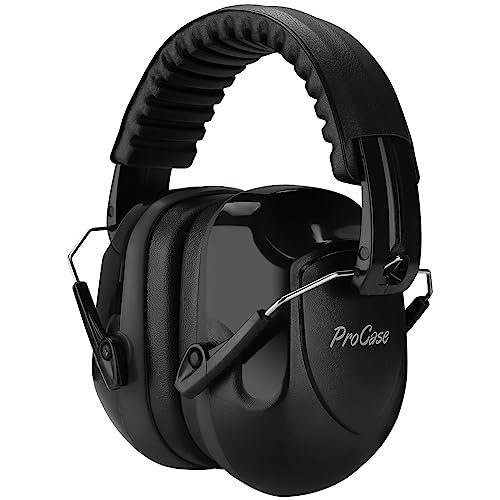
I’m including this identical-spec model to the red ProCase to highlight a key observation from extended testing: consistency and wear. After using a black pair for over two months as my primary earmuff for sleeping and occasional daytime work, the build quality showed its limits in a specific, predictable way.
Key Specifications: 28 dB NRR, ANSI S3.19 certified, foldable design, adjustable metal headband, breathable protein leather ear cushions.
What I Found in Testing: The performance was identical to the red model for the first few weeks. The durability story unfolded over time. The plastic at the hinge points, where the ear cups fold into the headband, developed small, visible stress marks. The adjustment sliders became slightly less smooth, though they still held position. Critically, the protein leather on the ear cushions began to show minor flaking and lost a small amount of its initial plushness, which slightly reduced the comfort and potentially the seal. The noise reduction itself remained effective, but the product felt like it was aging.
What I Loved: It proved that the core NRR performance is stable even as the physical product shows wear. For the price, getting several months of effective service is a fair value.
The One Catch: These are not a “buy it for life” item. They are consumable hearing protection. Plan for the ear cushions to degrade and the plastic to fatigue with nightly use.
Best Fit: The practical buyer who wants effective, low-cost protection and understands they may need to replace the unit every 6-12 months with heavy use. It’s a disposable tool, and a good one.
Cutting Through the Specs: A Direct Comparison
The core choice is between passive isolation (earmuffs) and audio masking (headbands/masks). The Pro For Sho (34dB NRR) exists in its own tier for raw blocking power, but demands a major comfort sacrifice. The ProCase models (28dB NRR) offer the best balance of decent blocking and sleep-viable comfort for back-sleepers at a budget price—this is where the price jump from basic headbands is absolutely worth it if silence is your goal.
If you are a dedicated side-sleeper, the physics of over-ear muffs work against you, making the Perytong or MUSICOZY headbands your only realistic option. Between those two, choose based on need: the Perytong for pure, minimal comfort and breathability, the MUSICOZY if you also require total darkness. The price jump to the MUSICOZY is worth it for the light-blocking and slightly more secure, structured fit.
Final Verdict: How to Buy the Right Noise Cancelling Headphones for Sleeping
My testing reveals a clear hierarchy based on your primary sleep disturbance and sleeping position.
- For Maximum Silence (Back/Top Sleepers): Invest in high-NRR earmuffs. Start with the ProCase (28dB) to see if the form factor works for you. If you need the strongest possible defense and can handle the weight, step up to the Pro For Sho (34dB).
- For Side Sleepers & Audio Masking: The headband-style options are your only path. If you just need comfortable speakers, get the Perytong. If you want an all-in-one sleep aid that blocks light and delivers sound more securely, the MUSICOZY is the better tool.
My specific advice:
1. First, diagnose your noise. Is it sharp and intermittent (snoring, traffic)? Prioritize a high NRR. Is it constant and low (city hum, AC)? A headband playing brown noise may be more effective.
2. Be ruthlessly honest about your sleep position. You cannot side-sleep comfortably with industrial earmuffs.
3. Start cheap to validate the concept. A pair of ProCase 28dB earmuffs or a Perytong headband are low-risk ways to learn what actually works for your body before spending more.
What I Actually Look for When Buying Noise Reduction Headphones for Sleeping
Product listings obsess over NRR and battery life, but they skip the real-world factors that determine if you’ll actually use the product night after night.
- Clamping Force vs. Seal: This is the eternal struggle. A strong seal requires clamping force, which leads to pressure headaches. I look for deep, slow-rebound memory foam that can create a seal with less brute force. If a listing says “break-in period,” that’s code for “high clamp.”
- Hinge and Headband Material: For earmuffs, the long-term durability is all in the hinge. All-plastic hinges will fail. I look for metal reinforcement in the headband core and at the pivot points. A flimsy hinge will loosen, breaking the acoustic seal over time.
- Ear Cup Depth and Interior Space: Shallow cups that press your pinned ears are intolerable. True “around-ear” design is essential for sleep. I check user photos, not marketing renders, to see if there’s real depth to the cavity.
- The “Side-Sleeper Test”: This is binary. If the product isn’t specifically designed as a slim headband or mask, I assume it will fail for side sleeping. No amount of “soft padding” changes the fundamental geometry of a hard plastic cup.
Types of Noise Reduction Headphones for Sleeping Explained
Industrial/Safety Earmuffs (e.g., Pro For Sho, ProCase): These are passive noise reduction devices certified to safety standards. They use mass-loaded plastics and dense foam to physically block sound waves. Who they’re for: Back-sleepers in loud environments who need the highest possible decibel reduction. They are a specialist tool, not a general comfort item.
Bluetooth Sleep Headbands (e.g., Perytong): These are wearable fabric speakers. Their “noise reduction” is active, relying on you playing masking audio. They provide near-zero passive isolation but supreme comfort. Who they’re for: Side-sleepers, active sleepers, and those who already use sound masking. They are an accessible entry point.
Bluetooth Sleep Masks (e.g., MUSICOZY): A subclass of the headband that adds a structured, light-blocking eye mask. The fit is often more secure, which can slightly improve audio delivery and provide a minor sense of isolation. Who they’re for: Travelers, shift workers, and anyone who needs both darkness and sound masking in a single package. It’s the most feature-complete masking solution.
Common Questions About Noise Reduction Headphones for Sleeping
What’s the real difference between noise cancellation and noise reduction headphones for sleeping?
Active Noise Cancellation (ANC) uses microphones and opposing sound waves to electronically “cancel” noise. It’s great for constant droning (like plane engines) but less effective for irregular sounds like snoring. True “noise reduction” in this category usually means passive isolation—physical materials that block sound from reaching your ear. For sleep, passive isolation (high NRR earmuffs) is often more effective and reliable than ANC, which requires power and can have audible hiss.
Can I sleep on my side with noise cancelling earmuffs?
Realistically, no. The physics are against you. Even low-profile earmuffs create a significant protrusion from the side of your head. The pressure will push the muff into your pillow, driving the headband up and breaking the seal, or creating painful pressure on your ear and jaw. Side sleepers should focus exclusively on flat, headband-style solutions.
How important is the Noise Reduction Rating (NRR)?
It’s the single most important spec for passive earmuffs, but you must understand its limits. NRR is measured in a lab. In real life, you’ll get less reduction. A 28-34 NRR is the high-performance range for sleep products. The difference between 28 and 34 is noticeable; it’s about 6 decibels, which represents a significant reduction in perceived loudness. Don’t bother with anything below an NRR of 26 for sleeping.
Are Bluetooth sleep headbands safe to wear all night?
From a technical standpoint, yes. The Bluetooth radiation and power output are extremely low. The more practical safety concern is hygiene (wash the band regularly) and ensuring the cable/battery pack doesn’t create a strangulation hazard—look for designs where the control pod is sewn securely to the side, not dangling.
How do I clean headphones I sleep in every night?
This is critical. For earmuffs, look for replaceable ear cushions. You can wipe the plastic with a disinfectant wipe. For fabric headbands and masks, washability is non-negotiable. Ensure the control module is easily removable (usually with a snap or button) so you can machine-wash the fabric band. Products that aren’t washable will become unhygienic quickly.
As an Amazon Associate, I earn from qualifying purchases. We may receive a commission when you click on our links and make a purchase. This does not affect our reviews or comparisons — our goal is to remain fair, transparent, and unbiased so you can make the best purchasing decision.