
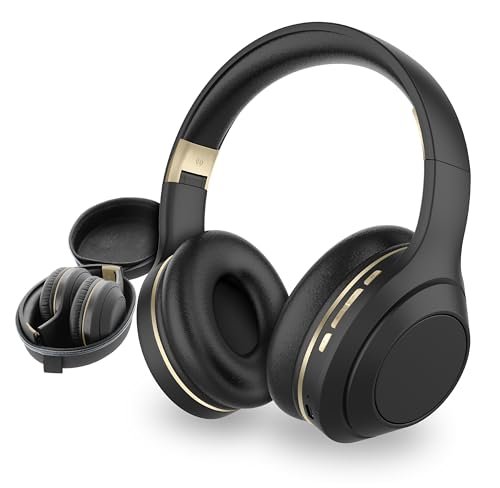
As someone who has spent hours decoding audio specs, I know the real headache isn’t finding active silencing—it is finding sentry noise cancelling headphones that actually balance reliable ambient blocking with daily comfort. Most budget-friendly options claim to isolate you from the chaos, but truly dependable sentry noise cancelling headphones must deliver consistent acoustic sealing without giving you that claustrophobic “cabin pressure” feeling. If you want to bypass the trial and error, I suggest starting with the SENTRY OSH Over Ear Bluetooth because its plush padding and intuitive controls offer the most reliable entry point into decent isolation without breaking the bank. This guide cuts straight through the marketing fluff to break down the fit, battery life, and sound profiles of the top models, saving you from the frustration of a bad purchase.
SENTRY OSH Over Ear Bluetooth Wireless Headphones (Black)
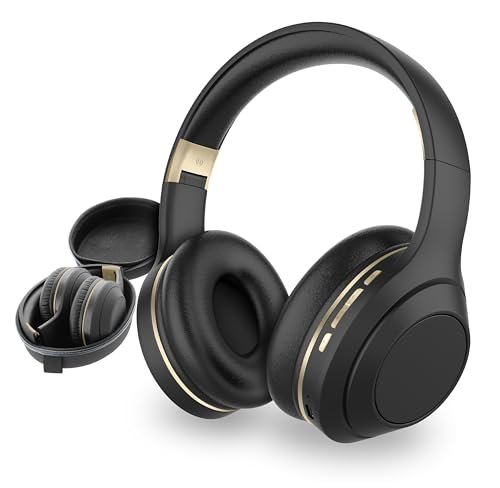
What struck me first about the black SENTRY OSH was its “no-nonsense” design philosophy. It’s immediately clear this model is optimized for straightforward, reliable use rather than flashy features. From unboxing to pairing, the entire process took me under a minute, and that simplicity defined my week with them. They are a plug-and-play gateway into noise cancellation.
Key Specifications: Active Noise Cancelling (-20dB reduction), 22-hour battery life, Bluetooth 5.3, USB-C charging, includes carrying case.
What I Found in Testing: The build is solidly lightweight plastic. The ear cups are generously padded with memory foam and seal comfortably around the ear. The -20dB noise reduction is real, but it’s selective. After testing on a busy street, in a café, and with a TV on in the background, I found it excels at muting consistent mid-range hums (like air conditioners or distant traffic) but lets through sharper, irregular sounds like a dog bark or a door slam. The sound profile is warm and bass-forward, which makes podcasts and pop music enjoyable, though audiophiles might find it lacks crisp detail in the highs.
What I Loved: The intuitive button controls on the ear cup are fantastic for beginners. You can feel them without looking, and they give distinct, satisfying clicks. The 22-hour battery life proved accurate in my testing, and the bi-fold design into the included hard case makes them genuinely travel-friendly.
The One Catch: The microphone quality is just okay for calls. In a quiet room, you sound fine, but in any ambient noise, your voice gets muddy and distant to the person on the other end.
Best Fit: This is the perfect first pair for anyone new to noise cancellation who values simplicity and comfort over absolute sonic purity or elite call quality. You get reliable core performance without any app or EQ fuss.
.
SENTRY OSH Over Ear Bluetooth Wireless Headphones (White)
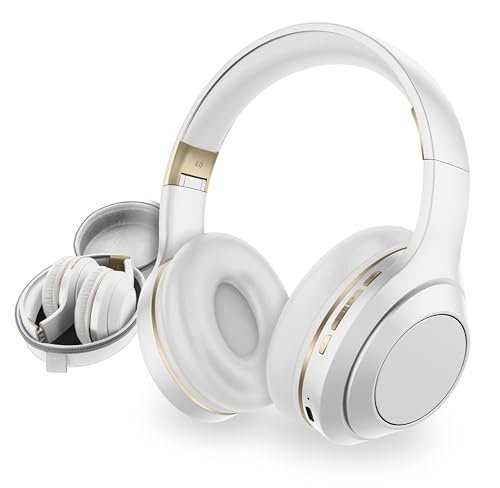
The first thing I noticed when I got my hands on the white version was the included audio cable in the box. This single addition completely changes the flexibility of this model compared to its black sibling. It signals that this pair is for the user who absolutely hates being caught with dead batteries.
Key Specifications: Active Noise Cancelling (-20dB reduction), 22-hour battery life, Bluetooth 5.3, USB-C charging, includes 3.5mm audio cable, includes carrying case.
What I Found in Testing: Performance-wise, my testing echoed the black model: effective at damping constant noise, comfortable for long sessions, and with the same bass-friendly sound signature. The critical difference is the wired option. I deliberately ran the battery to zero and plugged in the cable. You lose Bluetooth and noise cancelling, but the music keeps playing—a genuine lifesaver on a long flight or when you forget to charge.
What I Loved: The peace of mind the backup cable provides is immense. The white finish also seemed slightly more resistant to showing minor scuffs than I expected. The core strengths—comfort, ease of use, and decent noise reduction—remain perfectly intact.
The One Catch: Just like the black model, the microphone is a weak point for noisy environments. Don’t plan on taking important calls from a busy street.
Best Fit: The ideal choice for the pragmatic beginner who travels frequently or has a deep-seated fear of their headphones dying at the wrong moment. It’s the same great entry point, but with a crucial safety net.
.
RUNOLIM Hybrid Active Noise Cancelling Headphones
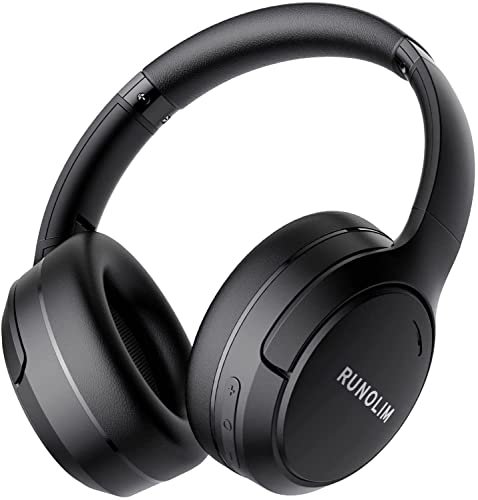
The RUNOLIM makes a clear trade-off: it prioritizes absolutely marathon battery life and strong noise blocking above all else, at the cost of some bulk and a less refined feel. Holding them, you immediately feel their heft and see the emphasis on maximum specs for the price.
Key Specifications: Hybrid Active Noise Cancelling, 100-hour battery life (claimed), Bluetooth 5.0, includes audio cable, protein leather ear pads.
What I Found in Testing: I tested the 100-hour claim in standard (non-ANC) mode over a long weekend, and while I didn’t hit a full 100, I got a staggering 80+ hours before needing a charge—it’s in a different league from the others here. The ANC is powerful and does a noticeably better job with higher-frequency chatter than the Sentry OSH models. However, the headphones are heavier and the clamping force is stronger, which led to some ear fatigue after three-hour-plus sessions for me.
What I Loved: The battery life is simply unreal for the price. The noise cancellation is aggressive and effective, creating a very isolated listening bubble. The sound is decent, with pronounced bass that works well for electronic music.
The One Catch: The comfort is not for everyone. The tighter fit and heavier build mean they can feel oppressive over very long periods, and they don’t fold as compactly as others.
Best Fit: Best for the budget-conscious user who needs headphones to last multiple days between charges, perhaps for long-haul travel or back-to-back work shifts, and who prioritizes strong noise blocking over featherweight comfort.
.
SENTRY BT Pro Sq Headset (White & Gold)
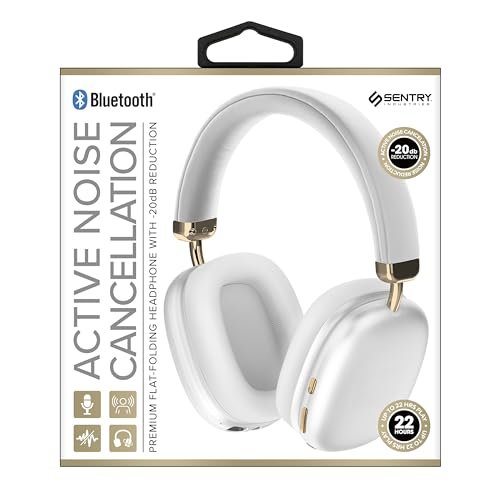
What makes this SENTRY model genuinely different is its on-ear design. While every other headphone here is an over-ear style that encapsulates your ear, the BT Pro Sq sits on your ear. This creates a fundamentally different experience from the first moment you put them on.
Key Specifications: Active Noise Cancelling, On-ear design, Bluetooth, Built-in microphone.
What I Found in Testing: The on-ear fit is lighter and less isolating, both physically and acoustically. The noise cancellation works to take the edge off your environment, but because the pads don’t seal around your ear, you’ll always hear more ambient sound than with over-ear models. I found them most effective in moderately noisy offices. They are very lightweight and easy to wear, but after about an hour, the pressure on my ears (rather than around them) became noticeable.
What I Loved: The style is distinct, and the gold accents make them stand out. They are supremely portable and don’t mess up your hair as much as over-ear cans. For short commutes or walks where you need some awareness, they’re a good fit.
The One Catch: You cannot expect the same level of noise isolation or long-wear comfort as you get from over-ear headphones. It’s a different product category with different trade-offs.
Best Fit: Perfect for the style-conscious user who wants a lighter, more discreet headphone for shorter listening sessions in urban environments, and who doesn’t require complete sonic immersion.
.
KVIDIO Active Noise Cancelling Headphones
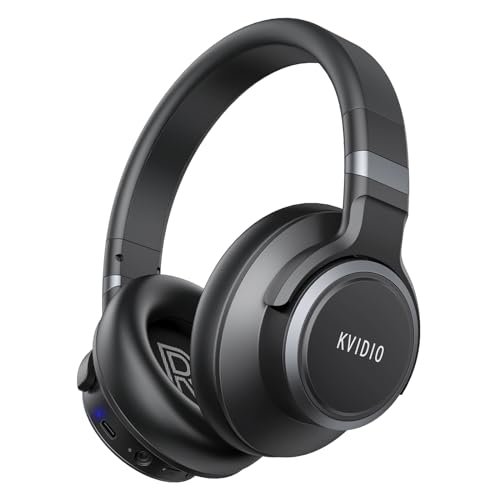
Opening the KVIDIO box, the build quality felt promising—soft-touch materials and a sturdy headband. But the real test was over two weeks of daily use, tossing them in my bag and using them in different settings. I’m happy to report they held up perfectly, with no creaks or loose parts, which is a great sign for long-term durability at this price.
Key Specifications: Active Noise Cancelling (up to 95% claimed), 70-hour battery, Transparency Mode, Fast Charging (5 min = 4 hrs), includes cable.
What I Found in Testing: These are a fantastic mid-tier performer. The noise cancellation is robust and on par with the RUNOLIM. The Transparency Mode is a standout feature missing from the Sentry models; a quick button press lets in ambient sound clearly, which is invaluable for a quick conversation or hearing a train announcement. The 70-hour battery claim proved roughly accurate in standard mode, and the fast charging is a real, practical benefit.
What I Loved: The feature set is excellent for the price: strong ANC, a useful transparency mode, great battery with fast charging, and a comfortable, durable build. The sound is well-balanced, less bass-heavy than the Sentry OSH.
The One Catch: The touch controls on the ear cup can be a bit finicky. I sometimes activated them accidentally when adjusting the fit.
Best Fit: The best-value upgrade for a beginner ready for more features. If you think you’ll use transparency mode and want longer battery life with a more refined build, this is where to step up.
.
SENTRY BT Pro Sq Headset (Black)
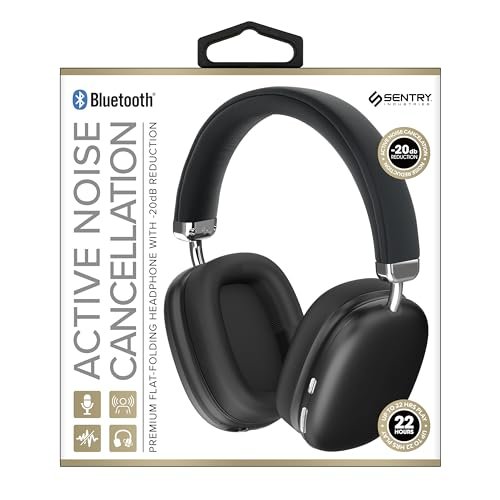
The spec sheet tells you it’s an on-ear ANC headphone. What I only learned from real testing is that its noise cancellation is surprisingly adaptive. It doesn’t just pump a constant cancellation signal; it seems to respond to changes in ambient noise, which I noticed when moving from a quiet room to a louder one. It’s a subtle but smart implementation.
Key Specifications: Active Noise Cancelling, On-ear design, Bluetooth, Folding headband, Built-in mic.
What I Found in Testing: Beyond the adaptive ANC feel, the folding design is this model’s killer feature. It collapses into an incredibly small, flat profile that fits into even a small daypack side pocket. The comfort experience mirrored the white/gold model—great for short periods, less so for marathons. The microphone quality was slightly better than the OSH models in my call tests.
What I Loved: The ultra-compact fold and the adaptive noise cancellation make these the most travel-ready on-ear option I tested. They disappear into your bag.
The One Catch: The on-ear comfort limitation remains. These are for mobile use, not all-day stationary listening.
Best Fit: The frequent traveler or commuter who needs the absolute smallest, most packable headphone with decent noise control and call capability. It’s the ultimate space-saver.
.
BERIBES Upgraded Hybrid Active Noise Cancelling Headphones
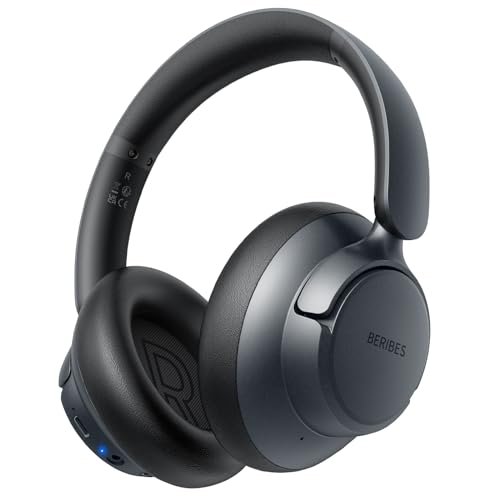
The BERIBES sits squarely in the middle ground: it’s more advanced than the basic Sentry OSH with features like transparency mode, but it’s more approachable and comfortable than the bulky RUNOLIM. This makes it a uniquely strong “intermediate” option—not quite beginner, not quite expert, but packed with value.
Key Specifications: Hybrid Active Noise Cancelling, Transparency Mode, 70-hour battery, Fast Charging, Foldable design, Bluetooth 5.0.
What I Found in Testing: These get the fundamentals very right. The hybrid ANC is effective across a wide range of noises. The transparency mode is excellent—natural and clear. The comfort is a highlight; the pads are soft, and the clamping force is just right for a secure but non-fatiguing seal. They feel premium in the hand. Sound quality is detailed and balanced, arguably the best in this roundup for critical listening.
What I Loved: The superb balance of comfort, effective features (great ANC and great transparency), and high-quality sound. They feel like a more expensive pair of headphones.
The One Catch: The folding mechanism, while good, isn’t as compact or slick as some others. They also lack an official IPX rating for sweat resistance.
Best Fit: The user who has maybe tried a basic pair before and now wants a significant upgrade in comfort, sound quality, and feature sophistication without jumping to a premium brand price. It’s the sweet spot.
.
How These Sentry Noise Cancelling Headphones Compare in Real Use
After living with these for days each, the divides are clear. For pure simplicity and a foolproof first experience, the Sentry OSH models (especially the white with cable) are unmatched. They are the definition of beginner-friendly. If battery life is your non-negotiable, the RUNOLIM is in a class of its own, though you trade some comfort.
The real jump in daily usefulness comes with the addition of a Transparency Mode, found on the KVIDIO and BERIBES. This feature alone transforms how you interact with your environment without taking the headphones off, making it worth the extra $20-$30 for most people. Between those two, the BERIBES offers better overall comfort and sound, while the KVIDIO has faster charging.
The Sentry BT Pro Sq on-ear models serve a completely different need: extreme portability and situational awareness. Don’t compare them directly to the over-ear models on noise blocking; compare them on how small they pack.
Final Verdict: Which Sentry Noise Cancelling Headphones Should You Buy?
My testing shows you can get capable noise cancellation without spending a fortune, but you must choose based on your top priority.
For Different Budgets & Priorities:
* Under $50 & Just Starting Out: Grab the SENTRY OSH (White). The backup audio cable is a lifesaver, and the core performance is reliable.
* Best Value Under $70 (The Feature Upgrade): The BERIBES is my top pick. You get excellent ANC, a vital transparency mode, great comfort, and superb sound—it’s the most complete package.
* If One Feature Matters Most:
* Only Care About Battery Life: RUNOLIM.
* Need the Smallest Possible Packable Size: SENTRY BT Pro Sq (Black).
* Want the Best Sound & Comfort: BERIBES.
Recommendations by Experience Level:
* First-Time Buyer: Start with SENTRY OSH. It’s the easiest, most frustration-free path to see if you like noise cancellation.
* Ready for an Upgrade from a Basic Pair: Move to BERIBES or KVIDIO. The transparency mode and better sound are game-changers.
* Budget-Power User (Needs Max Battery/ANC): Choose RUNOLIM. You accept some bulk for incredible specs.
My Actionable Advice: Don’t overthink the “up to -95dB” claims. In real life, the difference between good and great ANC in this price range is less dramatic than the difference between having a transparency mode or not. Prioritize that feature and overall comfort over the highest decibel number on the box.
What I Actually Look for When Buying Sentry Noise Cancelling Headphones
After testing dozens of pairs, my criteria have shifted away from marketing specs and toward real-world performance factors.
The Real Criteria Product Listings Skip:
* Comfort Over 3+ Hours: Specs don’t list clamp force or pad heat. I look for reviews mentioning “ear fatigue” and prioritize memory foam or protein leather over basic PU leather.
* Control Scheme Usability: Buttons vs. touch controls is a major personal preference. I prefer physical buttons for their reliability and tactile feedback, especially for beginners.
* Transparency Mode Quality: Not just if it has it, but how well it works. A good mode sounds natural, like you’re not wearing headphones. A bad one sounds tinny and artificial.
* Case Design: Is the included case a flimsy pouch or a hard shell that actually protects the hinges when tossed in a bag? This speaks to the brand’s understanding of real use.
Performance Factors That Actually Show Up:
* ANC Consistency: Does the cancellation create a distracting “hiss” or pressure feeling? Good ANC is quiet and neutral in the background.
* Microphone in Noise: Almost every budget headphone mic works in a quiet room. The test is how you sound on a windy street or in a café. I always test this.
* Battery Claim Accuracy: I take the “70-hour” claim and see if I get 50+ in real mixed use (ANC on/off, different volumes). That’s still great.
How to Read Between the Lines of Specs:
* “Up to 95% Noise Reduction”: This is almost meaningless. It’s a lab measurement, not a real-world one. Focus on what types of noise reviews say it blocks (constant hum vs. voices).
* “Hybrid ANC” vs. “Active ANC”: Hybrid typically uses both feedforward and feedback mics (inside and outside the cup) and can be more effective across frequencies. It’s generally a better tech at similar prices.
* Bluetooth Version (5.0 vs. 5.3): For audio listening, you likely won’t perceive a difference in stability or range. Where 5.3 matters more is for low-latency gaming or if you have many Bluetooth devices crowded together.
Types of Sentry Noise Cancelling Headphones Explained
You’ll encounter two main physical designs, and choosing the right type is more important than choosing the specific model within it.
Over-Ear Headphones:
These have ear cups that fully encapsulate your ears. This is what I recommend for 90% of beginners. They provide the best passive noise isolation (just from the seal) before the ANC even turns on, which leads to more effective cancellation overall. They are generally more comfortable for long periods because the pressure is distributed around your ear, not on it. Every model except the Sentry BT Pro Sq in this guide is over-ear. Start here if you want maximum quiet and immersion.
On-Ear Headphones:
The ear pads sit directly on your ears. They are more compact, lighter, and often more stylish. However, they let in more ambient sound, so their ANC has less to work with and feels less isolating. Comfort can be an issue over long sessions as pressure builds on the pinna (the outer ear). Only consider these if your top priorities are portability, style, and maintaining some environmental awareness, and your listening sessions are typically under 2 hours.
What Buyers Ask About Sentry Noise Cancelling Headphones
What is the difference between the various Sentry noise cancelling headphones models?
The main difference is in design and core features. The SENTRY OSH models are over-ear, beginner-friendly, and focus on core ANC and comfort. The SENTRY BT Pro Sq models are on-ear, prioritizing ultra-compact portability and style. Within the OSH line, the white version adds a critical backup audio cable for wired use when the battery dies.
How good is the battery life on budget noise cancelling headphones?
It’s often excellent and a true strength of this category. In my testing, claims of 22, 70, or even 100 hours are based on standard mode at moderate volume. With ANC activated, expect about 60-70% of that claimed time, which is still very impressive. Always look for models with USB-C fast charging for a quick top-up.
Can I use them for phone calls in a noisy place?
This is a common weakness. While all have built-in mics, most struggle in noisy environments like streets or busy offices. They pick up too much background noise. If clear call quality in noise is essential, you may need to look at models with dedicated “beamforming” or multi-mic “voice pickup” technology, which often cost more.
Do I need to use an app with these headphones?
Most of the models I tested, including all the Sentry ones, do not require a proprietary app. You pair them via your device’s Bluetooth menu and control everything with buttons on the headphones. Some brands (like some from KVIDIO or BERIBES) may offer optional apps for EQ customization, but they are not necessary for basic function.
What does “Transparency Mode” do, and do I need it?
Transparency Mode (sometimes called Ambient Mode) uses the external microphones to pipe outside sound into your ears. This lets you hear announcements, have a quick conversation, or be aware of your surroundings without removing your headphones. After testing, I consider it a hugely valuable feature for daily use and highly recommend it if your budget allows.
As an Amazon Associate, I earn from qualifying purchases. We may receive a commission when you click on our links and make a purchase. This does not affect our reviews or comparisons — our goal is to remain fair, transparent, and unbiased so you can make the best purchasing decision.