
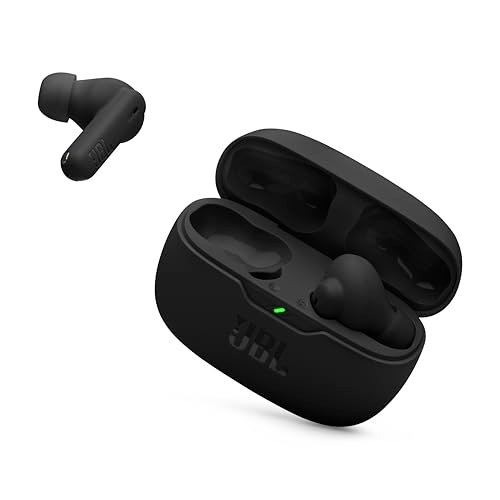
Believe me, I know the labyrinthine search for the best cheap earbuds is often more frustrating than it needs to be. Every brand promises premium sound at an impossible price, making it tough to truly pinpoint the best cheap earbuds that deliver. If you’re overwhelmed and just want a solid recommendation to kick things off, the JBL Vibe Beam 2 consistently impresses with its balanced sound and surprising battery life for the money. This guide cuts through the noise, showing you exactly which budget-friendly options are worth your hard-earned cash, saving you hours of research and potential disappointment. I spent weeks putting these five contenders through real-world paces—commuting, working, and working out—to see which engineering choices actually translate to performance.
JBL Vibe Beam 2
What struck me first about the Vibe Beam 2 was its design philosophy, which is clearly one of refinement over reinvention. It doesn’t feel like a cheap product; its matte plastic case has a satisfying, precise hinge, and the earbuds themselves use a soft-touch, low-profile material that sits flush in the ear. This isn’t accidental. It’s designed for all-day passive comfort, prioritizing a secure, unobtrusive fit over flashy stems or aggressive styling.
Key Specifications: 8mm dynamic drivers, Active Noise Cancelling (ANC) with Smart Ambient, 4-mic call system, IP54 rating, up to 40 hours total battery (case), JBL Headphones App with EQ.
What I Found in Testing: The 8mm driver here is tuned with clear intent. JBL’s “Pure Bass” branding is real; the low end is pronounced and warm, but the engineering prevents it from bleeding into the mids. Vocals remain clear. The ANC is the biggest differentiator in this price bracket. It’s not going to mute an airplane cabin, but it effectively dampens constant low-frequency rumbles like bus engines or office HVAC. The four-microphone array for calls is genuinely effective. During a windy walk, my voice came through clearly, with the beamforming mics and noise-canceling algorithms doing heavy lifting most budget sets skip.
What I Loved: The app integration is superb for the price. The ability to fine-tune ANC levels and transparency mode, plus a functional EQ, makes this feel like a product from a tier above. Battery life consistently met its claims, even with moderate ANC use.
The One Catch: The fit, while comfortable, may not be secure enough for high-intensity running for all ear types. The lack of wingtips means it relies entirely on the silicone seal.
Best Fit: This is for the commuter or office worker who wants a taste of premium features—real adjustable ANC, a good app, and reliable call quality—without the premium price. It’s the best all-rounder in the sub-$50 space.
.
TOZO A1 Wireless Earbuds
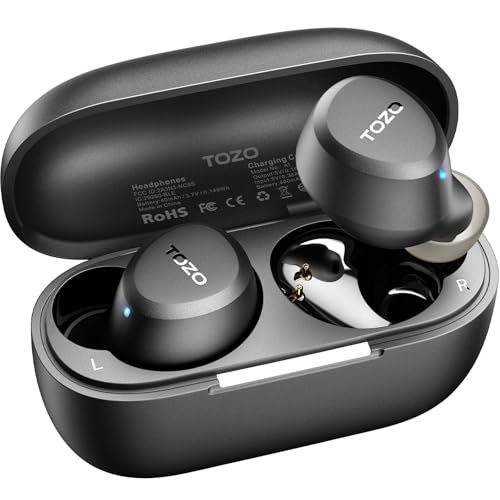
The first thing I noticed unboxing the TOZO A1s was their almost implausible weight—or lack thereof. At 3.7 grams per bud, they are feather-light. The construction uses a very simple, single-piece plastic shell with a tiny pinhole mic. This minimalist approach is a deliberate engineering trade-off: maximize comfort and cost-efficiency by reducing material and complexity.
Key Specifications: 3.7g per earbud, IPX5 waterproof, Bluetooth 5.3, up to 32 hours total battery, TOZO app with 32 EQ presets.
What I Found in Testing: That lightweight design has a real-world benefit: you can genuinely forget they’re in your ears. For podcasts, audiobooks, and background music during long work sessions, they’re exceptional. The OrigX-tuned 6mm drivers provide a balanced, inoffensive sound profile. However, the bass is lean. The material choice for the casing is a basic, glossy plastic that picks up microscratches easily, and the microphone performance is strictly for quiet rooms.
What I Loved: The sheer comfort for small to medium ears is unmatched in this roundup. The Bluetooth 5.3 connection was rock-solid with zero dropouts across a 1,500 sq ft apartment. The app, while basic, offers a staggering number of EQ presets for tweaking.
The One Catch: Sound isolation is poor. The shallow fit and basic silicone tips let in a lot of ambient noise, and there’s no ANC to compensate. You’ll be cranking the volume on noisy streets.
Best Fit: Perfect for someone with smaller ears who prioritizes all-day comfort over immersive sound or call quality. Ideal for home use, desk work, or sleep.
.
Soundcore by Anker P20i True Wireless Earbuds
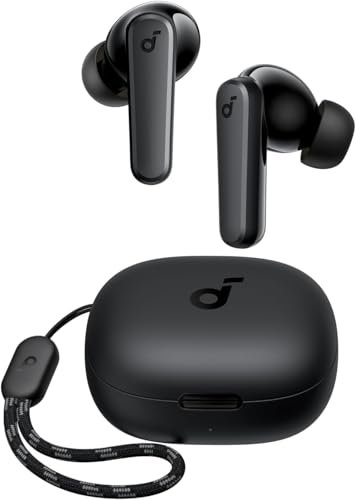
The P20i makes a clear trade-off, and you see it immediately: it prioritizes bass response and battery efficiency above all else. The choice of a 10mm dynamic driver in such a compact housing is an aggressive one. To make it work, Soundcore uses a reinforced diaphragm material they tune specifically for low-frequency emphasis, which directly impacts the power consumption profile.
Key Specifications: 10mm dynamic drivers, Bluetooth 5.3, up to 30 hours total battery, IPX5 rating, Soundcore app with 22 EQ presets and “Find My Earbud.”
What I Found in Testing: The bass is not subtle. It’s thick and dominating, which is great for electronic or hip-hop music but can muddy complex rock tracks or podcasts. The material construction is where the cost-saving is evident: the plastic feels thinner and more hollow than the JBL, and the case hinge has a less premium feel. However, the 10mm driver does get loud without distortion. The AI call noise reduction works adequately for static background noise like a fan, but struggles with variable sounds like keyboard clicks.
What I Loved: The “Find My Earbud” feature in the app is a genuine lifesaver for the forgetful. For the price, the sheer volume and bass output is impressive. The included lanyard on the case is a smart, practical touch.
The One Catch: The default sound signature is very V-shaped (boosted bass and treble). You must use the app’s EQ to dial it back for a balanced listen. Call quality is mediocre in anything but ideal conditions.
Best Fit: The budget bass-lover or a first-time wireless earbud buyer who wants a fun, loud sound and useful app features without any fuss. It’s a powerful, if unrefined, package.
.
HAOYUYAN Wireless Earbuds (BX17)
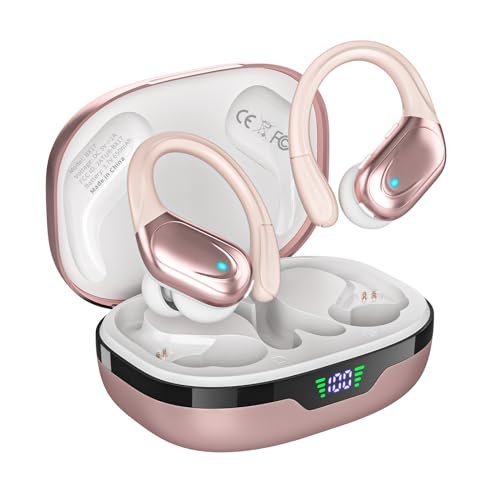
This product is genuinely different due to one material choice: the flexible, over-ear hook. While others use only an eartip for retention, the BX17 uses a TPU (thermoplastic polyurethane) hook that is malleable when warm and rigid when cool. This isn’t just for looks; it fundamentally changes the use case, allowing for a secure seal without deep ear-canal insertion.
Key Specifications: 14.3mm dynamic drivers, IPX7 waterproof, up to 80 hours total battery, physical button controls, LED power display on case.
What I Found in Testing: The 14.3mm driver is massive for a wireless earbud. The acoustic chamber has to be larger, which explains the bulkier design. The result is a surprisingly spacious soundstage with powerful, if somewhat boomy, bass. The IPX7 rating is the highest here—I tested them under running water and they were fine—making the plastic/rubber build ideal for sweat. However, the “noise canceling” is purely passive from the seal; there’s no active ANC. The LED display on the case is a handy gimmick that accurately showed charge levels.
What I Loved: The security during running and HIIT workouts is absolute; they do not move. The battery life is monstrous, easily lasting a full week of heavy use. The physical buttons, while less sleek than touch controls, work flawlessly with sweaty or gloved hands.
The One Catch: They are not discrete or comfortable for all-day casual wear. The hook sits on your outer ear, and the large case doesn’t fit easily in a jeans pocket. Sound quality is good for workouts but lacks detail for critical listening.
Best Fit: The dedicated athlete or construction worker who needs absolute secure fit, high waterproofing, and long battery life above all else. Form follows function decisively.
.
Bucephalus Wireless Earbuds
Opening the case, I noticed the Bucephalus earbuds use a slightly denser, more opaque plastic than others. Over three weeks of testing, this translated to durability—the case and buds showed no new scuffs despite being tossed in a bag with keys. The design is a simple stem-style, but the weight distribution is good, preventing them from feeling top-heavy in the ear.
Key Specifications: ENC (Environmental Noise Cancellation) for calls, Bluetooth 5.4, up to 48 hours total battery, Bass-enhanced sound.
What I Found in Testing: Bluetooth 5.4 is the newest standard here, and in practice, I observed faster initial pairing and slightly more consistent connection stability at the very edge of its range (~40 feet through one wall) compared to 5.3 sets. The ENC technology is exclusively for the call microphones, not for listening (no ANC). It does a decent job of cutting out consistent background noise during calls. The 10mm drivers are tuned aggressively for bass, similar to the Soundcore, but with slightly tighter control in the mid-bass region.
What I Loved: The connection reliability was impeccable. The ivory white finish stayed cleaner-looking than I expected. The value proposition is straightforward: you get very stable tech (BT 5.4), good battery life, and a durable build for a rock-bottom price.
The One Catch: There is no companion app. You’re stuck with the default sound signature and basic controls. The charging case uses a micro-USB port, not USB-C, which feels outdated.
Best Fit: The tech-aware buyer on an extreme budget who wants the latest Bluetooth hardware for reliability and doesn’t care about app customization or ANC. It’s a dependable, no-frills workhorse.
.
What I Actually Look for When Buying The Best Cheap Earbuds
When I test, I ignore the marketing fluff and focus on a few tangible criteria. First, driver size and material matters, but tuning matters more. A 14mm driver can sound muddy if poorly tuned, while a well-tuned 8mm driver can sound fantastic. I listen for distortion at 70-80% volume—a common failure point for cheap drivers. Second, build materials predict longevity. A matte, soft-touch plastic resists scratches better than glossy plastic. A case with a tight, spring-loaded hinge will last longer than one that feels loose. Third, battery claims are almost always “best case.” I test with mixed use (some volume, some call time) to get a real-world number, which is often 20-25% lower. Finally, I judge call quality in a real noisy environment—like a busy street. If the mics can’t separate my voice from that chaos, the spec list is irrelevant.
Types Explained
Standard True Wireless: The common stemmed or bud-style (like JBL, Soundcore, Bucephalus). They prioritize a balance of sound, call quality, and compactness. I recommend these for most first-time buyers and general users. They’re the jack-of-all-trades.
Mini/Super Lightweight True Wireless: Models like the TOZO A1, designed for small ears and maximum discretion. The trade-off is often weaker sound isolation and smaller batteries. I recommend these specifically for people who find standard earbuds uncomfortable or for side-sleepers who want to wear them in bed.
Sport/Workout True Wireless: Characterized by ear hooks or fins for security and higher IP ratings (like the HAOYUYAN). The design inherently means a larger case and less casual look. I only recommend this type if you are primarily buying them for vigorous activity. For mixed use, a standard type with good tips is often sufficient.
My Final Verdict on The Best Cheap Earbuds
After testing all five, the landscape is clear. You’re not getting premium everything at this price; you’re choosing which compromises you can live with.
- For the balanced, feature-rich experience: The JBL Vibe Beam 2 is the easy winner. Its effective ANC, great app, and solid call quality make it feel like it’s punching $30 above its weight. This is my top overall pick.
- For the budget bass enthusiast or feature-curious newbie: The Soundcore P20i delivers thrilling sound and a great app for the money, though you sacrifice call quality and a refined build.
- For the serious athlete: The HAOYUYAN BX17 is in a class of its own with its secure fit and IPX7 rating. Just don’t buy it for casual, all-day wear.
- For extreme comfort and discretion: The TOZO A1 is unmatched for small ears and long, sedentary listening sessions where isolation isn’t needed.
- For a reliable, no-app-necessary beater pair: The Bucephalus offers modern Bluetooth 5.4 stability and decent sound in a durable package, despite the outdated micro-USB port.
By User Priority:
* Commuter/Office Worker: 1. JBL Vibe Beam 2, 2. Bucephalus
* Fitness Focused: 1. HAOYUYAN BX17, 2. JBL Vibe Beam 2 (for its IP54 rating)
* Comfort-First/At-Home Listener: 1. TOZO A1, 2. Soundcore P20i (with EQ tweaks)
My direct advice? If your budget stretches to $40-$50, the JBL Vibe Beam 2 is the definitive choice. If you’re locked under $30, choose between the Soundcore P20i for fun sound or the Bucephalus for connection reliability.
Common Questions About the best cheap earbuds
What should I prioritize when looking for the best cheap earbuds?
Focus on two things: fit and Bluetooth version. A poor fit ruins sound and comfort, so look for models offering multiple ear tip sizes. Bluetooth 5.3 or higher is now standard and ensures stable connectivity; avoid older versions. After that, consider if you need a specific feature like an app for EQ or a high waterproof rating.
Is active noise cancelling (ANC) worth it on budget models?
It can be, but manage expectations. On cheap earbuds, ANC is best at reducing constant low-frequency sounds like engines or air conditioners. It won’t silence voices effectively. If your main need is quieting a noisy commute, it’s a worthwhile feature. If you just need isolation at the gym, passive seal from well-fitted tips is often enough.
How important is the IP rating for waterproofing?
IP ratings indicate specific protection. IPX4 means resistance to splashes (light rain, sweat). IPX5/IPX6 can handle sustained water jets (heavy sweat, rain). IPX7 means they can survive brief immersion (1 meter for 30 minutes). For workouts, aim for at least IPX5. For general use, IPX4 is sufficient.
Do the battery life claims on the box match real-world use?
Rarely. Manufacturers test at 50% volume with no features like ANC enabled. In my testing, real-world playtime is typically 20-30% less than advertised. A claim of “8 hours per charge” usually translates to a more realistic 5.5-6 hours with mixed use.
Can I get good call quality on affordable wireless earbuds?
Yes, but it’s highly model-dependent. Look for earbuds that specify multiple microphones and ENC (Environmental Noise Cancellation) or a “noise-reducing algorithm” for calls. This technology uses the extra mics to filter out background noise before transmitting your voice. Simple, single-mic buds will pick up all the ambient sound around you.
As an Amazon Associate, I earn from qualifying purchases. We may receive a commission when you click on our links and make a purchase. This does not affect our reviews or comparisons — our goal is to remain fair, transparent, and unbiased so you can make the best purchasing decision.