
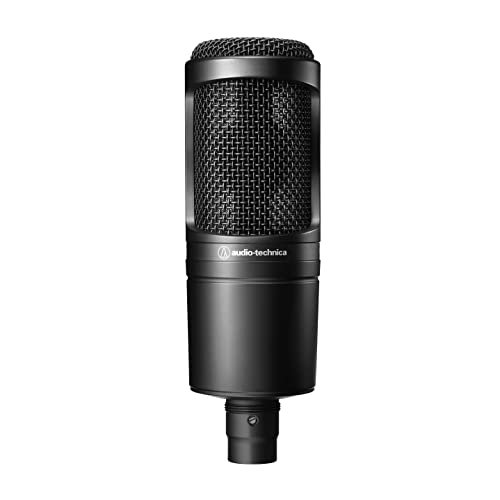
The Audio-Technica AT2020 is an affordable condenser microphone capturing crisp, airy detail, while the Shure SM7B is a studio dynamic microphone engineered to isolate speech in untreated rooms. Choose the AT2020 if you want clean fidelity on a budget. Pick the SM7B for deep, broadcast-ready vocals and superior background noise rejection.
I have spent years tracking vocals, voiceovers, and podcasts with both the Audio-Technica AT2020 and the Shure SM7B in home and commercial setups. While both units have earned loyal followings, they rely on opposite acoustic designs that drastically alter how your room sounds on a recording. Here is how they stack up in everyday use and how to decide which one belongs on your boom arm.
Audio-Technica AT2020 vs Shure SM7B: At a Glance
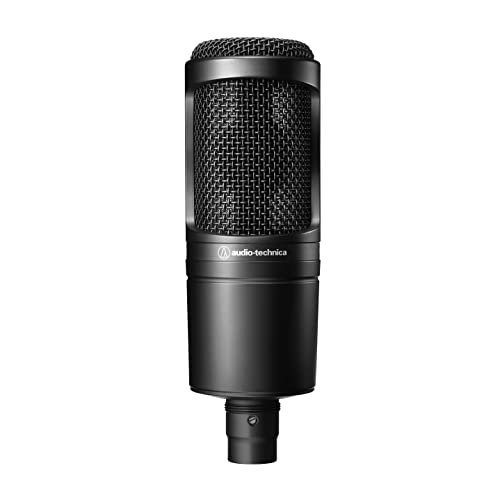
Audio-Technica AT2020
|
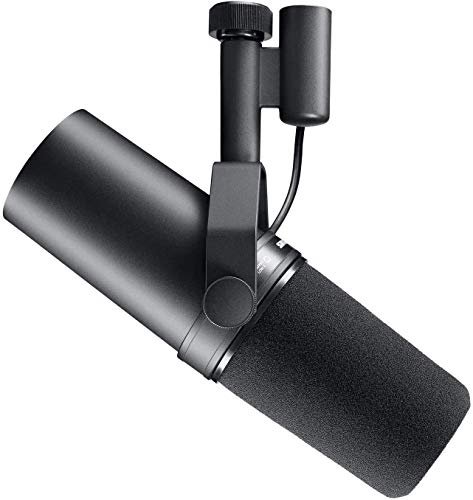
Shure SM7B
|
|
|---|---|---|
| Transducer Mechanism | Condenser design with a lightweight diaphragm for fast acoustic transient capture | Moving-coil dynamic design engineered for robust, high-volume vocal tracking |
| Power Requirements | Requires +48V phantom power to operate the active internal capsule circuitry | Passive operation that functions without external phantom power |
| Preamp Gain Demand | Low to moderate gain needs; pairs easily with budget audio interfaces | Extremely gain-hungry; often requires clean high-gain preamps or inline boosters |
| Room Acoustics Sensitivity | High sensitivity; easily picks up room reflections and ambient background noise | Low sensitivity; highly forgiving in untreated rooms and acoustically challenging environments |
| Tonal Profile | Bright, airy top-end with detailed highs and crisp vocal presence | Warm, smooth, and flat response tailored for natural broadcast-style speech |
| Off-Axis Noise Rejection | Standard cardioid rejection; still prone to capturing nearby keyboard or fan noise | Superior directional isolation; rejects side bleed, echo, and mechanical room noise |
| Durability and Shielding | Solid studio build, but delicate capsule requires careful handling and storage | Heavy-duty construction with internal shock mounting and electromagnetic hum shielding |
Complete Comparison: Audio-Technica AT2020 vs Shure SM7B
| Audio-Technica AT2020 Cardioid Condenser Studio… | Shure SM7B Dynamic Vocal Microphone for | |
|---|---|---|
| Product Image | |
|
| Price | View On Amazon | View On Amazon |
| Category | Budget Studio Condenser | Premium Broadcast Dynamic |
| Transducer & Diaphragm Design | Custom-engineered low-mass condenser diaphragm for extended frequency and fast transient response | Dynamic cartridge delivering smooth, warm, and balanced vocal response |
| Vibration & Background Isolation | Standard cardioid polar pattern to isolate desired sound source from sides/rear | Cardioid pickup combined with internal air suspension shock isolation to eliminate handling noise |
| Pop & Plosive Protection | Open grille design (external pop filter required) | Built-in pop filtering plus detachable close-talk windscreen included |
| Build & Interference Shielding | Durable metal chassis | Rugged all-metal body with advanced electromagnetic shielding against hum and interference |
| Dynamic Range & SPL Handling | High SPL handling with wide dynamic range for versatile studio applications | Robust dynamic element naturally suited for high SPL broadcast and studio recording |
| Included Accessories | Pivoting 5/8″-27 stand mount, threaded adapter, and soft protective pouch | Detachable windscreen and integrated locking swivel mount |
| Output Connection | Integral 3-pin XLRM type (requires +48V phantom power) | Professional 3-pin XLR (passive dynamic, requires high-gain interface/preamp) |
| Best For | Acoustic instruments and vocals in controlled project/home studios | Professional podcasting, broadcast, voiceover, and untreated streaming rooms |
| Amazon Link | View On Amazon | View On Amazon |
| Overall Winner | Runner-up (Best Budget Entry) | Winner |
Audio-Technica AT2020 Cardioid Condenser Studio XLR Microphone
The Audio-Technica AT2020 has long stood as the price/performance standard in side address studio condenser microphone technology across the audio industry. Built around a custom engineered low mass diaphragm, it captures fast acoustic transients and subtle vocal inflections with crisp clarity. Its cardioid polar pattern attenuates sound arriving from the back and sides, helping you isolate your voice during recording sessions. Thanks to high SPL handling and wide dynamic range, this mic effortlessly takes on loud electric guitar amps or screaming vocal takes without cracking. It remains a dependable foundation for creators building out practical project/home studio applications on a lean budget.
Key Features
- Custom engineered low mass diaphragm provides extended frequency response and superior transient response
- High SPL handling and wide dynamic range provide unmatched versatility
- Cardioid polar pattern reduces pickup of sounds from the sides and rear, improving isolation of desired sound source
- Standard XLR output requiring 48V phantom power from an interface or mixer
Pros
- Outstanding high-frequency detail for under one hundred dollars
- Handles high sound pressure levels without audible distortion
- Captures the natural resonance of acoustic guitars and spoken dialogue
Cons
- Picks up keyboard clatter and room reflections easily in untreated spaces
- Package does not include an elastic shock mount or pop filter
Best for: Budget-conscious home recording artists and voiceover creators working in treated, quiet environments.
Expert Opinion: The AT2020 gives you authentic studio condenser clarity at an entry-level price, provided your recording space is quiet enough to handle its open capsule sensitivity.
Shure SM7B Dynamic Vocal Microphone
The Shure SM7B represents the gold standard for broadcast studios, streaming setups, and modern podcast productions. A dynamic cartridge and wide-range frequency response work together to create a warm, thick low end that smooths out harsh vocal sibilance. Its directional cardioid pickup pattern works with air suspension shock isolation to reject desk thuds and room echo with surprising efficiency. Plosives are kept under tight control by built-in pop filtering and a detachable windscreen, removing the need for bulky clamp-on filters. The rugged all-metal construction with advanced electromagnetic shielding guards the internal coil against hum from computer screens and studio lights. To get the best sound through its professional XLR output, you must connect it to a high-gain preamp or audio interface capable of driving hungry dynamic capsules.
Key Features
- Dynamic cartridge delivers natural vocals with a balanced, warm frequency curve
- Focused cardioid pickup pattern paired with air suspension shock isolation blocks mechanical noise
- Built-in pop filtering and detachable windscreen stop aggressive plosives and breath noise
- Rugged all-metal body with electromagnetic shielding to block computer monitor hum
- Rear switches for bass roll-off and mid-range presence boost tailoring
Pros
- Rejects untreated room echo and background hum better than most microphones
- Smooth, radio-style vocal profile right out of the box
- Tank-like metal housing that survives decades of daily abuse
Cons
- Requires roughly 60dB of clean gain to reach healthy recording levels
- Significantly higher overall price point once you include necessary hardware
Best for: Podcasters, broadcasters, and vocalists tracking in untreated rooms who want an authoritative vocal tone.
Expert Opinion: The SM7B remains the definitive vocal microphone for modern content creators because it virtually ignores poor room acoustics while flattering spoken word.
Audio-Technica AT2020 vs Shure SM7B: Key Differences That Matter
Performance Comparison
A condenser mic like the AT2020 behaves very differently from a dynamic unit like the SM7B. The AT2020 uses an electrically charged backplate and a thin diaphragm, making it exceptionally sensitive to subtle breath sounds and the delicate snap of an acoustic guitar string. That sensitivity gives you open highs, yet it also drags room flutter, computer fans, and outside traffic into your monitor headphones.
The Shure SM7B relies on a heavier moving coil dynamic mechanism. You must speak much closer to the grille, which yields that famous radio broadcast proximity effect. Harsh “S” sounds get naturally rounded off, and harsh room echoes disappear into the background. While the SM7B sounds less airy than the AT2020 on acoustic instruments, it produces a deeper, punchier spoken vocal track that sits instantly in a mix.
Price and Value Analysis
Budget creates the widest gulf between these two models. The AT2020 retails for roughly a quarter of the SM7B’s price tag. Furthermore, the AT2020 runs happily on standard 48V phantom power supplied by any entry-level audio interface. You can set up a full vocal chain with an AT2020, an interface, and a boom arm for less than half the cost of an SM7B alone.
The SM7B demands serious financial commitment. Beyond its premium upfront cost, the microphone has notoriously low output sensitivity. Plugging it straight into a cheap audio interface often results in hiss because you have to crank the gain knob to maximum. Most users end up purchasing an inline gain booster or an expensive studio preamp, driving total setup costs higher.
Build Quality Comparison
Audio-Technica constructed the AT2020 with a cast metal body and a sturdy wire mesh basket. It handles typical studio drops without failing, though the finish can scratch after years of travel. The included stand mount is hard plastic, meaning any bump to your desk travels straight through the mic stand into your recording.
Shure designed the SM7B like studio broadcast equipment meant to last 30 years. Its heavy cast aluminum body feels indestructible. An integrated captive bracket keeps the microphone firmly anchored to boom arms without loosening, while the internal pneumatic shock isolation eliminates desk bumps before they reach the capsule. It also contains shielding coils that block electromagnetic interference from nearby monitors.
User Experience Differences
Recording with the AT2020 feels easy and immediate. Plug it in, switch on 48V phantom power, set your interface gain to 12 o’clock, and you are ready to track. You can sit six to ten inches back from the mic without losing vocal presence. The downside is that you spend extra time editing out mouse clicks, chair squeaks, and background room noise.
Using the SM7B requires deliberate technique. You must stay right against the windscreen to get that rich tone, which can feel restrictive if you move around during long streaming sessions. Dialing in clean gain takes careful calibration. Once configured, though, your recording workflow becomes painless because you spend almost zero time editing out room noise or applying aggressive de-essers.
Which Should You Choose?
Your acoustic environment and gear budget are the two deciding factors for this choice
| Choose Audio-Technica AT2020 if… | Choose Shure SM7B if… |
|---|---|
| You have a strict total budget under one hundred dollars | You record in an untreated room with audible background noise |
| Your recording space has acoustic treatment or quiet surroundings | You produce podcasts or streams demanding deep vocal warmth |
| You plan to track acoustic guitars and stringed instruments | You own an interface or preamp capable of high gain output |
| Your current audio interface provides modest gain levels | You want built-in shielding against desk vibrations and electrical hum |
Frequently Asked Questions
Q: In an Audio-Technica AT2020 vs Shure SM7B comparison, which is better for an untreated bedroom?
A: The Shure SM7B is significantly better for untreated spaces. Because it is a dynamic microphone with low sensitivity and tight directional rejection, it ignores room reflections and PC fan noise that the sensitive AT2020 condenser capsule picks up.
Q: Does the Audio-Technica AT2020 need a Cloudlifter or inline preamp?
A: No, the AT2020 does not need an inline preamp. It is an active condenser microphone powered by standard 48V phantom power, giving it plenty of output level with basic audio interfaces.
Q: In the Audio-Technica AT2020 vs Shure SM7B matchup, which sounds better on female vocals?
A: Both microphones work well, but the choice depends on vocal tone. The AT2020 emphasizes airy highs and upper-mid clarity, which can flatter softer female voices. The SM7B smooths out high frequencies, making it ideal for taming shrillness or sibilance on bright female vocalists.
Q: Can you plug either of these microphones directly into a computer USB port?
A: Neither model can plug directly into a USB port on its own. Both use standard XLR outputs and require an audio interface or dedicated mixer. If you want direct USB connectivity, Audio-Technica makes the AT2020USB-X, and Shure makes the SM7dB with a built-in preamp or the hybrid XLR/USB MV7+.
Q: Why does the Shure SM7B need so much gain compared to the AT2020?
A: The SM7B uses a passive dynamic capsule with a heavy diaphragm coil that produces an output level around -59 dBV. The AT2020 contains internal active electronics powered by 48V phantom power, producing a much stronger signal that requires less amplification from your interface.
Q: Is the AT2020 good for recording loud instruments like guitar cabs and drums?
A: Yes, the AT2020 handles up to 144 dB of sound pressure level without distorting. You can position it in front of loud guitar amplifiers, brass instruments, and drum overheads without damaging the internal capsule.
As an Amazon Associate, I earn from qualifying purchases. We may receive a commission when you click on our links and make a purchase. This does not affect our reviews or comparisons — our goal is to remain fair, transparent, and unbiased so you can make the best purchasing decision.