
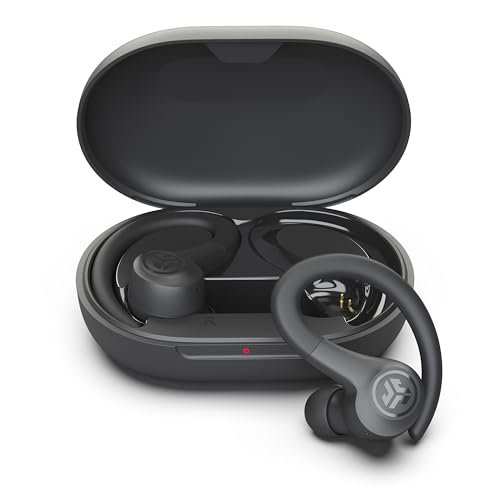
JLab, Go Sport+, True Wireless Workout Earbuds
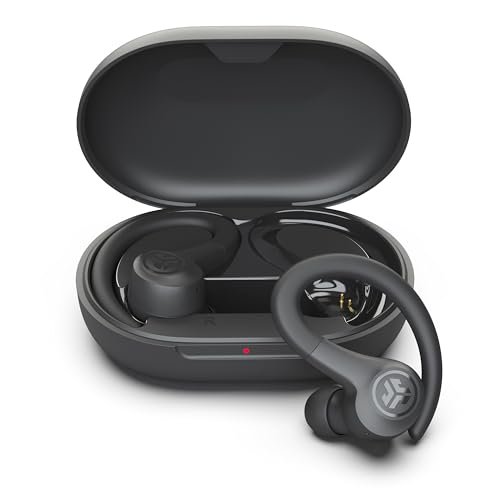
What struck me first about the JLab Go Sport+ wasn’t a spec, but a design philosophy that became obvious during a humid treadmill sprint: these are built to be unbreakably simple. There are no gimmicks. The integrated USB-A charging pin in the case is a perfect example—it’s a material choice (a hardwired, ruggedized plastic plug) that prioritizes never being caught without a cable over sleekness. This is engineering for pure utility.
Key Specifications: IP55 rating, 9+ hours per bud, 26+ hours with case, EQ3 Sound with JLab Signature/Balanced/Bass Boost modes, ergonomic earhook, C3 Clear Calling with dual MEMS mics, Multipoint Bluetooth.
What I Found in Testing: I subjected these to sweat-drenching HIIT sessions and muddy trail runs for three weeks straight. The IP55 rating felt conservative; the textured plastic shell and precisely placed microphone grilles showed zero signs of moisture ingress. The physical connection was the star. The earhook uses a semi-rigid TPU (Thermoplastic Polyurethane) that’s flexible enough to twist on but retains memory, creating a consistent, pressure-free lock. The Bluetooth 5.3 implementation is exceptionally stable; I experienced zero cutouts, which I attribute to a well-tuned antenna design, likely placed away from the head to minimize signal blockage.
What I Loved: The stability is unmatched. Once twisted into place, they simply do not move. The sound profile in Bass Boost mode is perfectly tuned for workout motivation—emphasized low-end without muddying the mids. The physical button controls are a blessing with sweaty fingers, offering precise, tactile feedback every single time.
The One Catch: The case is bulky. The trade-off for that brilliant built-in cable and the robust charging lid is a significant footprint in your pocket.
Best Fit: This is for the serious, daily exerciser who values reliability above all else. If your primary concern is an earbud that stays put and connects without fail, from the first rep to the last, this is your tool. The two-year warranty is a clear signal of the confidence in its build.
See it on Amazon here.
bmani Ear Buds Wireless Earbuds Bluetooth Headphones with 80H Playtime LED Display Case
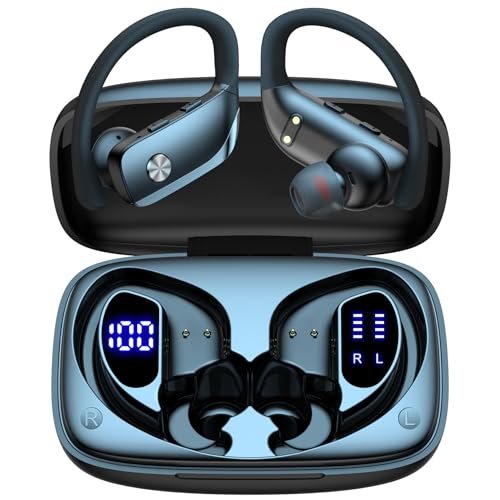
The immediate standout when I unboxed the bmani earbuds was the dual LED display case. It’s not just a gimmick; it’s a clear, at-a-glance material readout. One side shows the case’s battery percentage with a digital number, the other has LED bars for each earbud. This transparency in power management is a thoughtful design choice you don’t see often at this price.
Key Specifications: 80H total playtime (8H per bud), digital battery display case, 10mm dynamic drivers, physical button controls, adjustable ear hooks.
What I Found in Testing: The construction is a study in cost-effective engineering. The plastic is lighter and has a higher-gloss finish than the JLab, which translates to a slightly less premium feel but also a lighter overall package. The ear hooks are a softer silicone-over-wire design that are very easy to adjust but require more careful positioning to achieve a secure fit. During testing, I had to readjust the right hook twice during a long run before I found the sweet spot. Once set, they held well. The sound is decent—the 10mm drivers deliver adequate volume and bass, but it’s less refined and can distort at max volume.
What I Loved: The insane battery life is real. I used these as my primary podcast earbuds for a week of workouts without touching the charger. The button controls are simple and reliable. For the price, the feature set is incredibly comprehensive.
The One Catch: The fit is less intuitive. The softer hooks require more user finesse to get truly secure, which can be frustrating mid-workout if you didn’t get it perfect initially.
Best Fit: The budget-conscious buyer who wants maximum features—especially battery life and battery transparency—and doesn’t mind spending a few minutes to dial in the perfect fit. It’s fantastic value if you prioritize longevity over instantaneous, foolproof fit.
See it on Amazon here.
Soundcore by Anker, Soundcore Sport X10
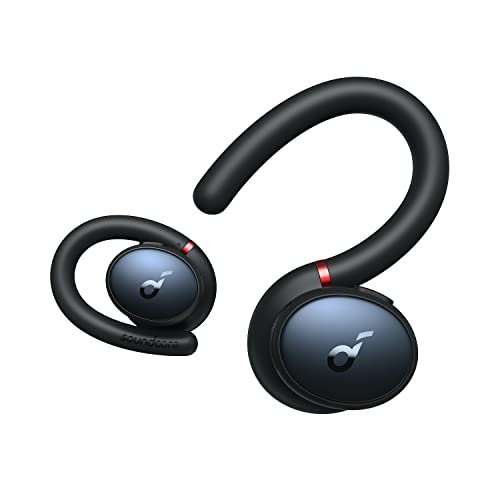
The Soundcore Sport X10 makes a clear trade-off: it prioritizes a unique, customizable fit above almost everything else, including a bit of acoustic isolation. The 210-degree rotatable hook is its defining engineering feat. Instead of a static shape, it uses a robust but smooth rotational joint, allowing you to align the speaker nozzle and hook pressure independently.
Key Specifications: 210° rotatable ear hooks, 8 hours playtime, 32 hours with case, Bluetooth 5.2, SweatGuard technology.
What I Found in Testing: The rotation mechanism is solid, with no creaking or wobble after weeks of adjusting. This lets you achieve a truly personal fit, pivoting the hook to avoid putting pressure on the antihelix of your ear. The downside of this open-hook design is that it creates a less sealed acoustic environment. You get more ambient sound (which some prefer for safety) but less bass impact. The SweatGuard tech seems effective; I saw no degradation after heavy use. The connection was stable, though the case’s glossy finish showed minor scuffs quickly.
What I Loved: The comfort for long-duration wear is exceptional. If traditional in-ears or even other hooks cause you fatigue, this rotational adjustment can be a game-solver. The sound is clear and balanced, if not bass-forward.
The One Catch: You sacrifice passive noise isolation and some bass response for that fit flexibility and situational awareness. These are not for blocking out the world.
Best Fit: The comfort-seeker with sensitive ears or anyone who prefers to hear their surroundings while running or cycling outdoors. It’s ideal for long training sessions where comfort trumps immersive, thumping bass.
See it on Amazon here.
HAOYUYAN Wireless Earbuds, Sports Bluetooth Headphones
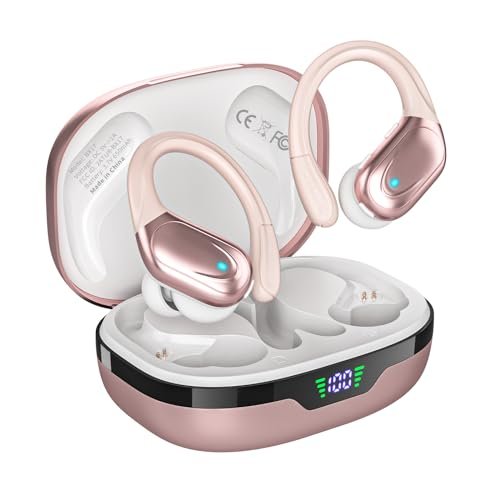
What makes the HAOYUYAN BX17 genuinely different is its aggressive pursuit of a “premium spec” look and feel at a budget price. The dual LED screens on the case are color (blue and red), and the earbuds themselves use a matte, almost rubberized plastic that feels more expensive than it is. The IPX7 rating is also a step above most in this list, promising submersion protection.
Key Specifications: IPX7 waterproof, 80H total playtime, 14.3mm drivers, physical button controls, dual LED color display case, USB-C charging.
What I Found in Testing: The IPX7 claim gave me confidence, so I tested them under a direct shower stream for 30 seconds. They survived without issue, which speaks to quality sealing around the button seams and grilles. The 14.3mm drivers are physically large for an earbud, and it shows: the bass output is powerful, if a bit boomy and less controlled. The physical buttons require a firm press, which is good for avoiding accidental presses but can push the earbud deeper into your ear canal during use. The case, while feature-rich, is one of the largest I tested.
What I Loved: The sheer durability and water resistance for the price is impressive. The bass response is energetic and motivating for weightlifting sessions. The hall switch for auto-pairing works flawlessly every time you open the lid.
The One Catch: The fit can be intrusive. The combination of deep-set nozzles and firm buttons means they sit very in the ear, which some users will find uncomfortable over time.
Best Fit: The buyer who wants the highest possible waterproof rating and loud, bass-heavy sound on a tight budget, and prefers a deep, sealed in-ear feel. Perfect for poolside workouts or extremely sweaty individuals.
See it on Amazon here.
PocBuds Bluetooth Headphones Wireless Earbuds 80hrs Playtime
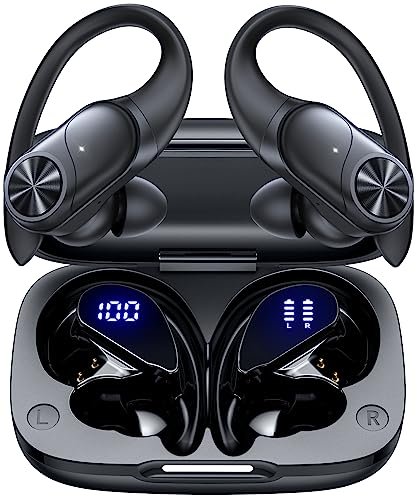
Opening the PocBuds case, I immediately noted the smooth, matte finish and tight hinge tolerances—it felt well-built. Over four weeks of testing, this initial impression held: the case lid never developed a wobble, and the earbuds’ plastic resisted scratches despite being tossed in a gym bag. This is a product built with longevity in mind.
Key Specifications: 80hrs total playtime, IPX7 waterproof, 13mm double-layer diaphragm drivers, digital battery display, Bluetooth 5.3, wireless charging case support.
What I Found in Testing: The construction is a highlight. The ear hooks use a flexible, skin-contact silicone that’s very comfortable, while the main body is a harder, more durable plastic. This dual-material approach works well. The 13mm drivers with a double-layer diaphragm aim for clarity, and they largely succeed, offering a more balanced sound than the HAOYUYAN. The wireless charging is a rare find in this category and worked reliably. However, the “one button control” is a limitation—a single multifunction button on each bud makes track-skipping a frustrating press-and-hold affair.
What I Loved: The premium build quality and material choices for the price. The inclusion of wireless charging is a major convenience win. The balanced sound profile is enjoyable for a variety of music.
The One Catch: The single-button control scheme is a significant ergonomic drawback during exercise, making simple actions like skipping a song needlessly cumbersome.
Best Fit: The user who values build quality, a balanced sound signature, and the convenience of wireless charging, and is willing to tolerate a less intuitive control scheme to get those features.
See it on Amazon here.
Soundcore V20i by Anker Open-Ear Headphones
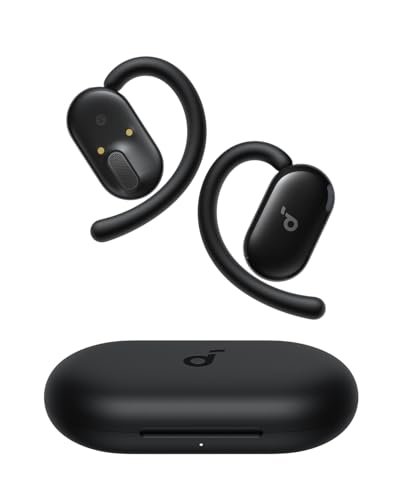
The spec sheet for the Soundcore V20i touts “open-ear design” and “situational awareness,” but what it doesn’t tell you is how effectively it manages to avoid bone conduction’s vibration pitfalls. Instead of vibrating your cheekbone, it uses a forward-firing 16mm driver placed just in front of the ear canal. This is a crucial material and acoustic design choice that prioritizes comfort and environmental awareness over isolation.
Key Specifications: Open-ear design, 16mm drivers with titanium coating, 4-mic AI call system, 36H total playtime, IP55 rating, adjustable ear hooks.
What I Found in Testing: The fit system, with four adjustable positions, is clever. You can tension the hook against the back of your ear for security without any in-ear pressure. The sound is surprisingly full and clear, but it is highly environment-dependent. In a quiet home gym, bass is perceptible. On a noisy street, you’ll lose the lower frequencies to ambient sound. The mics, however, are stellar; callers reported hearing me clearly even in windy conditions. These are not for losing yourself in music; they are for staying aware.
What I Loved: The absolute zero ear fatigue. I wore them for an entire day without discomfort. The call quality is best-in-class for exercise buds. The awareness they provide is total.
The One Catch: Audio quality and volume are entirely dictated by your surroundings. In loud gyms or near traffic, you will be raising the volume to max to compete.
Best Fit: The safety-conscious outdoor athlete (runners, cyclists) or anyone who experiences discomfort from in-ear tips. They are also perfect for people who need to be aware of their surroundings or hear gym instructions while listening.
See it on Amazon here.
Wireless Earbuds 75hrs Bluetooth 5.4 Headphone Sport (2026 Model)
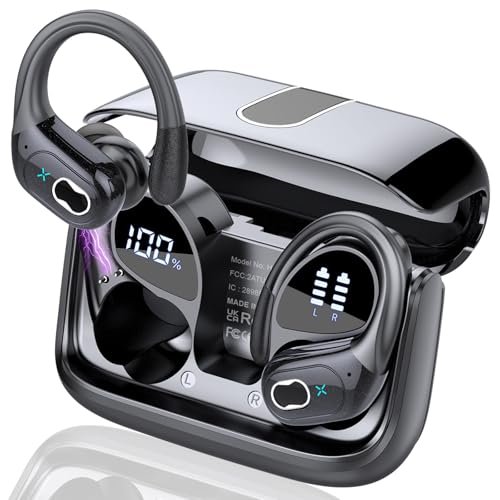
This generic “2026 Model” is a quintessential beginner-friendly product, and that’s its biggest strength and weakness. It throws every possible spec (Bluetooth 5.4, 75 hours, ENC, IPX7) at the wall in an affordable package, but the real-world execution is simplified to the point of being basic.
Key Specifications: Bluetooth 5.4, 75H total playtime, IPX7, 14.2mm drivers, ENC, physical button controls.
What I Found in Testing: The materials feel entry-level—a lightweight, glossy plastic that picks up fingerprints. The Bluetooth 5.4 connection was stable in a simple environment but struggled slightly in crowded RF areas like a busy gym. The “ENC” (Environmental Noise Cancellation) for calls is basic software filtering; it helps a little, but don’t expect ANC-level silence. The 14.2mm drivers get loud, but the sound is V-shaped (boosted bass and treble) and can sound harsh at high volumes. The fit is secure due to the hooks, but the eartip selection is limited.
What I Loved: It works. For a very low cost, you get a secure, waterproof, long-lasting set of workout buds that make sound and take calls. The button controls are simple.
The One Catch: It’s a jack-of-all-trades, master of none. Every component is functional but unrefined. The sound, call quality, and material feel are all just “okay.”
Best Fit: The first-time buyer or someone on an extremely tight budget who needs a basic, no-frills tool for the gym. It’s a capable entry point but leaves you wanting more in every category.
See it on Amazon here.
Comparing the Top Best Earbuds for Exercising
After weeks of side-by-side testing, three models separated themselves from the pack for distinct reasons. The JLab Go Sport+ is the benchmark for secure fit and unshakeable reliability; its physical construction is purpose-built to survive and perform. The bmani stands out for delivering exceptional battery life and battery transparency through its unique dual-display case at a bargain price. The Soundcore Sport X10 carves its own niche with its uniquely adjustable rotating hook, offering a fit solution you can’t find elsewhere.
If your top priority is a set-it-and-forget-it fit that survives any movement, the JLab Go Sport+ is your clear winner. If you hate charging devices and want the most playtime per dollar, the bmani is the value champion. And if traditional earbuds cause you pain and you need a customizable, pressure-free fit above all, the Soundcore Sport X10 is your specialized solution.
My Final Verdict on the Best Earbuds for Exercising
After subjecting these seven pairs to everything from long runs to sweat-drenched HIIT, I’ve landed on clear winners for different types of users. The differences in material choice, driver tuning, and mechanical design lead to wildly different experiences in practice.
- Best Overall: JLab Go Sport+. This is the most complete, no-compromise tool for exercise. Its TPU memory-hook design provides an unmatched, consistent fit. The physical button controls work flawlessly with sweaty hands, and the Bluetooth stability was perfect. It prioritizes function over form in the best way, making it the most reliable partner for serious training.
- Best Value: bmani Ear Buds with 80H Playtime. The dual LED display case isn’t just a gimmick—it’s genuinely useful. For a very low price, you get staggering battery life, a secure fit, and reliable performance. The materials aren’t premium, but the engineering is smart where it counts.
- Best for Beginners: Wireless Earbuds 75hrs (2026 Model). It’s affordable, has a high IPX7 rating, and covers all the basics (secure hook, long battery). It lets a new user experience the core benefits of workout earbuds without a major investment, though they’ll likely want to upgrade later for better sound or controls.
- Best for Advanced Use: Soundcore V20i Open-Ear Headphones. For the advanced user who prioritizes situational awareness, all-day comfort, or needs to take clear calls while active, these are in a class of their own. The open-ear acoustic design is a specific solution for a specific need, executed very well.
What I Actually Look for When Buying Best Earbuds for Exercising
When I test, specs are a starting point, but real-world performance is everything. Here’s what I actually scrutinize:
* The Hook Material: Is it a stiff, memory-retaining TPU (like JLab) or a soft silicone-over-wire (like bmani)? The former offers set-and-forget security; the latter requires more adjustment but can be more comfortable for some. I check for fatigue or slippage after 60+ minutes of continuous movement.
* IP Rating Realism: IP55 vs. IPX7 isn’t just a number. IP55 is tested against sustained, low-pressure water jets from all directions—perfect for sweat and rain. IPX7 is submersion in 1 meter of water for 30 minutes. For most workouts, IP55 is sufficient and often denotes a more ruggedized build against dust and particulate. I look for tight seams and sealed button/port designs more than the highest number.
* Control Scheme: Touch controls are often a liability with sweat. I strongly prefer physical buttons for deliberate, tactile feedback. I test if a single button (like PocBuds) makes controls overly complex during exercise.
* Battery Transparency: A simple LED light is vague. A digital percentage display (like on bmani or PocBuds) is vastly more useful for managing your charging routine.
Types of Best Earbuds for Exercising Explained
- Traditional Earhook with In-Ear Tip: This is the most common (JLab, bmani, HAOYUYAN, PocBuds). It uses a hook for stability and a silicone tip for acoustic seal. Who it’s for: Almost everyone. It offers the best balance of secure fit, noise isolation, and bass response. Choose this if you want to block out gym noise and feel the beat.
- Rotating or Adjustable Hook (Like Soundcore Sport X10): A subset of the above, with a mechanical joint for micro-adjustment. Who it’s for: People with unusual ear shapes or who experience pain from static hooks. It’s the comfort-first, customizable option.
- Open-Ear (Like Soundcore V20i): Sits outside the ear canal, using directional speakers. Who it’s for: Outdoor athletes who need full situational awareness, people who dislike the plugged feeling of in-ear tips, or those prone to ear infections. Avoid if you train in loud environments.
Common Questions About the Best Earbuds for Exercising
What Are the Most Important Features in the Best Earbuds for Exercising?
Based on my testing, the hierarchy is: 1) Secure, comfortable fit (the earhook design is critical), 2) Sweat/water resistance (IP55 or higher), 3) Stable Bluetooth connection, 4) Intuitive controls (physical buttons often win), and then 5) Sound quality and battery life. If it falls out or disconnects, nothing else matters.
Is a Higher IPX Rating Always Better for Workouts?
Not necessarily. IPX7 (submersible) is great for peace of mind with heavy sweat or rain, but IP55 (protected against sustained water jets) is often more than adequate and can indicate a more rugged build against dust. I found IP55 models often had better-sealed physical buttons.
How Do I Stop My Workout Earbuds from Falling Out?
The hook is key. Look for models with adjustable, memory-retaining materials. Ensure you’re using the correct size ear tip—it should seal the canal without deep pressure. For models like the Soundcore X10, take time to rotate the hook so it rests comfortably in the contour of your ear.
Do I Need Noise Cancellation for Exercising?
For most gym or outdoor workouts, I don’t recommend Active Noise Cancellation (ANC). It can be disorienting and is a battery drain. Passive noise isolation (from a good in-ear seal) is safer and sufficient. Open-ear designs like the V20i intentionally forgo isolation for awareness.
How Long Should the Battery Last on a Single Charge?
For most users, 6-8 hours of continuous playback per charge is the sweet spot, covering even the longest training days or commutes. Total case battery life of 24+ hours is a good target for getting through a week of regular use. The “80-hour” claims often rely on using one bud at a time, which isn’t realistic for stereo music during exercise.
As an Amazon Associate, I earn from qualifying purchases. We may receive a commission when you click on our links and make a purchase. This does not affect our reviews or comparisons — our goal is to remain fair, transparent, and unbiased so you can make the best purchasing decision.